Car Safety

How to Safely Tow a Car Without a Tow Truck (2026 Complete Guide)

Auto Roamer
11 min read
Prices verified February 2026
Includes Video

Your car sputtered to a halt on the shoulder, the engine dead. The tow truck estimate is $150 plus $7 a mile, and response time is an hour. You need to tow your car yourself, right now. This isn't a theoretical problem; it's an immediate roadside dilemma.

Your car sputtered to a halt on the shoulder, the engine dead. The tow truck estimate is $150 plus $7 a mile, and response time is an hour. You need to tow your car yourself, right now. This isn't a theoretical problem; it's an immediate roadside dilemma. While statistics show tow trucks rescue about 55,000 vehicles daily in America The Essential Guide to Towing: What Every Driver Must Know, waiting isn't always an option. Being prepared to tow your car yourself, whether it's a short distance or to the nearest mechanic, can save you significant time and money. You might be tempted to just grab a rope and go, but improperly towing can cause serious damage to both vehicles. Understanding the fundamental principles of safely moving a disabled vehicle is crucial to avoid costly mistakes and ensure everyone's safety on the road Safe Way to Towing a Vehicle: How to Guide. This guide will equip you with the knowledge to tow your car yourself, confidently navigating this unexpected challenge.
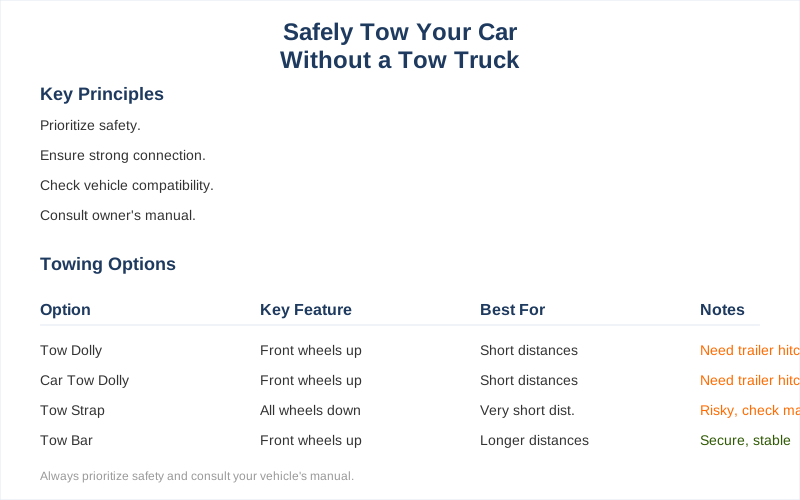
Infographic comparing car towing specs without a tow truck.
Key specifications for How to Safely Tow a Car Without a Tow Truck

The Short Answer

Towing a car yourself is feasible for short distances and specific situations, but safety and vehicle compatibility are paramount. Always prioritize a strong connection and ensure the towed vehicle is prepared to prevent damage or accidents.

The core principle when you need to tow a car yourself is understanding its limitations and the capabilities of your towing vehicle. Not all vehicles are designed for towing, especially flat towing, where all four wheels remain on the ground. Always consult your owner's manual to confirm if your vehicle is manufacturer-approved for this method; attempting to flat tow an unapproved vehicle can lead to severe drivetrain damage 2026 Dinghy Towing Guide: An RV LIFE Exclusive.

For successful towing, the tow vehicle must be larger and heavier than the car being towed to provide adequate engine and braking power How to Tow a Car with Another Car - JD Power. Before you begin, prepare the towed vehicle by placing it in neutral, releasing the parking brake, and ensuring the ignition is on to disengage the steering lock (if applicable) The Essential Guide to Towing: What Every Driver Must Know. For automatic transmissions, towing with the engine off is generally not recommended; a flatbed trailer is the safer alternative How to move car a small distance without tow dolly.

When using a rope for towing, ensure it's a heavy-duty tow rope specifically designed for the task, and inspect it thoroughly for any signs of wear or damage. Almost all vehicles have a designated strong point, like a loop or hook, for towing How to move car a small distance without tow dolly. Secure the connection tightly, and remember to drive slowly with small turns, being prepared to straighten out the towed vehicle as needed I need help. First time towing. I have no idea what I'm doing : r/Cartalk.
To make the process easier, consider reviewing our tips on how to change a flat tire.
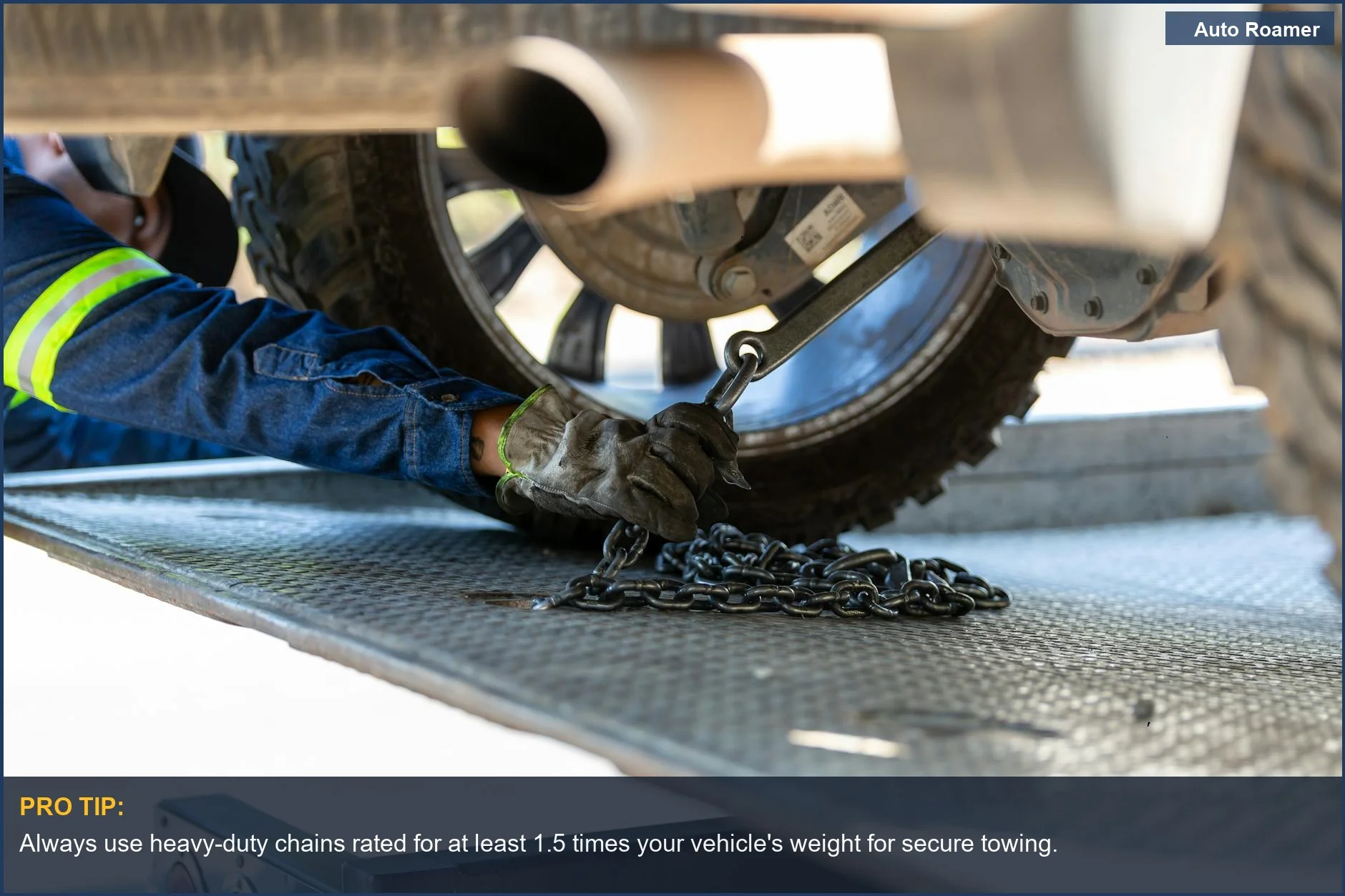
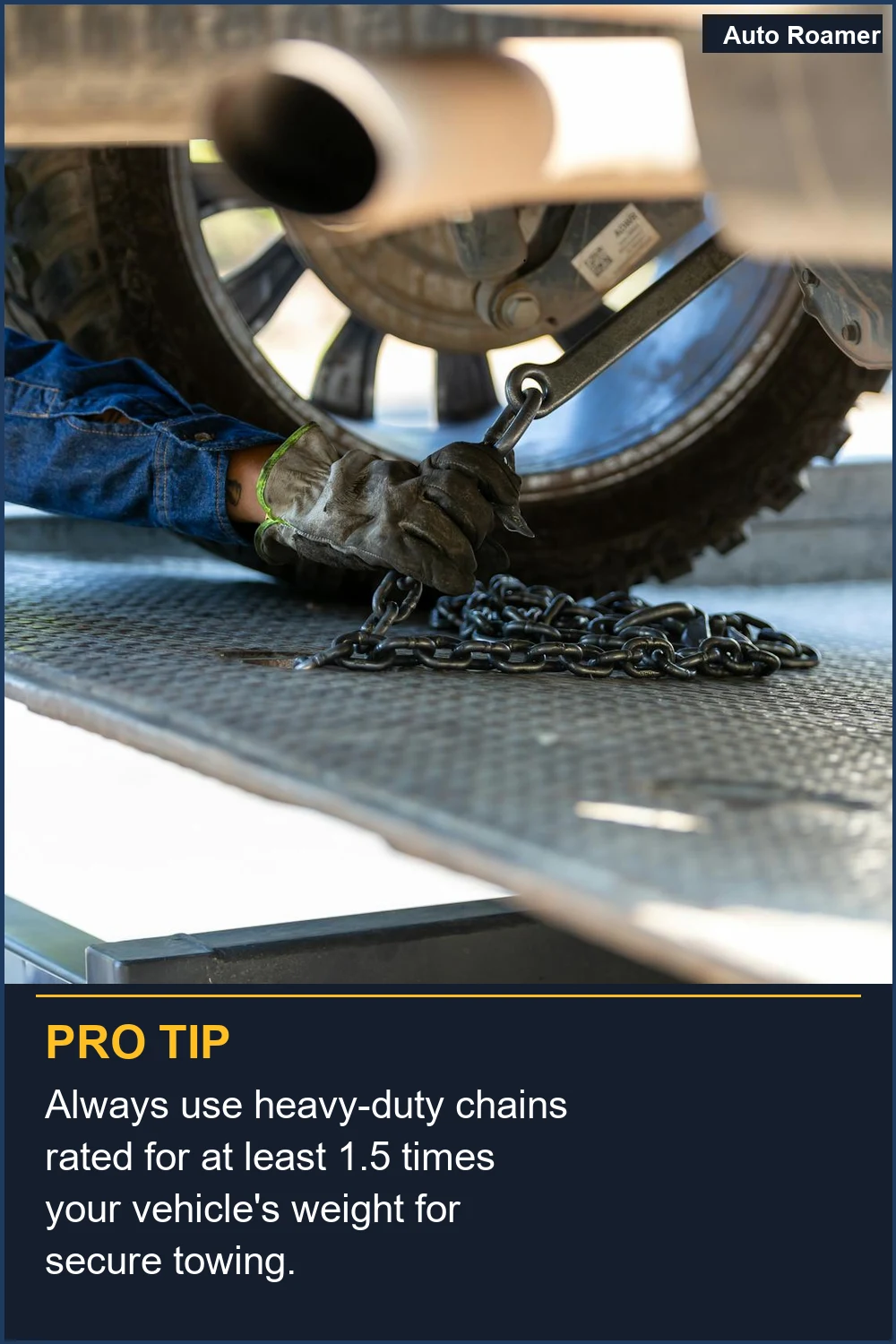
Always use heavy-duty chains rated for at least 1.5 times your vehicle's weight for secure towing.
A mechanic meticulously secures a vehicle with a chain, highlighting the critical importance of a strong connection when you tow a car yourself. | Photo by Jonathan Reynaga

What You Need to Know

1
Determine if your vehicle can be flat towed - Not all vehicles are designed to be flat towed, also known as dinghy towing. Always consult your owner's manual for manufacturer approval; towing an unapproved vehicle can cause serious drivetrain damage, potentially voiding your warranty. This is especially critical for vehicles with automatic transmissions or all-wheel drive systems, where improper towing can lead to catastrophic failure.
2
Select the right tow vehicle and equipment - The vehicle you use to tow must be larger and heavier than the car being towed. This ensures sufficient engine and braking power to safely manage the combined weight. Inspect your tow strap or rope for any signs of wear, fraying, or damage; a compromised towing attachment is a major safety hazard (Hoist Towing). For longer distances or heavier vehicles, consider a trailer with proper braking systems (Hoist Towing).
3
Prepare the towed vehicle - Before you can tow a car yourself, ensure it's in neutral and the parking brake is fully released. For vehicles with power steering or power brakes, the ignition typically needs to be turned to the "on" position to disengage steering locks and enable assisted braking (Mechanics Stack Exchange). Remove any loose items from the interior that could shift and cause damage or become a hazard.
4
Connect the vehicles safely - Locate the designated tow points on both vehicles, which are usually reinforced loops or hooks. Never attach tow ropes or chains to suspension components or bumpers, as these are not designed to withstand towing forces. Ensure the connection is secure and taut, but not so tight that it restricts movement during turns.
Understanding the safety of using heat sources in your vehicle can also apply to cooking; learn more in our guide on cooking in your car.
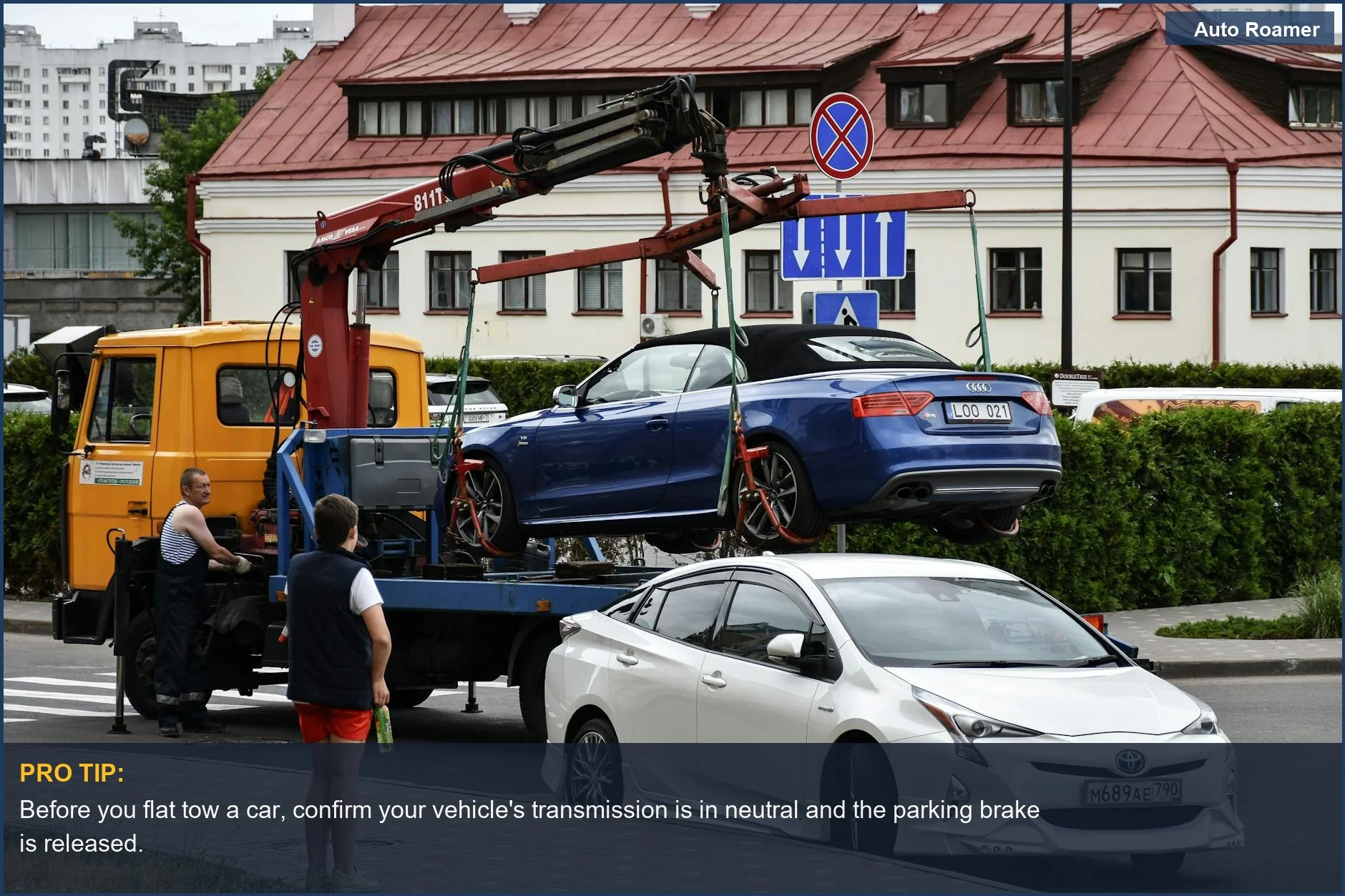
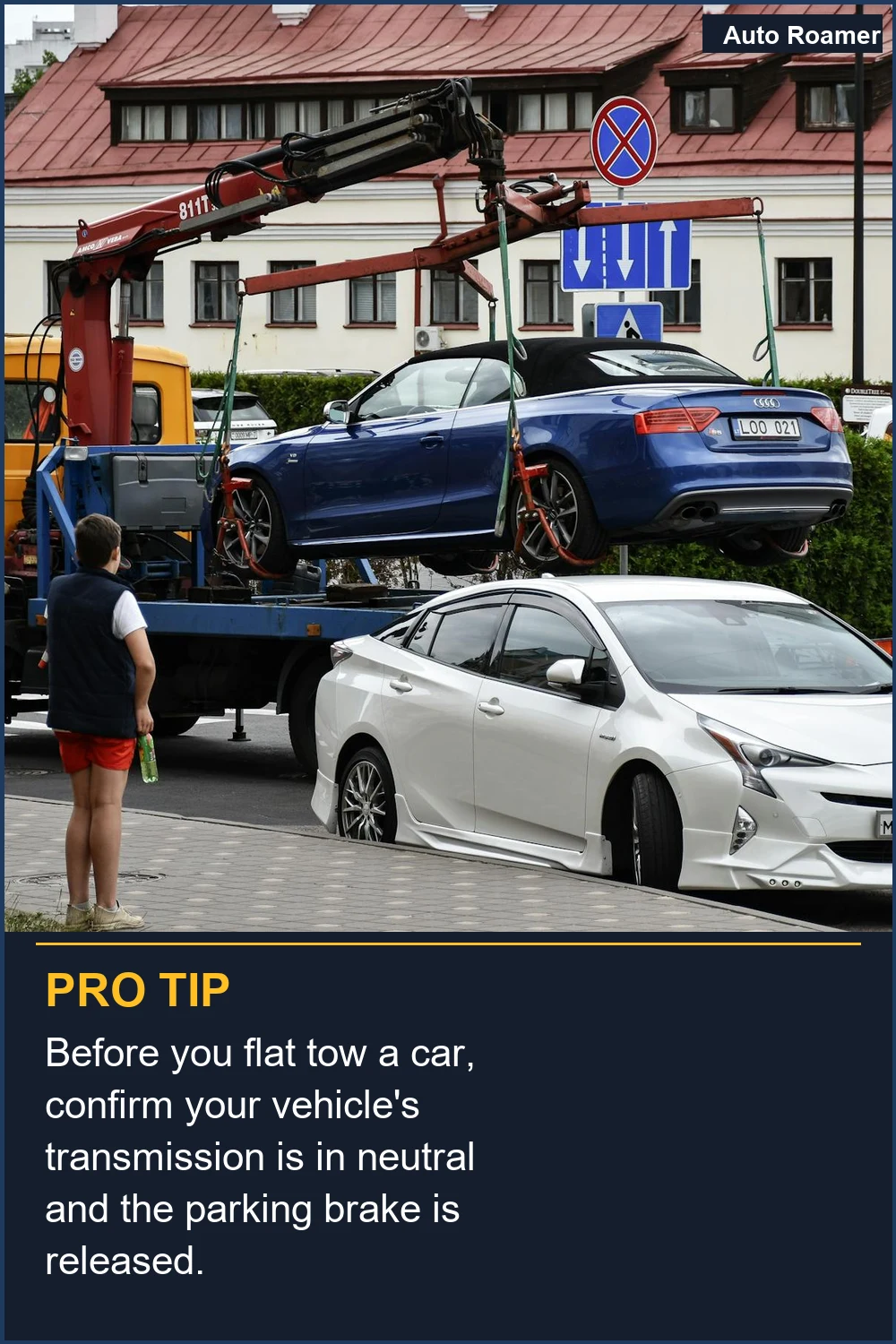
Before you flat tow a car, confirm your vehicle's transmission is in neutral and the parking brake is released.
Navigating city streets while towing a car yourself requires careful planning. This blue Audi shows how to flat tow a car in urban environments. | Photo by Artem Makarov

How to Handle This

1
Verify Vehicle Compatibility - Not all vehicles can be flat-towed, meaning all four wheels on the ground. Only specific vehicles are manufacturer-approved for this method; always check your owner's manual. Attempting to flat-tow an unapproved vehicle can lead to serious drivetrain damage that likely won't be covered by warranty. This is crucial for preventing costly repairs and ensuring the safety of both vehicles.
2
Choose the Right Towing Gear - You'll need a heavy-duty tow rope or strap rated significantly higher than the weight of the vehicle being towed. Inspect any rope or strap for wear, fraying, or damage; a weak connection can snap, causing a dangerous situation. For longer distances or heavier vehicles, a tow dolly or car trailer might be necessary, but for short moves, a sturdy rope attached to a designated tow hook or loop on the chassis is often sufficient, as noted in discussions about moving a car a small distance. Ensure you have a way to secure it tightly to avoid slippage.
3
Prepare the Towed Vehicle Correctly - Place the transmission in neutral and release the parking brake. For vehicles with power steering or power brakes, the ignition may need to be turned to the 'on' position (without starting the engine) to disengage the steering lock and allow for easier control, though this can drain the battery if left on too long. If the engine is completely dead, power steering and brakes will be significantly harder to operate, demanding extreme caution. Leaving valuables behind is also a good idea to prevent theft or damage. Check and release the parking brake is a non-negotiable step.
4
Drive Cautiously and Communicate - The tow vehicle must be larger and heavier than the vehicle being towed to provide adequate engine and braking power. The tow vehicle should be larger and heavier than the car being towed. Drive slowly, especially when navigating turns, hills, or adverse weather conditions. Communicate with the driver of the towed vehicle via cell phone or pre-arranged signals if they are present. Making wide turns and frequently checking the connection are critical. If you're trying to tow a car yourself, remember that reduced visibility, especially at night or in fog, significantly increases risk.
To enhance your car sleeping experience, it's also important to consider how to sleep in your car safely.
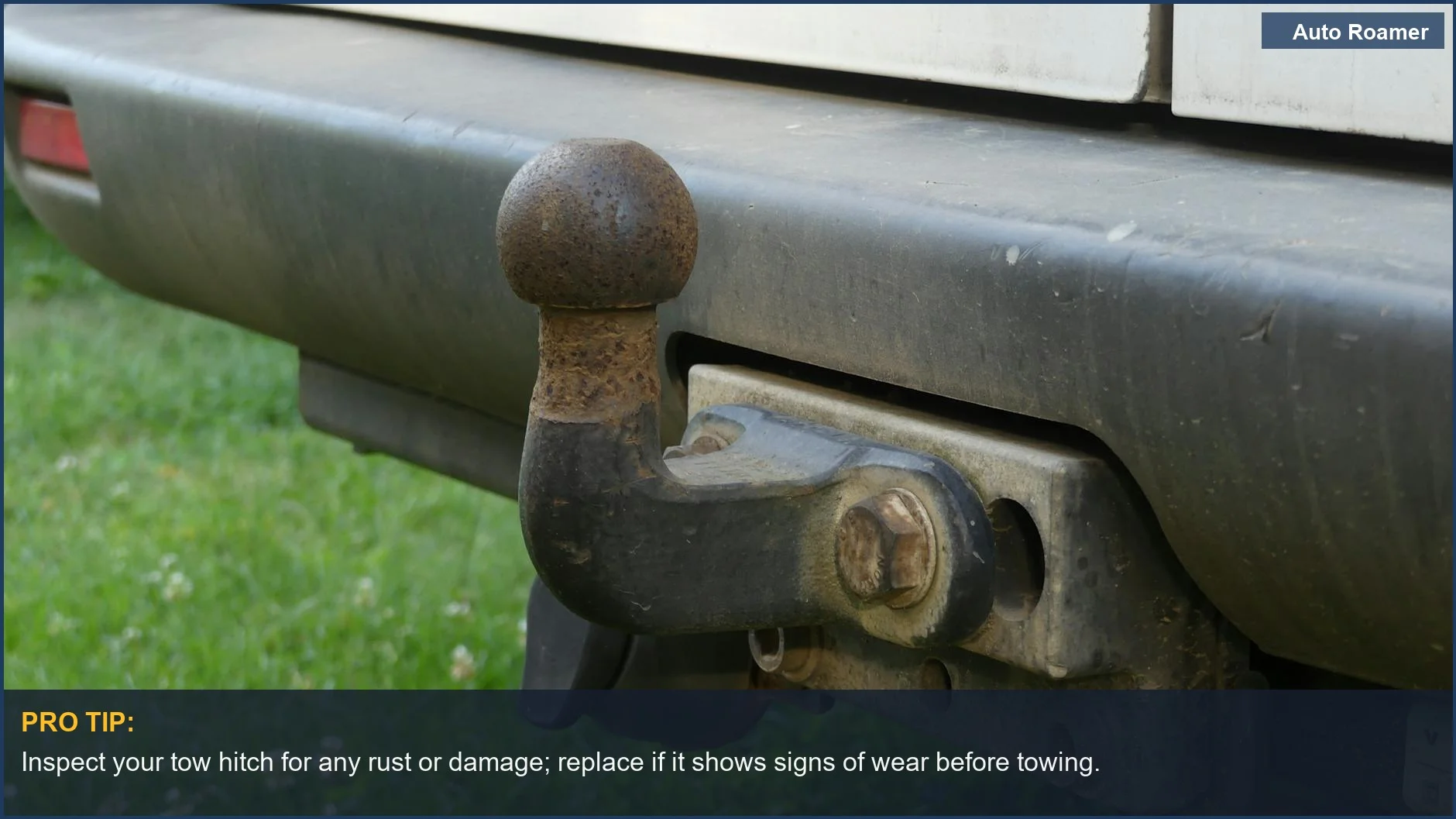
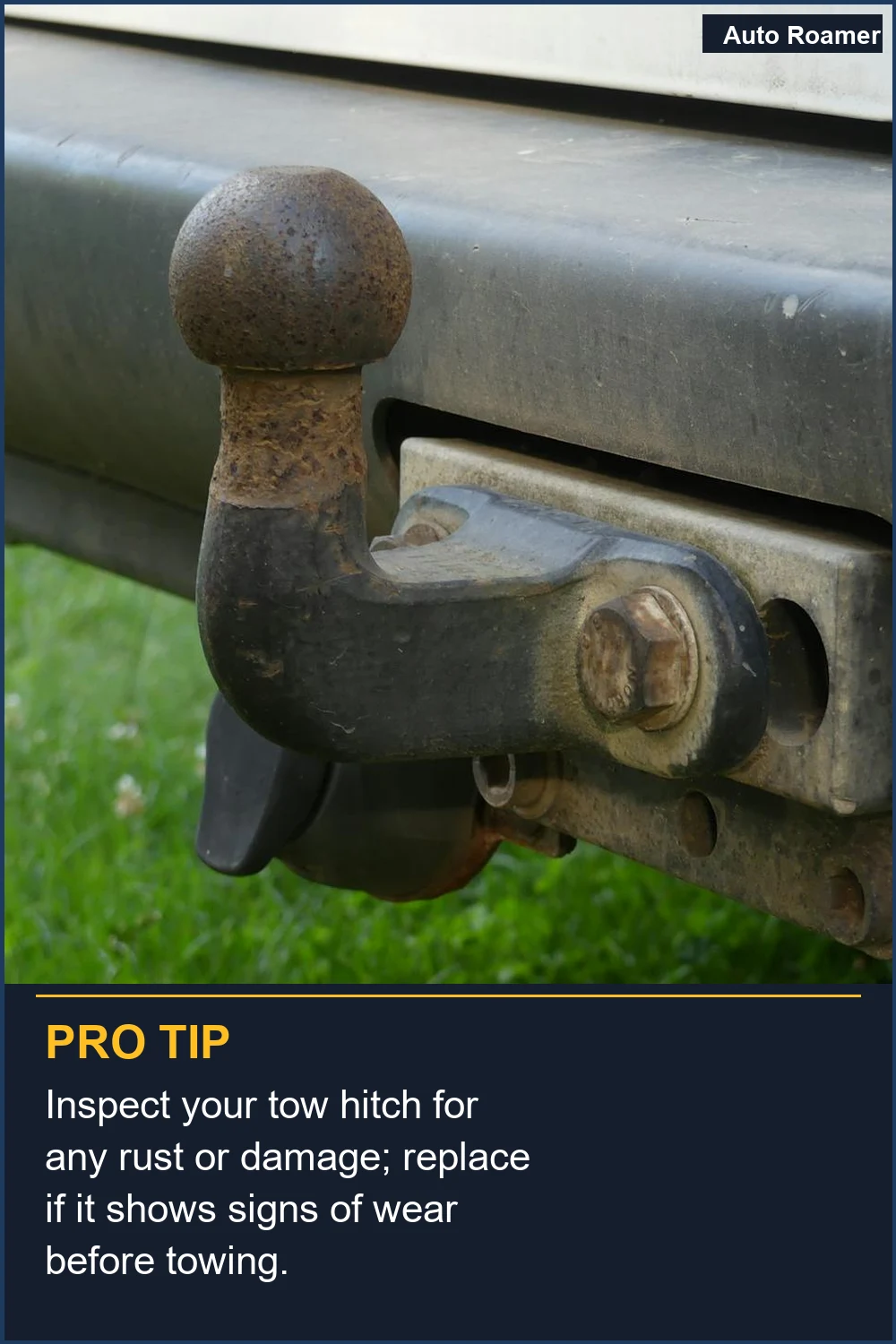
Inspect your tow hitch for any rust or damage; replace if it shows signs of wear before towing.
A rusty tow hitch serves as a reminder to check all towing equipment thoroughly. Ensure your hitch is secure to tow without a tow truck safely. | Photo by Csaba Nagy

What This Looks Like in Practice

  • Winter Mountain Pass in a Subaru Outback A family's Subaru Outback lost power on a steep, snow-covered mountain pass. They managed to flat tow the car themselves for a few miles to a pull-off using a heavy-duty tow strap attached to the designated front recovery point, as recommended by online forums for Subaru vehicles How to move car a small distance without tow dolly. What worked was the Outback's sturdy frame and the accessible tow hook, allowing for a secure connection. What didn't work was the limited visibility and the extreme cold, making the process slow and dangerous, highlighting the need for extreme caution in adverse conditions Safe Way to Towing a Vehicle: How to Guide.
  • Summer Desert in a Honda Civic After a blown tire in the middle of a scorching desert, a driver needed to tow their Honda Civic a short distance to a service station. They used a borrowed tow rope, carefully attaching it to a chassis point after confirming the Civic's owner's manual did not prohibit towing 2026 Dinghy Towing Guide: An RV LIFE Exclusive. The rope worked for the short distance on flat terrain, but the lack of power steering and brakes made steering and stopping the Civic incredibly difficult and physically demanding for the driver of the tow vehicle How to move car a small distance without tow dolly.
  • Urban Gridlock with a Ford F-150 A construction worker needed to move a non-operational Ford F-150 a few blocks down a busy city street to clear traffic. They utilized a heavy-duty tow strap, connecting it to the F-150's frame-mounted tow hooks, a common feature on trucks How to move car a small distance without tow dolly. This method worked effectively for short distances in controlled traffic, but the sheer size and weight of the F-150 meant the towing vehicle, a smaller pickup, struggled significantly with acceleration and braking, underscoring the importance of matching tow vehicle capacity to the towed vehicle How to Tow a Car with Another Car - JD Power.
If you're also considering a road trip with a furry friend, explore tips in our guide on traveling long distance with a dog.
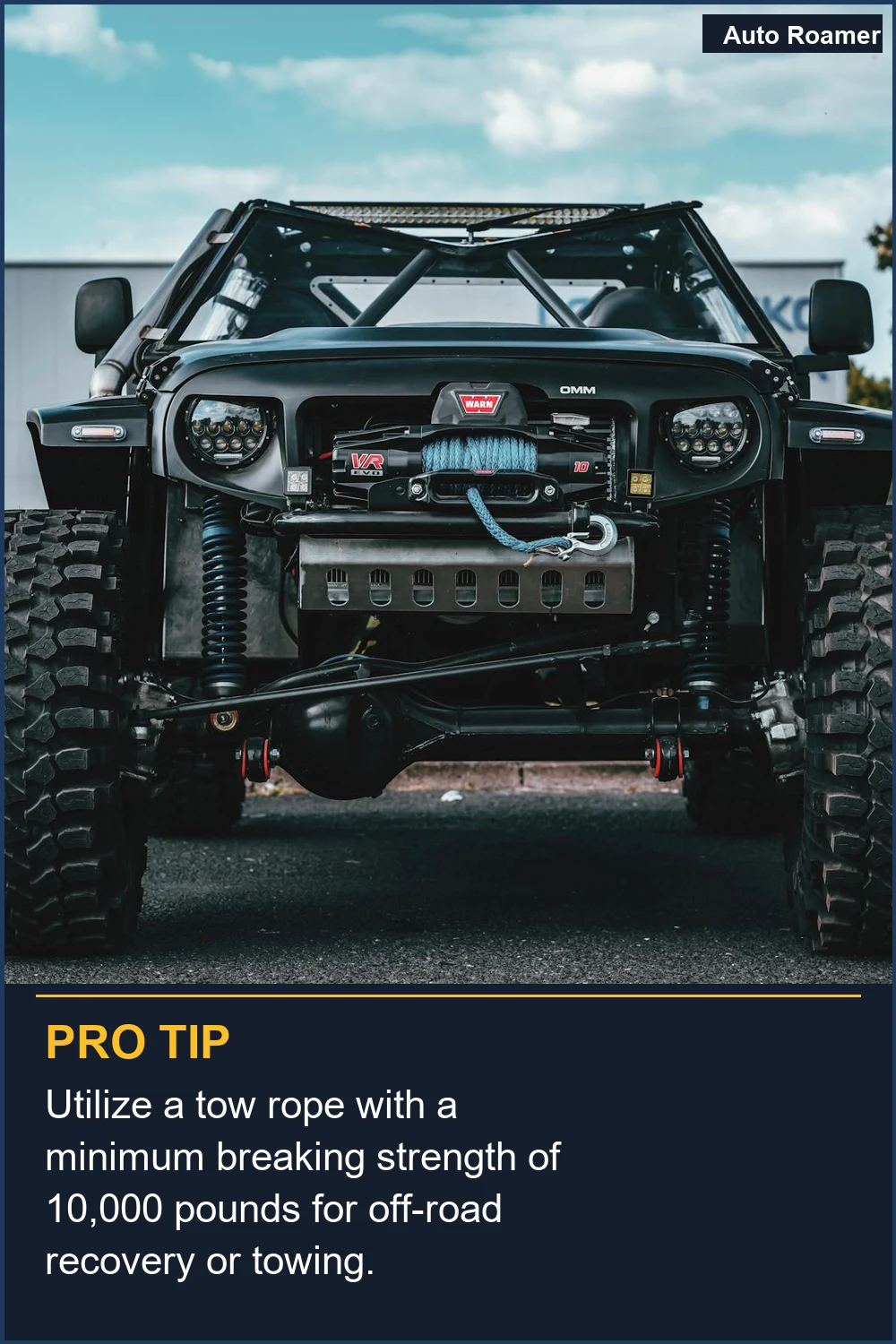
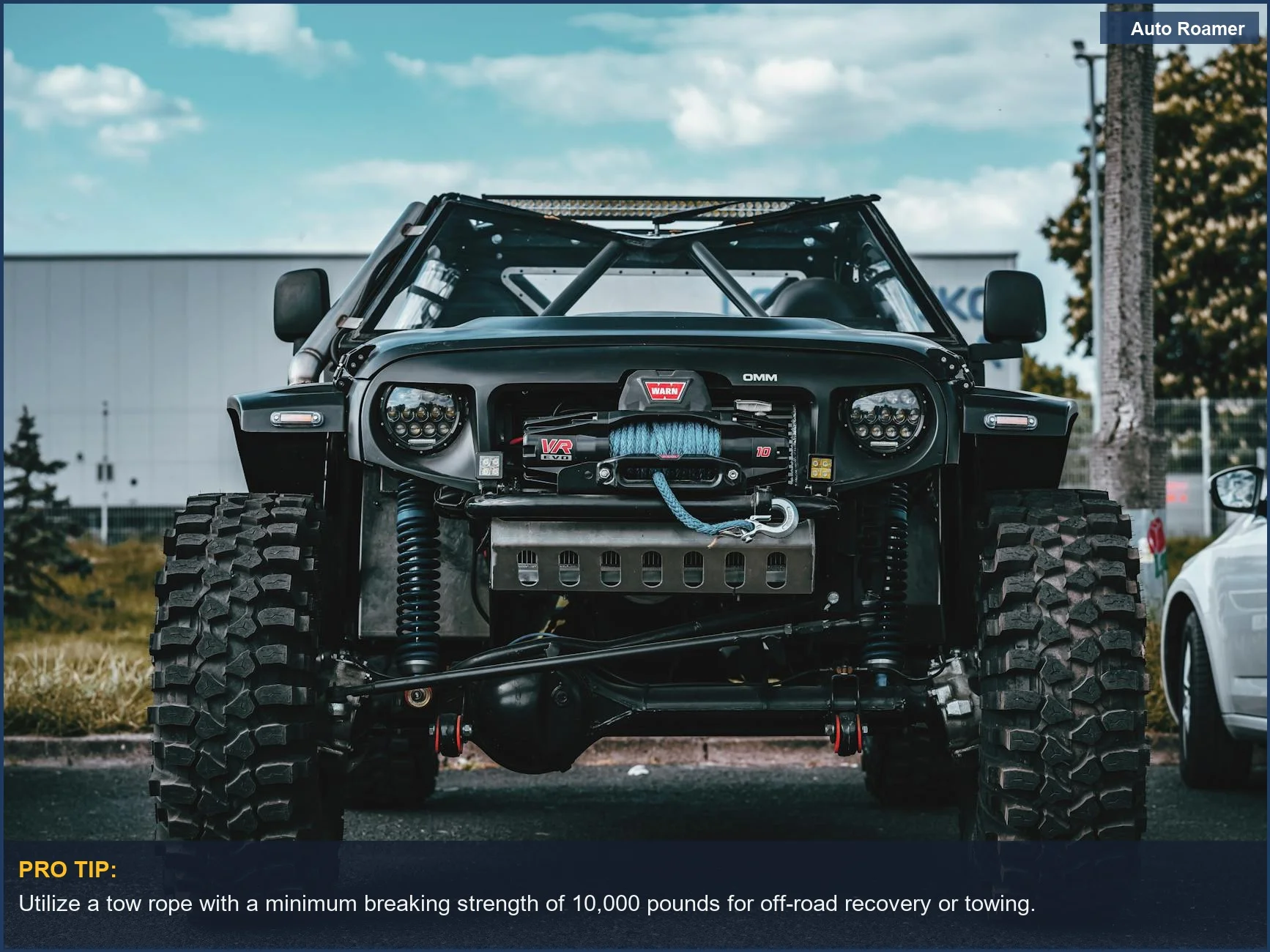
Utilize a tow rope with a minimum breaking strength of 10,000 pounds for off-road recovery or towing.
This rugged vehicle with its tow rope demonstrates preparedness for towing. Learn how to tow a car yourself in challenging conditions. | Photo by Egor Komarov

Mistakes That Cost People

Symptom The towed car's steering wheel is locked, or the transmission grinds and whines.
Signal The towed vehicle is difficult to steer or move, and you hear unusual noises from its drivetrain.
Fix For automatic transmissions, always flat tow only if the owner's manual explicitly permits it, or use a tow dolly or flatbed trailer. For manual transmissions, ensure the vehicle is in neutral and the ignition is on to disable the steering lock. Failing to do this can cause severe drivetrain damage. 2026 Dinghy Towing Guide: An RV LIFE Exclusive, How to move car a small distance without tow dolly
Symptom The tow strap or chain snaps, or the attachment point on the towed car breaks.
Signal You experience a sudden jolt, and the towed vehicle becomes detached from the tow vehicle.
Fix Use only heavy-duty tow straps or chains specifically rated for the weight of the vehicle you are towing. Inspect them for any signs of wear, fraying, or damage before each use. Never use a rope unless it's a designated tow rope with sufficient strength. Ensure you are attaching to a reinforced tow point on both vehicles, not flimsy bumper components. Safe Way to Towing a Vehicle: How to Guide
Symptom The tow vehicle struggles to accelerate, brake, or maintain control.
Signal Reduced engine power, longer braking distances, and difficulty maneuvering the combined vehicle.
Fix The tow vehicle must be larger and heavier than the car being towed. Overloading the tow vehicle compromises its braking and acceleration capabilities, creating a dangerous situation. Always check your tow vehicle's towing capacity and ensure it's well within its limits. How to Tow a Car with Another Car - JD Power
Symptom The towed car's lights (brake lights, turn signals) are non-functional.
Signal Other drivers are unaware of your intentions, leading to near-misses or accidents.
Fix Implement a towing light kit for the towed vehicle. This often involves a separate set of lights that connect to the tow vehicle's electrical system. Without functional lights, you are a hazard to other road users, especially at night or in poor visibility. Safe Way to Towing a Vehicle: How to Guide
Symptom You are attempting to tow a car that is not designed for flat towing.
Signal The owner's manual states the vehicle cannot be dinghy towed, or you are unsure.
Fix Always check the owner's manual to confirm if a vehicle is approved for dinghy towing. Not all vehicles are manufactured to withstand the stresses of being towed with all four wheels on the ground. Towing an unapproved vehicle can lead to significant and costly drivetrain damage that may not be covered by warranty. 2026 Dinghy Towing Guide: An RV LIFE Exclusive
Understanding how long you can drive on a spare tire is crucial to avoid further complications on the road; learn more in our guide to driving on a spare.
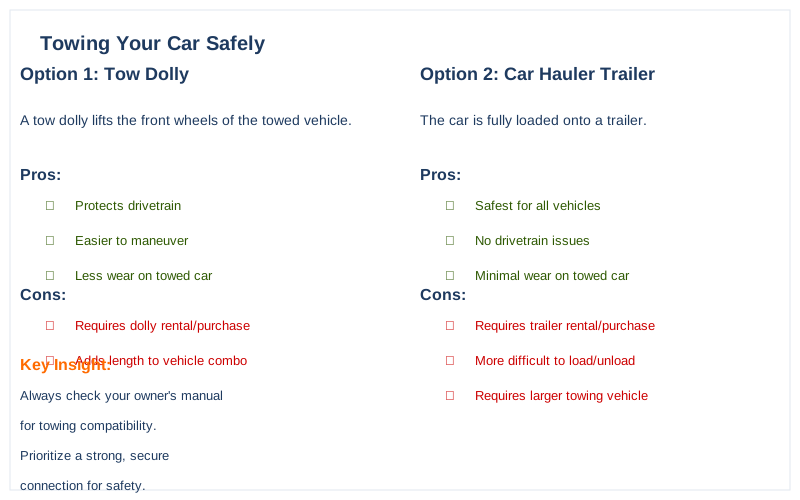
Pros/cons infographic for safe car towing without a tow truck.
Product comparison for How to Safely Tow a Car Without a Tow Truck

Key Takeaways

  • Before you tow car yourself, confirm the tow vehicle is larger and heavier than the car being towed, ensuring adequate engine and braking power JD Power.
  • Always check your owner's manual to ensure the vehicle is approved for flat towing; not all vehicles are manufacturer-approved for this method, and improper towing can cause serious drivetrain damage 2026 Dinghy Towing Guide: An RV LIFE Exclusive.
  • Thoroughly inspect all towing equipment, including ropes or straps, for wear, fraying, or damage, as safety is paramount Safe Way to Towing a Vehicle: How to Guide.
  • When towing, ensure the car being towed is in neutral, the parking brake is released, and the ignition key is in the "on" position to disengage the steering lock How to move car a small distance without tow dolly.
  • The single most important thing to remember is: Prioritize safety above all else; incorrect towing can lead to accidents and costly damage.
In case you discover a flat tire during your inspection, knowing how to change a flat tire can save the day.

Frequently Asked Questions

What's the easiest way to tow a car myself without a traditional tow truck?
Flat towing, also known as dinghy towing, is often considered the easiest method as it requires minimal extra equipment once set up. This involves towing a vehicle with all four wheels on the ground behind another vehicle, commonly an RV. Always ensure your vehicle is manufacturer-approved for flat towing by checking your owner's manual to avoid drivetrain damage.
I need to move my car a short distance without a tow dolly. Can I use a rope?
Yes, for short distances, a strong rope can be used to tow a car, but it's crucial to have a proper towing rope with some elasticity to absorb jolts. Locate a secure towing loop or a strong point on the chassis of the vehicle being towed. For automatic transmissions, it's generally recommended to use a flatbed truck rather than towing if the engine isn't running.
What kind of vehicle is best for towing another car?
When towing another car, the tow vehicle should ideally be larger and heavier than the car being towed to ensure adequate engine and braking power. This is especially important for stopping safely. If you're considering flat towing, always check the towing capacity and Gross Combination Weight Rating (GCWR) of your tow vehicle.
What are the essential safety checks before attempting to tow a car on my own?
Before towing, thoroughly inspect all towing equipment, including ropes or straps, for any signs of wear, fraying, or damage, ensuring they are rated for the weight of the car. Also, release the parking brake on the towed vehicle and ensure it's in neutral. For vehicles with power steering or brakes, remember the engine must be running for them to function properly.
Are there any specific types of vehicles that can't be towed without a tow truck?
Not all vehicles are suitable for towing without a dedicated tow truck or trailer. For instance, many vehicles are not manufacturer-approved for flat towing (all four wheels on the ground), and attempting to do so can cause serious drivetrain damage. Always consult your vehicle's owner's manual to confirm if it's safe to tow and what method is recommended.

Sources

Related Articles