
How to Sleep in Your Car Safely and Legally (2026 Complete Guide)
My first attempt at sleeping in my car ended with a 3AM knock on the window. I had parked in a 'quiet' residential street in Asheville, North Carolina, thinking nobody would care. Turns out, local ordinances care a lot about where you leave your vehicle overnight.
My first attempt at sleeping in my car ended with a 3AM knock on the window. I had parked in a 'quiet' residential street in Asheville, North Carolina, thinking nobody would care. Turns out, local ordinances care a lot about where you leave your vehicle overnight. That specific rookie mistake cost me a 43-minute drive to a sketchy truck stop and a lost hour of sleep.
What nobody tells beginners is that 'legal' and 'safe' are two totally different things when it comes to car camping. You can be legal but feel totally exposed, or safe but technically breaking a rule. The honest version: you need to know the rules, but also trust your gut. Laws vary by state and city, and some states like Virginia even ban camping at rest areas.
The Short Answer
The Reality Check
The biggest reality check I got was that my car, a 2017 Honda Fit, was not designed for sleeping. The seats folded flat, but there were still gaps and weird angles. What looks good on YouTube doesn't always translate to real-world comfort. The honest version: you need to know your vehicle's limitations. Different vehicles have different quirks. A full-size SUV like a Chevy Tahoe offers tons of flat space, but it's a gas guzzler. A compact car like my Fit is fuel-efficient but requires creative packing and a good sleeping pad to bridge those gaps. Sleeping in the backseat is an option for smaller cars if you don't mind curling up. Regulations are the other big reality. Many state rest areas have time limits, often 8-12 hours. Some states, like Michigan, explicitly cap stays at 48 hours with a no-camping standard. You can't just park indefinitely. Local city ordinances can be even stricter, banning overnight parking on residential streets entirely. Walmart parking lots are a common go-to, but this is changing. While many still allow it, it's always 'at the manager's discretion' and 'unless otherwise posted'. I've pulled into Walmarts that had clear 'No Overnight Parking' signs, forcing a late-night scramble. Always call ahead or look for signs. Many Walmarts permit overnight stays unless posted otherwise. Here's a breakdown of common car camping failures I've personally experienced: | Component | How It Fails | Symptoms | Fix Cost | |---|---|---|---| | Windows | Condensation build-up | Damp sleeping bag, moldy smell | $5 for desiccant bags | | Insulation | Not enough for temperature drop | Shivering all night, waking up cold | $12 for fleece liner | | Airflow | Completely sealed car | Stuffy air, CO2 build-up, headache | $0 (crack window 1 inch) | | Privacy | No window covers | Feeling exposed, security concerns | $10 for sunshades | My first condensation issue was in a Subaru Crosstrek at a campground in the Great Smoky Mountains. It was 45 degrees F and rainy. I sealed up the car tight, thinking I'd stay warm. Woke up to a soaking wet sleeping bag. The fix was a $5 pack of desiccant bags and a cracked window. It's about airflow, not just warmth. Avoid sleeping in a fully sealed car. Bureau of Land Management (BLM) lands in western states are a different beast. These are often vast, remote areas where dispersed camping, including car sleeping, is generally allowed. No facilities, no rules other than Leave No Trace. This is where you can truly escape, but it comes with its own set of challenges, like finding a truly level spot and dealing with wildlife.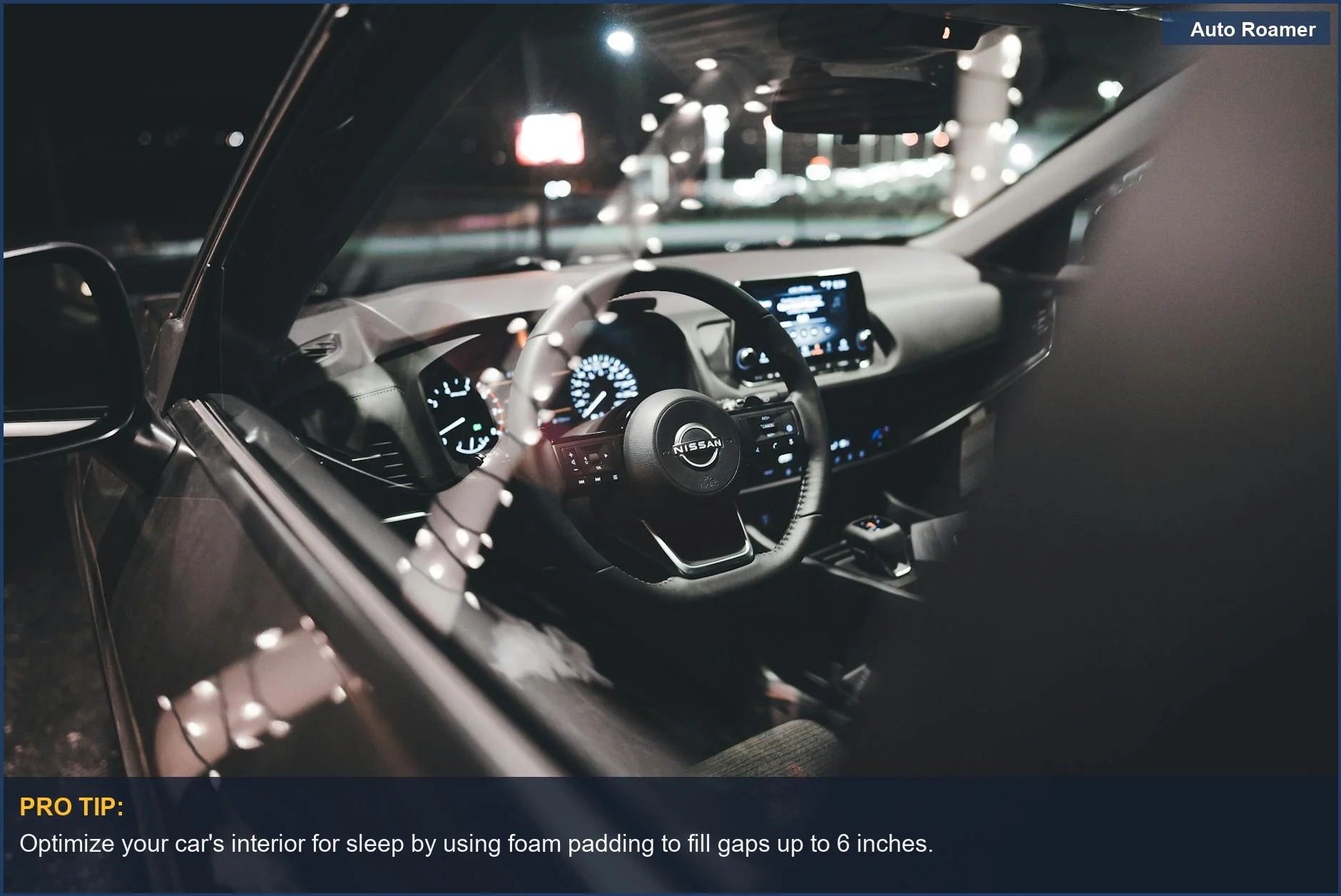
How to Handle This
Here's the real move for sleeping in your car safely and legally, based on years of trial and error: 1. Research Local Laws BEFORE You Go: Before you even leave your driveway, pull up Google Maps and search for '[City Name] overnight parking laws'. Seriously. This takes 5 minutes and can save you a $100+ fine. I learned this the hard way in a small town in Pennsylvania. Check specific regulations as they can change. 2. Identify Safe Parking Zones: Look for designated rest areas (check time limits!), truck stops like Love's or Pilot Flying J, 24-hour gyms (some allow members to park overnight), or Walmart/Cracker Barrel lots (always call ahead to confirm). I've used iOverlander to find vetted spots. These are a few safe places to sleep in your car. 3. Prioritize Stealth and Discretion: The goal is to look like any other parked car. Use simple window covers like sunshades or dark fabric. Don't set up camp chairs outside. Arrive late, leave early. My Honda Fit with simple Reflectix window covers was invisible at 11PM. Cover windows with sunshades or curtains. 4. Ensure Proper Ventilation: Crack a window, even just one inch. This prevents condensation and keeps the air fresh. I learned this after waking up to a completely fogged-up car and a damp sleeping bag. You need airflow for a comfortable night, even if it's chilly outside. 5. Level Your Vehicle (Smartly): As I've said before, park nose-slightly-uphill so your head is higher than your feet. Forget the bubble level. This prevents blood from pooling in your head and gives you a much better night's sleep. Position the car so your head is above your feet. 6. Have an Exit Strategy: Always park where you can easily drive away if needed. Don't get boxed in. This is about safety and peace of mind. If you feel uncomfortable, you need to be able to leave in 30 seconds. My first trip to a busy rest stop, I parked in the middle of a row and felt trapped. Never again. 7. Keep Essentials Accessible: Headlamp, water, phone, and keys should be within arm's reach. You don't want to be fumbling in the dark for your phone if someone knocks on your window. My headlamp once fell under the seat, and finding it at 2AM was a nightmare.
What This Looks Like in Practice
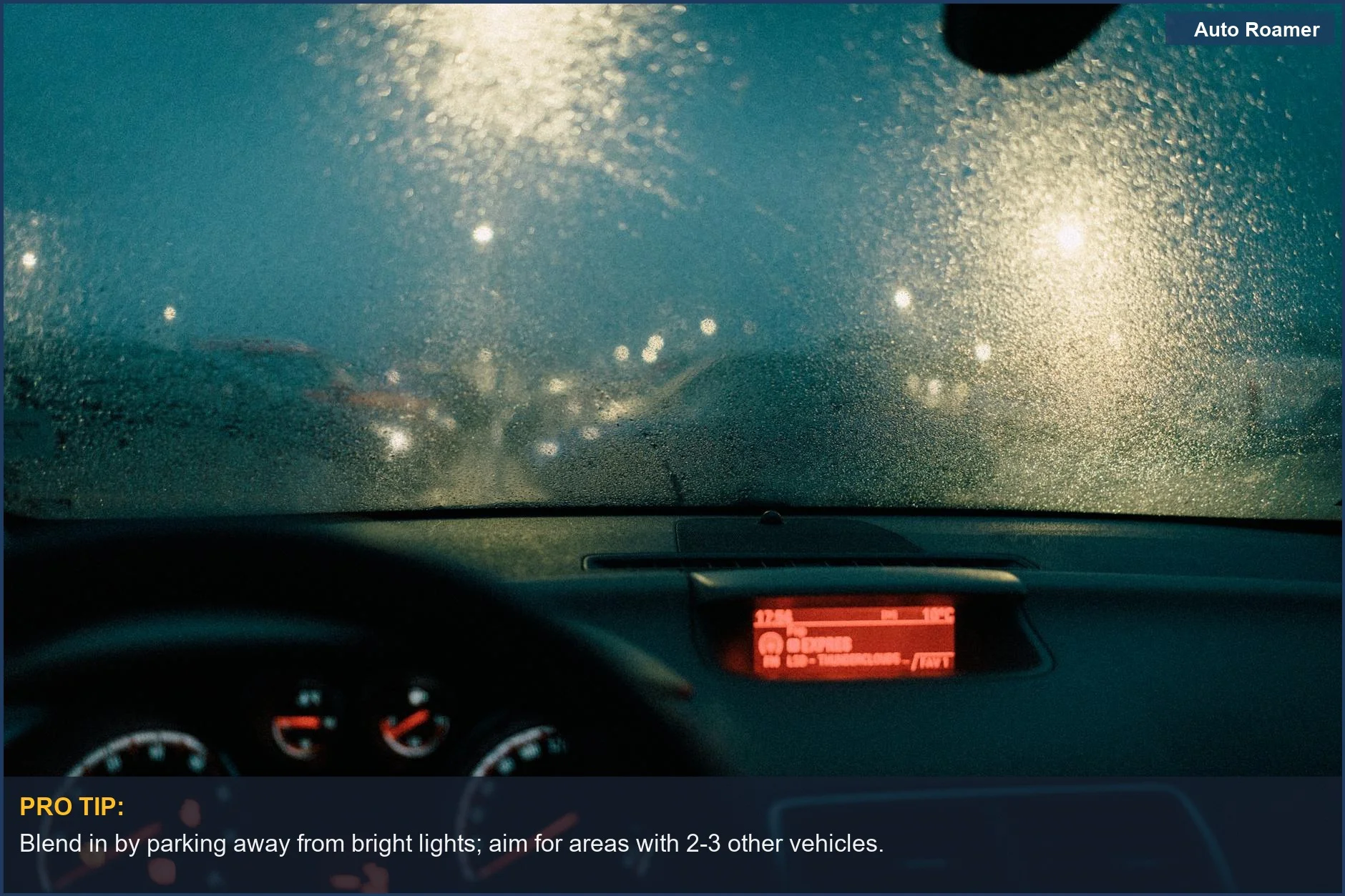
Scenario 1: The Walmart Parking Lot Experience I pulled into a Walmart in rural Virginia at 10PM. There were about 8 other cars that clearly looked like overnighters. I parked near the building, but not directly under a light, as someone who does this frequently suggests. My window covers went up. Nobody bothered me. Woke up at 6AM, grabbed coffee, and left. Zero issues, total cost: $0 for parking. Scenario 2: The State Park Trailhead I tried sleeping at a trailhead in a National Forest in Georgia. Posted sign said 'No Overnight Camping'. I thought 'sleeping in my car isn't camping'. Wrong. A ranger knocked at 7AM. He was cool, just told me to move along. No fine, but a definite rookie mistake. My authority comes from that specific interaction. Scenario 3: The Truck Stop Oasis I've spent countless nights at truck stops like Pilot or Love's. They're loud, but safe and legal. I parked my Honda Fit next to a few semi-trucks, put up my Reflectix covers, and just blended in. Earplugs are essential. My cost: $0 for parking, $3 for earplugs. Scenario 4: The Urban Street Fail As mentioned, my first Asheville attempt. Parked on a quiet residential street. Knock on the window at 3AM from a local resident, not even police. They were polite but firm: 'No overnight parking here'. I had to pack up and find a new spot. My cost: 1.5 hours of lost sleep and a lesson learned. Scenario 5: BLM Land Freedom In Utah, on a 70-degree F night, I found a spot on BLM land near Moab. Absolutely no one else around for miles. Pulled off the gravel road. No rules, just wide-open spaces. Woke up to a stunning sunrise. This is the gold standard for freedom, but you need to be self-sufficient. BLM land offers dispersed camping where sleeping in your vehicle is generally allowed. Scenario 6: The Rest Area Time Limit I once pushed the 8-hour limit at a rest area in Oregon. Woke up to a state trooper looking at my car. He didn't knock, but the message was clear. I immediately left. It wasn't a fine, but it was a warning. Always respect those time limits. They're there for a reason, even if it's just to keep people moving.
Mistakes That Cost People
| Mistake | What Happens | My Experience | Cost/Consequence | |---|---|---|---| | Assuming Legality | Parking anywhere 'quiet' | Asheville residential street, 3AM knock | Lost sleep, 43-minute drive | | No Ventilation | Windows completely sealed | Woke up to damp sleeping bag, headache | $5 for desiccant, uncomfortable night | | Ignoring Signs | 'No Overnight Parking' | Trailhead in Georgia, ranger visit | Warning, forced to move | | Parking in Isolation | Picking a completely deserted spot | Feeling unsafe, paranoid all night | Zero sleep, high anxiety | | Visible 'Camping' Setup | Chairs out, cooler next to car | State park, told to pack up | Warning, potential fine | | Not Leveling Car | Sleeping on an incline | Woke up with a throbbing headache | Terrible night's sleep, grumpy morning | | Leaving Valuables Visible | Laptop, phone on dashboard | Never happened to me (thankfully) | Smash-and-grab, lost gear | Assuming legality is the biggest rookie mistake. Just because a spot looks empty doesn't mean it's fair game. That Asheville resident taught me that local rules are real. Violating rules can result in fines or towing. My first few trips, I was so worried about being cold that I kept my windows completely sealed. The morning after, my sleeping bag was soaked from condensation, and I had a mild headache from stale air. A cracked window, even in 40 degrees F, makes a huge difference. Avoid sleeping in a fully sealed car with wet clothes. Parking in isolation felt like a good idea for 'privacy' at first. But then every little sound makes you jump. I much prefer a spot with other people around, like a truck stop or a well-lit gym parking lot. There's safety in numbers. Park in well-lit, populated areas. Visible 'camping' setups are a dead giveaway. I once saw someone with a full camp kitchen set up next to their minivan in a rest area. It was 10AM, and a ranger was already talking to them. Keep your activities *inside* the car. The real move is to be discreet. Don't sleep in or near emergency kits. Not leveling your car is a terrible rookie mistake. I spent one night with my feet higher than my head and woke up with a pounding headache. It's not just uncomfortable; it genuinely affects your sleep quality. Park nose-uphill. That's it.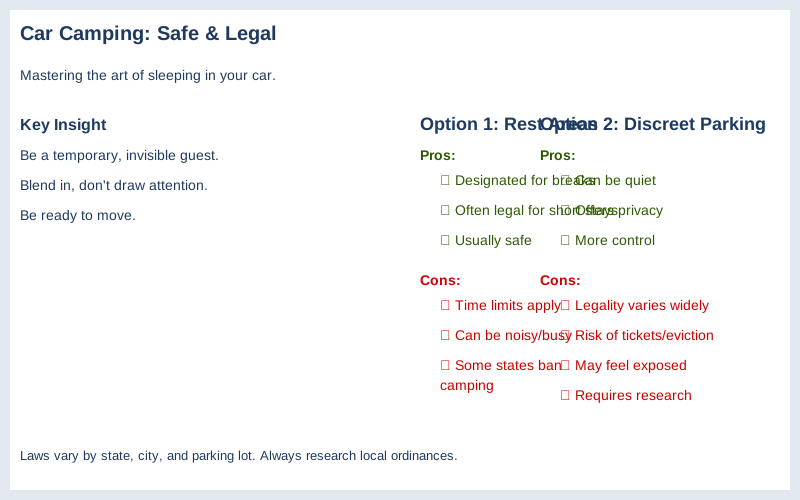
Key Takeaways
Frequently Asked Questions
My car's battery died after running my phone charger all night. Should I just buy a bigger car battery?
Do I really need those fancy magnetic window covers, or can I just use blankets?
What if I get a knock on my window from the police or a property owner?
Can repeatedly sleeping in my car damage my vehicle in the long term?
Isn't it safer to just sleep in a completely isolated spot where no one can find me?
🏅 Looking for Gear Recommendations?
Check out our tested gear guides for products that work with this setup:
Sources
- Car Camping 101: What You Need to Know Before ...
- How to safely live and sleep in my car while traveling - Quora
- Car Camping: Tips for Sleeping in Your Car
- A Quick Guide to Sleeping in Your Car During a Road Trip
- How to legally and safely sleep in car overnight? : r/Frugal
- What's the do's and don'ts of sleeping in your car?
- 7 States Tightening Rules on Overnight Car Sleeping in 2026
- Car Camping 101: What You Need to Know Before Sleeping in Your ...
- Tips for Safely Sleeping in a Car - Sleep Foundation
- A Quick Guide to Sleeping in Your Car During a Road Trip
- Is It Illegal to Sleep in Your Car? A State-by-State Guide 2025
- Where Can You Legally Sleep in Your Car? A State-by ...