
Is It Illegal To Eat While Driving (2026 Complete Guide)
Eating while driving is not explicitly illegal in most states, but it can result in fines if it leads to distracted driving. For example, states like California may issue fines up to $100 for reckless driving, which can include eating behind the wheel. Always prioritize safety, as eating while driving can significantly increase the risk of accidents.
The question of whether eating while driving is illegal often comes up for those of us who enjoy road trips or simply need a quick snack during our daily commutes. In most states across the U.S., including Pennsylvania, it is not explicitly illegal to eat while driving. However, recent changes in distracted driving laws raise important considerations for drivers who may want to snack behind the wheel. Starting June 5, 2026, a new law in Pennsylvania will classify various forms of distracted driving, including eating and drinking, as potentially punishable offenses if they lead to unsafe driving behaviors Source.
Understanding the nuances of these laws is crucial for anyone who spends significant time on the road. Although there may not be a specific law against eating while driving, distracted driving remains a serious concern. Studies indicate that when drivers eat or drink, they often have a harder time maintaining control of their vehicle, which can lead to dangerous situations Source. The potential for accidents increases when a driver's focus is diverted, making it essential to consider whether it's worth the risk.
This matter is not just a legal concern; it also touches on safety and responsibility. While enjoying a meal on the go may seem harmless, it can impair your driving just as much as texting or using a mobile device. In fact, Pennsylvania's new distracted driving legislation aims to reduce these risks by penalizing behaviors that could lead to accidents, even if those behaviors don't directly involve a handheld device Source.
In summary, while eating while driving is not outright illegal in many places, the implications of distracted driving laws make it a complex issue that should not be taken lightly. We recommend always prioritizing safety over convenience. Consider pulling over to enjoy your snack rather than risking your safety and that of others on the road.

The Short Answer: Is It Illegal To Eat While Driving
Eating while driving is, in most places, not explicitly illegal, but it can lead to serious legal consequences depending on the circumstances. While there is no universal law prohibiting eating while behind the wheel across the United States, certain states, including Pennsylvania, have started to implement regulations that indirectly target this behavior as part of broader distracted driving laws. For instance, Pennsylvania's new distracted driving law, effective June 5, 2026, will impose penalties for actions that divert a driver's attention, including eating and drinking while driving, which can affect vehicle control and safety Source.
The key fact is that while eating while driving is not inherently illegal, it can lead to distracted driving charges if it results in unsafe driving behavior. For example, if a driver is observed swerving or failing to maintain control because they are eating, they could potentially be cited for distracted driving or reckless endangerment, which carries heavier penalties Source.
The bottom line is that while we may think that grabbing a quick snack on the road is harmless, it can have serious repercussions. We recommend being cautious about how and when you eat while driving. If you are on a long road trip and need to refuel with food, consider pulling over to a safe location. This not only ensures your safety but also avoids potential legal issues related to distracted driving.
In states without specific laws against eating while driving, the general rule of thumb is that you can enjoy your meal as long as it does not interfere with your ability to operate the vehicle safely. However, even in these places, if your driving is affected by the act of eating, you could still face legal consequences. Therefore, while eating while driving is not universally illegal, it is advisable to weigh the risks and opt for a safer alternative whenever possible Source.
What You Need to Know
When it comes to the legality of eating while driving, the answer isn't straightforward. While there is no universal law across the United States that explicitly prohibits eating while behind the wheel, various states have begun to incorporate such behavior into broader distracted driving laws. In Pennsylvania, for instance, recent legislation has started to address eating while driving in a more targeted manner. Under new regulations set to take effect on June 5, 2026, specific clauses banning eating while driving have been included within a larger framework addressing all forms of distracted driving, including the use of handheld devices Source.
In general, the legality of eating while driving can vary based on local laws and the interpretation of distracted driving rules. For example, while it might not be illegal to eat a sandwich or sip coffee in most states, doing so can lead to violations if it results in dangerous driving behavior. We know from firsthand experience and various studies that eating or drinking can significantly distract a driver. The Pennsylvania Department of Transportation notes that such distractions can impair a driver's ability to maintain control of their vehicle, stay in their lane, and react promptly to sudden changes in traffic conditions.
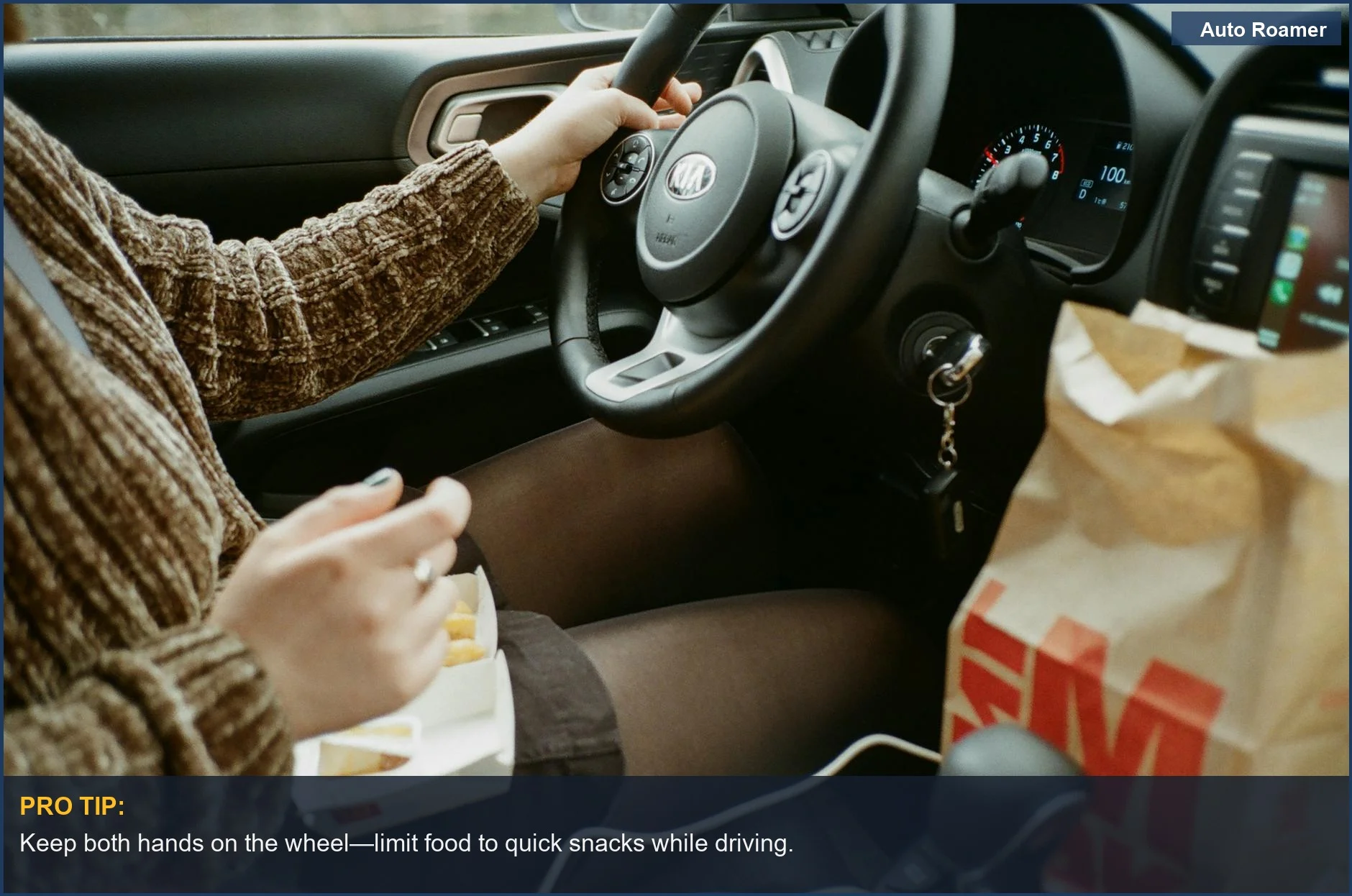
To break it down situationally, let's consider a few examples. If you're driving with a handheld burger in one hand, it may be deemed more distracting than if you're sipping from a travel mug equipped with a lid. Here, the potential for spillage and needing to adjust your grip on the steering wheel increases the risk of an accident. Similarly, if you find yourself fumbling with food wrappers or trying to grab items from a cooler while driving, you're likely engaging in behavior that could lead to penalties under distracted driving laws Source.
Moreover, while many states have not yet made it illegal to eat while driving, they might impose penalties if your actions lead to unsafe driving practices. For instance, if you're caught swerving or causing an accident due to your meal, you could face charges related to reckless or distracted driving, even if you weren't specifically cited for eating Source.
Exceptions also arise in various contexts. For example, emergency scenarios, where a driver might quickly grab a snack to maintain energy on a long road trip, could be viewed differently than a leisurely meal while stuck in traffic. Ultimately, while it may not be outright illegal in many areas, we recommend being cautious and minimizing distractions to ensure safety on the road. The nuances of eating while driving can lead to unexpected legal consequences, and it's wise to stay informed about local regulations to avoid any issues.
How to Handle This
When it comes to eating while driving, navigating the legal landscape can be tricky. While it is technically not illegal to eat while driving in many states, including Pennsylvania, the act can still lead to dangerous situations. We recommend following these practical steps to ensure your safety and avoid potential legal issues.
First, understand the local laws. In Pennsylvania, for instance, there is no explicit law against eating while driving, but the new distracted driving law effective June 5, 2026, emphasizes that any activity diverting attention from the road can be subject to penalties. We suggest checking your local laws to see if there are any restrictions on eating or drinking while driving. Always stay informed about updates, such as those presented in PennLive.
Next, we recommend planning your meals. If you're on a long road trip, consider packing easy-to-eat foods that require minimal handling. Items like granola bars, sandwiches, or fruit can be kept within easy reach, helping you avoid fumbling with wrappers or containers. We've found that products like the OXO Grips Snap Container (around $10) are perfect for storing snacks safely.
When you do eat, make sure you keep your hands on the wheel as much as possible. Use one hand to steer and the other to hold your food. We also recommend using a sturdy cup holder for drinks to prevent spills, which can cause distractions and potential accidents. According to JackWin Safety, accidents related to distracted driving can be severe, so minimizing risk is crucial.
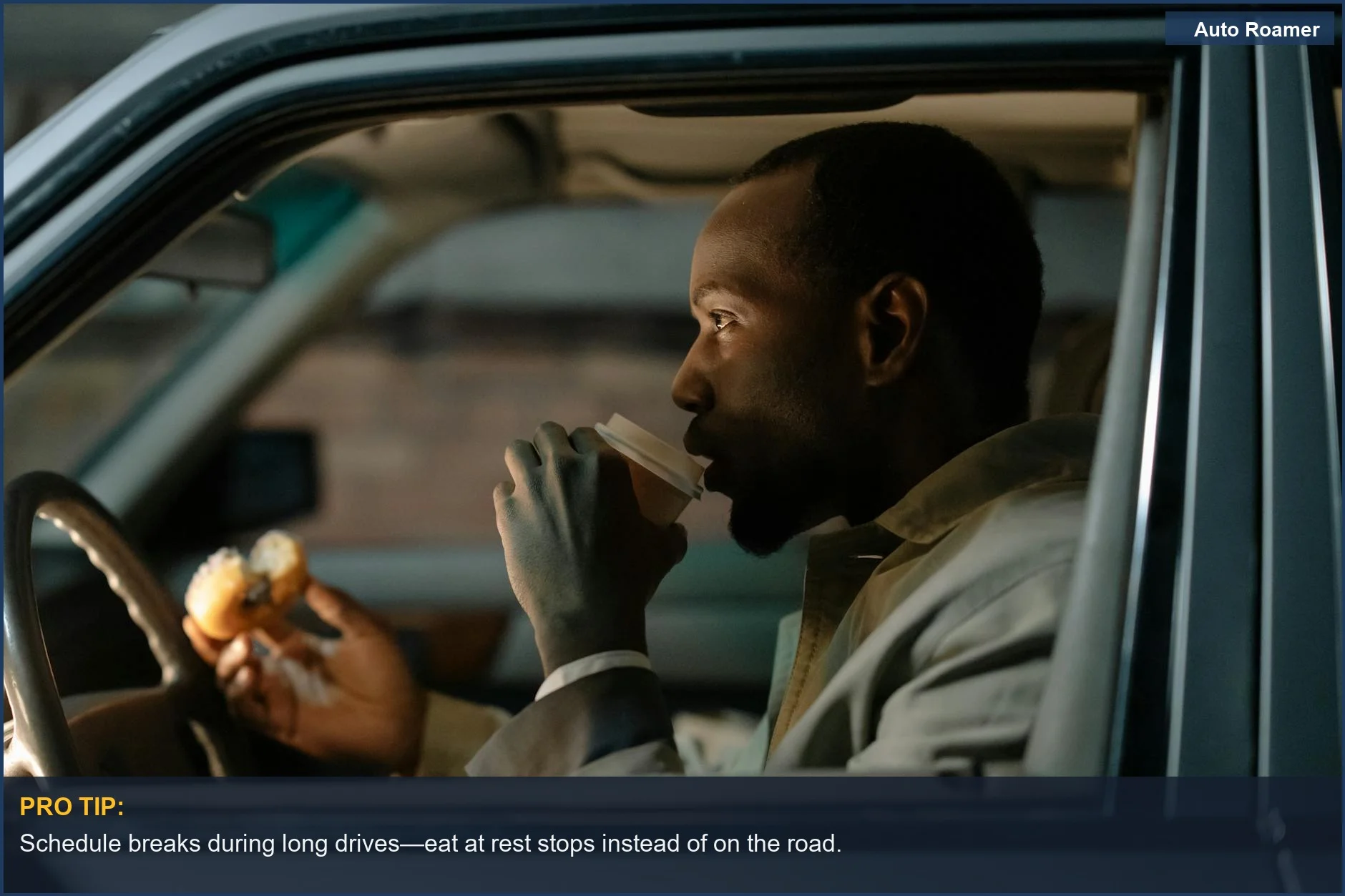
In practice, if you find yourself feeling overwhelmed by hunger while driving, it's best to pull over safely to eat. Look for rest stops or parking lots where you can take a break. This not only keeps you safe but allows you to enjoy your meal without the stress of multitasking.
Lastly, we suggest sharing your experiences with fellow drivers. Discussing the challenges of eating while driving can provide insights and tips from those who have faced similar situations. Engaging with online forums or local driving groups can also be a great resource for advice on balancing convenience and safety while on the road.
By following these guidelines, we can enjoy our meals on the go while maintaining safety and legality.
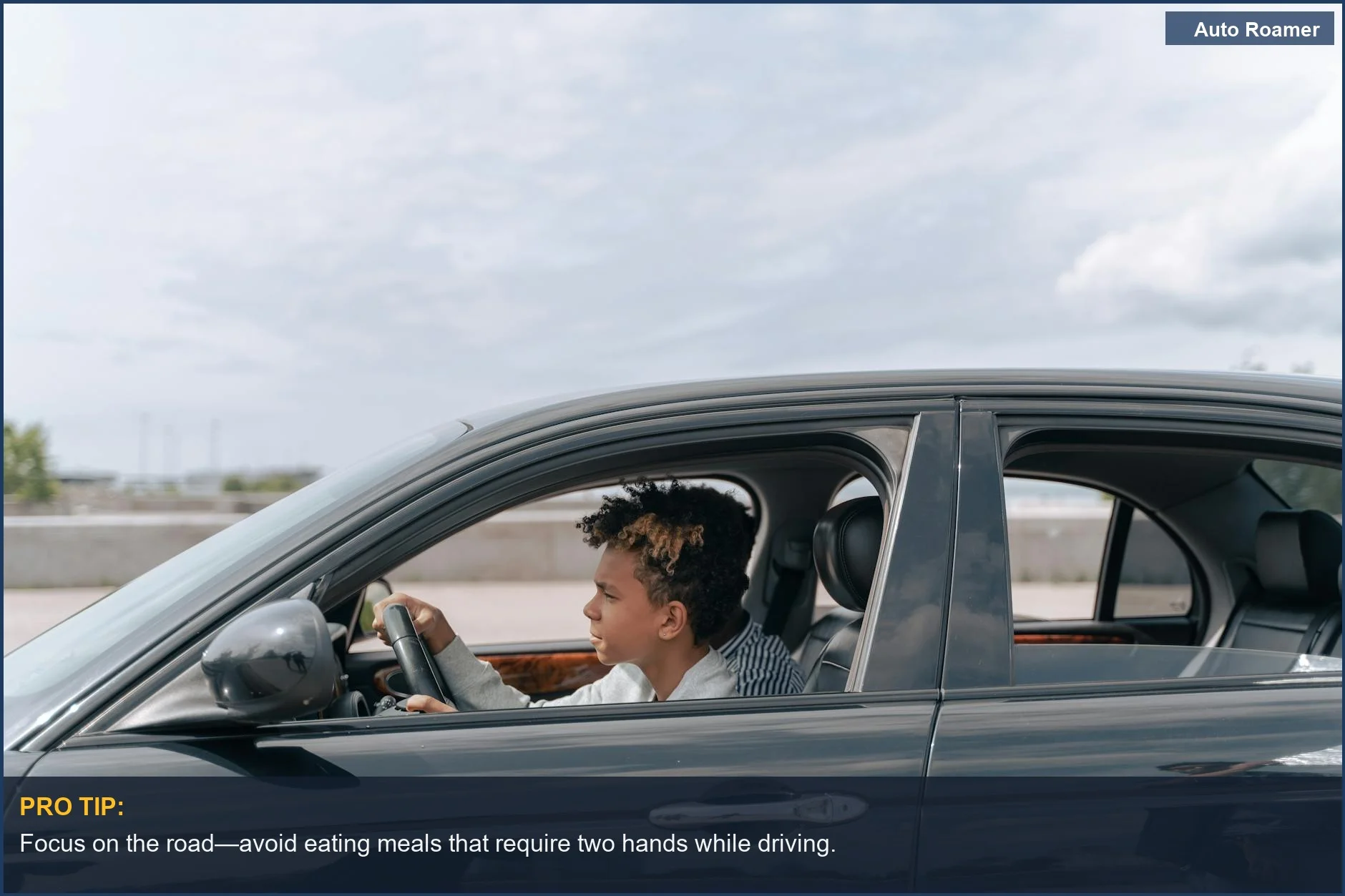
Safety Considerations
Eating while driving may not be explicitly illegal in many states, but the safety risks associated with it are substantial and warrant serious consideration. Engaging in any activity that diverts our attention from the road increases the likelihood of accidents. According to the Pennsylvania Department of Transportation, distractions, including eating, can lead to difficulty in controlling the vehicle and staying in the correct lane. Drivers who attempt to eat while driving often find themselves braking more frequently, which can result in sudden stops that catch other drivers off guard and potentially cause collisions Source.
Beyond the immediate risk of accidents, there are health hazards involved. Eating while driving can lead to choking incidents if food gets lodged in the throat, particularly if the driver is distracted. Furthermore, consuming hot beverages or foods can result in burns, causing a driver to lose control of the vehicle in a panic response Source.
Legal consequences can also arise from eating while driving, especially in states like Pennsylvania, where new distracted driving laws are being enforced. Starting June 5, 2026, drivers may face a $50 fine for engaging in distracting activities while driving, which could include eating Source. Even if no specific law prohibits eating while driving, if a driver is involved in an accident while doing so, they could be found at fault due to negligence.
To mitigate these risks, we recommend several strategies. Ensure you eat before starting your journey or during scheduled breaks. If you must eat on the road, consider foods that are easy to manage and consume with one hand, like sandwiches or snacks that don't require utensils. We also suggest keeping drinks in secure containers that minimize spills.
If you find that you cannot resist the temptation to eat while driving or if you struggle with other distractions, it may be time to seek professional help. Distracted driving is a serious issue, and addressing any underlying habits that lead to this behavior could save lives-your own and those of others on the road.
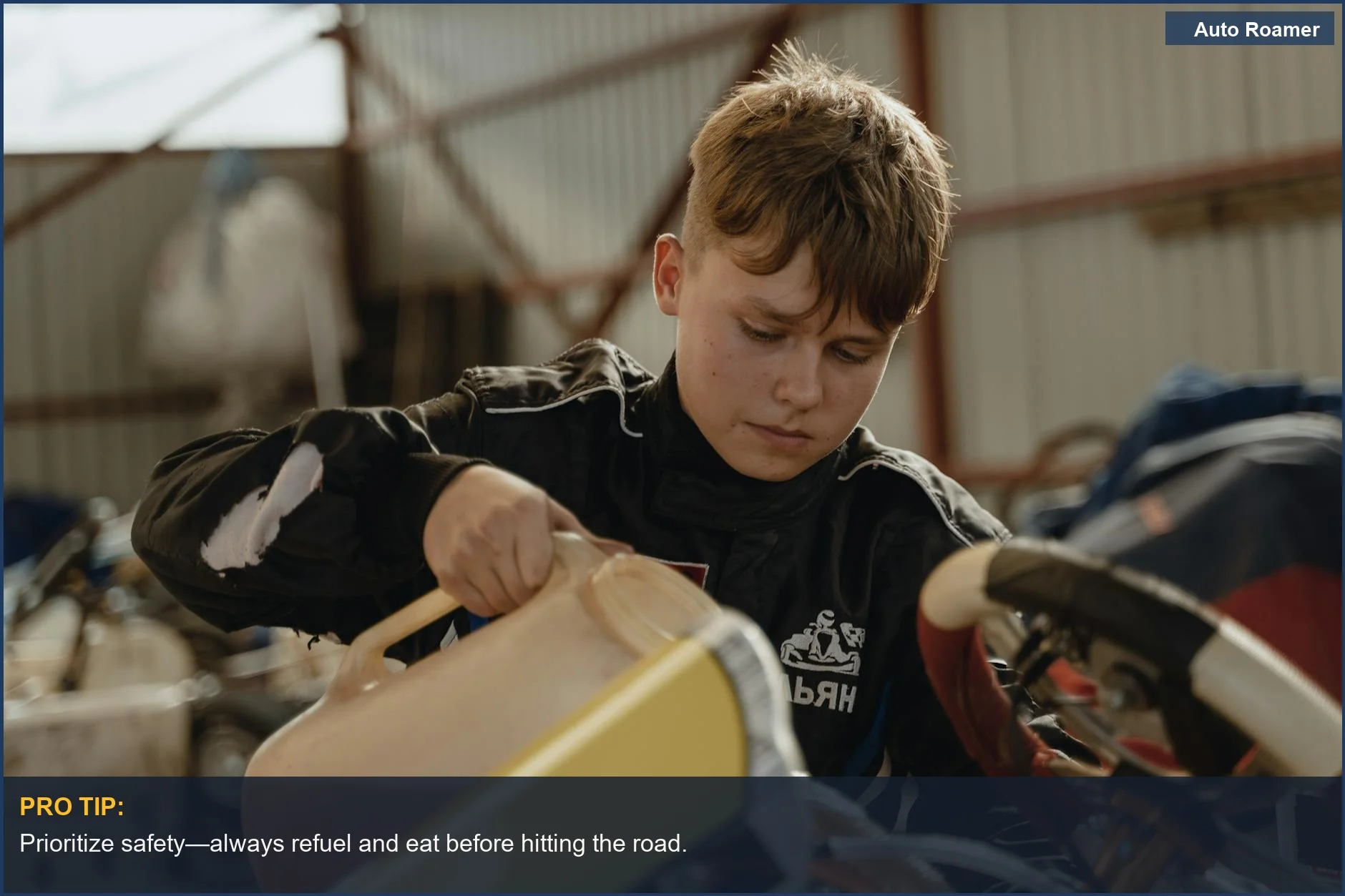
Common Mistakes to Avoid
When discussing the legality of eating while driving, we often encounter a variety of misconceptions that can lead to confusion. One common mistake is assuming that eating while driving is outright illegal everywhere. While it's true that some states have enacted laws to combat distracted driving, such as Pennsylvania's new legislation, which takes effect on June 5, 2026, banning specific forms of distraction, eating itself is not universally illegal. In fact, in most states, eating while driving is not explicitly prohibited unless it leads to dangerous driving behavior or is combined with other distractions, like using a mobile device (Coluccio Law).
Another misconception is that the mere act of eating constitutes a violation of distracted driving laws. While these laws address behaviors that divert a driver's attention from the road, such as texting or using a handheld device, eating does not automatically fall under this category. However, it can still be a significant distraction. For example, adjusting food packaging or attempting to take a sip from a drink can divert your focus, leading to dangerous situations on the road (Pennsylvania Department of Transportation).
Additionally, some drivers believe they can eat any item without consequence. In reality, certain foods can increase the risk of distraction. Messy foods like burgers, tacos, or anything requiring two hands can lead to more significant issues than a simple snack like a granola bar. We recommend that if you must eat on the road, opt for items that require minimal handling and can be consumed with one hand, allowing you to keep your focus on driving.
Lastly, we should clarify that while eating while driving may not be illegal per se, it can lead to penalties if it results in unsafe driving behavior. For instance, if a driver is observed swerving or failing to maintain control of their vehicle while eating, they could be ticketed for reckless driving or another related offense. It is crucial to remain aware of both your state's laws and your own driving capabilities. Engaging in eating while driving can lead to dangerous situations, and we strongly advise assessing whether it's really worth the risk.
Key Takeaways
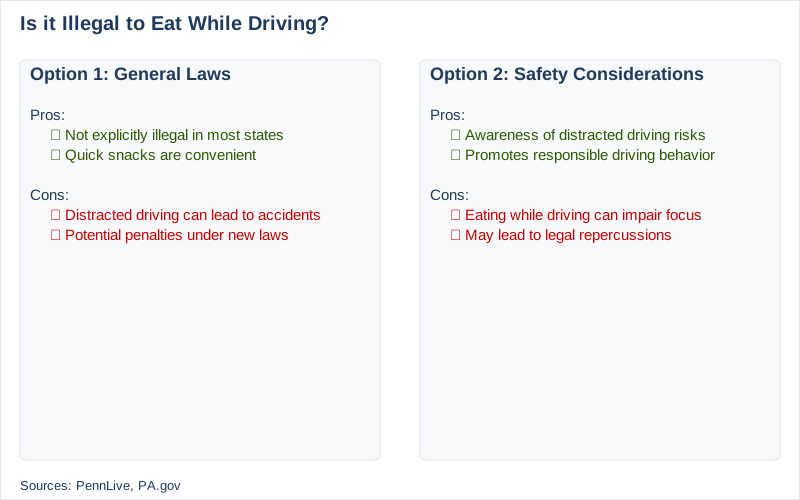
In conclusion, while eating while driving is not explicitly illegal in most states, it can still lead to dangerous situations and potential legal consequences, especially as distracted driving laws evolve. As we have discussed, the act of eating can divert attention from the road, impair vehicle control, and increase the likelihood of accidents. For instance, Pennsylvania's new distracted driving law, set to take effect on June 5, 2026, highlights the increasing focus on driver attentiveness, with penalties for using interactive mobile devices that could reflect a broader trend towards discouraging distractions like eating and drinking behind the wheel Source.
We recommend that drivers remain mindful of their actions while on the road. If you find you often feel the need to eat while driving, consider planning ahead by choosing convenient snacks that are easy to consume without needing to divert your eyes from the road, such as protein bars or wrapped sandwiches. Additionally, if you are in a situation where consuming food is necessary, finding a safe place to pull over is always the best choice.
If you have been involved in an accident while eating or drinking, or if you are facing legal repercussions as a result, seeking professional advice from a legal expert can provide clarity on your situation and help you navigate any potential penalties. Understanding the nuances of distracted driving laws can empower you to make better choices behind the wheel. Ultimately, while eating while driving may not be illegal in many areas, prioritizing safety should always come first.