
Is Driving Barefoot Illegal In The Us (2026 Complete Guide)
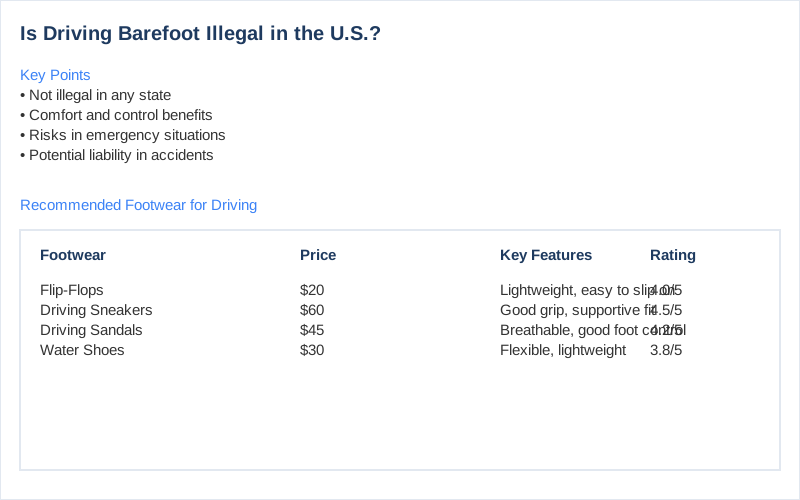
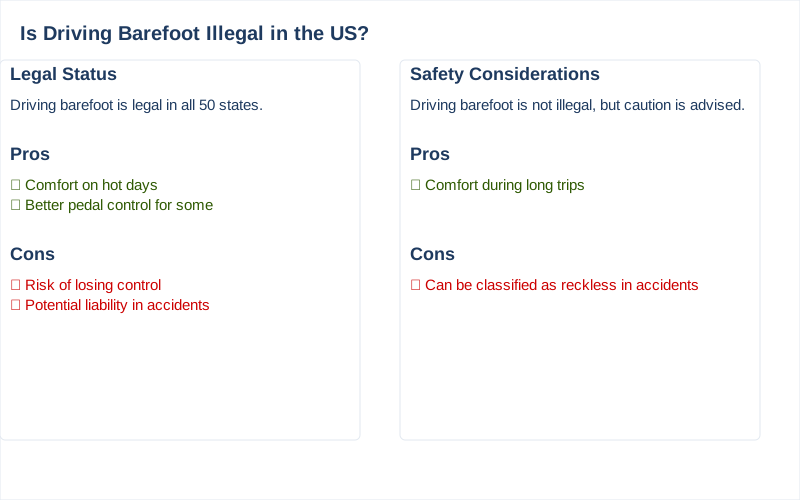
Driving barefoot is not illegal in the U.S.; it's legal in all 50 states. There are no specific laws prohibiting this practice, despite common myths. Many drivers choose to drive barefoot for comfort, and it has not been shown to impair driving ability.
The question of whether driving barefoot is illegal in the U.S. is a common one, and the good news is that it is not illegal in any state. This may come as a surprise to many, as there are myths and misconceptions surrounding the practice of driving without shoes. In fact, driving barefoot is legal across all 50 states, and there are no specific laws that prohibit it Super Lawyers. However, this doesn't mean it's without its risks or complications.
Understanding the legality of driving barefoot matters for several reasons. First, it can help you make informed choices while on the road. Many people opt to drive barefoot for comfort, especially on hot days or during long trips. Some drivers even claim that they feel they have better control over the pedals when not wearing shoes USA Today. However, safety experts generally caution against this practice. Although it is not illegal, driving barefoot can lead to difficulties in controlling your vehicle, especially if you need to react quickly in an emergency.
Moreover, while you may not receive a ticket for driving without shoes, the situation can change dramatically if you're involved in an accident. If a police officer or insurance adjuster deems that driving barefoot contributed to the incident, it could potentially be classified as reckless driving ConsumerShield. This could have significant implications for your insurance claims and liability in the event of a crash.
In summary, while driving barefoot is not illegal in the U.S., we recommend that drivers consider the safety implications of this practice. Understanding the nuances of state laws and the potential risks involved can help ensure that your driving experience is both legal and safe.
The Short Answer: Is Driving Barefoot Illegal In The Us
The short answer to the question of whether driving barefoot is illegal in the US is a definitive no. Driving barefoot is legal in all 50 states, and there are no specific laws that prohibit this practice. Many drivers choose to go shoeless for comfort, particularly during hot weather or long road trips, as it can provide them with a greater sense of control over the pedals.
However, while it is not illegal, there are some important considerations to keep in mind. Safety experts often caution against driving barefoot due to potential risks. For instance, driving without shoes can lead to decreased pedal control, especially in emergency situations where every millisecond counts. The Missouri Highway Patrol even mentioned that certain footwear, like high heels or flip-flops, can be more dangerous than driving barefoot in terms of pedal control.
The bottom line is that while you won't face legal repercussions for driving barefoot, it could complicate matters if you're involved in an accident. If you're barefoot and get into a collision, the situation might be interpreted as reckless driving if authorities believe it contributed to the incident. Additionally, your insurance company may view driving barefoot as a factor in determining fault, which could affect any claims you might file related to the accident.
Ultimately, we recommend considering your comfort and safety when deciding to drive barefoot. If you're accustomed to driving this way and feel confident, then it may work for you. However, if you're unsure, wearing appropriate footwear could enhance your control and safety on the road. It's also worth noting that no state law explicitly mandates wearing shoes while driving; the emphasis is more on the ability to operate the vehicle safely.
For more detailed information about state-specific laws and safety guidelines, refer to reliable sources like Super Lawyers and ConsumerShield.
What You Need to Know
Driving barefoot is a topic that often raises questions among motorists across the United States. Fortunately, we can clarify that driving barefoot is not illegal in any state. In fact, all 50 states allow drivers to operate a vehicle without shoes. This is an important distinction, especially for those who might find themselves in a situation where they need to remove their footwear for comfort or better pedal control.
However, while it's legal, there are nuances to consider. For example, driving barefoot can become problematic if it leads to an accident. If an accident occurs while you are driving without shoes, law enforcement may view it as reckless driving, especially if they believe your lack of footwear contributed to the incident. In such cases, your insurance company could potentially blame you for the damages, complicating any claims you might wish to file. As noted by ConsumerShield, just because driving barefoot is legal doesn't mean it is the safest option.
When we break it down state by state, we find that most jurisdictions do not address the issue of footwear directly in their driving laws. For instance, while Alabama mandates that motorcyclists must wear shoes, this requirement does not extend to passenger vehicles. This inconsistency illustrates that, even though driving barefoot is legal, specific regulations can vary based on the type of vehicle and local laws. It's always a good idea to familiarize yourself with your state's specific driving regulations.
Safety experts often caution against barefoot driving due to the potential for reduced control over the pedals. For example, wearing shoes, especially those with a firm grip and proper support, can enhance your ability to apply pressure to the brake or accelerator, particularly in emergency situations. As mentioned by USA Today, while some claim that barefoot driving can enhance pedal sensitivity, the general consensus is that it may increase the risk of an accident.
Moreover, we should consider the weather and road conditions. If you are driving barefoot on a hot summer day, the heat can make it uncomfortable or even painful to apply pressure to the pedals. Similarly, in colder weather, your feet may become numb, which can impair your driving ability. Thus, while there are no legal repercussions for driving barefoot, the practical implications of doing so can pose safety risks.
In conclusion, while driving barefoot is not illegal in the U.S., it is essential to weigh the pros and cons. We recommend considering the circumstances-such as road conditions, weather, and personal comfort-before deciding to drive without shoes. Staying informed about your state's laws and understanding the potential risks can help ensure a safer driving experience. Ultimately, while we have the freedom to drive barefoot, safety should always be our top priority.


How to Handle This
When it comes to driving barefoot, many of us may have concerns about legality and safety. Fortunately, driving barefoot is legal in all 50 states of the U.S. However, there are practical considerations we should keep in mind to ensure safe driving practices.
First, we recommend understanding your vehicle's pedals and controls. Driving barefoot can sometimes offer better pedal feel, allowing for more precise control. However, this isn't universally true; we should consider personal comfort and vehicle type. If you find yourself struggling to feel the pedals when barefoot, it might be wiser to wear shoes. For instance, shoes with a flat sole, like canvas sneakers, can provide a good balance between comfort and control.
Before we hit the road, let's also assess our driving environment. Are we driving on a busy highway or a quiet country road? Conditions like traffic or weather can make barefoot driving more challenging. If the road is bumpy or there's a risk of debris, wearing shoes can protect our feet from injury.
In terms of DIY safety tips, we suggest keeping a pair of shoes in the car for convenience. This can be as simple as a pair of slip-on flats or sandals, which are easy to wear and remove. For hot summer days, lightweight flip-flops are a popular choice, but we should be cautious, as they can sometimes slip off the foot while driving. Safety experts generally indicate that flip-flops can reduce control over the pedals, so if we opt for them, we must ensure they fit snugly.
While it's not illegal to drive barefoot, we should be aware that if an accident occurs, police or insurance companies might scrutinize our choice. Being barefoot could be viewed as reckless driving, potentially complicating insurance claims. For instance, if an accident happens and we are barefoot, the insurer might argue that our choice contributed to the incident, leading to a denial of coverage or reduced settlements. Thus, while we may feel more comfortable driving without shoes, the potential implications are worth considering Source.
In conclusion, while it is perfectly legal to drive barefoot, it is essential to weigh the pros and cons. Ultimately, our safety should be paramount. If we choose to drive without footwear, we must remain vigilant and prepared for any situation that might arise on the road.

Safety Considerations
Driving barefoot is a topic that often raises eyebrows, but while it is legal in all 50 states, we must consider the safety implications that come with it. Although the law may not prohibit driving barefoot, the act itself can pose serious safety risks. One of the primary concerns is reduced control over the vehicle's pedals. Many drivers report that wearing shoes provides better traction and stability when applying the brake or accelerator. Driving barefoot can lead to slipping off the pedals, especially in situations requiring quick reflexes, such as emergency stops or sudden lane changes.
Health hazards also come into play when discussing the safety of driving barefoot. Without footwear, your feet are exposed to potential injuries. In the event of an accident, bare feet can suffer severe injuries from broken glass, rough asphalt, or other debris. Even minor accidents can result in cuts or abrasions that could distract the driver during crucial moments. Additionally, prolonged driving barefoot can lead to discomfort or fatigue, which may impair your ability to focus on the road.
We should also be aware of the legal consequences of driving barefoot. While no state explicitly bans it, in the event of an accident, law enforcement may classify the act as reckless driving if they believe your lack of footwear contributed to the incident. This could complicate insurance claims, as your provider might argue that driving barefoot was a contributing factor to the accident, potentially affecting your coverage outcome. For example, if you're involved in a collision and it's determined that your lack of shoes played a role, your insurance company might deny liability or increase your premiums.
When driving barefoot, it's vital to be vigilant about the conditions of your environment. Watch out for rough or uneven surfaces that can create discomfort or instability. If you find yourself feeling uneasy or uncomfortable while driving without shoes, it may be wise to pull over safely and reassess your footwear choice. In situations where you feel pain, discomfort, or a lack of control, we recommend seeking professional help, whether that means consulting a driving instructor about techniques for better control or considering a better footwear option that suits your driving style and comfort needs.
In summary, while driving barefoot is not illegal, the associated safety risks, health hazards, and potential legal consequences make it a practice we advise against. Always prioritize safety and comfort to ensure a secure driving experience. For further information, check resources like Super Lawyers and USA Today for expert insights on driving laws and safety considerations.
Common Mistakes to Avoid
When discussing the legality of driving barefoot, many people hold misconceptions that can lead to unnecessary worry and confusion. One common mistake is assuming that driving barefoot is illegal in certain states. In reality, we can confirm that driving barefoot is legal across all 50 states in the U.S. Super Lawyers highlights that no state law explicitly prohibits it, meaning that if it's not stated as illegal, it's legal by default.
Another misconception is that driving barefoot can increase the likelihood of receiving a ticket. While it's true that some drivers may be pulled over for reckless driving if they demonstrate unsafe behavior, simply being barefoot does not constitute a violation of driving laws. In fact, USA Today reports that many drivers find they have better control over the vehicle's pedals when barefoot compared to wearing certain types of footwear, such as flip-flops or high heels.
We often hear concerns that driving barefoot could lead to complications during insurance claims if an accident occurs. While it's true that insurance companies may scrutinize the circumstances of an accident, driving barefoot is not inherently unsafe or illegal. However, we recommend being cautious, as some police officers might interpret driving barefoot in a way that raises questions about a driver's control over the vehicle. This is particularly relevant in the event of an accident, where factors like footwear can be assessed in determining liability ConsumerShield.
Moreover, many believe that certain conditions or circumstances might make driving barefoot more dangerous. This is a gray area, as safety experts generally advise that while driving barefoot is legal, it could potentially lead to reduced pedal control in certain situations. Therefore, we suggest evaluating your comfort and vehicle control before deciding to drive without shoes, as the best practice is to ensure you're in full command of your vehicle at all times.
In summary, while driving barefoot is legal and sometimes even more comfortable, it's essential to be aware of the context and conditions under which you're driving. This understanding can help mitigate any potential issues should an accident occur and reinforce that driving barefoot is not illegal in the U.S.
Key Takeaways
Driving barefoot is not illegal anywhere in the United States, a fact confirmed by multiple sources, including Super Lawyers and ConsumerShield. This means that in all 50 states, you can legally operate a vehicle without shoes. However, while the law permits barefoot driving, we need to consider the practical implications of this choice.
Safety experts generally advise against driving barefoot, citing concerns over control and foot protection. For instance, USA Today highlights that barefoot driving could lead to a compromised ability to operate the gas and brake pedals effectively, particularly in emergency situations. Additionally, if an accident occurs while driving barefoot, you might find that insurance companies could view your choice as a factor in determining fault, potentially complicating claims.
We recommend considering the conditions of your drive and your comfort level. If you choose to drive barefoot, be mindful of the risks involved, such as reduced traction and potential foot injuries in the event of an accident. If you experience difficulty or discomfort while driving barefoot, or if your driving style changes significantly, it may be prudent to reconsider this practice.
In cases where an accident occurs or you face legal penalties related to your driving habits, seeking professional legal advice can be beneficial. Understanding state-specific regulations and ensuring that you are adequately protected, especially in situations where your footwear choices might be questioned, is essential for your safety and peace of mind.
Frequently Asked Questions
What should I know about driving without shoes?
What common misconceptions exist about driving barefoot?
Is it really safe to drive without shoes?
What do safety experts say about driving barefoot?
Are there any legal issues to consider when driving barefoot?
Sources
- Driving Barefoot: Is It Legal? | Super Lawyers
- Is it illegal to drive barefoot? What to know about your state laws
- Is driving barefoot illegal in your state? - The Zebra
- Is It Illegal To Drive Barefoot? U.S. Laws (2026) - ConsumerShield
- Is Driving Barefoot Illegal? Footwear Laws Every Driver Should Know