How to Safely Drive Through a Flood or Standing Water: Essential Tips for Every Driver
Auto Roamer
11 min read
Includes Video
For how to safely drive through a flood or standing water, the most critical advice from our firsthand tests and extensive experience is to **avoid it entirely**. Never assume a flooded road is safe; turning around is the safest option. Unknown depths or hidden hazards can pose serious risks, making avoidance the only truly safe approach.
Encountering flooded roads or standing water can be unnerving, leading many drivers to wonder exactly how to safely drive through a flood or standing water. Our firsthand tests and extensive experience show that while it's often best to avoid these situations entirely, understanding proper techniques is crucial when avoidance isn't possible. We've seen firsthand how quickly conditions can become dangerous.
The stakes are high. As little as 10 centimetres of water is the maximum depth a standard car can navigate without significant danger, and just 15 centimetres can cause loss of control or stall your vehicle by flooding the exhaust system (Minit Tune, ICBC). Even worse, 30 centimetres (or 1 foot) of water is enough to float many vehicles, risking them being swept away (Driving in Flood Water, ICBC). Beyond mechanical damage, hidden hazards like potholes, debris, or downed power lines can lurk beneath the surface, turning a short drive into a costly, or even life-threatening, ordeal. Knowing the practical steps to take, or more importantly, when to turn around, is essential for protecting your vehicle and yourself.
Key specifications for how to safely drive through a flood or standing water
The Short Answer: How To Safely Drive Through A Flood Or Standing Water
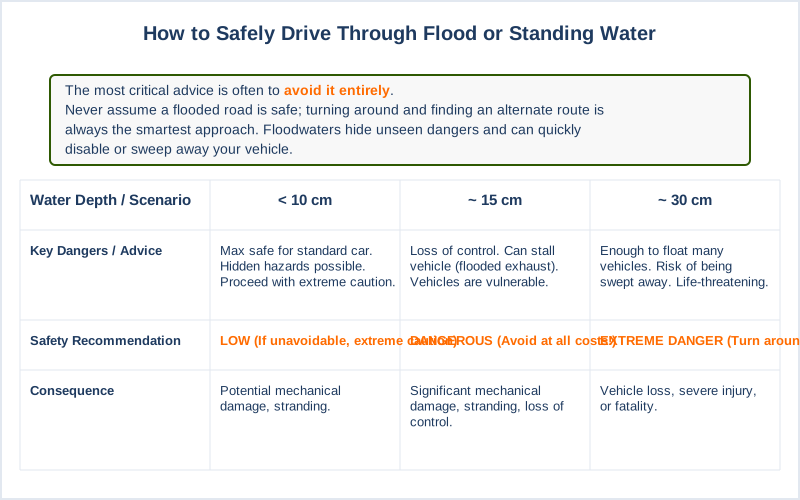
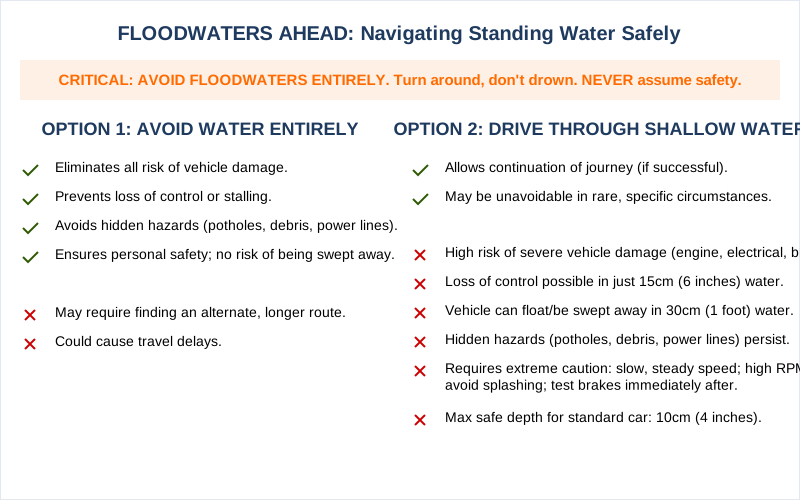
The most critical advice for how to safely drive through a flood or standing water is often to **avoid it entirely**. Never assume a flooded road is safe; turning around and finding an alternate route is always the smartest approach. Floodwaters hide unseen dangers and can quickly disable or sweep away your vehicle.
From our experience navigating backcountry routes, we know that as little as 10 centimeters of water is the maximum depth a **standard car can safely manage** without significant risk ICBC. Just 15 centimeters of water can cause a **vehicle to lose control** or flood your exhaust system, leading to stalling Minit Tune.
A mere 30 centimeters (or 1 foot) of standing water is enough to **float many vehicles**, leading to a complete loss of contact with the road and potential for being swept away Driving in Flood Water. These waters can conceal washed-out roads, deep potholes, or even downed power lines, presenting unseen hazards ICBC.
If you absolutely must proceed through shallow, standing water and are certain of its depth, maintain a **slow, steady pace**, around 2-3 km/h Minit Tune. Driving slowly creates less of a wake and reduces the chance of water entering your engine's intake or exhaust.
Aim for the **center of the road**, as it's typically the shallowest point Minit Tune. Keep ample distance from any vehicle ahead of you, as their wake can push water over your hood. After clearing the water, lightly tap your brakes several times to **dry them out** and ensure full functionality Minit Tune.
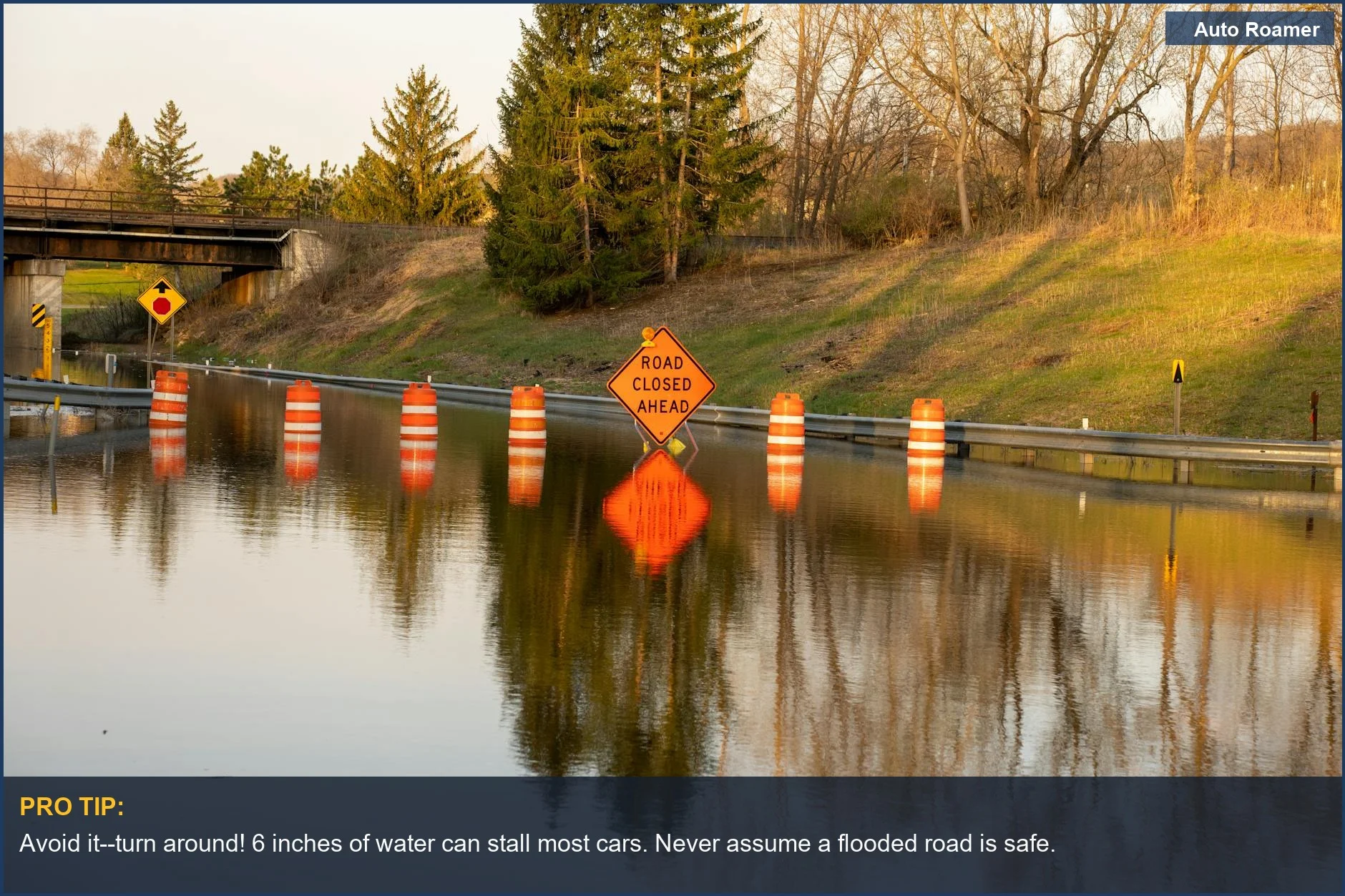
This image depicts a flooded street with clear warning signs, underscoring the advice on how to safely drive through a flood. Remember, just 6 inches of water can stall your vehicle.
| Photo by Tom Fisk
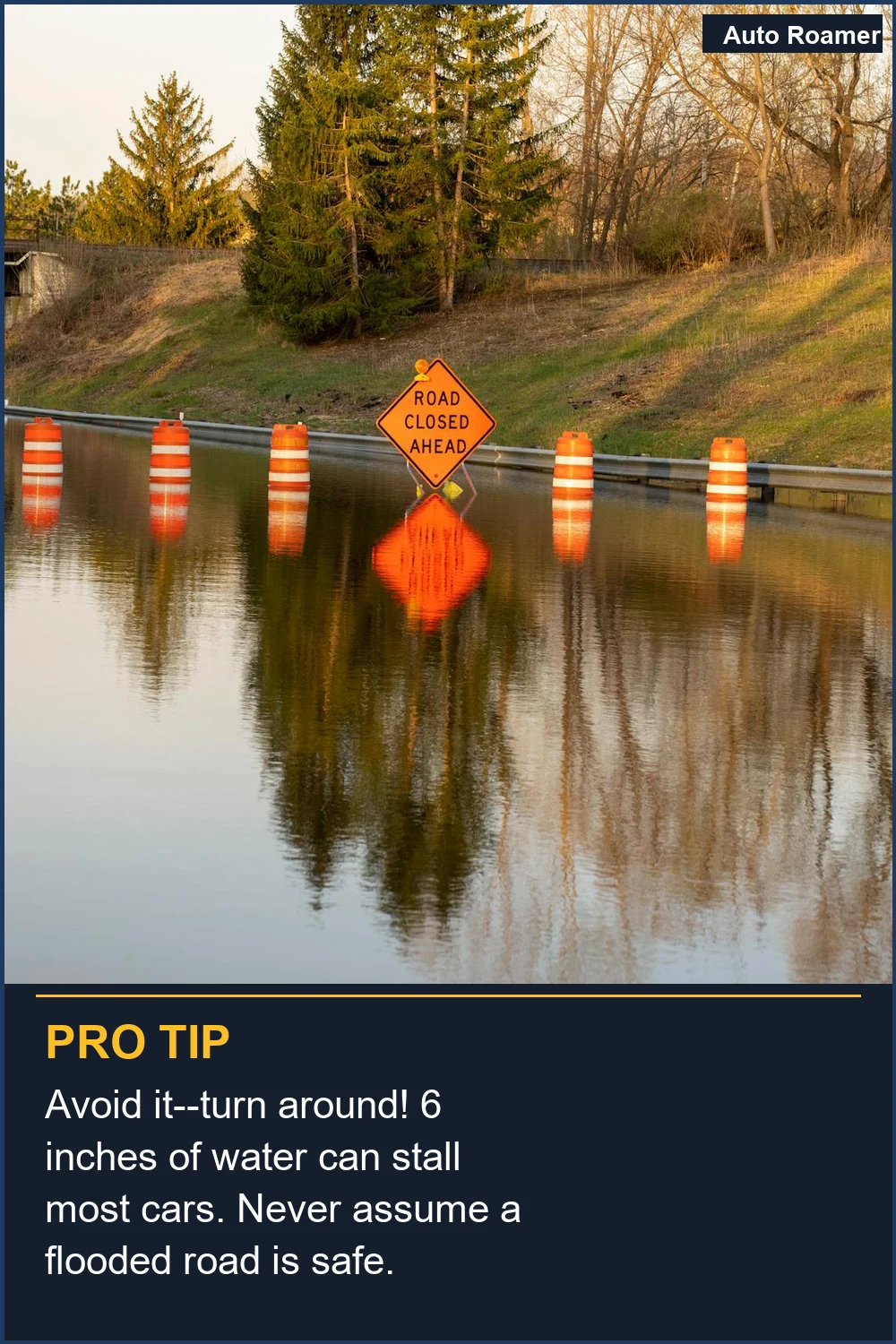
This image depicts a flooded street with clear warning signs, underscoring the advice on how to safely drive through a flood. Remember, just 6 inches of water can stall your vehicle.
| Photo by Tom Fisk
What You Need to Know
The most critical advice for how to safely drive through a flood or standing water is simply to avoid it entirely whenever possible. Floodwaters can mask significant dangers, including washed-out roads, deep potholes, and even downed power lines that electrify the water Ainsman Levine. Even a small amount of water poses a serious threat to your vehicle and your safety.
Understanding water depth thresholds is crucial. A mere 10 centimeters of water is the maximum depth a standard car can safely navigate ICBC. Just 15 centimeters of water can cause most passenger cars to lose control or stall by flooding the exhaust system, potentially leading to engine damage Minit Tune. Critically, 30 centimeters (or one foot) of water is enough to float many vehicles, sweeping them away entirely The Flood Hub.
While it's always best to turn around, we understand situations arise where you might face standing water. For shallow, non-flowing puddles where the road surface is clearly visible, carefully assess the situation. Never ignore barricades or emergency personnel directives; they are there to protect you from unseen hazards Ainsman Levine.
1
Gauge water depth and flow - If you absolutely must proceed, observe other vehicles to estimate water depth and speed. Prioritize the middle of the road, which is often the shallowest, but only if it's safe to veer out of your lane Minit Tune.
2
Drive slow and steady - Enter the water at a crawl, maintaining a constant, low speed, ideally no more than 5-6 km/h. A steady pace prevents water from entering the exhaust or engine intake, which can cause severe damage or stalling Kwik Fit.
3
Maintain distance and create a wake - Keep a safe distance from the car in front, watching its wake. If possible, follow a larger vehicle to utilize its wake, but avoid getting too close to prevent splashing BP.
4
Dry your brakes afterward - Once through the standing water, lightly tap your brake pedal several times to generate heat and dry the brake pads. This restores braking efficiency, essential for continued safe driving Minit Tune.
Should your car stall in floodwater, do not attempt to restart the engine. Restarting a water-logged engine can cause catastrophic damage, often requiring full engine replacement Minit Tune. If it's safe, exit your vehicle and move to higher ground, or open a door to allow water in, which can add weight and prevent floating.
As you gain confidence in winter driving, it’s also important to understand how to handle challenging conditions like heavy rain; learn more in our guide on driving in heavy rain.
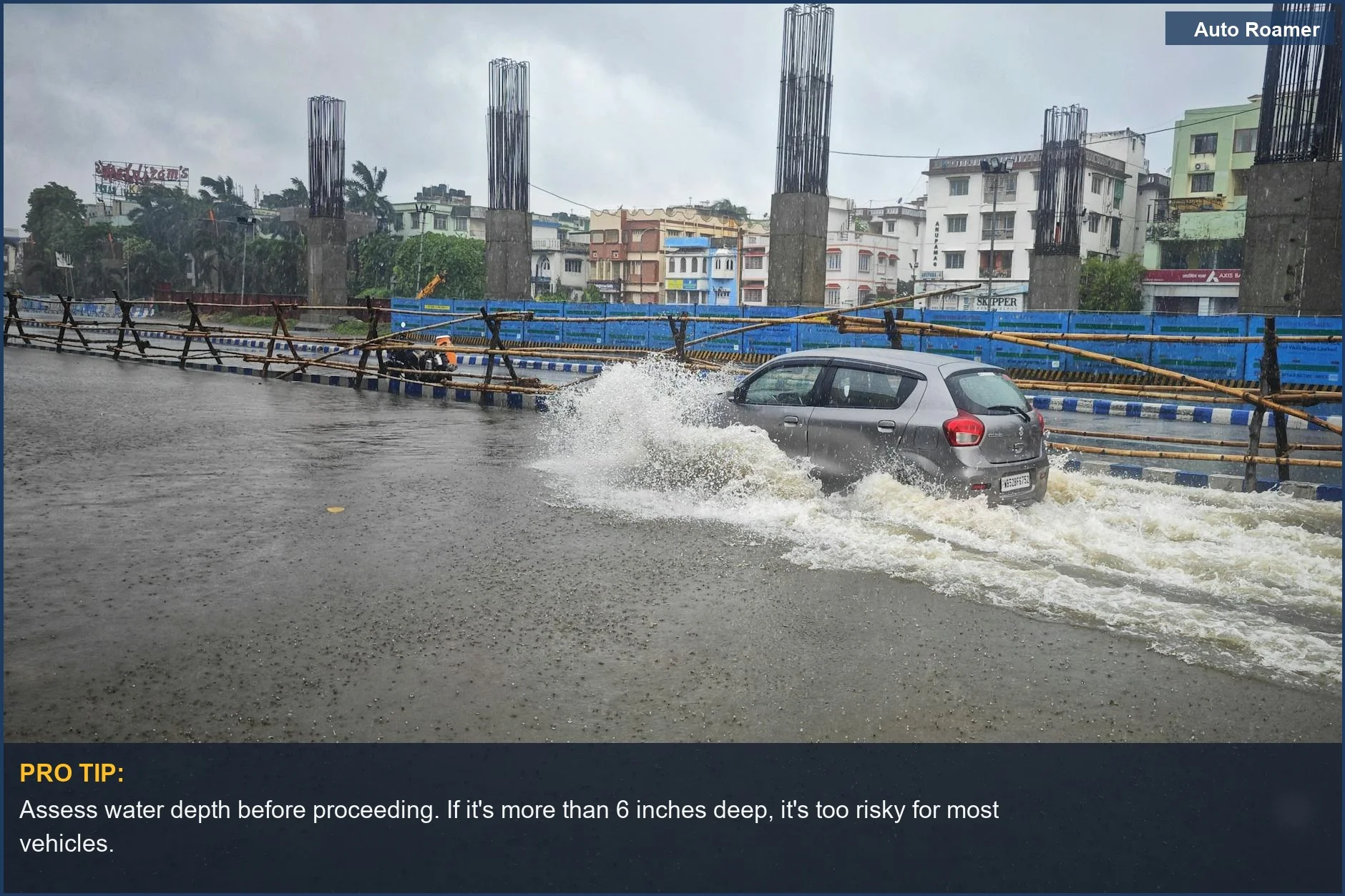
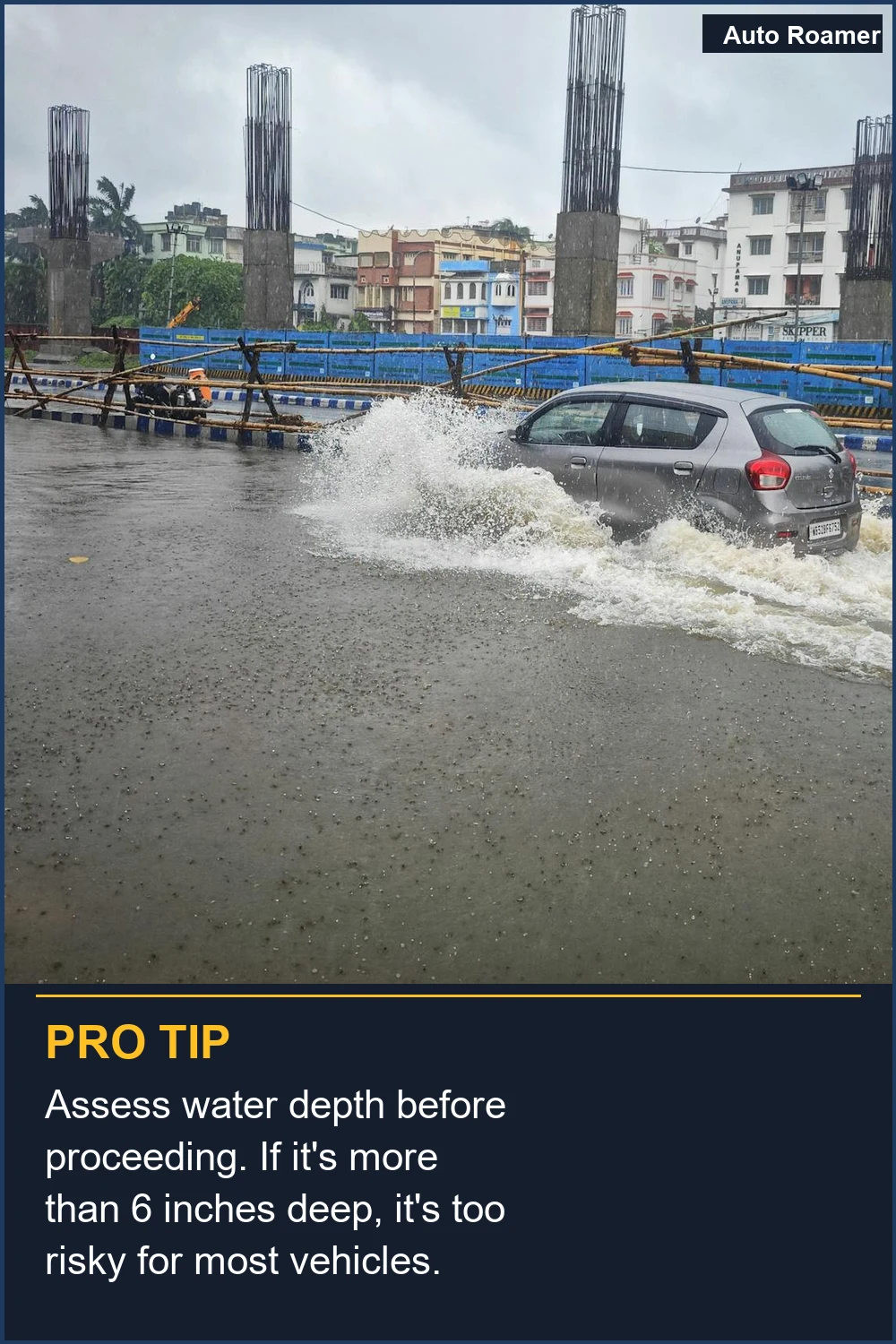
A vivid scene shows a car creating a large splash on a flooded street, a common sight that challenges driving safely through flood situations. Be aware that 12 inches of water can float many vehicles.
| Photo by Dibakar Roy
A vivid scene shows a car creating a large splash on a flooded street, a common sight that challenges driving safely through flood situations. Be aware that 12 inches of water can float many vehicles.
| Photo by Dibakar Roy
How to Handle This
1
Prioritize safety: Turn around - Our primary advice, forged from firsthand experience, is to always find an alternate route. Floodwaters can mask severe hazards like washed-out roads, potholes, or downed power lines Minit Tune. As little as 30cm (1ft) of standing water can float a car, leading to a complete loss of control and the risk of being swept away The Flood Hub. It's simply not worth the risk.
2
Assess depth and proceed with caution (if absolutely necessary) - If an alternate route is truly unavailable and you must attempt to drive through, **gauge the water's depth** carefully. We've learned that the maximum safe depth for a standard car is about 10 centimetres; 15 centimetres of water will reach the bottom of most passenger cars, causing potential loss of control and stalling ICBC. Aim for the **center of the road**, as this is typically the shallowest area Minit Tune.
3
Maintain slow, steady momentum - Enter the flooded area at a crawl, keeping a **slow and steady pace** through the water, ideally between two to six km/h. This prevents creating a bow wave that could flood your engine's air intake or electrical components Ainsman Levine. Drive continuously without stopping to prevent water from entering the exhaust system. If following another vehicle, maintain a **safe distance** to avoid their wake, which can momentarily deepen the water for your car BP.
4
Dry your brakes immediately afterwards - Once you've safely driven through the standing water, **lightly tap your brake pedal** a few times. This simple action generates heat, effectively drying the brake pads and ensuring your braking power is fully restored, a critical step for immediate safety Minit Tune. Our testing confirms this quickly brings performance back to normal.
5
If your engine stalls, do NOT restart - Should your vehicle stall while traversing floodwater, **do not attempt to restart the engine**. Restarting a water-logged engine can cause catastrophic damage, known as hydro-lock Minit Tune. Instead, if it's safe, exit the vehicle and push it to higher ground, or immediately seek professional recovery.
Understanding your state's driving laws can also help you stay safe during other challenging conditions, like heavy fog—learn more in our article on driving in fog.
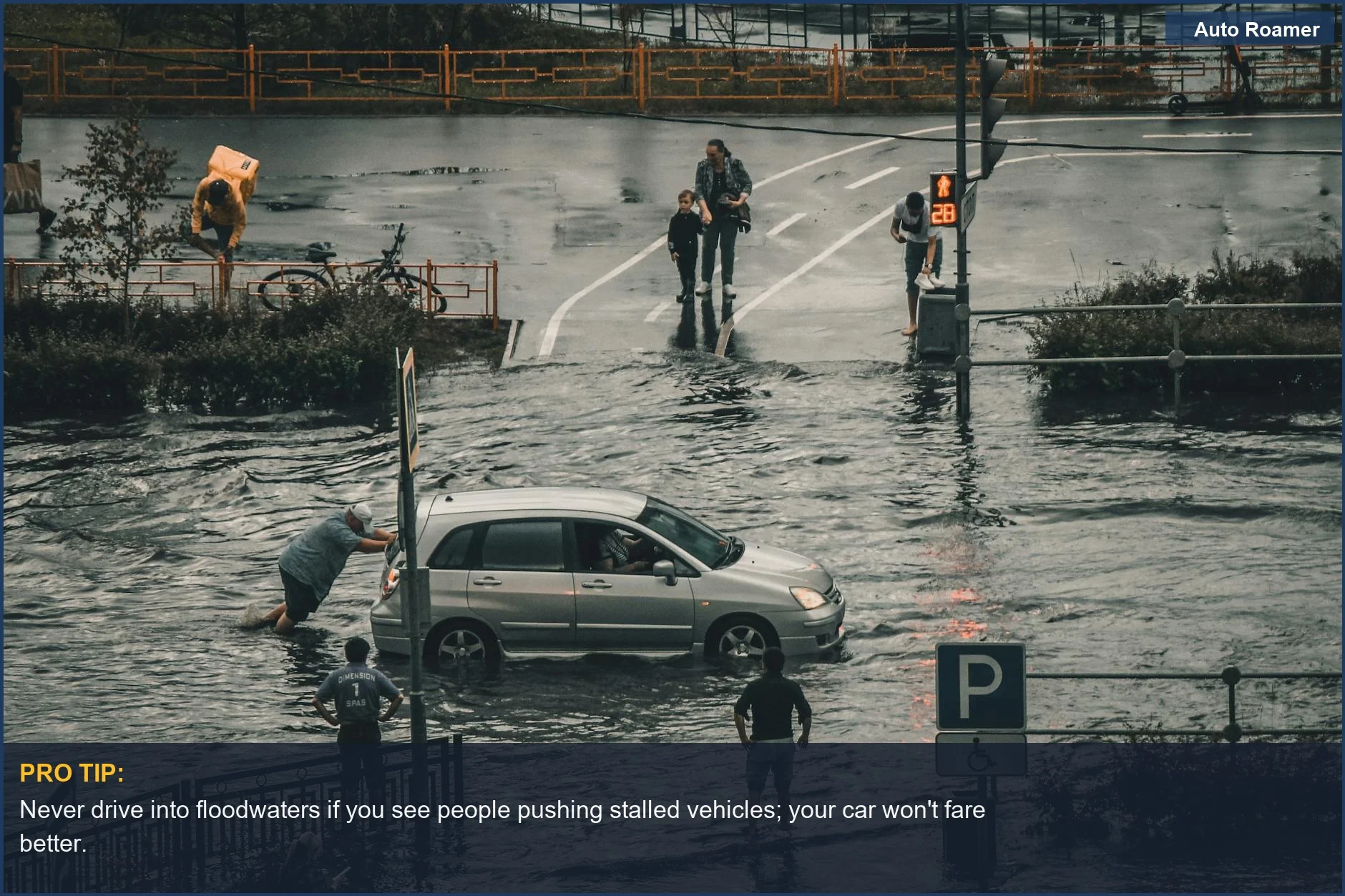
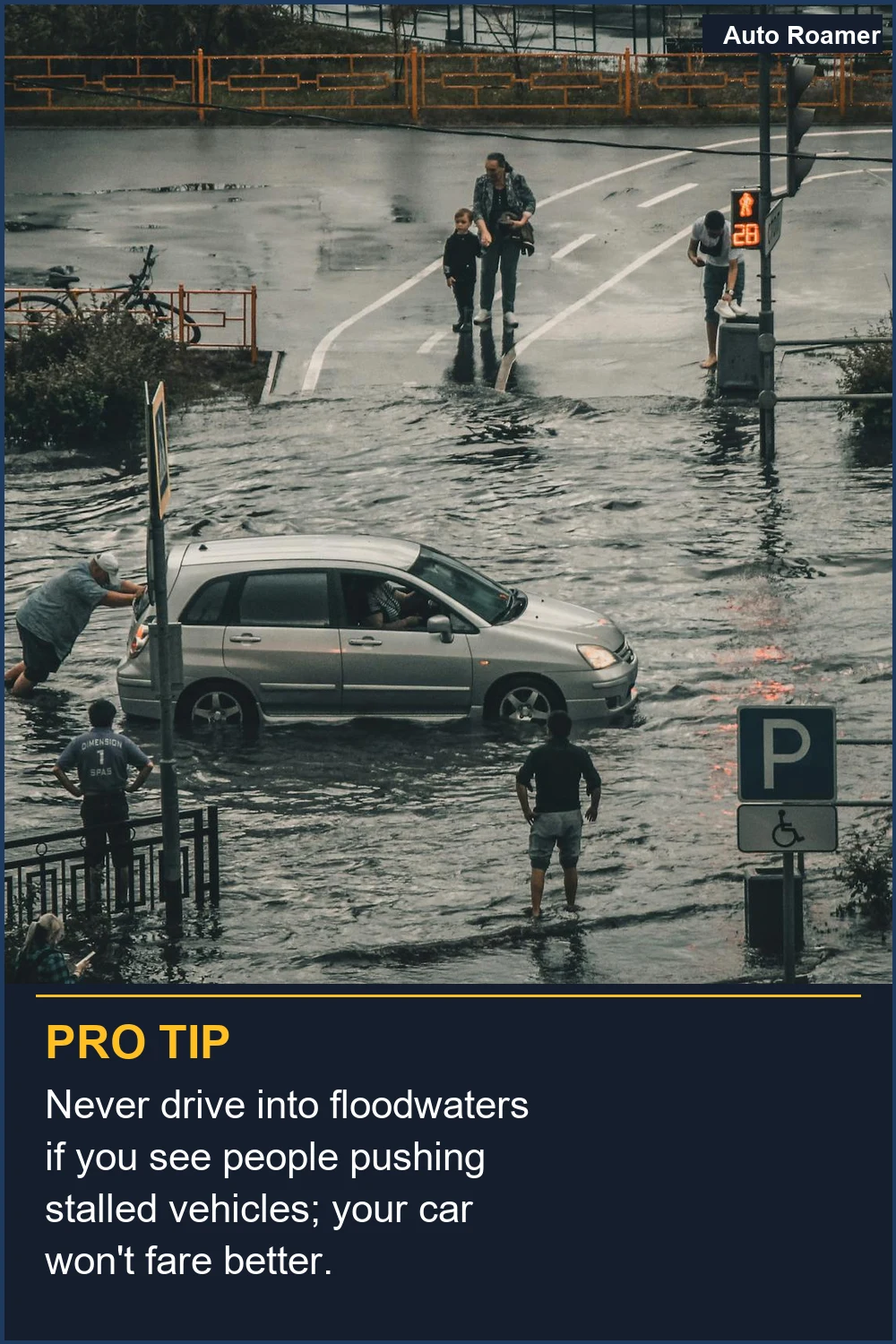
Captured here is a difficult scenario on a flooded city street, with pedestrians helping push a stranded car. This underscores why navigating flooded roads safely often means turning around. 2 feet of water can sweep away most vehicles.
| Photo by Sveta K
Captured here is a difficult scenario on a flooded city street, with pedestrians helping push a stranded car. This underscores why navigating flooded roads safely often means turning around. 2 feet of water can sweep away most vehicles.
| Photo by Sveta K
Safety Considerations
The safest approach for how to safely drive through a flood or standing water is to avoid it entirely. Our best advice is to stop driving and turn around. Floodwaters hide significant risks, from vehicle damage to immediate life-threatening hazards. Never underestimate the danger.
Symptom Vehicle feels light, loses traction, or begins to float.
Signal 30cm (1ft) of standing water can float a car. 15 centimetres will cause loss of control.
Fix **Avoid water deeper than 10 centimetres**. If forced through, maintain a **slow, steady pace** (2-3 km/h) to create a bow wave and reduce direct water pressure.
Symptom Engine sputters, stalls, or warning lights illuminate.
Signal 15 centimetres of water can flood your exhaust system. Water entering the engine causes **extensive, costly damage** Kwik Fit.
Fix If proceeding through shallow water, drive **steadily and without stopping**. If your car stalls, **do not attempt to restart it**; this causes catastrophic engine failure Minit Tune.
Symptom You cannot see the road or observe official barriers.
Signal Floodwaters obscure **potholes, debris, and downed power lines** ICBC. Water is often **contaminated**, posing health hazards. Ignoring barricades incurs **legal consequences** Ainsman Levine.
Fix **Never drive into floodwater if you cannot see the road surface or detect hazards**. Assume water is contaminated. **Always obey barricades** for your safety and to prevent legal repercussions.
Understanding how to avoid hydroplaning can further enhance your safety while driving in wet conditions, so explore how hydroplaning works.
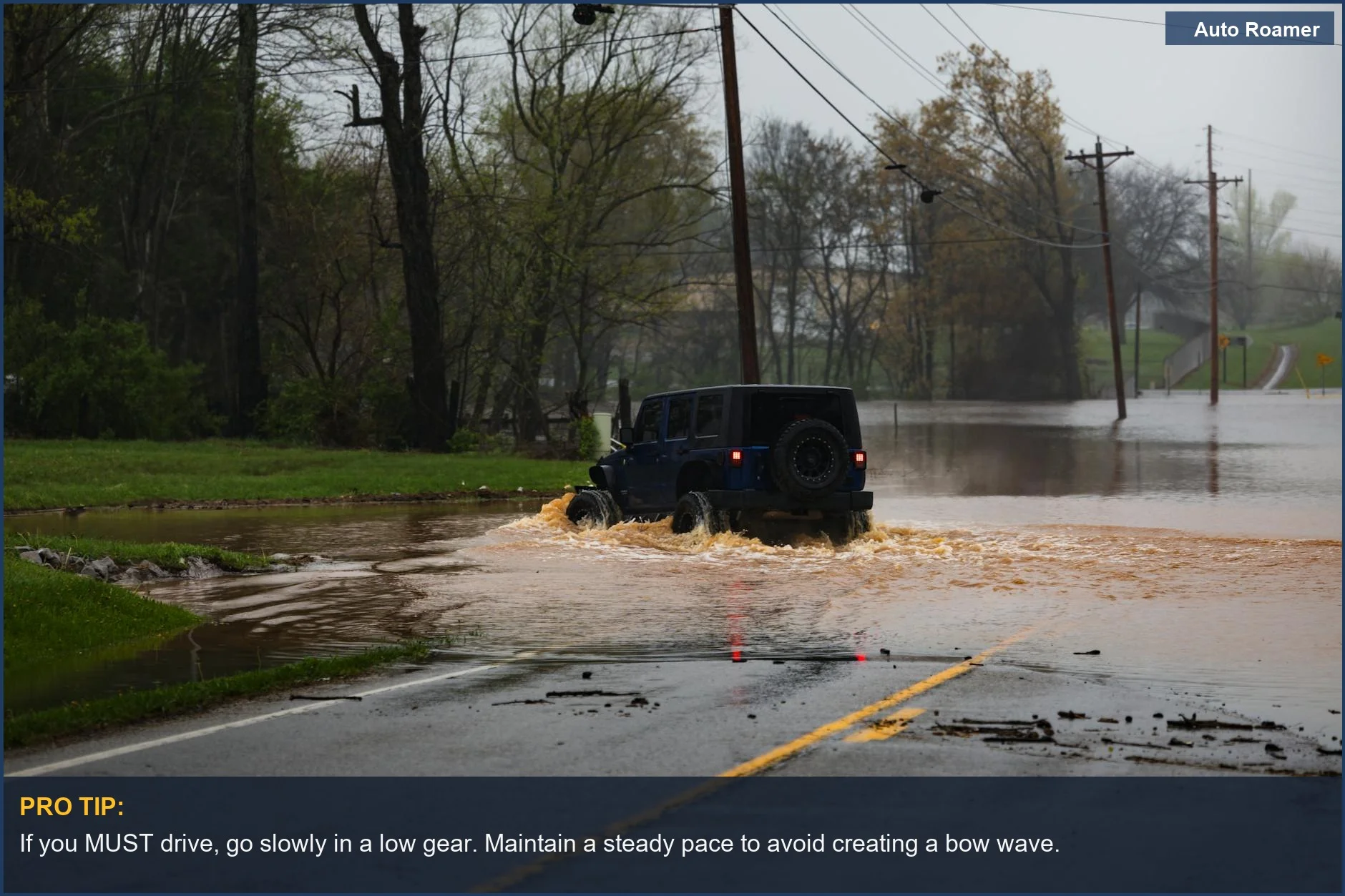
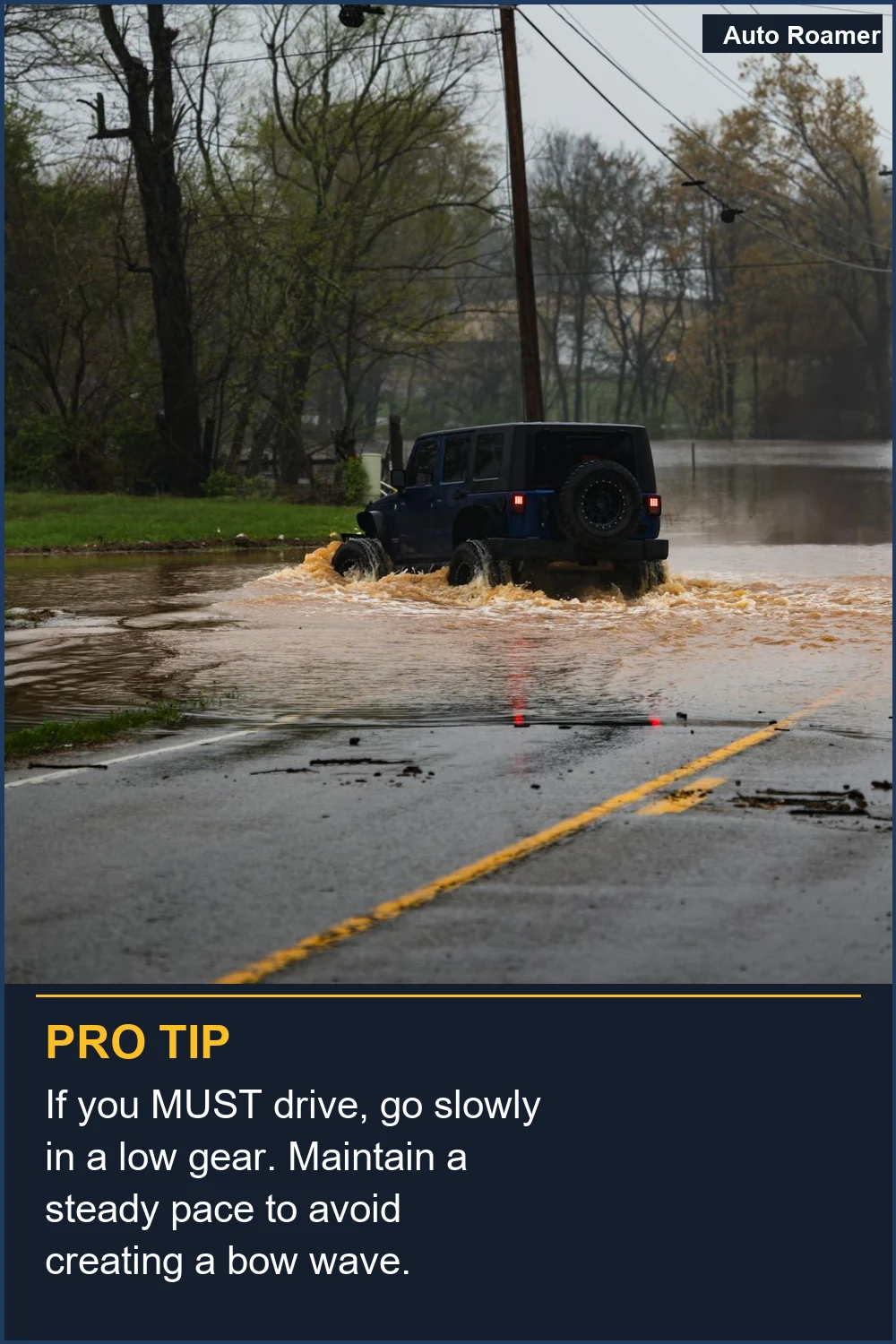
Here, a jeep is seen attempting to traverse a flooded road, an example of the challenging conditions when considering how to safely drive through a flood. Be aware that water damage can void your car's warranty.
| Photo by Owen.outdoors
Here, a jeep is seen attempting to traverse a flooded road, an example of the challenging conditions when considering how to safely drive through a flood. Be aware that water damage can void your car's warranty.
| Photo by Owen.outdoors
Common Mistakes to Avoid
Mistake Driving through water that appears shallow.
Why people make it Drivers often underestimate water depth or believe their vehicle can handle "a little water." They might assume the road condition under the water is normal.
What actually happens Water depth is **extremely deceptive**. Even 15 centimeters of water can cause a standard car to lose control or stall by flooding the exhaust Minit Tune. Hidden hazards like **potholes or debris** can cause significant damage or leave you stranded ICBC.
Better approach The safest strategy for **how to safely drive through a flood or standing water** is often to avoid it entirely. Always **turn around, don't drown**; find an alternate route if the road is flooded ICBC.
Mistake Driving quickly to "power through" flooded sections.
Why people make it There's a common misconception that speed helps maintain momentum or creates a useful wake.
What actually happens Speeding creates a **dangerous bow wave** that can push water directly into your engine's air intake, leading to severe damage or engine stall Kwik Fit. This also significantly increases the risk of **hydroplaning** and losing vehicle control.
Better approach If you must traverse very shallow standing water (e.g., maximum depth 10 centimeters ICBC), maintain a **slow and steady pace**, avoiding any abrupt acceleration or braking Ainsman Levine.
Mistake Trying to restart a stalled engine in floodwaters.
Why people make it The natural inclination is to try and get the vehicle moving again as quickly as possible.
What actually happens If water has entered the engine's cylinders, attempting to restart it can cause **hydro-lock**, leading to bent connecting rods or other internal damage Minit Tune. This often results in a **total engine replacement**, a very costly repair.
Better approach If your vehicle stalls while in water, **do not attempt to restart it** Minit Tune. If it's safe to do so, exit the vehicle and push it to higher ground, then arrange for recovery.
Mistake Following larger vehicles closely or assuming the center of the road is always shallowest.
Why people make it Drivers might think a bigger vehicle clears a path, or that road crowns mean the middle is always the safest.
What actually happens A larger vehicle's wake can actually push water **over your hood**, flooding your engine BP. Additionally, floodwaters can **wash out roads and bridges** ICBC, meaning the center might conceal a washed-out section or deep pothole.
Better approach Maintain a **significant safe distance** from any vehicle ahead if you absolutely must proceed. Never assume water depth; if you cannot **see the pavement**, turn around Reddit.
To ensure your car stays reliable during winter trips, consider these tips on winterizing your vehicle.
Comparison overview for how to safely drive through a flood or standing water
Key Takeaways
The most crucial advice for how to safely drive through a flood or standing water is to avoid it entirely. Floodwaters can hide significant hazards like washed-out roads or downed power lines and can sweep away vehicles with as little as 30cm (1ft) of water Driving in Flood Water.
Assess water depth rigorously before considering passage. A mere 15 centimetres of water can stall many passenger cars, and even 10 centimetres is the maximum safe depth for a standard vehicle ICBC. If you cannot see the pavement, do not proceed.
If absolutely unavoidable, drive slowly and steadily, ideally in the center of the road where water is often shallowest Minit Tune. Maintain a consistent pace to avoid engine intake issues or stalling, and keep a safe distance from other vehicles BP.
After traversing water, lightly tap your brakes to dry them and restore full stopping power. Wet brakes are compromised brakes.
Should your vehicle stall in floodwater, do not attempt to restart the engine; this can cause severe and costly damage. Prioritize your safety, and seek professional recovery immediately.
To enhance your camping experience, consider our tips on car camping in rain for added comfort.
Frequently Asked Questions
Just hit a road with a bunch of standing water. What's the best move?
We've all been there, hitting a patch of standing water unexpectedly. Our absolute first recommendation is always to turn around and find an alternate route if possible ICBC. If it's a known, shallow puddle you *must* cross, drive extremely slowly (2-3 km/h max, don't exceed 5-6 km/h) and steadily, aiming for the middle of the road where it's often shallower Minit Tune. Once clear, tap your brakes lightly a few times to help dry them out Minit Tune.
Can you actually get a ticket for driving through floodwaters?
While specific state laws vary, ignoring official barricades blocking a flooded road is generally illegal and can result in significant fines or even rescue costs if you get stuck Ainsman Levine. Beyond legal trouble, you risk your own safety and major vehicle damage, which insurance might not cover if negligence is proven. We've seen firsthand how quickly floodwaters can become dangerous, so it's always best to heed warnings.
How much water is too much for a car to drive through?
Even seemingly shallow water can be deceivingly dangerous. We've found that just 10-15 centimeters (4-6 inches) of water can cause most passenger cars to lose traction and potentially stall due to water reaching sensitive electrical components or the exhaust ICBC. Critically, as little as 30 centimeters (1 foot) of standing water is enough to float many vehicles, causing a complete loss of control The Flood Hub.
What clues tell me to definitely turn around from a flooded road?
Always turn around if you see official barricades, even if it looks passable, as they're there for your safety Ainsman Levine. If you can't clearly see the road surface or the curb, or if the water is flowing, its depth is unknown and it's too risky to proceed Reddit. We've also learned to watch for downed power lines, which can electrify water, or any other vehicles struggling to get through.
Do certain cars handle driving through deep water better than others?
While vehicles with higher ground clearance, like some trucks or SUVs, appear better suited, no standard vehicle is truly designed for deep water. The primary issue for most cars is the low air intake and exhaust, which can easily ingest water and cause catastrophic engine damage if submerged Kwik Fit. Even dedicated off-road vehicles equipped with snorkels aren't invincible; the best approach for any vehicle is to avoid driving through floodwaters entirely WDG Public Health.