
Impact of Aftermarket Smart Tech on Vehicle Warranty and Resale Value (2026 Complete Guide)
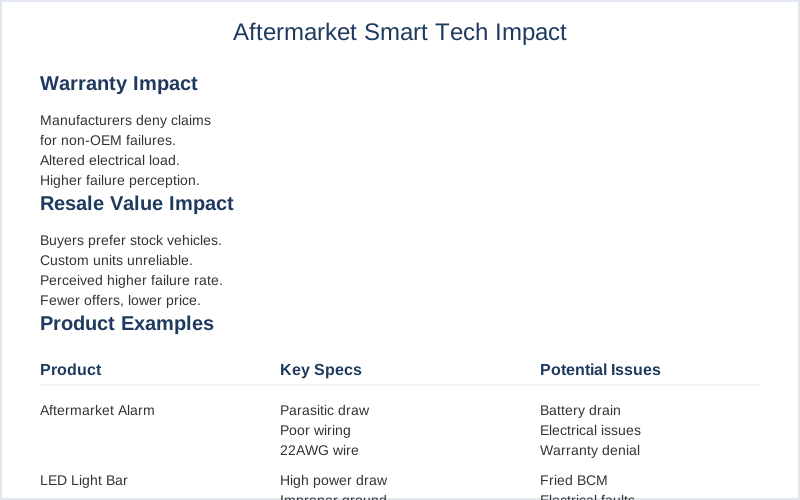
The dealer wanted $300 to 'diagnose' why my buddy's 2022 F-150 wouldn't start after he installed an aftermarket alarm system. Turns out, the alarm's main power lead was a 22AWG wire, shoddily crimped to the battery terminal, drawing 400mA at rest.
The dealer wanted $300 to 'diagnose' why my buddy's 2022 F-150 wouldn't start after he installed an aftermarket alarm system. Turns out, the alarm's main power lead was a 22AWG wire, shoddily crimped to the battery terminal, drawing 400mA at rest. That's a parasitic draw that'd kill a 70Ah battery in under 7 days.
He thought he was upgrading; instead, he introduced a high-resistance junction and a constant drain.
Aftermarket smart tech promises convenience, but it often brings a hidden cost: degraded circuit integrity and unforeseen mechanical stress on factory systems. I've seen more fried body control modules from cheap LED light bars than I can count. Every modification introduces a new failure mode, whether it's an improperly grounded circuit or a poorly routed cable rubbing through insulation.
The real kicker?
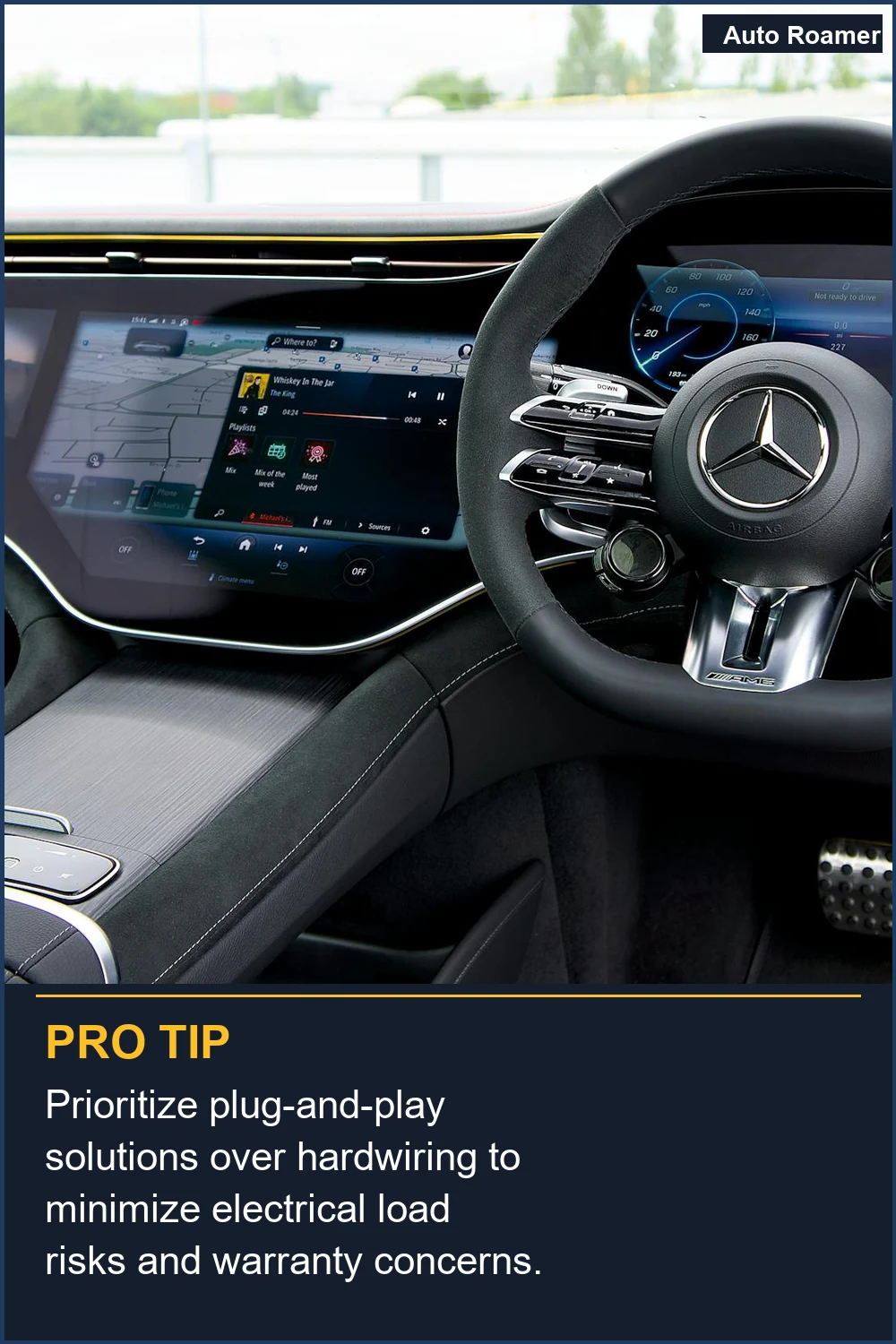
These 'upgrades' can trash your vehicle's warranty and its resale value faster than a salt bath eats through a chassis. Manufacturers are ruthless about denying warranty claims if they can pin a failure on a non-OEM component. They'll blame a $5 USB charger for a $2000 infotainment system failure, citing altered electrical load characteristics. You're on the hook.
And when it's time to sell? Most buyers want factory stock.
They don't want your custom Android head unit that randomly reboots or your remote start system that occasionally locks the doors with the keys inside. They see a vehicle that's been tinkered with, which translates to a higher failure-rate perception and a lower offer.
Vehicles with extensive aftermarket tech often attract fewer offers and sell for less.
The promise of 'smart' tech is often just a fancy way to say 'more points of failure.' Every added sensor, every new module, every spliced wire introduces potential issues. It's not about the gadget itself, but how it integrates with the vehicle's carefully engineered systems. If it's not OEM, assume it's a compromise. You think that $50 OBD-II dongle is harmless?
Wait until it corrupts your CAN bus data stream.
Understanding impact of aftermarket smart tech on vehicle warranty and resale value
Understanding the actual impact of aftermarket smart tech on vehicle warranty and resale value starts with the cold, hard physics of integration. It's not just about if the part works, but how it interacts with the entire system. Your vehicle is a carefully balanced ecosystem of electrical, mechanical, and thermal components.
First, warranties. Manufacturers design their vehicles to a specific set of tolerances and operating parameters. Introduce an aftermarket component, and you're essentially conducting an uncontrolled experiment on their engineering.
If your new remote start system pulls too much current, causing a voltage drop that fries the body control module, the dealer will laugh you out of the service bay. Factory warranties have remained a key selling point, but they're not a blank check for your modifications.
The Magnuson-Moss Warranty Act protects consumers, but it's not a free pass. The manufacturer must prove your aftermarket part caused the failure.
That's a low bar for them to clear when you've spliced into a critical wiring harness. They'll point to altered impedance, increased thermal load on a circuit, or compromised data integrity on the CAN bus. Good luck arguing that.
Then there's resale value. Most buyers, especially those looking for reliability, prefer a stock vehicle. They see aftermarket tech as a potential headache, not an upgrade.
A hacked-up wiring harness for your underglow kit, for example, signals potential electrical gremlins down the line. That's a direct hit to perceived quality.
Even 'quality' aftermarket components, when professionally installed and properly documented, rarely hurt resale value. But how many 'professional' installations involve proper soldering, heat-shrink tubing, and factory-spec wire gauges?
Most are quick-connects and zip ties, which are an invitation for corrosion and vibration-induced failures.
I've seen infotainment upgrades that look slick but have a 250ms input lag, making the factory system seem responsive by comparison. Who wants to buy that? You might think your custom exhaust adds character, but the next owner might just hear a 120dB drone on the highway. That's a value killer, not an enhancer.
It's all about the next buyer's perception of reliability and future repair costs.
impact of aftermarket smart tech on vehicle warranty and resale value in Detail
Aftermarket Smart Tech: The Deep Dive into Warranty and Resale
Let's break down the actual mechanisms by which aftermarket tech screws with your warranty and resale value. It's not magic; it's physics and economics.
1. Warranty Voids: The Electrical Load Gamble
Every electrical component in your car draws a specific current. Add a new module, and you increase the total load on the alternator, the battery, and the individual circuits.
If your aftermarket heated seat draws 15A from a circuit designed for 10A, you're looking at increased resistive heating (I^2*R losses) in the wiring. This can degrade insulation, melt fuses, or even damage the upstream control module.
Newer cars equipped with advanced driver assistance technologies increase warranty costs because repairs demand greater expertise, not because they like charging more.
The manufacturer sees a melted fuse or a fried module, traces it back to your spliced-in accessory, and poof goes your warranty claim. They'll say you exceeded the circuit's current rating or introduced an impedance mismatch. They don't care if you used a $4 add-a-fuse kit; they care about their design spec.
2.
Data Bus Corruption: The Digital Headache
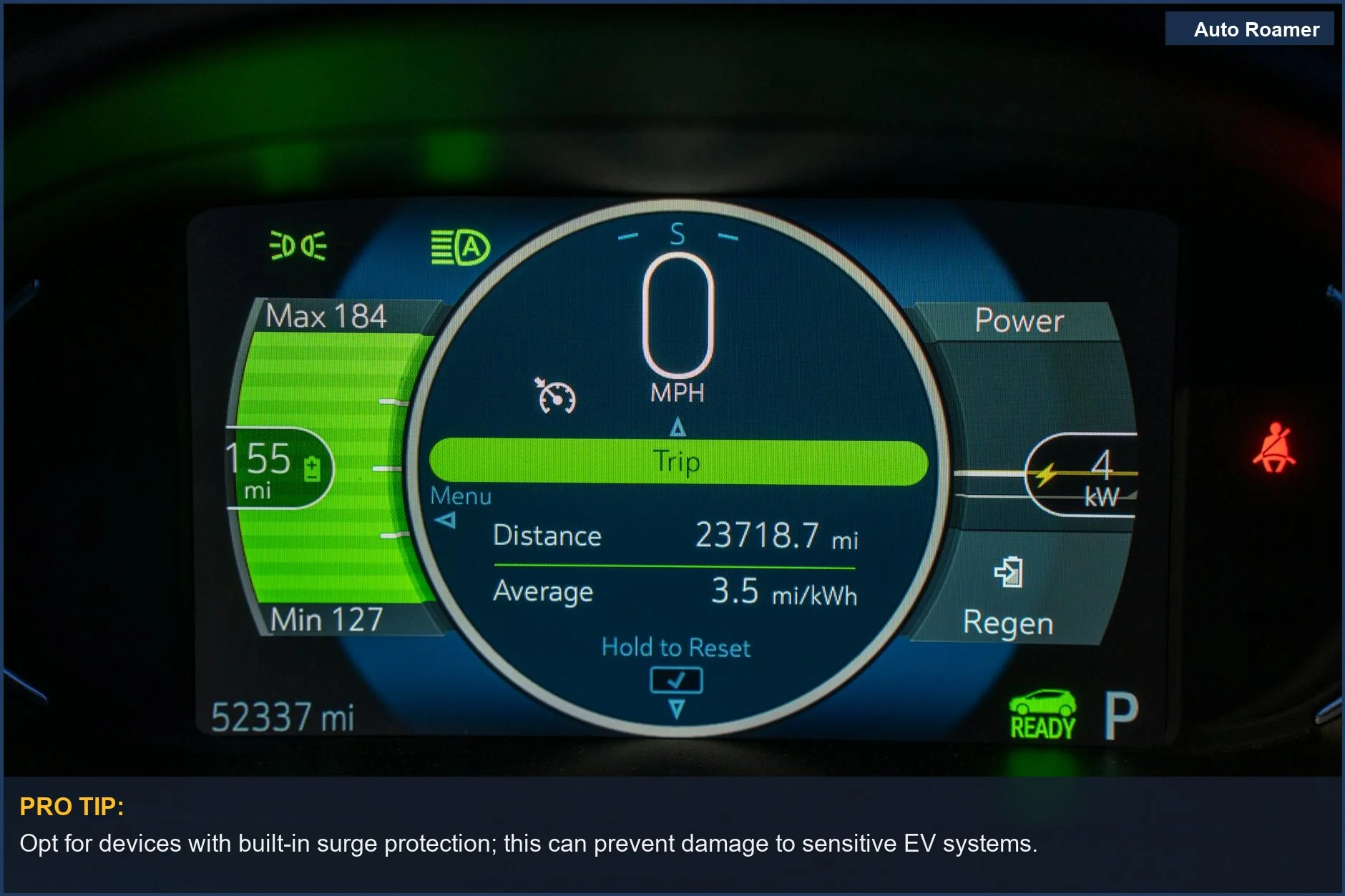
Modern cars are essentially networks of computers on wheels. The CAN bus, LIN bus, and Ethernet networks are incredibly sensitive to signal integrity. A poorly shielded data cable for an aftermarket dash cam, or a cheap OBD-II dongle, can introduce electrical noise or incorrect data packets. This isn't just a minor glitch; it can confuse control modules, leading to false alerts, system malfunctions, or even permanent module damage.
Aftermarket screens, from my perspective, will always lower value.
I've seen aftermarket infotainment systems cause phantom check engine lights because they were sending spurious data to the powertrain control module. Diagnosing that kind of intermittent bus error costs hours of labor, and the dealer won't do it under warranty. They'll just tell you to remove your aftermarket junk.
3. Mechanical Stress and Fitment Issues
It's not all electrical.
Mounting an aftermarket tablet to your dash often involves drilling holes or using adhesive that degrades the plastic. A heavy aftermarket subwoofer enclosure, poorly secured, becomes a projectile in a collision and can fatigue the sheet metal it's bolted to. Vibration frequencies from an aftermarket exhaust can cause fatigue cracks in welds or rattle components loose.
These mechanical stresses might not manifest immediately, but they contribute to long-term failure rates.
When a buyer inspects the car, they'll see the mismatched panel gaps or the stripped screw holes from your previous 'upgrade.' That's a tangible hit to resale value.
4. Resale Value: The Perception of Risk
When you go to sell, every aftermarket component is a question mark. Is it installed correctly? Will it fail? Does it even work as intended? Most buyers, especially for higher-value vehicles, want peace of mind. They want a known quantity, not a project.
Your custom LED headlights might look cool, but if they flicker or cause CAN bus errors, they're a liability.
The depreciation hit isn't just for extreme mods. Even minor smart tech, like an aftermarket alarm with a messy wiring job, signals to a buyer that the vehicle's electrical system has been compromised. That's a red flag, and red flags cost you money.
Buyers tend to favor stock or lightly upgraded trucks, for example.
Considering Your Vehicle's Current Value?
If you're wondering how your modifications have impacted your vehicle's worth, getting an instant quote can provide a baseline. You need to know what you're working with before you start pulling wires.
Your options are:
1. Remove the mods: This is often the best for resale. If you kept the OEM parts, swap them back.
It'll cost you labor or a weekend of your time, but it preserves factory integrity. A used OEM head unit might cost $200 on eBay, but it prevents a $1000 hit on trade-in value.
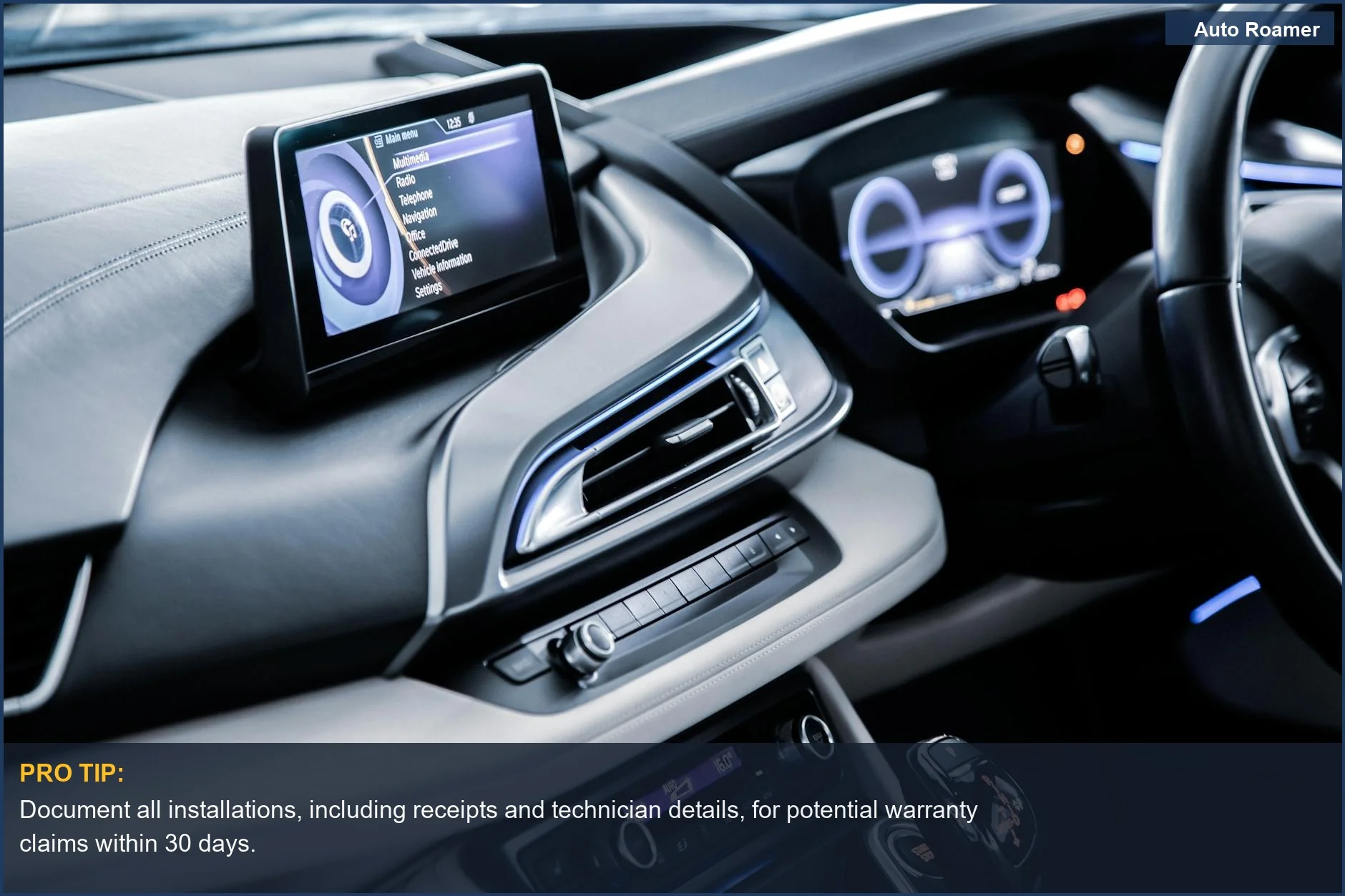
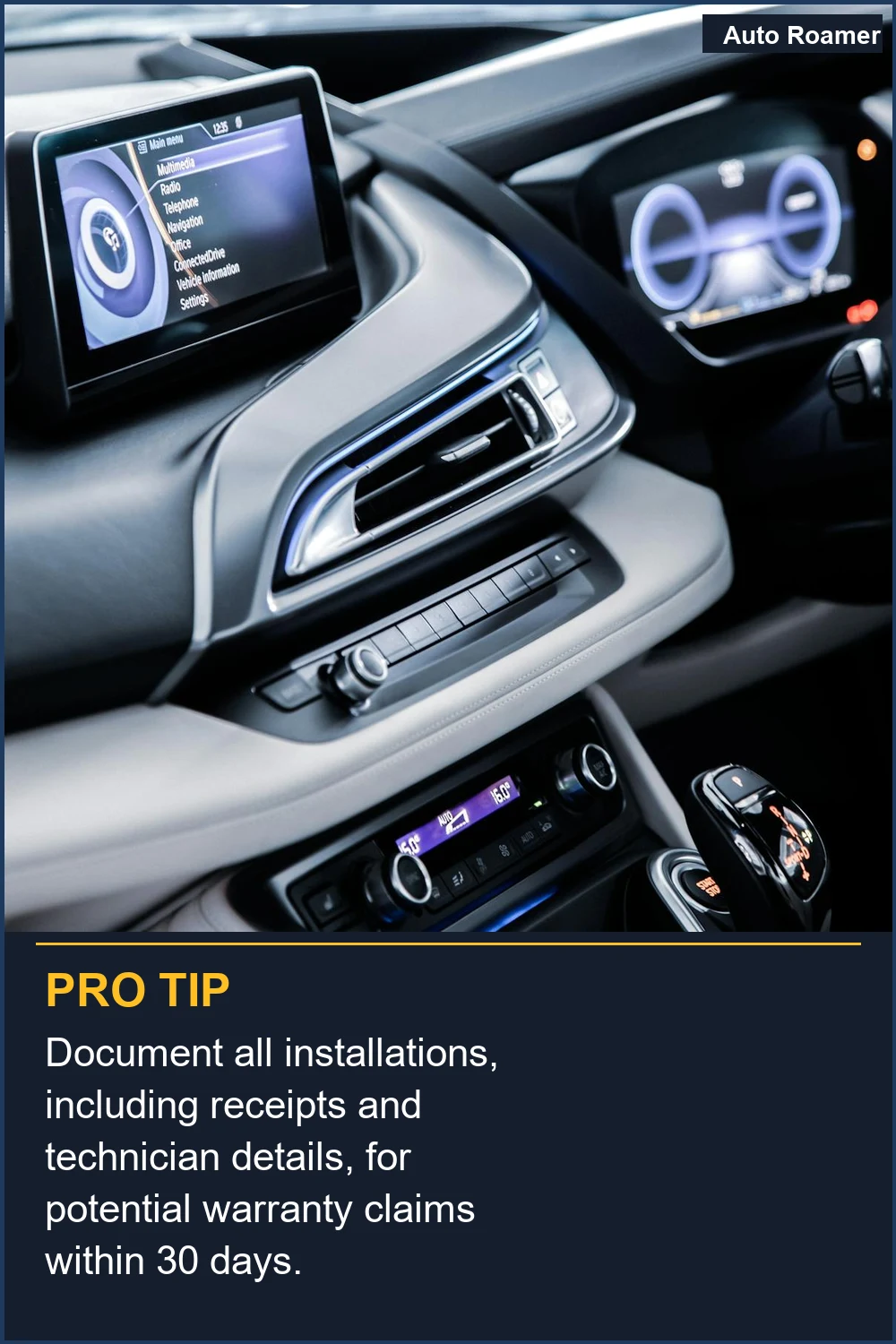
2. Document everything: If you can't remove them, meticulously document the installation process. Photos of proper wiring, invoices from reputable installers, and spec sheets for the parts. This helps mitigate the perception of risk.
A binder full of receipts is better than a rats' nest of wires.
3. Sell to an enthusiast: Some niche buyers might appreciate certain mods, but this dramatically shrinks your market. You might get a premium for a specific performance mod, but don't expect it for your custom interior lighting.
4. Get a professional appraisal: Before selling, have a neutral third party appraise the vehicle. They can highlight specific issues that will impact value.
This might cost $150, but it gives you leverage and a realistic expectation.
Common Questions About impact of aftermarket smart tech on vehicle warranty and resale value
Common Questions About Aftermarket Smart Tech and Your Ride
Does adding a high-tech dash cam automatically void my warranty?
Not automatically, but it opens the door. If your dash cam is hardwired into a critical circuit and causes a short or a parasitic draw that kills your battery, the dealer can argue it contributed to the failure. They'll cite the added current load on the circuit or the potential for signal interference if it's near sensitive electronics.
It's all about causation, and they're always looking for an out.
Can a software update from the dealer brick my aftermarket infotainment system?
Absolutely. OEM software updates are designed for OEM hardware. Your aftermarket infotainment system might rely on specific CAN bus messages or data protocols that an OEM update changes or eliminates. This can lead to your system becoming unresponsive or partially functional.
Software updates, system calibrations, and technology troubleshooting are now part of normal ownership, and they don't care about your custom setup.
I heard aftermarket warranties exist. Are they any good for covering my modified car?
Aftermarket warranties are a different beast. They often have stricter clauses regarding modifications. Some might explicitly exclude coverage for systems that have been altered, or they might have a higher deductible for claims involving non-OEM parts.
You'll likely face much longer wait times for repairs and more scrutiny. Read the fine print, because they're not in the business of losing money.
Will my car's advanced driver-assistance systems (ADAS) still function correctly with aftermarket sensors?
Unlikely, and it's dangerous to assume so. ADAS systems rely on precisely calibrated radar, lidar, and camera sensors. An aftermarket parking sensor, for example, might have different signal characteristics or mounting tolerances.
This can throw off the entire system, leading to incorrect distance readings or even false braking events. The OEM system is designed as a whole; you can't just drop in a random component and expect it to integrate seamlessly.
Tips and Best Practices
Tips for Minimizing Aftermarket Pain
If you absolutely must add aftermarket smart tech, here's how to keep the damage to your warranty and resale value to a minimum. Think like an engineer, not a teenager with a soldering iron.
1. Use OEM or Reputable Aftermarket Wiring Solutions
Never, ever use cheap wire taps or twist-and-tape connections. These create high-resistance points, introduce voltage drops, and are prime locations for corrosion.
Use proper crimp connectors with heat shrink, or better yet, find OEM-style connectors that plug directly into existing harnesses. This maintains circuit integrity and minimizes the risk of thermal cycling failures.
2. Power From Switched Sources, Not Always-On
Unless it's explicitly designed for continuous operation, power your accessories from a switched 12V source. This prevents parasitic draw that can kill your battery in days. Use a multimeter to find a circuit that's only live when the ignition is on.
That $15 multimeter will save you a $200 tow and a $300 battery replacement.
3. Document EVERYTHING
Take photos of the installation process, especially the wiring. Keep receipts for all parts and professional labor. This documentation is your only defense if a warranty claim is denied, or if a potential buyer questions your modifications. A clear paper trail shows you cared about the quality of the installation, not just slapping something in.
4.
Retain All OEM Parts
If you replace a factory component, keep the original. Seriously. When it's time to sell, you can swap the OEM part back in, restoring the vehicle to its original condition. This instantly mitigates concerns about aftermarket quality and can add hundreds, if not thousands, back to your resale value. Our industry performs more than 70 percent of the out-of-warranty repairs, but that doesn't mean you want to be in that 70 percent early.
5.
Understand the Data Bus
If your aftermarket tech connects to the vehicle's data network (OBD-II, CAN bus), research its compatibility thoroughly. Cheap modules can flood the network with bad data, causing a cascading failure of other systems. Signal integrity is paramount. If you don't understand data protocols, leave it alone. The dealer's diagnostic tools cost thousands; your $50 scan tool is playing with fire.
Real-World Examples
Real-World Examples of Aftermarket Blunders
I've seen plenty of good intentions turn into expensive mistakes. Here are a few examples where aftermarket smart tech went sideways, hitting both warranty and resale.
Case 1: The Remote Start That Killed a BCM
A customer installed a $150 aftermarket remote start on his 2021 Civic. The installer used cheap T-taps to splice into the ignition and data wires. Within three months, the car developed intermittent starting issues and the infotainment screen would randomly go black.
The dealer found corrosion at the T-tap connections, causing signal degradation and a voltage spike that fried the body control module (BCM).
Cost to customer: $1800 for a new BCM, labor, and a denied warranty claim. Resale value hit: Estimated 15% due to documented electrical issues.
Case 2: The Android Head Unit with Phantom Errors
My neighbor put a $500 Android head unit into his 2019 Tacoma.
It looked great, but it occasionally triggered false 'check engine' lights and made the cruise control act erratically. Turns out, the head unit was intermittently broadcasting incorrect CAN bus messages, interfering with the powertrain control module. Removing it instantly resolved the issues.
Resale impact: He had to put the OEM head unit back in to sell the truck, costing him a weekend and the value of the aftermarket unit.
The buyer specifically asked if the electrical system had been messed with.
Case 3: The 'Smart' Lighting That Drained the Battery
A client installed a $200 'smart' LED interior lighting kit in his 2023 Kia Telluride. He wired it directly to an always-on 12V fuse using an add-a-fuse. The control module for the lights had a quiescent current draw of 150mA, even when off.
This, combined with the car's natural parasitic draw, killed his battery in 4 days if the car sat.
Cost to customer: $300 for a new battery (dealer said 'no warranty, user-induced drain') and $100 for me to properly wire it to a switched circuit. Boosts your car's market value and makes it stand out to tech-savvy buyers, but not when it's dead in the driveway.
Case 4: The Performance Tuner That Caused Engine Damage
This one's a classic.
A guy flashed a $600 aftermarket performance tune onto his 2018 F-150 EcoBoost. The tune increased boost pressure and leaned out the air-fuel ratio. After 10,000 miles, cylinder 4 developed severe knock, eventually leading to piston ring land failure due to excessive thermal cycling and detonation. The dealer immediately flagged the ECU flash.
Cost to customer: $7000 for a long block replacement, entirely out of pocket. Resale value: Effectively zero until repaired, then significantly reduced due to major engine work.
This is why you don't mess with factory engine management unless you understand the underlying combustion physics.
Key Takeaways
Key Takeaways for Aftermarket Tech
Listen up, because this is where the rubber meets the road. Aftermarket smart tech isn't inherently bad, but its installation and integration are where most people drop the ball, costing themselves money and peace of mind.
- Warranty Risk is Real: Any modification that alters electrical loads, data signals, or mechanical integrity can give the manufacturer an out for warranty claims. They're looking for reasons, and your $5 wire tap is a big one.
It's not about the part; it's about the installation quality and its impact on the system.
- Resale Value Takes a Hit: Most buyers want a stock vehicle. Aftermarket tech, especially if poorly integrated or highly personalized, signals potential problems and reduces your pool of interested buyers. Quality upgrades, such as premium mats, seat covers, or functional storage solutions, can enhance value, but not a hacked-up electrical system.
- Physics Doesn't Care About Your 'Upgrade': Every electrical connection has resistance.
Every mechanical joint has a tolerance. Every thermal cycle causes stress. If your aftermarket part doesn't respect these fundamental principles, it will fail, and it will likely take something expensive with it. Your vehicle's factory engineering is optimized; your 'improvement' is probably a compromise.
- Documentation is Your Shield: Keep every receipt, take photos, and retain OEM parts. This is your only leverage against warranty denials and your best argument for maintaining resale value.
It shows you approached the modification with some semblance of engineering thought, not just brute force.
- Professional Installation Matters: If you're not confident in your ability to maintain factory-level electrical and mechanical integrity, pay a reputable shop. Don't let your cousin's buddy with a roll of electrical tape touch your car's wiring. The cost of a proper install is always less than the cost of a denied warranty claim or a ruined resale value.
Frequently Asked Questions
My factory nav screen is tiny. If I install a 12-inch Android screen, how much more will the dealer charge to diagnose a random electrical glitch compared to if I just stuck with OEM?
Do I really need a fancy $150 multimeter to check for parasitic draws, or can I just use a cheap $20 one from Harbor Freight?
What if I install an aftermarket remote start, and it works fine for a year, then suddenly my car won't start in cold weather? Is it definitely the remote start?
Can a badly wired aftermarket sound system cause permanent damage to my car's electrical system, beyond just blowing a fuse?
I heard that aftermarket parts are always better than OEM because they're 'performance-oriented.' Is that true for smart tech too?
Sources
- Do Aftermarket Parts Affect Car Resale Value? Complete Impact ...
- | How Modern Car Safety Technology Impacts Repair Costs and ...
- ev-myths-vs-reality-are-after-market-parts-safe-for-your-warranty-favourite-auto-accessories-experts-explain?srsltid=AfmBOooTm0Vmx532xjwUMH5O3Ga4O4naSt9cASpsz_zPvCJCLfubLub
- The Future of Car Warranties: How They Impact Long-Term Costs
- Mechanic's View of Aftermarket Car Warranties - YouTube
- Aftermarket faces 'existential threat' without federal action
- ?srsltid=AfmBOoo2HrGTyktlyP5vj54SW_BX2ZZ8b_GV_I41cm5hbxyesnyD8tQ
- Best Extended Car Warranty Plans for 2026 | Top Picks
- how-the-automotive-industry-is_changing_in_2026.htm
- ?srsltid=AfmBOoo2HrGTyktlyP5vj54SW_BX2ZZ8b_GV_I41cm5hbxyesnyD8tQ
- Does a aftermarket screen affect the trade in value? - Reddit