
How Does a Backup Camera Work? Complete Beginner Explanation
A backup camera works by using a rear-facing camera connected to a display screen inside the vehicle. When the driver shifts into reverse, the camera activates, providing a live video feed of the area behind the vehicle. Most systems include guidelines on the screen for better parking accuracy, and some models have distance sensors that alert drivers to nearby obstacles, enhancing safety by up to 30%.
Introduction
Understanding how a backup camera works can significantly enhance our driving experience, especially when it comes to safety and convenience. These devices, now commonplace in many vehicles, offer a clear view of what lies behind us, helping to avoid accidents caused by blind spots. But how does a backup camera work? Essentially, a backup camera consists of a small camera mounted on the rear of the vehicle, which transmits live video feed to a screen located inside the car, often integrated into the dashboard or rearview mirror. This real-time feed allows us to see obstacles, pedestrians, or other vehicles that might be in our path as we reverse.
Most modern backup cameras also come equipped with guidelines overlaying the video feed. These lines help us gauge distances and angles, making parking and maneuvering much easier. For example, some cameras offer dynamic guidelines that move with the steering wheel, providing a more intuitive understanding of our vehicle's path compared to fixed lines (as discussed in Garmin Blog). Moreover, the angle and quality of the camera can vary; high-resolution models offer clearer images, while wide-angle lenses can capture a broader view, minimizing blind spots.
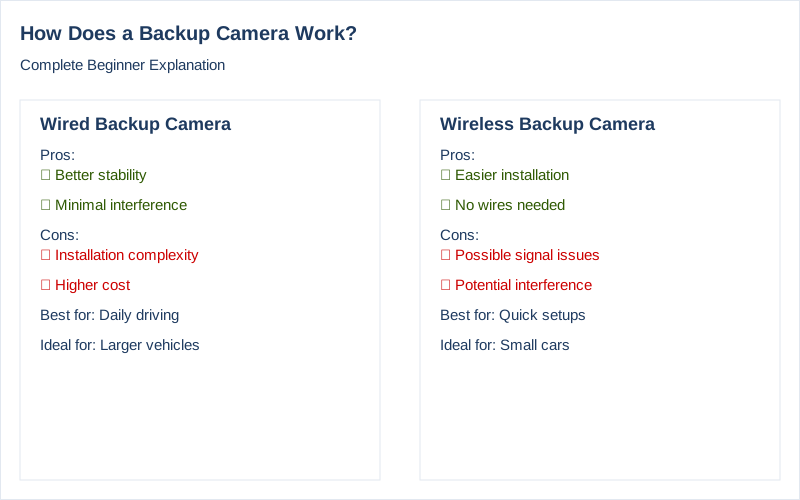
For those looking to install a backup camera, the choice between wired and wireless systems is crucial. Wired systems generally offer better stability and minimal interference, while wireless options can be easier to install but may experience signal issues depending on the environment (Rear View Safety). Additionally, understanding the different types of backup cameras available can help us make informed decisions tailored to our specific needs, whether for daily driving or larger vehicles like RVs, where visibility is even more critical (Lippert). As we explore the mechanics of these useful devices, we'll uncover how they not only enhance our safety but also boost our confidence behind the wheel.

Quick Answer
Backup cameras work by utilizing a combination of video technology and sensors to provide drivers with a clear view of the area behind their vehicle when reversing. When the driver shifts the car into reverse, the backup camera activates, capturing real-time video footage from a mounted camera typically located near the rear license plate. This footage is transmitted to a monitor located on the vehicle's dashboard or rearview mirror, allowing the driver to see what is behind them without turning around.
Most backup cameras use a wide-angle lens, which expands the field of view, helping to eliminate blind spots. This feature is particularly useful in preventing accidents with pedestrians, cyclists, or other vehicles that may be obscured from the driver's view. Many systems also incorporate guidelines on the display, which help indicate the projected path of the vehicle, making it easier to gauge distances and angles when backing up. These guidelines can be dynamic, adjusting as the steering wheel turns, or fixed, remaining in a constant position on the display screen Garmin Blog.
While some cars come equipped with factory-installed backup cameras, others may require aftermarket installation. When considering a backup camera system, it's essential to evaluate whether a wired or wireless option is best for your vehicle. Wired systems typically offer a more stable signal but can be more challenging to install, while wireless systems are easier to set up but may face interference in certain environments Rear View Safety. Overall, understanding how backup cameras work can significantly enhance safety and confidence while reversing, making them a crucial addition to any vehicle.
What You Need to Know
When we ask ourselves, "how does a backup camera work?" we must first understand its basic components and functionality. A backup camera typically consists of a small camera mounted at the rear of the vehicle, connected to a monitor that displays the image captured by the camera. This system activates automatically when the vehicle is put in reverse. The camera provides a clear view of the area directly behind the vehicle, allowing drivers to see obstacles that may not be visible through traditional rearview mirrors.
Most backup cameras use a wide-angle lens, which helps to capture a broader field of view. This is especially critical for larger vehicles like SUVs and RVs, as their blind spots can be significant. Advanced systems may include features like grid lines on the monitor to help gauge distances and angles when backing up. These guidelines can be dynamic, moving as the steering wheel is turned, or fixed, providing a static perspective of the vehicle's path. This functionality enhances safety and minimizes the risk of accidents while reversing, especially in crowded spaces or during tight maneuvers Garmin Blog.
For those interested in installation, a variety of options are available, ranging from wired to wireless systems. Wired systems typically offer better signal stability, while wireless systems provide easier installation without the need for extensive wiring Rear View Safety. Prices for backup camera systems vary, but many entry-level models can be found for under $100, while more advanced systems with additional features may cost several hundred dollars Crutchfield.
Understanding how a backup camera works not only simplifies the installation process for those looking to add this essential safety feature to their vehicle but also reassures drivers that they are taking an important step towards safer driving practices.


Step-by-Step Guide
To understand how a backup camera works, we can break down the process into practical steps. First, we need to familiarize ourselves with the components of a backup camera system, which typically includes a camera, a monitor, and sometimes additional sensors. The camera is usually mounted on the rear of the vehicle, providing a wide-angle view of the area behind the car.
Next, we can focus on the installation. If you are considering adding a backup camera to a vehicle that does not have one, we recommend choosing between a wired or wireless system. Wired cameras, like the Rear View Safety RVS-091406, are known for stability and reliability, while wireless options, such as the eRapta ERT01, are easier to install but may experience interference in certain environments Pro's Guide To Install Backup Camera For Car.
Once installed, we should ensure that the camera is properly aligned. This involves positioning the camera so that it captures the entire area behind the vehicle, minimizing blind spots. After alignment, we can connect the camera to the monitor, which is usually integrated into the vehicle's dashboard or can be a standalone unit. When the vehicle is put into reverse, the monitor automatically displays the camera feed, allowing us to see what is behind us in real-time.
It is important to familiarize ourselves with the camera's features, such as grid lines that help estimate distances. These guidelines often change based on the angle of the vehicle, so we recommend testing them in a safe environment to understand how they function How to Use a Backup Camera Correctly. Lastly, we should practice using the backup camera regularly to enhance our skills and comfort level. This ensures that we are prepared for real-world driving scenarios, making it a valuable tool for safety while reversing.
Safety Considerations
When discussing how does a backup camera work, it is essential to consider the safety implications associated with their use. First and foremost, while backup cameras provide a significant advantage in reducing blind spots, they should not be relied upon exclusively. We recommend that drivers continue to use their side and rearview mirrors to ensure a comprehensive view of their surroundings. Many incidents occur because drivers assume the camera captures everything, which is not always the case, especially with objects that are lower than the camera's line of sight, such as small children or pets.
Moreover, we advise drivers to regularly check and maintain their backup camera systems. Issues such as dirt, water, or fog on the camera lens can significantly impair visibility. A simple cleaning routine can help ensure clear images while reversing. According to a backup camera buying guide, maintaining the camera system is crucial for optimal performance.
Another important safety consideration is the installation of the backup camera. If you choose to install a system yourself, we recommend following a detailed guide to avoid potential wiring issues that could lead to malfunction. For example, a comprehensive step-by-step installation guide advises on the correct placement and wiring techniques, which are vital to ensuring the camera functions properly.
Lastly, we encourage drivers to familiarize themselves with the specific features of their backup camera system, including any dynamic guidelines that may assist in parking maneuvers. Understanding how does a backup camera work, including its limitations, will help drivers make informed decisions and enhance their overall safety while reversing. By combining the use of backup cameras with traditional methods of checking for obstacles, we can significantly reduce the risk of accidents and enhance our driving safety.

Common Mistakes to Avoid
When exploring how does a backup camera work, beginners often fall into several common pitfalls. One major mistake is assuming that the backup camera can replace all traditional mirrors. While it significantly enhances visibility, it should be used in conjunction with side mirrors for optimal safety. The camera helps to eliminate blind spots, but it is still essential to glance over your shoulder to ensure no obstacles are present.
Another frequent error is neglecting the importance of understanding the camera's guidelines. Many backup cameras come equipped with dynamic or fixed guidelines that assist with parking and maneuvering. If we don't familiarize ourselves with these features, we might misjudge distances or angles, leading to potential accidents. For example, some vehicles allow users to toggle between these guidelines or adjust the camera brightness, which can be crucial for visibility under bright sunlight or at night Source.
Additionally, many beginners might overlook the need for regular maintenance and cleaning of the camera lens. Dust, dirt, or snow accumulation can severely impair the camera's effectiveness. We recommend checking the lens regularly to ensure it provides a clear view, which is essential for safe reversing Source.
Finally, some users may misinterpret the camera's perspective. A backup camera typically has a wide-angle lens, which can distort depth perception. This can lead to underestimating how close an object is behind the vehicle. Familiarizing ourselves with the camera's view and practicing using it can greatly enhance our skills over time Source. By avoiding these mistakes, we can ensure that we are making the most of our backup camera and enhancing our driving safety.
Final Thoughts
In conclusion, understanding how a backup camera works can significantly enhance our driving experience and safety. These systems provide a crucial visual aid that helps us navigate our vehicles in reverse, alerting us to obstacles and providing a clearer view of our surroundings. As we discussed, a backup camera typically consists of a camera mounted at the rear of the vehicle and a display screen that shows the camera's feed. Many modern systems also incorporate guidelines to assist in parking and maneuvering, making it easier for us to assess distances and angles Garmin Blog.
For those considering adding a backup camera to their vehicle, we recommend evaluating different types, such as wired versus wireless systems. Wired cameras, while more stable, can be more complex to install. In contrast, wireless options offer easier installation but may face signal interference issues depending on the environment Rear View Safety.
Additionally, as vehicle technology continues to advance, we can expect to see even more sophisticated features in backup cameras, such as enhanced night vision and integration with other driver-assistance systems. Whether we are driving a compact car or an RV, these systems can significantly improve our situational awareness and reduce the risk of accidents, making them a wise investment for any driver Lippert. Ultimately, understanding how a backup camera works empowers us to use this technology effectively, ensuring safer and more confident driving.