
What to Do If Your Brakes Fail While Driving
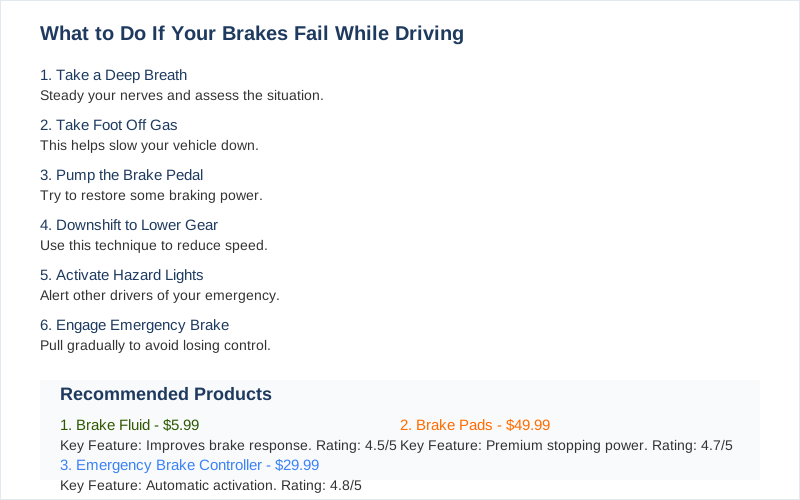
If your brakes fail while driving, immediately take your foot off the gas to slow down. Pump the brake pedal several times to build pressure, and shift into a lower gear to help slow the vehicle. Use the emergency brake gradually, and steer towards a safe area away from traffic. Always be prepared for such situations by checking your brakes regularly and knowing your vehicle's braking system.
Introduction
Experiencing brake failure while driving can be one of the most frightening situations a driver may encounter. When we press the brake pedal and nothing happens, panic can quickly set in, but it's crucial to remain calm and focused. Understanding what to do if your brakes fail while driving can significantly increase your chances of safely stopping your vehicle and avoiding an accident.
First and foremost, we recommend taking a deep breath to steady your nerves. Assessing the situation quickly is paramount. If you find yourself in this dire predicament, your immediate reaction should be to take your foot off the gas pedal. This simple action will help slow your vehicle down without further accelerating your speed. Next, you should try pumping the brake pedal repeatedly; sometimes, this can restore some braking power, especially if the issue is a temporary loss of pressure in the brake lines Top Driver.
If the brakes still fail to respond, downshifting your vehicle into a lower gear can help reduce your speed. This technique is particularly effective in manual transmission vehicles, but even in automatics, shifting to a lower gear can assist in slowing down your car Meineke. Additionally, activating your hazard lights is a helpful measure to alert other drivers that you are experiencing an emergency, which can create a safer environment as you navigate towards a stop.
Lastly, if all else fails, engage your emergency brake gradually. It's important to pull it slowly to avoid locking up the rear wheels, which could lead to a loss of control Brakes To Go. Remember, staying calm and following these steps can help mitigate the danger when your brakes fail while driving.
Quick Answer
If your brakes fail while driving, it's crucial to stay calm and act swiftly. First, we recommend taking your foot off the gas pedal to reduce your speed. Next, try pumping the brake pedal several times. This can sometimes restore enough pressure in the brake lines to allow for some braking power. If this doesn't work, downshift your vehicle into a lower gear. This technique helps slow down your vehicle using the engine's power, which can assist in reducing speed safely California DMV.
While downshifting, ensure that you do so gradually to avoid losing control. If your vehicle begins to slow down, engage your hazard lights to alert other drivers about your situation. If you still cannot stop the vehicle, carefully pull the parking brake lever. However, do this slowly to prevent skidding Top Driver. If necessary, steer your vehicle towards an open space or a clear shoulder to minimize the risk of collision.
Finally, if you are unable to stop completely, look for an escape route, such as a ditch or a soft area, to guide your vehicle into, which can help absorb the impact. Remember, keeping a cool head is essential; panicking can lead to poor decisions and increase the risk of accidents. In such dire situations, knowing what to do when your brakes fail while driving can save lives, including your own Brake's to Go.
What You Need to Know
Experiencing brake failure while driving can be a terrifying situation, but knowing what to do can make a significant difference. First and foremost, we recommend staying calm. Panic can lead to poor decision-making, which can worsen the situation. The initial steps to take involve assessing your surroundings and reacting appropriately.
If you notice your brakes fail while driving, the first action should be to take your foot off the accelerator. This will help reduce your speed naturally. Next, try pumping the brake pedal. In some cases, this may build up enough pressure for the brakes to engage temporarily. According to the Top Driver, this is often the first step to attempt restoring some braking power.
If pumping the brakes does not work, we recommend downshifting to lower gears. This process can help slow the vehicle down gradually as it utilizes engine braking. Be careful not to downshift too quickly, as this could lead to loss of control. We also suggest turning on your hazard lights to alert other drivers to your situation, giving them a chance to yield or create space for you.
Another crucial step is to engage the emergency brake. However, this should be done carefully. Pulling the emergency brake too quickly can cause the vehicle to skid or spin out of control. Instead, apply it gradually to avoid sudden jerks. If you find yourself on a steep incline, aim to steer your vehicle towards an area with a clear escape route, such as an open field or an uphill slope to help stop your vehicle safely.
Lastly, if it's possible, try to steer towards an area with fewer obstacles and other vehicles. As per the Meineke, it's vital to maneuver your vehicle safely off the road when your brakes fail. Remember, the most important thing is to maintain composure and make calculated decisions to minimize risks. By following these steps, you can significantly improve your chances of safely managing a brake failure while driving.
Step-by-Step Guide
To effectively respond when our brakes fail while driving, we recommend following these practical steps to ensure our safety and that of others on the road.
First, we need to remain calm and take our foot off the gas pedal immediately. This action will help slow the vehicle down naturally. Next, we can try pumping the brake pedal. In some cases, this can restore enough pressure to engage the brakes briefly, allowing us to slow down or stop safely. If this does not work, we should consider downshifting the vehicle into a lower gear. This process helps slow the car through the engine's resistance, which can be effective in reducing speed California DMV.
If we find ourselves still unable to stop, we should activate our hazard lights to alert other drivers of our situation. Carefully maneuvering our vehicle to the right lane or shoulder can help us avoid collisions with other cars Top Driver. Once we have a safe space, we can gradually pull the emergency brake. It is important to apply this brake slowly to avoid skidding or losing control of the vehicle Brakes To Go.
If necessary, we can use other methods to slow down, such as steering into soft obstacles like bushes or grass instead of hard barriers. This should be a last resort, but it can minimize the impact if we are unable to stop completely. Finally, once we have come to a stop, we should not turn off the ignition immediately, as this can disable our steering. Instead, we should keep the vehicle in gear, engage the parking brake fully, and call for assistance.
By following these steps, we can better manage a brake failure situation and prioritize our safety and the safety of those around us while driving.
Safety Considerations
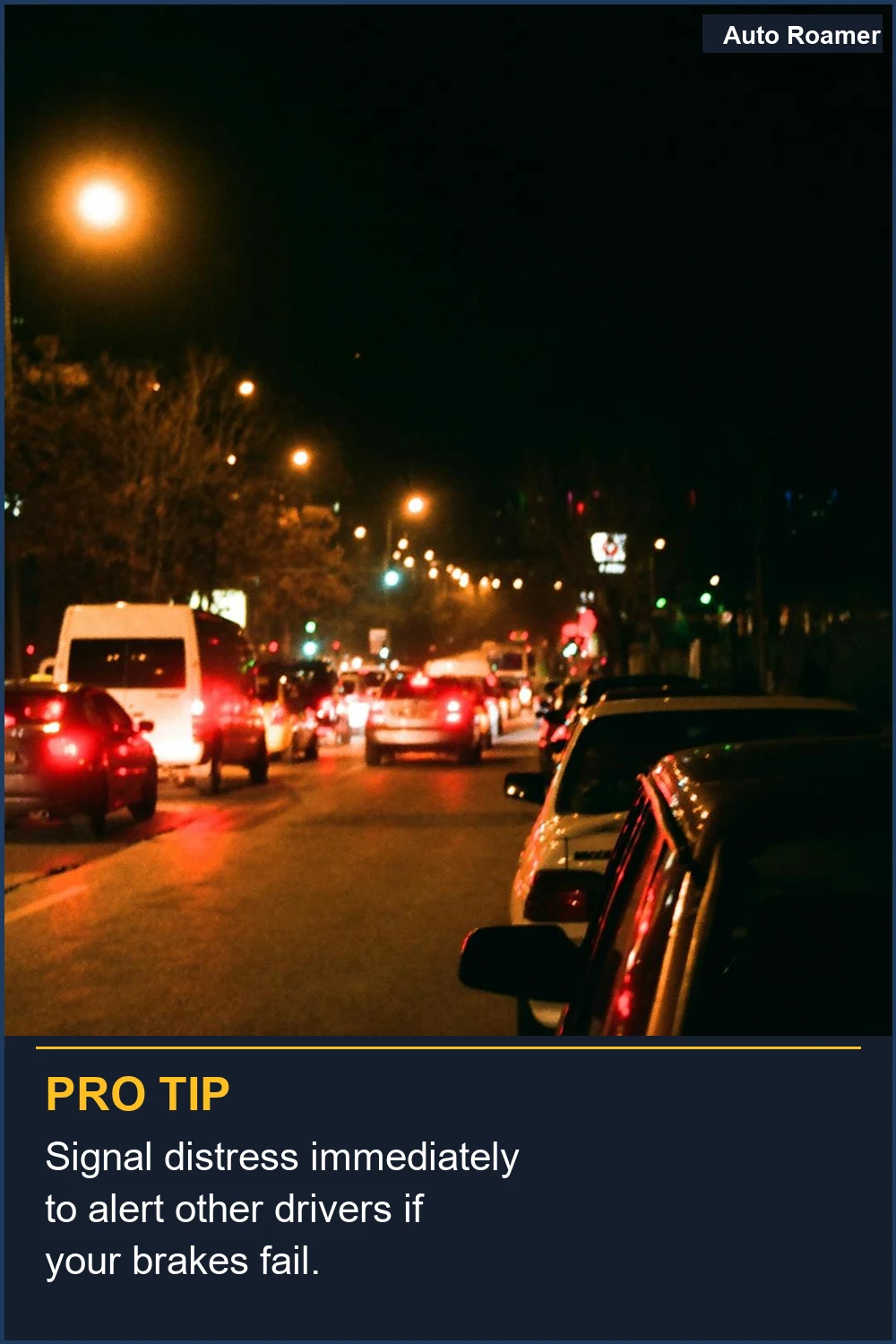
When faced with brake failure, safety should be our top priority. It's crucial to remain calm and composed, as panic can lead to poor decision-making. We recommend taking immediate actions to minimize danger to ourselves and others on the road. First and foremost, we should try to signal our distress by turning on our hazard lights to alert surrounding drivers. This is an essential step in ensuring that other vehicles maintain a safe distance from us while we attempt to regain control of the vehicle.
If our brakes fail while driving, we can take several measures. One effective method is to pump the brake pedal several times in quick succession. This can sometimes build up enough pressure to restore partial braking function, allowing us to slow down gradually. If this does not work, we should downshift into a lower gear to reduce our speed, as per the recommendations by the California DMV. It is important to do this smoothly to avoid losing control of the vehicle.
In addition, we should engage the emergency brake, but be cautious as it can cause the rear wheels to lock up if applied too forcefully. If the emergency brake does not slow us down effectively, we can steer towards an open area, such as a parking lot or an uphill incline, which can help bring the vehicle to a stop. According to Top Driver, it is crucial to avoid steering sharply, as this can lead to a loss of control.
Lastly, it is essential to keep our surroundings in mind. We should be aware of other vehicles and obstacles around us, allowing us to make informed and safe maneuvers. By staying vigilant and following these guidelines, we can effectively manage a situation where our brakes fail while driving, thereby enhancing our safety and that of others on the road.
Common Mistakes to Avoid
When faced with a situation where our brakes fail while driving, we must avoid several common mistakes to ensure both our safety and that of others on the road. One of the most critical errors is panicking. In such high-pressure moments, staying calm is essential. Panic can lead to rash decisions that may worsen the situation. Instead, we recommend taking a deep breath and assessing the scenario carefully, as this will help us maintain control of the vehicle and think clearly about our next steps.
Another mistake to avoid is neglecting to signal our intentions. If we have time, turning on our hazard lights is vital. This alerts other drivers to our predicament and can help prevent collisions. Additionally, we should not rely solely on the emergency brake. While it's important to engage it gradually, we should be aware that it may not stop the vehicle entirely, especially if we are traveling at high speeds. Instead, we should also attempt to downshift slowly to reduce our speed, as suggested by sources like Forbes.
Furthermore, we must avoid slamming on the brakes. Sudden braking can lead to loss of control and can cause the tires to skid. Instead, we should pump the brakes gently to see if we can regain some braking capability, as advised by Brake's To Go. Lastly, we should never turn off the engine while the vehicle is still in motion, as this can disable critical systems and make steering more difficult. By avoiding these common mistakes, we can better manage the situation when our brakes fail while driving and increase our chances of safely bringing the vehicle to a stop.

Final Thoughts
In conclusion, experiencing brake failure while driving can be a terrifying ordeal, but knowing what to do can significantly enhance your chances of avoiding a serious accident. First and foremost, we recommend staying calm. Panic can cloud your judgment and lead to poor decision-making. Instead, take a deep breath and focus on the steps you need to take to regain control of your vehicle.
Initially, try to pump the brake pedal; sometimes, this action can restore some braking power. If that does not work, downshifting your vehicle into a lower gear can help reduce speed gradually. It is crucial to perform this maneuver smoothly to maintain vehicle control. Additionally, engaging the emergency brake slowly can assist in bringing your car to a complete stop, but we advise against relying solely on it, as it may lock the wheels and cause a loss of control if applied too harshly Meineke.
While executing these actions, it's also vital to signal to other drivers that you are experiencing issues, perhaps by turning on your hazard lights, to alert them to your situation Top Driver. Lastly, when safe, maneuver your vehicle off the road to a secure location, minimizing the risk to yourself and others. Remember, understanding what to do if your brakes fail while driving can make a significant difference in an emergency. By preparing ourselves with this knowledge, we can navigate such crises more effectively and maintain safety on the road.