Roadside Emergencies

What Do Your Dashboard Warning Lights Actually Mean?

Auto Roamer
14 min read
Prices verified February 2026
Includes Video

The sudden illumination of a dashboard warning light is an unwelcome sight, instantly shifting your focus from the road ahead to the cryptic symbol staring back at you. Whether it's the dreaded "check engine" light or a less familiar icon, your car is trying to tell you something, and ignoring it can turn a minor inconvenience into a costly disaster Car and Driver .

The sudden illumination of a dashboard warning light is an unwelcome sight, instantly shifting your focus from the road ahead to the cryptic symbol staring back at you. Whether it's the dreaded "check engine" light or a less familiar icon, your car is trying to tell you something, and ignoring it can turn a minor inconvenience into a costly disaster Car and Driver. These lights are your vehicle's primary communication method for potential issues, acting as an early alert system Car and Driver. A red light signifies a critical problem demanding immediate attention, often requiring you to stop safely as soon as possible U.S. News Cars. Conversely, amber or yellow lights usually indicate a less urgent system error or a need for caution, suggesting you should address the issue promptly Reddit. Understanding the meaning behind these dashboard warning lights is crucial for safe driving and preventing significant damage.

These illuminated symbols are not merely decorative; they are sophisticated indicators designed to alert drivers to a wide range of potential malfunctions, from minor inconveniences to serious threats to your vehicle's integrity and your personal safety Kelley Blue Book. While many warning lights indicate that a fault has occurred inside the vehicle's system, they don't always pinpoint the exact item or system that has failed, making further investigation necessary AutoZone. For instance, a red light, such as the brake system warning, suggests a critical issue that could compromise your ability to stop safely, necessitating an immediate pull-over Brogden Garden City Honda. On the other hand, an amber or yellow light, like the tire pressure monitoring system (TPMS) alert, signals a less immediate concern but still requires attention to prevent potential problems down the line Speedway Subaru. Familiarizing yourself with these various icons, which are often standardized across manufacturers but can have slight variations, is a vital step in proactive vehicle maintenance and ensuring a secure driving experience Toyota Owners.
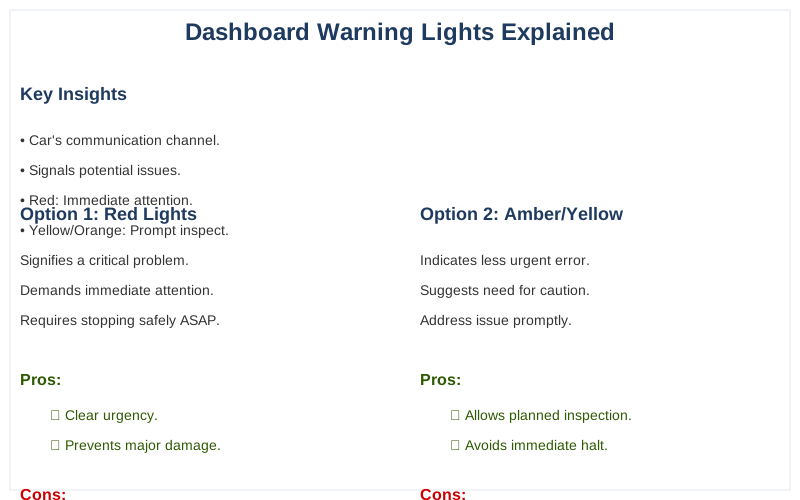
Infographic: Dashboard warning light meanings & specs
Key specifications for What Do Your Dashboard Warning Lights Actually Mean?

The Short Answer

Dashboard warning lights are your car's direct communication channel, signaling potential issues ranging from minor inconveniences to critical failures.

The color of the light is your primary guide: red demands immediate attention, while yellow or orange indicates a need for prompt inspection.

Think of these lights as your car's personal assistant, alerting you when something needs a closer look. They illuminate briefly when you start your vehicle to confirm the system is functional; if one stays on or fails to appear, it's a signal to pay attention Car and Driver. Many warning lights indicate that a fault has occurred inside the vehicle's system, but they do not always pinpoint the exact item or system that has failed AutoZone. Understanding these illuminated symbols is crucial for safe driving and preventing more significant problems down the road.

Red warning lights are the most urgent. They typically indicate a major problem or failure that requires you to stop driving as soon as it's safe to do so U.S. News Cars. Ignoring a red light can lead to severe damage, costly repairs, and compromise your safety What do the Dashboard Warning Lights on Your Honda Mean? [2026]. Examples of common red lights include the oil pressure warning light, which signifies a critical lack of lubrication, or the brake system warning light, which could mean low brake fluid or a malfunction in the braking mechanism itself. In these situations, pulling over immediately and turning off the engine is paramount.

Yellow or orange lights, on the other hand, signal a system error, low fluid levels, or a critical feature alert. While not always an immediate emergency, these lights mean something needs to be addressed as soon as possible and may require professional attention Car Warning Lights Guide 2026: Meanings & Immediate Solutions. These lights can also indicate a faulty sensor, not necessarily a catastrophic failure, but they still warrant investigation Car Warning Lights Guide 2026: Meanings & Immediate Solutions. A common example is the check engine light, which can illuminate for a wide range of issues from a loose gas cap to more complex emissions system problems. Other yellow or orange lights might indicate low tire pressure, a faulty anti-lock braking system (ABS) sensor, or that the traction control system is engaged or malfunctioning.

Many dashboard warning lights are linked to sensors and can trigger for various reasons, from a simple loose gas cap to a more complex engine issue What do the Dashboard Warning Lights on Your Honda Mean? [2026]. It's crucial to consult your owner's manual for specific interpretations, as symbols can vary significantly between makes and models Dashboard Warning Lights Explained | Toyota Owners. For instance, a tire pressure monitoring system (TPMS) light might look different or have a slightly different meaning depending on the manufacturer. Similarly, the meaning of a general warning light could be clarified by referring to specific guides for your vehicle's make, such as those available for Subaru Understanding the Symbols on Your Subaru Dashboard or Honda What do the Dashboard Warning Lights on Your Honda Mean? [2026]. Ultimately, these lights are designed to help you maintain your vehicle and ensure your safety on the road.
To better understand these signals, explore our comprehensive guide on dashboard warning lights.
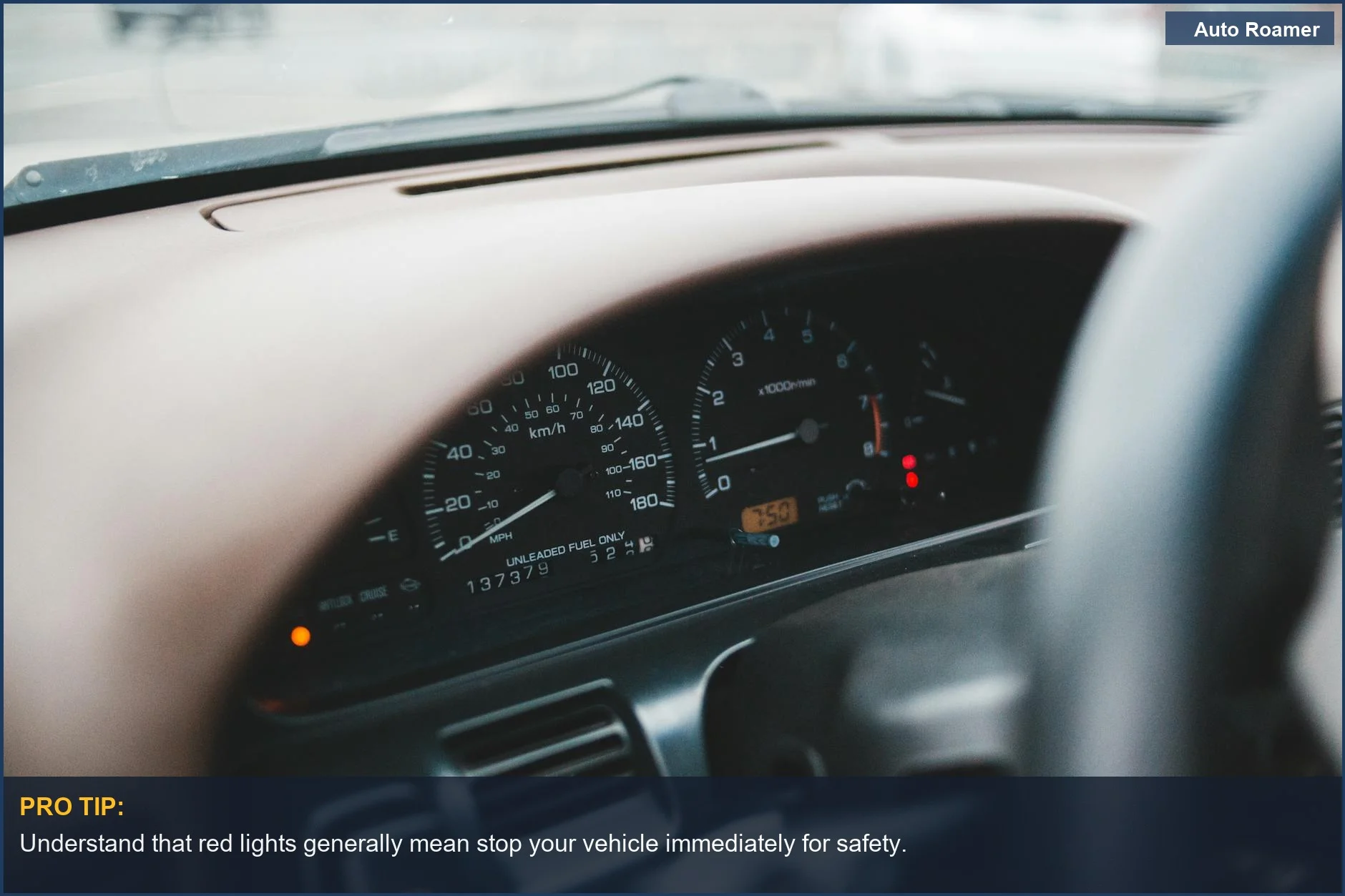
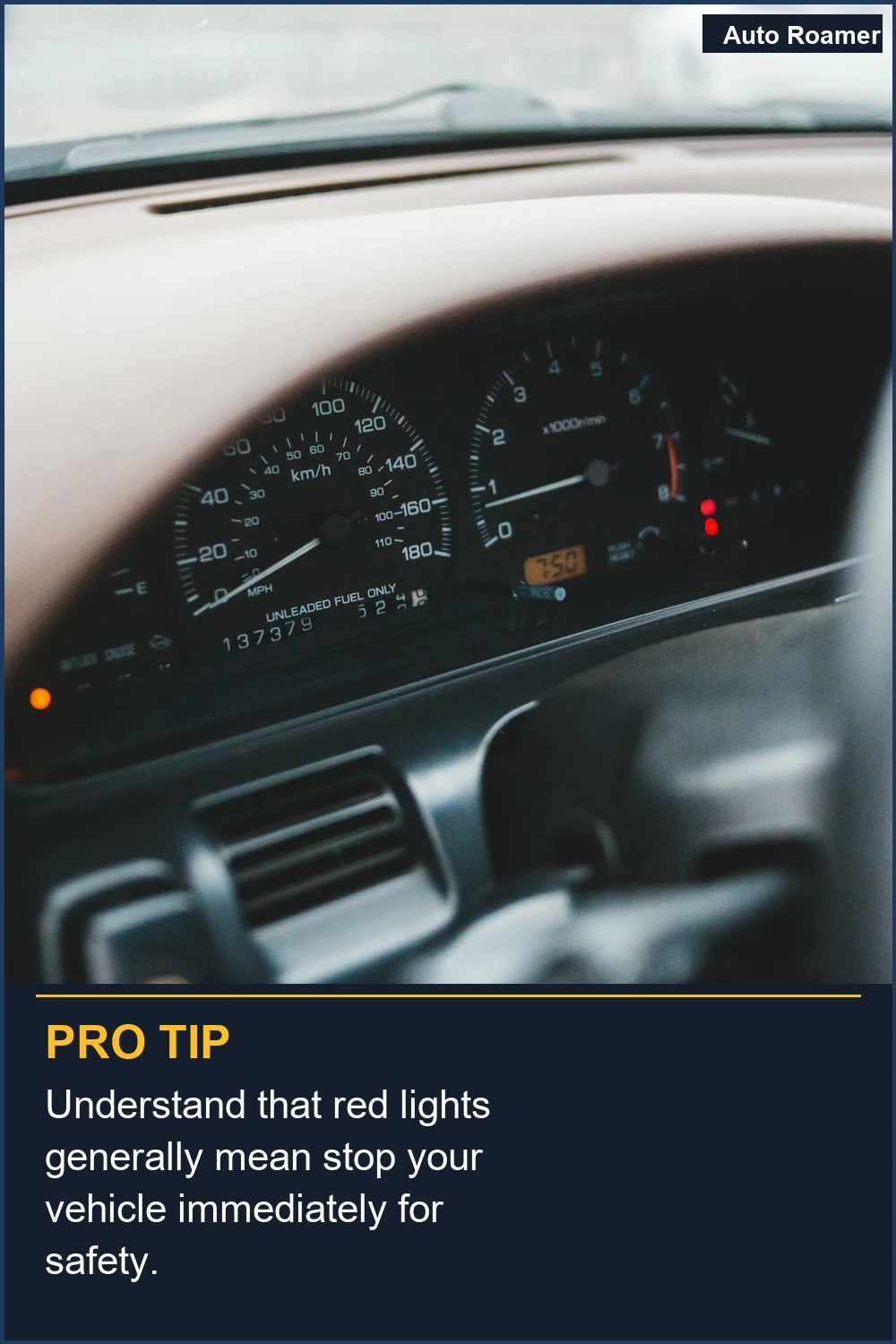
Understand that red lights generally mean stop your vehicle immediately for safety.
Your car's dashboard warning lights are crucial indicators. Red lights, like the one pictured, demand immediate attention to prevent serious damage. | Photo by Erik Mclean

What You Need to Know

1
Dashboard warning lights are your car's language. They illuminate briefly on startup to confirm system checks, but if one stays lit, it signals a problem. Ignoring these alerts, no matter how minor they seem, can escalate into costly repairs or even compromise your safety. Car and Driver emphasizes that understanding these symbols is crucial to prevent a small issue from becoming a major one.
2
Color dictates urgency. Red lights demand immediate attention; they indicate a critical failure or safety risk, meaning you should pull over safely as soon as possible. U.S. News Cars states clearly that a red light signifies a major problem requiring you to stop. Orange or yellow lights, on the other hand, suggest a system error or a feature that needs attention soon, allowing you to continue driving with caution. Honest John categorizes these as needing resolution as soon as possible.
3
Vehicle type can influence interpretation. While core symbols are universal, some manufacturers might have unique indicators or variations for specific systems, especially between sedans, SUVs, trucks, and vans. For instance, a truck might have a specific trailer brake warning light. Always consult your vehicle's owner's manual for the most accurate interpretation of your specific dashboard warning lights. Toyota Owners provides a resource for owners to check their specific vehicle's lights.
4
Common lights and their meanings. The "Check Engine" light, often a yellow or orange engine icon, is perhaps the most common and can indicate anything from a loose gas cap to serious engine or emissions issues. Facebook discussions highlight this as a frequent concern. The battery light, typically a battery shape, signals charging system problems. The oil pressure warning light, resembling an oil can, is critical and means your engine is critically low on oil. The tire pressure monitoring system (TPMS) light, often an exclamation mark inside a tire outline, warns of underinflated tires. Car and Driver lists these and many more, including brake system warnings and airbag indicators.
5
Sensors are the eyes and ears. Most warning lights are triggered by sensors monitoring various vehicle systems. A light can illuminate due to a genuine fault, or it could be a faulty sensor itself reporting a problem. Honest John notes that sensors can be the source of the alert. Therefore, a lit warning light doesn't always pinpoint the exact failed component but rather indicates that a system is not operating as intended.
Understanding these warning symbols can be just as important as knowing what features like ADAS on a dashcam offer.
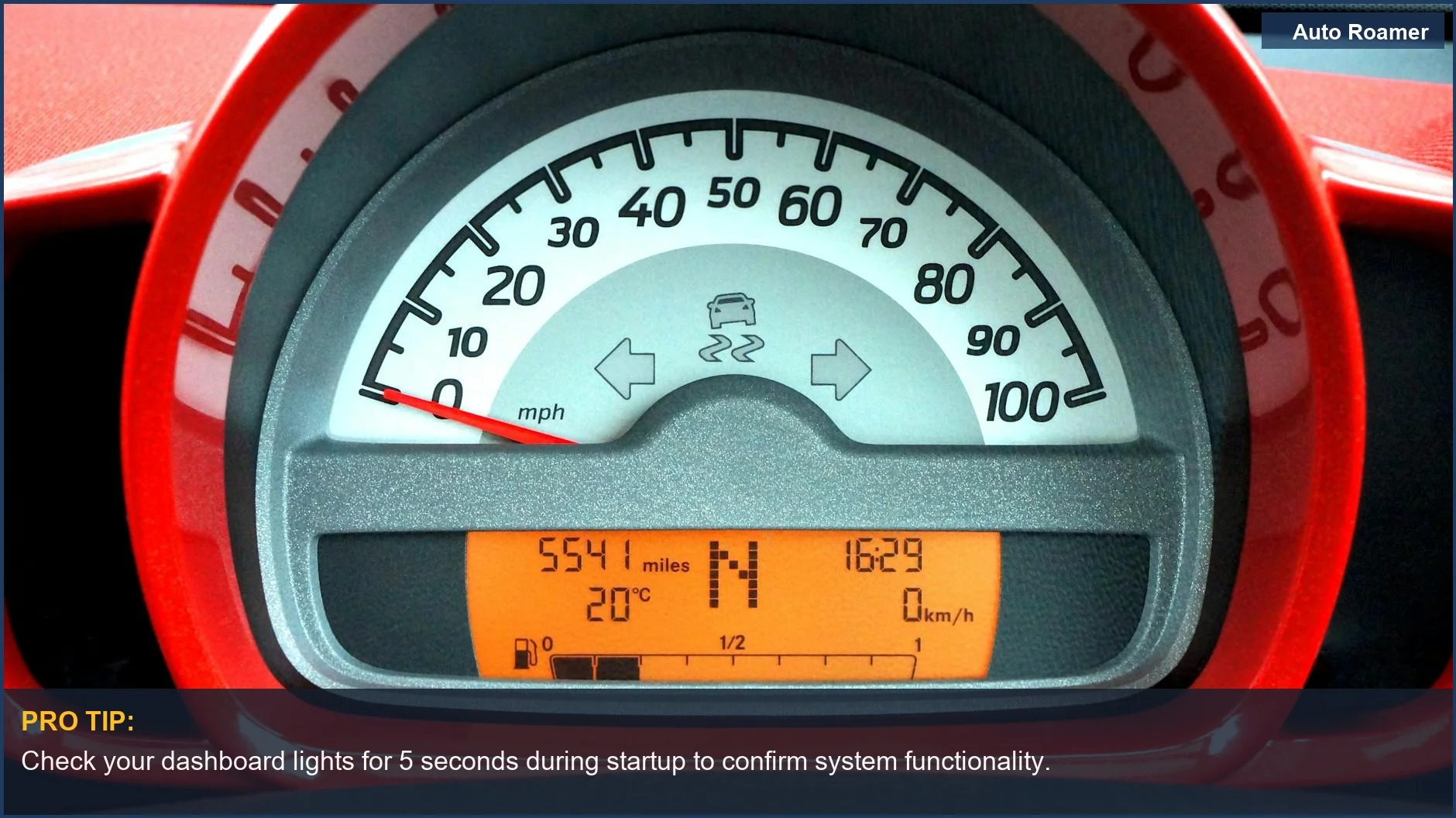
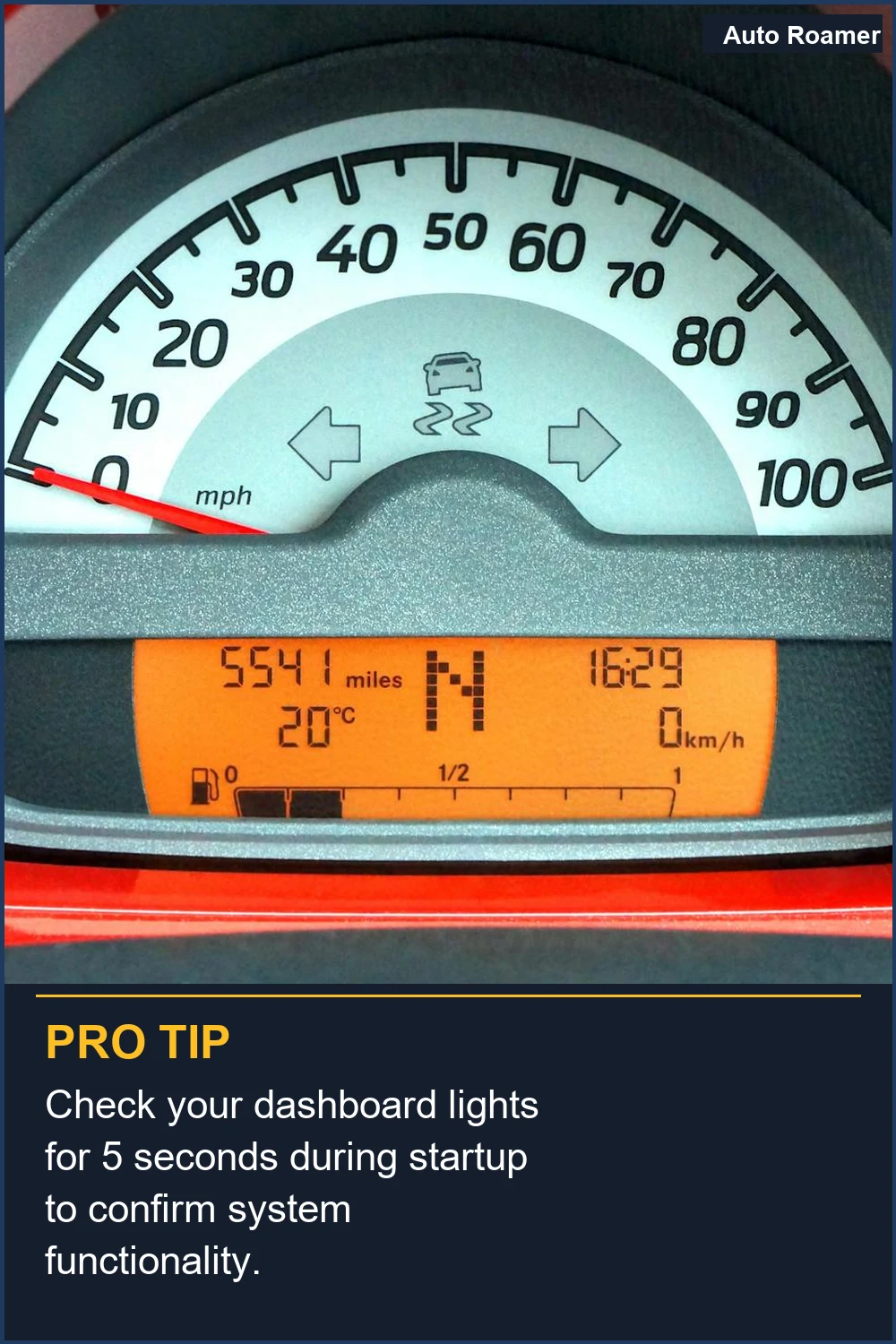
Check your dashboard lights for 5 seconds during startup to confirm system functionality.
A car's digital dashboard display shows various indicators. These lights confirm system checks on startup, but staying lit signals a problem. | Photo by Mike Bird

How to Handle This

1
Identify the light's color and symbol. Red lights signal a safety-critical system failure; pull over safely and stop the car. U.S. News Cars states red lights indicate a major problem or failure requiring you to prepare to stop as soon as it's safe. Orange or yellow lights signal a system error or a need for attention soon, but don't require an immediate stop; continue driving with caution. Reddit users echo this, noting red means stop immediately while amber means proceed with caution. Skipping this color-coding risks overreacting to minor issues or ignoring critical warnings.
2
Consult your owner's manual for specific dashboard warning lights meaning. Your car's manual details the exact meaning of each symbol and recommended action. For example, a flashing check engine light is more urgent than a solid one, and your manual clarifies this distinction. Toyota Owners advises consulting your Owner's Manual or scheduling service if a safety system light doesn't illuminate as expected. Ignoring your manual means misinterpreting alerts, potentially leaving you stranded or causing damage.
3
Assess your immediate surroundings and road conditions. If a red light illuminates, pulling over abruptly on a busy highway at night in heavy rain is more dangerous than finding a safe exit or shoulder. Consider visibility, traffic speed, and safe stopping areas. A flashing check engine light might be manageable for a few miles to reach a safe location, but navigating a dark, winding country road with no shoulder when your brake system light comes on is a risk. Car and Driver emphasizes understanding the light's meaning avoids bigger, more expensive, and dangerous issues.
4
Determine if immediate professional attention is required. Some lights, like oil pressure or a critical brake system alert, mean you should not drive further to avoid irreparable engine damage or loss of braking control. For less critical lights (like tire pressure monitoring or a non-flashing check engine light), drive cautiously to a mechanic. Brogden Garden City Honda highlights that red lights mean stop now, as there's a real risk to your car or safety. Skipping this step risks a breakdown in an unsafe location or causing secondary, more costly damage.
Understanding the essential dash cam features can greatly enhance your experience before installation.
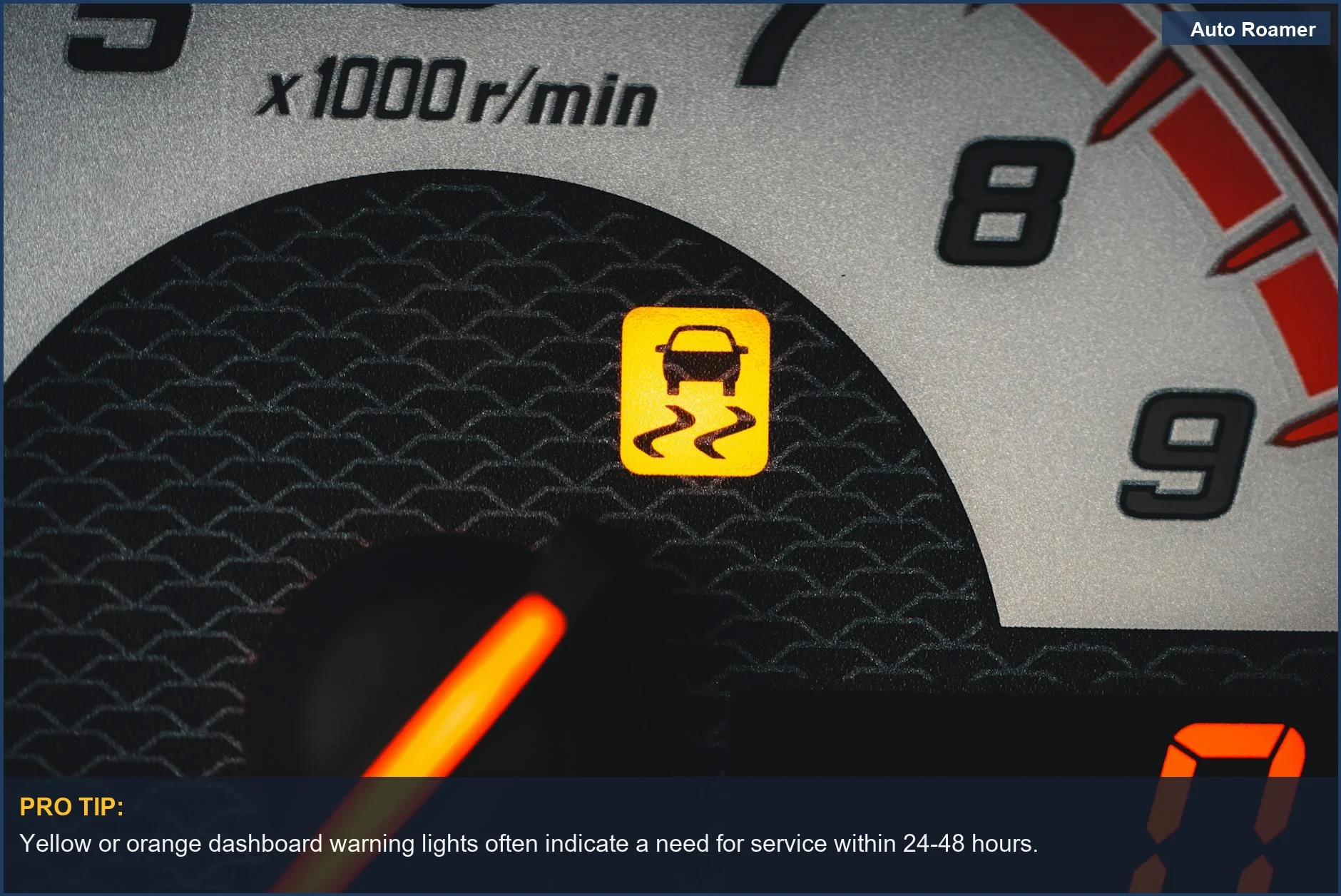
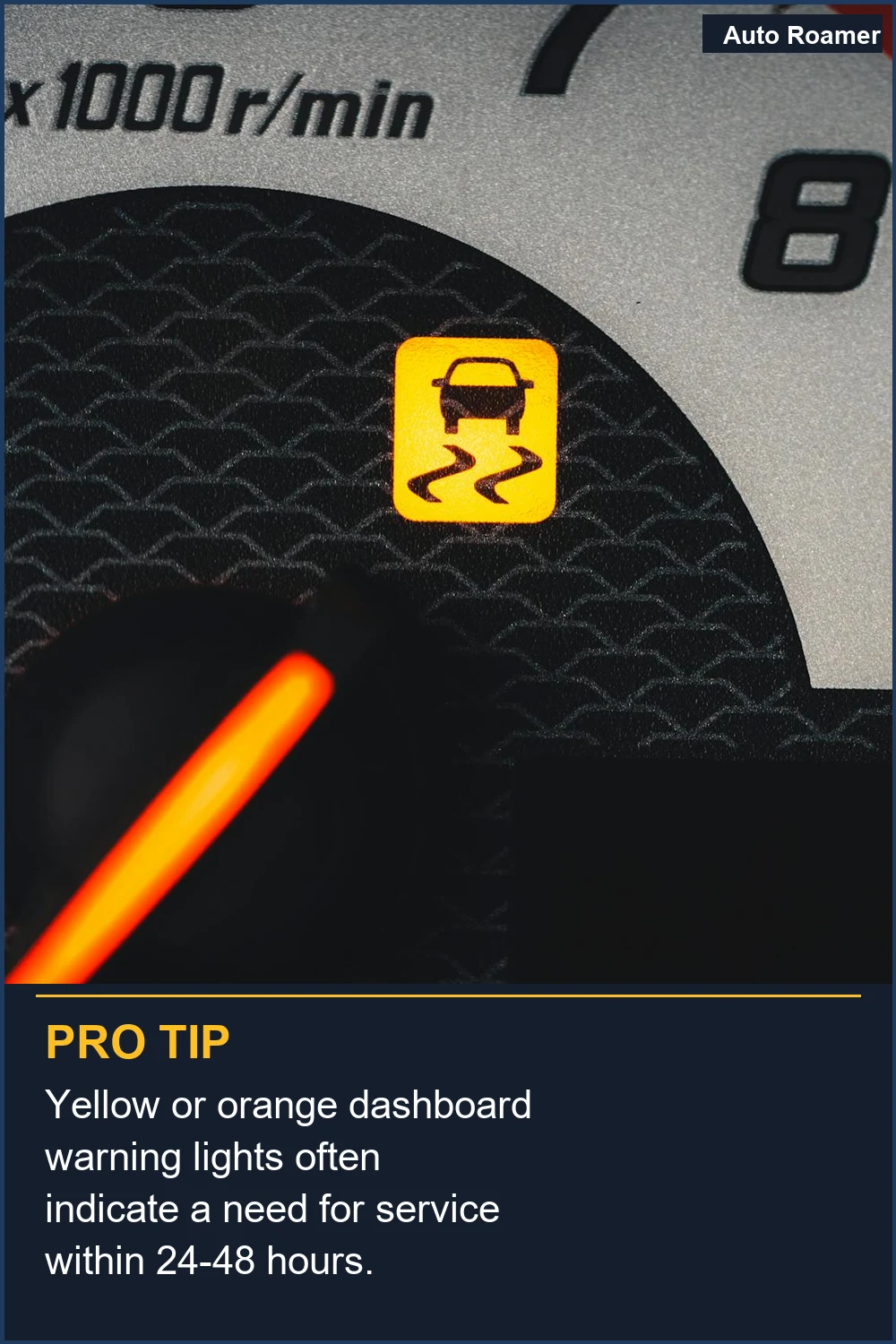
Yellow or orange dashboard warning lights often indicate a need for service within 24-48 hours.
This yellow traction control light on a car dashboard signifies a system that needs attention soon, but not necessarily immediate stopping. | Photo by Erik Mclean

What This Looks Like in Practice

  • Winter Mountain Pass in a Subaru Outback: Driving up a steep, snowy mountain pass, the check engine light illuminated on a Subaru Outback under heavy load. The driver noticed a slight loss of power but continued cautiously, as the amber light suggested it wasn't an immediate failure Car Warning Lights Guide 2026: Meanings & Immediate Solutions. The Subaru's traction control system also briefly engaged due to wheel slip on the icy surface. Upon reaching a safe pull-off, a loose gas cap was discovered as the likely culprit for the check engine light What do the Dashboard Warning Lights on Your Honda Mean? [2026].
  • Summer Desert in a Honda Civic: On a scorching summer day in the desert, a Honda Civic's engine temperature warning light flashed red during stop-and-go traffic. The driver immediately pulled over and turned off the engine. The red light indicated a critical issue requiring immediate attention Dashboard Warning Lights Explained - Car and Driver. After 30 minutes, the temperature gauge dropped, and the light went out. The coolant level was critically low, likely due to a slow leak. The Civic proceeded to the nearest town for repairs.
  • Highway Commute in a Toyota Camry: During a routine highway commute in a Toyota Camry, the tire pressure monitoring system (TPMS) light illuminated without any noticeable change in handling. The driver, remembering that amber lights signify a need for attention but not an immediate stop, found the nearest gas station. One tire was significantly underinflated, likely due to a slow puncture. The TPMS light is a crucial safety feature Dashboard Warning Lights Explained | Toyota Owners, Dashboard Warning Lights Guide - U.S. News Cars.
While monitoring warning lights is crucial, understanding how devices like dashcams impact your vehicle's battery is equally important; learn more about dashcam effects.
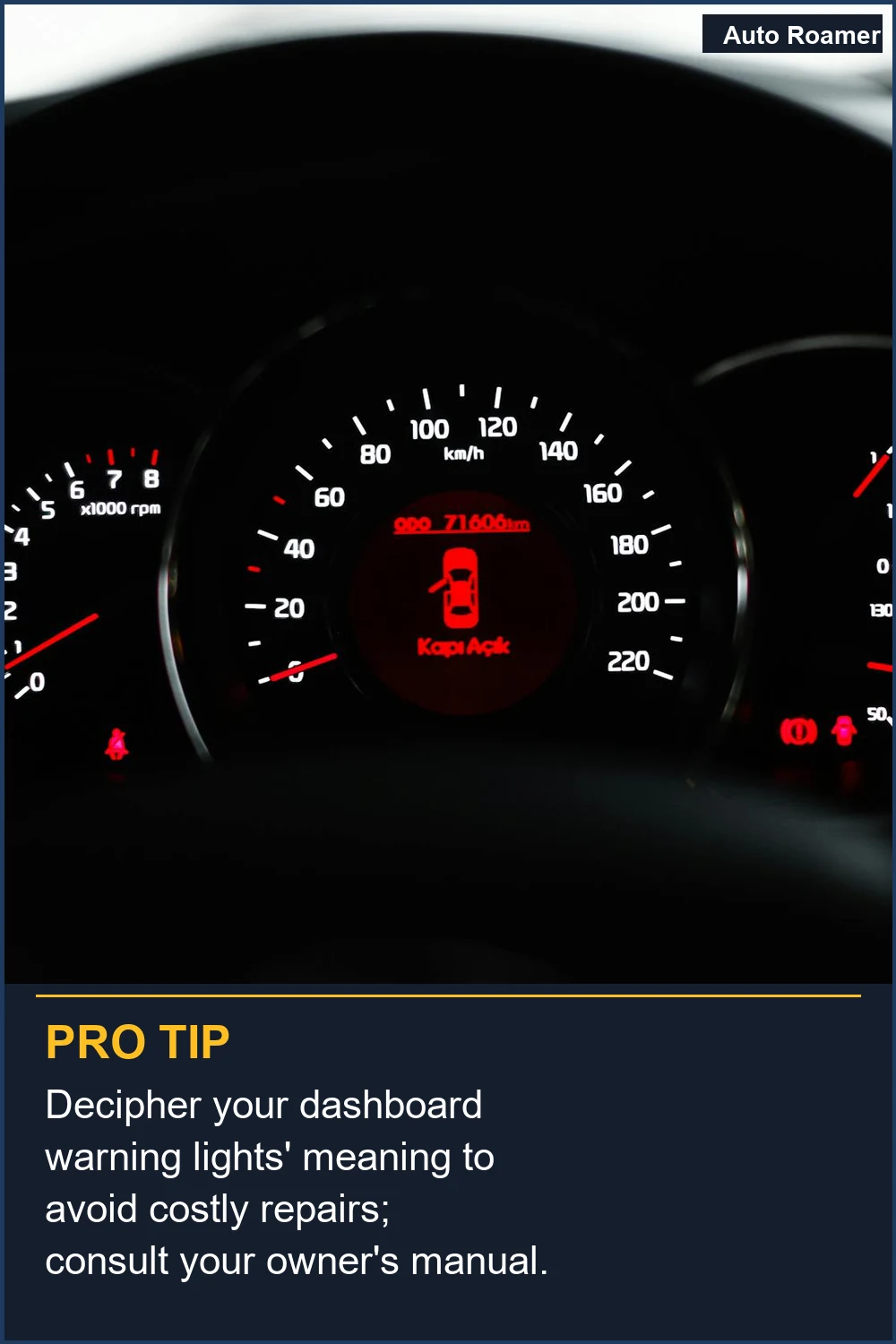
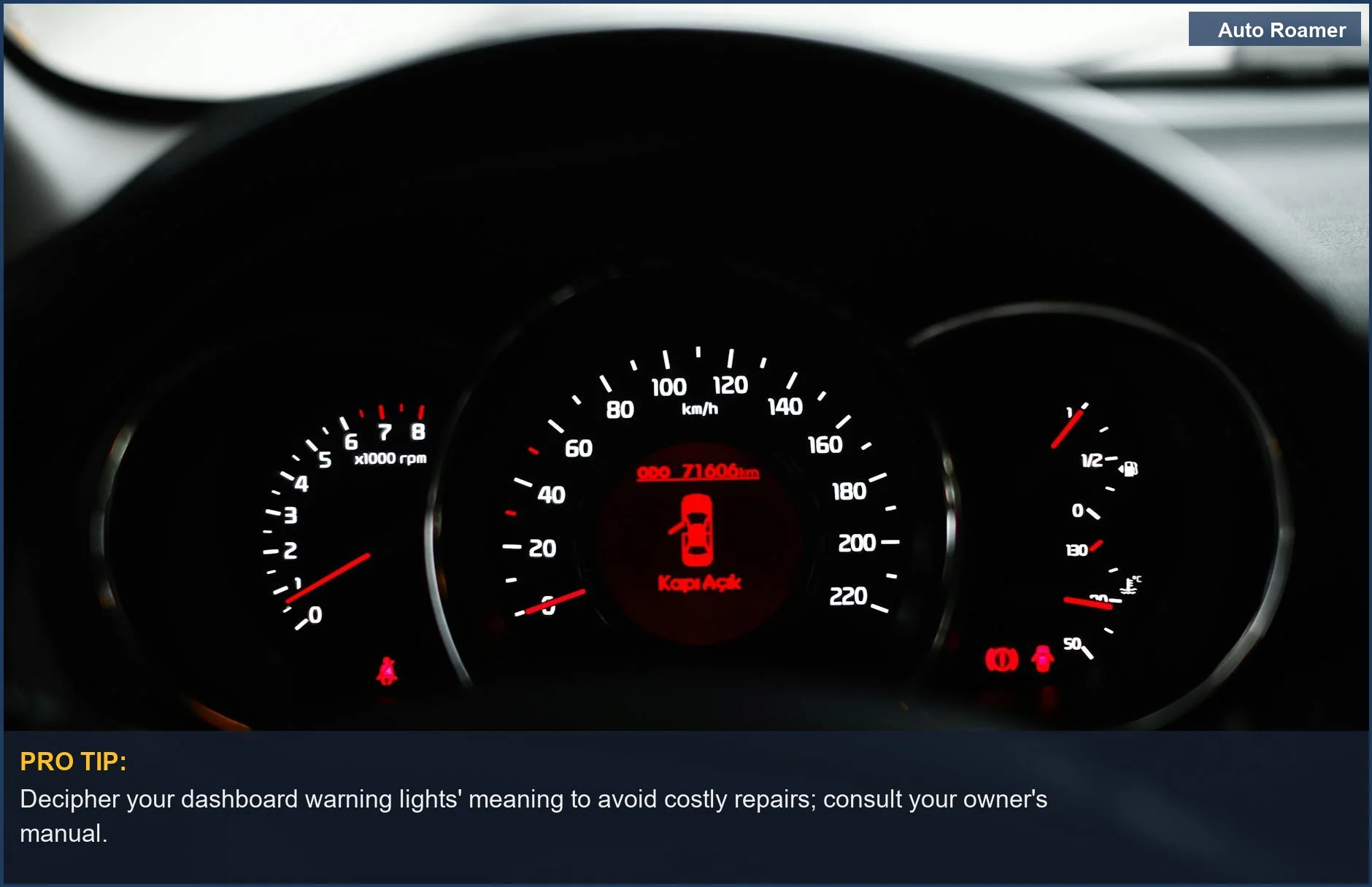
Decipher your dashboard warning lights' meaning to avoid costly repairs; consult your owner's manual.
Various dials and gauges on a car dashboard are essential. Understanding the meaning of illuminated warning lights is key to car maintenance. | Photo by Yakup Polat

Mistakes That Cost People

Mistake Assuming all dashboard warning lights are critical emergencies.
Why people make it The immediate association of any light with a serious breakdown, often fueled by dramatic portrayals in media. Many lights are designed to be alarming.
What actually happens People panic, sometimes pulling over unsafely or ignoring less urgent but still important notifications. This can lead to unnecessary stress and costly, premature repairs. For example, a loose gas cap can trigger the check engine light, but it's not a roadside emergency. Car and Driver notes that some lights are informational.
The fix Understand the color coding: red demands immediate attention, while yellow or orange lights mean "be alert" and address the issue soon. Honest John highlights this distinction. Consult your owner's manual for specific meanings.
Mistake Ignoring the check engine light because the car still "runs fine."
Why people make it The check engine light (CEL) can illuminate for a wide range of issues, from minor to severe. If the car's performance hasn't noticeably degraded, it's easy to postpone addressing it.
What actually happens A persistent CEL, even if the car drives normally, often indicates a problem with the engine, emissions system, or transmission that can worsen over time. This can lead to reduced fuel efficiency, increased emissions, and eventually, more expensive damage. Honda warns that a CEL can signal trouble with the engine or exhaust system.
The fix Get the vehicle scanned by a mechanic or use an OBD-II scanner to identify the specific fault code. Address the underlying issue promptly, even if the car seems fine.
Mistake Believing that if a warning light *doesn't* illuminate on startup, it's functioning perfectly.
Why people make it The brief illumination of all dashboard lights upon ignition is a system check. Drivers often assume that if they *see* the light flash, the system is okay, and if it *doesn't* flash, it's not needed.
What actually happens If a warning light fails to illuminate during the startup sequence, it means the bulb or the system indicating the fault may be inoperative. This leaves you blind to potential problems, such as a malfunctioning airbag system or ABS, which could be critical in an accident. Car and Driver emphasizes that if they aren't functioning, you might not detect a problem.
The fix Pay attention to the startup sequence. If a light that should illuminate doesn't, have it checked immediately.
Mistake Overlooking the importance of tire pressure monitoring system (TPMS) alerts.
Why people make it Drivers may dismiss the TPMS light as a minor inconvenience, especially if they don't notice a drastic change in tire feel, or they might confuse it with a general tire issue.
What actually happens The TPMS light indicates that one or more tires are significantly underinflated. Driving on underinflated tires reduces fuel economy, compromises handling and braking, and can lead to premature tire wear or even a blowout. Honest John details TPMS as a common warning light.
The fix Check tire pressure immediately with a gauge and inflate to the recommended PSI found on the driver's side doorjamb sticker. Note that the light may stay on if a sensor is faulty, requiring professional diagnosis.
If you're experiencing issues like a display that turns off, you might want to explore common dash cam problems.
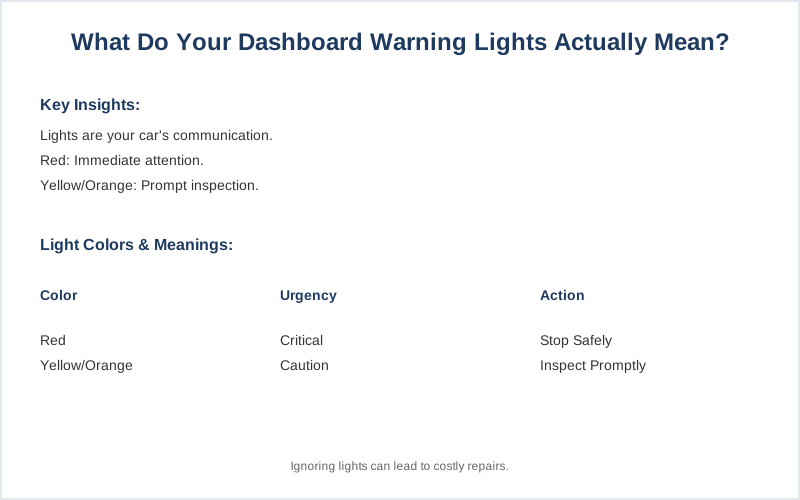
Infographic: Dashboard warning light meanings, pros, and cons.
Product comparison for What Do Your Dashboard Warning Lights Actually Mean?

Key Takeaways

  • Dashboard warning lights are your car's direct line of communication, signaling everything from minor inconveniences to critical failures. Ignoring them is a gamble that can escalate small issues into major, costly, and potentially dangerous problems Car and Driver. These lights are designed to alert you to potential issues before they become catastrophic, acting as an early warning system for your vehicle's health.
  • Understand the color coding: Red lights demand immediate attention and often mean you should stop safely and investigate U.S. News Cars. Think of a red light, such as the oil pressure or engine temperature warning, as a "stop now" command; continuing to drive could cause irreversible engine damage. Yellow or orange lights are alerts to be aware; something needs attention soon, possibly requiring professional help Car Warning Lights Guide 2026: Meanings & Immediate Solutions. These are often indicators like a check engine light or tire pressure warning, which, while not immediately critical, should not be postponed.
  • Know that a light illuminating doesn't always pinpoint a specific failed part; it indicates a fault within a system AutoZone. For instance, the check engine light can be triggered by a loose gas cap or a more complex catalytic converter issue. Always consult your vehicle's owner's manual for the most accurate interpretation of your specific car's dashboard warning lights meaning, as symbols can vary slightly between manufacturers.
  • The single most important thing to remember is this: Never ignore a warning light. Even seemingly minor alerts can point to underlying issues that, if left unaddressed, will inevitably lead to more serious and expensive repairs. Proactive attention can save you significant time, money, and potential safety hazards on the road.
Understanding your dashboard lights can also help you stay informed about important updates, like a vehicle’s safety recall status.

Frequently Asked Questions

What do the different colored dashboard warning lights mean?
Dashboard warning lights use color to signal urgency. Red lights indicate a critical issue requiring immediate attention, meaning you should stop safely as soon as possible. Yellow or orange lights suggest a system error or low fluid level that needs to be addressed soon but doesn't necessarily require you to stop driving immediately. Green, blue, black, or white lights are typically informational and don't signify a fault.
When the 'check engine' light comes on, what's usually wrong?
The 'check engine' light can indicate a wide range of issues, from a simple problem like a loose gas cap to more complex engine or emissions system malfunctions. While it doesn't pinpoint the exact fault, it signals that a sensor has detected an issue. It's best to have your vehicle inspected by a mechanic to diagnose and resolve the problem promptly.
My car's oil can symbol is lit up, what does that mean?
The oil can symbol on your dashboard usually signifies low oil pressure, which is a serious issue. If this light illuminates, it's crucial to stop driving as soon as it is safe to do so and check your oil level. Driving with low oil pressure can cause significant damage to your engine.
What should I do if the tire pressure warning light appears?
The tire pressure monitoring system (TPMS) light indicates that one or more of your tires are significantly underinflated. This can affect handling, fuel efficiency, and tire wear. Check your tire pressure when the tires are cold and inflate them to the recommended PSI found on the sticker inside your driver's side door jamb.
Is the airbag warning light something I need to worry about immediately?
Yes, the airbag warning light signifies a problem with the supplemental restraint system (SRS), which includes your airbags. If this light stays illuminated, your airbags may not deploy in an accident, posing a serious safety risk. It's recommended to have your vehicle inspected by a qualified technician as soon as possible.
What does the brake system warning light mean if it turns on?
When the brake system warning light illuminates, it can mean several things, including low brake fluid or a problem with the anti-lock braking system (ABS). In some cases, it may also indicate that the parking brake is still engaged. It's important to address this light immediately, as it directly relates to your vehicle's braking capability and safety.
My car dashboard has a battery symbol lit up, what's the issue?
A lit battery symbol typically indicates a problem with your car's charging system, meaning the battery isn't being recharged properly. This could be due to a faulty alternator, a loose or corroded battery cable, or a worn-out battery. If this light stays on, your car may eventually run out of power and stop.
What does the coolant temperature warning light signify?
The coolant temperature warning light, often resembling a thermometer in waves, means your engine is overheating. This can be caused by low coolant levels, a faulty thermostat, or a problem with the cooling fan. Continuing to drive an overheating engine can lead to severe and costly damage.

Sources

Related Articles