What Those Dashboard Warning Lights Actually Mean (2026 Complete Guide)
Auto Roamer
13 min read
Prices verified February 2026
Includes Video
The sudden appearance of an amber or red icon on your dashboard can trigger immediate concern. Is it a minor inconvenience or a sign of impending disaster? Your car communicates critical information through these dashboard warning lights, and understanding their language is paramount for both safety and the longevity of your vehicle Dashboard Warning Lights Explained - Car and Driver .
The sudden appearance of an amber or red icon on your dashboard can trigger immediate concern. Is it a minor inconvenience or a sign of impending disaster? Your car communicates critical information through these dashboard warning lights, and understanding their language is paramount for both safety and the longevity of your vehicle Dashboard Warning Lights Explained - Car and Driver. These symbols are more than just decorative; they are your car's way of alerting you to issues ranging from simple indicators to serious malfunctions that demand immediate attention A Guide to Common Dashboard Warning Lights - MotorTrend. For instance, a red oil pressure light signifies a critical loss of lubrication, a situation that can lead to severe engine damage if not addressed instantly What do the Dashboard Lights Mean in Your Ford? [2026]. Ignoring these signals can turn a minor problem into an expensive and potentially dangerous one, making it essential to know what each car warning symbol represents.
Key specifications for What Those Dashboard Warning Lights Actually Mean
The Short Answer
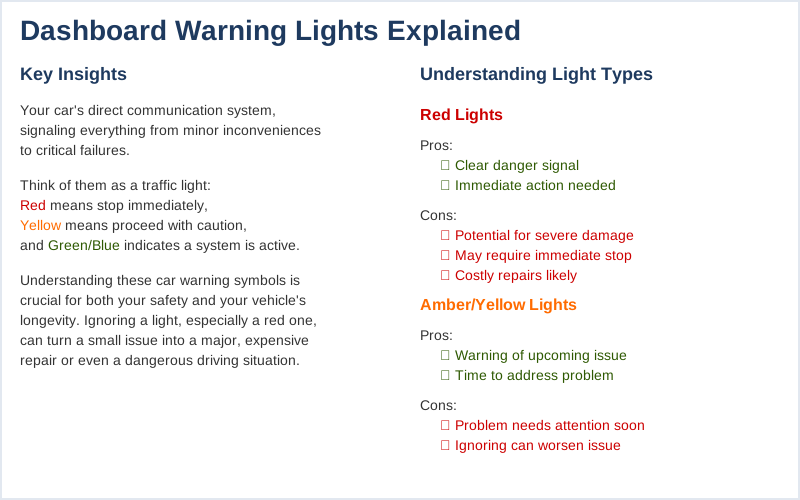
Dashboard warning lights are your car's direct communication system, signaling everything from minor inconveniences to critical failures.
Think of them as a traffic light: red means stop immediately, yellow means proceed with caution, and green/blue indicates a system is simply active.
Understanding these car warning symbols is crucial for both your safety and your vehicle's longevity. Ignoring a light, especially a red one, can turn a small issue into a major, expensive repair or even a dangerous driving situation Car and Driver.
The dashboard warning lights follow a universal color-coding system. Red lights are urgent, demanding you pull over safely and shut off the engine, as they often indicate critical problems like low oil pressure or engine overheating Diamond Ford. Yellow or amber lights act as a caution, signaling a problem that needs prompt attention but doesn't necessarily require an immediate stop, such as a minor emission fault or low tire pressure Auto Pro Tips. Green or blue lights are purely informational, confirming that a system like your headlights or cruise control is engaged.
The infamous check engine light meaning can range from a loose gas cap to a more serious powertrain issue. While not always an immediate emergency, it warrants a visit to a mechanic to prevent potential long-term damage Car and Driver.
Other common indicators include the brake system warning light, which could mean your parking brake is engaged or a more serious brake component failure Diamond Ford. The tire pressure monitoring system (TPMS) light, often appearing as an exclamation point inside a tire cross-section, alerts you to underinflated tires, which impacts handling and fuel efficiency Car and Driver.
Some lights, like those for fog lights or lane-keeping assist, simply indicate a system is active and not a malfunction. For instance, a Lane-Keeping Assist System (LKAS) light means the system is actively helping you stay within your lane Phil Hughes Honda. Conversely, a sensor issue, like one for advanced driver-assistance systems being blocked by ice or condensation, might trigger a warning light that will clear on its own once conditions improve Reddit.
To better understand these signals, you can dive into our detailed overview of dashboard warning lights.
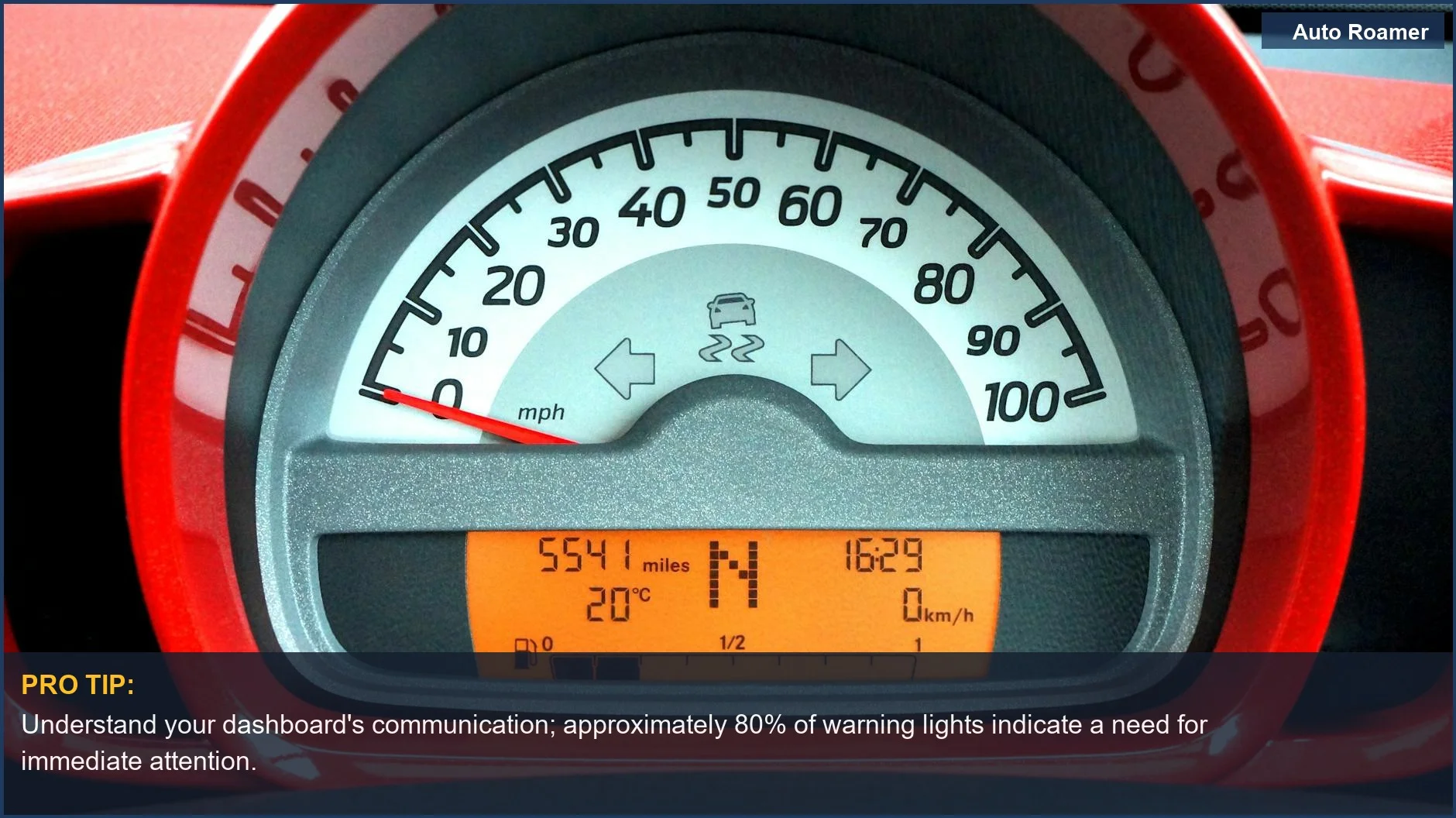
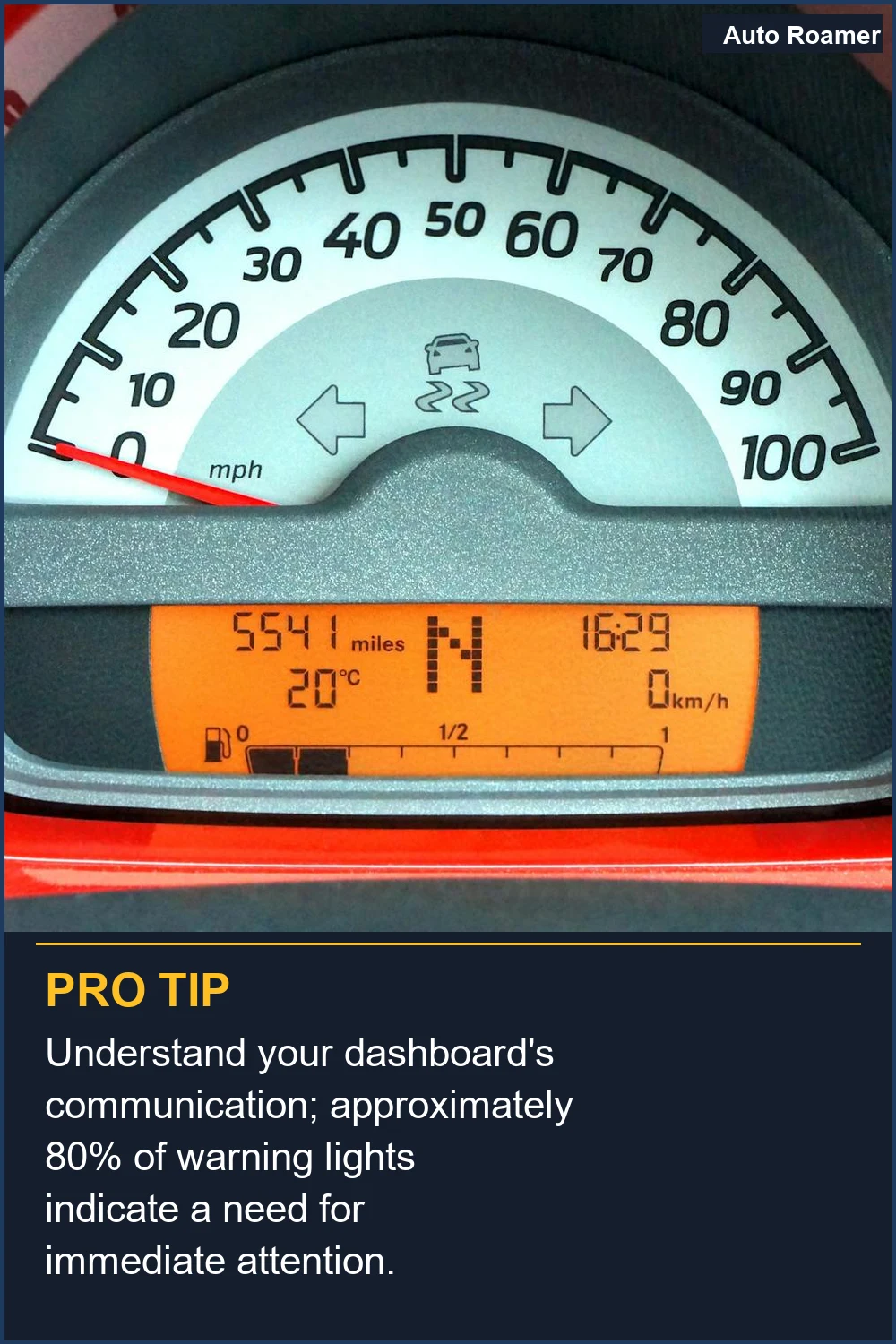
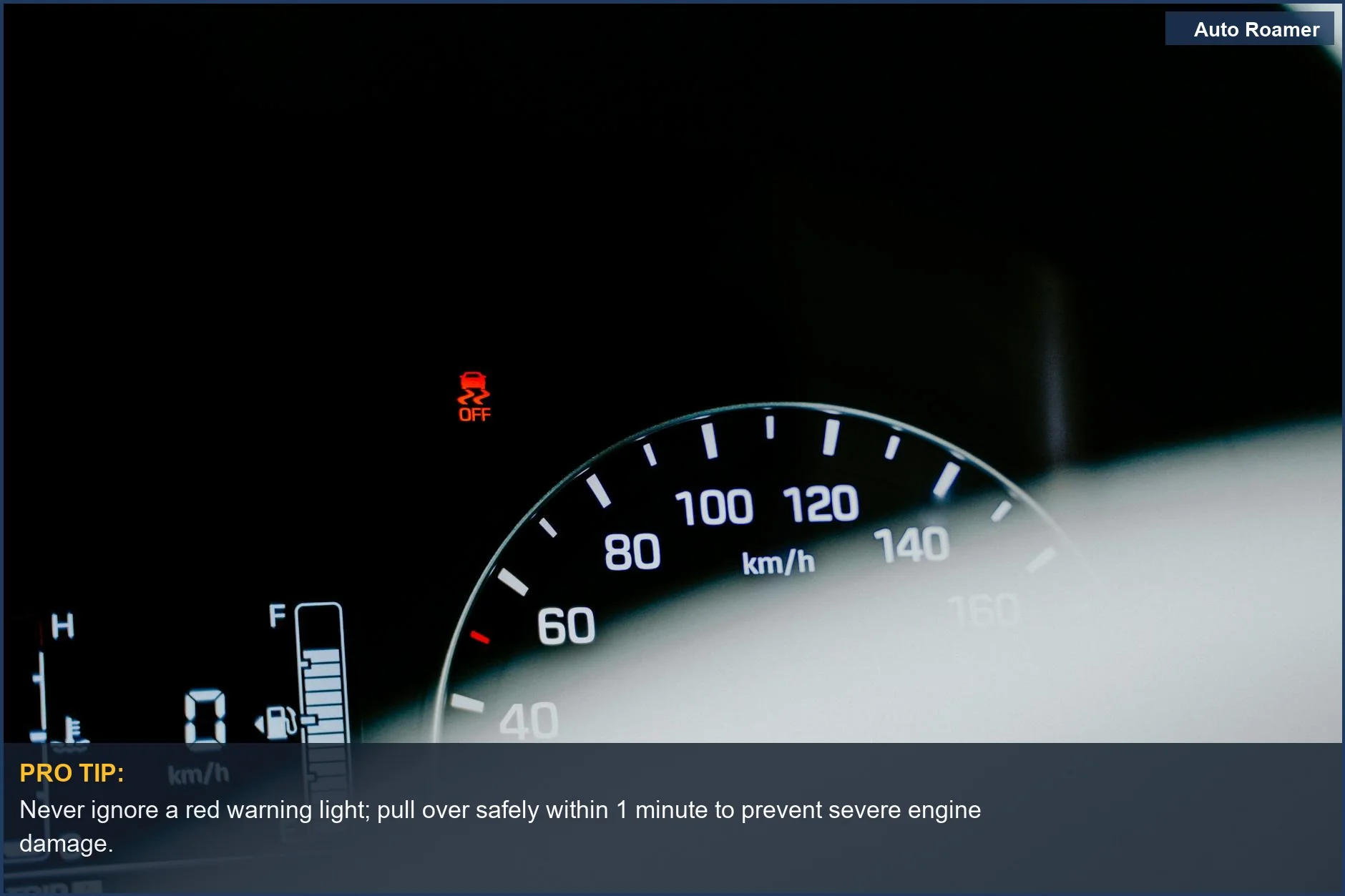
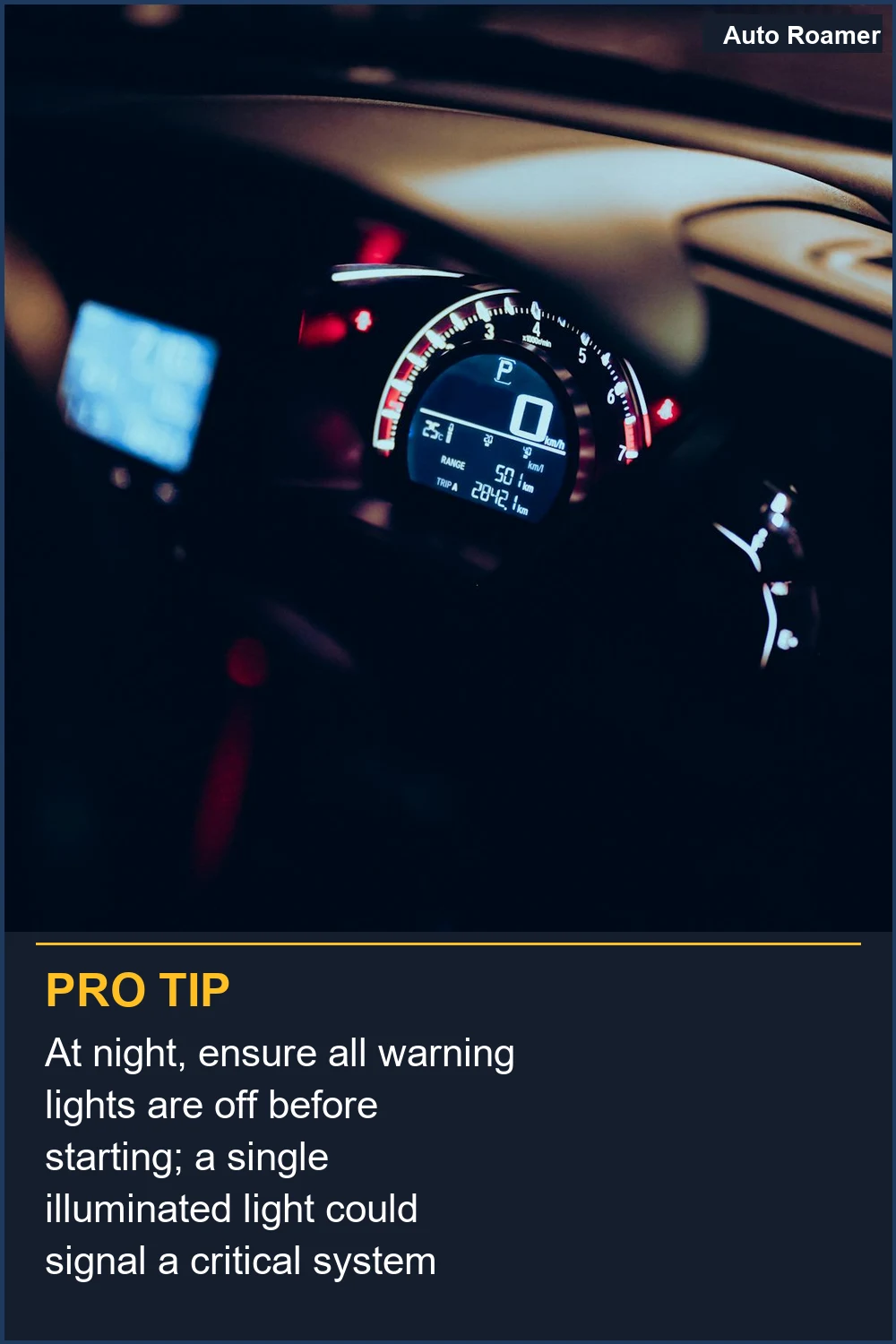
Familiarize yourself with your car's dashboard warning lights. These illuminated symbols, like the ones seen here, are crucial for understanding your vehicle's health and preventing unexpected breakdowns.
| Photo by Mike Bird
Familiarize yourself with your car's dashboard warning lights. These illuminated symbols, like the ones seen here, are crucial for understanding your vehicle's health and preventing unexpected breakdowns.
| Photo by Mike Bird
What You Need to Know
1
Dashboard warning lights are your car's primary communication system for impending issues. These symbols, ranging from cryptic icons to text alerts, are designed to inform you about the vehicle's health and safety status. Ignoring them can turn minor problems into costly repairs or dangerous situations Car and Driver. Understanding these lights is crucial for both vehicle longevity and your personal safety on the road.
2
The color of a warning light dictates its urgency. Red lights signal a serious, often safety-critical problem requiring immediate attention; pull over safely as soon as possible and shut off the engine to prevent major damage or dangerous driving conditions autoprotips.com. Yellow or amber lights are a "caution" alert, indicating a need for prompt attention but usually allowing you to drive to a repair shop or your destination. Green or blue lights are purely informational, indicating a system is active, like headlights or turn signals, and require no action.
3
Specific car warning symbols have distinct meanings. The Check Engine light, officially the Malfunction Indicator Light (MIL), often signals an issue with the engine, emissions system, or electronic control unit (ECU) Car and Driver. A red oil pressure warning light, sometimes depicted as a magic lamp with a teardrop, means the engine is losing oil pressure and can cause severe damage if not addressed immediately; pull over and check oil levels Diamond Ford. A brake system warning light can indicate an issue with your brakes or that the parking brake is engaged; if the parking brake is off and the light remains, stop driving and seek professional help.
4
Advanced vehicle systems also have dedicated indicators. For instance, a Lane-Keeping Assist System (LKAS) warning light indicates the system is active and functioning to keep you within your lane Phil Hughes Honda. Conversely, an amber or orange light related to driver-assistance systems might mean the system has detected a condition where it may not be functioning optimally, or that a sensor is temporarily unavailable, perhaps due to weather obscuring cameras or sensors autoprotips.com. Some systems, like those on a 2026 Hyundai Palisade Limited, might display a warning if a sensor around the rear-view mirror is blocked by ice or condensation, suggesting you simply drive for a bit to clear it r/HyundaiPalisade.
5
Vehicle manufacturers sometimes use color-coding to differentiate system status. For example, with certain driver-assistance systems, a white indicator means the system isn't active, green indicates it's active and assisting, and orange/amber means the system has detected a potential issue or limitation Ritchey Buick GMC. Understanding these nuances across different vehicle types, from sedans to SUVs and trucks, is key to interpreting what your car is trying to tell you Diamond Ford.
Understanding your vehicle's recall status is crucial, so consider reading our article on family car recall notices.
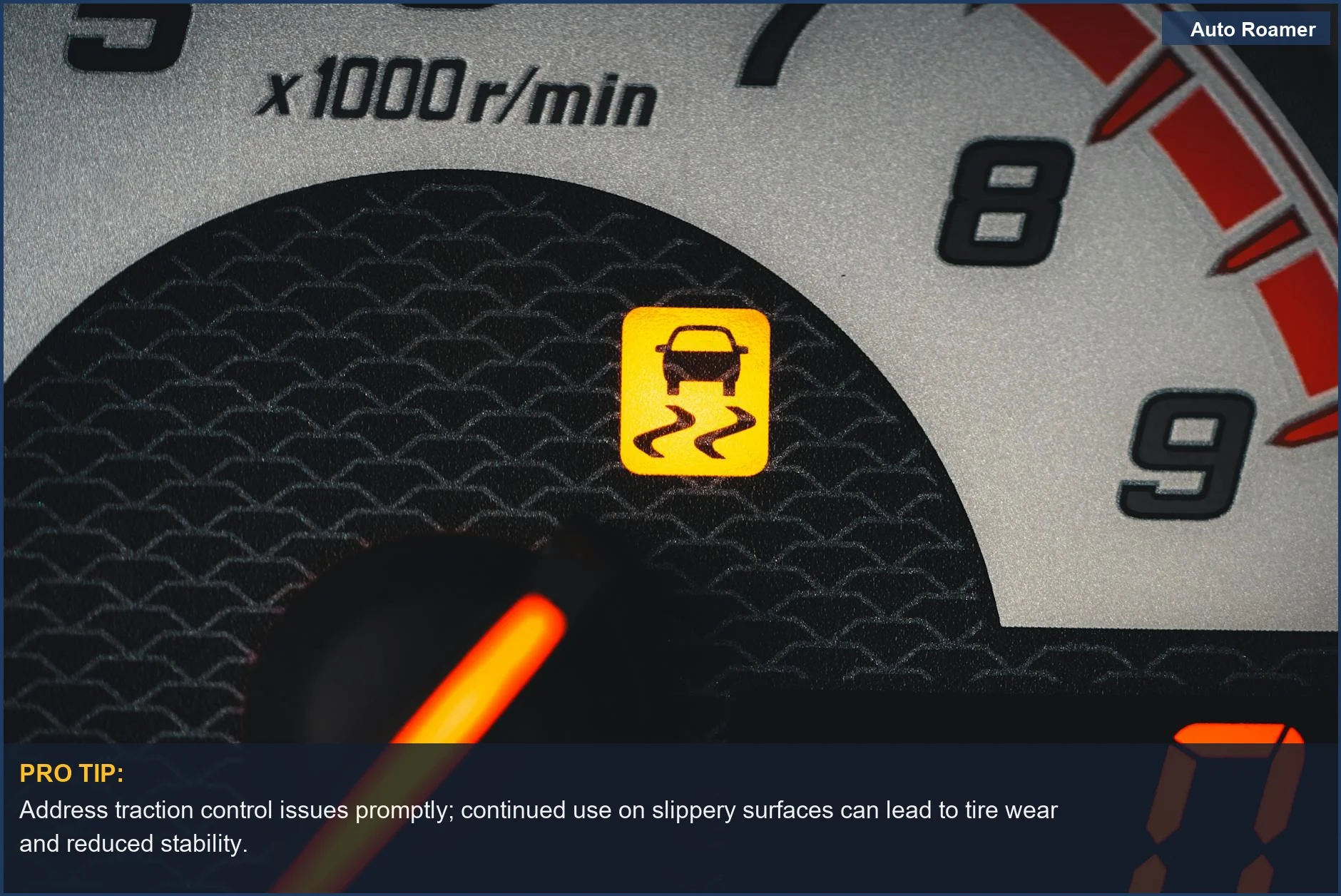
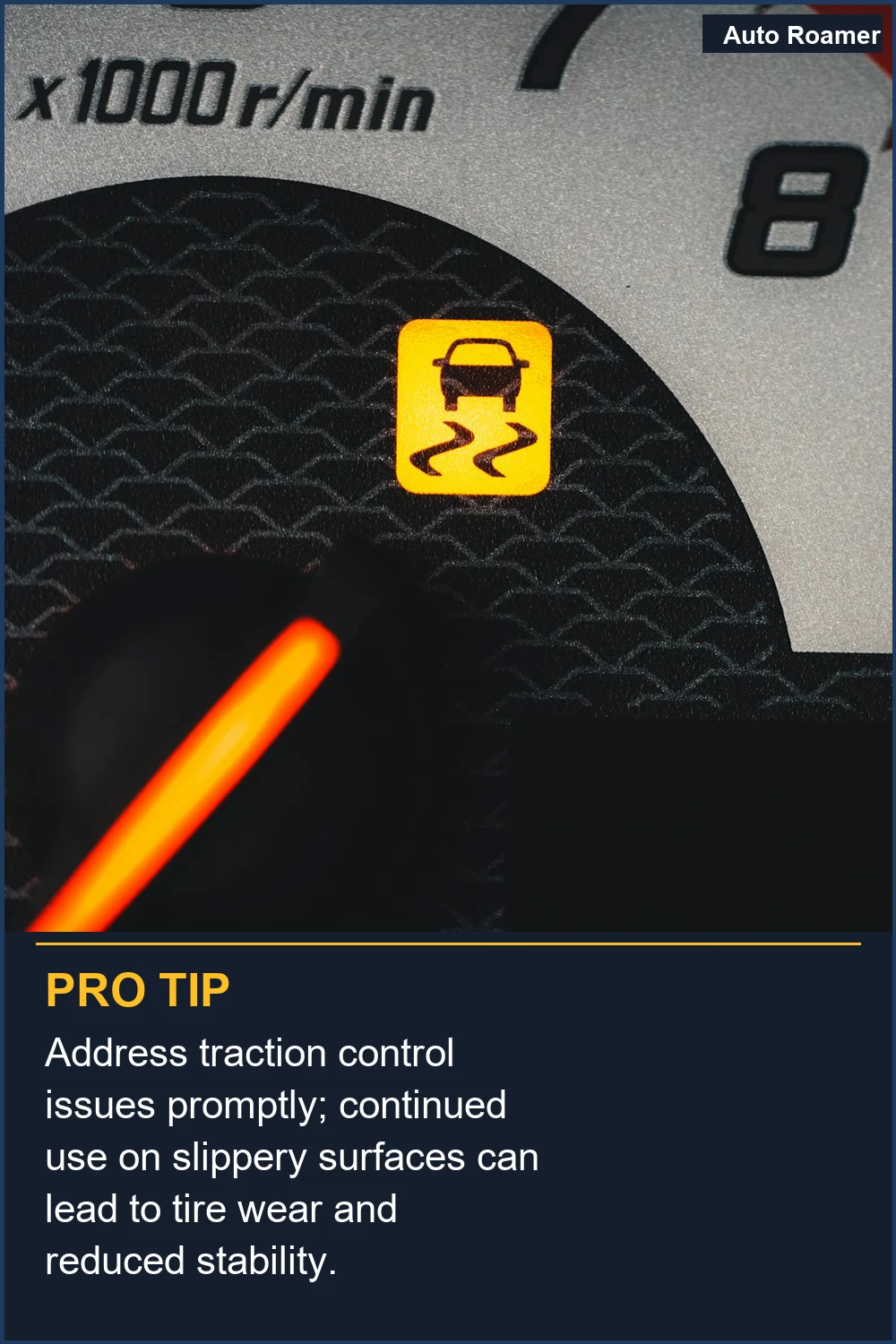
A yellow traction control light indicates a potential problem with your vehicle's stability system. Addressing this car warning symbol ensures safer driving, especially in adverse weather conditions.
| Photo by Erik Mclean
A yellow traction control light indicates a potential problem with your vehicle's stability system. Addressing this car warning symbol ensures safer driving, especially in adverse weather conditions.
| Photo by Erik Mclean
How to Handle This
1
Identify the light's color and symbol - Red lights are your immediate danger signal; pull over ASAP. Amber lights mean caution and require prompt attention, but you can usually drive to a safe location What Do Those Dashboard Warning Lights Actually Mean?. Skipping this initial assessment means you could be ignoring a critical failure or unnecessarily panicking about a minor indicator. If you're driving in heavy rain or fog, a sensor issue might trigger a warning, but it doesn't necessarily mean imminent engine failure What Do Those Dashboard Warning Lights Actually Mean?.
2
Consult your owner's manual immediately - This is non-negotiable, especially at night or in unfamiliar territory. Your manual is the definitive guide to what each specific car warning symbol means for your vehicle. Ignoring it means you're guessing, which is dangerous. For example, a red oil pressure light means your engine is losing oil pressure and can sustain serious damage if you continue driving What do the Dashboard Lights Mean in Your Ford? [2026]. Without the manual, you might mistake a critical brake system warning for something less urgent.
3
Assess your immediate surroundings and conditions - Are you on a busy highway, a dark rural road, or in a storm? A check engine light meaning can vary wildly in urgency based on your location and the weather. If you're on a remote road in blizzard conditions and the lane-keeping assist light comes on, it's likely due to sensor obstruction from ice or snow, and you might be able to drive it out Warning Lights on dash 2026 Palisade Limited : r/HyundaiPalisade. If that same light appears on a clear day in city traffic, it could indicate a more serious system malfunction. Driving without understanding this context can lead to dangerous decisions, like attempting to drive through a severe engine issue on a freeway shoulder.
4
Make a plan to get it checked - Even amber lights, which suggest you can continue driving, need prompt attention. A minor emission issue indicated by the check engine light can escalate into more significant, expensive problems if ignored Dashboard Warning Lights Explained - Car and Driver. If you're far from home, research local, reputable repair shops using your phone's GPS. Skipping this step means a small problem becomes a major breakdown, potentially stranding you in an inconvenient or unsafe location, possibly after dark.
If you notice persistent warning lights, it might be time to explore check engine light issues for deeper insights.
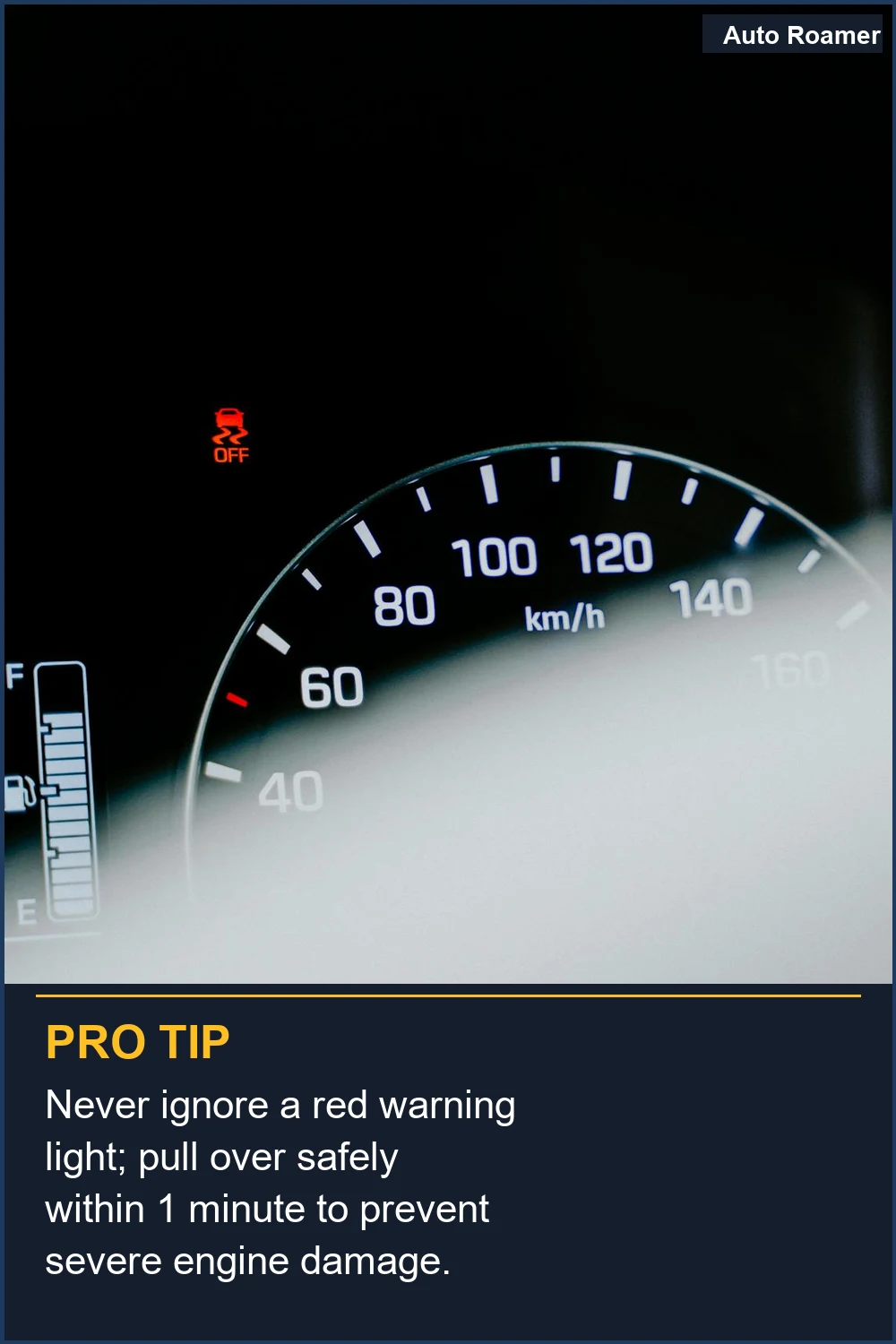
This red warning light demands immediate attention. Understanding the check engine light meaning and other critical symbols can save you from costly repairs and ensure your safety on the road.
| Photo by Daniel Andraski
This red warning light demands immediate attention. Understanding the check engine light meaning and other critical symbols can save you from costly repairs and ensure your safety on the road.
| Photo by Daniel Andraski
What This Looks Like in Practice
Winter Mountain Pass in a Subaru Outback: Descending a steep, icy pass, ABS and traction control lights illuminated. Snow around wheel speed sensors rendered them ineffective. The driver safely used engine braking and a light touch on the brake pedal, reaching their destination without incident. Systems returned to normal on clear roads once sensors cleared What Do Those Dashboard Warning Lights Actually Mean? Your 2026 Guide to Car Safety.
Summer Desert in a Honda Civic: During an extended drive in high ambient temperatures, the engine coolant temperature warning light turned red. The driver pulled over and shut off the engine. After cooling, the coolant level was checked and found adequate. The light did not reappear, indicating extreme heat had temporarily stressed the cooling system What do the Dashboard Lights Mean in Your Ford? [2026].
City Commute in a Ford F-150: Navigating stop-and-go traffic, the critical red oil pressure warning light glowed. The driver pulled over safely and shut off the engine. A quick check revealed low oil. Topping up the oil extinguished the light, preventing potential engine damage What do the Dashboard Lights Mean in Your Ford? [2026].
Highway Drive in a Hyundai Palisade: On a foggy morning, a sensor indicator light near the rearview mirror illuminated. This amber warning light signaled driver assistance features were unavailable due to obscured sensors Warning Lights on dash 2026 Palisade Limited : r/HyundaiPalisade. The driver continued, understanding it was informational, and the light cleared once visibility improved.
To ensure your engine stays cool during hot summer drives, it's crucial to know how to identify if your car is overheating, as detailed in this guide.
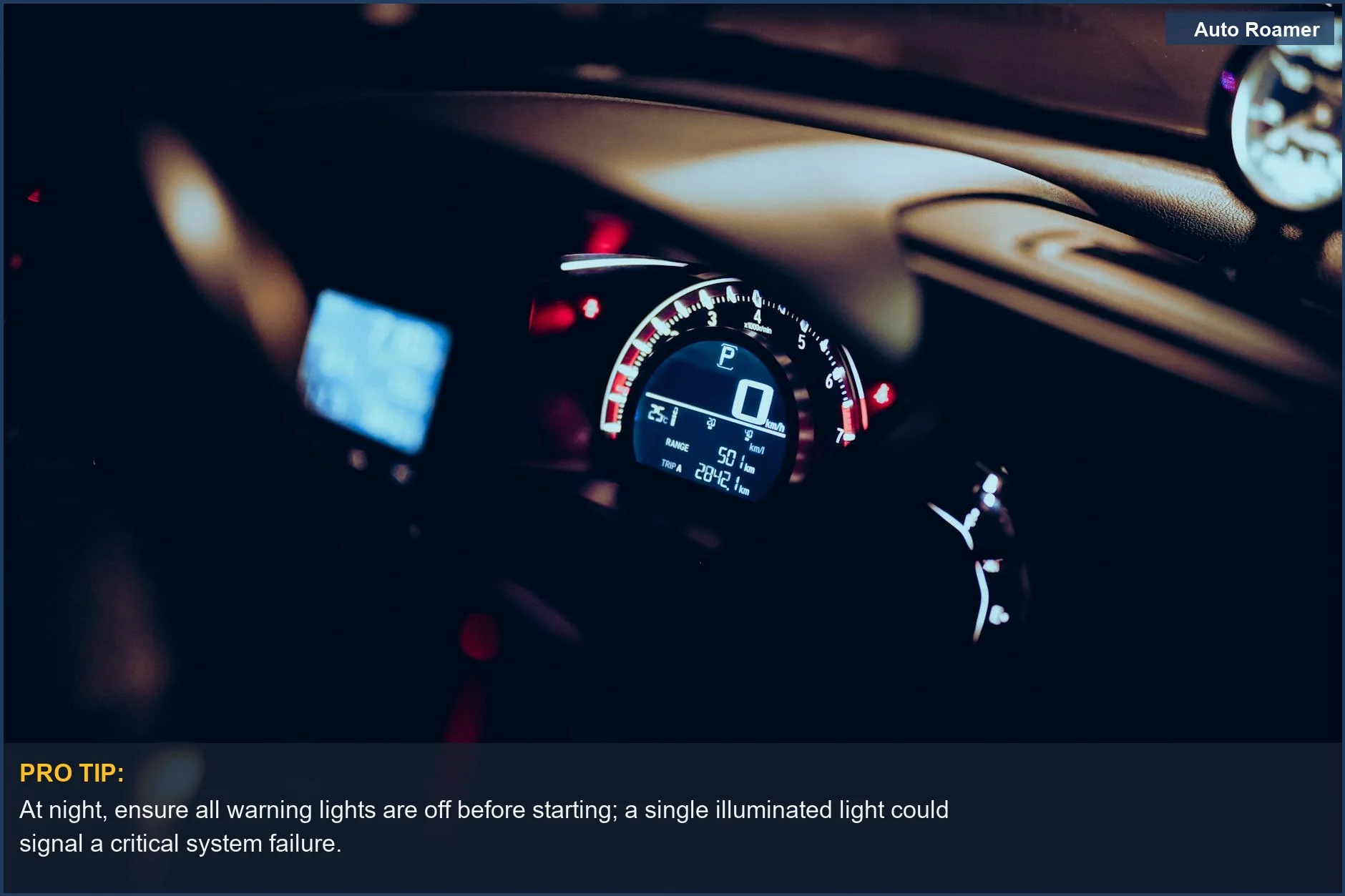
Even at night, your dashboard is speaking to you. These glowing car warning symbols are vital indicators of your vehicle's performance and potential issues, guiding your journey.
| Photo by Doci
Even at night, your dashboard is speaking to you. These glowing car warning symbols are vital indicators of your vehicle's performance and potential issues, guiding your journey.
| Photo by Doci
Mistakes That Cost People
Mistake Assuming all dashboard lights mean immediate danger.
Why people make it A lifetime of seeing red lights trigger panic has ingrained a fear response. The car warning symbols are designed to get attention, and red ones often scream "emergency."
What actually happens Many lights are informational or indicate minor issues. For example, a green or blue light simply means a system is active, like your fog lights indicator. Overreacting can lead to unnecessary stress and costly, premature service visits.
The fix Understand the dashboard warning lights color code: Red means stop ASAP, yellow/amber means caution and get it checked soon, and green/blue means it's just an indicator.
Mistake Ignoring the "check engine light meaning" for extended periods.
Why people make it It's often a yellow or amber light, and cars are so reliable these days that many people believe they can drive through minor issues without consequence. The check engine light can seem vague, leading to procrastination.
What actually happens This light, also known as the Malfunction Indicator Light, can signal anything from a loose gas cap to serious engine oil pressure issues. Ignoring it can lead to reduced fuel efficiency, increased emissions, and potentially catastrophic engine damage, turning a minor fix into a major repair bill.
The fix Don't ignore the check engine light. If it's flashing, stop driving immediately. If it's solid, get your vehicle diagnosed by a mechanic as soon as possible.
Mistake Believing sensor-related lights always mean a broken sensor.
Why people make it Modern vehicles are packed with sensors, and when a light related to a system like lane-keeping assist or automatic braking illuminates, the assumption is the sensor itself has failed.
The fix Before assuming a costly sensor replacement, check for environmental obstructions. Clearing condensation, waiting for ice to melt, or driving through heavy precipitation may resolve the issue. If the light persists after conditions improve, then investigate the sensor.
Mistake Confusing the oil pressure warning light with a low oil level warning.
Why people make it Both relate to oil, and the symbols can look similar to the untrained eye. People often think "low oil" means just add oil.
What actually happens The oil pressure warning light is far more serious than just a low oil level. It signifies that the engine is losing oil pressure, meaning critical engine components aren't being lubricated. This can lead to serious engine damage if not addressed immediately.
The fix If the oil pressure light appears (often a red oil can with a drip), pull over immediately and shut off the engine. Check your oil level, but if it's adequate, the problem is likely with the oil pump or a blockage, requiring professional attention.
Mistake Overlooking the fact that *all* lights illuminate on startup.
Why people make it People are focused on what happens when a light *stays on*, not when one *doesn't come on* briefly. They assume the system is fine if no warning appears.
What actually happens When you start your car, the dashboard warning lights illuminate briefly to confirm the bulbs are working. If a light that *should* illuminate (like the brake system warning or check engine light) doesn't briefly flash, its warning function may be disabled. This means you won't be alerted to a real problem when it occurs.
The fix Pay attention during startup. If any expected warning light *fails* to illuminate briefly, get the bulb or its associated system checked by a technician.
Mistake Assuming a "tire pressure monitoring system" light means a flat tire.
Why people make it The TPMS light is commonly associated with low tire pressure, which often leads to a flat. It's the most direct cause-and-effect people assume.
What actually happens While low tire pressure is a common cause, the TPMS light can also illuminate due to temperature fluctuations affecting air pressure, a faulty sensor, or even a dead battery in a sensor. Driving on significantly underinflated tires, regardless of the cause, can lead to poor handling and tire damage.
The fix When the TPMS light illuminates, check your tire pressure immediately with a reliable gauge and inflate to the manufacturer's recommended PSI. If the light remains on after inflating, or if it returns shortly, have the system inspected by a professional.
To prevent further mistakes, consider exploring other simple tasks in our guide to car maintenance you can do.
Product comparison for What Those Dashboard Warning Lights Actually Mean
Key Takeaways
Understanding your car's dashboard warning lights is crucial for both safety and vehicle longevity. These symbols are your car's primary communication method when something is amiss Car and Driver.
Always interpret the color of the light: Red demands immediate attention and often means pulling over safely, while Yellow/Amber signals a need for prompt diagnosis but usually allows you to continue driving cautiously autoprotips.com.
Don't ignore lights that fail to illuminate during startup; this could mean the warning system itself is compromised, leaving you unaware of critical issues Car and Driver.
A glowing check engine light meaning can range from a minor emissions issue to a more serious powertrain problem, necessitating a visit to a mechanic for diagnosis Car and Driver.
Ultimately, the single most important thing to remember is that these car warning symbols are not suggestions; they are direct messages from your vehicle that require a timely and appropriate response to prevent minor issues from becoming major, expensive repairs.
Understanding how to manage heat in your vehicle is essential, so here’s what to do if your car overheats: what to do if your car overheats.
Frequently Asked Questions
What's the best way to figure out what these dashboard warning lights actually mean?
Dashboard warning lights are your car's way of communicating potential issues, and understanding them is crucial for safety and preventing costly repairs. Generally, red lights signal a serious problem requiring immediate attention, like low oil pressure or overheating, so you should pull over safely. Yellow or amber lights indicate a caution, suggesting you get the vehicle checked soon, such as a check engine light for emissions or a tire pressure warning.
My car's dashboard has a light that looks like a wrench or a car with an engine symbol. What does that usually mean?
That symbol is often the 'Check Engine' light, and it can illuminate for a variety of reasons, from a loose gas cap to more serious engine or emission system problems. While it's often an amber or yellow light, meaning you should get it checked soon, it's best to have a mechanic scan the code to pinpoint the exact issue and avoid potential damage.
I saw a red light on my dashboard that looked like an oil can with a drip. What should I do?
That red warning light typically indicates a critical issue with your engine's oil pressure. It means your engine is losing oil pressure, and continuing to drive can cause severe engine damage, potentially costing thousands in repairs. You should pull over safely as soon as possible and turn off the engine; then, check your oil level and add more if needed.
What does the light on my dashboard that looks like a tire with an exclamation point in it mean?
This symbol is your Tire Pressure Monitoring System (TPMS) warning light, indicating that one or more of your tires is significantly underinflated. Low tire pressure can affect your car's handling, fuel efficiency, and tire wear, so it's important to check your tire pressure and inflate them to the recommended PSI found on the sticker in your driver's side doorjamb.
Sometimes a light shows up on my dashboard when it's foggy or raining heavily, and it goes away on its own. What is that?
That light likely relates to your vehicle's advanced driver-assistance systems (ADAS), such as adaptive cruise control or lane-keeping assist. These systems often rely on cameras and sensors that can be temporarily unavailable due to weather conditions like heavy rain, fog, or snow, causing the indicator to illuminate until visibility improves.