What Is Gap Insurance and Do You Actually Need It: A Practical Guide for Car Owners
Auto Roamer
13 min read
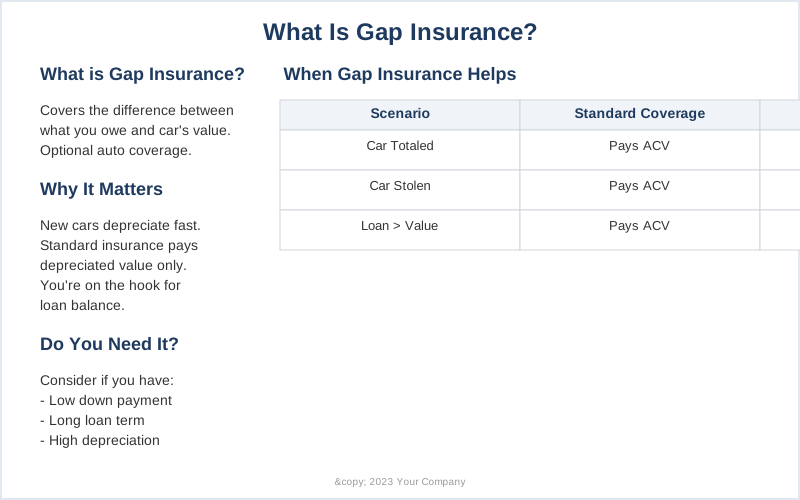
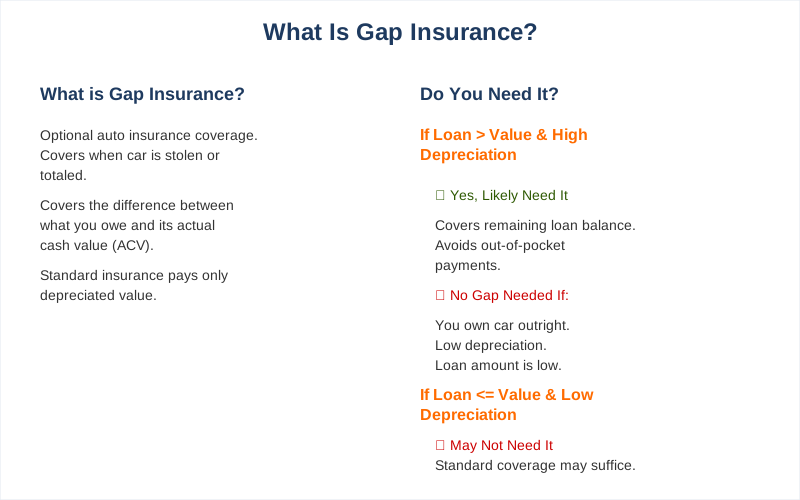
When you're hitting the open road in your rig, whether it's a daily driver or your beloved campervan, the last thing you want to worry about is what happens if the unexpected strikes. That's where gap insurance comes in. It's an optional auto insurance coverage that steps in if your car is stolen or deemed a total loss Progressive .
When you're hitting the open road in your rig, whether it's a daily driver or your beloved campervan, the last thing you want to worry about is what happens if the unexpected strikes. That's where gap insurance comes in. It's an optional auto insurance coverage that steps in if your car is stolen or deemed a total loss Progressive. Essentially, it covers the difference between what you owe on your vehicle and what it's actually worth Texas Department of Insurance.
The "gap" can be substantial, especially with new cars that depreciate the moment you drive them off the lot. If your loan amount exceeds your car's depreciated value and it's totaled, your standard insurance might only pay out the car's current market value, leaving you on the hook for the remaining loan balance. This guide dives deep into what gap insurance is, how it works, and most importantly, whether you actually need it for your adventures. We'll break down the scenarios where it's a lifesaver and when you might be able to skip it.
Key specifications for What Is Gap Insurance and Do You Actually Need It
Key Features to Consider
Coverage Scope Gap insurance is an optional auto insurance coverage that applies when your car is stolen or deemed a total loss. It specifically covers the difference between what you owe on your car and its actual cash value (ACV) at the time of the incident. This is critical because your standard comprehensive and collision coverage will only pay out the depreciated value of your vehicle.
Why it matters Without gap insurance, if your car is totaled and you owe more than its depreciated value, you'll be responsible for paying the remaining loan balance out of pocket. For example, if you owe $25,000 but the car is only worth $20,000, you'd still owe $5,000 after your insurance payout (minus your deductible). Gap coverage ensures you aren't left paying for a car you can no longer drive.
What to look for Ensure the policy clearly defines what constitutes a "total loss" and how the ACV is determined. Check for any exclusions that might limit the payout, such as unpaid finance charges or overdue payments as these can reduce the amount you receive. Compare rates from your existing auto insurer versus options offered by dealerships or lenders, as your insurer may offer a better deal.
Red flags Be wary of gap coverage sold as a mandatory add-on or if it seems excessively expensive compared to standard insurance premiums. Also, understand if the "gap product" from a dealer or bank is actually an insurance policy or a contract that TDI cannot help with if issues arise as this distinction is important.
Loan-to-Value Ratio The primary factor determining if you *need* gap insurance is the financial gap between your loan balance and your car's depreciating value. New cars lose approximately 20% of their value in the first year alone as depreciation kicks in immediately. If your down payment was less than 20% or you financed for 60 months or more, you're more likely to be "upside down" on your loan meaning you owe more than the car is worth.
Why it matters Being upside down on your loan means that in the event of a total loss, your standard insurance payout won't cover your outstanding debt. This leaves you with a financial burden for a vehicle you can no longer use. Gap insurance bridges this shortfall, preventing you from having to pay thousands out of pocket.
What to look for Review your loan statement and compare it to current market values for your vehicle. Online car valuation guides can help. If the outstanding loan balance significantly exceeds the vehicle's worth, gap insurance is a strong consideration. Progressive offers loan/lease payoff coverage, which is similar but may have payout limits up to 25% of the vehicle's value.
Red flags If you've made a substantial down payment (20% or more) or have a very small loan balance, the risk of a significant gap is lower, and gap insurance may be an unnecessary expense as indicated by user discussions.
Why it matters Integrating gap insurance with your primary auto policy simplifies claims processing. When your car is totaled, your insurer handles the ACV payout, and your gap coverage then kicks in to cover the remaining loan balance. This avoids dealing with multiple separate entities for a single incident.
What to look for Confirm that the gap coverage is indeed part of your auto insurance policy and not a separate, potentially less regulated, contract. Understand how the deductible applies, as it's typically subtracted from the ACV payout before the gap is calculated meaning you'll still pay your deductible.
Red flags Be cautious if a dealer or lender pushes a "GAP contract" that isn't clearly linked to your auto insurance. These may have different terms, exclusions, or be harder to navigate if you have a claim and TDI cannot assist with issues related to them.
To fully grasp the financial impact of car ownership, it's essential to understand the hidden costs that often go unnoticed.
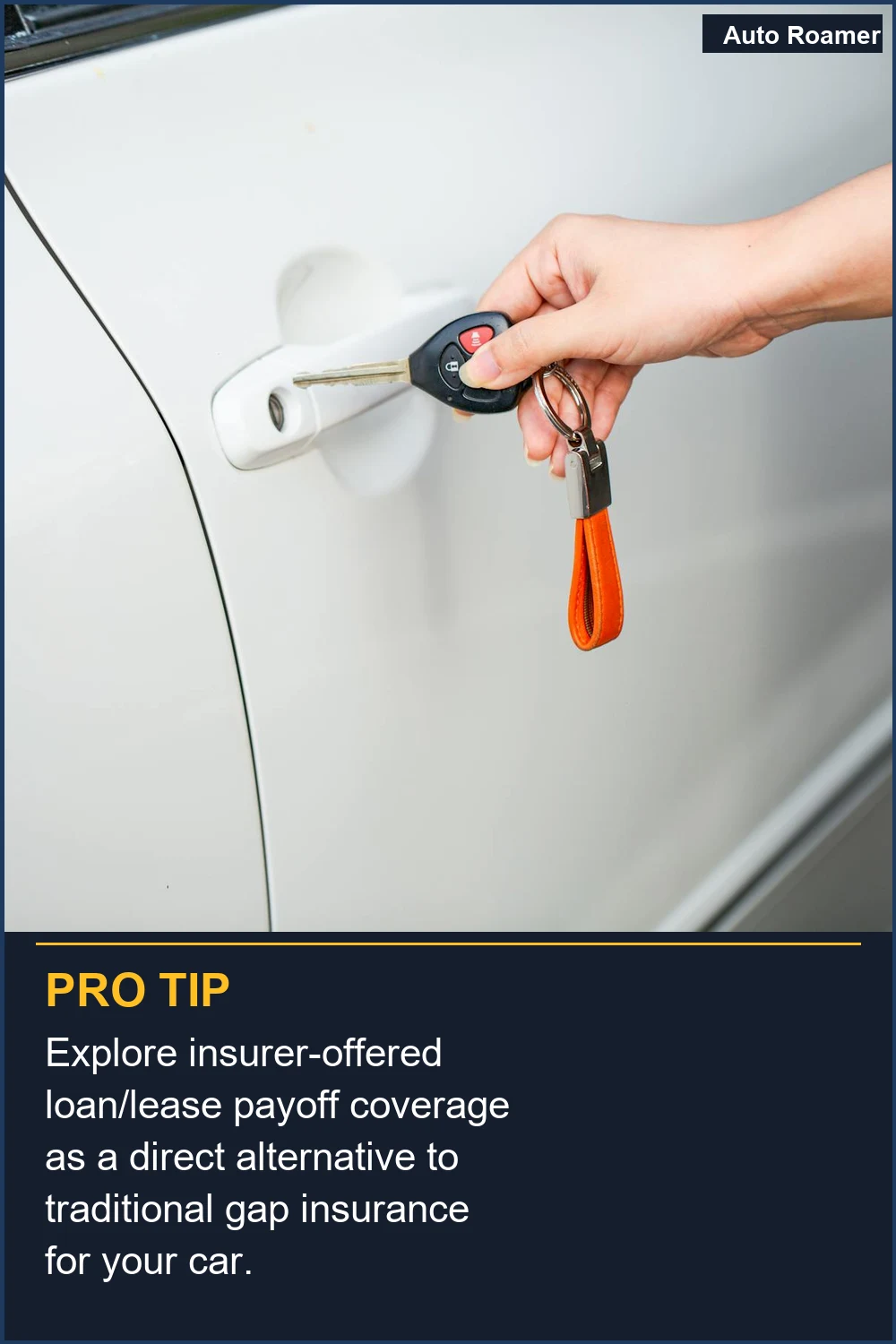
These car keys represent the financial commitment tied to a vehicle. Gap insurance is vital when your car's value falls below your loan balance, often occurring within the first year.
| Photo by Brett Jordan
These car keys represent the financial commitment tied to a vehicle. Gap insurance is vital when your car's value falls below your loan balance, often occurring within the first year.
| Photo by Brett Jordan
Our Top Picks
Progressive Loan/Lease Payoff Coverage This is a direct alternative to traditional GAP insurance, often offered by major insurers. Progressive's offering is designed to cover the difference between what you owe and your car's depreciated value. A key distinction is that the payout is typically capped at no more than 25% of your vehicle's value, though this limit can vary by state. This makes it a strong contender if you have a substantial loan balance but don't expect the gap to exceed that percentage.
Specs: Covers the difference between loan balance and ACV, with a potential payout cap.
Pricing: Varies based on vehicle, loan amount, and state.
Pros: Often more integrated with your existing policy, potentially simpler to manage.
Cons: Payout cap might not cover the full gap in all situations.
Best For: Drivers who have a significant loan but don't owe drastically more than the car is worth, and prefer a single insurer for all coverage.
Dealership-Offered GAP Insurance (e.g., Guaranteed Asset Protection) When you're at the dealership's finance office, this is the GAP product they'll push. It's specifically designed to bridge the financial void if your car is totaled or stolen and you owe more than its depreciated value. It's important to note that GAP products from dealers or banks might not always be insurance, meaning you might have less recourse if there's an issue Do you need gap insurance for your car? How does it work?. Always scrutinize the terms and understand who is providing the coverage.
Specs: Covers the difference between loan balance and ACV.
Pricing: Can be rolled into your car loan, making it seem "free" upfront but increasing your total interest paid.
Pros: Conveniently offered at the point of sale, can be financed with the car.
Cons: Often more expensive than insurer-offered GAP, can be difficult to get a refund if you pay off the car early, and may not be true insurance.
Best For: Drivers who want maximum convenience and don't want to shop around, but be prepared to negotiate hard.
Your Auto Insurer's Standard Collision/Comprehensive Coverage (with a caveat) While not true GAP insurance, your existing comprehensive and collision coverage is the first line of defense. It pays out the actual cash value (ACV) of your vehicle if it's stolen or totaled What Is Gap Insurance and How Does It Work? - Progressive. However, this is precisely where the "gap" emerges: if your ACV is less than what you owe, your standard policy won't cover the difference. You need GAP if you anticipate owing more than the car's depreciated value, which is common with new cars that lose about 20% of their value within the first yearWhat Is GAP Insurance and Do You Really Need It?.
Specs: Pays the actual cash value (ACV) of your vehicle.
Pricing: Included as part of your standard auto insurance premium.
Pros: Already part of your policy, no additional purchase needed for this base coverage.
Cons: Does not cover the difference between ACV and loan balance.
Best For: Everyone, as it's a mandatory component for most loans and leases, but insufficient on its own if you're "upside down" on your loan.
To better understand how your vehicle's value is affected by technology, explore our insights on smart car tech.
Unlocking your car with a key and fob can be routine, but understanding your insurance coverage is crucial. Progressive's loan payoff option directly addresses the gap between value and debt.
| Photo by Mix and Match Studio
Unlocking your car with a key and fob can be routine, but understanding your insurance coverage is crucial. Progressive's loan payoff option directly addresses the gap between value and debt.
| Photo by Mix and Match Studio
Budget vs Premium Options
Gap insurance offers varying levels of protection, from budget-friendly to premium.
Budget-Friendly
Adding gap insurance to your existing auto policy through your insurer is typically the most cost-effective option. You pay a small monthly premium to cover the "gap" between your car's depreciated value and what you owe. For example, if you owe $25,000 and your car is worth $20,000, your insurer covers the $5,000 difference, minus your deductible Progressive.
What You Get
You gain crucial financial protection against owing money on a totaled or stolen car you can no longer drive. This prevents you from paying for a vehicle you don't possess Bachrodt Chevy.
What You Sacrifice
Some policies have payout limitations, like Progressive's loan/lease payoff coverage, capped at 25% of the vehicle's value Progressive. You must also maintain comprehensive and collision coverage.
Best For
Those with minimal down payments, long loan terms (60+ months), or who bought a new car that depreciates about 20% in its first year Texas Department of Insurance. It's for buyers wanting straightforward, affordable coverage.
Premium
This usually means gap insurance purchased directly from the dealership or lender. While convenient at purchase, it can be more expensive than getting it through your auto insurer. These products may not be actual insurance, complicating recourse Texas Department of Insurance.
What You Get
Similar core coverage, protecting you from the financial shortfall between your loan balance and the car's depreciated value. It covers that "gap" SC Credit Union.
What You Sacrifice
You may sacrifice value for money. Dealerships often mark up these products significantly. Consumer protection can also be a sacrifice if the product isn't regulated as insurance Texas Department of Insurance.
Best For
Buyers prioritizing immediate convenience at the dealership who haven't shopped around. We strongly advise comparing rates first.
To truly understand the financial impact of ownership, it's important to consider the hidden car costs that may arise.
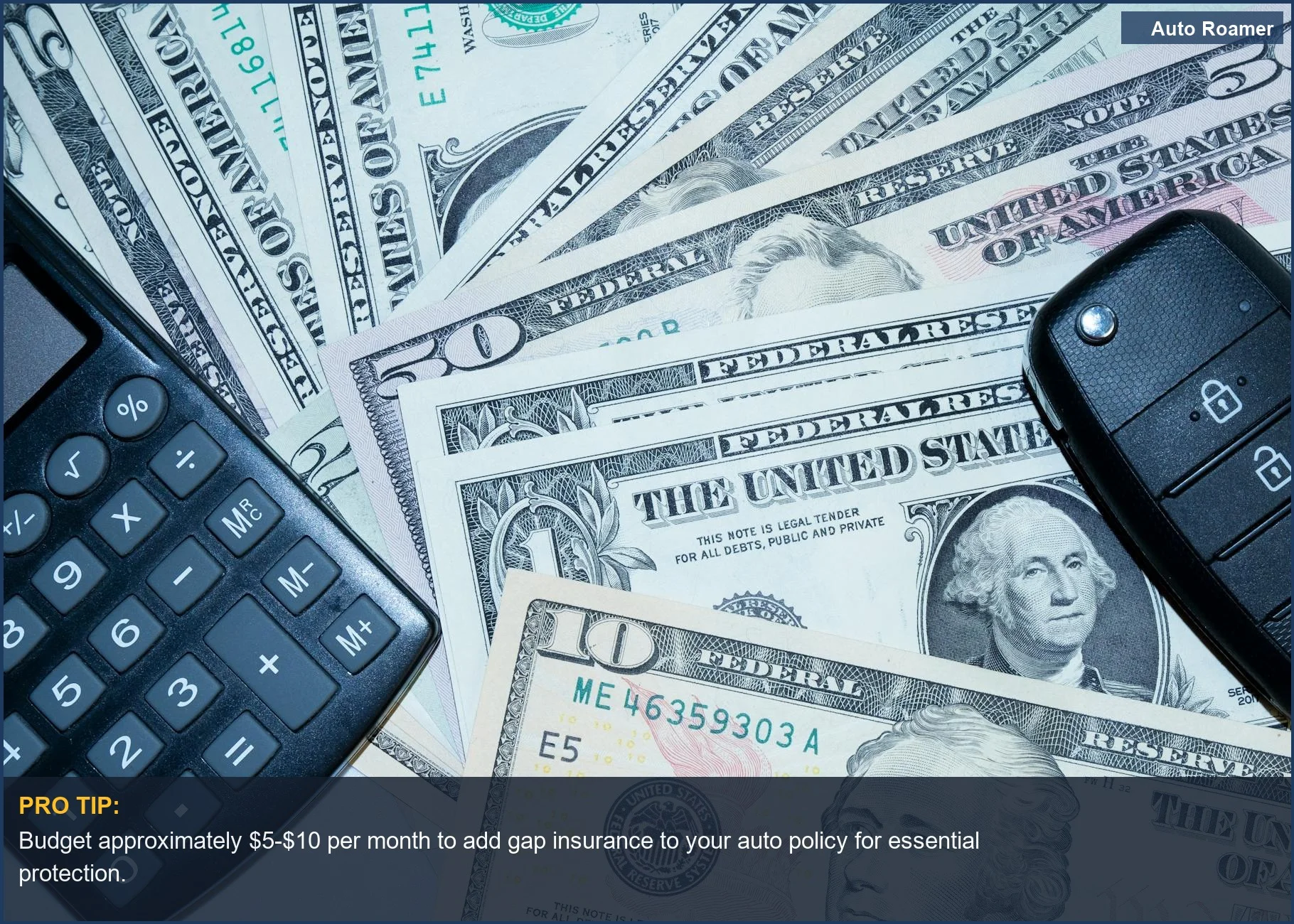
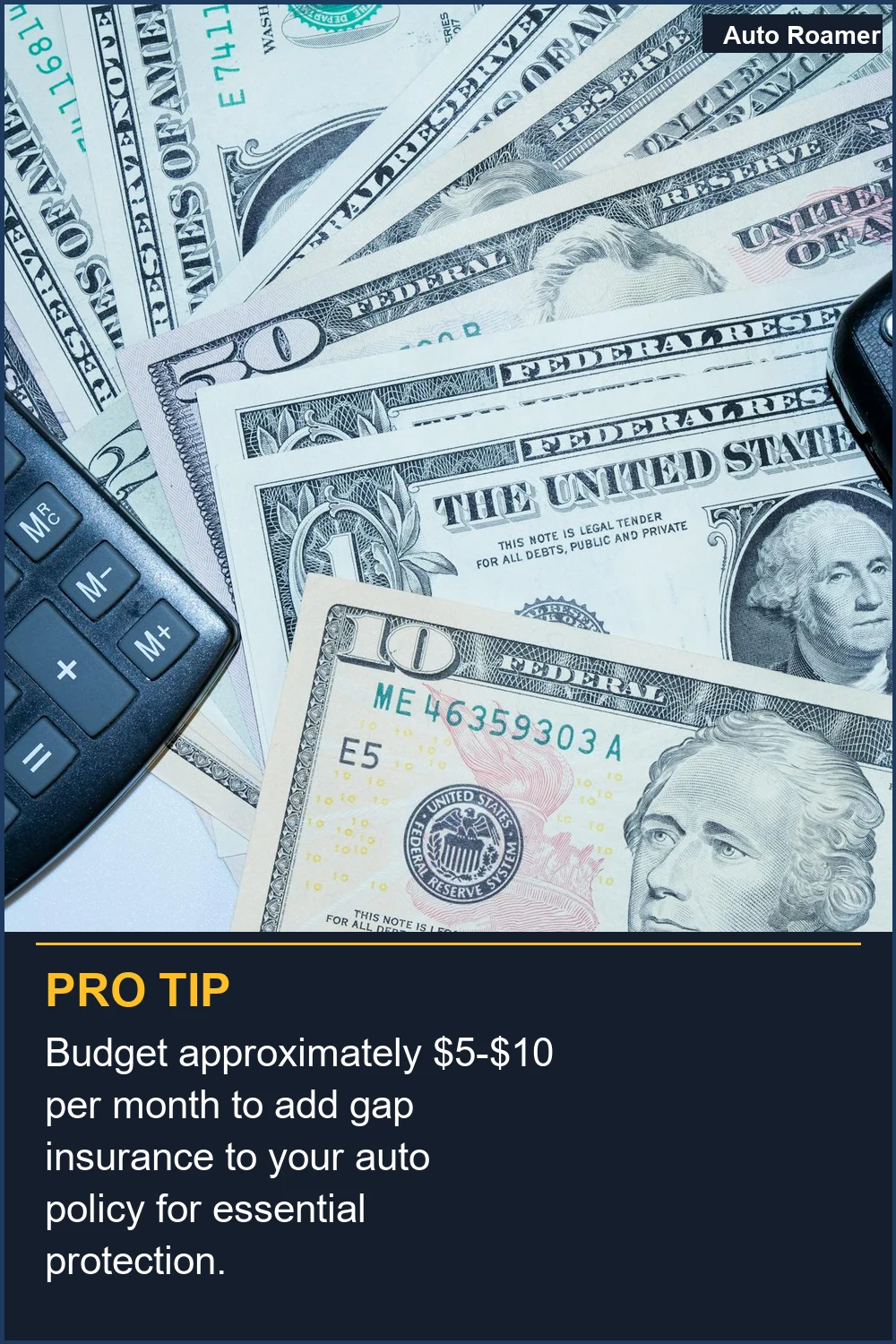
Financial tools like dollars and a calculator help assess your needs. Gap insurance can be surprisingly affordable, often costing as little as $5 per month for peace of mind.
| Photo by Саша Алалыкин
Financial tools like dollars and a calculator help assess your needs. Gap insurance can be surprisingly affordable, often costing as little as $5 per month for peace of mind.
| Photo by Саша Алалыкин
Setup and Installation Tips
1
Understand the Gap - New cars depreciate rapidly, losing about 20% of their value in the first year. This means if your car is totaled or stolen, its current market value might be less than what you owe on your loan. This difference is the "gap" that GAP insurance covers GAP Insurance. For example, if you owe $28,500 but the car is only worth $24,000, you'd be on the hook for $4,500 without this coverage GAP Insurance.
2
Check Your Loan or Lease Agreement - Some lenders or leasing companies require GAP insurance. If it's mandated, you'll need to comply to finalize your financing. Always read the fine print to understand if this is a requirement for your specific situation What Is Gap Insurance? - CNBC.
3
Evaluate Your Down Payment and Loan Terms - If you put down less than 20% or financed your car for 60 months or more, the "gap" is likely larger, making GAP insurance a smart consideration Do you need gap insurance for your car?. A significant down payment or paying down your loan quickly reduces the risk of owing more than your car is worth.
Know When to Cancel - You can typically cancel your GAP insurance once you owe less than your vehicle is worth. This often happens within the first two years of ownership. Regularly compare your outstanding loan balance to your car's current market value to determine when you no longer need the coverage Do you need gap insurance for your car?.
Understanding oil change practices can also help you manage your budget, so consider how it fits into the overall cost of car ownership.
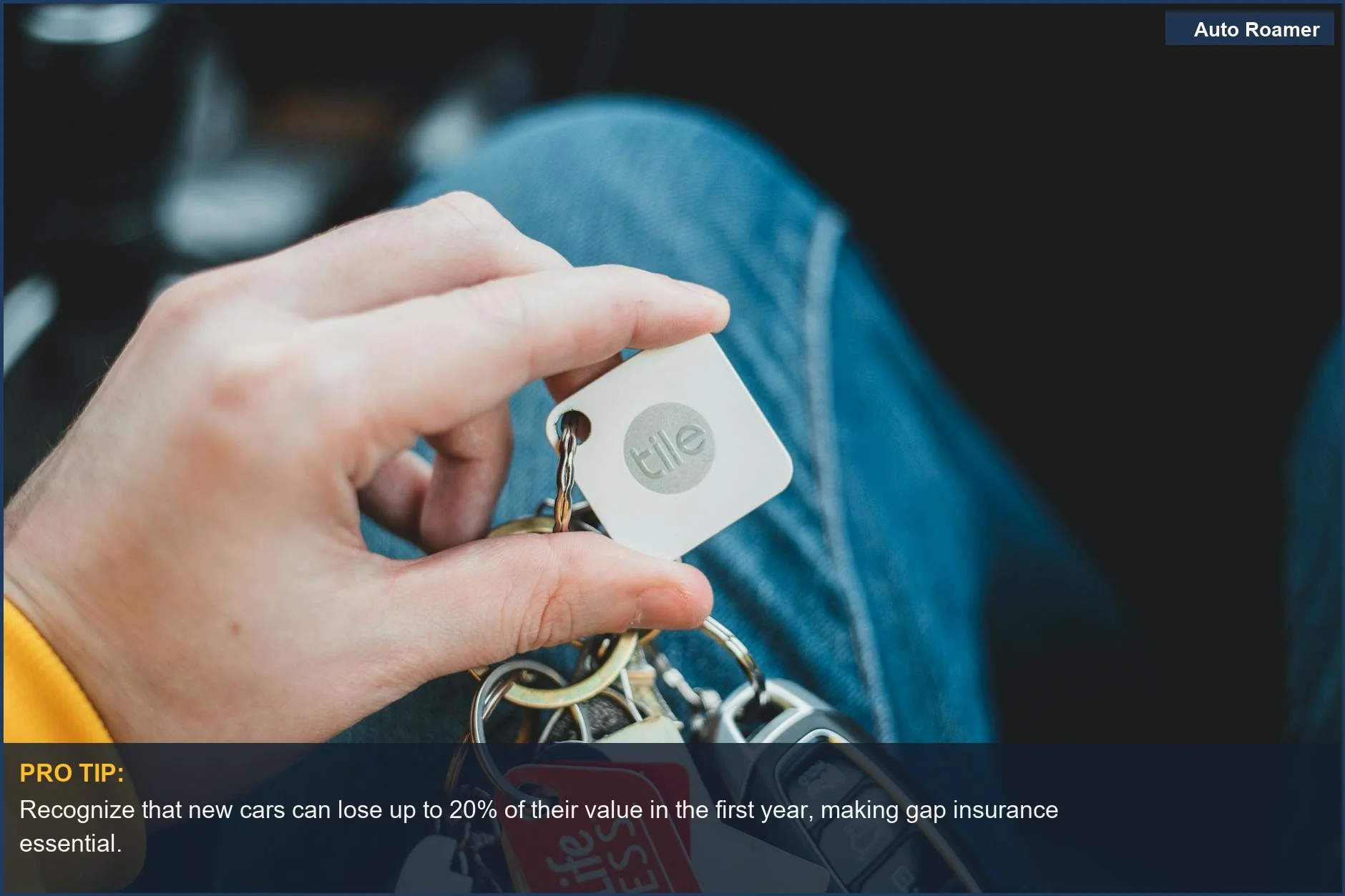
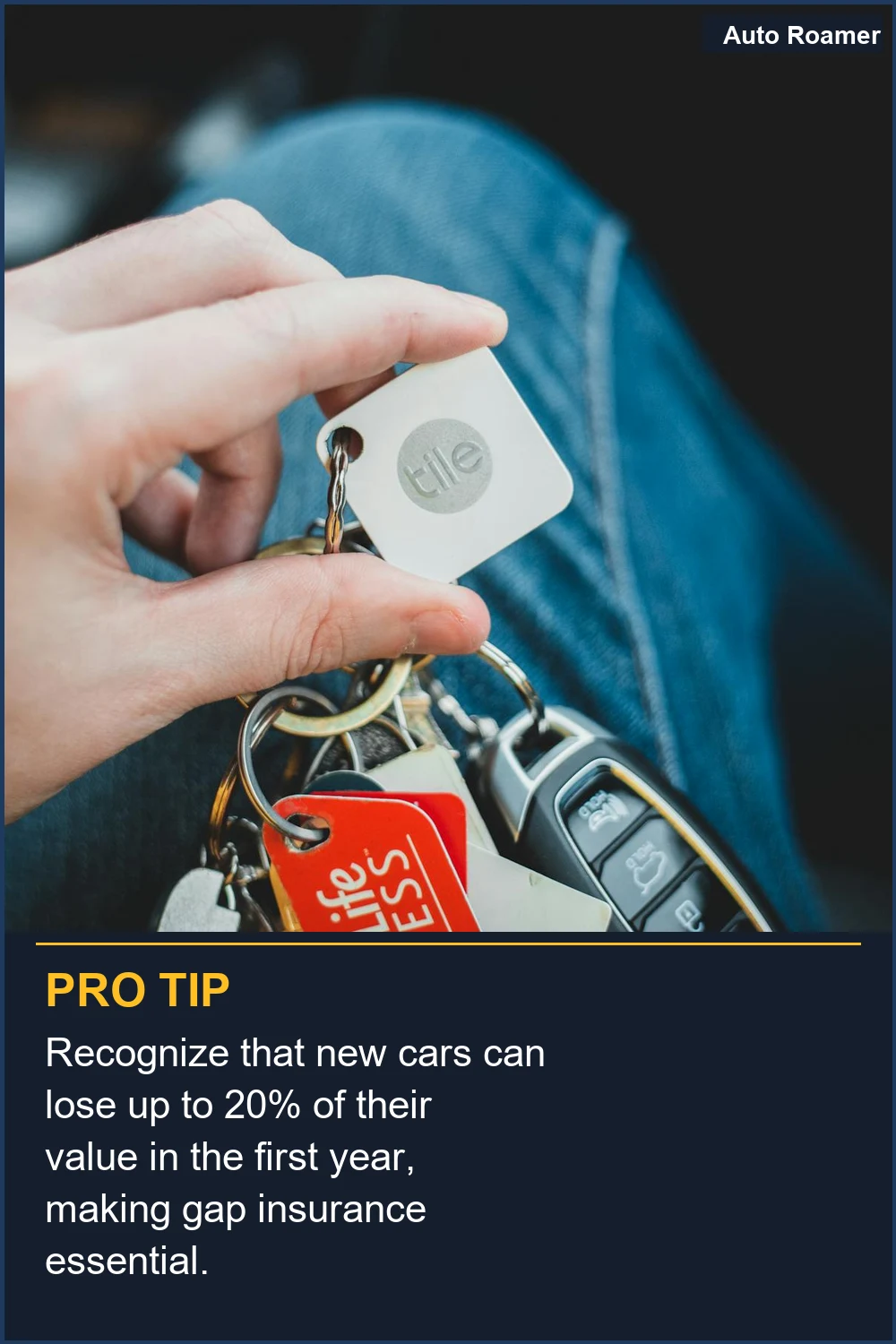
A hand holds car keys, symbolizing ownership and the rapid depreciation of new vehicles. Understanding this 20% first-year value loss is key to knowing if you need gap insurance.
| Photo by Erik Mclean
A hand holds car keys, symbolizing ownership and the rapid depreciation of new vehicles. Understanding this 20% first-year value loss is key to knowing if you need gap insurance.
| Photo by Erik Mclean
Care and Maintenance Tips
1
Understand the Gap - Gap insurance is optional coverage that pays the difference between what you owe on your car and its actual cash value (ACV) if it's stolen or totaled. Progressive explains that if you owe $25,000 and your car is worth $20,000, gap coverage handles the $5,000 shortfall. This is crucial because new cars depreciate rapidly, losing about 20% of their value in the first year alone Scucu.
2
When to Consider Gap Insurance - You likely need gap insurance if you put down less than 20% or financed your loan for 60 months or more, as this increases the "gap" Texas Department of Insurance. If your loan balance exceeds your vehicle's depreciated value, you're upside down. Without gap coverage, you'd be responsible for paying that difference out of pocket for a car you can no longer drive Scucu.
3
When to Re-evaluate - You can typically cancel your gap insurance once you owe less than your car is worth, which often happens around the two-year mark. Compare your outstanding loan balance with online car value guides. If you pay off your loan early or sell the vehicle, it's also time to drop the policy Texas Department of Insurance. Some policies may have exclusions, so always read your specific terms Progressive.
To protect your investment further, it's wise to understand what dealers don’t tell you about extended warranties.
Product comparison for What Is Gap Insurance and Do You Actually Need It
For most new car buyers, especially those financing a significant portion, gap insurance is highly recommended. It protects against the rapid depreciation new vehicles experience, often losing 20% of their value in the first year What Is GAP Insurance and Do You Really Need It?.
If your car loan balance significantly exceeds its current market value, gap insurance is essential. For instance, owing $25,000 on a car worth $20,000 means you'd be on the hook for that $5,000 gap without it What Is Gap Insurance and How Does It Work? - Progressive.
To mitigate those hidden costs, it's crucial to know how to identify when you're being overcharged by your mechanic, so check out essential tips for savvy car owners.
What does gap insurance cover and how does it work?
Gap insurance is a safety net for when your car is totaled or stolen. If you owe more on your car loan than its depreciated value, gap insurance covers that difference. For instance, if you owe $25,000 but your car is only worth $20,000, gap insurance would pay the $5,000 shortfall, minus your deductible. We found this coverage particularly useful in the early years of a car loan when depreciation is steepest.
How does gap insurance differ from standard car insurance?
Standard comprehensive and collision coverage pays out the actual cash value (ACV) of your car if it's totaled or stolen. Gap insurance, on the other hand, covers the gap between that ACV and the amount you still owe on your loan or lease. Think of it as filling the hole left by depreciation that your regular insurance doesn't touch. You'll need comprehensive and collision to even qualify for gap coverage.
Is gap insurance worth it for used cars or just for new purchases?
We see value in gap insurance for both new and used cars, but it's especially critical for new ones. A new car depreciates significantly the moment you drive it off the lot, often by 20% in the first year alone Source Name. For used cars, it's more about how much you owe versus its current value; if you financed a large portion or have a long loan term, the gap can still be substantial.
What factors should I consider before buying gap insurance?
Consider how much you owe on your car loan compared to its current market value. If your down payment was less than 20% or your loan term is 60 months or longer, you're likely to have a significant gap Source Name. Also, check if your lease or loan agreement requires it, as some do. We always compare quotes from our insurer versus what the dealership offers, as prices can vary.
Can I get a refund on my gap insurance if I sell my car early?
Yes, typically you can get a prorated refund for unused gap insurance if you sell your car or pay off your loan early. Since gap insurance is tied to your loan, once that's settled, the coverage is no longer needed. We advise contacting your insurance provider or the company that sold you the policy to initiate the refund process.