Pet Travel

How to Keep Cats Calm During Car Travel: Practical Tips for Stress-Free Journeys

Auto Roamer
11 min read
Includes Video

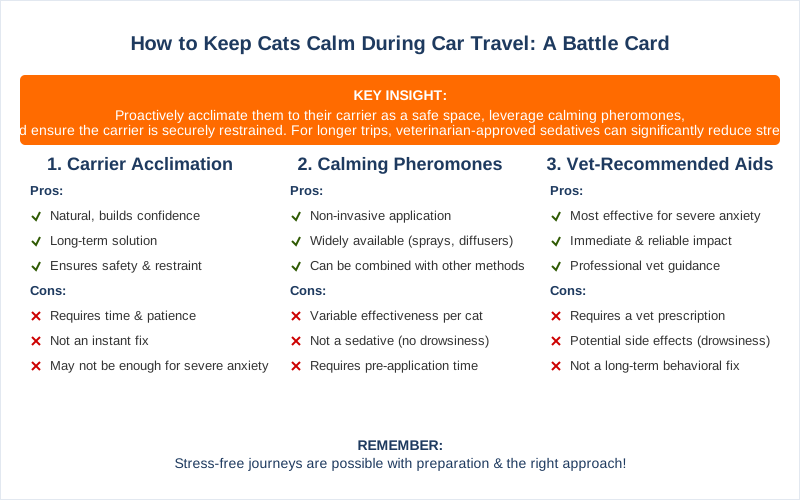
To keep cats calm during car travel, proactively acclimate them to their carrier as a safe space. Leverage calming pheromones, and ensure the carrier is securely placed. Effective preparation and a deep understanding of feline behavior are crucial for achieving stress-free journeys for your cat.

Travel with cats can often feel like a Herculean task, especially when anxiety and stress turn a simple car ride into a cacophony of meows and frantic scratching. If you've ever wondered how to keep cats calm during car travel, you're not alone. We've personally navigated countless miles with our feline companions, testing various approaches to ensure their comfort and our sanity. This guide distills our practical experience and research into actionable tips, revealing that stress-free journeys are indeed possible.

Keeping your cat calm isn't just about a peaceful car ride; it's fundamental to their safety and overall health. Cats who experience continuous stress or anxiety during travel are at risk of developing other medical problems, including urinary tract, digestive, skin, and cardiovascular issues How to Help Your Cat With Car Anxiety & Carsickness. Moreover, an unrestrained, anxious cat poses a significant safety risk, potentially distracting the driver or even escaping. It's crucial for your cat to be appropriately restrained during travel, for both their safety and yours Road Trips and Car Travel With Your Cat. We'll show you how proper preparation, carrier acclimation, pheromone use, and even veterinarian-recommended aids can transform travel from a dreaded ordeal into a manageable part of life with your cat.
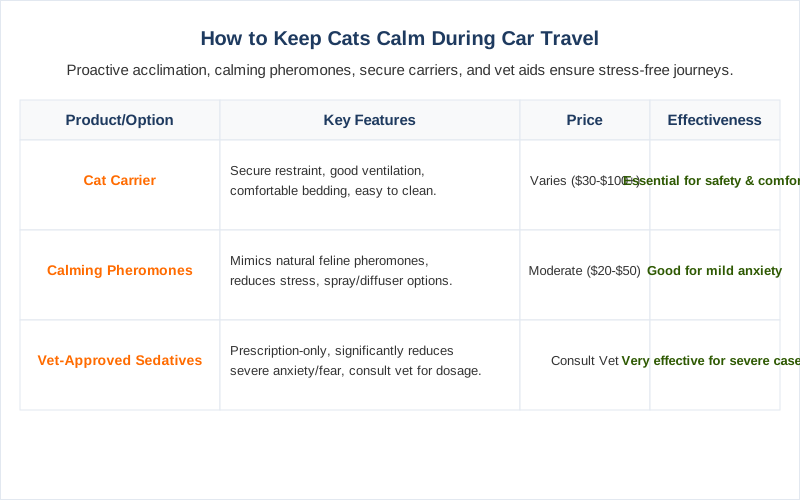
Infographic comparing methods for keeping cats calm
Key specifications for how to keep cats calm during car travel

The Short Answer: How To Keep Cats Calm During Car Travel

To effectively keep cats calm during car travel, proactively acclimate them to their carrier as a safe space, leverage calming pheromones, and ensure the carrier is securely restrained. For longer trips, veterinarian-approved sedatives can significantly reduce stress.

We've found that preparation is paramount. Start by making the carrier a familiar, positive area long before travel, encouraging your cat to explore it with treats and toys Bond Vet. This helps them see it as a den, not just a trap for vet visits Animal Humane Society.

Before departure, spray the carrier with a synthetic feline pheromone product like Feliway to decrease stress levels Pet Health Network. Always ensure your cat's carrier is securely placed in the car, ideally in the middle of the back seat, to prevent shifting and minimize anxiety Preventive Vet.

For more anxious cats or extended journeys, consult your veterinarian about medication. We've seen good results with a vet-recommended dose, such as 5 mg of Benadryl, which can induce drowsiness for 8-12 hrs and lessen stress JustAnswer. Withholding food a few hours before travel also helps prevent motion sickness.

The bottom line for how to keep cats calm during car travel is a combination of early positive association, strategic use of calming agents, and ensuring their physical security during the ride. Consistency in these steps will make the journey much smoother for everyone involved.
For pet travelers, mastering calming techniques is also essential during stressful situations like thunderstorms, as detailed in our article on keeping your dog calm.
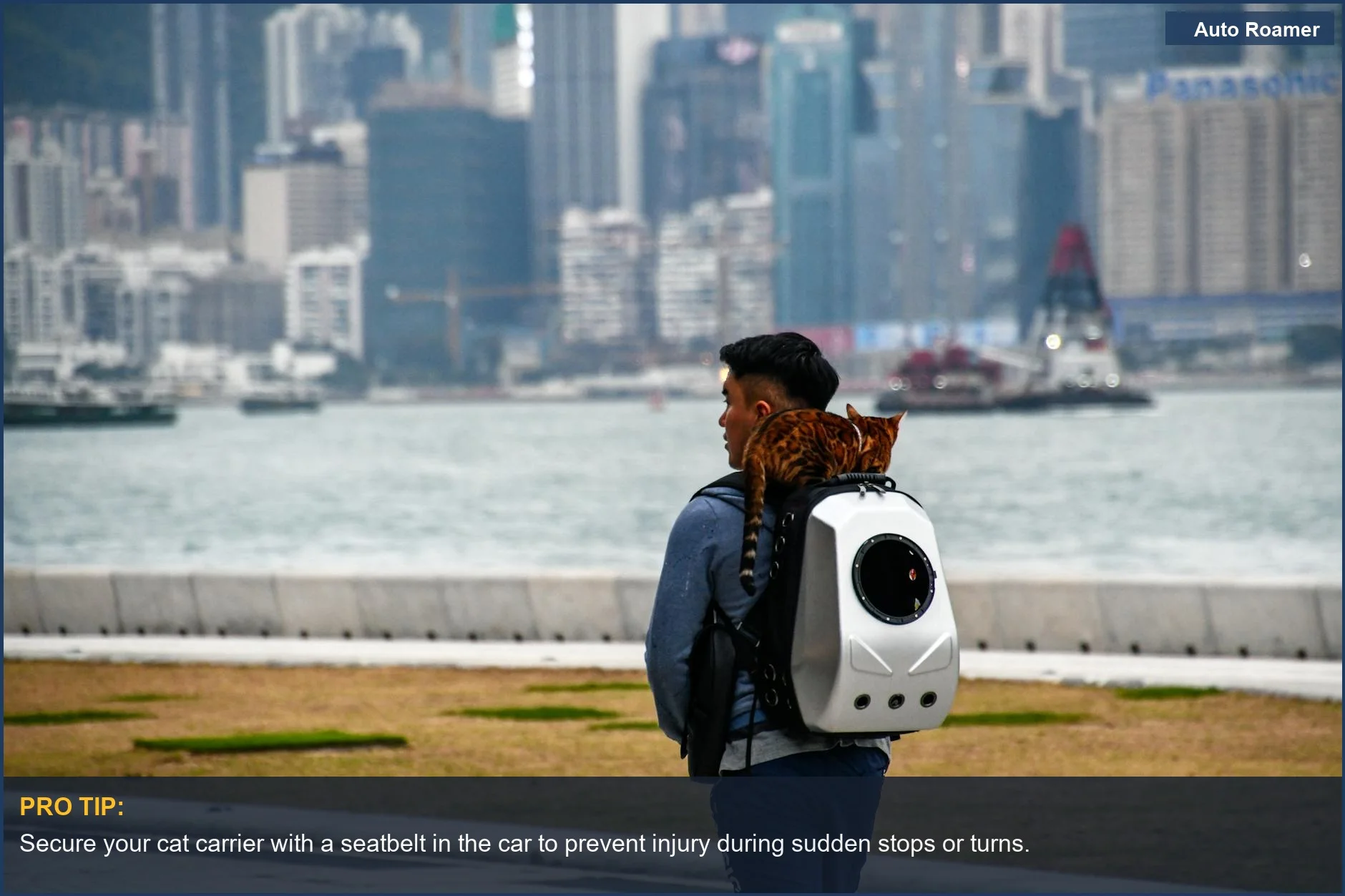
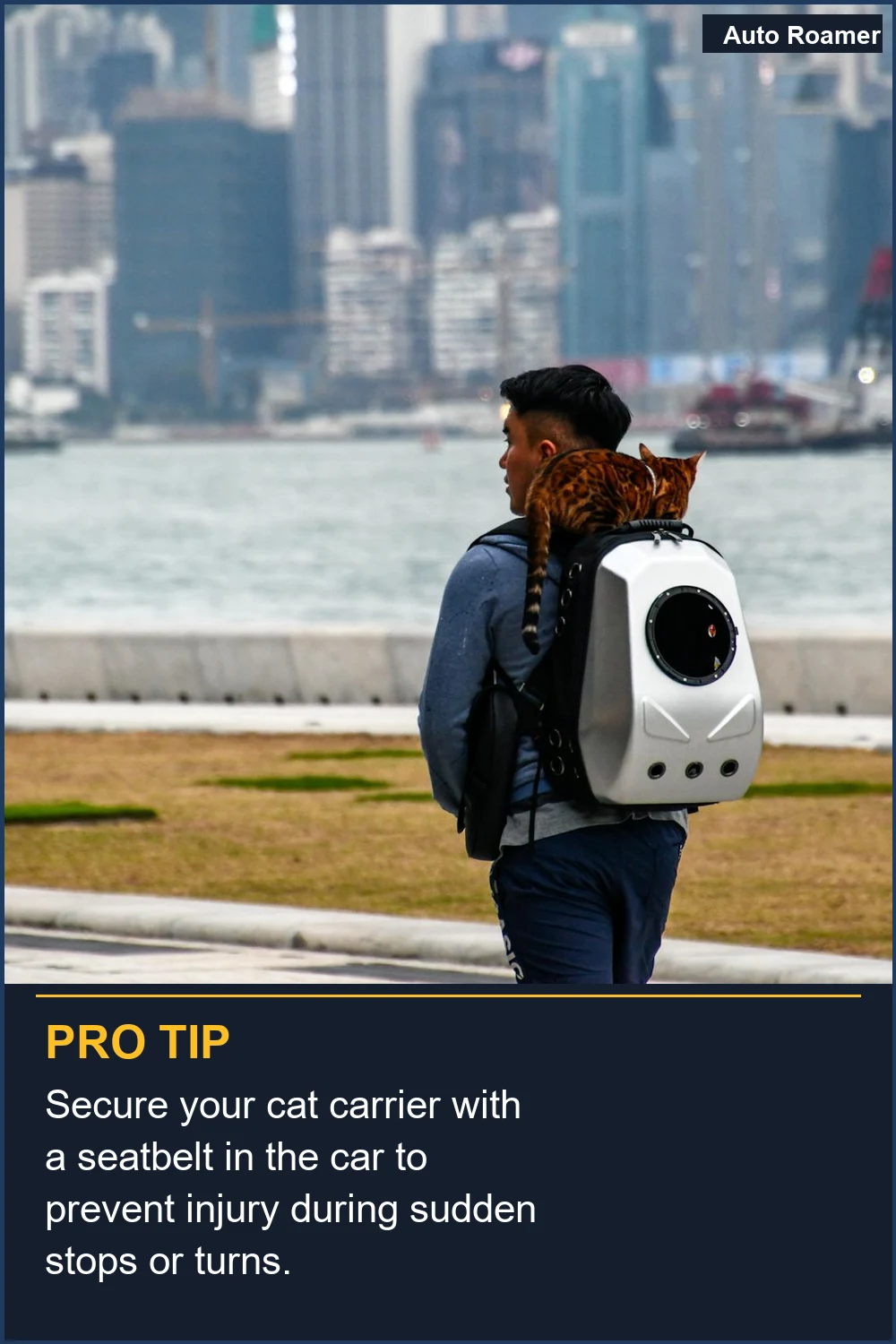
Secure your cat carrier with a seatbelt in the car to prevent injury during sudden stops or turns.
This adventurous cat enjoys a city stroll in its carrier, illustrating the importance of making the carrier a positive space. Acclimating your cat for just 15-20 minutes daily significantly helps with cat travel calmness. | Photo by Hoi Wai

What You Need to Know

Keeping a cat calm during car travel requires preparation and a deep understanding of feline behavior. We know cats often prefer their familiar territory, but with the right approach, even typically 'place-oriented' felines can become manageable travel companions VCA Hospitals. Our goal isn't to make them love car rides like some dogs do, but to significantly reduce their stress and anxiety Pet Health Network.

The journey to a calm cat traveler begins long before you ever leave the driveway. We've found that addressing their core anxieties and providing a sense of security are paramount for successful trips. Here's our structured breakdown for how to keep cats calm during car travel, based on what truly works.
1
Acclimate your cat to their carrier - The carrier should be a safe, inviting space, not just something associated with stressful vet visits. Keep it open and accessible at all times, making it a regular resting spot and even feeding your cat inside it VCA Hospitals. We often place treats and favorite toys inside to build positive associations over time Bond Vet.
2
Utilize feline pheromones - Spray the interior of the carrier with a synthetic feline pheromone product, like Feliway, well in advance of travel. These products are known to help decrease stress in cats by mimicking natural calming pheromones Pet Health Network, VCA Hospitals. We find this step crucial for preempting anxiety.
3
Practice short vehicle exposures - Once your cat is comfortable in the carrier indoors, introduce it to the vehicle. Start by placing the carrier in the car, running the engine briefly, and then bringing your cat back inside, rewarding calm behavior VCA Hospitals. Gradually work up to very short drives around the block.
4
Secure the carrier and ensure comfort - Always secure the carrier in the car; the middle of the back seat is ideal to prevent shifting, which can increase anxiety and carsickness Preventive Vet. A soft pad or towel in the carrier provides comfort and absorbs any accidents Facebook Group Post.
5
Consider veterinarian-prescribed calming aids - For cats with severe anxiety or for long journeys, consult your vet about medication. A common recommendation is 5 mg of Benadryl, which can induce drowsiness and reduce stress for at least 8-12 hrs, making the trip much easier JustAnswer. Always get professional veterinary advice before administering any medication.
If you're also traveling with a dog, you might find helpful strategies in our article on calming a dog during car rides.
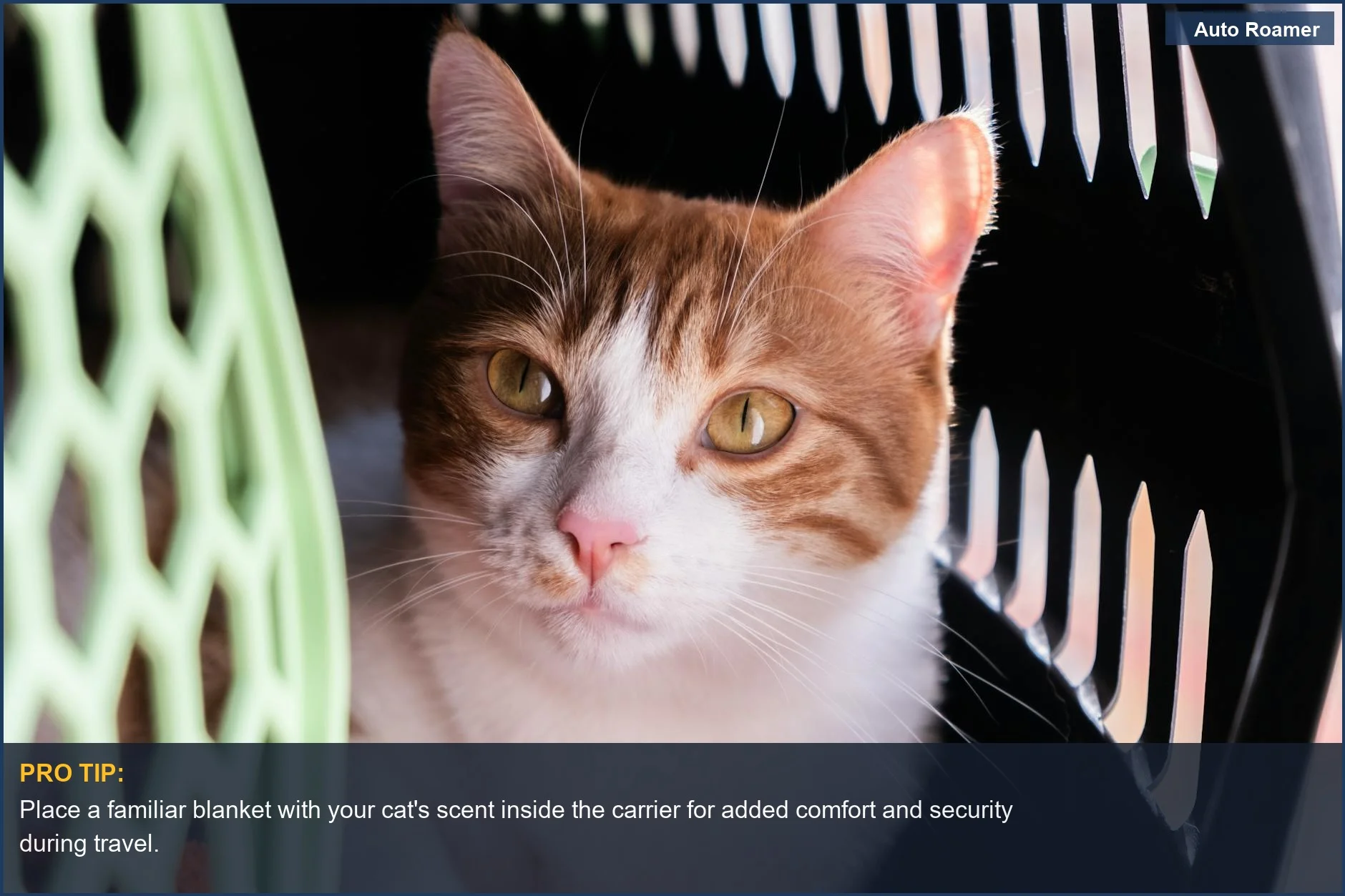
Place a familiar blanket with your cat's scent inside the carrier for added comfort and security during travel.
Resting comfortably in its carrier, this feline showcases ideal preparation for car journeys. A study shows pheromone diffusers can reduce cat stress behaviors by up to 50% for keeping cats calm during car travel. | Photo by Batuhan Küçükdemir

How to Handle This

1
Acclimate the carrier early - Don't make the carrier a scary "vet-only" box. Leave it open and accessible at home, turning it into a familiar, safe space where your cat can relax. This pre-travel work is crucial for successfully teaching your cat that travel isn't a threat.

We've found that consistency is key. Feed your cat her meals inside the carrier, and offer special treats and toys to encourage positive associations, making it a preferred resting spot Bond Vet. Spraying synthetic feline pheromones like Feliway in the carrier can also significantly reduce anxiety VCA Hospitals. This proactive approach tackles anxiety long before you ever hit the road.

2
Introduce car rides incrementally - Once your cat is comfortable with the carrier, it's time to introduce the car itself in tiny, manageable steps. This gradual desensitization prevents the car from becoming another source of fear, especially for cats who only associate rides with vet visits Pet Health Network.

Start by placing the carrier in the car with the engine off, then progress to running the engine for short periods. Eventually, take very brief drives around the block, always returning home and rewarding your cat. We always make sure the carrier is securely restrained in the back seat to prevent shifting, which helps with both anxiety and safety Preventive Vet. This method gently introduces the motion and sounds, making "how to keep cats calm during car travel" much more achievable.

3
Optimize the travel environment and consider calming aids - On travel day, focus on creating a calm "cave-like" atmosphere in the carrier and managing potential motion sickness. These practical steps address immediate stressors and physical discomfort during the journey.

Line the carrier with a soft blanket or pet pad and consider covering it with a light sheet to create a secure, den-like space. Re-apply a pheromone spray to the bedding before departure VCA Hospitals. For longer trips, discuss anti-anxiety medications or sedatives with your vet; research suggests a 5 mg dose of Benadryl can make cats drowsy for 8-12 hours, reducing stress JustAnswer. Avoid feeding your cat immediately before travel to lessen the chance of carsickness, and maintain good ventilation in the car.
To ensure a pleasant journey for both you and your cat, it’s also wise to consider keeping your car clean.
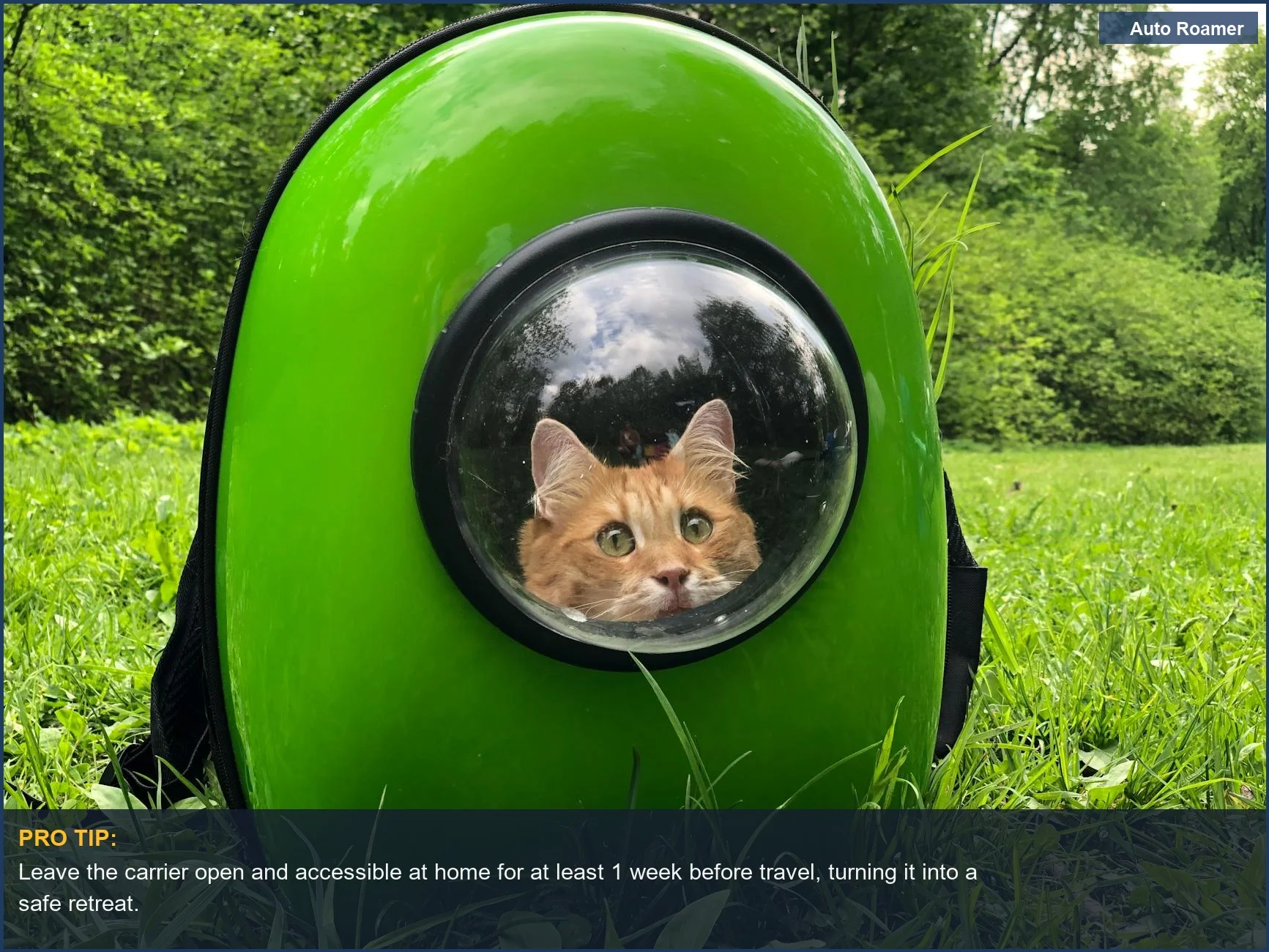
Leave the carrier open and accessible at home for at least 1 week before travel, turning it into a safe retreat.
This tabby cat finds comfort in its green backpack, a testament to proper carrier acclimatization. Spending just 5-10 minutes daily encouraging positive association helps make cat car travel calm. | Photo by Helen

Safety Considerations

Prioritizing safety is paramount when planning how to keep cats calm during car travel. Overlooking crucial precautions can turn a routine trip into a dangerous ordeal for both you and your feline. We've identified key risks and their mitigations based on our road-tripping experience.
Risk Unrestrained Cat Injury, Driver Distraction
Signs Cat loose, obstructing view or controls; legal issues possible.
Prevention Use a secure, crash-tested carrier. Secure it with a seatbelt in the back seat How to Help Your Cat With Car Anxiety & Carsickness.
What to do Ensure carrier is appropriate, securely latched. Never allow free roaming.
Risk Extreme Temperature Exposure (Heatstroke/Hypothermia)
Signs Excessive panting, drooling, lethargy (heat); shivering, cold (cold).
Prevention Maintain comfortable cabin temperature. Never leave cat unattended in car.
What to do Adjust climate control. For severe signs, seek emergency vet care.
Risk Escape and Becoming Lost
Signs Cat trying to open carrier or bolting from vehicle.
Prevention Use sturdy carrier, all latches fastened. Microchip cat and use ID tags Reducing Cat Stress during Car Rides.
What to do Double-check carrier security. Only open carrier in a secure, enclosed space.
Risk Severe Motion Sickness and Dehydration
Signs Excessive drooling, repeated vomiting, diarrhea, lethargy Motion Sickness in Cats: 10 Tips to Help a Car Sick Cat. Dehydration is critical.
Prevention Withhold food 4-6 hours pre-travel. Consult vet for anti-nausea; 5 mg Benadryl can cause 8-12 hours drowsiness What can I give my cats before a long car drive to keep them calm .... Apply pheromone sprays Road Trips and Car Travel With Your Cat.
What to do Pull over safely. Offer small sips of water. Clean carrier, administer vet-prescribed medications.
To enhance your safety and comfort, consider tips on how to organize your car trunk effectively.
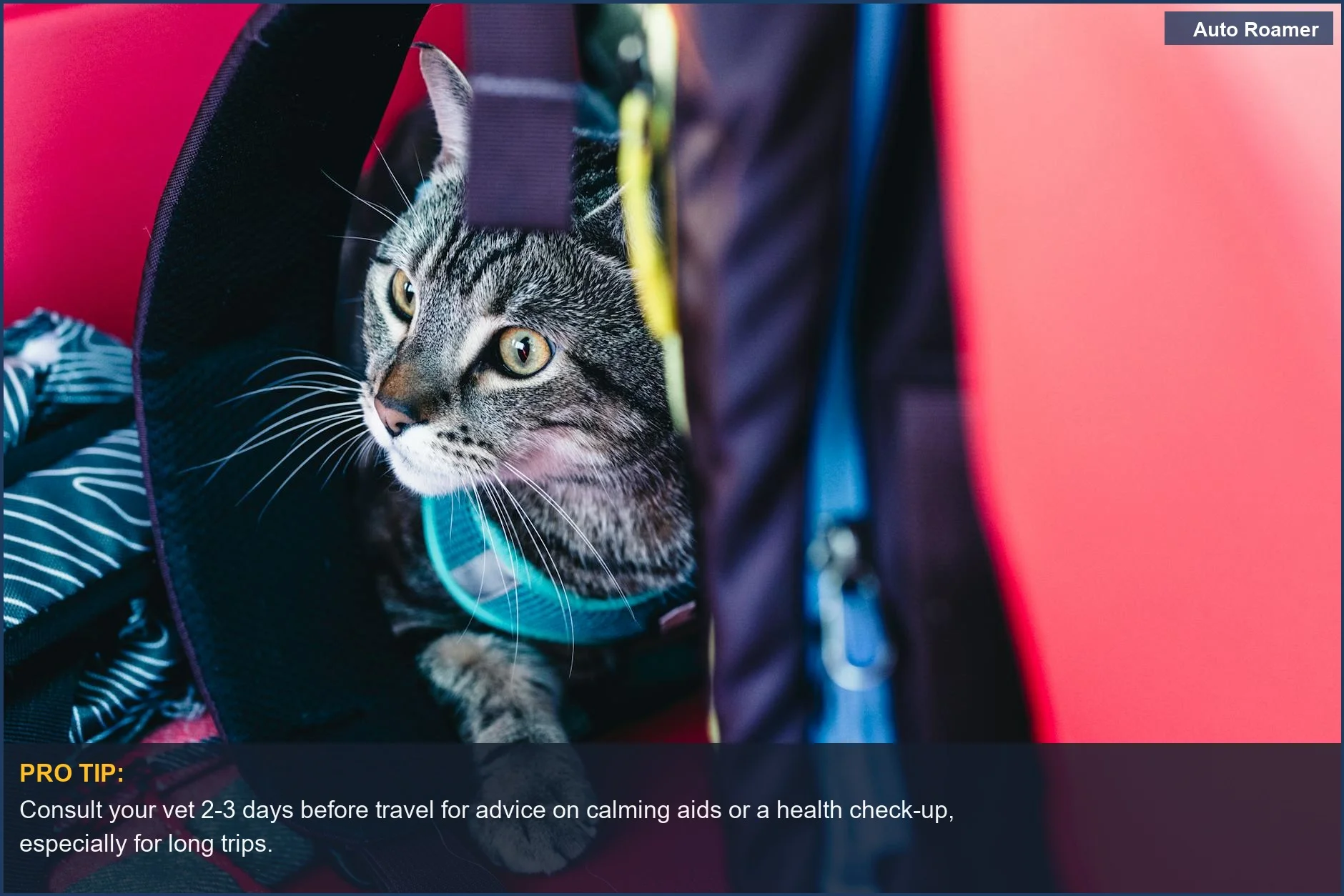
Consult your vet 2-3 days before travel for advice on calming aids or a health check-up, especially for long trips.
Peeking curiously from its travel backpack, this tabby exemplifies readiness for safe journeys. Ensuring proper ventilation in the carrier, with at least 3-4 open sides, is crucial for how to keep cats calm during car travel. | Photo by Ali Kazal

Common Mistakes to Avoid

Mistake Letting your cat roam free in the car.
Why people make it Owners assume cats will be less anxious if not confined, believing free movement promotes comfort.
What actually happens A loose cat is a significant safety hazard, causing driver distraction or severe injury in sudden stops.
Better approach Always use a secure, appropriately sized carrier. "It is important for your cat to be appropriately restrained during travel" Road Trips and Car Travel With Your Cat. Secure the carrier in the back seat to prevent shifting, which helps reduce anxiety How to Help Your Cat With Car Anxiety & Carsickness.
Mistake Only introducing the carrier right before travel.
Why people make it The carrier is often stored away and only brought out as a travel necessity.
What actually happens Cats quickly associate the carrier with stress, making the entire travel experience negative from the start. "Your cat's car anxiety begins long before they ever reach the car, and it all starts with the carrier" How to Help Your Cat With Car Anxiety & Carsickness.
Better approach Keep the carrier accessible and inviting at all times. Feed your cat in it and offer treats inside to create positive associations Road Trips and Car Travel With Your Cat, Motion Sickness in Cats: 10 Tips to Help a Car.
Mistake Feeding a full meal right before a long drive.
Why people make it Owners want to ensure their cat is well-fed and comfortable before the journey.
What actually happens A full stomach can worsen motion sickness, leading to vomiting and increased stress. "Most motion sickness in cats is caused by stress and anxiety during travel" Motion Sickness in Cats: 10 Tips to Help a Car.
Better approach Withhold food for several hours before travel. Offer small amounts of water periodically during the journey.
Mistake Relying on a single calming method.
Why people make it People often hope one quick solution, like a pheromone spray, will be sufficient.
What actually happens While effective, a single method rarely provides enough support for truly anxious cats. Pheromone products alone might not be enough Reducing Cat Stress during Car Rides.
Better approach Implement a multi-modal strategy including carrier acclimation, pheromones, and a secure carrier. For highly anxious cats, consult your vet about medication like 5 mg of Benadryl, which can cause drowsiness for 8-12 hrs What can I give my cats before a long car drive to keep them calm ....
If you're also traveling with a puppy, consider these tips for smooth car rides.
Cat car travel: calming methods
Comparison overview for how to keep cats calm during car travel

Key Takeaways

  • To successfully keep cats calm during car travel, prioritize early carrier acclimation. We ensure our cats associate their carrier with positive experiences, leaving it open and accessible for feeding and rest VCA Hospitals. This groundwork dramatically reduces pre-travel anxiety Preventive Vet.
  • Utilize pheromone products inside the carrier to create a soothing atmosphere. Spraying Feliway or similar synthetic feline pheromone products helps decrease stress Pet Health Network, mimicking natural calming signals.
  • Always guarantee a secure and stable carrier placement within the vehicle. We position carriers securely in the middle of the back seat to prevent shifting, which lessens motion sickness and anxiety Preventive Vet.
  • For persistent anxiety or motion sickness, consult your veterinarian for medication. Options like 5 mg of Benadryl can make cats drowsy for 8-12 hours, significantly reducing stress during long drives JustAnswer.
  • Ultimately, understanding your cat's specific needs and being patient is paramount. If initial strategies don't suffice, don't hesitate to seek professional veterinary guidance for tailored solutions to ensure stress-free journeys for both of you.
If you're traveling with multiple pets, you might also want to consider tips for traveling with dogs.

Frequently Asked Questions

What's the best way to introduce my cat to car travel?
A good starting point is making the carrier a positive space *before* it even goes into the car. We've found leaving the carrier open with treats and a familiar blanket inside helps cats see it as a safe den, not just a travel cage Bond Vet. Once they're comfortable with the carrier, introduce it to the parked car, then progress to very short drives around the block, slowly increasing duration VCA Hospitals.
Can my cat just walk around the car during a road trip, or do they need a carrier?
No, it's definitely not safe for your cat or for you. An unrestrained cat can become a dangerous projectile in a sudden stop or accident, and they can also cause driver distraction VCA Hospitals. We always secure our cat's carrier with a seatbelt in the back seat to prevent it from shifting, which also helps reduce their anxiety Preventive Vet.
My cat always throws up in the car. What can I do about cat carsickness?
If your cat consistently gets car sick, the first step is to consult your veterinarian to rule out any underlying medical issues and discuss prescription medications Reddit. We've found withholding food for about 3-4 hours before travel can reduce nausea, but make sure they still have access to water. For some cats, an anti-emetic or a sedative from the vet can make a significant difference for longer trips.
Are there laws about how I need to transport my cat in the car?
While specific laws for cat travel vary by region and aren't always explicitly about cats, many states have general distracted driving or animal endangerment laws that could apply. The key is ensuring your cat is safely restrained and cannot interfere with your driving Animal Humane Society. We always recommend using a secure, seat-belted carrier, which adheres to safety principles even if there isn't a specific "cat law."
What are some tips for my cat to stay calm on a really long drive?
For extended journeys, providing familiar comforts within the carrier is crucial; we always put in a favorite blanket or a worn t-shirt that smells like home Facebook Group. Synthetic pheromone sprays, like Feliway, applied to the carrier 15-30 minutes before departure, have shown positive results in reducing anxiety for many cats VCA Hospitals. Additionally, maintain a calm environment in the car, keeping the music low and avoiding sudden movements.

Sources

Related Articles