Why the Dog Earns Its Own Spot in the Setup
The first time I took my dog car camping I treated it like packing one more bag. Throw a blanket in the back, bring a bowl, figure the rest out there. By the second night I'd learned what every dog owner who camps out of a vehicle learns the hard way: the dog isn't an add-on to your setup, it reshapes it. Where you sleep, how you load the back, what you can leave open at night — the dog touches all of it.
Here's what nobody tells you up front. A dog needs its own defined spot or it spends the night reorganizing yours. It needs to be secured on the drive in a way a loose blanket can't provide. It needs a safe way in and out of a vehicle that sits higher than your couch at home. And at camp it needs to be with you without being able to chase a deer into the dark. Skip any one of those and the trip gets harder than it should be.
The good news is the gear that solves all this is short and most of it is cheap. You don't need a custom build or a roof tent. You need four things done right: a place for the dog to sleep, a restraint for the drive, a way up and down, and a tether for camp. Everything else is comfort and convenience layered on top.
Below I'll go through each of those, what to actually check against your specific dog and rig, where the money genuinely matters versus where it doesn't, and what I'd pack for a weekend versus a long trip. None of it is complicated once you stop thinking of the dog as cargo and start thinking of it as a second camper with needs of its own.
Real-World Scenarios: Matching the Restraint to Your Dog and Drive
The right restraint depends entirely on your scenario — your dog's size and the vehicle it rides in — and this is the piece people skip and shouldn't, because it's the only one with a safety consequence. An unrestrained dog in a sudden stop becomes a projectile — for itself, for you, and for anyone in the front seats. The Center for Pet Safety, which actually crash-tests this gear, is blunt about it: most restraint products fail their tests, and an unrestrained dog is the worst option of all. So the question isn't whether to secure the dog; it's which method fits your dog and your vehicle.
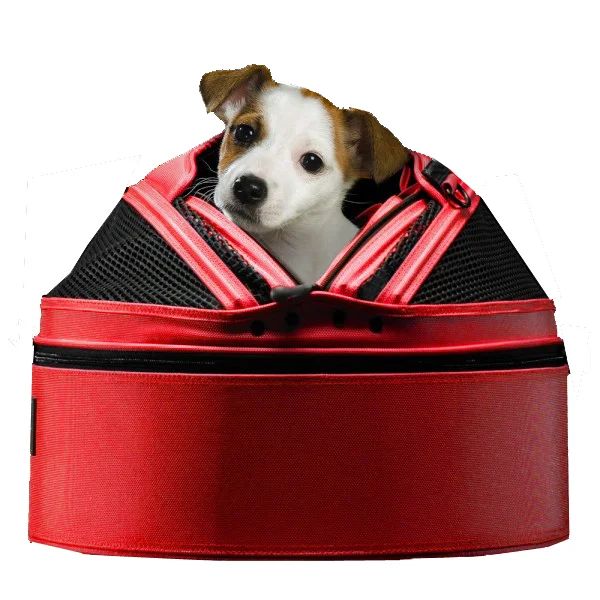
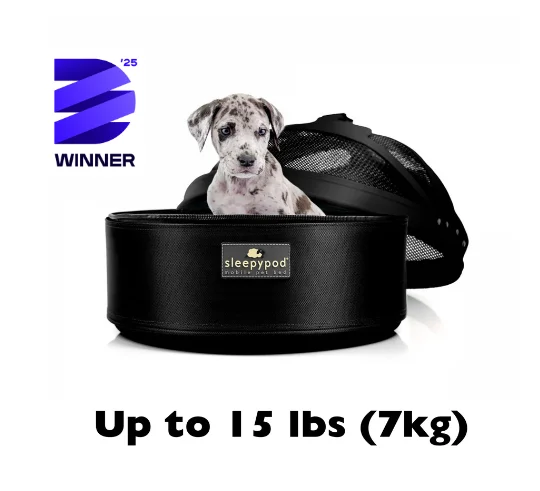
There are three real approaches. A crate contains the dog in a rigid or semi-rigid structure — for small dogs a carrier like the SleepyPod Mobile, which is one of the few products to actually earn top crash-test marks, doubles as the dog's bed and its restraint. A crash-tested harness tethers the dog to a seatbelt anchor, which suits medium and large dogs that ride in a back seat. And a barrier like the Vailge Dog Car Barrier doesn't restrain the dog so much as keep it out of the front — it stops a dog climbing into the driver's footwell, which is its own kind of safety even if it isn't crash protection.
The honest hierarchy: for crash protection, a top-rated crate or harness beats a barrier, full stop. A barrier solves a different problem — keeping the dog confined to the cargo or back-seat zone so it isn't underfoot while you drive. Plenty of people run a barrier and a harness, which is the belt-and-suspenders answer for a big dog in an SUV.
- Small dog: a crash-tested carrier-crate (SleepyPod type) that straps to a seatbelt — it's the bed and the restraint in one.
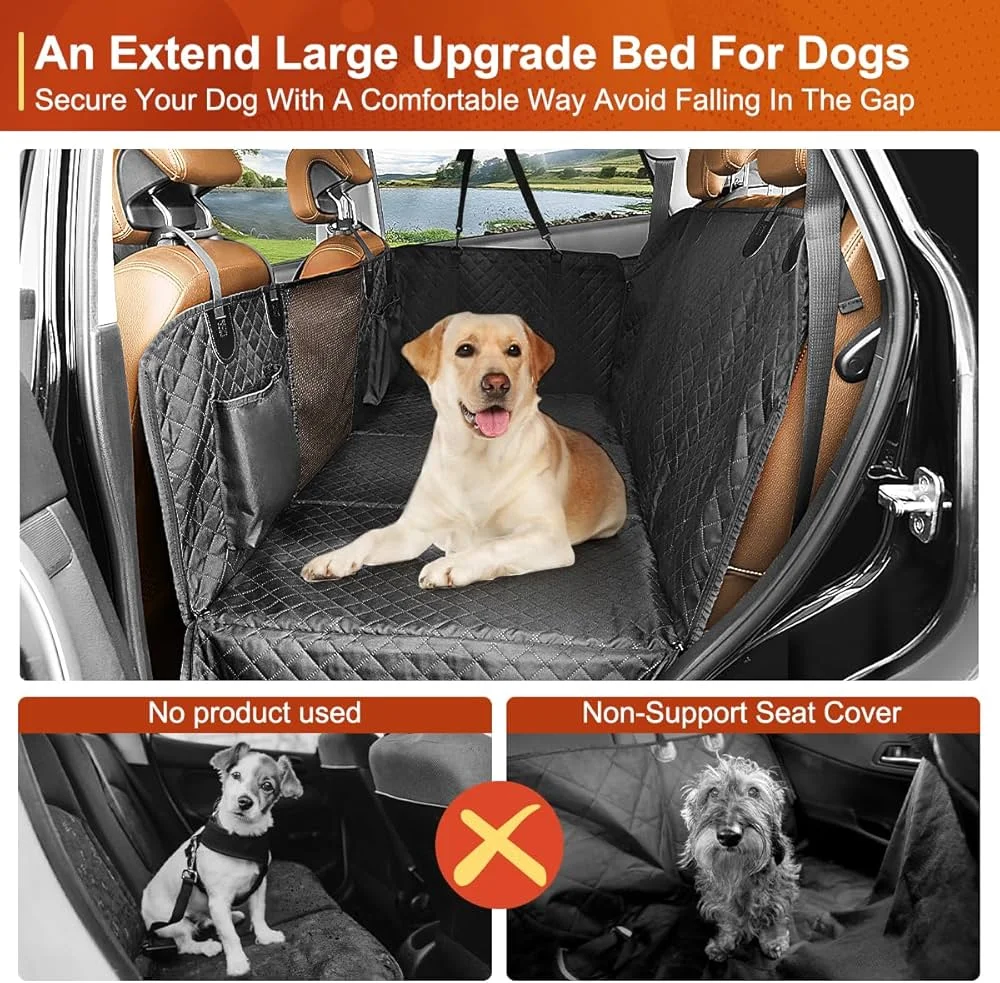
- Medium/large dog, back seat: a crash-tested harness to a seatbelt anchor; add a barrier if it tries to come forward.
- Large dog, SUV cargo area: a barrier to confine it back there, ideally with a harness anchored to a cargo tie-down.
Whatever you pick, check that it's rated for your dog's weight and that the anchor point can actually take a load. A harness clipped to a flimsy plastic loop is theater. The restraint is only as good as what it's attached to.
The Dog-Camping Checklist: What to Look For Before You Pack
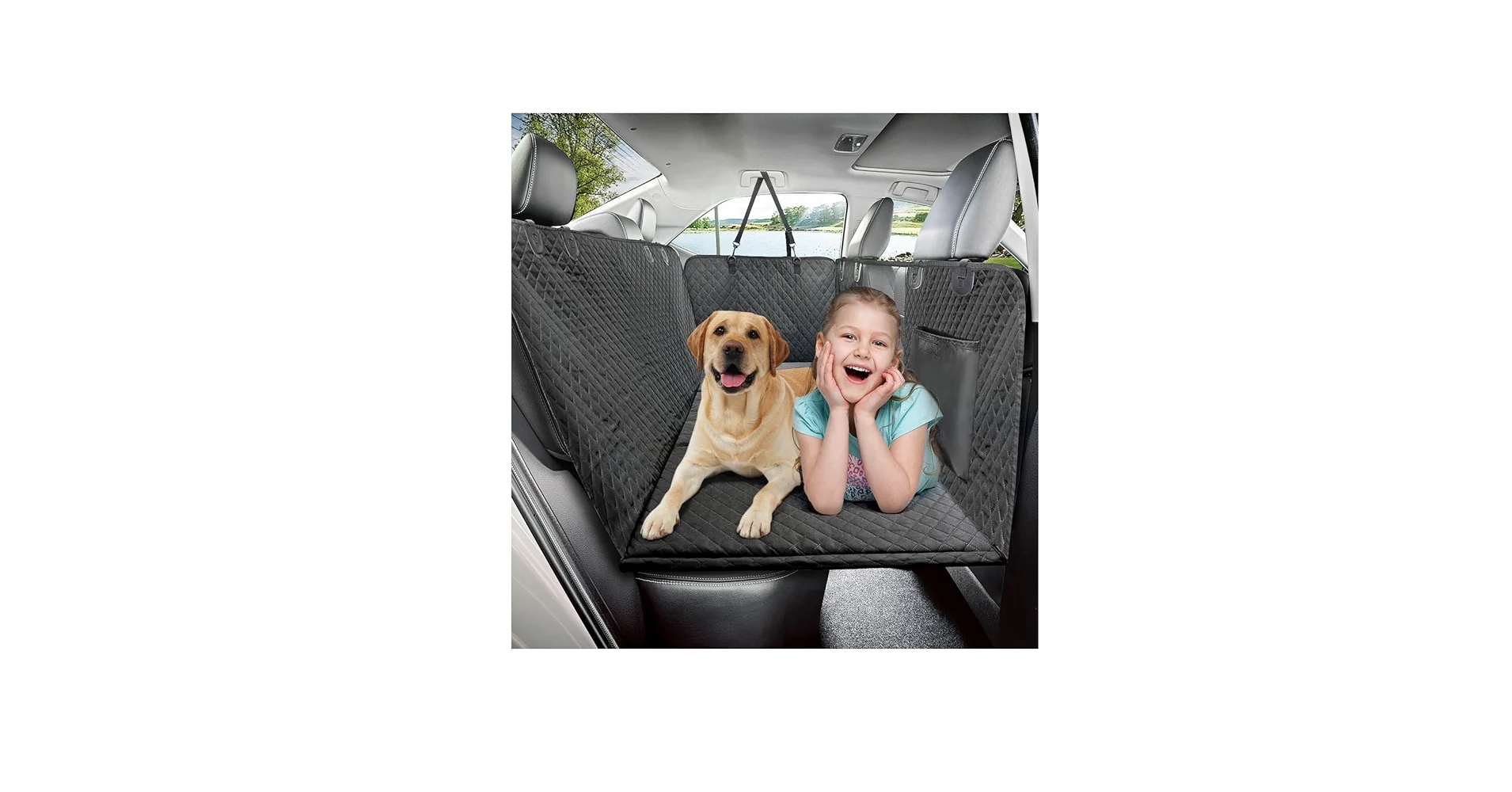
Dog gear is a category where the listing photos lie a lot — everything looks like it fits a golden retriever in a clean SUV. Run this check against your actual dog and your actual vehicle before you order, because the returns on ill-fitting dog gear are a genuine hassle:
- Measure the dog, not the breed. Weight and shoulder-to-tail length matter more than 'fits large breeds.' A lean 60-pound dog and a stocky 60-pound dog need different harness cuts.
- Measure the space. A travel bed has to fit the cargo floor with the seats up or folded the way you actually camp — not the showroom configuration.
- Check the anchor. For a harness, confirm your back seat has a usable seatbelt receiver or a tie-down the tether reaches. For a barrier, confirm it mounts to your headrest posts or cargo points.
- Crash-test evidence, not marketing. 'Crash-tested' is unregulated language. Look for an actual Center for Pet Safety rating if crash protection is the goal.
- Wash-ability. Anything the dog touches outdoors gets filthy. A non-removable cover is a future garbage bag.
The one people skip: think about the dog's age and joints before you decide you don't need a ramp. A spry two-year-old jumps into a tailgate fine; the same dog at nine doesn't, and the day you realize that is usually a day you're already on the road. If your dog is past middle age or your vehicle sits high, budget for the ramp now.
The Add-Ons That Make Dog Camping Work: Bed, Ramp, Tie-Out
Beyond the restraint, three add-ons turn a dog into a comfortable second camper: a packable bed for the nights, a ramp for getting in and out, and a tie-out for camp. None is expensive, and each solves a problem you'll hit on the first trip. Start with the bed.
Start with the bed, because it's the thing your dog interacts with for the most hours and the thing most people get wrong by overthinking or underthinking it. The job is simple: give the dog a defined, insulated, packable spot that says this is yours. A dog with its own bed settles. A dog without one claims your sleeping bag.
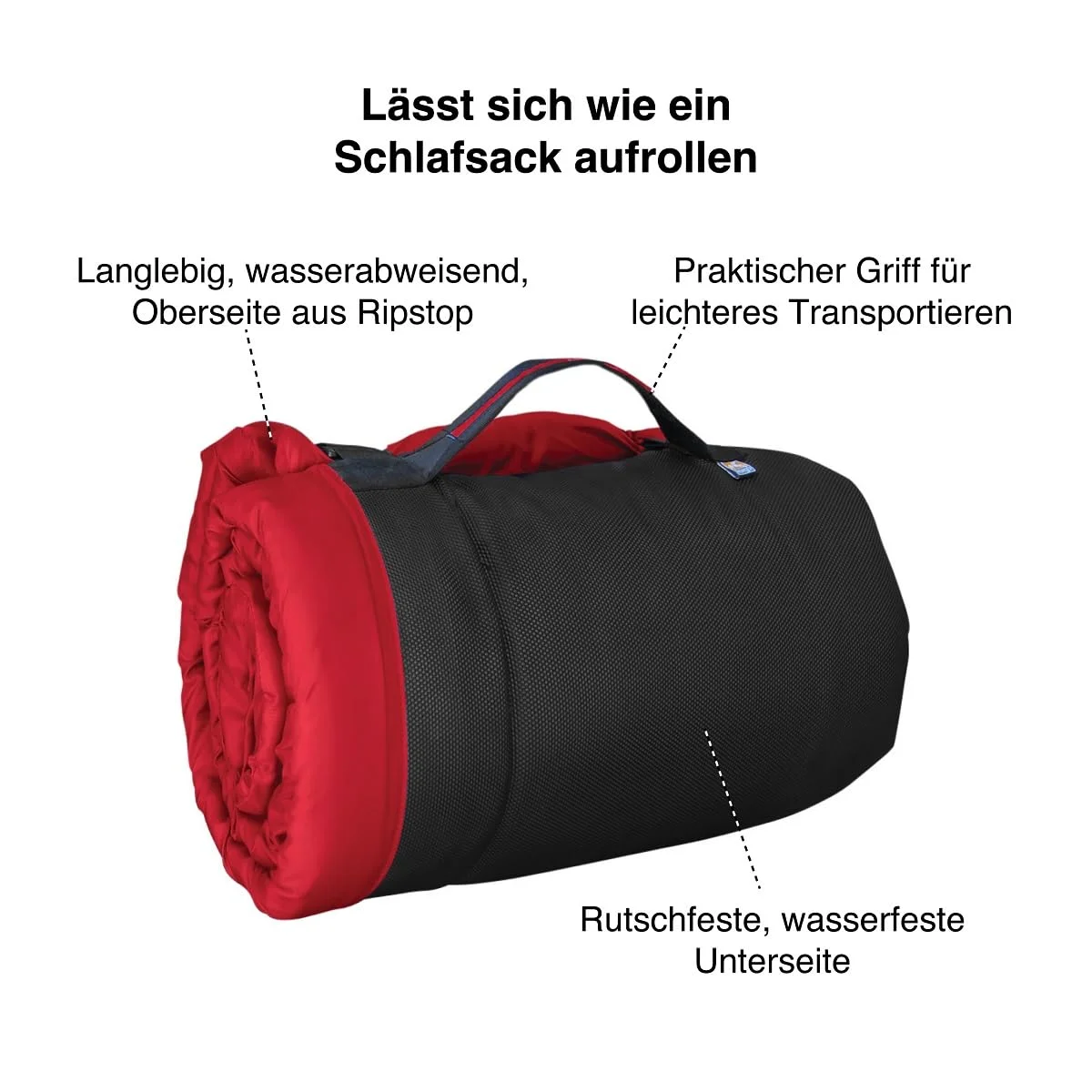
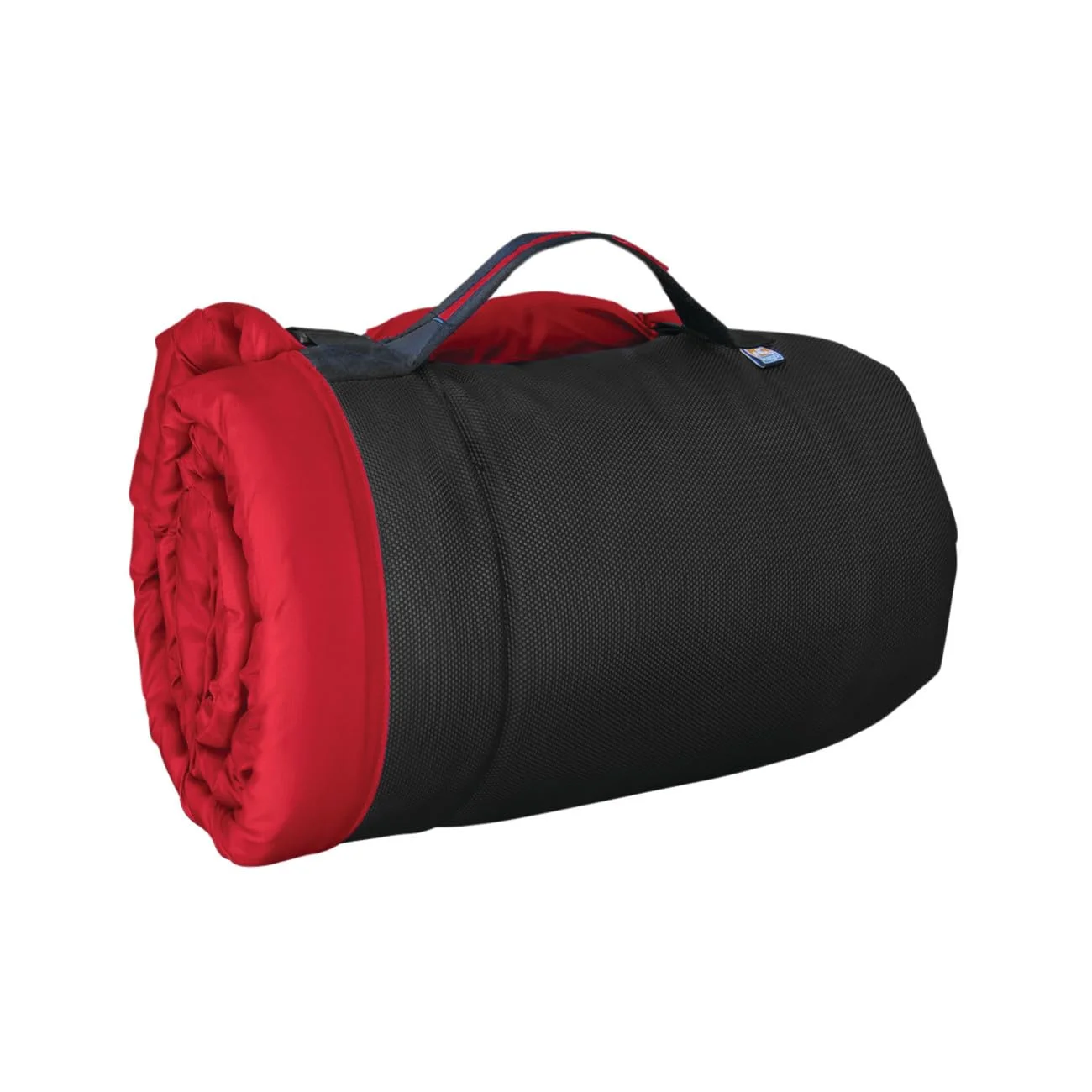
The split is between a thick home-style orthopedic bed and a thin packable travel pad. For car camping the packable pad wins almost every time, and the Kurgo Wander Bed is the type I keep coming back to — it's a water-resistant travel bed that rolls into its own bundle, so it stores flat against a wall of the cargo area instead of eating a cubic foot of space. The trade is less plush than a memory-foam slab at home, but a dog that's tired from a day outside doesn't need four inches of foam; it needs warmth off the metal floor and a smell it recognizes.
Insulation from the floor matters more than people expect. A cargo area is a sheet of steel with carpet over it, and on a cold night that floor pulls heat out of a dog the same way a cold tent floor does to you. A travel pad with even a thin foam or fill layer breaks that contact. If you're camping below freezing, layer the pad over a closed-cell foam mat the way you would your own — the dog feels the cold ground just like you do.
Bring something that already smells like home. A bed that's lived in your living room for a month is worth more on the first night than the most expensive new pad, because the unfamiliar smell of a brand-new bed in a brand-new place is exactly what keeps an anxious dog pacing. Wash it later; pack it dirty first.
One practical note: get a bed with a removable, washable cover, because it will get muddy, and a muddy dog bed you can't clean becomes a muddy dog bed you throw away. The whole point of a travel bed is that it survives the abuse car camping throws at it.
The ramp — the add-on people buy second, after a hard jump.
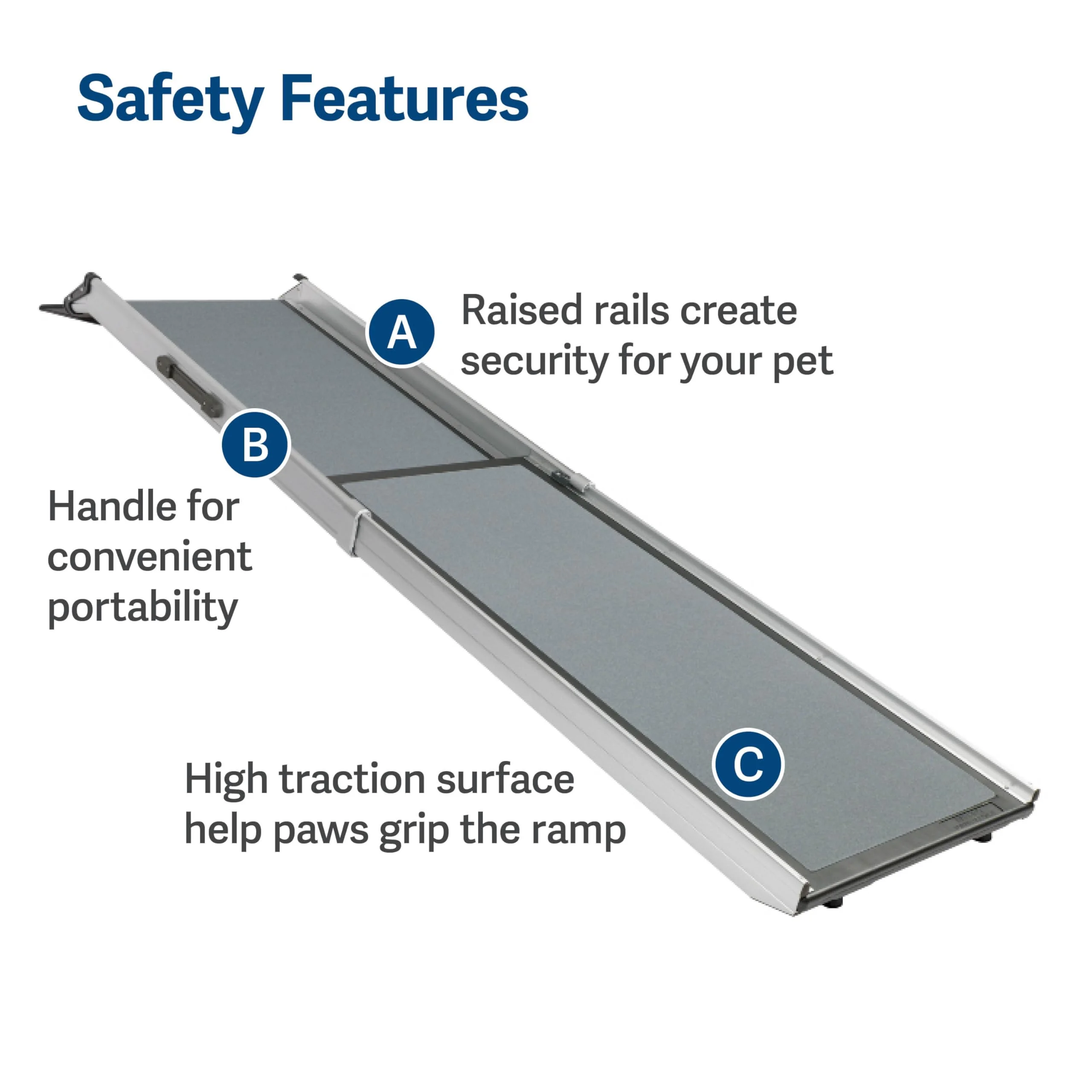
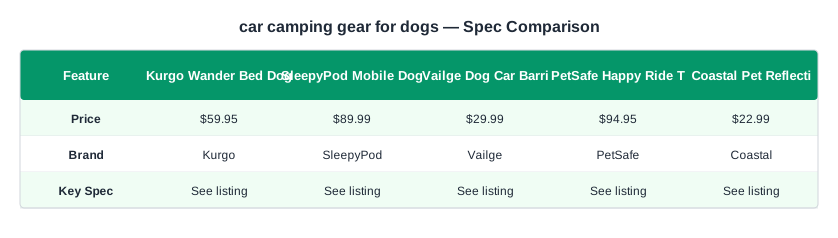
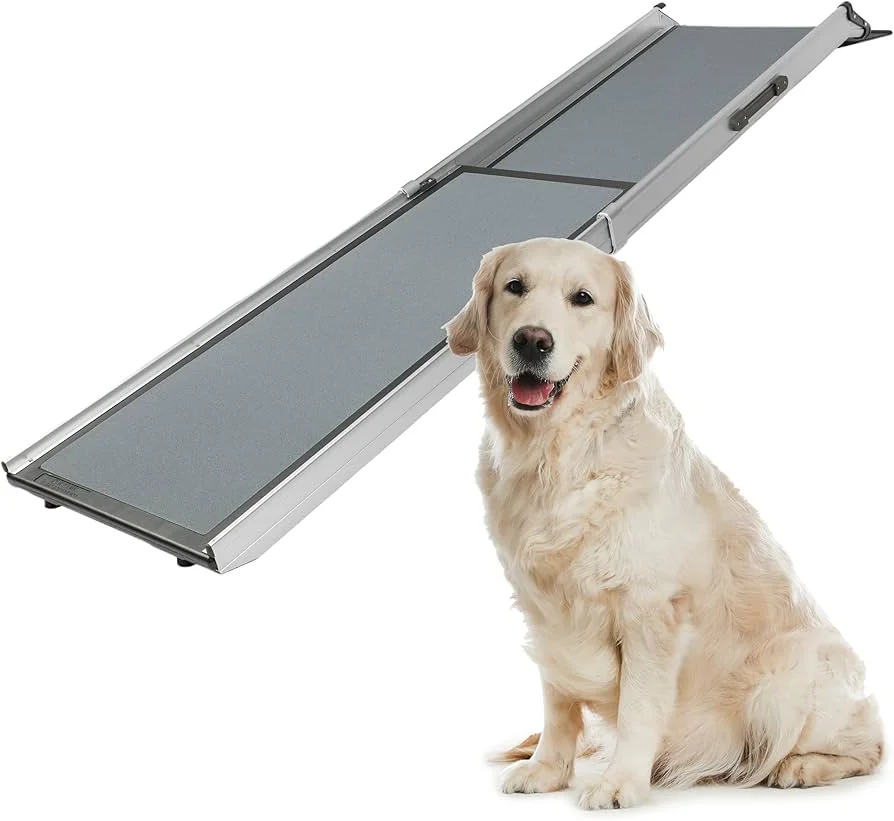
The ramp is the piece people buy second, after their dog hurts itself or refuses a jump it used to make. A vehicle tailgate or cargo floor sits high — often 24 to 36 in off the ground — and a dog launching up to it and thudding down from it repeatedly is hard on hips, elbows, and a spine that's older than the dog acts. A PetSafe Happy Ride Telescoping Ramp, around $95 and rated to 150 lb, or one like it turns that jolt into a walk.
Two designs exist: folding ramps that hinge in the middle and telescoping ones that extend to roughly 71 in. For car camping I lean telescoping, because it adjusts to whatever height the tailgate or floor happens to be and packs down to about 39 in to slide along a wall of the cargo area. A folding ramp is often sturdier and cheaper but stores as a fixed, bulky slab. Both work; the storage shape is what usually decides it for a loaded rig.
The spec that actually matters is the weight rating and the surface grip, not the length. A ramp your dog won't trust is a ramp it jumps off the side of. Look for a high-traction surface and a rating well above your dog's weight — a 150 lb rating covers nearly any dog — and then spend a week at home teaching the dog to use it before the trip; a dog learning a ramp for the first time in a dark campground will refuse it.
Not every dog needs one. A young, sound, medium dog jumping into a sedan trunk is fine. But if your dog is large, old, short-legged, recovering from anything, or your vehicle is a lifted truck or tall SUV, the ramp moves from luxury to the thing that lets the dog keep camping with you for a few more years. That's the lens I judge it by — not convenience, but joints.
The tie-out — keeping the dog close at camp.
The drive is solved; now the dog has to exist at camp without bolting into the woods after the first squirrel. A campsite isn't a fenced yard, and a recall that's perfect at home evaporates the instant a dog is somewhere new with deer, other campers' food, and a hundred smells it's never met. You need a way to keep the dog with you that doesn't mean holding a leash for twelve hours.
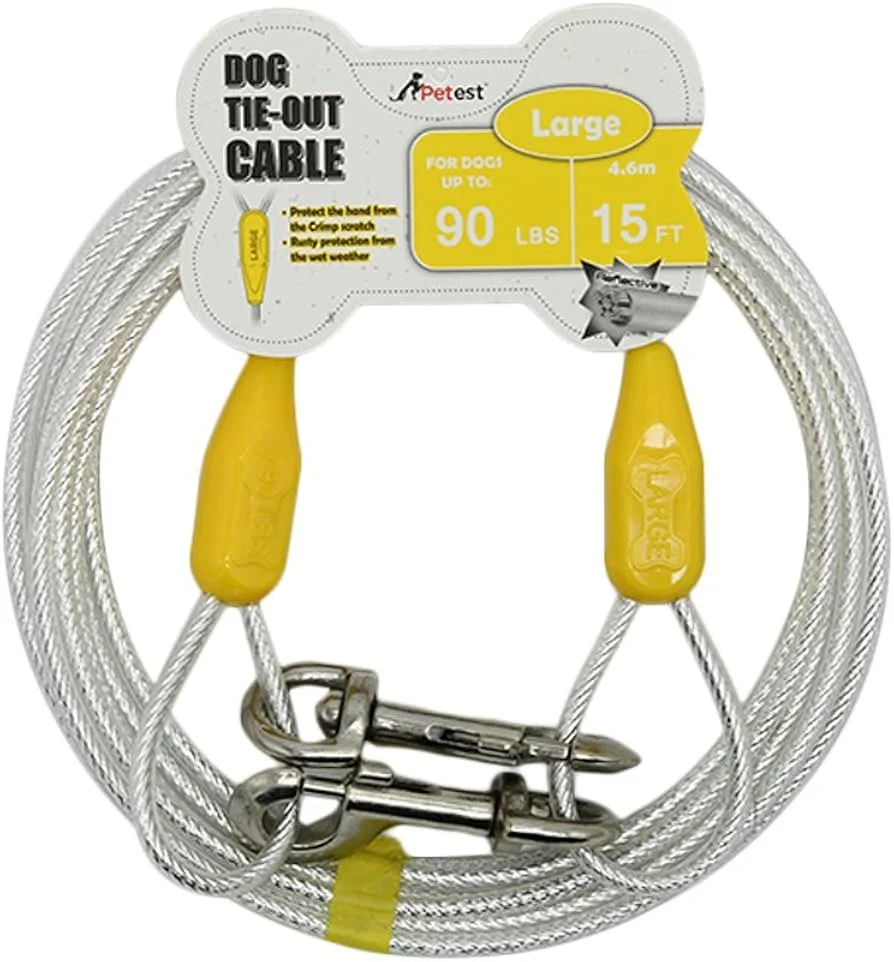
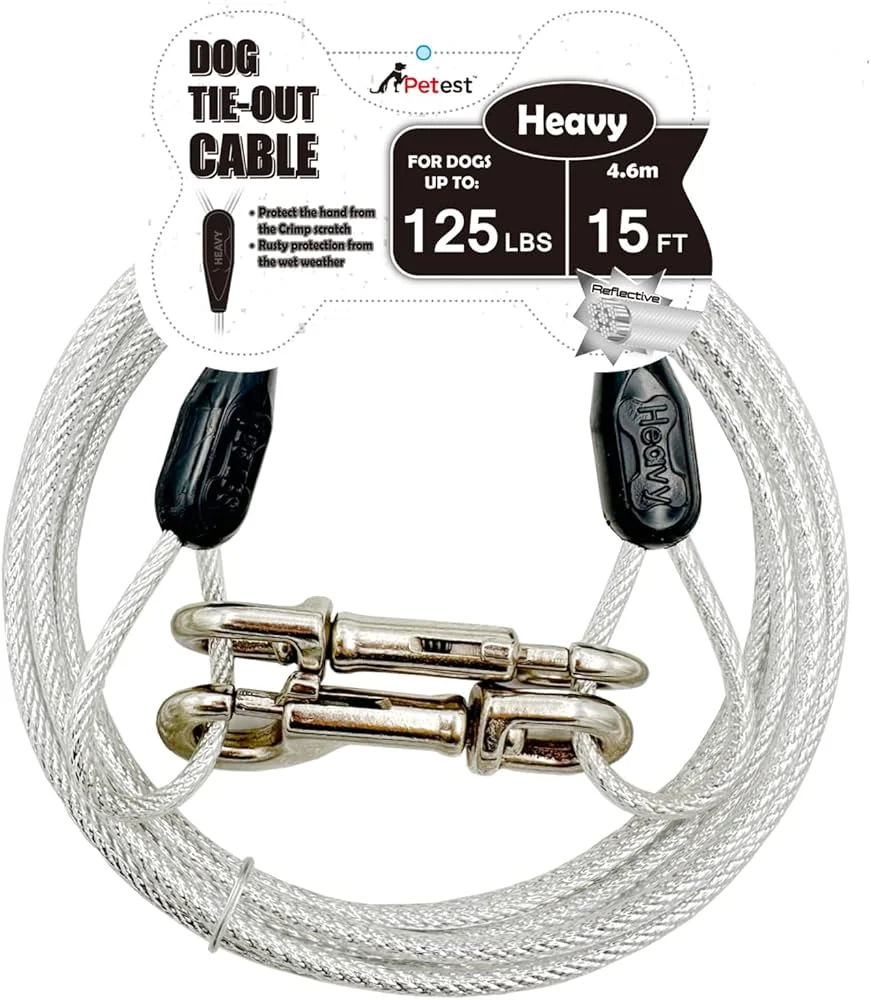
A tie-out cable like the Coastal Pet Reflective Tie-Out staked to the ground gives the dog a defined radius around camp — enough to move, sniff, and lie in the sun, not enough to reach the road or the neighbor's site. The reflective sleeve matters more than it sounds: a cable strung across a campsite at ankle height is a trip hazard in the dark, and a reflective one shows up in a headlamp before you walk into it.
Match the cable's weight rating to your dog with margin — a tie-out rated for your dog's exact weight snaps the first time a 70-pound dog hits the end of it at a sprint. The stake matters too: a flimsy stake in soft ground pulls out and now you have a loose dog dragging a cable. In hard or rocky ground, a screw-in stake holds where a straight spike won't.
- Cable, not rope, for chewers. A coated steel cable survives a bored dog; a fabric lead becomes a chewed fabric lead.
- Length to the terrain. A long radius is great in an open site and a tangle hazard in a tight, treed one.
- Never leave a tied dog unattended for long. A tie-out is for keeping the dog close while you're there, not a babysitter.
For a dog that can't be trusted on a tie-out — a digger, a serious bolter, a reactive dog — a collapsible exercise pen or the crate is the honest answer. Don't ask a tie-out to do containment it can't.
Cleaning, Water, and Caring for Dog Gear Between Trips
Caring for the dog gear between trips is half of why it lasts, and the cleaning starts the moment you get home. Everything the dog touches outdoors — the bed cover, the harness, the tie-out — comes back muddy, and gear you can't clean is gear you replace. Pull the bed's removable cover and wash it, hose and dry the tie-out cable so it doesn't rust at the swivel, and wipe down the harness webbing; salt and grit chew through stitching faster than the dog ever will.
A collapsible silicone bowl is the cheap, obvious win — it clips to a bag, holds water without tipping in a moving vehicle if you get a no-spill design, and packs flat. Keep one in the cabin for the drive (offer water at every stop) and one at camp. A spill-resistant travel bowl in the back seat means you can water the dog without pulling over, which on a long highway day matters.
Food is simpler but has its own trap: store it in a sealed, rodent-and-bear-resistant container, not the bag it came in. Open kibble in a tent or an open trunk is an invitation — to ants, to mice, and in bear country to something much larger. The same food-storage discipline that applies to your own snacks applies double to the dog's, because kibble is fragrant and dogs are messy eaters. Treat the dog's food like your food: sealed, contained, and never left out overnight.
One more: bring whatever your dog normally eats and don't experiment on a trip. A new food plus the stress of a new place is how you end up cleaning up at 2 a.m. far from a vet. Consistency in the bowl is part of the gear list even though it isn't gear.
How to Pick Between a Crate and a Barrier for Your Dog
For owners of medium and large dogs, the real fork is between fully crating the dog and just running a barrier, so it's worth being honest about the trade rather than pretending one is universally right. A crate — even a soft collapsible one at camp, a crash-rated one on the road — gives the dog a den. It's the better answer for an anxious dog, a dog that doesn't settle in open space, or any situation where you need the dog genuinely contained: a busy campground, a dog that resource-guards, a night when you're not in the vehicle with it. The cost is space and setup; a crate is a real object you have to store and pitch.
A barrier like the Vailge flips that. It's a mesh or panel wall that confines the dog to a zone without boxing it in, so the dog gets the whole cargo area to stretch out and you keep the front seats dog-free. It stows to almost nothing and goes up in seconds. The catch is it confines rather than contains — a determined dog can still thrash around back there, and it's no crash protection on its own. It's the better answer for a calm dog in a wagon or SUV that just needs to stay out of the driver's lap.
So it comes down to your dog's temperament and how contained it needs to be, not which is the 'better product.' If your dog settles in open space and rides calmly, the barrier is less gear for the same result. If your dog is anxious, reactive, or you ever leave it in the vehicle, the crate earns its bulk. This is the same logic I use on the rest of a build — I'd rather match the tool to the animal than buy the one with more features and fight it every trip, the same way I'd size a portable power station to what I actually run rather than the biggest box on the shelf.
Where people go wrong is buying a barrier expecting crash safety, or buying a crate so big it eats the whole cargo area for a dog that would have been fine with a wall. Know which problem you're solving: containment and calm, or just keeping the dog out of the front.
When You Can Skip the Fancy Dog Gear (and When You Cannot)
Not every dog needs every piece, and knowing what you can skip saves real money — but the place people try to save is usually exactly the place they shouldn't. Here's where the fancy gear is overkill and where skipping it is a mistake:
- Spend on the restraint. This is the one with a safety consequence. A crash-tested carrier or harness with real test data behind it is worth every dollar over a bargain one that fails the moment it matters. Don't save here.
- Spend on the ramp surface and rating. A cheap ramp with a slick deck or a marginal weight rating is one your dog won't use or one that flexes alarmingly. The mid-tier telescoping ramps are the sweet spot.
- Save on the bed. A packable travel pad does the job at the low-to-mid range; the premium ones add plushness the dog doesn't need outdoors. Buy washable and warm, not fancy.
- Save on the tie-out. A reflective cable and a solid stake are cheap and the expensive ones don't hold a dog any better. Match the rating to your dog and move on.
The false economy is buying the cheapest restraint to free up budget for a nicer bed. That's exactly backwards — the bed is comfort, the restraint is safety, and a comfortable dog that's unsecured is the worst of both. Spend where the failure mode is the dog getting hurt, save where the failure mode is the dog being slightly less cozy.
Straight Answers to What People Ask Me About Camping With a Dog
The same handful of questions come up every time someone's planning their first trip with a dog, so here are the honest answers before you pack. Can my dog just sleep loose in the back? It can, but it'll sleep better with a defined bed and you'll sleep better knowing it isn't reorganizing your gear at 3 a.m. — the bed is cheap insurance against a restless night for both of you.
Do I really need a crash-tested restraint, or is a regular harness fine? For day-to-day, any restraint beats none. For real safety, the crash-tested rating is the difference between a harness that holds in a stop and one that's decorative. If you drive highway miles with the dog, it's worth the upgrade — the Center for Pet Safety exists precisely because most products don't pass.
Is a tie-out cruel? No, used right — it's a defined safe radius, not a punishment, and it's far kinder than a dog hit on a campground road. The cruelty is leaving a tied dog alone for hours or staking it with no shade or water. Use it to keep the dog close while you're there, not as a babysitter.
What's the one thing I'll forget? Water capacity for the dog, almost guaranteed. Everyone packs their own and underestimates the dog's, especially on a hot, active day. Bring more than feels necessary and a spill-proof bowl for the drive, and you've solved the problem most first trips run into.
The Verdict: What I'd Actually Pack for My Dog
Strip it to the essentials and a dog-ready car camping kit is short. The non-negotiables: a packable travel bed like the Kurgo Wander Bed so the dog has its own warm spot, a proper restraint for the drive — a crash-tested SleepyPod for a small dog, a crash-tested harness or the Vailge Dog Car Barrier for a larger one — and enough water and a spill-proof bowl to keep the dog hydrated between taps. Those three cover sleep, safety, and survival.
The trip-dependent adds: a PetSafe Happy Ride Ramp if your dog is old, large, or your tailgate is high, and a Coastal Pet Reflective Tie-Out so the dog can be out with you at camp without bolting. Add a dog jacket for a short-coated dog in the cold, a sealed food container so you're not feeding the local wildlife, and the dog's normal food so you're not running an experiment in the backcountry.
Judge every piece by the same question I judge the rest of a build by: does it solve a problem the dog actually has, or does it just look like dog camping gear? The bed solves restlessness, the restraint solves safety, the ramp solves joints, the tie-out solves bolting, the water solves the thing everyone forgets. Get those right and the dog stops being something you manage on the trip and becomes the reason the trip's worth taking. Pack for the dog the way you pack for yourself — for the real problems, not the catalog — and you'll both sleep through the night. — Dana Cole