Why a Portable Inflator Earns Its Spot in the Trunk
I spent eighteen years with my head under hoods before I started living out of a car, and the tool that has saved more road trips than any wrench I own is an air compressor the size of a water bottle. A slow leak doesn't announce itself. It waits for the worst possible exit ramp, then lets you find out at the gas-station gauge that a tire wanting 35 PSI is sitting at 22.
That's not an emergency yet. It becomes one about 40 miles later, when you've talked yourself out of stopping. Underinflation is how good tires die young: the sidewall flexes, the shoulder runs hot, and you trade a two-minute top-up for a blowout and a tow. The tow costs more than every inflator in this guide combined, which is the entire argument for keeping one in the trunk.
A portable inflator turns a stranded afternoon into a chore you forget by lunch. The honest catch: most of them are mediocre, and the box is no help, because the number printed biggest is almost never the number that matters. The rest of this guide is about which numbers do.
How Fast These Actually Fill — and What the Numbers Mean
Every box shouts a max-pressure number — 120 PSI, 150 PSI — like it's a dare. Your sedan tire wants about 32 to 35 PSI. Nobody's impressed. A light-truck or SUV tire might ask for 50. The max-pressure rating only promises the pump won't stall before it reaches your target; it says nothing about how long you'll stand there in the cold to get there.
The spec that decides that is airflow — liters per minute — and most compact units leave it off the front of the box for a reason. The manufacturer-rated air-delivery is the honest tell: a higher L/min figure means a pump that tops a big tire while a smaller one is still clearing its throat. Owners with SUVs say the same thing again and again — the pocket units are a top-up tool, not a from-flat tool.
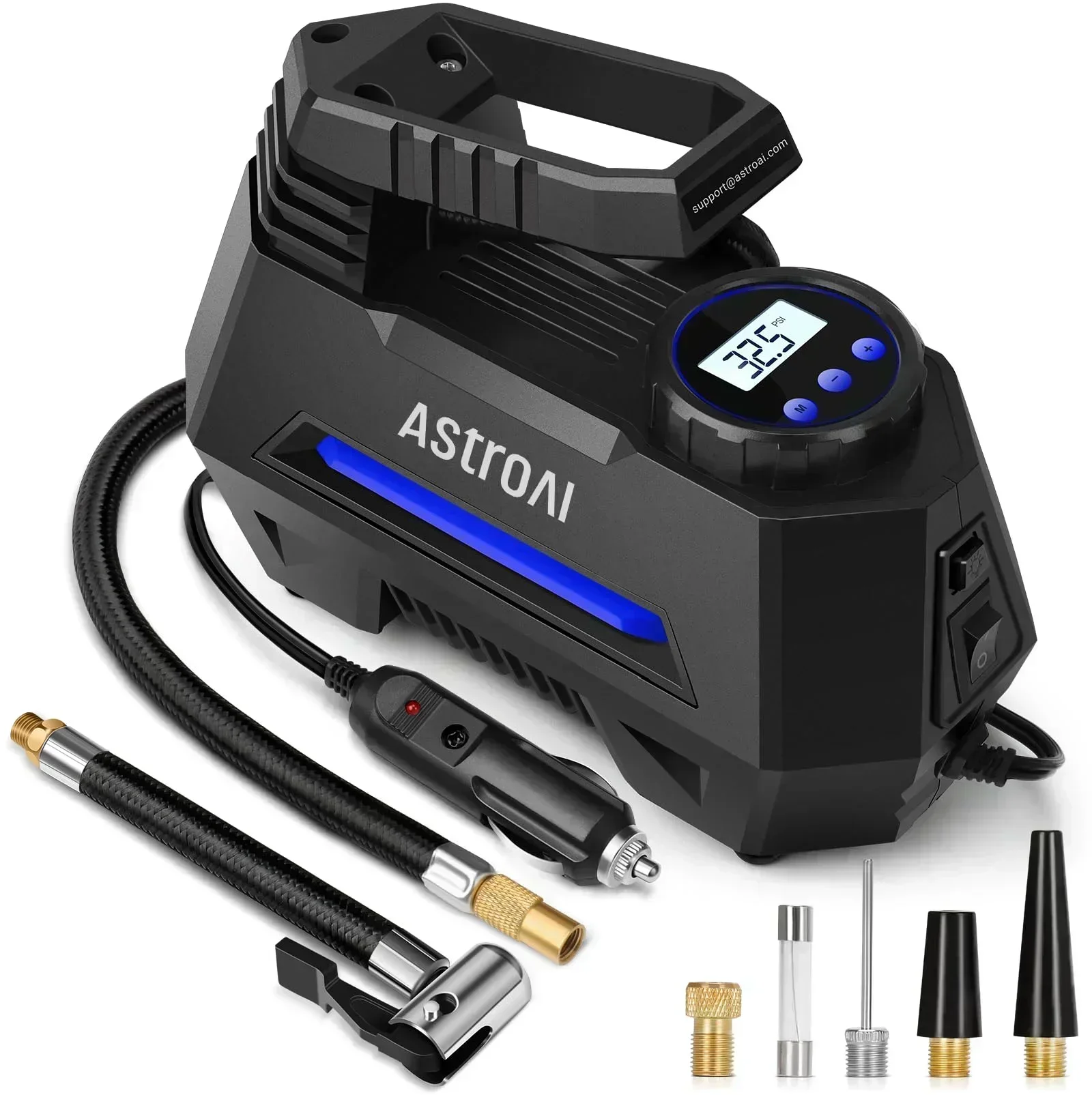
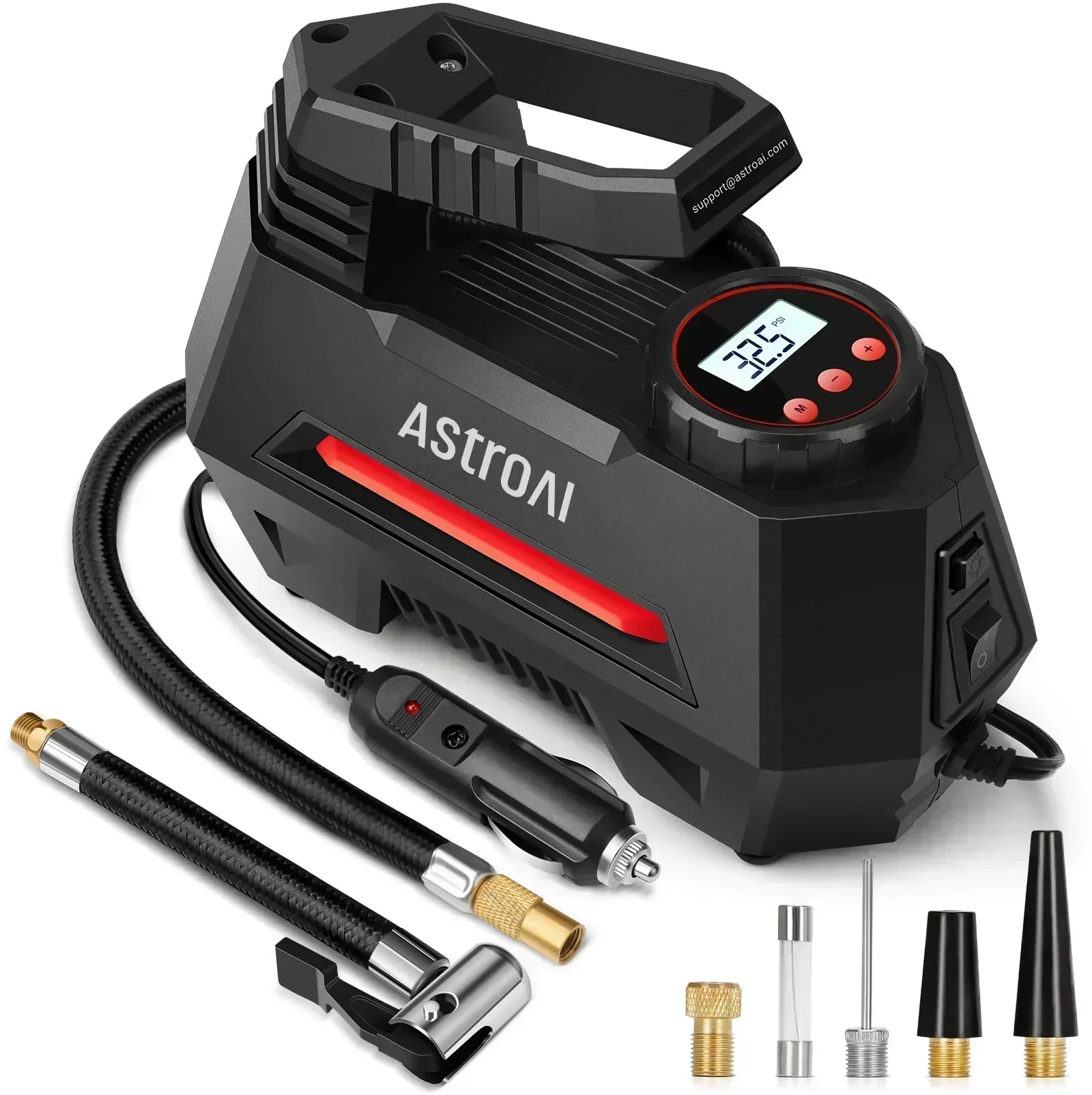
So read the spec sheet for L/min, not the cover for PSI. A unit rated for car-and-bike air-delivery, like the Airmoto, is plenty for a sedan and will quietly disappoint you on a 31-inch tire. The AstroAI AIRUN H and the corded BULLSEYE PRO carry higher air-delivery for the bigger rubber.
Match the airflow to your tires and the speed takes care of itself.
What to Look For Before You Buy
When somebody asks which inflator to grab, I run the same five-point check I'd run on any tool that has to work when there's no shop in sight. None of these make the headline specs, and every one is the difference between a tool you trust and a toy you replace.
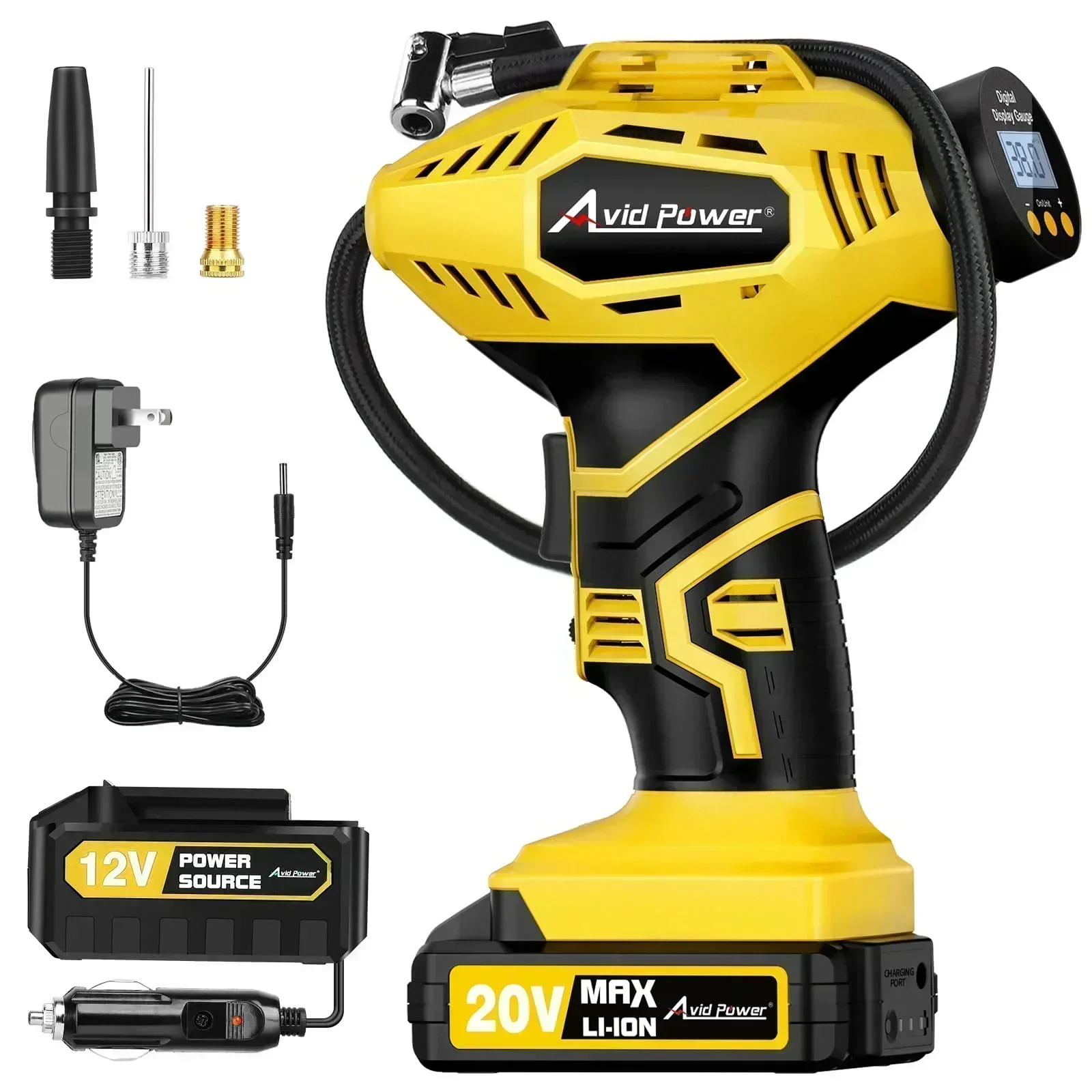
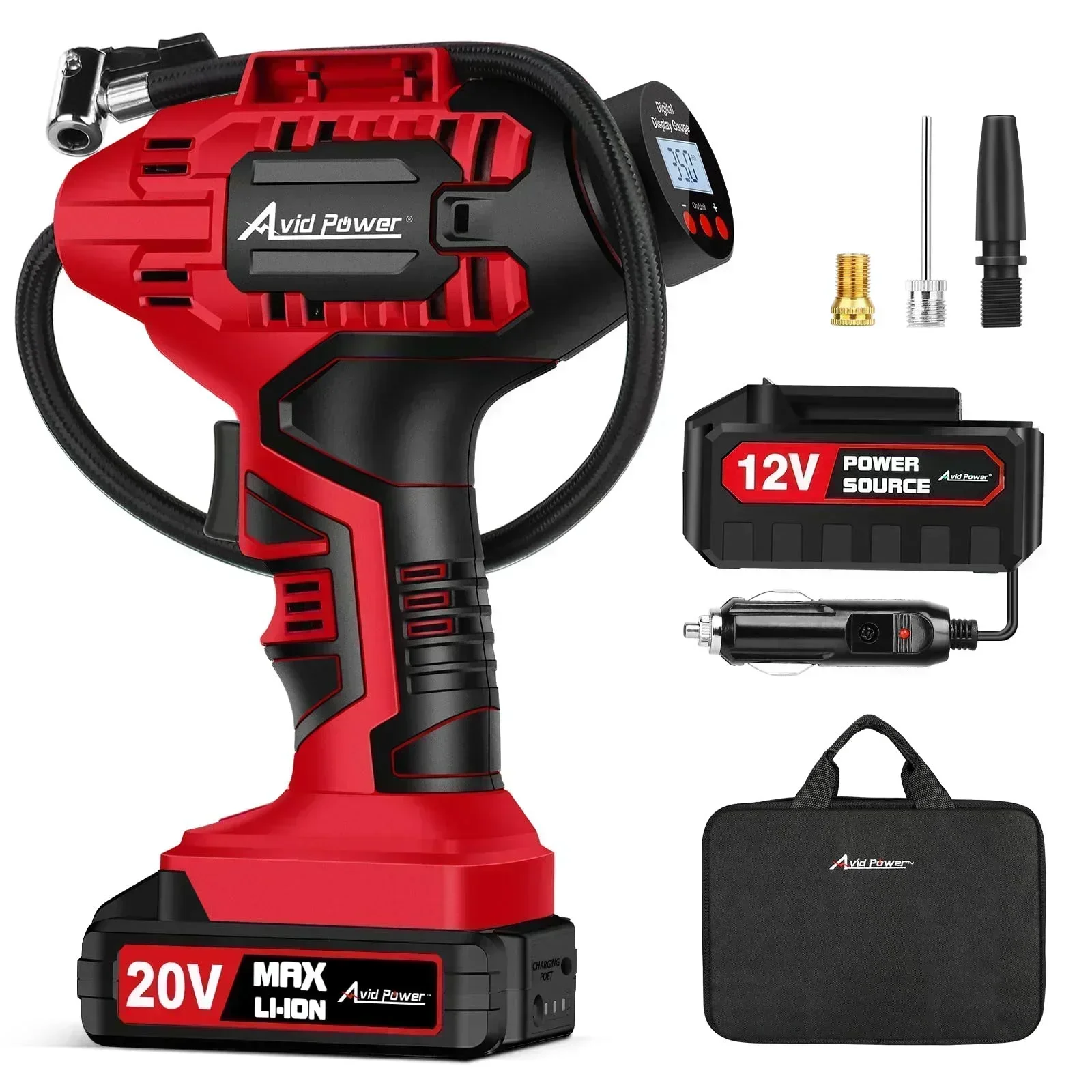
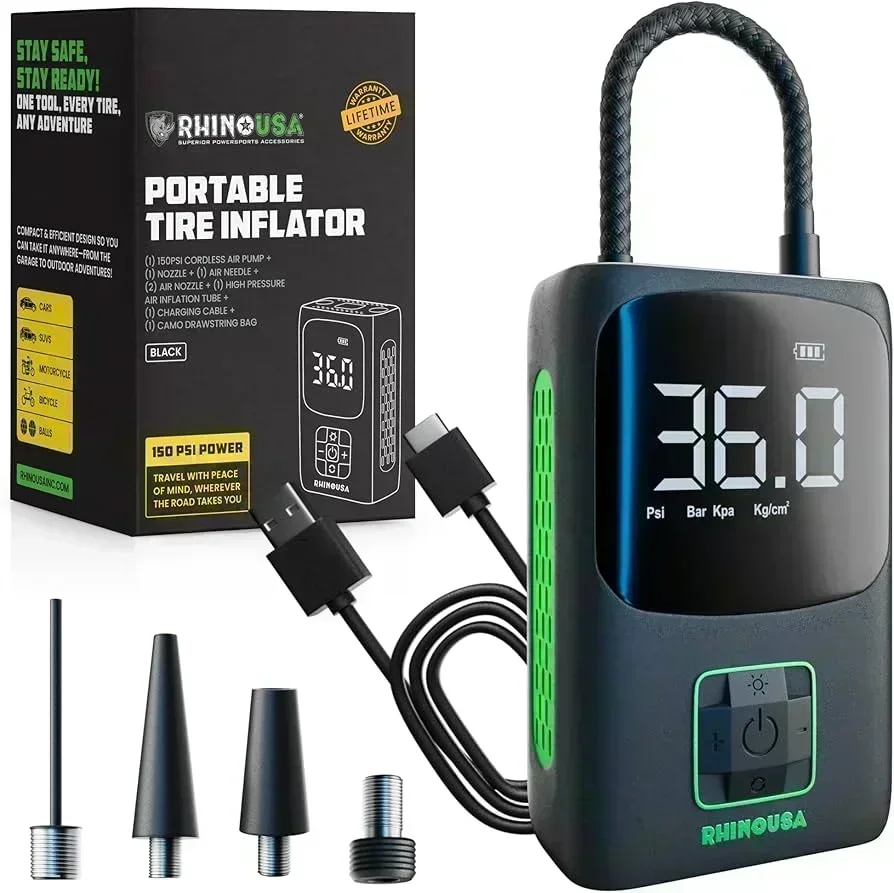
Gauge accuracy. A readout that drifts 3 PSI quietly under- or over-inflates every tire you touch. Reviewer consensus across buyer reviews flags this on the cheapest units; I want one I can sanity-check against a known-good stick gauge. Power source. A rechargeable lithium pack like the Airmoto's or the AVID POWER 20V is grab-and-go; a corded 12-volt like the Rhino USA or BULLSEYE PRO never runs out of charge but ties a cord across your lap.
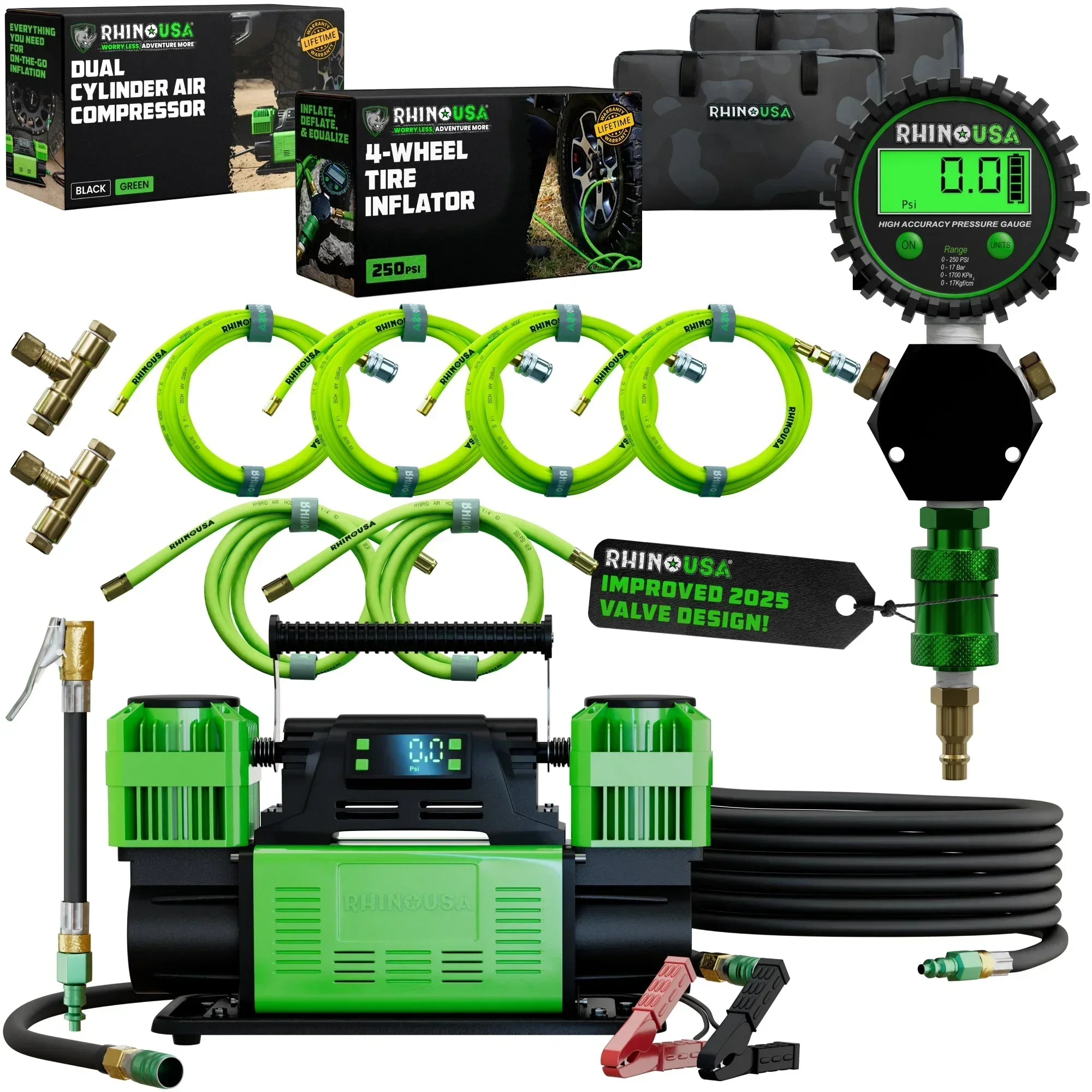
Auto-shutoff. Set the target, walk away, done — the feature owners say sells them on a unit. Build and hose. Brass fittings and a real hose, the way the Rhino USA is built, outlast the plastic chucks that crack in a cold trunk. Size. The best inflator is the one small enough that you actually keep it within reach instead of buried under the spare.
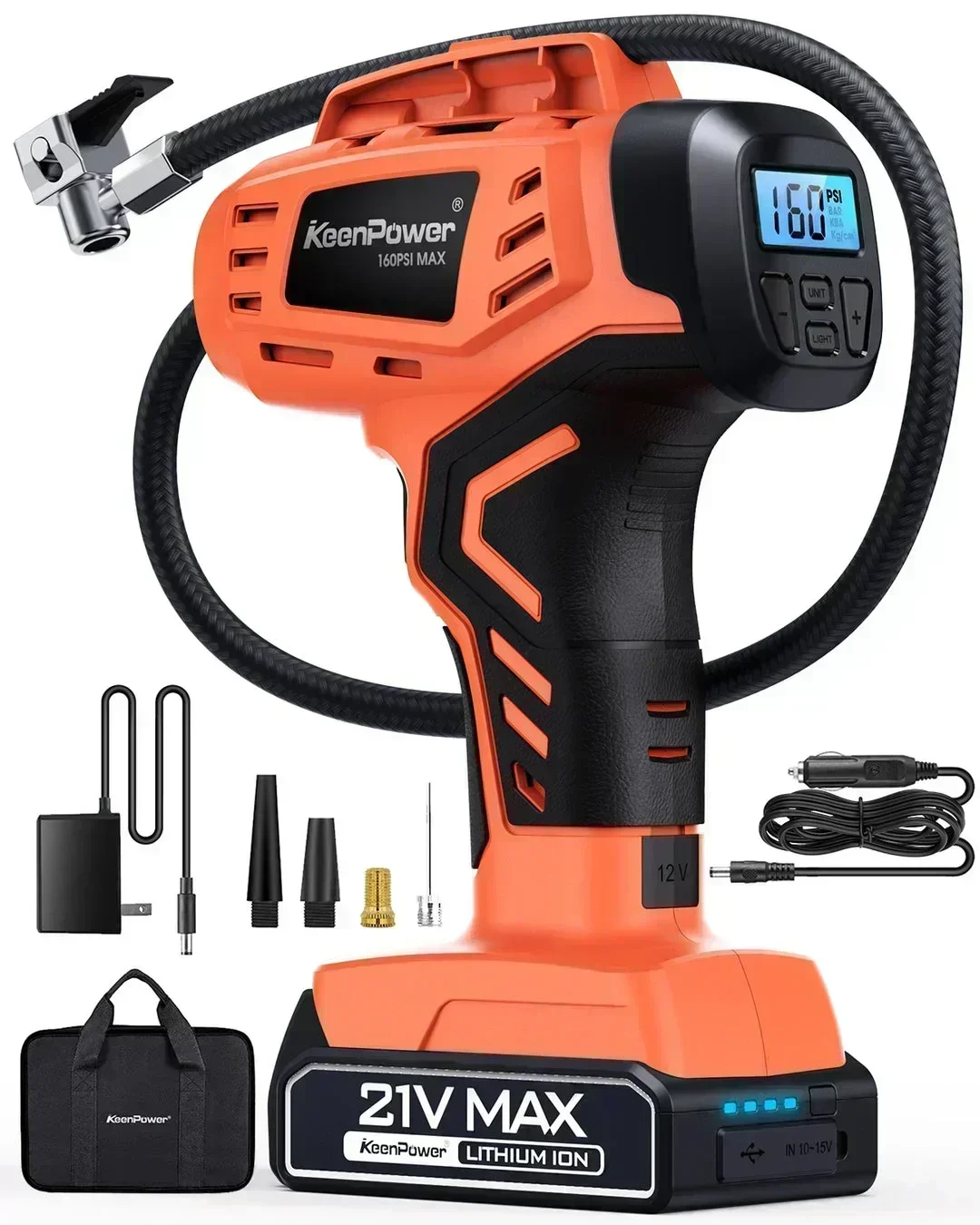
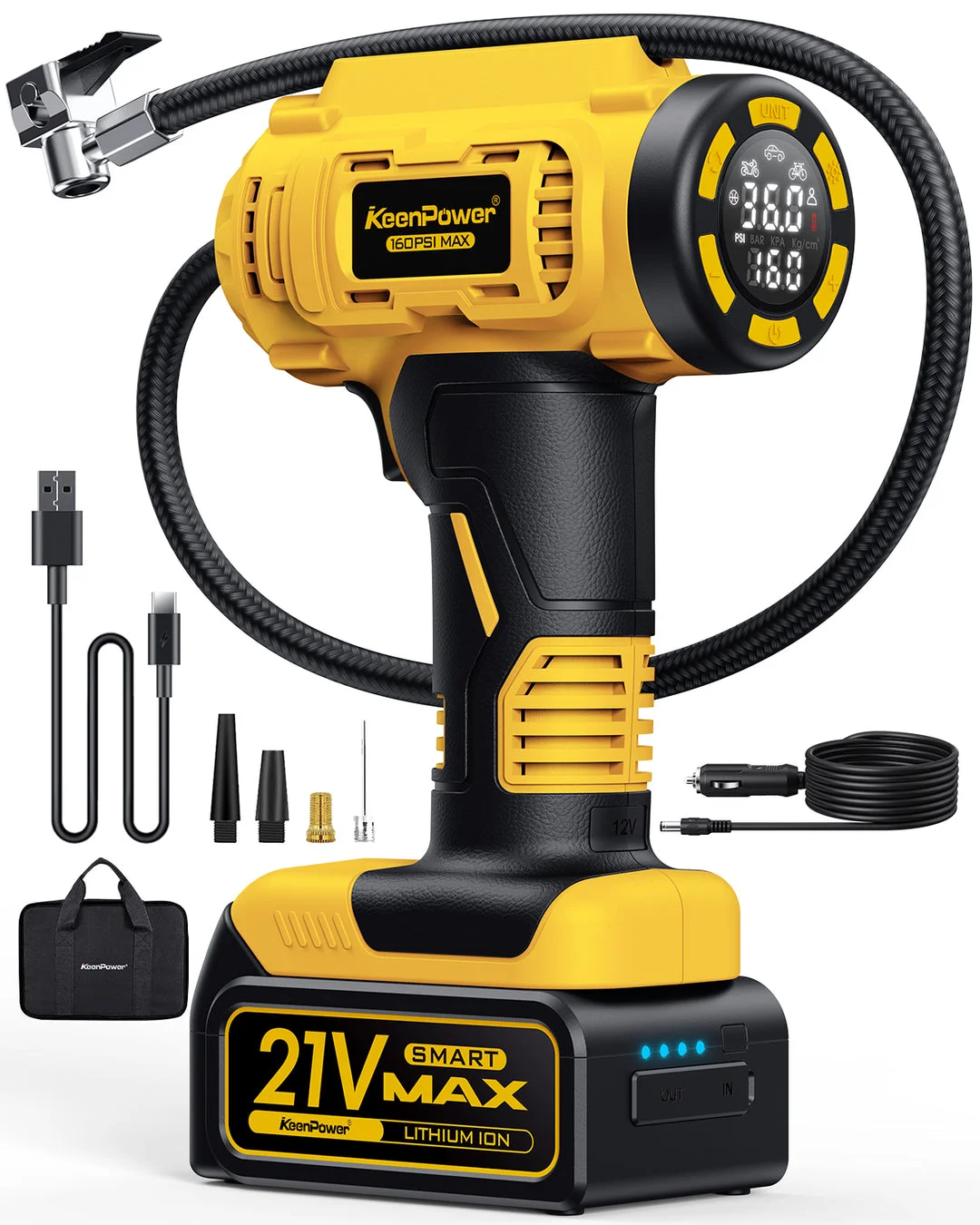
Run a unit past those five and the marketing falls away fast. The KeenPower, for instance, punches above its price for occasional use — owners praise the built-in LED on a dark roadside — but its compact air-delivery means you treat it as a top-up tool and it lasts.
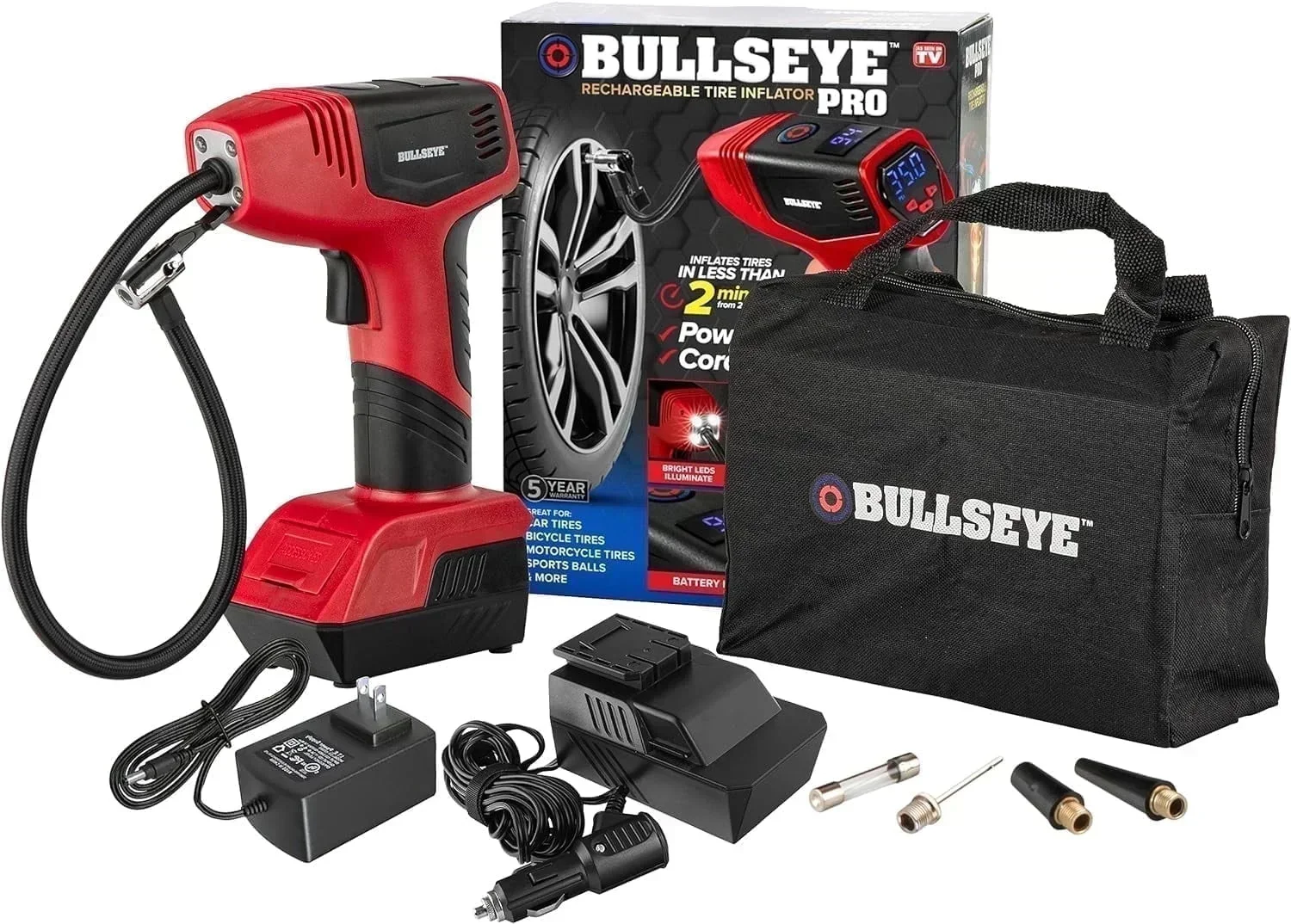
I'd add a sixth check for anyone airing up more than one tire at a sitting: duty cycle, the rating for how long a pump runs before it has to cool off. The spec sheets bury it, but it's the difference between a unit that resets pressures on all four corners in a row and one that gets hot, throttles itself, and leaves you waiting between tires. Owners airing up a full set raise this constantly — the manufacturer-rated continuous-duty motor on the BULLSEYE PRO is built for it, while a pocket unit pushed past its rating just gets warm and resentful.
If you only ever top off a single low tire, ignore it; if you reset pressures across the car, it's the spec that decides whether the job takes five minutes or twenty. The tell on a spec sheet is a runtime printed in minutes followed by a required rest period — a unit that needs ten minutes off after every ten minutes on is telling you, quietly, that it was built for one tire and a prayer.
Cordless vs Corded: The Trade-Off Nobody Spells Out
The argument I hear most is cordless-versus-corded, and most of the advice online gets it backwards. Corded 12-volt pumps are cheap and never run out of charge — which is the nicest thing I can say about a cord across your lap and a motor that quits on the second tire. Their one real edge is that they're always ready; no charging discipline required.
Cordless lithium changed the math. A pack like the Airmoto's gives you a tool that works in a parking spot with the engine off, no cord, no fuss. The AVID POWER 20V goes one better for owners already in that tool ecosystem: the battery is interchangeable with the rest of the brand's line, which long-term owners mention more often than raw speed. The catch is discipline — a lithium pack you forgot to charge is just a heavier flashlight without the light.
The honest split: if you air up from genuinely low pressure with any regularity, or there's a truck or trailer in your life, go corded with high air-delivery — the BULLSEYE PRO's continuous-duty motor doesn't need the cool-down breaks budget pumps force between tires. If you mostly top off a sedan and value a tool that vanishes into a door pocket, cordless wins and it isn't close.
Keeping It Alive: Storage, Charging, and the Gauge
A roadside tool is only worth anything if it works the day you finally need it, and that's where most inflators quietly die — not from use, but from neglect in a hot trunk. Lithium cells self-discharge, so a pack you charged in spring can be flat by the time a leak shows up in fall. A dead pack at mile 40 isn't a tool. It's an expensive paperweight you charged with good intentions.
I top mine to full every two to three months whether it's been used or not. It takes the same five minutes as ignoring it, and only one of those options works in the rain. Heat is the other killer: sustained temperatures above about 110 degrees — which a closed trunk hits easily in summer — cook lithium cells and shorten every charge that follows. Owners in hot climates raise this constantly, and it's the quiet reason a two-year-old pump suddenly won't hold a charge.
The gauge needs the same skepticism. Check it against a known-good stick gauge once a season; a readout drifting 4 PSI is worse than no gauge, because at least no gauge makes you stop and think.
Store the unit in the cabin if you can, keep the hose kink-free, and it will outlast the car it rides in.
Real-World Jobs Beyond a Low Tire
The same pump that tops a sedan tire earns its keep on a surprising range of jobs, and that versatility is half of why I keep one within arm's reach. Bicycle tires are the obvious one — a mountain-bike tire set to a precise 30 PSI rides like a different machine than one guessed by thumb, and a digital gauge beats a gas-station dial that's been kicked since 2014.
The nozzle adapters most units ship with handle Presta valves, sports gear, and the inevitable air mattress when a trip runs a night longer than planned. The Airmoto and AstroAI both include the preset adapters; owners say the auto-shutoff is what makes inflating a basketball to an exact pressure a 20-second job instead of a guessing game that ends with a rock.
For anyone who heads off pavement, airing down for sand or trail and back up at the highway is where a higher-air-delivery unit like the BULLSEYE PRO stops being a convenience and starts being equipment. The pump that lives in your trunk for the once-a-year flat ends up handling a dozen small jobs you stopped noticing you were avoiding.
The Lineup, Pump by Pump
Here's the rundown I'd give in the parts-store parking lot — what owners and the spec sheets actually bear out, with the box copy left in the box. I've reached for enough of these on enough shoulders to know which traits hold up and which evaporate at 22 PSI.
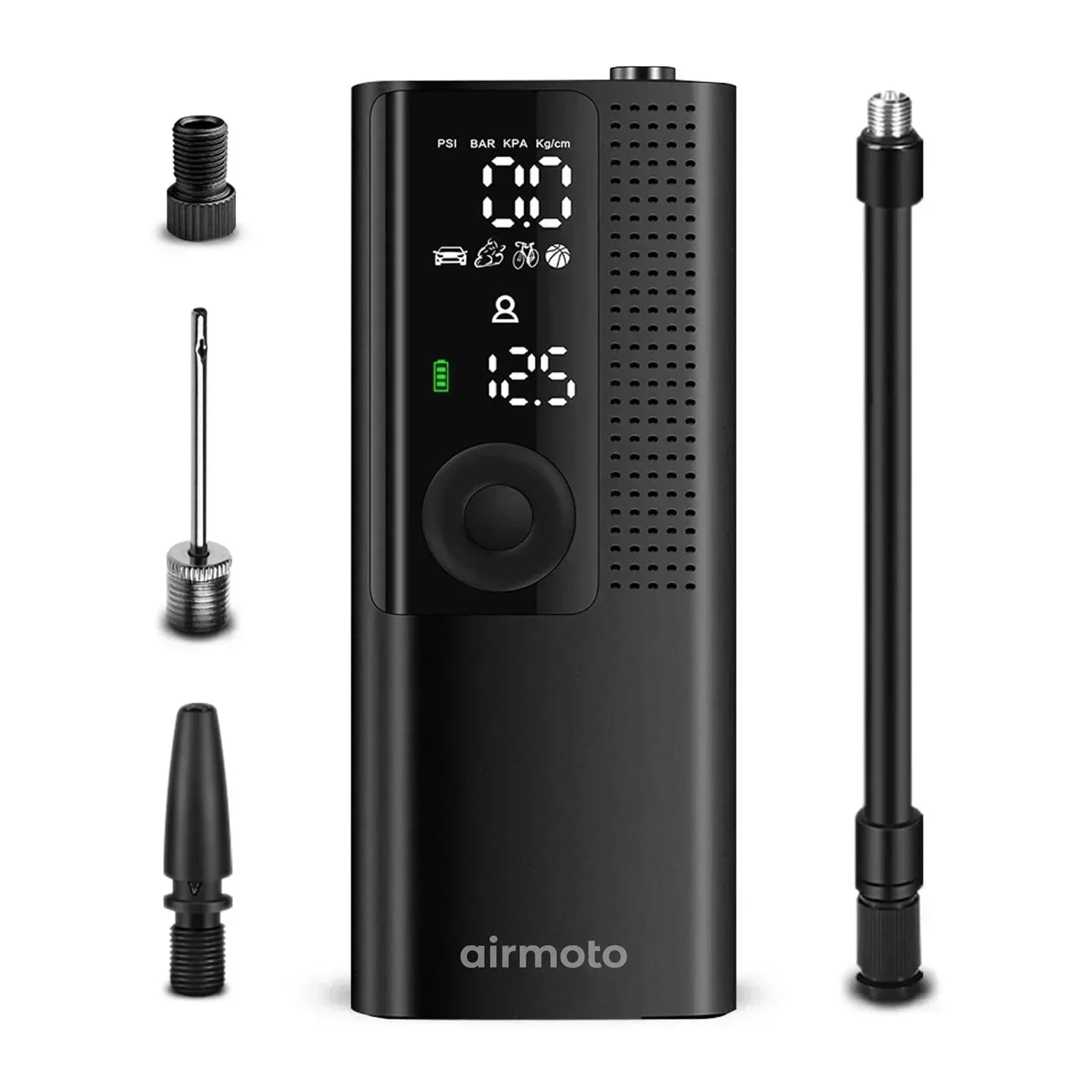
Owners consistently report the Airmoto's pocket size is exactly why it actually rides along instead of living in the garage — the trade-off they note is a slower top-up on bigger tires. The manufacturer-rated air-delivery is tuned for car and bike tires rather than truck rubber, so owners with 31-inch-plus tires repeatedly say to size up instead. Reviewer consensus across buyer reviews credits the preset auto-shutoff as the feature that sells it. It's the one I hand to a sedan owner who wants to stop thinking about it.
Owners consistently report the AstroAI AIRUN H tops up faster than the pocket units thanks to a beefier motor, and the digital preset shuts it off where you set it. The manufacturer-rated higher air-delivery means it handles the SUV tires that bog down smaller pumps — buyers with larger vehicles raise this repeatedly — with heat build-up on long runs as the common caveat. The AVID POWER 20V wins on a quieter angle: owners say the interchangeable battery shared with the brand's tool line is the hidden value, mentioned more often than raw speed, with cold weather shortening a charge as the honest catch.
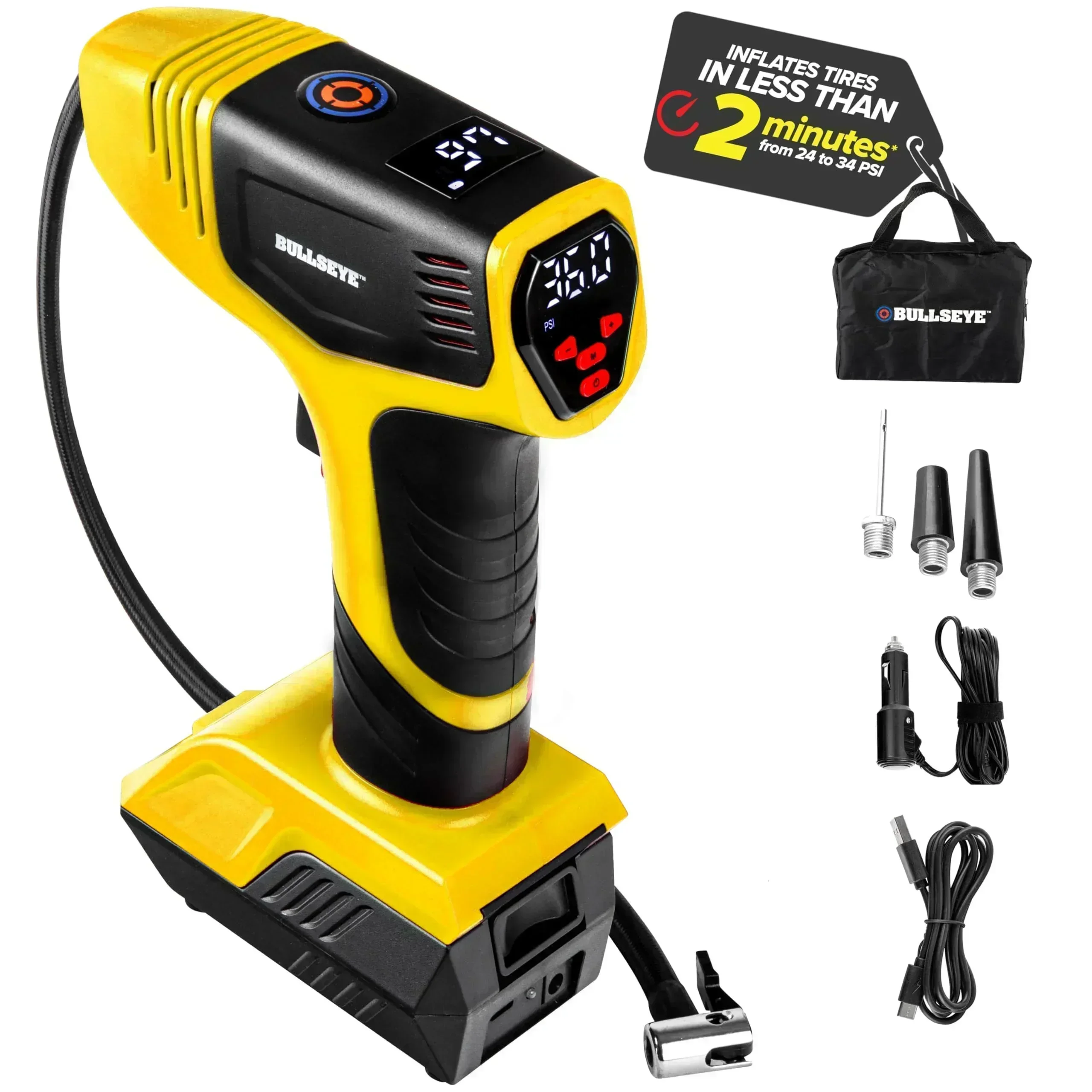
Buyers repeatedly note the Rhino USA's heavy-duty hose and brass fittings outclass the price, and owners credit the metal connector for not cracking like plastic chucks; the manufacturer-rated 100 PSI ceiling covers passenger and light-truck tires alike, and the warranty is the trust signal that closes the sale. The BULLSEYE PRO is the workhorse — owners report the high air-delivery clears a full set quickly and the continuous-duty motor skips the cool-down breaks budget pumps force between tires.
And the KeenPower punches above its price for occasional use, with owners praising the roadside LED; its compact air-delivery means you treat it as a top-up tool and it lasts. Six honest tools, one decision: match the air-delivery to your tires and ignore the PSI printed biggest.
The Buying Mistakes That Cost You Twice
Almost every regretted inflator traces back to the same handful of mistakes, and all of them are avoidable for free. The first is buying on max PSI. A 150-PSI rating on a unit with weak air-delivery is a tortoise wearing a cape — it'll reach your target eventually, while you age in the breakdown lane. Read the spec sheet for liters per minute and let the cover number go.
The second is buying cordless without the charging discipline to match. A lithium pump is a grab-and-go tool right up until it's a dead weight you charged in spring and reached for in fall. If you know yourself well enough to know you won't top it every couple of months, the corded Rhino USA or BULLSEYE PRO is the honest choice — a cord across your lap beats a pump that quit before you needed it. The third is undersizing: a sedan-tuned unit on a truck tire is the slow, sad afternoon owners with SUVs keep warning about.
The last mistake is treating the gauge as gospel. A readout drifting 4 PSI quietly ruins every tire you set, and the cheapest units are the worst offenders — reviewer consensus is blunt about it. Check it against a known-good stick gauge once a season.
Get those four right and you buy one inflator that lasts; get them wrong and you fund the inflator aisle one disappointment at a time.
My Pick After All This
Strip away the marketing and the decision is simple. If you drive car tires and want a tool that vanishes into a door pocket and works with the engine off, the Airmoto is the one I point people to — rechargeable, accurate, auto-shutoff, and small enough that you'll actually keep it within reach instead of buried in the spare well. Its honest limit is airflow on big tires, which for a sedan owner simply never comes up.
If there's a truck, an SUV, or a trailer in your life, or you air up from low pressure with any regularity, buy for air-delivery instead: the AstroAI AIRUN H for a cordless option that handles bigger rubber, or the corded BULLSEYE PRO when you're filling a full set and don't want a cool-down break between tires. The Rhino USA is the one to grab if build quality closes the sale — brass fittings, a real hose, and a warranty owners actually name.
The AVID POWER 20V makes sense if you already own the battery platform, and the KeenPower is the honest budget pick for someone who tops off twice a year and wants a light on a dark shoulder. Whichever you choose, keep it charged and check the gauge. The best inflator in the world is useless at 22 PSI in the breakdown lane because you let the battery die.
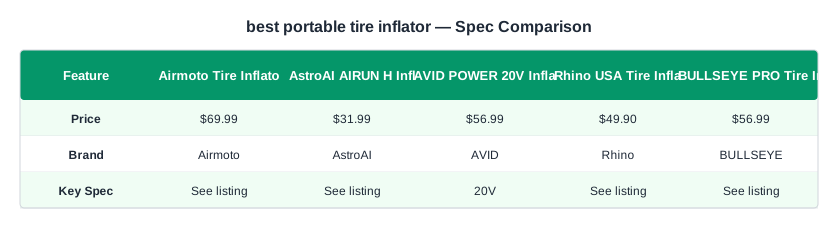
The complete lineup also includes Airmoto Tire Inflator ($69.99), Rhino USA Tire Inflator ($49.90), BULLSEYE PRO Tire Inflator ($56.99), KeenPower Tire Inflator Portable Air Compressor ($49.99) — each compared on the same specs and reviewer consensus.