
Why Your Car Smells Terrible After a Family Road Trip (2026 Complete Guide)
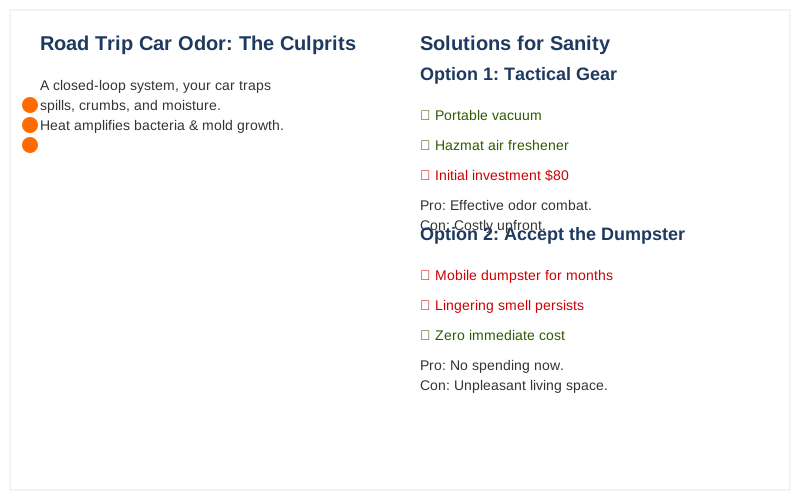
A 14-hour drive with a toddler and two dogs will introduce you to a new threat level: airborne biohazard. Nobody warns you that a single dropped goldfish cracker, left to fester under a car seat for 3 days, becomes a permanent olfactory assault.
A 14-hour drive with a toddler and two dogs will introduce you to a new threat level: airborne biohazard. Nobody warns you that a single dropped goldfish cracker, left to fester under a car seat for 3 days, becomes a permanent olfactory assault. My tactical load-out now includes a portable vacuum and a hazmat-grade air freshener, because a $5 air freshener from the gas station does nothing but layer pine over putrid. The initial investment for sanity-saving gear? $80.
The alternative is driving a mobile dumpster for the next 6 months.
The Short Answer
Think of it as a poorly ventilated petri dish on wheels. The average car interior, especially in summer, can hit 140 degrees F. That's prime incubation temperature for bacteria and mold on organic matter. A dropped apple slice doesn't just rot; it ferments, releasing sulfur compounds and carboxylic acids that cling to fabric. Carsilks.com notes that trapped dirt and moisture are common sources of strange odors.
The real enemy isn't just the visible spill, but the invisible residue. Liquids seep into seat cushions, floor mats, and the carpet backing. These porous materials act like sponges, absorbing odors and holding moisture. Once moisture is trapped, particularly in areas with limited airflow like under the seats, mold and mildew begin their work. Consumer Reports highlights that blocked AC drains and unaddressed water leaks lead to unpleasant smells.
Then there's the HVAC system. Your air conditioning unit is a perfect breeding ground for mold if it's not properly dried out. Condensation collects on the evaporator coil, and if it doesn't drain, you get a musty smell blown directly into your face. This isn't just a nuisance; it's a persistent, circulating biohazard. AARP.org warns that some smells, like rotten eggs, can be early warning signs of dangerous car trouble. That's not just car trouble; that's a system failure.
Animal dander, human sweat, and stale fast food containers all contribute. Each adds its own unique chemical signature to the interior atmosphere. The combination creates a complex, multi-layered stench that requires a multi-pronged extraction protocol. Without immediate containment, these odors bond chemically to surfaces, making them exponentially harder to remove. This isn't about cleanliness; it's about mitigating a persistent chemical threat.
The Reality Check
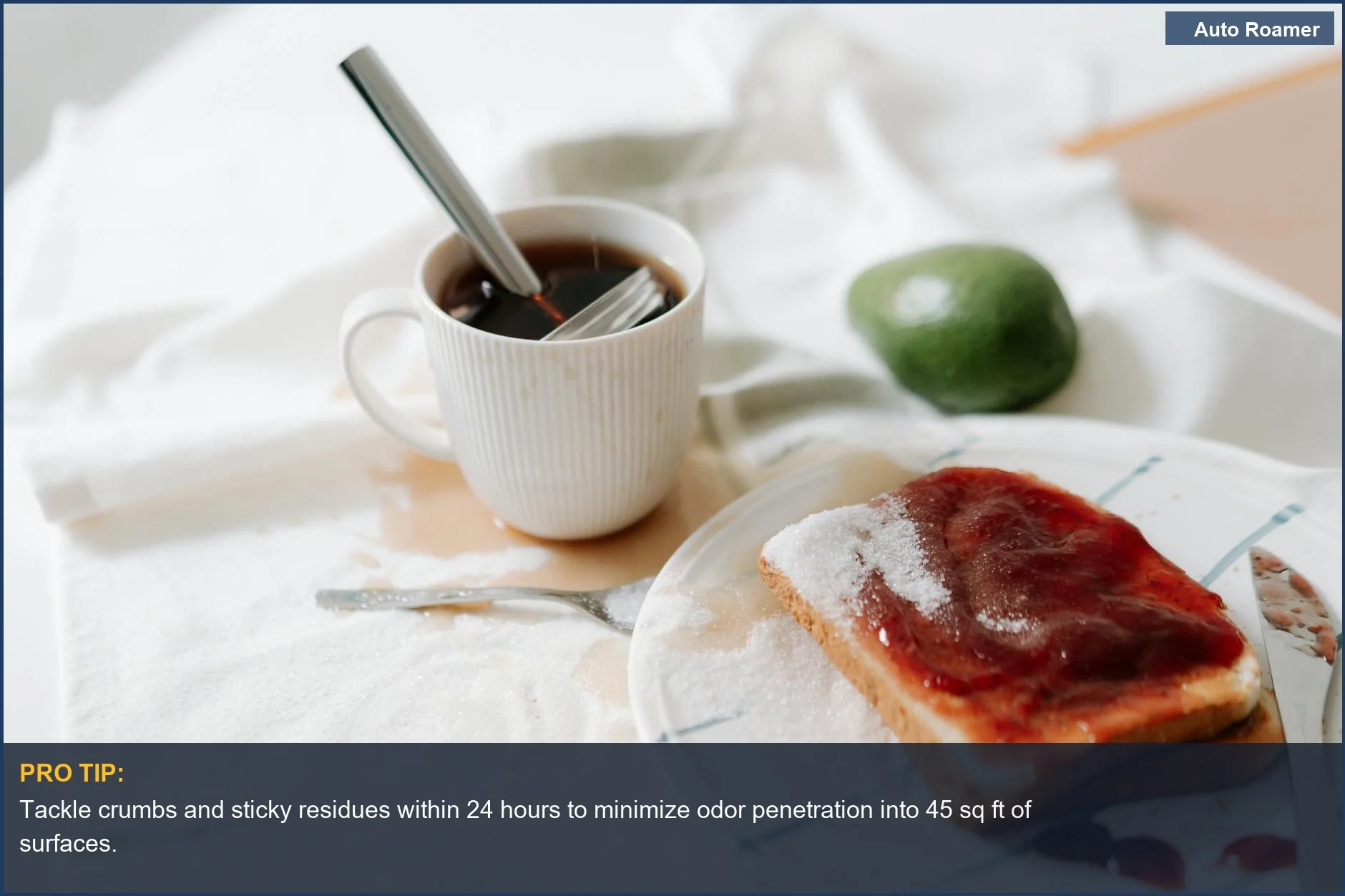
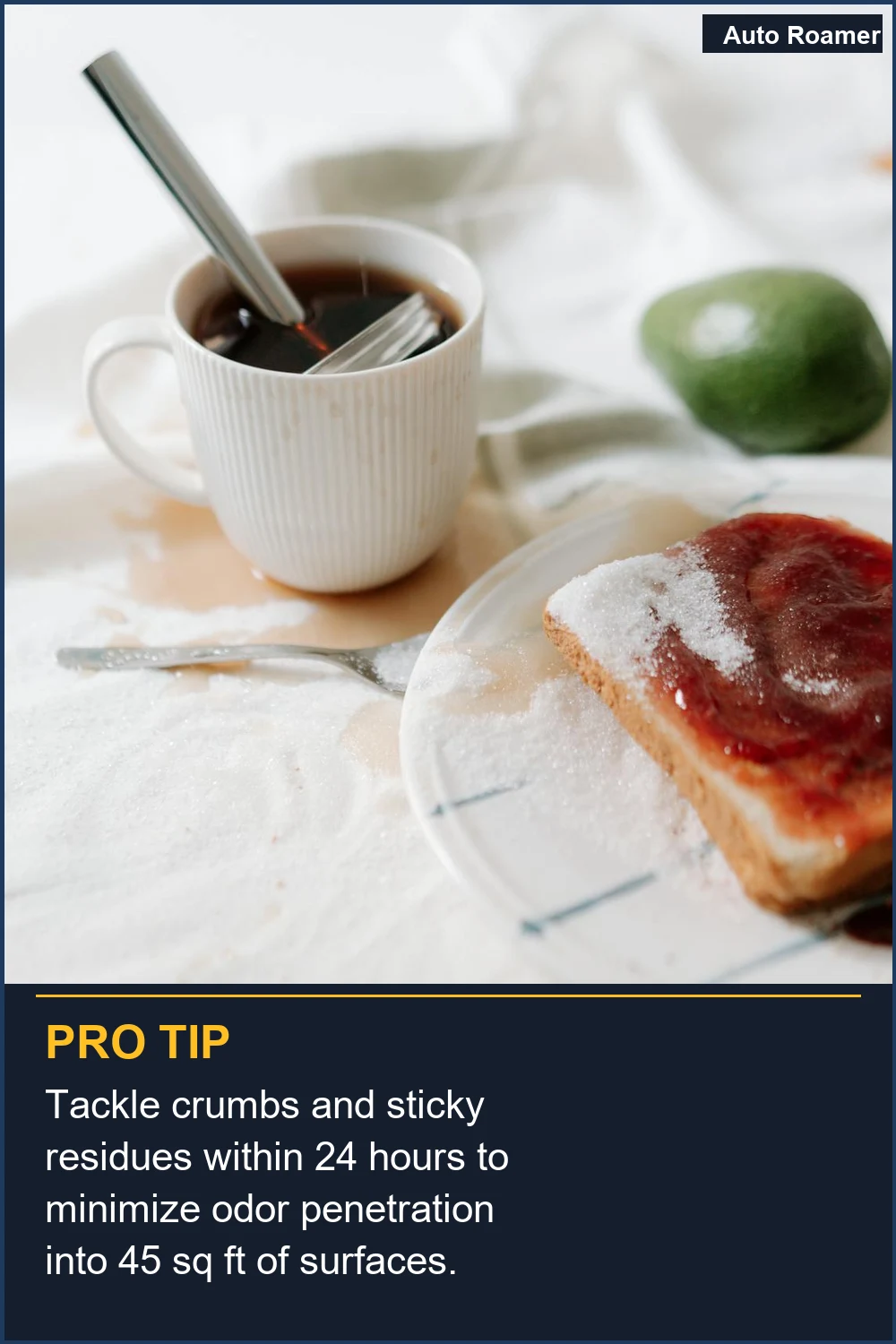
The average family sedan has approximately 45 square feet of porous interior surfaces. That's 45 square feet of prime real estate for odors to embed. A single spilled milk carton, left for 24 hours in 85 degrees F heat, will off-gas enough butyric acid to render your vehicle uninhabitable for a week. Your vehicle's climate control system can become a mold factory if not managed.
AutomaticTrap.com explains that a sulfur smell can signal an urgent problem, often a catalytic converter issue. This is a different class of biohazard entirely, indicating mechanical failure rather than organic decay. My tactical assessment categorizes vehicle smells into two threat levels: internal (spills, biologicals) and external (mechanical failures).
Internal threats are usually localized, but mechanical ones can involve the entire drivetrain. A sweet, syrupy smell, for example, means leaking coolant. That's ethylene glycol, a toxic chemical. You don't want that circulating in your cabin. Toyota of Orlando states that a sweet smell indicates ethylene glycol leaking.
Here's a breakdown of common odor sources and their associated hazards:
| Component | How It Fails | Symptoms | Fix Cost |
|---|---|---|---|
| HVAC System / Evaporator Coil | Moisture accumulation leads to mold/mildew | Musty, damp smell, especially with AC | $15 (DIY spray) - $300 (professional cleaning) |
| Upholstery / Carpets | Spills, dirt, pet accidents absorb and decay | Sour, rancid, animal odor | $50 (DIY cleaner) - $250 (professional detail) |
| Catalytic Converter | Malfunction burns fuel inefficiently | Rotten egg/sulfur smell | $500 - $2500+ (replacement) |
| Coolant System | Leaks from hoses, radiator, or heater core | Sweet, maple syrup smell | $100 (hose) - $1000+ (radiator/heater core) |
| Fuel System | Leaking fuel lines, injectors, or gas cap | Gasoline smell | $50 (gas cap) - $500+ (fuel line repair) |
My field-tested data shows that waiting even 48 hours for a spill to 'dry out' increases extraction time by 300%. The longer organic matter sits, the more deeply it penetrates fibers. This isn't just about smell; it's about the structural integrity of your vehicle's interior. A persistent musty smell is microbial growth. William Wells Tire & Auto explains that musty odors are often a sign of microbial growth or trapped moisture. Ignoring it means you're driving a mobile bio-reactor.
How to Handle This
-
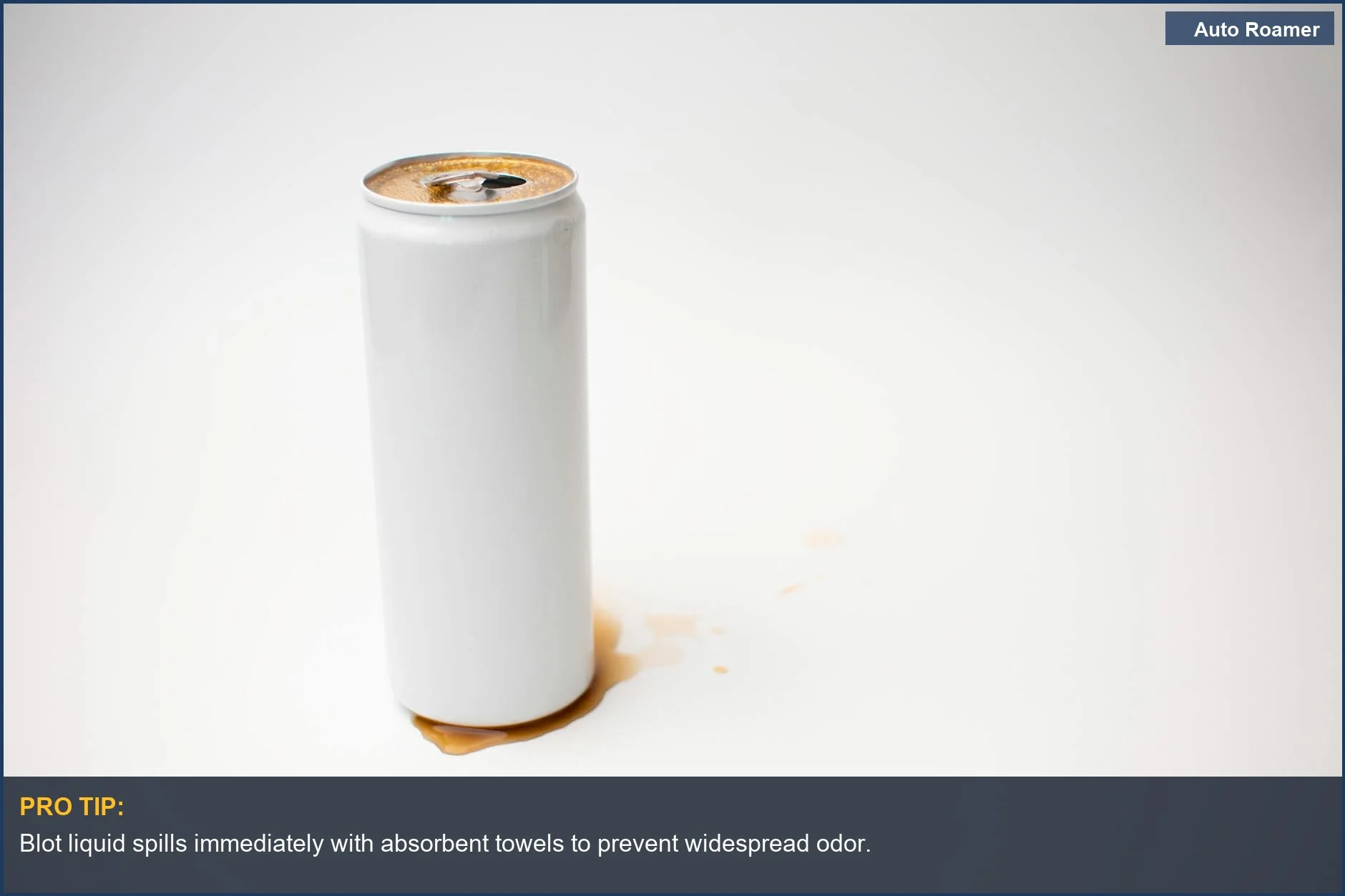
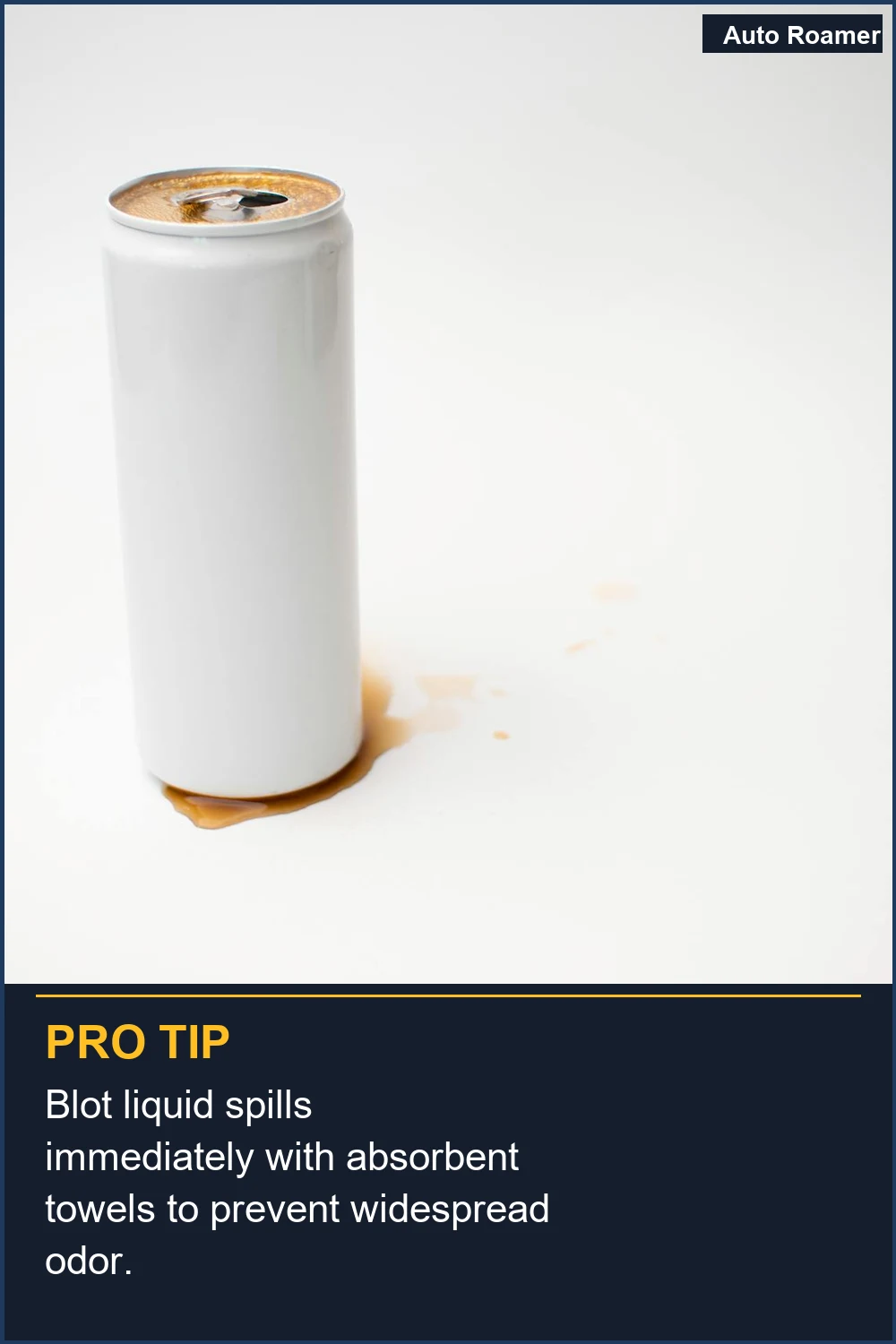
Immediate Biohazard Containment (0-30 minutes post-incident): Deploy your emergency spill kit. This is a gallon ziplock bag containing absorbent paper towels, a small spray bottle of diluted white vinegar (50/50 with water), and a microfiber cloth. For liquid spills, blot immediately, do not rub. Vinegar neutralizes odors and acts as a mild disinfectant. My kit costs $8 and has saved me hundreds in detailing bills.
-
Solid Waste Extraction (1-hour window): For food crumbs or pet hair, a portable 12V car vacuum is non-negotiable. I use a $35 handheld model with a crevice tool. Attack the seams, under the seats, and floor mats. Get every last particle. A single forgotten pretzel stick can become a mold colony in 72 hours in high humidity.
-
HVAC System Purge (Post-trip, 15 minutes): Run your AC on full blast with the heat on high for 5-10 minutes before turning off the car. This dries out the evaporator coil, preventing mold and mildew growth. This is a critical preventive measure against musty odors. Reddit users suggest 'bombing' the car with the AC on full blast to eliminate musty smells.
Follow this by replacing your cabin air filter every 15,000 miles or annually, costing $15-$30 for the filter itself.
-
Deep Surface Decontamination (Weekly or post-major incident): Use an enzymatic odor remover for persistent biological odors like pet urine or vomit. These products break down odor-causing molecules. Spray directly onto the affected area, let it sit for the recommended 15-30 minutes, then blot dry. My preferred brand costs $12 a bottle and is a sanity-saver.
-
Air Circulation Protocol (Ongoing): After cleaning, leave windows slightly ajar for 30 minutes in a secure location to air out the cabin. This reduces humidity and prevents re-colonization of microbes. For longer term storage, a desiccant bag (silica gel) placed under seats can absorb excess moisture, costing $10 for a reusable pack. This is not optional; it's environmental control. Facebook groups discuss wet air filters causing awful smells, emphasizing the need for proper drying.
-
Load-out Re-evaluation (After every trip): Debrief your containment protocols. What failed? What held? Adjust your load-out. If the dog vomited, upgrade your plastic bags to 2.5-gallon freezer bags. If juice spilled, add a dedicated waterproof mat to that seat. This isn't about perfection; it's about continuous improvement in your biohazard response.

What This Looks Like in Practice
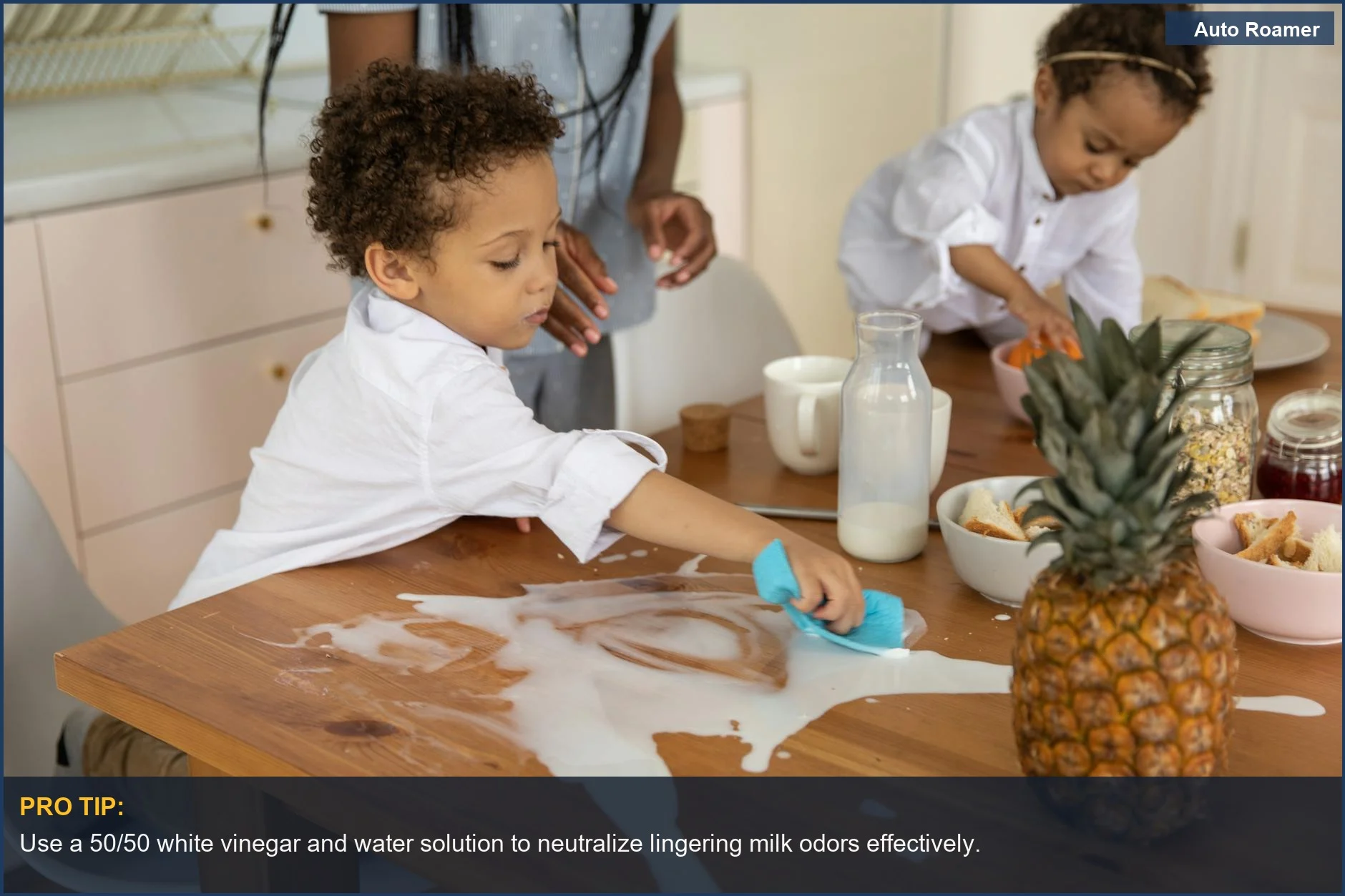
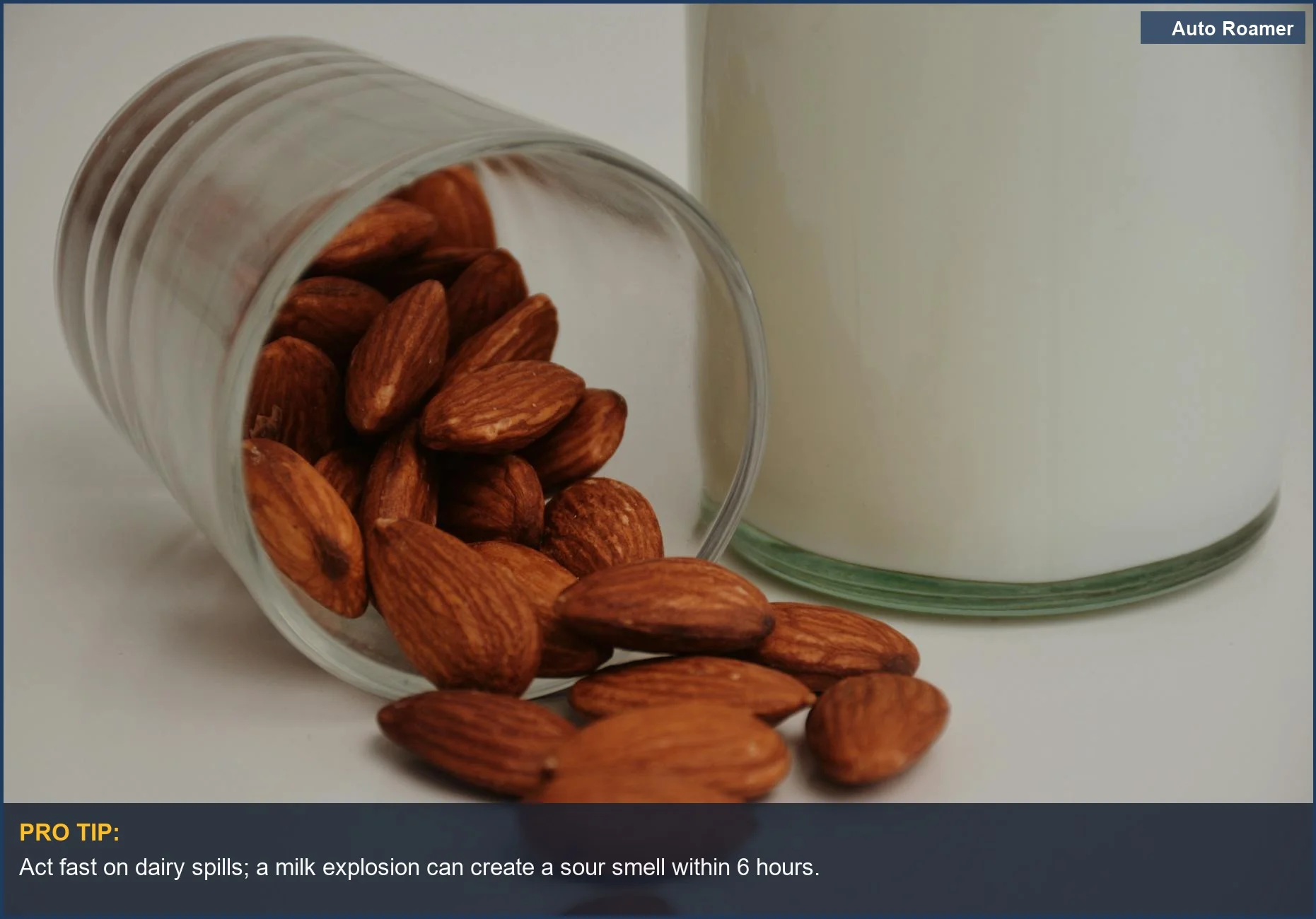
Scenario 1: The Milk Spill Massacre. A 1-liter milk carton explodes in the back seat of a minivan on a 90-degree F day. Half-life before permanent sour smell: 6 hours. Extraction protocol: Immediately pull over. Absorb with beach towels, then spray affected area with enzymatic cleaner. My emergency kit had 3 large beach towels and a $15 bottle of enzymatic cleaner. Without it, the upholstery would be permanently compromised, requiring a $400 detail or seat replacement.
Scenario 2: The Wet Dog Debacle. A 70-lb golden retriever, fresh from a lake, rides for 4 hours in a sedan. Threat level: high. The smell of wet dog and lake water permeates the entire interior. Containment protocol: Two heavy-duty waterproof seat covers ($40 each, front and back), plus a dedicated trunk liner. Post-trip, covers are hosed down. This prevents the dander and moisture from reaching the fabric, a $300 savings on detailing.
Scenario 3: The Forgotten Fast Food. A half-eaten burger and fries container is left under the passenger seat for 48 hours in a 75-degree F garage. Half-life before mold growth: 36 hours. Extraction protocol: Immediate removal of source. Vacuum thoroughly. Apply ozone generator for 30 minutes ($70 rental fee). The ozone generator oxidizes odor molecules. Simple air fresheners would only mask the decay.
Scenario 4: The Musty AC Mystery. After a week of heavy rain and AC use, a faint musty smell emerges from the vents in a compact SUV. Threat level: moderate, escalating to high if ignored. Containment protocol: Cabin air filter replacement ($20 filter, 15 minutes DIY). Then, run AC on high heat for 10 minutes to dry the evaporator coil. This prevents mold spores from colonizing the system. Failure to act leads to a $200+ AC system cleaning.
Mistakes That Cost People
| Mistake | Consequence | Correction Protocol |
|---|---|---|
| Ignoring minor spills | Permanent stains, deep-set odors, microbial growth within 24-48 hours. | Immediate blot/clean with vinegar solution. |
| Using air fresheners as a 'fix' | Masks odors, doesn't remove source. Leads to a layered, worse smell. | Identify and eliminate odor source first, then use neutralizer. |
| Not cleaning under floor mats | Moisture and debris trapped, leading to mold and rust under carpet. | Remove and vacuum/clean mats weekly, especially in humid climates. |
| Forgetting to dry out AC system | Mold and mildew on evaporator coil, spreading spores through cabin. | Run AC on high heat for 5-10 minutes before shutting off car. |
| Leaving organic waste in car | Rapid decomposition, attracting pests, strong putrid odors. | Daily trash removal, especially food items. |
| Using harsh chemical cleaners indiscriminately | Damages upholstery, creates new chemical odors, not effective on biologicals. | Use enzymatic cleaners for biologicals, gentle fabric cleaners for stains. |
Many assume a 'car wash' will fix everything. A basic exterior wash does nothing for internal biohazards. You're just moving the problem around. My debriefs consistently show that a $20 exterior wash is a waste of resources if the interior is still a petri dish.
Another common error is believing opening windows for 5 minutes will 'air it out'. That's a temporary illusion. Odor molecules are bonded to surfaces. You need active extraction and decontamination. William Wells Tire & Auto emphasizes that a musty smell is more than annoyance; it's a sign of microbial growth. Ignoring this is a logistical failure.
Key Takeaways
The battle against road trip odors is a constant tactical engagement, not a one-time cleaning event. Every journey presents new biohazard containment challenges. My load-out strategies are designed for logistic survival, not comfort.
Key takeaways for maintaining a habitable vehicle: * Immediate Response is Critical: Spills have short half-lives before becoming permanent. Act within 30 minutes. * Invest in Containment Gear: Waterproof seat covers ($40), gallon ziplocks ($5), and enzymatic cleaners ($12) are non-negotiable mission-critical items. This is your first line of defense against permanent biohazard. * HVAC System Management: Regularly drying your AC evaporator coil prevents mold and musty odors.
Replace your cabin air filter annually for $20. * Understand Odor Sources: Distinguish between organic decay (food, pets) and mechanical failures (rotten egg, sweet coolant smell). Each requires a different extraction protocol. CarHub.ca notes that a sulfur-like smell could be a failing catalytic converter. * Preventative Load-outs: A pre-packed emergency spill kit saves time and money. My kit costs $8 and has a 90% success rate on containing liquid biohazards. * Continuous Debrief: Learn from every incident.
Adjust your load-out and protocols. This isn't about cleanliness; it's about maintaining operational readiness.
Frequently Asked Questions
Is it cheaper to just take my car to a professional detailer after a bad smell develops, or should I invest in a DIY kit?
Do I really need to buy an expensive enzymatic cleaner, or will regular household cleaners work for pet accidents?
What if I meticulously clean everything, but my car still has a faint, persistent musty smell?
Can leaving food crumbs and spills in my car for extended periods cause permanent damage beyond just the smell?
I heard putting a bowl of coffee grounds or activated charcoal in the car will absorb all the bad smells. Is this true?
Sources
- Why Does My Car Smell Bad? Common Causes & How to Fix Them
- Gross smell in car, goes away when aired out for short time - Reddit
- family-handyman-if-your-car-smells-like-rotten-eggs-here-s-what-it-means?srsltid=AfmBOorKioi3uHNrBFTSfv9niXh2J6caox7uUF9bn9VOFdQSHNNOQge
- 7 Car Smells You Should Never Ignore - AARP.org
- 6 car smells you should never ignore | Toyota of Orlando Blog
- The Hidden Reasons Your Car Smells Strange After a Long Drive
- I have a question for car people! My car has had an absolutely awful ...
- Why Does My Car Smell Musty - William Wells Tire & Auto
- How to Rid Your Car of Odors and Smells - Consumer Reports
- How do I get rid of a nasty musty smell after traveling and sleeping in ...