
Toyota Grand Highlander Camping Setup: 3-Row Family SUV Complete Guide
Introduction: Grand Highlander as the Family Camping Platform
The Toyota Grand Highlander represents the apex of family-focused camping vehicles—a genuinely large 3-row SUV combining Toyota reliability with sophisticated family features and substantial cargo versatility. Introduced recently (2024), the Grand Highlander expands Toyota's Highlander lineage with additional seating and cargo capacity, creating a platform optimized for families seeking space without full-size SUV dimensions or Sequoia-level pricing. The Grand Highlander splits the difference between Highlander (mid-size 3-row) and Sequoia (full-size) with a longer wheelbase, extended cargo area, and flexible seating arrangements enabling sophisticated camping configurations. With rear seats folded (second and third rows), the Grand Highlander provides approximately 90-95 inches of sleeping length and 48-52 inches of width—dimensions accommodating families with children, couples with significant gear, or multiple sleeping configurations simultaneously.
What You'll Learn
- Vehicle Specs & Dimensions
- Sleeping Setup Options
- Storage & Organization
- Power & Electrical
- Climate Control
- Pros and Cons
- Frequently Asked Questions
The Grand Highlander's 3-row architecture enables unique camping flexibility unavailable in single-row or dual-row vehicles. Configurations range from simple two-person sleeping in third row (preserving second row for daytime seating) to converting entire cargo area into sophisticated family sleeping platforms. The vehicle's multiple seating configurations enable camping logistics previously requiring larger RVs: children sleeping safely in dedicated areas, adults comfortable on separate sleeping surfaces, designated organization spaces for family gear. The Grand Highlander appeals to families establishing baseline camping experience, multi-generational groups including elderly members requiring vehicle-base positioning, and couples with dogs or outdoor equipment requiring dedicated spaces. This comprehensive guide addresses 3-row architecture specifics, flexible sleeping configurations optimizing family comfort, sophisticated climate management scaling to family-size spaces, advanced organization strategies for multiple occupants and extended trips, and realistic assessment of family camping logistics within Grand Highlander constraints.
Family camping succeeds through intentional logistics management—understanding sleeping configurations, efficient gear organization, and realistic assessment of multi-person space allocation. Unlike single-person or couple camping where optimization is personal-scale, family camping involves balancing multiple comfort needs, maintaining equitable sleeping conditions for various family members, and organizing shared vehicle space efficiently. The Grand Highlander's substantial dimensions and flexible architecture provide the tools; strategic planning ensures everyone enjoys the camping experience.
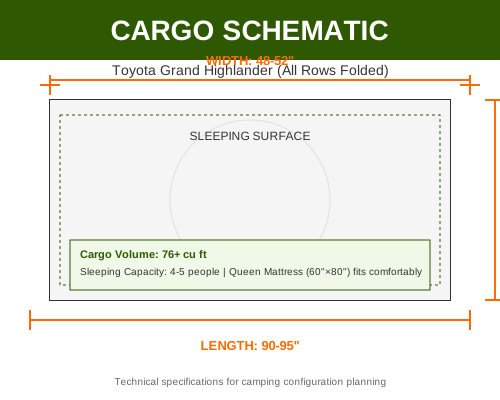
Grand Highlander Cargo and Seating Dimensions
Understanding the Grand Highlander's multi-row architecture and flexible seating enables optimal camping configuration planning. Unlike single-row vehicles where configuration options are limited, the Grand Highlander's three rows enable sophisticated spatial allocation: which rows fold, which remain for seating, how family members distribute across available surfaces. The vehicle's engineering thoughtfully integrates cargo space with comfortable passenger accommodation, providing tools for family camping that larger RVs enable through significant financial investment.
Grand Highlander Dimensional Overview
With all rows folded (second and third rows): - Length: ~90-95" (from driver seat area to tailgate) - Width: 48-52" (between wheel wells) - Maximum width: 55-58" (above wheel wells) - Height: 40-42" (floor to ceiling) - Cargo volume: 76+ cu ft (all rows folded) - Floor to ceiling clearance: 40-42"
The Grand Highlander's expanded dimensions compared to standard Highlander represent meaningful improvements for family camping. The 90-95 inch length accommodates most family members without diagonal sleeping. The 48-52 inch width easily accommodates full-size or king-size adjacent sleeping configurations. The 76+ cubic feet available cargo (rows folded) provides genuine space for family gear without claustrophobic constraint. This is substantial space—full-size SUV territory without Sequoia's price premium.
With second and third rows folded separately: - Third row folded only: Creates extended cargo area behind second row, maintaining second-row seating for daytime comfort - Usable length with third row folded: ~60-65" behind second row - Second row folded (third row up): Preserves third row for additional seating or children's sleeping - Optimal configurations: Mix folding based on daily camping needs
The Grand Highlander's flexible architecture enables sophisticated day-to-day configuration changes. Morning arrival might use all rows for passenger seating and immediate cargo. Throughout day, progressively fold rows to optimize sleeping configurations. Evening preparations fold both rear rows creating maximum sleeping space. This flexibility surpasses vehicles with rigid seating-or-cargo configurations.
Sleeping Comfort by Configuration
| Configuration | Sleeping Capacity | Optimal Use | Notes |
|---|---|---|---|
| All rows folded | 4-5 people | Larger family or dual couples | Maximum space utilization |
| Second + third folded | 2-3 people | Family with children | Extended cargo + seating |
| Third row only folded | 2 people | Couple + additional space | Flexible day seating |
| Dual second row + third | 2 people | Couple with comfort priority | Daytime flexibility |
Row-by-Row Breakdown
First row (driver and passenger): - Designed for operating vehicle and daytime comfort - Not typically used for sleeping (though possible for individuals needing vehicle access) - Seats don't fold—permanent infrastructure - Reclinable back enables partial-recline sleeping if necessary
Second row (middle row): - 3 independent seats with 40/20/40 split fold capability - Full-height recline enables day-comfort without folding - Folded position creates relatively flat surface when both second and third rows folded - Can remain up for daytime passenger seating while third row folds for sleeping - Optimal for couples or parents maintaining day-seating flexibility
Third row (rear row): - Most compact row, designed for children or supplementary seating - When folded creates additional cargo space - When upright provides emergency seating or dedicated sleeping area for children - Access requires moving second-row seats (slightly awkward for frequent adjustment)
Cargo Space Variations by Seating Configuration
Maximum cargo (all rows folded): - 76+ cubic feet of completely flat sleeping surface - Accommodates family of four sleeping side-by-side or two large adults with significant gear - Optimal for extended camping trips where maximum space needed - Daytime sacrifice: all passenger seating eliminated
Mid-configuration (second row folded, third row up): - 40-50 cubic feet usable cargo space - Maintains two rear-row passenger seats for daytime comfort - Third row occupants comfortable for short drives - Sleeping limited to cargo area or front-row reclining - Optimal for weekend trips prioritizing daytime flexibility
Family configuration (all rows upright): - 15-20 cubic feet standard cargo area - Accommodates normal family driving - Enables quick short-range camping without vehicle conversion - Limited sleeping capability (vehicle sleeping not primary)—better for campground RV facility use
Floor Flatness and Sleep Surface Quality
Seat folding performance: When folded, second and third rows create reasonably flat surface extending from behind front seats to tailgate. Unlike some vehicles with pronounced folding creases, the Grand Highlander's engineering minimizes height variations. Complete flatness rivals or exceeds Sequoia (both full-size platforms). This represents meaningful advantage over compact vehicles requiring gap-filling padding.
Unobstructed sleeping surface: Folded seats create minimal residual protrusions or mechanisms intruding into sleeping area. The engineering prioritizes flat sleeping surface—a key design consideration for family camping vehicle. Unlike vehicles designed primarily for cargo hauling with sleeping as secondary consideration, the Grand Highlander's architecture reflects family camping as primary use case.
Weight distribution and vehicle stability: The Grand Highlander's extended wheelbase and multi-row design distribute sleeping occupants evenly across vehicle. Unlike compact vehicles where concentrated weight forward creates stability concerns, the Grand Highlander's longer platform enables safe distributed sleeping without suspension or handling compromise.
Generation and Model Year Considerations
Grand Highlander introduction (2024): Toyota introduced the Grand Highlander as new model in 2024. This recent introduction means used models are limited to newest examples. All 2024 Grand Highlanders feature essentially identical architecture and dimensions. Unlike older Highlander models (which differ substantially), the new Grand Highlander has no prior generations to distinguish. Early adopters benefit from latest technology and longest warranty potential; later buyers will access increasingly affordable used examples.
Comparison with standard Highlander: The Grand Highlander extends the Highlander with longer wheelbase (approximately 5-6 inches additional length) creating the expanded cargo area. Standard Highlander measurements are approximately 85-90 inches with rows folded; Grand Highlander offers 90-95 inches—meaningful but not revolutionary difference. Both vehicles function for family camping; Grand Highlander provides meaningful additional space for larger families or extended trips.
Family Sleeping Configurations and Mattress Solutions
The Grand Highlander's substantial dimensions enable sophisticated sleeping configurations unattainable in smaller vehicles. Unlike compact SUVs with single sleeping option, the Grand Highlander's architecture permits multiple simultaneous sleeping areas, flexible multi-occupant arrangements, and options matching various family compositions. This section explores proven sleeping configurations optimized for family comfort and realistic logistics.
Configuration 1: Full-Family Layout (All Rows Folded)
Setup for family of four:
- Fold second row seats completely into floor
- Fold third row seats completely into floor
- Remove headrests and store in front area
- Place queen-size foam mattress (60" × 80") spanning width of vehicle
- Position sleeping bag or blanket across mattress
- Creates continuous sleeping surface accommodating two adults and two children
- Effective dimensions: 90-95" length × 48-52" width
Advantages: Maximum sleeping space, accommodates entire family without crowding, simplest complete-family configuration, quick setup/breakdown
Disadvantages: Eliminates all passenger seating (flexibility sacrifice), shared sleeping surface means contact between family members, requires parking in relatively private areas
Optimal for: Weekend family camping, close-knit families comfortable with shared sleeping space, trips prioritizing camping comfort over driving flexibility
Configuration 2: Dual-Sleeping-Zone (Family Comfortable with Separate Surfaces)
Setup for family of four with separation preference:
- Fold second and third rows completely flat
- Position queen-size mattress in primary sleeping area (90" × 50" area)
- Position second, narrower sleeping surface (twin air mattress or narrow foam) alongside primary sleeping area
- Creates two defined sleeping zones: parents on queen-size, child on twin pad, second child with parents or in third configuration
- Total sleeping dimensions: 90-95" length × 48-52" width, divided between sleeping surfaces
Advantages: Psychological comfort from defined personal spaces, enables temperature preference accommodation, reduces sleep disturbance from contact, maintains organized zone definition
Disadvantages: More complex setup/breakdown, requires fitting two mattresses within width constraints, less seamless than single-surface approach
Optimal for: Families where children prefer personal sleeping zones, situations where sleep disturbance is concern, trips where flexibility/comfort prioritized
Configuration 3: Third Row Preservation (Maintaining Day Seating)
Setup prioritizing daytime passenger flexibility:
- Keep third row seats upright (not folded)
- Fold second row seats completely
- This creates cargo area from behind second row to tailgate
- Position queen-size mattress in cargo area only (50-60" length effective)
- Third row remains available for passenger seating or children's sleeping
- Total sleeping: Two adults on queen in cargo area, children in third row seats or with parents
Advantages: Preserves daytime passenger seating for flexible travel, maintains second seating row for comfortable day driving, enables family to maintain normal vehicle use pattern
Disadvantages: Reduced cargo sleeping length (50-60" versus 90-95"), more complex reconfigurations between driving and sleeping, third row seats uncomfortable for extended sleeping (designed for short-distance use)
Optimal for: Weekend trips prioritizing daytime driving comfort, situations where vehicle serves both transportation and camping, families needing flexibility throughout day
Configuration 4: Children's Independent Sleeping
Setup enabling children's dedicated sleeping area:
- Fold second row (creating cargo area)
- Keep third row upright
- Arrange second-row area with sleeping pads for children
- Position adults' sleeping in front-row recline or in minimal third-row space
- Creates separation: children in middle/rear area, adults maintaining vehicle operation capability or separate sleeping
Advantages: Enables children's safe independent sleeping, maintains psychological distance, parents can adjust positions for vehicle operation if needed, accommodates varying bedtimes
Disadvantages: Awkward positioning for parents, requires careful organization to maintain distinct sleeping areas, less ideal comfort for adult sleepers
Optimal for: Situations where children sleep earlier, safety priority of dedicated child areas, families with older children more independent
Mattress Selection for Family Configurations
Queen-Size Foam (60" × 80") - Optimal for full-family or dual-adult sleeping - Fits Grand Highlander width comfortably - Multiple firmness options (soft/medium/firm) - 4-6 inch thickness provides genuine cushioning - Durable materials withstand family use - Cost: $180-350 - Best for: Primary family mattress, comfortable adult sleeping, frequent multi-night trips
Twin-Size Foam (39" × 75-80") - Optimal for children's sleeping or secondary surface - Fits comfortably alongside queen in Grand Highlander width - Lightweight for easy repositioning - 4-6 inch thickness adequate for children - Cost: $100-180 - Best for: Children's dedicated sleeping, supplementary surfaces, flexible configurations
Twin-XL Air Mattress (39" × 80") - Portable supplementary sleeping surface - Adjustable firmness through air pressure - Multiple air chambers prevent complete deflation - Cost: $70-130 - Best for: Flexible family configurations, occasional supplementary surface, storage ease
Self-Inflating Pad (77" × 52") with High R-Value - Exceptional insulation for cool-weather family camping - 4-inch thickness provides meaningful cushioning - Premium comfort and durability - Cost: $280-380 - Best for: Comfort-priority families, year-round camping, premium investment
Family Sleeping Optimization Tips
Sleeping bag selection by age: - Infants/toddlers: Parent-snuggle configuration (small dedicated sleeping area, primary adult supervision) - Young children (4-10): Individual sleeping bags, dedicated sleeping pads - Older children (10+): Own sleeping bags/pads, can occupy third row or alongside adult sleeping - Adults: Quality sleeping bags rated to expected temperature
Temperature management for multiple sleepers: - Stagger bedtime: Children sleep earlier, can be undisturbed by adult movements - Separate sleeping surfaces: Enables temperature preference accommodation (warm sleeper/cool sleeper) - Layered bedding: Individuals adjust coverage independent of others - Sleeping bag variety: Different bags for different family members
Bathroom access logistics: Families with young children requiring bathroom access during night must consider parking location near facilities or maintain portable solution in vehicle. This affects campground selection and parking logistics.
Organization between sleeping and driving: Enable quick reconfigurations between day-driving and night-sleeping. Position items logically: sleeping gear accessible for evening setup, daytime items easily secured for morning departure. Reduce setup time prevents frustration with nightly reconfigurations.
Family Gear Organization and Space Management
The Grand Highlander's 76+ cubic feet of cargo space (rows folded) provides substantial capacity, yet family camping requires strategic organization to efficiently allocate space among multiple occupants, varying trip durations, and diverse equipment needs. Systematic organization maximizes functionality while maintaining psychological order crucial for pleasant multi-person camping experiences. This section details organizational strategies, equipment recommendations, and space-allocation approaches optimizing family camping logistics.
Storage Zone Mapping for Family Configuration
Zone 1 (Behind second row, before third row if folded): - Daily-use kitchen supplies and cooking equipment - Beverage cooler - Frequently accessed items (toiletries, medications, entertainment) - Optimal for: Mid-trip access without disrupting sleeping configuration
Zone 2 (Alongside main sleeping area): - Sleep-accessible items (charging cables, headlamps, water bottles) - Extra blankets and thermal gear - Emergency supplies - Medications and first aid - Optimal for: Nighttime accessibility without vehicle exit
Zone 3 (Front passenger area): - Clothing compressed in vacuum-seal bags - Personal electronics and chargers - Navigation and trip planning materials - Daytime comfort items (sunglasses, sunscreen) - Optimal for: Easily accessible without cargo area disturbance
Zone 4 (Under-sleeping-surface if platform installed): - Emergency equipment, spare tire, basic tools - Reserved clothing backup - Infrequently accessed items - Optimal for: Items needed once per trip or in emergencies
Zone 5 (Roof rack if available): - Bulky items (cooler, camping chairs, folding table) - Fishing rods, outdoor equipment - Items accessed at campsite, not in vehicle - Optimal for: Expanding storage without interior space sacrifice
Organization Equipment for Families
Large soft duffel bags: - Cost: $40-80 each - Conform to cargo space - Easy to move and reorganize - Accommodate 2-3 complete clothing changes per family member - Ideal for: Family clothing, soft gear, flexible storage
Compression sacks (multiple sizes): - Cost: $20-40 per set - Reduce clothing volume 40-50% - Enable vacuum-seal storage - Multiple sizes accommodate various items - Ideal for: Sleeping bags, seasonal clothing, space efficiency
Clear plastic storage bins (various sizes): - Cost: $5-20 each - Waterproof protection from leaks or spills - Contents visible without opening - Stackable for organized arrangement - Ideal for: Kitchen supplies, toiletries, first aid, documents, children's activities
Hanging organizers: - Cost: $20-60 - Attach to seat backs or cargo area - Maximize vertical space - Multiple compartments for varied items - Ideal for: Small items, electronics, personal care, children's entertainment
Rolling cooler with removable shelves: - Cost: $60-150 - Mobile kitchen organization - Keeps food organized and accessible - Removable shelves enable customization - Ideal for: Consolidated kitchen system, serving surface, cooler organization
Overhead cargo nets or baskets: - Cost: $30-80 - Utilize ceiling space effectively - Keeps lightweight items accessible but off floor - Prevents gear from shifting during driving - Ideal for: Camping chairs, emergency supplies, bulky lightweight items
Packing Strategy for Multi-Night Family Camping
Packing sequence (first to last):
- Emergency/reserve supplies (packed first, accessed last):
- Spare tire and jack
- Basic tools
- First aid kit
- Emergency blankets
- Extra medications
-
Important documents
-
Extended-trip supplies (middle layer):
- Backup clothing for family members
- Extra blankets and thermal gear
- Expanded toiletries
- Cooking equipment beyond basics
-
Entertainment materials for rainy days
-
Daily-use supplies (upper layers):
- Kitchen supplies and cooler
- Current-day clothing
- Toiletries and personal care
-
Medications and first aid
-
Sleep-accessible items (top and sides):
- Phone chargers and cables
- Headlamps and flashlights
- Water bottles
- Medications
-
Reading materials
-
Mattresses and sleeping gear (absolute last):
- Sleeping pads
- Pillows
- After all other items positioned
Multi-Day Family Trip Packing
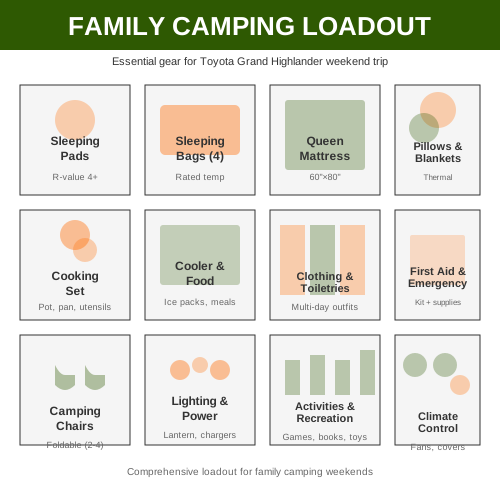
3-day weekend family camping (family of four): - Two outfit changes per person - Consolidated toiletries - Simple cooking setup (pot, pan, utensils) - Sleeping gear and pads - Entertainment (books, games, portable activities) - Total cargo use: 40-50 cubic feet (leaves 25-35 cu ft buffer)
Week-long family camping: - Three outfit changes per person - Extended toiletries (shampoo, soap, medications) - Comprehensive cooking equipment - Multiple sleeping configurations - Activities for various weather (rainy day entertainment crucial) - Total cargo use: 60-70 cubic feet (manageable within 76+ capacity)
Extended camping or family road trip: - Four+ outfit changes per person - Seasonal clothing for variable weather - Complete kitchen setup - Activity-specific gear (fishing, hiking, etc.) - Significant entertainment for downtime - Total cargo use: 70+ cubic feet (approaches capacity)
Children's Organization and Entertainment
Activity bucket system: Organize children's activities in separate bins by category: coloring/art supplies, games, books, outdoor play equipment. Rotating daily reduces monotony for multi-day trips. Designated bins enable quick cleanup between activities.
Entertainment for vehicle time: Prepare entertainment for extended driving between campsites: audiobooks, podcasts, activity books, travel games. This reduces trip stress and prevents behavioral issues from boredom during long drives.
Personal gear organization per child: Each child can have dedicated compression bag/duffel containing clothing and personal items. This teaches responsibility and enables quick identification of individual needs.
Bathroom accessibility: For families with young children, portable toilet or camp potty is critical. Position near sleeping area for nighttime access without vehicle exit. This affects cargo organization—toilet storage requires dedicated space and careful positioning for odor control.
Kitchen Organization for Family Meals
Consolidated cooking setup: - Single large pot with lid (serves as cookware and serving dish) - One non-stick pan (optional but useful for variety) - One cutting board (multi-purpose: food prep, serving, eating surface) - Utensils: spoon, fork, knife (shared set, quick-wash between uses) - Four plates/bowls (enables family meals with minimal washing) - Four cups or mugs - Biodegradable soap and sponge - Collapsible drying rack
Coordinated meal planning: Simple meals enable efficient cooking and minimal equipment: pasta with sauce, rice and beans, grilled items, soups. Plan 2-3 day meal rotation preventing menu boredom. Ingredient shopping daily rather than bulk pre-trip reduces cooler burden.
Cooler organization: Separate items into layers: beverages bottom (coldest, last accessed), proteins and perishables middle, condiments and lighter items top (easiest access). Clear ziplock bags group similar items enabling quick retrieval. Ice/cold packs refresh daily if possible.
Vehicle Interior Cleanliness with Family
Daily maintenance routine: - Morning: Shake out sleeping bags, open all doors 10-15 minutes for air exchange - Post-meals: Wipe down eating surfaces, remove crumbs preventing odors and insects - Evening preparation: Sweep cargo area, organize gear for next day, close all windows - Trash management: Daily removal to campground facilities prevents odor accumulation
Moisture and odor management with children: Families require aggressive moisture management—children's activity and accidents increase interior humidity. Place desiccant products (Damp Rid, silica gel) in cargo area. Plan regular morning ventilation. Emergency waterproof pads for bedwetting prevention if relevant.
Quick cleanup strategy: Keeep cleaning supplies immediately accessible: paper towels, cloth, mild soap, trash bags. Quick spill cleanup prevents small issues from becoming vehicle damage. Establish ground rules for eating locations and beverage management.
Climate Management and Comfort for Family Camping
Climate control in the Grand Highlander involves managing temperature and moisture for multiple occupants with varying comfort preferences. The vehicle's larger volume and multiple seating zones enable sophisticated climate strategies unavailable in compact vehicles. Understanding multi-zone comfort management ensures pleasant family experiences across diverse weather conditions.
Summer Camping Climate Strategy
Parking location selection (critical): Full shade is essential for family comfort. Direct sun creates 15-20°F temperature increase within 30-45 minutes—unpleasant for multiple occupants. Prioritize shade from trees, rock formations, or structures. Family presence makes overheating unpleasant rather than merely uncomfortable. Shade-finding becomes non-negotiable priority.
Window covering system: Reflective silver covers reduce solar heat gain 50-60%. Apply immediately after parking. The Grand Highlander's larger window area captures more solar energy than compact vehicles—coverage benefits are more dramatic. Professional-fit covers ($80-120) provide superior coverage versus universal options. Maximize window coverage to minimize cooling loads.
Ventilation for large interior volume: The Grand Highlander's larger interior requires more air circulation than compact vehicles. Strategy: Open multiple windows (front driver, passenger, rear sides) creating comprehensive cross-ventilation. The larger volume enables greater airflow tolerance without privacy concerns. Diagonal window opening (opposite front to rear) creates circulation patterns.
Fan supplementation: - Multiple 12V fans ($20-40 each) positioned for directional airflow - Battery-powered fans for portable circulation - Portable air conditioning units (battery-powered, $200-400) for extended hot-weather camping - Multiple fans more effective than single powerful unit in large volume
Evening arrival protocol: 1. Arrive at campsite during evening (5-7 PM) when temperatures declining 2. Open all doors fully for initial 10-15 minute air exchange 3. Run air conditioning briefly while outside temperature still warm 4. As evening temperature drops, gradually reduce cooling demand 5. Open windows for continuous ventilation 6. By established bedtime, natural evening cooling typically sufficient
Sleeping configuration for summer with family: - Light sleeping bags used as covers only (not fully enclosed) - Cotton sheets for moisture absorption - Moisture-wicking pad covers - Minimal sleeping clothing - Fans positioned for airflow across sleeping surfaces
Winter Heating Strategy for Families
Insulation priority: Window insulation becomes essential for winter family camping. Reflective covers with foam backing reduce heat loss 30-40%. Thermal curtains hung inside cabin create air gaps. Multi-layer insulation significantly reduces nighttime heating loads. Extended family groups generate body heat—leverage this advantage for efficiency.
Engine heating cycles: The Grand Highlander (gasoline engine, no hybrid Ready mode) requires engine operation for cabin heating. Strategy: Run engine for 20-30 minutes before bedtime, raising cabin temperature above comfortable sleeping level. Once warm, engine off preserves fuel while interior cools slowly. Multiple occupants' body heat contributes to maintaining warmth.
For extended winter camping: 15-30 minute engine operation every 2-3 hours provides sustained heating without excessive fuel consumption. Balance comfort against fuel economy and environmental impact. Multiple occupants' body heat means family camping requires less artificial heating than solo/couple scenarios.
Sleeping configuration for winter: - Sleeping bags rated 15-20°F below expected temperature - High-R-value insulating pads (R-value 4+) - Multiple thermal blankets - Warm layered clothing under sleeping bags - Hot water bottles for supplementary warmth - Dry clothing stored in sleeping bags for morning changes
Pre-sleep warmth generation: - Warm family meal before sleeping (collective body heat generation) - Group activity increasing core temperature (games, conversation) - Avoid sleeping with empty stomachs - Ensure all clothing remains dry
Multi-Occupant Comfort Management
Temperature preference accommodation: Family members have varying warmth preferences. Strategy: Provide multiple sleeping bag options (different temperature ratings), enable adjustable blanket/covering combinations, and establish sleeping positions that enable individual adjustment. One family member's extra warmth isn't another's discomfort.
Climate zone creation: Larger vehicle enables climate zone differentiation: front area comfortable for evening activities, back area optimized for sleeping. Different temperature zones within vehicle enable family members occupying different spaces to maintain preferred conditions. Coordinate fan positioning and window opening by zone.
Moisture management with family: Multiple occupants, children's activities, and sleeping create significant interior moisture. Prevention: continuous ventilation (crack windows 2-3 inches), moisture-absorbing products (silica gel, Damp Rid) placed strategically, aggressive morning ventilation (all doors open 15-20 minutes). Morning defroster removes any accumulated condensation.
Mildew and odor prevention: Family camping creates more potential odors (cooking, children's activities, bathroom needs). Strategy: Daily trash removal, exterior cooking when possible, morning air exchange, moisture management preventing mildew. Regular interior freshening (baking soda or activated charcoal overnight) prevents mustiness.
Advanced Climate Control Equipment
Portable air conditioning (battery-powered): - Evaporative coolers ($200-400) effective in dry climates - Require solar panels or substantial battery for sustained operation - Meaningful cooling for extended hot-weather family camping - Consider if planning significant summer camping
Auxiliary heating (non-engine): - Battery-powered heated blankets ($50-100 each) safer than fuel-based heaters - Multiple blankets enable family comfort without extended engine operation - Electric heating enables more controlled temperature management - Requires sufficient battery capacity or solar supplementation
Insulated interior covers: - Custom window insulation with integrated heating elements - Significantly reduce heat loss in winter - Cost: $150-300 for complete vehicle coverage - Valuable investment for regular winter camping
Elevation and Location Strategy
Higher elevation camping: Higher elevations run 3-5°F cooler per 1000 feet elevation. Summer family camping at 7,000-8,000 feet reduces cooling demands meaningfully. Natural temperature advantage reduces nighttime heat and associated family discomfort. Elevation selection is underutilized strategy for improving family camping comfort.
Water-adjacent camping: Campsites near lakes or rivers provide evaporative cooling effects and water-moderated temperature swings. Water bodies cool excessive daytime heat and moderate nighttime cold—beneficial for family comfort. Adds recreational benefit (swimming, water activities) beyond camping sleep.
Frequently Asked Questions
Is the Toyota Grand Highlander good for family camping?
Excellent. The Grand Highlander's 3-row architecture enables flexible family configurations unattainable in smaller vehicles. The 90-95 inch sleeping length and 48-52 inch width accommodate families with children comfortably. The 76+ cubic feet cargo space (rows folded) provides substantial capacity for multi-person gear. The vehicle's recent introduction (2024) means latest technology, reliability expectations, and extended warranties. Families seeking genuine comfort without full-size SUV costs find the Grand Highlander optimal.
How many people can sleep in the Grand Highlander?
Realistic capacity: 4-5 people comfortably depending on configuration and family composition. Two adults on queen-size mattress in main cargo area, plus children sleeping on secondary pads or in third-row seats, accommodates family of four effectively. Extended family or multiple sleeping surfaces enables up to five occupants, though comfort decreases with density. Honest assessment of sleeping comfort versus pure capacity helps planning.
Can we sleep with our family of four plus dog?
Absolutely. The Grand Highlander's space accommodates family of four plus large dog comfortably. Configurations: Parents on primary sleeping surface, children on secondary pads, dog on designated bedding in cargo corner. Larger dogs (80+ lbs) have dedicated comfortable areas rather than forcing shared surfaces. The vehicle's dimensions enable comfortable multi-occupant sleeping alongside pet accommodation.
Should we fold all rows for maximum sleeping or keep some seating?
Depends on trip type and daily driving needs. Weekend trips: fold both rows for maximum sleeping comfort, accept driving-only seating. Multi-day camping: fold second row, keep third row up for daytime flexibility, sacrificing some sleeping space for vehicle versatility. Week-long trips: assess family comfort priorities—maximum sleeping favors initial comfort investment; maintained seating enables flexible daily activities.
What sleeping configuration is best for children?
Children sleeping options: (1) Dedicated sleeping pads in cargo area alongside parents, (2) Separate sleeping pad positioned in defined zone, (3) Third-row seats if upright (though less comfortable than proper pads). Best practice: Dedicated insulating pads and quality sleeping bags sized for children. Separate zones prevent parents from disturbing children's sleep. Organization of children's sleeping area creates psychological comfort and safety.
How much cargo space remains for gear with sleeping setup?
Approximate allocation: Queen-size mattress occupies 10-12 cu ft (sleeping surface). Family bedding, pillows, sleeping bags occupy 5-8 cu ft when compressed. Remaining 54-60 cu ft available for kitchen, clothing, emergency supplies, recreation equipment. Even with sleeping setup, substantial cargo capacity remains for multi-day trips. Organization determines how efficiently available space supports family camping.
Can kids sleep in the third row seats?
Yes, though not ideal comfort. Third row seats fold down for cargo but upright for seating provide makeshift sleeping when properly cushioned. Children up to approximately age 10 fit reasonably in third row with padding/pillows. Longer-term sleeping better served by dedicated pads in cargo area. Third row works for supplementary sleeping or situations where parents occupy cargo area.
Is Grand Highlander fuel economy acceptable for camping trips?
Solid for a 3-row vehicle. Real-world camping trip MPG: 22-27 mpg combined driving. A 500-mile camping trip costs approximately $65-80 in fuel (500 miles ÷ 24 mpg = 20.8 gallons × $3.50). Comparable full-size SUVs spend $90-110. Compared to RV camping, the Grand Highlander's fuel economy is exceptional. Budget-conscious families appreciate fuel costs comparable to standard SUVs while gaining space benefits.
How reliable is the Grand Highlander for camping?
Very reliable. As Toyota's newest model (2024), it benefits from latest engineering and reliability systems. Toyota brand reputation extends fully to Grand Highlander—no widespread issues reported. The vehicle's mechanical systems demonstrate proven durability consistent with Toyota standards. Regular maintenance (oil changes, filter replacements) ensures long-term dependability. Reliability is genuine advantage of Toyota brand selection.
Should we invest in portable air conditioning or heating?
Consider if planning significant hot-weather or winter family camping. Portable AC ($200-400) enables extended summer camping without heat stress. Battery-powered heaters ($50-100 each) provide winter warmth without engine operation. For occasional camping or mild climates, standard ventilation and engine heating/cooling suffice. Commitment to extreme-season camping justifies premium equipment investment.
How does Grand Highlander compare to Sequoia for family camping?
Grand Highlander: 3-row flexible, 76+ cu ft cargo (rows folded), newer technology, better fuel economy (~24 mpg), $40,000-50,000 price point. Sequoia: Full-size SUV, 120-160 cu ft cargo, massive space, full-size comfort, ~20-22 mpg fuel economy, $55,000-70,000 price. Choice depends on family size and priorities. Families of four with modest gear needs: Grand Highlander provides adequate space and better economics. Larger families or extended-trip preferences: Sequoia offers uncompromised space. Both vehicles excel for family camping.
Is the Grand Highlander better than Highlander standard for camping?
Yes, noticeably. Grand Highlander's extended wheelbase provides 5-6 additional inches length and approximately 10 cu ft additional cargo space. The expanded dimensions improve sleeping comfort and gear organization. Standard Highlander works for family camping but requires more creative configurations with less flexibility. Grand Highlander's improvements are meaningful enough to justify selection if prioritizing camping capability.