None
The Dodge Durango: Bold Three-Row Camping Power
The Dodge Durango is a distinctive three-row SUV that combines impressive performance with practical camping capability. With powerful engine options, available all-wheel drive, and up to 100 cubic feet of cargo space, the Durango appeals to campers seeking a bold vehicle that delivers both comfort and confidence. Its commanding stance and responsive handling distinguish it from other three-row competitors. The Durango's three-row seating flexibility, generous cargo capacity, and modern technology create excellent camping possibilities. Available performance upgrades enable reaching remote camping destinations with confidence. This guide explores how to maximize your Durango for memorable camping adventures.What You'll Learn
What You'll Learn
Sleeping Configurations with Three Rows
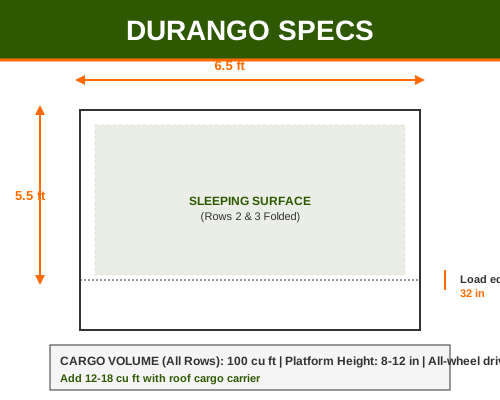
The Durango's three-row configuration provides multiple sleeping options. With second and third rows folded, you create a sleeping surface approximately 6.5 feet long by 5.5 feet wide. This accommodates double air mattresses or custom sleeping platforms comfortably.
Many Durango campers use custom sleeping platforms positioned in the cargo area with storage compartments underneath. These platforms typically sit 8-12 inches above the floor, providing access to tools, water containers, and gear storage while maintaining comfortable headroom. The relatively flat cargo floor simplifies platform installation.
Alternatively, configure the Durango as a basecamp—fold down all rows for maximum cargo space while sleeping in a nearby tent. This setup appeals to larger families wanting the vehicle's supply and shelter access without sleeping everyone in the vehicle. The flexible seating enables sleeping configurations tailored to specific trip needs.
Generous Cargo Space and Organization
With 100 cubic feet of cargo space (all rows folded), the Durango provides ample room for family camping gear. Adding a roof cargo carrier or roof rack increases capacity by 12-18 cubic feet for bulky items. This space accommodates extended trips with comfort and gear redundancy.
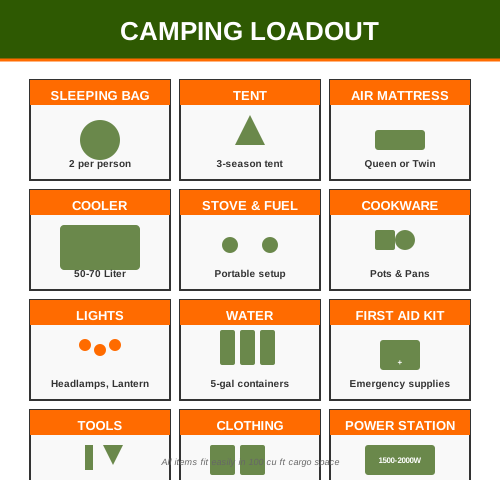
Organization is key in such large cargo areas. Stackable storage containers, hanging organizers on seat backs, and dedicated zones keep items accessible and prevent wasted space. Color-coded bins or labels help quickly locate frequently needed items. Create zones: sleeping area, cooking gear, clothing, safety equipment, and emergency supplies.
Keeping weight distribution balanced improves handling and fuel efficiency. Place heavier items (coolers, water containers) low and centered in the cargo area. The Durango's loading edge (approximately 32 inches) is manageable for most people loading and unloading camping gear.
Create dedicated zones: sleeping, cooking, clothing, emergency supplies
Use clear containers to identify contents quickly
Label all bins for fast item location at camp
Keep frequently used items near the cargo entrance
Store heavy items low and centered for weight distribution
Utilize vertical space with hanging organizers
Secure items with cargo nets to prevent shifting while driving
Durango Cargo Organization Options
| Organization Method | Benefit | Best For | |---|---|---| | Stackable bins | Easy access, visible contents | General gear storage | | Hanging organizers | Maximizes vertical space | Small items, frequently accessed | | Roof cargo carrier | Adds 12-18 cu ft capacity | Bulky camping gear, tents | | Custom sleeping platform | Built-in storage underneath | Multiple-night trips | | Drawer system | Quick access, organized | Tools, electrical gear | | Cargo net | Secures items during travel | Prevents shifting |Storage Organization Tips
Performance and Engine Options
The Durango's powerful engine options (typically V8 or upgraded V6) provide impressive towing and acceleration. The available 360+ horsepower V8 delivers confident highway driving and the power to access remote camping areas. The transmission shifts smoothly, enhancing comfort during long drives to distant destinations.
Performance transmission coolers help manage heat during extended driving or towing. All-wheel drive capability (available on many models) improves traction on unpaved roads and rough terrain. The Durango's responsive steering and good visibility simplify navigation on challenging campground roads.
While the powerful engines provide impressive capability, they consume more fuel than some competitors. Most models achieve 21-25 miles per gallon highway, reasonable for a performance-oriented three-row SUV.
Climate Control and Interior Comfort
The Durango's available tri-zone climate control allows independent temperature settings in different cabin areas. This feature is particularly valuable for families with varying comfort preferences during sleeping hours. Heated leather seats add comfort during cold-weather camping.
The available power moonroof provides excellent natural ventilation when slightly opened. Extensive window configuration allows cross-ventilation throughout the cabin when windows are cracked open slightly. Privacy shades designed for the Durango fit well, controlling light and heat independently from ventilation.
The heating system quickly warms the cabin during cold nights. Air conditioning efficiently maintains comfort in warm climates. Modern climate control systems allow setting preferred temperatures before sleeping, then the system maintains that temperature throughout the night.
Power and Electrical Systems
The Durango's robust electrical system supports camping accessories well. Multiple 12-volt power outlets and available USB charging ports provide convenient device charging. A portable power station (1500-2000W capacity) covers most camping power needs.
Many Durango campers install DC-to-AC inverters (1500-2000W) for standard household outlets. This setup costs less than dual battery systems and works well for weekend camping. For extended expeditions, dual battery systems with solar panel charging provide sustainable power.
The vehicle's large battery capacity and powerful alternator (typically 140+ amps) support electrical accessories well. Professional installation of upgrades ensures safe integration with the Durango's electrical system.
Towing and Hauling Capability
The Durango's impressive towing capacity (6,200-7,400 pounds depending on configuration) enables hauling trailers, teardrop campers, or small RVs. This capability significantly expands camping options for families wanting additional sleeping and living space.
Proper weight distribution when towing is essential. Use a weight-distributing hitch for smooth handling. The integrated backup camera assists with safe hitching. The transmission cooler manages heat effectively when towing, extending vehicle longevity.
The cargo bed option on some Durango models adds practical hauling space for tools, extra fuel, water containers, or emergency equipment for remote expeditions.
Multi-Season Durango Camping Strategies
The Durango's tri-zone climate control adapts remarkably well to varied camping seasons. Spring camping (45-65°F) requires moderate heating—the Durango warms quickly, reaching comfortable sleeping temperatures within 10-15 minutes. Summer camping (65-85°F) demands careful ventilation—open windows on opposite sides, utilize the moonroof for ventilation, and consider battery-powered fans for air circulation without engine running. Fall camping (50-70°F) offers ideal conditions: mild temperatures reduce climate control demands, preserving fuel efficiency. The Durango's comfortable interior seats provide excellent daytime hangout space when weather turns rainy. Winter camping (below 45°F) demands advanced preparation: precondition the cabin while parked using engine idle (with proper ventilation through cracked windows), use quality sleeping insulation (Reflectix under mattresses, quality sleeping bags rated for temperature), and maintain battery charge for climate control throughout the night. Many Durango campers create seasonal gear sets: summer configuration emphasizes ventilation and lightweight bedding; winter configuration emphasizes insulation, heating, and weatherproofing. This modular approach enables rapid transition between seasonal camping styles.Extended Trip Planning and Durango Reliability
The Durango's robust construction and modern reliability make it suitable for extended multi-week camping expeditions. The 100 cubic feet cargo capacity accommodates rotation clothing, extended supplies, and equipment redundancy for remote trips where replacement parts are unavailable. Before extended trips, perform comprehensive maintenance: fluid checks (oil, coolant, transmission fluid), battery load testing, tire pressure and rotation, brake inspection, and hose checks for leaks. The Durango's V8 engines consume approximately 20-24 liters per 1000km when loaded—calculate fuel costs for extended routes in advance. Many extended-trip Durango campers invest in auxiliary fuel tanks, adding 15-25 gallons capacity for remote region exploration where fuel stations exceed 200 miles. Water management becomes critical for extended camping: carry multiple 5-gallon containers (30-40 pounds of weight), locate campground water spigots during site selection, and plan refilling routines. Most established campgrounds provide water hookups; remote dispersed camping requires self-contained water carrying. Power management for extended trips: portable power stations (1500-2000W) powering LED lighting, fans, and device charging significantly reduce campsite fatigue. Solar panels (200-400W) trickling charge during sunny days, supplementing power generation. Many extended-trip Durango campers invest dual battery systems (auxiliary auxiliary battery isolated from starter battery) ensuring reliable vehicle operation despite concurrent appliance demands.Durango Customization and Aftermarket Upgrades
Many Durango campers invest in strategic upgrades enhancing camping comfort and capability. Roof racks and roof cargo carriers (adding 12-18 cubic feet) accommodate bulky camping gear, tents, and rooftop tent options. When properly installed on Durango-rated crossbars, rooftop tents extend sleeping capacity without compromising interior cargo space. Window treatments deserve investment: custom-fitted privacy shades block light while enabling controlled ventilation. Professional privacy setups ($300-500) provide superior aesthetics and function compared to DIY alternatives. Some Durango campers install heated window shades enabling temperature control—valuable for cold-weather camping. Interior lighting upgrades: LED cabin lighting and exterior campsite lighting (roof-mounted floodlights, work lights) dramatically improve nighttime safety and campsite visibility. Battery-powered LED systems cost less than hardwired alternatives, enabling reversible installation without permanent vehicle modifications. Exterior upgrades: roof racks, side rails for gear attachment, and mud flaps improve both function and aesthetics. All-terrain tires replace street tires on Durango models destined for rough terrain camping. Skid plates protect critical undercarriage components during off-road access to remote campsites.Family Safety and Durango Camping
The Durango's advanced safety systems (blind-spot monitoring, rearview cameras, lane-keeping assist) enhance family camping safety. The backup camera assists with safe hitching trailers—critical skill when towing campers or travel trailers. Children camping in Durango vehicles benefit from the spacious interior and abundant seating flexibility. The power rear window provides additional ventilation beyond doors and windows. Integrated child safety locks (rear windows) prevent accidental opening during travel. Many family Durango campers appreciate the third row's ability to maintain passenger capacity while sleeping configurations utilize second row and cargo area—enabling quick transitions between family activities and sleeping arrangements.FAQ
Q: How much cargo space does a Durango provide?
A: 100 cubic feet with all three rows folded, plus an additional 12-18 cubic feet with roof cargo addition.
Q: What sleeping space does a Durango offer?
A: A sleeping surface approximately 6.5 feet by 5.5 feet with second and third rows folded, accommodating double air mattresses or custom platforms.
Q: How much can a Durango tow?
A: Typically 6,200-7,400 pounds depending on configuration, suitable for trailers and small RVs.
Q: What's the fuel economy of a Durango?
A: Most models achieve 21-25 miles per gallon highway, reasonable for a powerful performance SUV.
Q: Does the Durango have good climate control for sleeping?
A: Yes, tri-zone climate control allows independent temperature settings. Heating and cooling systems quickly reach desired temperatures.
Q: Can I install a roof tent on a Durango?
A: Yes, the roof structure supports aftermarket roof tents when properly installed on crossbars rated for weight capacity.
Q: What's the ground clearance of a Durango?
A: Approximately 8.6 inches, allowing access to most developed campsites and rough roads.
Q: Is all-wheel drive necessary for Durango camping?
A: Not strictly necessary for developed campsites, but it improves capability on unpaved roads and rough terrain.
Q: What power solution works best for Durango camping?
A: A portable power station (1500-2000W) covers most needs. For extended trips, consider a dual battery system with solar charging.
Q: What makes the Durango special for camping?
A: The combination of powerful engines, three-row flexibility, impressive towing capacity, tri-zone climate control, and modern technology creates a capable and comfortable camping platform.
Q: What's the best sleeping setup for a Durango?
A: Most Durango campers prefer a custom sleeping platform with under-platform storage. This maximizes the 6.5x5.5 foot sleeping area while organizing gear efficiently. A quality camping mattress on top provides comfort for multiple-night trips.
Q: How do I keep a Durango cool during summer camping?
A: Park in shade when possible. Crack windows slightly for cross-ventilation. The tri-zone climate control maintains comfortable sleeping temperatures. Window shades designed for the Durango provide excellent heat blocking while maintaining privacy.
Q: What modifications do most Durango campers make?
A: Common upgrades include roof racks for cargo carriers, window coverings for privacy, sleeping platforms with storage, portable power stations, and upgraded ventilation systems. Many add exterior lighting for campsite visibility.
Q: Is the Durango suitable for solo camping?
A: Absolutely. Solo campers appreciate the three-row flexibility, generous cargo capacity, powerful performance for remote access, and modern safety features. The abundant seating provides comfortable daytime hangout space.
Q: What camping destinations suit a Durango well?
A: The Durango handles mountain destinations, desert exploration, coastal trips, and forest camping equally well. All-wheel drive (if equipped) opens rougher terrain access. Towing capability enables campground-based trips with a trailer.
Q: How reliable is a Durango for remote camping?
A: Dodge Durangos have solid reliability records. Modern models feature advanced diagnostics and safety systems. The robust electrical system supports accessories reliably. Professional maintenance before extended trips ensures peak performance.