Driving Safety

How to Drive on Black Ice: What to Do When You Hit It

Auto Roamer
12 min read
Includes Video

Black ice means losing all steering input. If you hit it, ease off everything: accelerator, brake, and steering. Look where you want to go. Your car disconnects from the road. We learned that on a recent trip through Montana - steering felt utterly useless. Driving on ice safely requires anticipating these invisible patches, especially after rain when temps drop.

You're driving, the road looks wet, but it's freezing out. Suddenly, the steering wheel feels light, and your car begins to slide. You've just hit black ice, a nearly invisible hazard that can cause an instant loss of traction. Black ice is dangerous because it appears as normal pavement, tricking drivers into thinking they have grip when they don't. According to Federal Highway Administration data, 24% of all weather-related vehicle crashes occur on snowy, icy, or slushy pavement, highlighting the severity of this issue According to the Federal Highway Administration, each year, 24% of .... If you find yourself in this terrifying situation, panic is your worst enemy. Resist the urge to slam on the brakes or overcorrect your steering. Your immediate reaction can mean the difference between regaining control and a dangerous skid. Understanding how to drive on black ice is critical for staying safe during winter months.
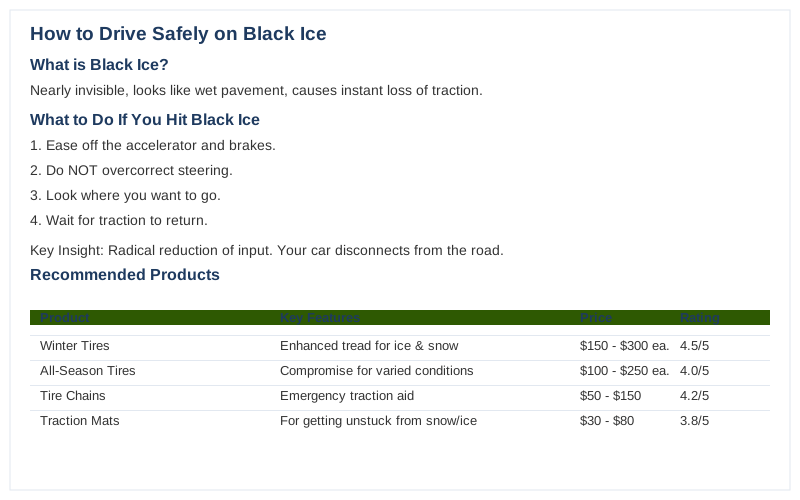
Infographic: Black ice driving safety tips & what to do.
Key specifications for how to drive safely on black ice and what to do if you hit it

The Short Answer

Black ice means losing all input, not just steering. Your car disconnects from the road. The rule is: ease off everything, look where you want to go, and wait for grip to return. This applies to all drivetrains, though they'll feel different.

When you hit black ice, the immediate mental model is radical reduction of input. Think of your tires floating on a frictionless surface. Your goal is to survive the loss of traction, not steer through it like a normal skid. Slamming brakes or overcorrecting steering will spin you out. Remember, 41% of fatal crashes on ice or frost involve speeding According to the Federal Highway Administration, each year, 24% of ..., so keeping speed low is critical.

The fundamental rule for black ice is to do nothing sudden. Gently lift off the accelerator and keep the steering wheel steady. If the car slides, look and steer where you want it to end up, not where it is. This is counter-steering, but on ice, it requires minimal, smooth inputs. You're waiting for the tires to regain grip.

While all drivetrains react to ice, the sensation varies. FWD tends to understeer (push wide), RWD is prone to oversteer (fishtailing), and AWD can offer a false sense of security, still losing traction. Regardless of your setup, the principle is the same: smoothness and patience. Avoid abrupt braking or acceleration. If your car has ABS, apply steady pressure and let the system work; don't pump the brakes [PDF] Don't Panic! 11 Tips for Driving on Black Ice.

Each year, 24 percent of weather-related vehicle crashes occur on snowy, slushy or icy pavement Snow & Ice - FHWA Road Weather Management. Vigilance for tell-tale signs-like wet-looking pavement near freezing temps-is key to avoiding black ice in the first place. If you must drive, slow down well before areas prone to ice, like bridges or shaded curves.
To maintain control in icy conditions, it's essential to follow our tips in the complete guide on driving on black ice.
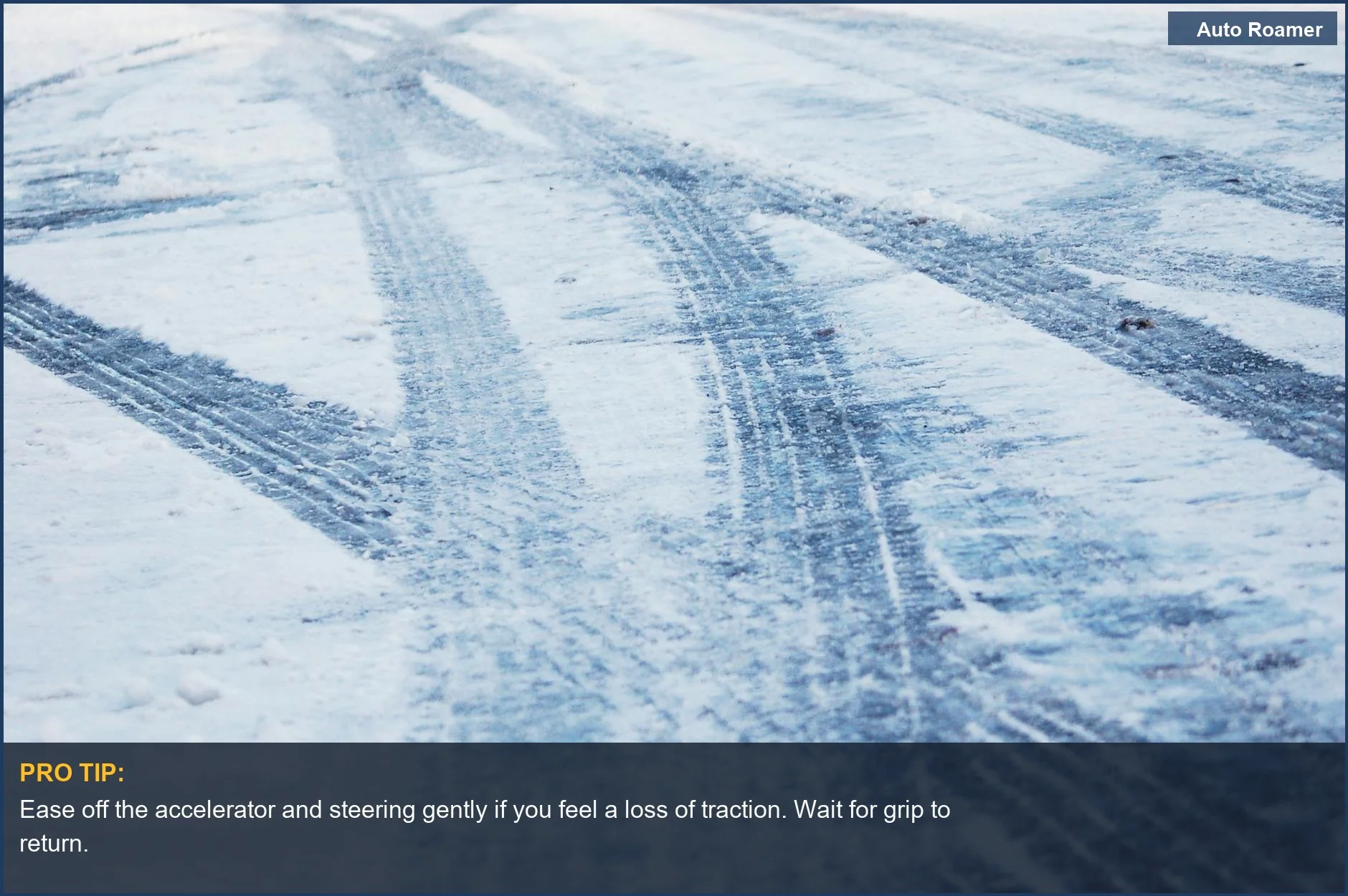
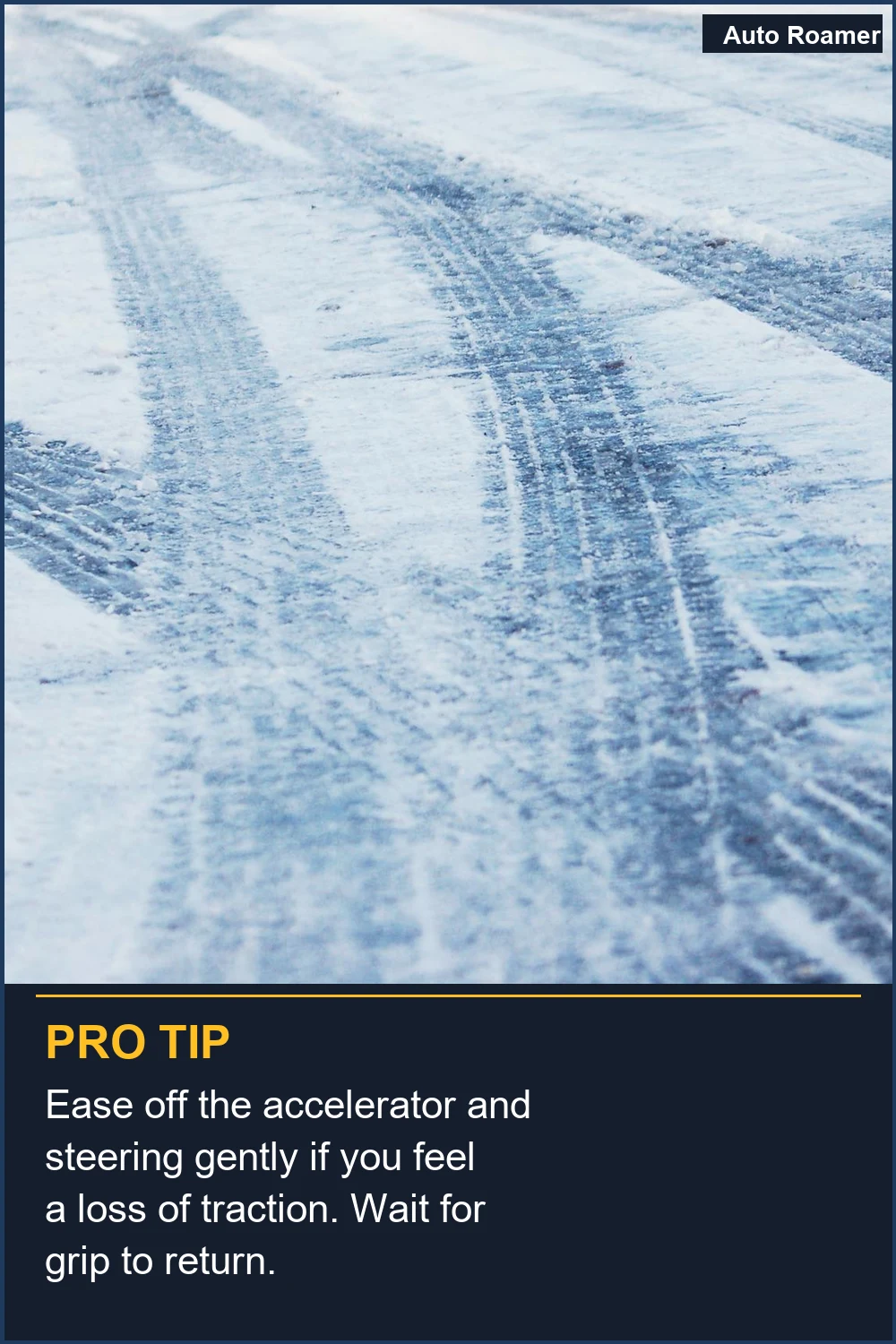
Ease off the accelerator and steering gently if you feel a loss of traction. Wait for grip to return.
Winter travel can be perilous. These tire tracks on snow highlight the need for caution and preparedness when driving on ice safely. | Photo by Ryan King

What You Need to Know

Black ice is a treacherous road hazard because it's nearly invisible until your tires lose all grip. It typically forms when moisture freezes on the pavement, especially when temperatures are around the freezing point Black Ice Explained. This thin, transparent ice allows the dark asphalt to show through, making it appear wet rather than frozen Black Ice Safety Tips. Drivers often underestimate the danger, assuming the road offers more traction than it does.

Black ice is most commonly found in specific "problem zones" that freeze faster than the surrounding road. These include bridges and overpasses because they are exposed to cold air from above and below. Shaded areas, curves, ramps, and elevation changes can also be prime locations where ice lingers Black Ice Explained. Be especially vigilant when temperatures hover near freezing and the pavement looks wet, as this is a strong indicator of potential black ice.

Modern vehicles often have Anti-lock Braking Systems (ABS), Electronic Stability Control (ESC), and traction control. While these systems can help, they behave differently on ice. ABS prevents wheel lock-up during braking, allowing you to steer, but on sheer ice, its effectiveness is limited. ESC and traction control work to prevent skids by reducing engine power or applying individual brakes, but they can also struggle to find grip on a slick surface. It's crucial to understand that these systems are aids, not guarantees, on ice.

Vehicle type matters too. Pickup trucks, with their higher center of gravity and often lighter rear ends, can be more prone to fishtailing on ice than sedans. SUVs share some of these characteristics. Sedans, especially those with a lower profile and more balanced weight distribution, might feel more stable, but all vehicles are significantly compromised on ice. Winter tires are a significant advantage for any vehicle type in these conditions.

1
Ease Off Everything - If you feel your car start to slide, immediately and gently lift your foot off the accelerator. Do NOT touch the brakes or make any sudden steering movements. The goal is to regain a sense of control by reducing any input that might cause further loss of traction.
2
Steer Where You Want to Go - Look in the direction you want the car to travel. Gently steer the vehicle in that direction. If the rear of your car is sliding out (a skid), steer slightly in the direction the rear is going (counter-steer). Avoid overcorrecting, as this can cause the car to slide the other way.
3
Wait for Grip - Continue to hold the steering wheel steady and allow the vehicle to slow down naturally. Once you feel the tires regain traction, you can gradually apply gentle pressure to the accelerator if needed, or make small, smooth steering corrections to get back on your intended path. Do not slam on the brakes; if your car has ABS, apply steady pressure and let the system work, but avoid panic braking Don't Panic! 11 Tips for Driving on Black Ice.

Each year, 24 percent of weather-related vehicle crashes occur on snowy, slushy, or icy pavement Snow & Ice - FHWA. In 2023, there were an estimated 22,293 injury crashes during snow/sleet conditions alone NHTSA Winter Driving Tips. These statistics underscore the severe danger black ice presents to drivers.
To further enhance your driving skills, consider learning how to handle challenging conditions like snow and ice in our guide on driving safely in snow.
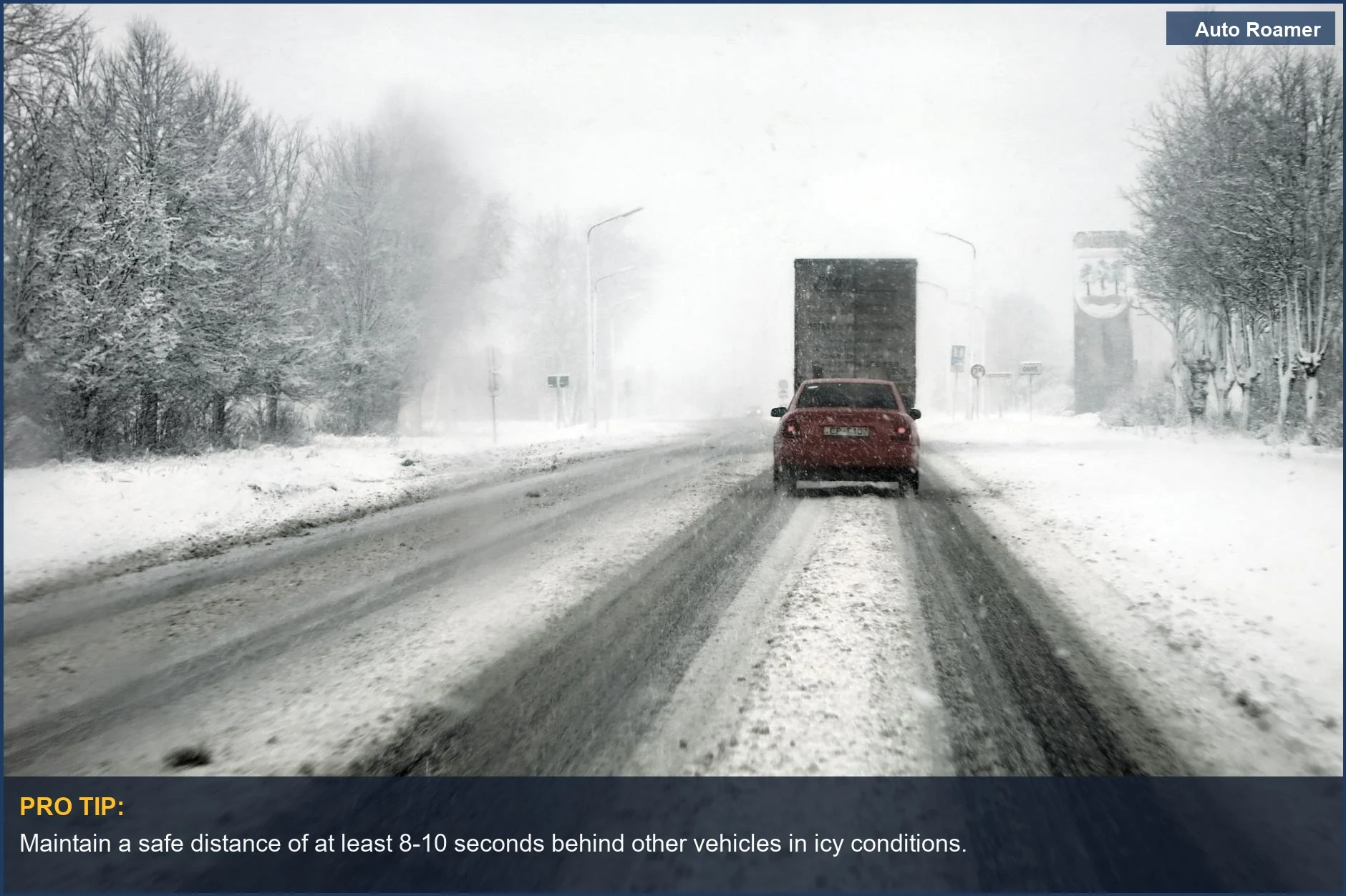
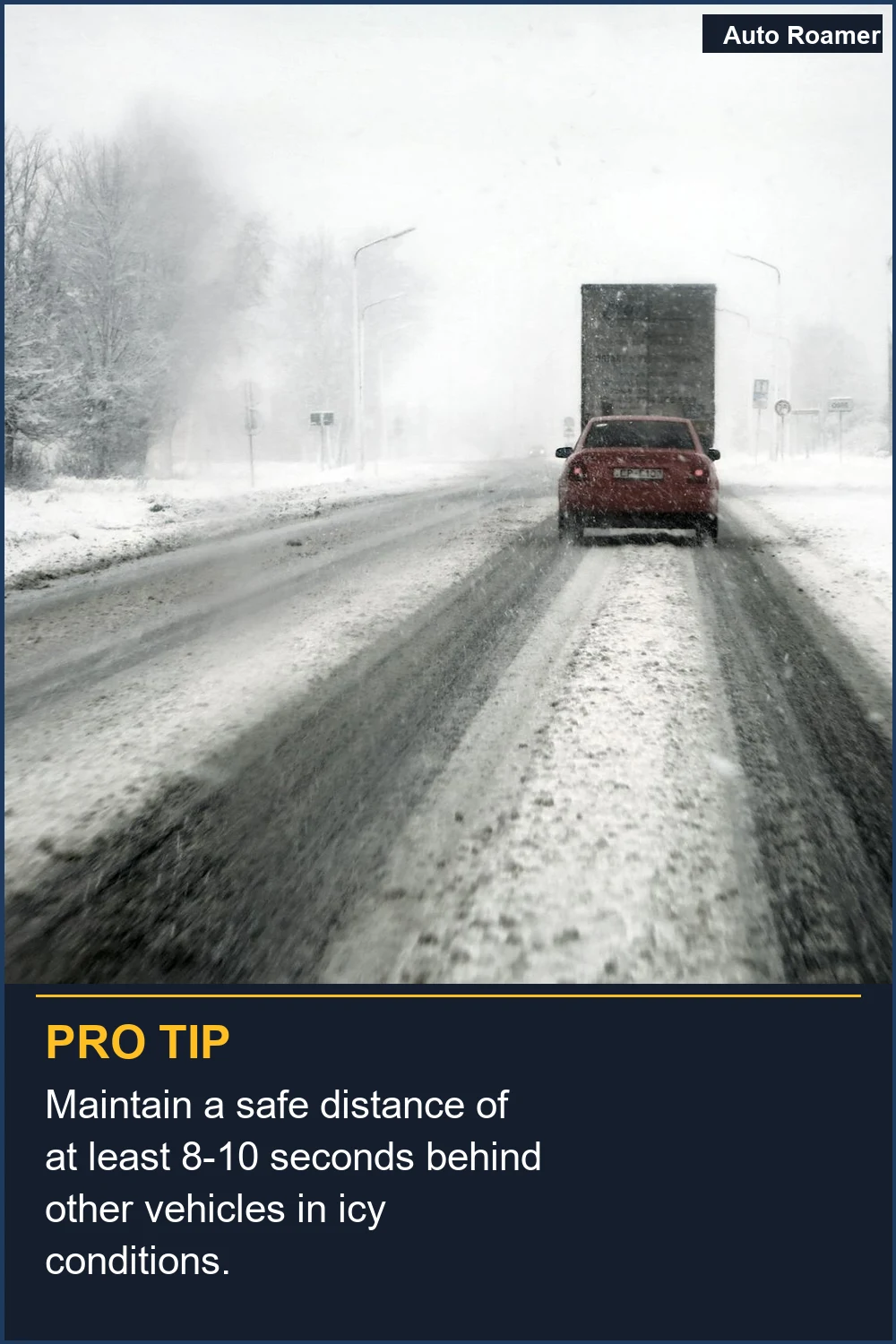
Maintain a safe distance of at least 8-10 seconds behind other vehicles in icy conditions.
Navigating a snowy highway during a blizzard underscores the importance of black ice driving tips. Visibility is low, and ice is a constant threat. | Photo by Ivars

How to Handle This

1
Ease off everything immediately - If you hit black ice, lift your foot off the accelerator and do NOT touch the brakes. Any sudden input, especially braking, will break the minimal traction you have left and send you into a skid. Tires have almost no grip on frozen roads. Black ice is nearly invisible.
2
Hold the wheel steady, steer where you want to go - Keep the steering wheel still, pointing where you want the car to travel. If you slide, gently steer in the direction you want the front of the car to go, but avoid overcorrecting. On a bridge overpass during freezing rain, this lack of sudden input is what separates you from losing control. Avoid sudden movements; the car is essentially a sled.
3
Allow ABS to work or gently pump brakes if no ABS - If your car has ABS, keep steady pressure on the brake pedal and let the system work. If you have an older car without ABS, gently pump the brake pedal, applying just enough pressure to slow down without locking the wheels. Slamming the brakes guarantees loss of control. According to Louisiana State University's safety sheet, this allows the car to maintain some steering control.
4
Wait for traction to return - Regain control smoothly as you feel the tires gripping the road again, whether by exiting the icy patch or as the ice thins. Don't panic or make sudden steering or braking adjustments once you regain grip. About 24 percent of weather-related vehicle crashes occur on snowy, slushy or icy pavement each year.
In addition to handling black ice, it's crucial to know what to do if your car slides off the road in winter, so read our article on car slides off the road.
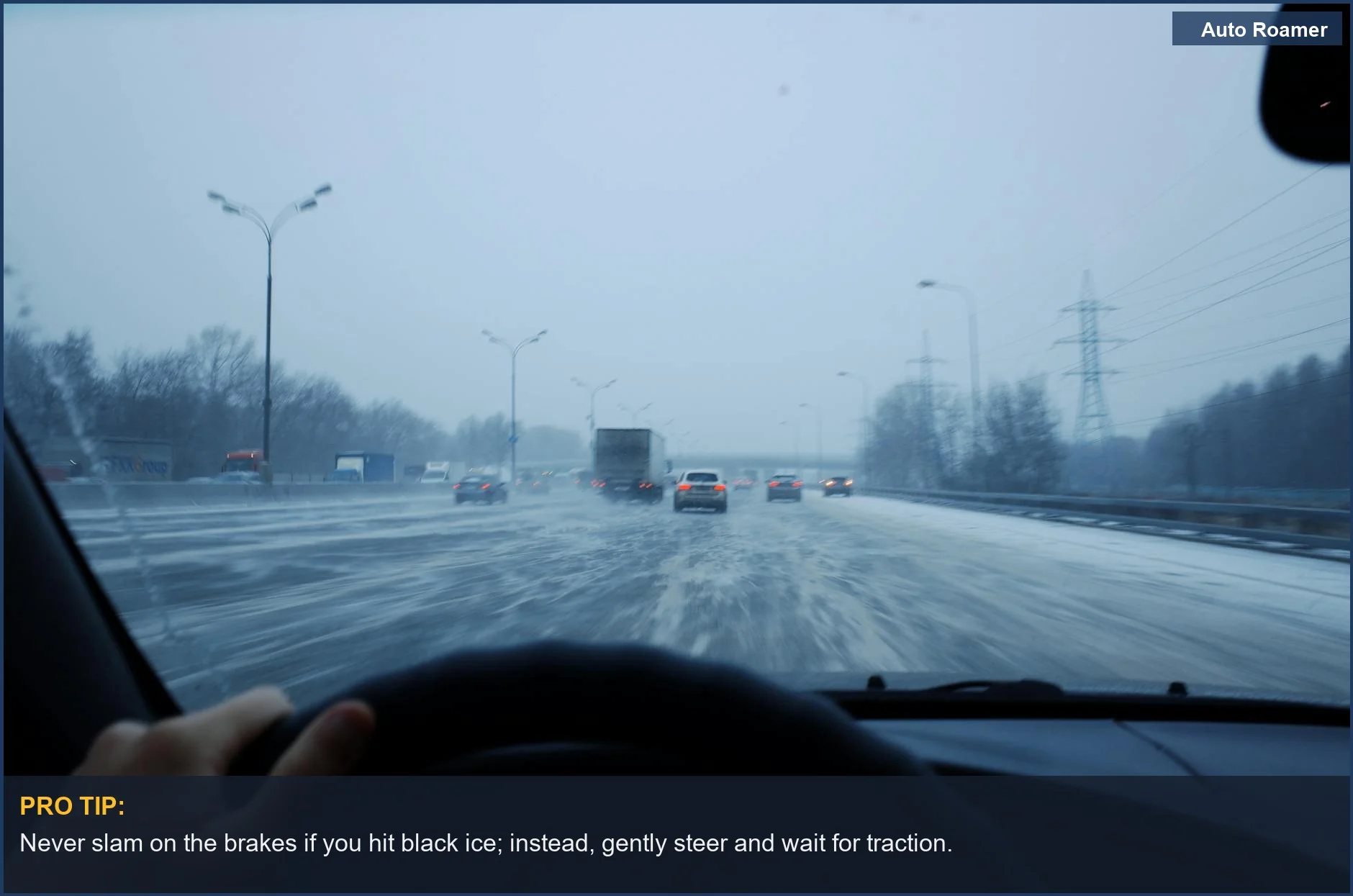
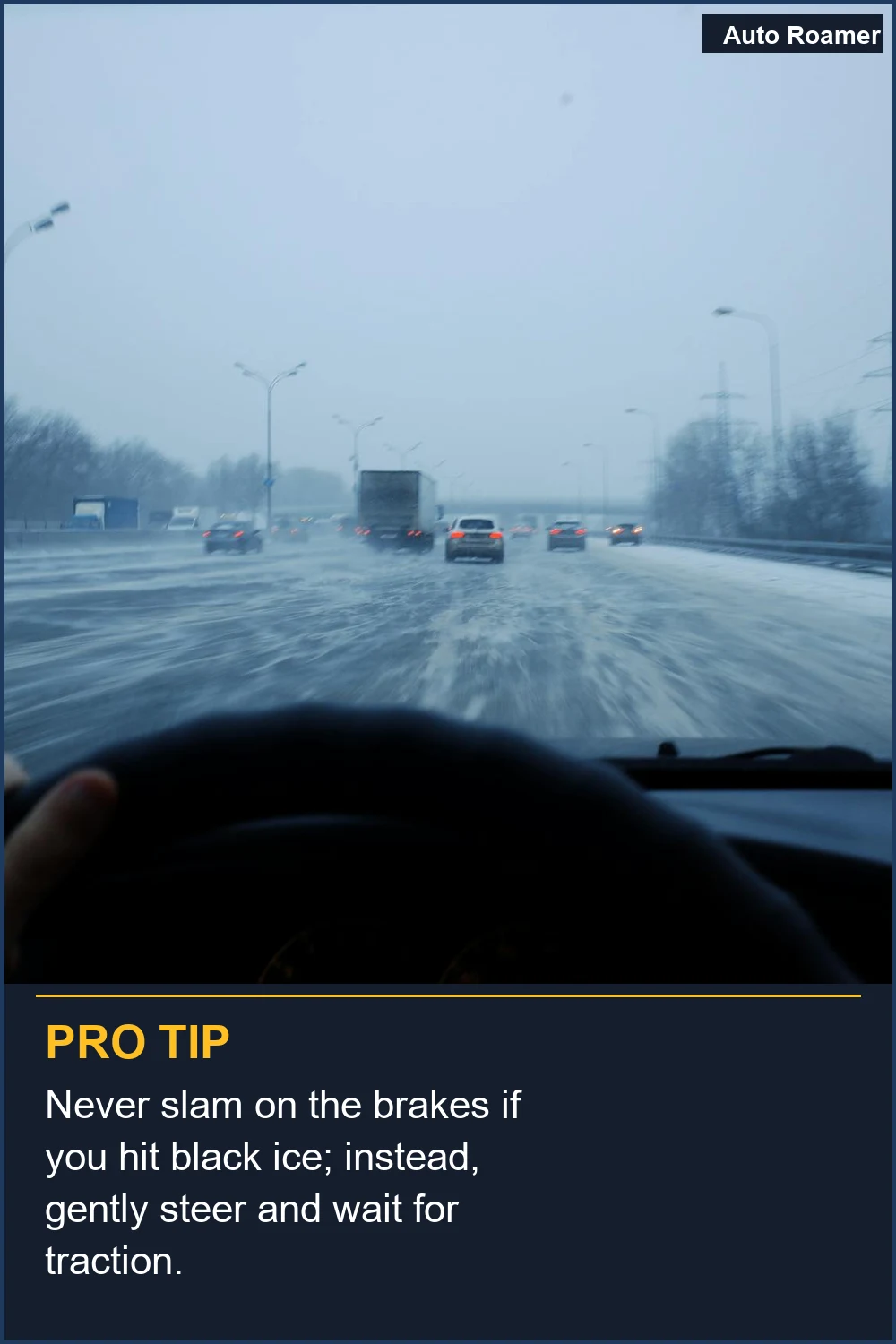
Never slam on the brakes if you hit black ice; instead, gently steer and wait for traction.
Driving on icy roads at twilight presents unique challenges. Learn what to do if you hit black ice to regain control. | Photo by Daniil Ustinov

What This Looks Like in Practice

  • Suburban Commute on a Freezing Morning in a Honda CR-V: Heading to work on a familiar suburban road, a slight downhill curve just after a bridge overpass, around 30°F. Suddenly, the steering felt light, the car drifted wide into the oncoming lane. The road looked wet. Braking hard only worsened the skid, and the rear end swung out. The CR-V's stability control kicked in; we counter-steered slightly and eased off the brakes, letting tires regain grip. What worked: not overreacting and letting the vehicle's systems help. What didn't work: the instinct to slam the brakes, a common mistake when hitting ice.
  • Interstate Travel in a Ford F-150 After Rain: Late afternoon, just after a cold rain, on I-70 near shaded overpasses. Cruising at 65 mph, we hit ice on an overpass. The truck felt like it was floating, rear wheels lost traction, causing a significant fishtail. We immediately lifted off the accelerator and kept the wheel straight, resisting overcorrection. The truck corrected as tires found pavement. What worked: maintaining a straight wheel and gentle deceleration, trusting the truck's weight to regain traction. What didn't work: the speed; a slight reduction would have provided more reaction time before hitting the ice.
  • Rural Road Descent in a Toyota Camry: Coming down a rural Vermont highway, temperatures near freezing. The road was clear, but a shaded section near woods was black ice. The Camry's nose dipped, steering became unresponsive. We gently eased off the gas and kept the wheel steady. The car slid sideways. We focused on looking where we wanted to go, not the ditch. What worked: smooth deceleration and aiming the car, allowing tires to find a slight edge of grip. What didn't work: not anticipating ice in shaded areas, a key black ice driving tip.
Once you've defogged your windshield, it's essential to know how to drive safely in low visibility, so consider our tips for driving in fog.
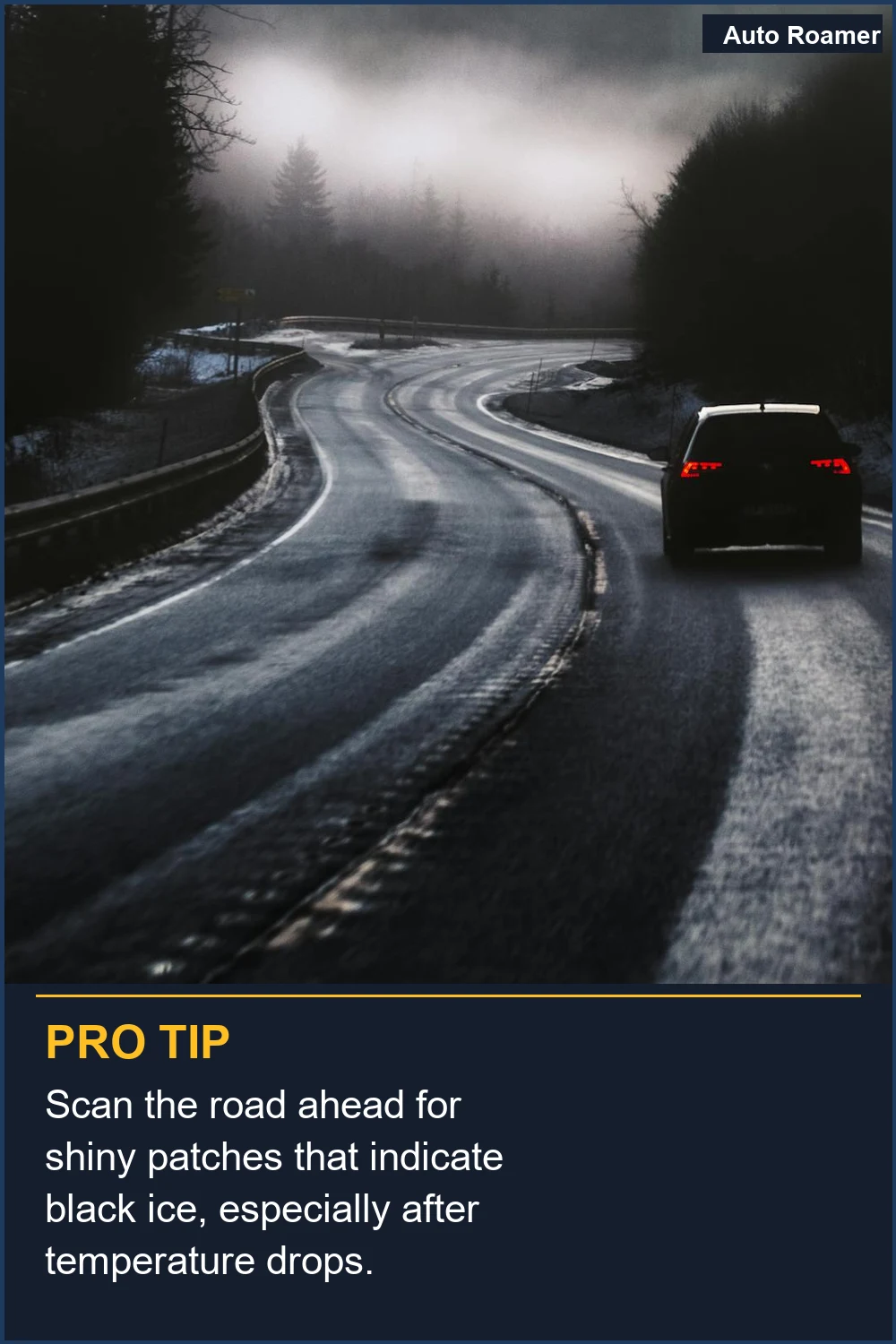
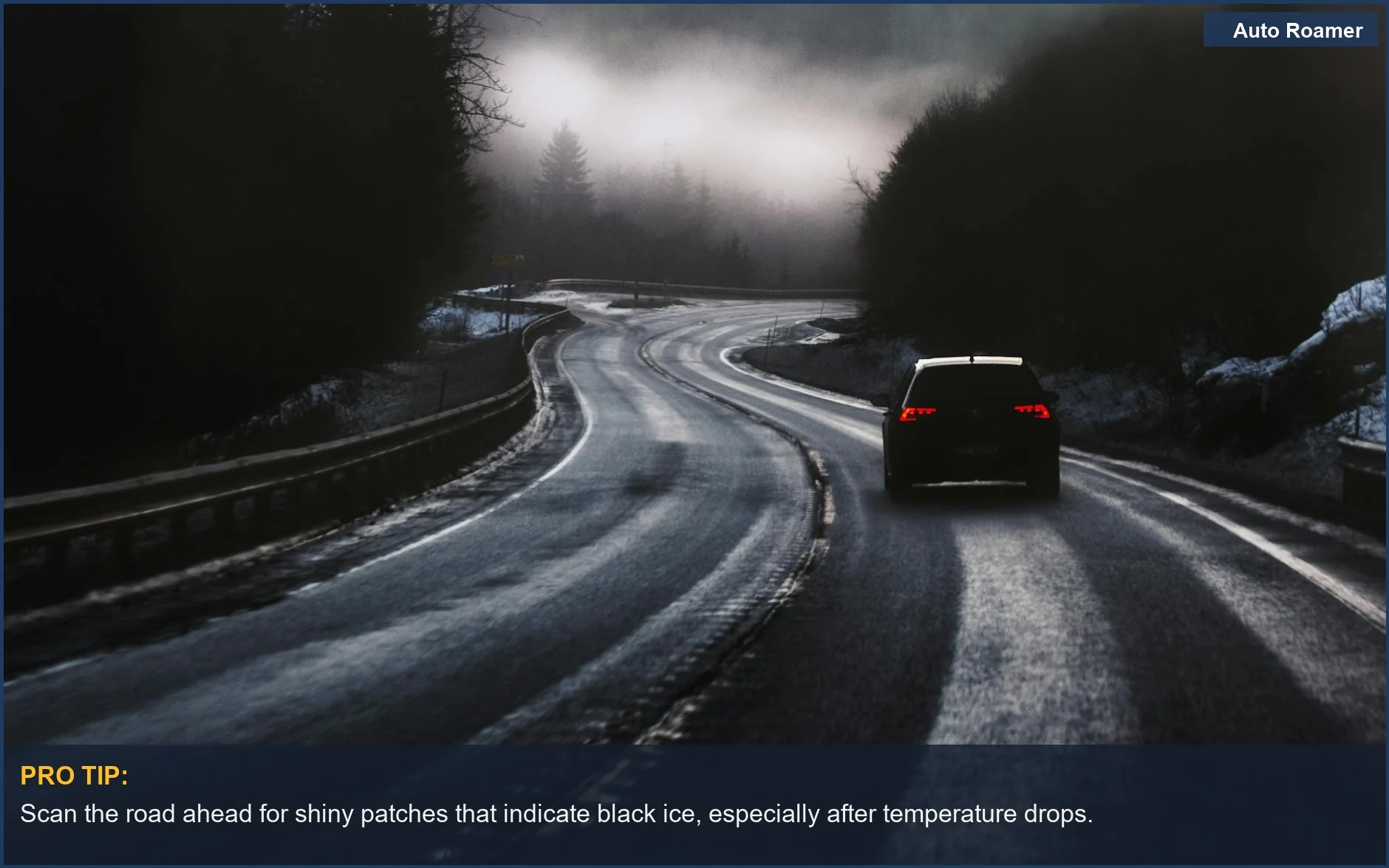
Scan the road ahead for shiny patches that indicate black ice, especially after temperature drops.
A dramatic winter drive on a foggy mountain road shows how to drive on black ice. Be aware of your surroundings and road conditions. | Photo by Marek Piwnicki

Mistakes That Cost People

Here are the common mistakes people make when driving on black ice, and what you should do instead:
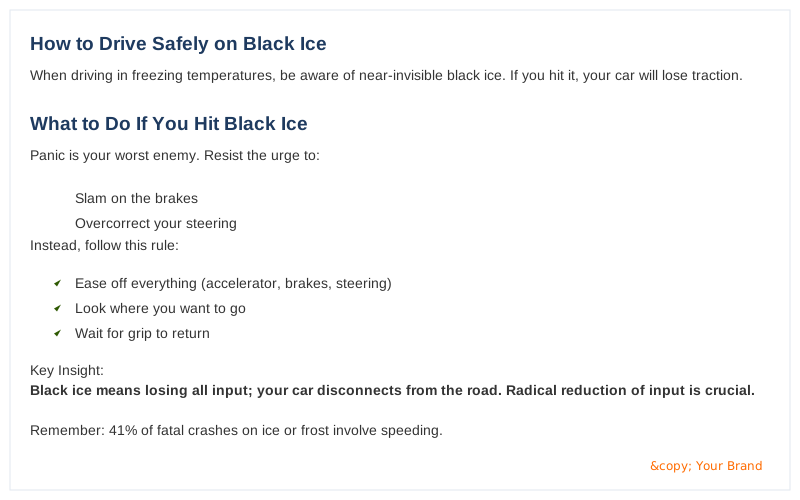
Mistake Slamming on the brakes
Why people make it Panic or a sudden need to stop
What actually happens Your tires lose all grip, causing a skid or spin that you can't control. This is a surefire way to lose control of your vehicle on ice.
The fix Ease off the accelerator completely and hold the steering wheel steady. If your car has ABS, apply steady, firm pressure to the brake pedal and let the system work. Don't pump the brakes. Source
Mistake Overcorrecting the steering
Why people make it Trying to force the car back into line too aggressively after a slide
What actually happens You can easily over-correct and initiate a skid in the opposite direction, leading to a dangerous fishtailing effect. It's a common trap when you start to slide. Source
The fix If you feel your car sliding, steer gently in the direction you want the car to go. Resist the urge to make sharp, sudden movements. Look where you want to end up, not at the obstacle.
Mistake Trusting All-Wheel Drive (AWD) too much
Why people make it Believing AWD means you have superior grip in all conditions
What actually happens AWD helps with acceleration and traction from a standstill, but it doesn't magically give you grip on ice when braking or turning. You can still slide and lose control just like any other drivetrain. Source
The fix Treat AWD vehicles with the same extreme caution on ice as any other car. Slow down well in advance, avoid sudden inputs, and remember that your tires are still the only thing connecting you to the road.
Mistake Assuming a "wet" road is just wet
Why people make it Black ice is nearly invisible, making roads appear merely wet, especially on dark asphalt.
What actually happens You maintain normal speed, only to find sudden, complete loss of traction when you hit the ice. This is a primary reason black ice is so dangerous; it deceives drivers into thinking they have grip. Source
The fix When temperatures are near freezing, especially on bridges, overpasses, or shaded areas, assume ice is present. Drive as if the road is slippery, even if it looks merely wet.
Mistake Relying solely on traction control in newer vehicles
Why people make it Modern vehicles have electronic stability control (ESC) and traction control, leading to a false sense of security.
What actually happens While helpful, these systems cannot create traction where none exists. On sheer ice, they can sometimes struggle to keep up with the rapid loss of grip, especially if you're making sudden inputs. Source
The fix Understand your vehicle's systems, but don't become complacent. ESC and traction control are aids, not replacements for slow, smooth driving and anticipating hazards. Always prioritize reducing speed and avoiding sudden maneuvers.
Mistake Gentle acceleration on ice
Why people make it Trying to regain momentum slowly after a slide.
What actually happens Even slight acceleration can cause your wheels to spin uselessly, leading to a loss of steering control and potentially a worse skid. Source
The fix If you've lost traction, do not touch the accelerator. Let the car coast and try to regain stability naturally. If you must accelerate, do so with the absolute lightest touch imaginable, and only when you feel some grip returning.
Just as navigating black ice requires caution, understanding visibility rules in fog is crucial for safe driving.
Infographic: Driving on black ice - pros, cons, and what to do.
Comparison overview for how to drive safely on black ice and what to do if you hit it

Key Takeaways

  • Ease off everything: If you hit black ice, gently lift your foot off the accelerator and avoid touching the brakes. Slamming on brakes or overcorrecting your steering will cause you to lose control. Let the car coast until tire grip returns.
  • Steer where you want to go: If your vehicle slides, look and steer in the direction you want the front of the car to go. Don't fight the slide by overcorrecting. Smooth, deliberate steering input is crucial for regaining control.
  • Anticipate and adapt: Black ice is hard to see, often appearing as wet pavement trafficsafetystore.com. Be extra vigilant on bridges, overpasses, and shaded areas when temperatures are near freezing How to Drive Safely on Black Ice? 2025 Essential Tips - Maana Law.
  • Slow and steady wins: Driving slowly and maintaining a larger following distance are your best defenses against black ice. Sudden movements are dangerous; smooth, gradual inputs maintain traction.

The single most important thing to remember when driving on black ice is to ease off everything and wait for grip to return. Resist the urge to brake or make sudden steering adjustments. Keeping your inputs smooth and gentle gives your tires the best chance to regain traction.

To ensure your wipers perform well in winter, consider these essential tips for winterizing your car.

Frequently Asked Questions

Can AWD or 4WD cars drive safely on black ice?
While AWD and 4WD can help you get moving on slippery surfaces, they don't magically give you more grip on black ice. We've learned firsthand that these systems can sometimes give a false sense of security. You still need to drive incredibly slowly and smoothly, as the wheels can still spin out if you're too aggressive with the throttle. Think of it as having a bit more traction to start, not a guarantee of control once you lose it.
Should you use cruise control when roads might have black ice?
Absolutely not. We learned this lesson the hard way on a particularly nasty stretch of I-80 in Wyoming. Cruise control tries to maintain a set speed, and on ice, that's the last thing you want. If your tires lose traction, the system can actually make it worse by trying to force the engine to power through the slip. Always keep your foot off cruise control in conditions where black ice is a possibility.
How can you tell if there is black ice on the road?
This is the tricky part, and honestly, you often can't see it until you're on it. The best approach is to assume black ice is present when temperatures are at or just below freezing, especially on bridges, overpasses, and shaded areas where ice forms faster Black Ice Explained. Look for pavement that appears wet on a cold day; that's usually your biggest clue. Also, watch for other drivers who might be suddenly slowing down or fishtailing.
Are winter tires effective on black ice?
Winter tires are a significant improvement over all-seasons for grip on ice, including black ice, but they're not invincible. We've tested various sets, and while they provide noticeably better traction, they won't let you drive at normal speeds. They have special rubber compounds and tread patterns designed for colder temperatures and icy conditions Reddit. Still, the key is to drive much slower and more cautiously, even with the best winter tires.
What time of day is black ice most common?
Black ice is most notorious in the early morning hours and overnight, especially when temperatures drop rapidly after sunset Black Ice Explained. This is when any residual moisture on the road has the best chance to freeze. We've also seen it form during a sudden temperature drop during the day. Always be extra vigilant when the temperature is hovering around 32°F (0°C).
What should I do if I hit black ice?
If you feel your car sliding on black ice, the absolute most important thing is to stay calm and avoid slamming on the brakes or gas pedal. Gently ease off the accelerator and steer smoothly in the direction you want the car to go Montana State University Extension. If your car has ABS, apply steady pressure to the brake pedal and let the system work. Overcorrecting is a common mistake that can lead to a spin.
What are the biggest dangers of black ice?
The primary danger of black ice is its invisibility; it looks like a wet road, making drivers underestimate the loss of traction Black Ice Explained. This deception can cause instant loss of control, leading to skids and accidents. According to the FHWA, 24% of weather-related crashes happen on icy pavement, and speeding is a significant factor FHWA Road Weather Management.
Are there specific places where black ice forms more often?
Yes, absolutely. Bridges and overpasses are notorious because they freeze faster than the surrounding road, as cold air circulates above and below them Maana Law. Shaded areas, like those under trees or near buildings, also tend to hold ice longer. Curves and hills are also tricky spots where traction can change unexpectedly.
How much slower should I drive if I suspect black ice?
We generally recommend cutting your speed by at least half, and often more, depending on the conditions. If the speed limit is 55 mph, you might be looking at 25-30 mph or even slower if you're on an exposed bridge. The goal is to give your tires enough time to find whatever grip is available Facebook. Smooth, deliberate movements are crucial; no sudden steering, braking, or acceleration.

Sources

Related Articles