
Honda Element Camping: Complete Guide to the Ultimate Car Camping Vehicle
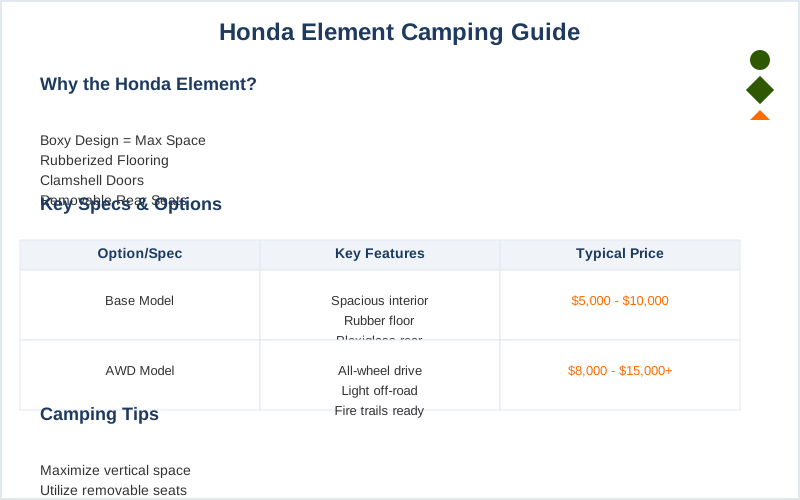
The Honda Element, despite being off the production line since 2011, still commands attention. You'll find beat-up examples going for $5,000 and pristine ones hitting $15,000+ on the used market. This isn't just nostalgia; it's a testament to a specific design philosophy that prioritizes utility over aesthetics.
The Honda Element, despite being off the production line since 2011, still commands attention. You'll find beat-up examples going for $5,000 and pristine ones hitting $15,000+ on the used market. This isn't just nostalgia; it's a testament to a specific design philosophy that prioritizes utility over aesthetics.
Honda built this thing for active lifestyles, not Instagram.Auto Roamer notes it was designed with features like a rubberized floor that could be hosed out, which is a detail that speaks volumes about its intended use.
Most modern SUVs are just bloated sedans with elevated seating. The Element, however, is a box on wheels. This isn't an accident; it's an engineering choice that maximizes internal volume.
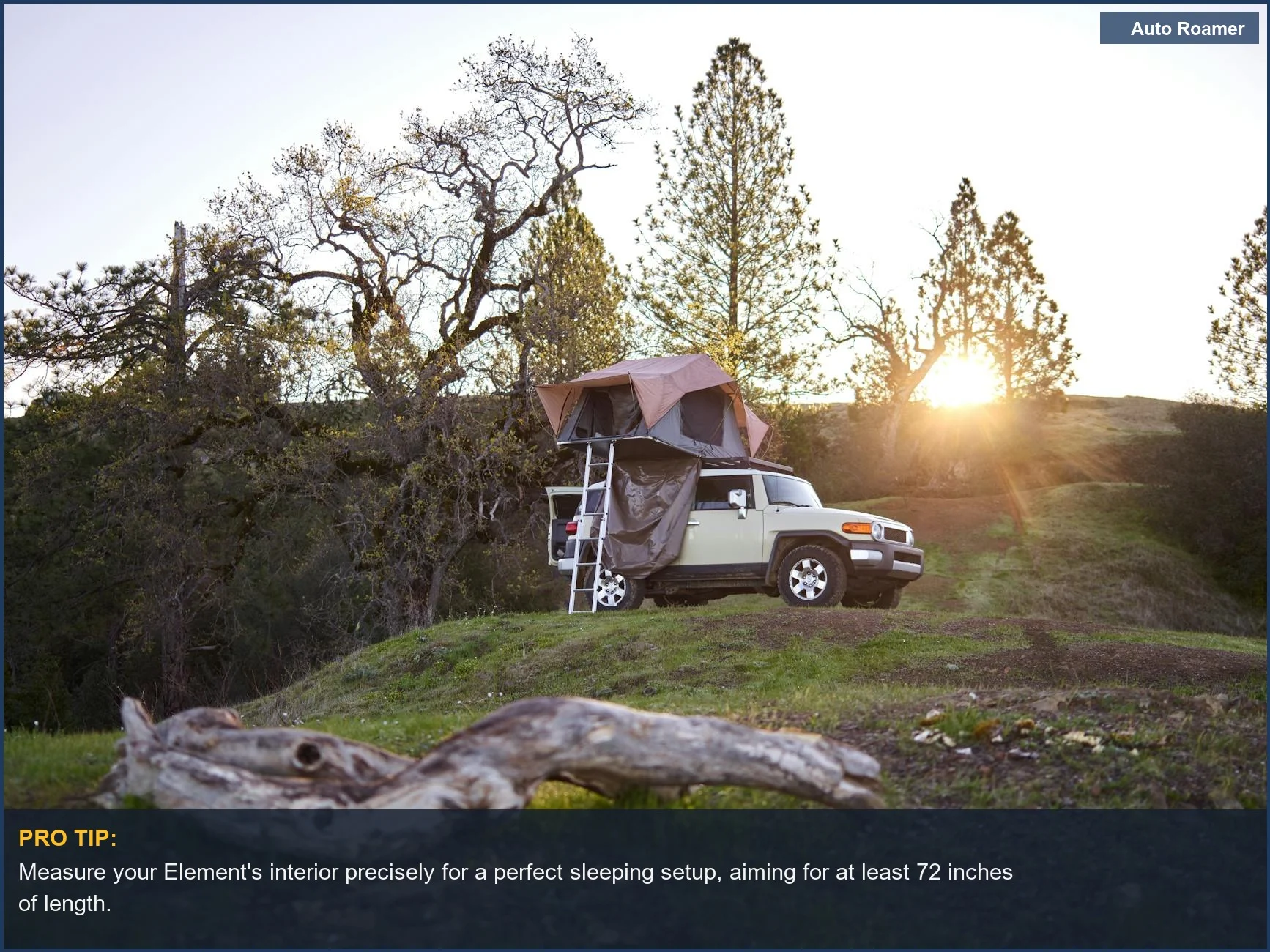
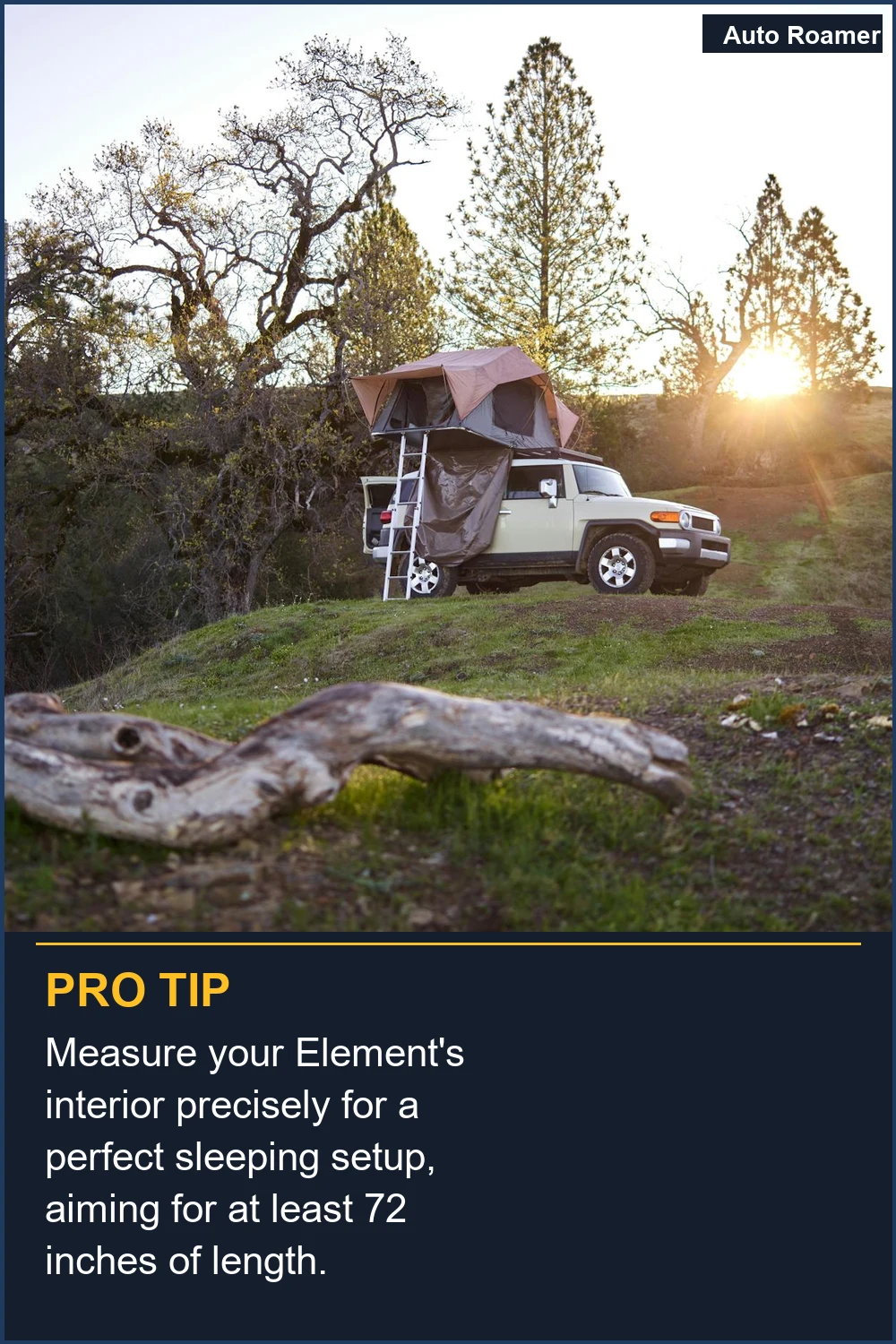
You get vertical walls, not tapered rooflines that eat into your headroom and cargo space. This matters when you're trying to stretch out a 72-inch sleeping pad.
Forget the 'experience' of driving. The Element offers a utilitarian platform. It's got a K24 motor, which is a known quantity for reliability, even if it's not setting any land speed records.
The optional AWD system isn't for rock crawling, but it'll get you down a muddy fire trail without needing a recovery vehicle - a Reddit thread confirms its suitability for light off-road use. This vehicle was built for function, not for impressing your neighbors.
The clamshell doors? Brilliant. They open wide, creating a massive aperture for loading gear or just enjoying an open-air camp setup.
It's a design that minimizes mechanical stress on the door hinges by distributing the load differently than a single, heavier door. And those rear seats that fold flat or can be removed entirely? That's not just a convenience; it's a structural decision that allows for maximum cargo flexibility, a feature this guide highlights as a key advantage. It saves you the cost and hassle of building a complex platform.
This guide dives into how to turn this utilitarian box into a functional camping rig.
Honda Element Camping: Complete Guide to the Ultimate Dimensions and Cargo Space
You want to camp in a Honda Element? First, get your tape measure. This isn't some vague 'roomy interior' claim; we're talking specific dimensions that make or break a sleeping setup. The Element's interior is a near-perfect rectangle for its class, which is a physics win for usable volume. Forget aerodynamically sculpted roofs that reduce interior height. The Element is a brick, and that's its strength.With the rear seats removed - and they come out with two bolts and a bit of muscle, a 10-minute job - you're looking at a flat load floor. The floor is constructed from hard plastic and rubberized material, which means spilled coffee or muddy boots won't penetrate and cause sub-floor corrosion or mold. This guide emphasizes the durability and practicality of these materials.
For sleeping, you get approximately 78 inches (6 feet 6 inches) of length from the rear hatch to the front seats, assuming those front seats are pushed forward. Width is around 52 inches at the widest point, tapering slightly to about 46 inches near the wheel wells. That's enough for two average-sized adults, if you don't mind getting cozy. Headroom is a generous 47 inches, as noted by Auto Roamer, which means you can sit up without hitting your head, a rare luxury in car camping.
Cargo volume with the rear seats out is a massive 74.6 cubic feet. That's more than some full-size SUVs. Those clamshell doors aren't just for show; they create an opening 40 inches wide and 45 inches high, making loading oversized gear simple. This minimizes shear stress on your back when loading heavy coolers. The SUV RVing channel showcases how this space can be utilized for a micro camper conversion. It's a pragmatic design for hauling gear, not just people.
Best Sleeping Setups for the Honda Element Camping: Complete Guide to the Ultimate
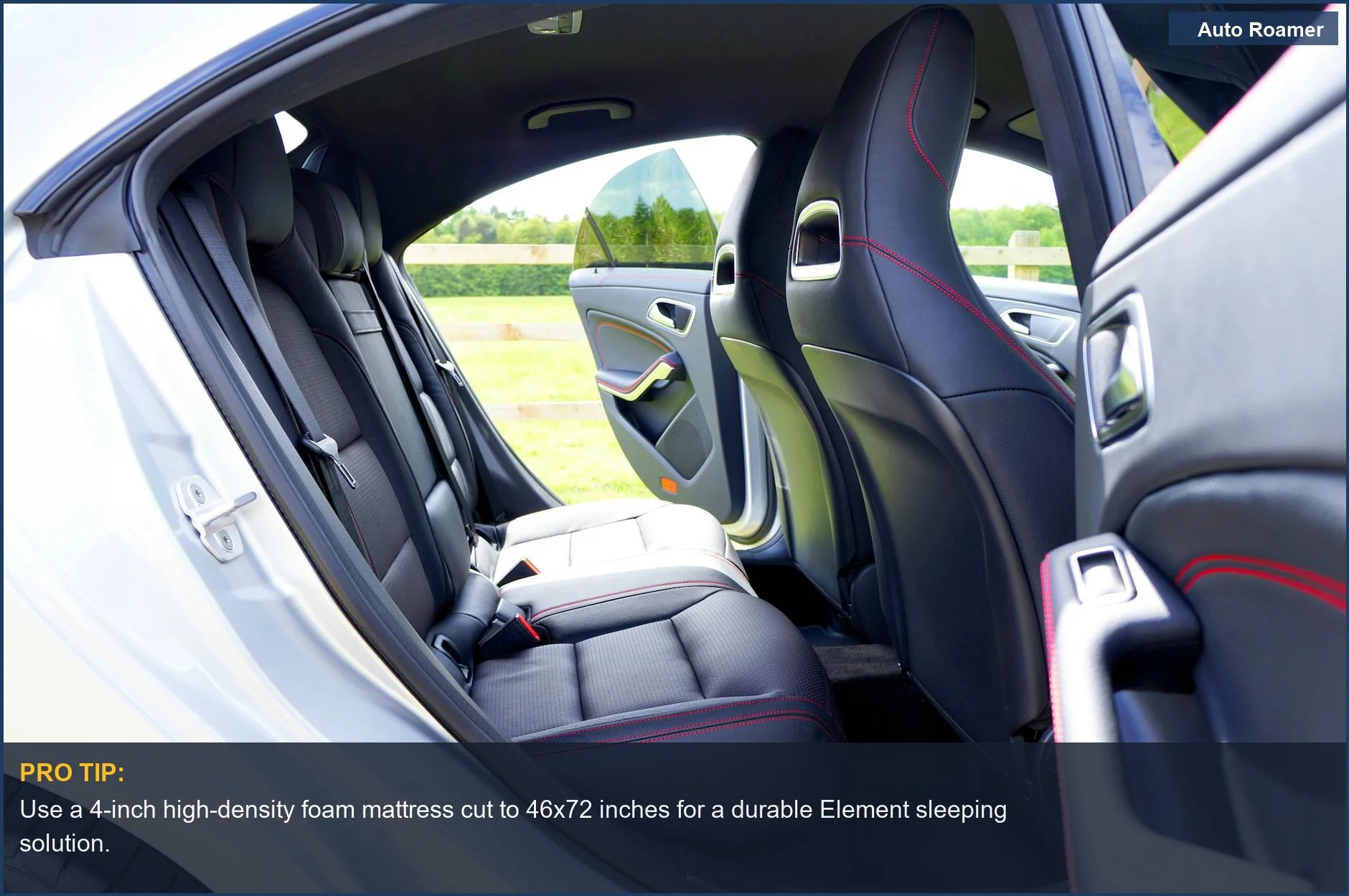
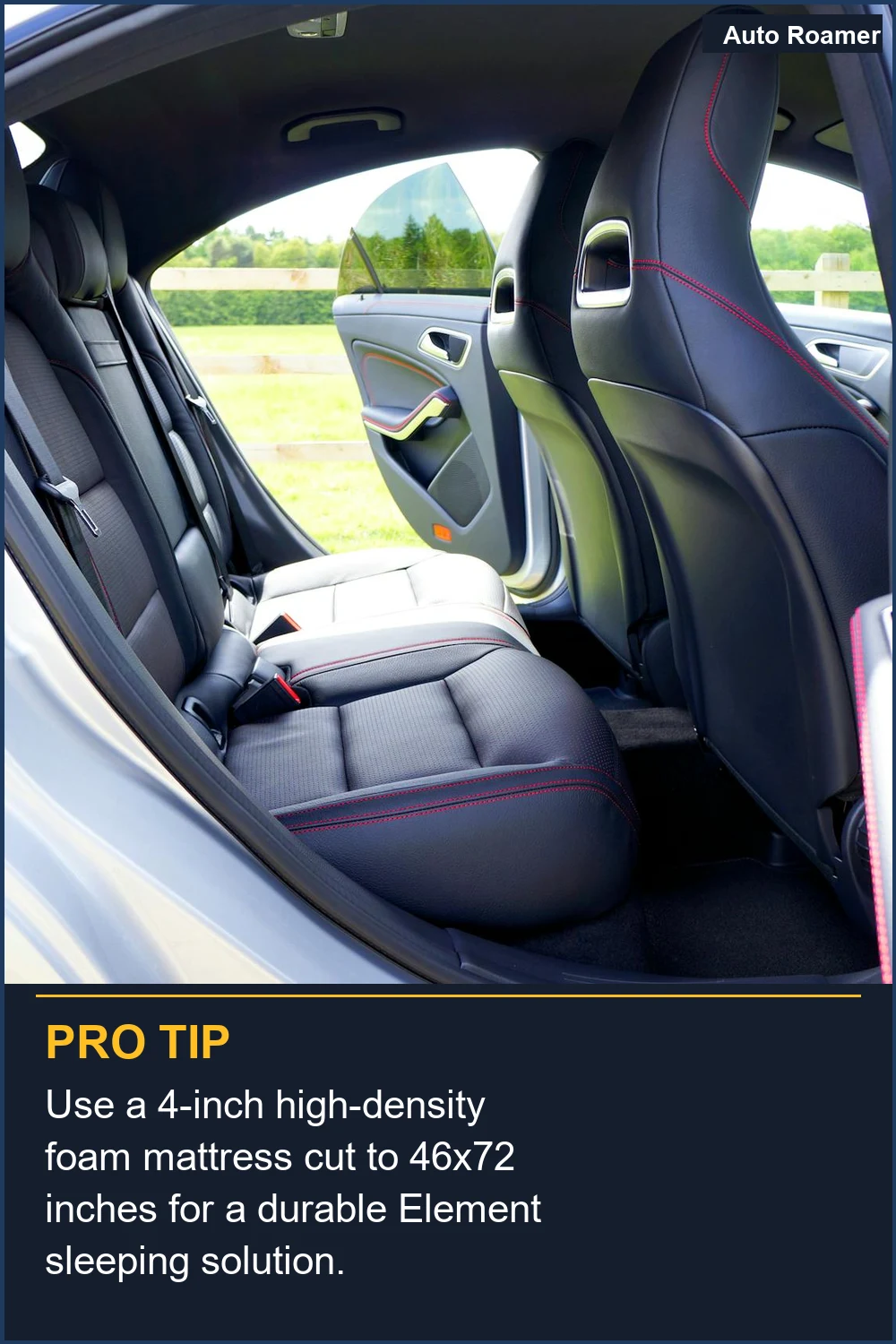
Forget those flimsy air mattresses that leak after three nights. You need something robust for the Element's flat floor. The simplest setup is a foam mattress. Cut a 46-inch by 72-inch piece of 4-inch high-density foam (~$80) and throw it in. It's not glamorous, but it works. No air pumps, no punctures, just consistent support. This is the zero-failure-mode option.For a more comfortable, albeit more expensive, solution, consider a self-inflating pad. The REI Co-op Camp Bed 3.5 Self-Inflating Sleeping Pad (~$150) at 3.5 inches thick offers a good balance of comfort and insulation. It packs down smaller than foam, which is a plus for gear storage during the day. Just remember that self-inflating pads rely on foam expansion; cold temperatures reduce that expansion rate, so you might need to add a few breaths.
If you want to go full air mattress, look for one designed for SUVs. The Luno Air Mattress 2.0 (~$350) is custom-fit for many SUVs, including the Element, filling the gaps around the wheel wells. It's an over-engineered solution for a perfectly flat surface. The downside? Air mattresses are susceptible to temperature changes, losing PSI as ambient temperature drops, requiring re-inflation. Plus, a puncture means you're sleeping on the floor.
The rear seats can be folded flat and even used as a makeshift bed, but the contours aren't ideal for long-term comfort. Element owners on Facebook often discuss removing the seats entirely for maximum flat space. This eliminates potential pressure points and gives you a continuous, uninterrupted sleeping area.
Some Element owners build simple wooden platforms, raising the sleeping surface by 12-18 inches. This creates storage underneath, a clever use of vertical space. A basic 2x4 and plywood platform can be built for under $100. Just make sure your lumber is kiln-dried to prevent outgassing of volatile organic compounds inside a sealed vehicle. A Facebook group post highlights flexible storage systems and living quarters created for these vehicles.
Practical Tips for Honda Element Camping: Complete Guide to the Ultimate Camping
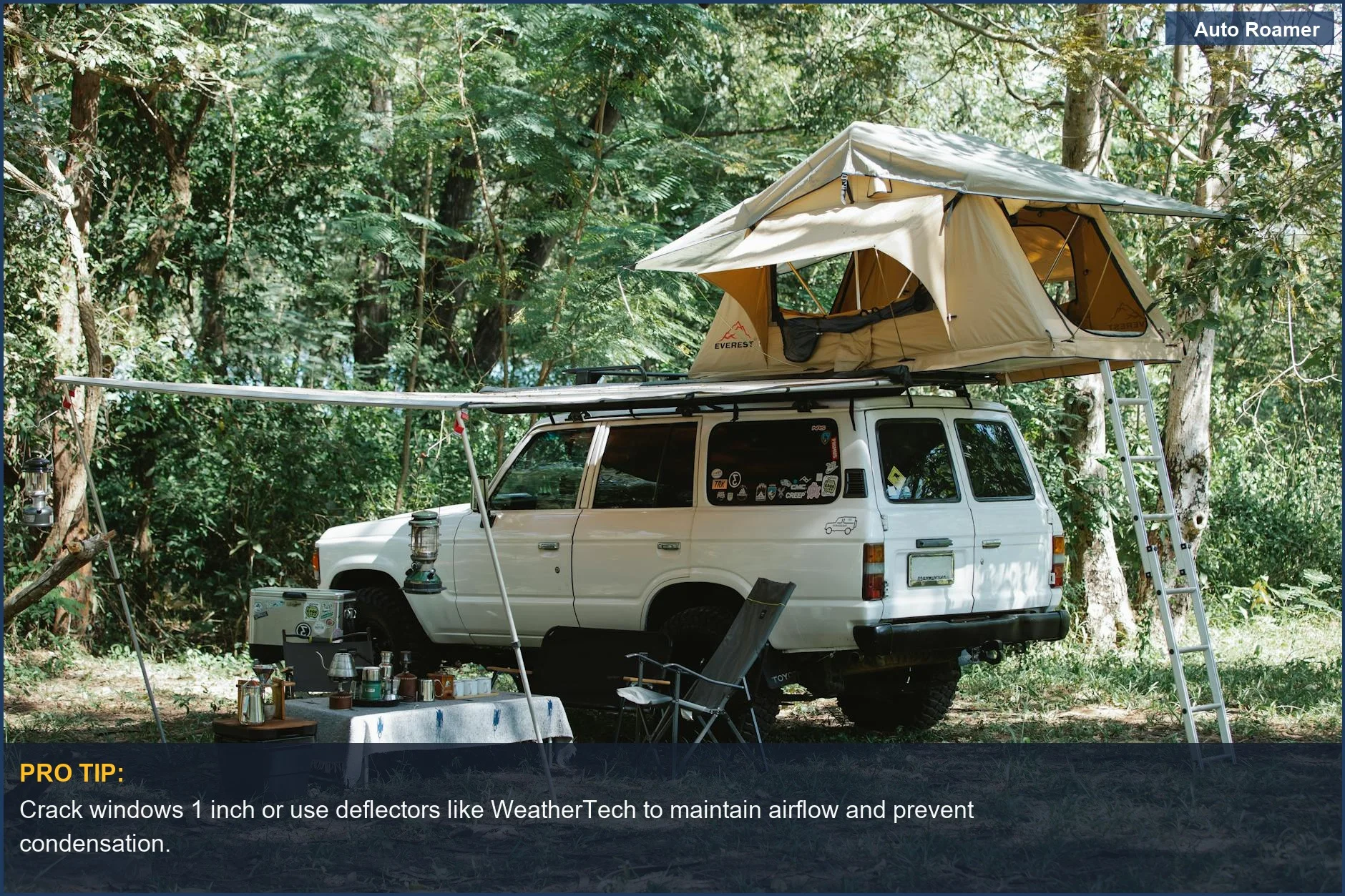
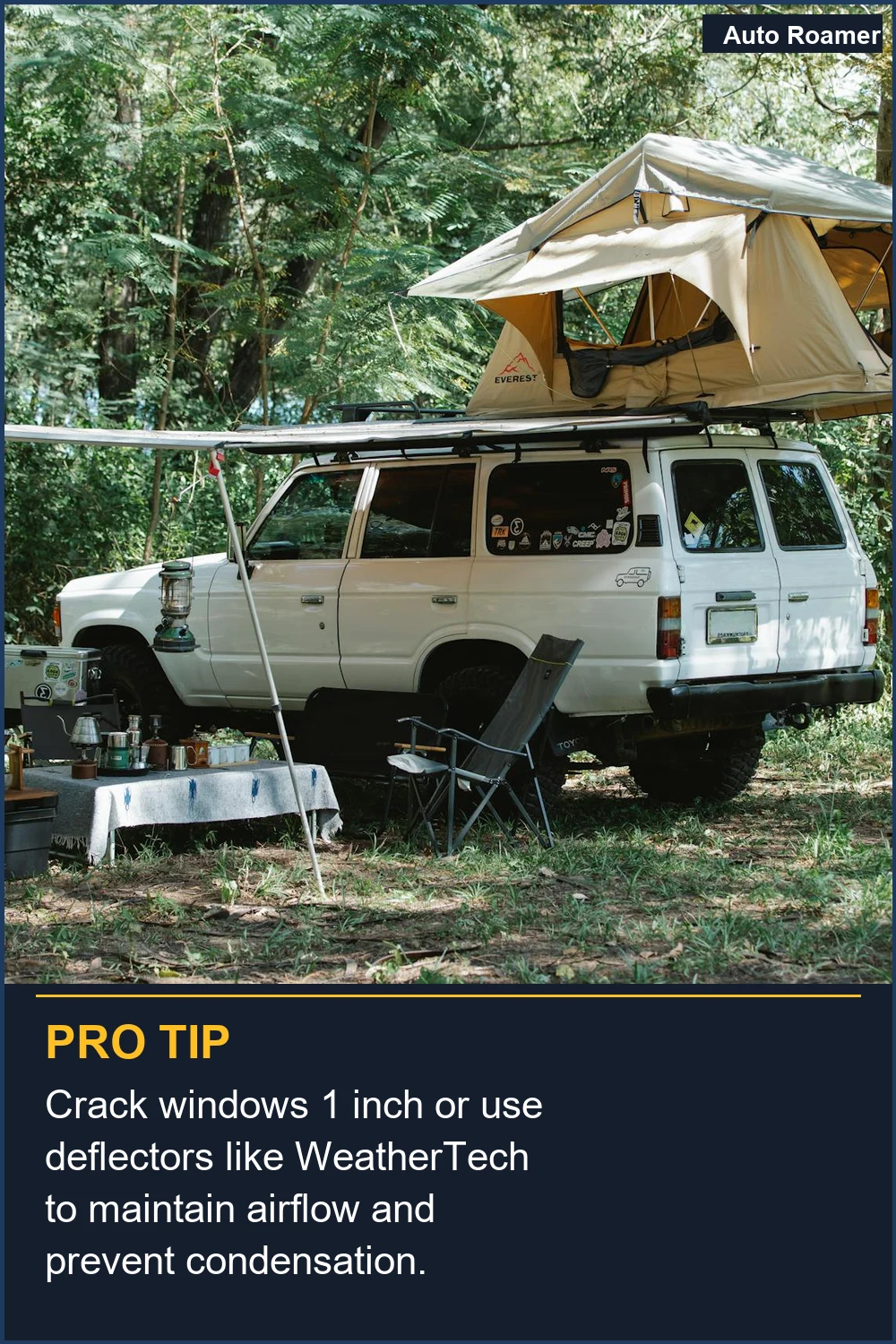
Ventilation is critical in a sealed box like the Element. You're exhaling moisture, which condenses on cold surfaces, leading to mold and that lovely damp-dog smell. Crack your windows 1 inch, even in the rain, or install window vents. The WeatherTech Side Window Deflectors (~$100) are a simple, no-drill solution that allows airflow while deflecting precipitation. This prevents relative humidity from hitting 100% and causing condensation.For power, don't rely on your starter battery. You'll drain it dead in hours running a fan or charging devices. A portable power station is a must. The Jackery Explorer 300 (~$250) provides 300Wh of power, enough to run a small fan and charge phones for a weekend. It recharges via a 12V cigarette lighter while driving, or from a solar panel. This isolates your camping power from your vehicle's critical starting circuit.
Window coverings are essential for privacy and insulation. Reflectix cut to size and held with velcro dots works, but it looks like you're living in a tinfoil box. Magnetic window covers, like those from Luno, offer a better aesthetic and easier deployment. They attach directly to the metal frame around the window, providing a tight seal that reduces thermal transfer. This is basic thermal dynamics: reduce convection and radiation.
Cooking inside the Element is a bad idea due to carbon monoxide and condensation. Use a portable stove outside. The Coleman Butane Stove (~$30) is compact and efficient. Just ensure you have solid footing; a stove tipping over in the Element would cause a thermal event you don't want to deal with. TikTok creators share tips for outdoor adventures, often emphasizing external cooking setups.
Storage is always a challenge. Those cargo nets designed for SUVs are mostly for show. Use hard-sided bins that stack. They prevent gear from shifting during transit, which can cause mechanical damage to interior panels or your expensive electronics. Secure them with cam straps to the existing cargo tie-downs. A Facebook post highlights the utility of the Element for car camping, often implying clever storage is key.
The Bottom Line
The Honda Element wasn't designed as a luxury vehicle; it was designed as a tool. Its boxy form factor, durable interior materials, and flexible seating were all engineered for utility. That's why it's still a top contender for car camping, years after its production ceased. This YouTube video even calls it the ultimate camping vehicle.You're not paying for fancy infotainment systems or plush leather. You're paying for a platform that minimizes modification costs and maximizes usable space. A good used Element might set you back $8,000, but the money you save on complex camper conversions can be put towards quality gear like a proper power station or a decent cooler. It's an investment in functionality, not flash.
The Element's design reduces the points of failure common in other vehicles when converted for camping. The flat floor means less custom carpentry. The water-resistant interior means less worry about mold and corrosion. It's a pragmatic choice for anyone who prioritizes mechanical integrity and functional design over superficial 'features.'
Frequently Asked Questions
My Element's rear hatch struts are weak. Can I just buy cheap ones online, or does the dealer have a better fix?
Do I really need a multimeter to check for parasitic draws in my camping setup? Can't I just guess?
What if my Element's AC still smells like wet socks after I spray Lysol into the fresh air intake?
Can extended car camping permanently damage my Element's suspension or tires?
Someone told me the Element's rubber floor makes it rust faster. Is that true?
🏅 Looking for Gear Recommendations?
Check out our tested gear guides for products that work with this setup:
Sources
- Honda element for car camping - Facebook
- the-ultimate-guide-to-car-camping?srsltid=AfmBOoqdGD_SJJXVUAuH3eTzwmnibB16d5UbojhhEzB1T3WFZWaEk1EF
- Are Honda elements worth it? : r/carcamping - Reddit
- 1 of the best car camp platforms!! Honda Element - Facebook
- Is This Honda the Ultimate Camping Vehicle - YouTube
- Exploring the Honda Element Car Camper Experience - TikTok
- Honda Element Camping: Complete Guide to the Ultimate Car ...
- My First Night in the Honda Element Camper… Here's ... - YouTube
- Honda Element Car Camping: The Ultimate Guide
- What are some essentials and modifications for car camping?