None
Introduction: Electric Truck Camping Advantages and Considerations
The Ford F-150 Lightning represents a fundamental shift in truck camping capability—a fully electric pickup combining substantial towing capacity with revolutionary integrated power system. Unlike conventional gasoline trucks relying on engine output for power and range, the Lightning's 131 kWh battery pack enables weeks of camping with integrated charging solutions and vehicle-to-load (V2L) power capability. This engineering transformation redefines truck camping from purely mechanical consideration to electrical resource management focused on charging infrastructure and power optimization. What distinguishes the Lightning for camping is dual innovation: first, the massive battery capacity enabling vehicle-to-home (V2H) and vehicle-to-load (V2L) power output to camping equipment, and second, the integrated SuperCruiser Camp feature enabling full living quarters activation with climate control and creature comforts from battery power. The Lightning's 52-54 inch bed width accommodates diverse sleeping configurations while the extended battery provides reliable power throughout trips without requiring generator operation. However, Lightning camping requires different planning philosophy than gasoline trucks. Charging infrastructure availability becomes paramount—location scouting must consider nearby Level 2 or DC fast charging rather than simply fuel availability. Range planning becomes critical since available charging dictates multi-day trip feasibility. Battery degradation in cold weather requires temperature management strategy. The dramatic shift from conventional truck camping demands understanding electrical concepts and charging logistics most truck campers haven't previously considered. This comprehensive guide addresses everything required for successful Lightning camping: practical range planning accounting for weather and driving patterns, charging infrastructure navigation and strategic location selection, vehicle-to-load (V2L) power utilization for camping equipment, battery management across seasons and trip lengths, sleeping configurations optimized for truck bed comfort, and practical strategies leveraging the Lightning's unique combination of electric capability and power provision. Whether planning weekend trips with convenient charging or week-long adventures requiring strategic location selection, the Lightning's combination of capability, power output, and innovative engineering makes it ideal platform for future-focused campers.What You'll Learn
What You'll Learn
Ford Lightning Sleeping Dimensions and Bed Configurations
The F-150 Lightning's truck bed design enables sleeping platform creation superior to traditional truck camping approaches. Understanding bed dimensions and integrated SuperCruiser Camp feature enables optimal sleeping configuration. The bed's integrated electrical system transforms sleeping comfort and power availability for camping applications.
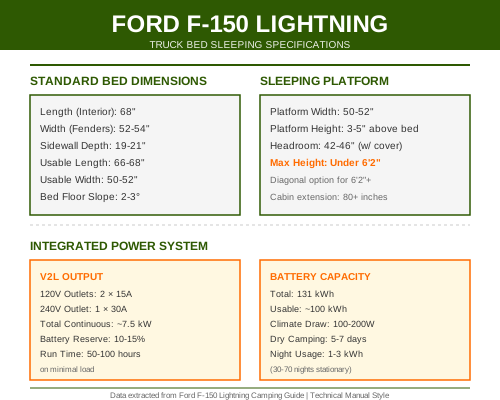
Length: 68 inches (interior)
Width: 52-54 inches (between fenders)
Height: 19-21 inches (sidewall depth)
Usable length: 66-68 inches
Usable width: 50-52 inches
Bed floor slope: Approximately 2-3 degrees
Built-in power outlets: 110V, 240V options
Integrated lighting: LED bed lighting
The standard Lightning bed accommodates sleeping platform creation with integrated power features unavailable in previous generations. The 52-54 inch width matches traditional truck bed sleeping dimensions while the 68-inch length constrains taller sleepers similar to full-size truck camping.
SuperCruiser Camp feature:
Integrated climate control extending to bed area
Power distribution system controlling outlets
Interior cameras for security
Integrated LED lighting
Automatic vents for temperature management
Powered tonneau cover (optional)
Estimated power consumption: 100-200W continuously
The SuperCruiser Camp feature activates integrated systems enabling cabin comfort while sleeping in truck bed. Climate control maintains temperature throughout sleeping period. LED lighting eliminates need for external lights. Integrated power eliminates generator requirements for most applications.
Bed length: 68 inches
Platform width: 50-52 inches
Mattress options: Twin or full-width truck bed mattress
Platform height: 3-5 inches above bed floor
Headroom: 42-46 inches (with tonneau or topper)
Sleeping comfort by height:
| Height | Comfort | Notes |
|--------|---------|-------|
| Under 5'6" | Excellent | Straight sleeping accommodated |
| 5'6" - 5'10" | Very Good | Comfortable without diagonal |
| 5'10" - 6'2" | Manageable | Slight head/foot positioning |
| Over 6'2" | Challenging | Diagonal positioning required |
Extended sleeping with cabin access:
Extend sleeping area into cabin (requires rear window operation)
Creates 80+ inch sleeping length
Accommodates very tall sleepers
Reduces privacy and cabin climate control effectiveness
Output: 2 × 120V / 15A (standard outlets)
Output: 1 × 240V / 30A (Level 2 charger connection)
Total available: Approximately 7.5 kW continuous
Battery reserve: Typically 10-15% remaining for vehicle operation
Estimated run time: 50-100 hours depending on load
OnBoard power features:
Integrated 110V outlets (bed mounted)
240V outlet (requires connection)
Power management system prioritizing vehicle operation
Automatic load shedding if battery drops below 15%
Estimated continuous draw (climate only): 0.5-2 kW
Battery capacity impact on camping:
131 kWh total capacity
Approximately 100 kWh usable (accounting for reserves)
Climate control: 100-200W continuous
LED lighting: 20-50W
Electronics: 100-200W
Estimated 5-7 day dry camping feasible with minimal load
Standard Lightning Bed Dimensions
Standard bed (5'8" bed):Sleeping Configuration Dimensions
Standard sleeping platform:Integrated Power System Overview
Vehicle-to-Load (V2L) specifications:EV Charging Infrastructure and Trip Planning
The Lightning's revolutionary capability as practical EV depends entirely on understanding and navigating charging infrastructure. Unlike gasoline vehicles requiring only fuel stops, the Lightning camping strategy must account for charging time, availability, and location planning. Successful Lightning camping involves strategic destination selection around reliable charging availability.
Typical output: 50-150 kW
Estimated time: 10% to 80% = 35-45 minutes
Average speed: Approximately 20 miles per 10 minutes (50 kW output)
Cost: Typically $15-30 per session
Availability: Limited, primarily highway corridors
Best for: Long-distance travel, quick turnarounds
Level 2 Charging (240V):
Typical output: 7-11 kW (7 kW most common)
Estimated time: Empty to full = 12-15 hours
Estimated time: 20-80% = 6-8 hours
Cost: $1-3 per session or hourly rates
Availability: Common at campgrounds, RV parks, public chargers
Best for: Overnight charging, stationary camping
Household 120V Charging (Level 1):
Output: 1.4 kW (standard outlet)
Estimated time: Empty to full = 40+ hours
Typical gain: Approximately 2-3 miles per hour
Cost: Minimal (home electricity)
Availability: Standard household outlet anywhere
Best for: Emergency situations, minimal power need
Typical consumption: 0.3-0.5 kWh per mile driven
200-mile trip consumes 60-100 kWh
Battery reserve: 30-50 kWh remaining
Charging strategy: Overnight Level 2 charge sufficient (6-8 hours)
Optimal: Campground with Level 2 charger at destination
Alternative: Day trip with charging at destination
Week-long trip (5-7 days):
Requires 400-600 miles range capability
Necessitates strategic charging points
Multi-day stationary camping: Rely on Level 2 charging
Daily driving: Plan routes through Level 2 charger availability
Backup DC fast charging: Research locations along route
Optimal strategy: 2-3 day stationary trips with charging
Extended expeditions (2+ weeks):
Practical only with reliable Level 2 charging availability
Consider alternating driving days with stationary camping
Research charging infrastructure comprehensively
Campgrounds with 240V connections essential
Extended trips better suited to RV parks than backcountry camping
Plan routes through developed areas with charging access
PlugShare app (most comprehensive US coverage)
ChargePoint network (extensive availability)
Electrify America (highway corridors)
EVgo (growing coverage)
ChargeEVs (Tesla Superchargers via Tesla app)
Built-in Ford Ford+ app (integrated navigation)
Evaluating charger reliability:
Check recent user reviews before arrival
Confirm working status via app
Identify backup chargers within range
Note operating hours (some close overnight)
Verify connector compatibility (Lightning uses CCS standard)
Strategic campground selection:
Prioritize campgrounds with 240V Level 2 chargers
Contact facilities confirming charger availability and functionality
RV parks increasingly offer charging (typically $5-15 per session)
Some state parks and National Forests installing chargers
Hybrid strategy: Mix developed campgrounds (with charging) and dispersed camping
Range planning calculations:
EPA rating: Approximately 240-260 miles (depending on model/conditions)
Real-world range: Typically 70-80% of EPA rating
Actual range: 170-210 miles depending on driving patterns
Weather impact: Winter reduces range 20-30%
Driving patterns: Highway vs. city affects efficiency dramatically
Conservative planning: Assume 150-180 miles practical range
Trip planning workflow:
1. Identify destination and driving distance
2. Search charging infrastructure between start and destination
3. Identify charging points every 150-180 miles
4. Confirm charger availability and status via reviews
5. Identify backup chargers within range
6. Plan charging stops as part of trip schedule
7. Account for driving style efficiency impacts
Charging Speed Comparison and Time Planning
DC Fast Charging (Level 3):Planning Multi-Day Camping Trips
Weekend trip (2-3 days):Charging Infrastructure Navigation
Finding available chargers:Vehicle-to-Load (V2L) Power and Equipment Integration
The Lightning's revolutionary vehicle-to-load (V2L) capability enables camping equipment operation directly from truck battery power without external generator requirement. The integrated 110V and 240V outlets provide approximately 7.5 kW continuous power sufficient for most camping applications. Understanding V2L power management and equipment compatibility transforms Lightning camping from traditional truck camping to powered camping experience.
120V outlets: 2 units × 15A each (1.8 kW combined)
240V outlet: 1 unit × 30A (7.2 kW capability)
Total simultaneous: Approximately 7.5 kW continuous
Reserve operation: Vehicle maintains 15%+ battery for operation
Automatic shutoff: System disables if battery drops below safety threshold
Typical duty cycle: 50-100 hours available from full charge
Power availability by battery remaining:
| Battery % | Usable Power | Estimated Hours |
|-----------|--------------|------------------|
| 100% | Full (7.5 kW) | 0 (vehicle reserve) |
| 80% | Full (7.5 kW) | 10-15 hours |
| 60% | Full (7.5 kW) | 25-30 hours |
| 40% | Reduced | 40-50 hours |
| 20% | Very Limited | 50-70 hours |
| Below 15% | Disabled | 0 (safety reserve) |
Important considerations:
Actual available power depends on vehicle status (climate running, battery temperature)
Cold weather reduces available capacity and charging efficiency
Vehicle requires operational reserve for climate and safety systems
Power management system automatically prioritizes vehicle needs
Extended camping uses battery efficiency rather than continuous high draw
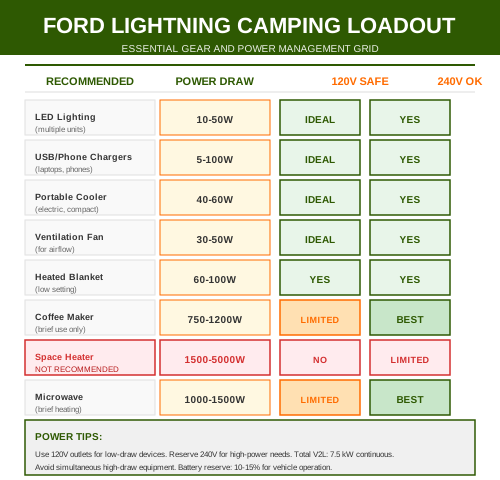
Coffee maker: 750-1200W (safe, brief operation)
Laptop charger: 50-100W (continuous, no issue)
Phone chargers: 5-20W (continuous, no issue)
LED lighting: 10-50W (continuous, ideal)
USB chargers: 5-30W (continuous, no issue)
Electric cooler: 40-60W (continuous operation feasible)
Small fan: 30-50W (continuous operation feasible)
LED lantern: 10-20W (continuous, ideal)
Heated blanket: 60-100W (safe, lower temp setting)
Portable heater: 500-1500W (NOT recommended - excessive draw)
240V higher-power equipment:
Level 2 vehicle charging input: 7.2 kW max
Space heater: 1500-5000W (requires careful power management)
Electric kettle: 1500-3000W (acceptable brief use)
Microwave: 1000-1500W (acceptable brief use)
Toaster: 1500-2000W (acceptable brief use)
Hair dryer: 1500-2000W (NOT recommended - excessive draw)
Recommended camping equipment for V2L operation:
LED lighting exclusively (10-50W each, multiple acceptable)
Laptop/work equipment (50-100W)
Mobile device charging (5-30W)
Portable cooler (40-60W)
Portable power station: Dual purpose charging and distribution
Small fan for ventilation (30-50W)
Heated blanket (60-100W, lower setting)
Optimize for efficiency over raw power
Use multiple low-power devices vs. single high-power equipment
LED lighting instead of standard bulbs
Passive cooling via ventilation vs. active AC
Separate charging of high-power devices
Designate brief-use items for high-power consumption
Load balancing:
Distribute power consumption across multiple outlets when possible
Avoid simultaneous high-draw equipment (microwave + heater simultaneously problematic)
Use 120V outlets for low-power devices (preserves 240V capacity)
Reserve 240V for intentional high-power activities
Monitor available power via Ford+ app throughout trip
Cold weather power management:
Battery capacity reduces 20-30% in cold weather
Climate control increases power draw significantly
Preconditioning (pre-heating) uses battery power before driving
Heated seats reduce total climate control system load
Heated blankets provide comfort while reducing cabin heating
Plan shorter trips or frequent charging in cold weather
Stationary camping power strategy:
Disable unnecessary systems (preconditioning, high climate draw)
Use passive ventilation instead of active AC when possible
Rely on heated blanket instead of cabin heating (saves power)
Charge devices during brief vehicle operation periods
Use solar panels for supplemental charging (optional)
Schedule high-power activities (cooking, charging) during daylight
V2L Power Output Specifications
Standard V2L configuration:Equipment Operation on V2L Power
120V small appliances:Power Management Strategy
Continuous low-draw approach:Battery Management Across Seasons and Conditions
The Lightning's battery performance fluctuates dramatically across temperature ranges and usage patterns. Understanding battery chemistry and management strategy ensures reliable camping power across seasons. Cold weather significantly impacts both range and available power, necessitating different trip planning approaches.
Range reduction: Typically 20-30% (can exceed 40% in extreme cold)
Charging efficiency: Reduced 10-20% (requires longer charging times)
Available capacity: Reduced due to chemical sluggishness
Climate control: Dramatically increases power consumption
Recovery time: Battery requires warming to optimal efficiency
Precondition feature (cold weather):
Plugged-in preconditioning: Warms battery before departure
Time required: Typically 15-30 minutes
Power source: Grid (Level 2 charger) not battery
Benefit: Restores 5-10% range capability
Camping consideration: Requires Level 2 charger access for full benefit
Hot weather impact (above 85°F):
Range reduction: Minimal (typically 5-10%)
Charging efficiency: Slightly improved
Available capacity: Maintained near full
Air conditioning: Increases power consumption significantly
Battery cooling: Active cooling system maintains safe temperature
Optimal temperature range (50-75°F):
Range: Optimal EPA ratings achieved
Charging efficiency: Best performance
Available capacity: Maximum
Climate comfort: Low environmental power requirements
Overall efficiency: Most favorable conditions
Typical: Approximately 2-3% degradation per year
Rapid charging: May increase degradation rate
Cold climate: May increase degradation rate
Normal use: Minimal concern for new vehicle
Ford warranty: Covers battery to 70% capacity for 8 years
Monitoring battery health:
Ford+ app displays real-time battery status
Available capacity shown as percentage of original
Degradation typically imperceptible first several years
Routine diagnostics: Optional through Ford service
Camping impact: Minimal on vehicle lifespan
Camping impact on battery:
V2L discharge/recharge cycles: Normal, minimal impact
Stationary parking: No significant impact
Cold weather camping: May increase degradation slightly
Proper charging: Essential for longevity (avoid deep discharge)
Smart charging: Utilize Ford+ app to optimize charging timing
Avoid fully depleting battery (keep above 10%)
Avoid frequent 100% charges (limit to occasional use)
Optimal charge range: 10-80% for daily use
Level 2 charging: Superior battery longevity vs. DC fast charging
Avoid rapid temperature changes after charging
Allow battery to cool after DC fast charging before extended high-draw use
Trip charging strategy:
Plan Level 2 charging when stationary (overnight charging ideal)
Use DC fast charging strategically (transitional charging, not regular)
Maintain 20-80% state of charge during extended trips
Avoid deep discharge on remote camping trips
Cold weather: Charge to 80% maximum to preserve battery chemistry
Seasonal considerations:
Winter: More frequent charging and shorter trip distances
Spring/Fall: Optimal range; longer trip distances feasible
Summer: Monitor cabin cooling power consumption; may exceed winter needs
Planning: Account for seasonal range variations in trip design
Temperature Effects on Battery Performance
Cold weather impact (below 32°F):Battery Degradation and Health Monitoring
Expected degradation:Strategic Charging for Battery Health
Optimal charging practices:Truck Bed Sleeping Setup and Configurations
The Lightning's truck bed design enables diverse sleeping configurations utilizing integrated features unavailable in traditional trucks. The bed's electrical integration and flat sleeping surface create comfortable camping platform. Configuration selection balances comfort, accessibility, and power system utilization.
Truck mattress specifically sized (Twin: 39"×75", Full: 55"×75")
Memory foam or high-quality air mattress recommended
Sleeping pad underneath adds insulation and comfort
Pillow and quality bedding essential
Headroom: 42-46 inches under tonneau cover or hardtop
Integrated features advantage:
LED lighting operational throughout night
Climate control maintains comfortable temperature
Power available for device charging
No external generator noise (revolutionary advantage)
Tonneau cover provides security and insulation
Integrated vents manage condensation
Motorized opening/closing
Powered by vehicle battery
Creates sealed sleeping environment
Better insulation than open bed
Security advantage
Cost: $2,000-4,000 (optional factory)
Manual tonneau cover:
Standard over bed
Less expensive alternative
Provides weather protection
Requires manual operation
Compatible with all sleeping configurations
Cost: $500-1,200
Hardtop bed cover:
Solid construction provides extreme durability
Insulation properties superior to soft tonneau
Integrated lighting and ventilation options
Most expensive option
Cost: $1,500-3,000
Open bed sleeping:
Viable in good weather conditions
Requires careful tailgate securing
No weather protection
Better ventilation than covered
Not recommended for multi-night trips
Fold rear seats, open rear window
Create sleeping area extending into cabin
Accommodates taller sleepers (80+ inches)
Reduces privacy and cabin efficiency
Works well for couples needing extended length
Camp chair addition:
Integrate camping chairs in bed area
Enables social interaction while camping
Reduces sleeping length slightly
Ideal for group camping
Takes advantage of truck capacity
Gear organization alongside sleeping:
Utilize bed sides for storage boxes
Keep frequently needed items accessible
Maintain sleeping space clear for comfort
Integrate with under-bed storage (if installed)
SuperCruiser Camp: Maintains temperature throughout night
Estimated draw: 100-200W continuously
Available power: Easily supports overnight operation
Reduces heating/cooling energy requirements from bedding
Enables comfortable sleeping across season range
Device charging and lighting:
Multiple 120V outlets available
Charge phones, tablets, laptops throughout camping
USB power options available
Integrated LED lighting eliminates flashlights
Power outlet accessibility from sleeping position
Heated mattress pad:
Optional electric heated mattress
Additional heating layer without cabin climate load
Localized warmth preserving battery power
Enables colder weather sleeping comfort
Cost: $150-300
Overnight power budget:
Climate control: 100-200W
Lighting: 20-50W (if left on)
Device charging: 20-100W
Total draw: 150-350W for comfortable night
Battery consumption: 1-3 kWh per night
Practical autonomy: 30-70 nights on full charge (stationary)
Tonneau cover provides theft deterrent
Integrated vehicle security system
Interior cameras available for perimeter monitoring
Ventilation while locking: Powered vents maintain airflow
Emergency exit: Rear window provides escape route
Weather protection:
Tonneau cover protects from rain and weather
Integrated seals prevent water intrusion
Drainage system manages accumulation
Ventilation prevents condensation buildup
Check seals periodically throughout trip
Standard Truck Bed Sleeping Platform
Basic sleeping configuration: 1. Clean and prepare truck bed 2. Install sleeping pad or mattress (twin or full-width truck bed specific) 3. Utilize integrated LED lighting 4. Operate SuperCruiser Camp climate control 5. Power charging and devices via integrated outlets Comfort considerations:Tonneau Cover and Cover Variations
Powered tonneau cover:Extended Sleeping Configurations
Cab extension into truck bed:Power Integration for Sleeping Comfort
Climate control operation:Security and Safety Considerations
Bed security:Frequently Asked Questions
What is the real-world range for the Ford F-150 Lightning?
EPA rating indicates approximately 240-260 miles depending on model configuration. Real-world range typically runs 70-80% of EPA estimates, providing 170-210 miles practical driving distance. Actual range varies significantly based on driving style, speed, terrain, weather, and load. Conservative planning assumes 150-180 miles per full charge accounting for reserve power. Weather drastically impacts range—winter conditions may reduce range 20-30% compared to ideal conditions.
Can you dry camp (camp without external charging) in a Lightning?
Yes, though for limited duration. The 131 kWh battery provides stationary power for 50-100 hours depending on equipment draw. With efficient usage (LED lighting, minimal climate draw), you might dry camp 3-5 days comfortably. For longer stationary camping, Level 2 charging becomes necessary. V2L power enables equipment operation without requiring external generator, making the Lightning superior to conventional trucks for boondocking.
How does winter camping work with the Lightning?
Winter camping requires careful planning due to range reduction (20-30%) and climate control power demands. Charging infrastructure access becomes more critical. Precondition the battery before departure when plugged in. Use heated blanket instead of cabin heating to preserve power. Plan shorter trips with more frequent charging stops. The advantage remains: no generator required, quieter camping experience, lower overall power consumption than large RVs.
What charging speed can I expect at typical campgrounds?
Most campgrounds offer Level 2 charging (7-11 kW), requiring 10-15 hours for full charge. Overnight charging at stationary camping is standard approach. Level 3 DC fast charging (50-150 kW) available at limited locations requires 35-45 minutes to 80% charge. Highway corridor fast charging enables longer distance travel. Charging speed limits stationary camping time but enables multi-week trips with strategic planning.
Can you run air conditioning all night from the Lightning battery?
Air conditioning continuously is power-intensive, consuming 1000-2000W. Running full AC depletes battery significantly over 8-10 hours. Partial operation or reduced cooling maintains comfort while preserving power. Most efficient approach: achieve desired temperature before sleep, then rely on passive cooling and ventilation. In extreme heat, position vehicle in shade and utilize ventilation windows to reduce AC load.
How much does it cost to charge the Lightning for camping?
Home charging via household outlet costs approximately $20-40 per full charge (based on $0.15/kWh average electricity). Public Level 2 chargers typically cost $2-5 per session. DC fast charging runs $15-30 per session. Compared to gasoline truck fuel consumption (15 MPG × $4/gallon = ~$0.27/mile), EV costs approximately $0.04/mile (based on $0.15/kWh and 3.5 miles/kWh), providing dramatic savings.
What happens if you run out of battery while camping?
The vehicle won't operate to drive to charging. However, SuperCruiser Camp continues operating as long as battery exists above minimum safety threshold. You would need to arrange charging or towing. Strategic trip planning with frequent charging stops prevents this scenario. Range estimation is conservative to prevent stranding. Emergency charging via Level 1 (standard outlet) provides approximately 2-3 miles per hour if available.
Is the Lightning suitable for remote backcountry camping?
Unlike gasoline trucks, the Lightning's utility decreases with distance from charging infrastructure. The vehicle excels for developed campground camping with charger access. Remote dispersed camping works for 2-3 days maximum before charging necessity. For true backcountry camping without infrastructure access, conventional trucks or gas-powered alternatives remain superior. The Lightning transforms camping by reducing generator requirements at developed sites.
How reliable is the Lightning for camping trips?
Ford's EV platform has proven reliability comparable to traditional vehicles. Fewer moving parts in electric motors reduce mechanical failure likelihood. Battery technology is mature and warranted. The primary variable is charging infrastructure reliability rather than vehicle mechanical reliability. Verify charger functionality before arrival at critical charging points. Recent software updates occasionally provide charging interface changes—familiarize yourself with Ford+ app before trips.
Can you charge the Lightning using a solar panel array?
Yes, though slowly. A 1000W solar panel (optimal conditions) provides approximately 4-5 kWh daily. Full charge requires multiple days of good solar conditions. Solar charging works as supplemental power for stationary camping rather than primary strategy. Standard approach combines solar (supplemental) with Level 2 charger access (primary). Not recommended for time-constrained trips without reliable charging infrastructure.
What's the best charging strategy for multi-week camping trips?
Alternate between driving days and multi-day stationary camping at locations with Level 2 chargers. Charge 6-8 hours overnight, drive 150-180 miles to next destination, camp 2-3 days with charging access. This pattern enables month-long trips while avoiding excessive DC fast charging. Campground selection becomes driving factor in trip planning, prioritizing charger access over scenic preference.