
Subaru Forester Camping Guide: Complete Setup for Compact SUV Camping
Introduction: Practical Compact SUV Camping
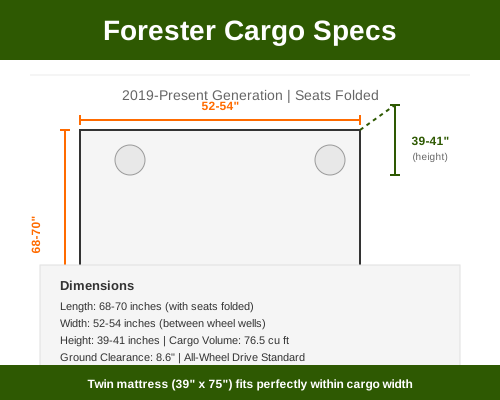
The Subaru Forester occupies a unique position in the automotive segment—a capable compact SUV combining standard all-wheel-drive with efficient packaging and proven reliability. Unlike full-size SUVs that dominate the camping market, the Forester delivers surprisingly effective car camping platform through intelligent design and outdoor-focused engineering. The 52-54 inch cargo width and 68-70 inch length (depending on generation) require more deliberate mattress selection and configuration planning than larger vehicles, but this compact design enables fuel efficiency and maneuverability that larger alternatives cannot match.
What You'll Learn
- Vehicle Specs & Dimensions
- Sleeping Setup Options
- Storage & Organization
- Power & Electrical
- Climate Control
- Pros and Cons
- Frequently Asked Questions
What distinguishes the Forester for camping is Subaru's unwavering commitment to all-wheel-drive capability as standard equipment across all models. The symmetrical AWD system enables access to forest service roads and elevated camping locations unavailable in front-wheel-drive competitors. The 8.6-inch ground clearance permits navigation of uneven terrain without belly scraping. The cargo area's upright design creates excellent vertical space despite moderate length, enabling creative storage organization.
The modern Forester generation (2019-present) refined the formula with improved cargo accessibility, enhanced climate control extending to rear compartments, updated safety features, and refined materials maintaining the rugged outdoor character. Earlier generations (2014-2018) established the Forester camping reputation, providing excellent used-market value. Vintage models (2009-2013) remain reliable platforms for budget-conscious adventurers discovering compact SUV camping benefits.
This comprehensive guide addresses everything required for successful Forester camping: generation-specific cargo dimensions, optimal mattress selection accounting for width constraints, proven sleeping configurations maximizing limited length, advanced organization strategies for compact space, climate management across seasons, and practical strategies leveraging the Forester's efficient and capable design. Whether planning weekend trips or extended adventures, the Forester's combination of capability, efficiency, and outdoor engineering makes it surprisingly effective camping platform.
Forester Cargo Dimensions by Generation
The Subaru Forester's evolution across multiple generations reflects continuous refinement of compact SUV design. Understanding your specific generation's dimensions enables precise mattress selection and optimal configuration strategy. The Forester's cargo area characteristics require careful measurement and deliberate sizing to maximize limited space efficiently.
Current Generation Forester (2019-Present)
With rear seats folded: - Length: 68-70 inches (depending on exact model year) - Width: 52-54 inches (between wheel wells) - Maximum width: 59-61 inches (above wheel wells) - Height: 39-41 inches - Cargo volume: 76.5 cu ft (seats folded) - Ground clearance: 8.6 inches - Headroom: 38-39 inches
The current generation Forester represents Subaru's most refined compact SUV design, featuring improved cargo floor flatness compared to predecessors, enhanced climate control extending to rear compartments, modern power features, and sophisticated safety systems. The width constraints compared to larger SUVs require twin or narrower mattress selection, though this limitation enables vehicle efficiency and agility benefits. The improved headroom in current generation provides better vertical space utilization.
Specific camping advantages: - Most level cargo floor among generations - Improved headroom enables taller sleeping positions - Modern climate control reaches cargo area - Power-folding rear seats simplify setup - Fuel economy exceeds larger vehicles - All-terrain capability standard
Previous Generation Forester (2014-2018)
With rear seats folded: - Length: 67-69 inches - Width: 51-53 inches (between wheel wells) - Maximum width: 58-60 inches (above wheel wells) - Height: 38-40 inches - Cargo volume: 73.3 cu ft - Ground clearance: 8.5 inches
The 2014-2018 generation established the modern Forester platform, offering excellent balance of capability and practicality. This generation remains abundant on used market with proven reliability records. The slightly narrower width compared to current generation requires twin-size mattress selection, though this focuses on efficient space utilization unavailable in larger vehicles.
Specific camping advantages: - Excellent used market availability - Proven durability with many examples exceeding 150,000 miles - Simpler mechanical systems easier to maintain - Strong aftermarket support - Outstanding value on used market - Reliable all-wheel-drive capability
Vintage Forester (2009-2013)
With rear seats folded: - Length: 65-66 inches - Width: 50-52 inches (between wheel wells) - Maximum width: 56-58 inches (above wheel wells) - Height: 37-38 inches - Cargo volume: 69 cu ft - Ground clearance: 8.3 inches
Earlier generation Foresters provide budget-friendly camping platforms while maintaining core Forester advantages: standard all-wheel-drive, capable suspension, and outdoor-focused design. These vehicles typically sell for under $12,000 when in reasonable condition. The narrower cargo area requires careful mattress selection, positioning this generation toward solo camping or couples comfortable in close proximity.
Specific camping advantages: - Exceptional used market value - Simpler systems easier for independent maintenance - Lower insurance and fuel costs - Strong reliability reputation - Capable suspension for varied terrain - Accessible price point
Sleeping Comfort by Height and Generation
| Height | Current | Previous | Vintage | Notes |
|---|---|---|---|---|
| Under 5'4" | Excellent | Excellent | Excellent | All generations accommodate easily |
| 5'4" - 5'8" | Excellent | Excellent | Very Good | Straight sleeping accommodated |
| 5'8" - 6' | Very Good | Good | Good | Front seat extension helpful |
| 6' - 6'2" | Manageable | Manageable | Challenging | Creative positioning required |
| Over 6'2" | Challenging | Challenging | Challenging | Diagonal positioning necessary |
Best Mattresses for Forester Camping
The Forester's 52-54 inch width constrains mattress options compared to larger SUVs, necessitating deliberate selection balancing comfort with space efficiency. Twin and narrow options optimize the Forester's compact dimensions while maintaining sleeping quality. Mattress selection directly impacts sleep satisfaction and overall camping experience—arguably the most important decision for successful compact SUV camping.
Air Mattresses for Forester Camping
Twin-size air mattress - Approximately 39" × 75" dimensions - Fits Forester width precisely - Inflates to various firmness levels - Dual air chambers for support - Cost: $60-120 - Best for: Budget-conscious campers, occasional use
Twin-size air mattresses provide perfect width fit within the Forester's 52-54 inch cargo area. The 39-inch width leaves side space for storage or enables diagonal positioning for taller sleepers. Quality twin air mattresses provide adequate comfort for weekend camping.
Narrow air mattress (36" width) - Engineered for compact spaces - Approximately 36" × 72" dimensions - Leaves 8-10 inches side space - Lightweight and packable - Cost: $80-150 - Best for: Couple camping with cargo flexibility
Narrow-profile air mattresses maximize cargo space utilization while providing adequate sleeping width for couples comfortable in closer proximity. The compact profile enables storage utilization alongside sleeping area.
Foam Mattresses for Forester Camping
Twin-width foam (38" × 66-70") - Precisely sized for Forester dimensions - 3-5 inch thickness options - Multiple firmness selections - Lightweight and portable - Cost: $80-160 - Best for: Regular campers, semi-permanent setup
Foam cut to Forester specifications provides excellent solution for committed campers. The precise fit eliminates gaps, improves appearance, and simplifies setup. Twin-width foam maximizes usable sleeping space within cargo constraints.
Narrow foam (36" × 68") - Ultra-space-efficient design - Leaves 8-10 inches cargo space - Enables under-mattress storage - Cost: $70-140 - Best for: Solo campers, flexible multi-purpose use
Narrow foam options optimize space utilization for campers valuing cargo flexibility. Solo sleeping width remains adequate while enabling under-mattress organization.
Self-Inflating Pads
Twin-XL self-inflating (38" × 80") - Width optimized for Forester - 2.5-3.5" thickness options - Excellent comfort-to-packability ratio - R-value approximately 3.5-4 - Cost: $90-150 - Best for: Regular campers seeking balanced approach
Twin-XL self-inflating pads fit Forester dimensions while providing extended length benefiting taller sleepers. The balance of packability and comfort appeals to regular campers managing compact space.
Exped SynMat 7 (76" × 38") - Synthetic fill suitable for wet conditions - Compact packed size - R-value approximately 4 - Cost: $120-180 - Best for: Three-season camping, moisture-prone areas
Forester Sleeping Configurations
The Forester's compact dimensions require more creative sleeping approaches than larger vehicles. Configuration selection balances comfort, setup simplicity, and cargo space utilization. Each approach optimizes the Forester's specific geometry for maximum sleeping quality within space constraints.
Configuration 1: Twin Mattress Straight Positioning
Standard setup: 1. Fold all rear seats completely flat 2. Remove rear headrests 3. Position twin mattress spanning width 4. Accounts for 68-70 inch cargo length 5. Leaves 5-10 inches side clearance
Specific advantages: Simple setup, straightforward configurations, works with standard twin bedding, leaves side storage space.
Specific disadvantages: Length limitations for individuals over 5'8", solo configuration optimal.
Ideal for: Solo campers, couples comfortable close together, weekend trips.
Configuration 2: Diagonal Sleeping Arrangement
Setup for extended length: 1. Fold all rear seats completely 2. Position mattress diagonally corner-to-corner 3. Sleep with head near driver area, feet toward tailgate 4. Effective length: 82-85 inches with diagonal 5. Requires narrow mattress (36" width)
Specific advantages: Extended length accommodates taller individuals, works for solo or couple camping.
Specific disadvantages: Diagonal geometry feels awkward initially, reduced cargo space.
Ideal for: Tall campers, solo sleeping, extended adventure trips.
Configuration 3: Front Passenger Recline Extension
Tall sleeper accommodation: 1. Fold rear seats completely 2. Move driver seat maximum forward 3. Recline passenger seat fully backward 4. Creates extended sleeping length 5. Effective length: 80+ inches
Specific advantages: Extended length for taller sleepers, quick cabin access, minimizes mattress width requirements.
Specific disadvantages: Solo configuration only, console intrusion into sleeping space, awkward geometry.
Ideal for: Solo tall campers, flexible positioning preferred.
Configuration 4: Dual Sleeping with Narrow Divider
Personal sleeping spaces: 1. Fold rear seats flat 2. Install lightweight center foam divider (6-8" height) 3. Position two narrow pads (18-20" width each) 4. Creates distinct personal zones 5. Each sleeper maintains adequate width
Specific advantages: Personal sleeping space, prevents partner disturbance, temperature flexibility, psychological comfort.
Specific disadvantages: Reduces per-sleeper width further, increases complexity, requires custom divider construction.
Ideal for: Light sleepers, temperature-sensitive couples.
Gear Organization in Compact Space
The Forester's 76.5 cubic feet cargo capacity requires strategic organization maximizing functionality within space constraints. Unlike larger vehicles with abundant capacity, the Forester demands systematic planning and efficient packing approaches. Effective organization maximizes functionality while maintaining sleeping comfort and vehicle practicality.
Storage Zone Mapping
Under mattress (most accessible): - Daily supplies and frequently needed items - Kitchen gear and meal ingredients - Toiletries and personal care items - Quick-access essentials
Behind mattress (mid-accessibility): - Sleeping gear and bulky items - Clothing bins and extra layers - Equipment and tools
Side compartments: - Narrow storage along cargo sides - Vertical organization critical - Quick-access items positioned here - Sleeping gear storage
Cargo area corners: - Odd-shaped items and irregulars - Emergency supplies - Spare parts and tools - Seldom-needed equipment
Organization Equipment
Soft compression bags: - Conform to irregular space - Reduce sleeping gear volume 40-50% - Enable better packing efficiency - Cost: $15-40 per bag
Vertical storage organizers: - Hanging options attach to cargo area - Utilize vertical space effectively - Contents visible without opening - Cost: $20-50 each
Small clear bins: - Stack for vertical space use - Waterproof protection - Visible contents - Cost: $10-25 each
Cargo nets: - Contain items preventing shifting - Affordable ($15-30) - Prevent loose item movement
Packing Strategy for Compact Vehicles
Load sequence for Forester: 1. Reserve items first (under future mattress position) 2. Trip supplies layered strategically 3. Daily access items last 4. Mattress placed last 5. Side compartments utilized throughout
Space-efficient packing: - 2-3 day trip: utilize 30-40 cu ft (leaving sleeping space) - Week-long trip: requires rigorous curation - Extended trip: likely exceeds practical capacity without external storage - Prioritize sleeping comfort over cargo capacity
Expansion options: - Roof box adds 15-18 cu ft - Roof racks enable cargo carriers - Small cargo trailer option - Aftermarket roof rails ($150-400)
Sleeping Space Integration with Gear
Under-mattress organization: - Place flat items beneath mattress - Create organized compartments - Enables quick access without moving mattress - Separate containers for category organization
Side-compartment utilization: - Tall narrow bins along cargo sides - Enables full cargo floor use for sleeping - Accessible without moving mattress - Perfect for frequently needed items
Compact camping philosophy: - Multi-purpose items (blankets serve as padding) - Minimize duplicate equipment - Lightweight gear over heavier alternatives - Consolidate gear into fewer containers
All-Wheel-Drive and Forester Off-Road Access
The Forester's standard symmetrical all-wheel-drive system represents defining advantage for compact SUV camping. Unlike competitors available only in front-wheel-drive or requiring expensive AWD packages, the Forester's integrated AWD capability enables access to remote camping locations unavailable in traditional sedans. The 8.6-inch ground clearance provides adequate terrain navigation for vehicle of this scale.
Off-Road Capability Overview
Terrain access enabled by AWD: - Forest Service roads with moderate grades - Unpaved campground approach roads - Rocky terrain with moderate obstacles - Elevated elevation camping locations (8,000-10,000 ft) - Winter snow access with proper tires - Muddy conditions during transitional seasons
Ground clearance advantage: - 8.6 inches ground clearance (current generation) - Exceeds most sedans significantly - Sufficient for forest road navigation - Prevents belly scraping on rocky terrain - Enables moderate terrain flexibility
Traction and stability: - Symmetrical AWD distributes power evenly - Improved traction in varied conditions - Enhanced stability on sloped terrain - Winter performance superior to front-wheel-drive - Confident handling in challenging conditions
Utilizing Forester Off-Road Capability
Remote camping location access: 1. Research forest service roads and public lands 2. Verify Forester ground clearance adequacy 3. Confirm current road conditions 4. Plan conservative travel timing 5. Carry emergency supplies for remote access
Driving approach: - AWD improves traction on uneven surfaces - Avoid water crossings unless shallows confirmed - Rock crawling inappropriate for stock Forester - Stick to moderate terrain suitable for vehicle - Conservative approach ensures safe camping access
Vehicle preparation for remote camping: - Ensure tires appropriate for conditions - Carry spare tire and change supplies - Pack emergency supplies (tools, first aid) - Verify fuel tank adequacy - Install recovery strap if tackling challenging roads
Winter Camping with Forester AWD
Snow and ice capability: - AWD significantly improves winter traction - Winter tires essential for snow camping - Adequate ground clearance for snow roads - Tire pressure management critical - All-season tires inadequate for winter
Winter preparation: - Install winter tires (non-negotiable) - Carry emergency supplies (blankets, flares, food) - Communicate location and return plans - Monitor weather forecasts carefully - Have evacuation plan if conditions deteriorate
Winter sleeping setup: - Insulated tonneau cover recommended - High R-value sleeping pad critical - Quality cold-rated sleeping bag - Additional insulation layers - Hot water bottles for warmth
Ventilation and Climate Management in Compact Spaces
The Forester's compact cargo area enables efficient climate control while requiring deliberate ventilation strategy. The upright design creates unique ventilation characteristics different from larger SUVs. Proper ventilation prevents condensation, manages odors, and maintains comfort across seasons in constrained space.
Summer Camping Strategy
Parking location critical: - Seek complete shade (reduces interior 15-20°F) - Position toward prevailing breezes - Avoid reflecting surfaces (asphalt, buildings) - Elevate if possible - Water-adjacent locations provide natural cooling
Ventilation approach: - Crack all windows 3-4 inches - Rear cargo area requires attention - Cross-ventilation through both sides - Small fans effective in compact space - Nighttime setup with measured opening
Summer bedding: - Lightweight sleeping bag or quilt - Cotton or moisture-wicking materials - Minimal clothing during sleep - Breathable mattress covers
Fan setup: - 12V cargo area fan ($20-50) - Battery-powered options available - Effective in compact spaces due to close proximity - 10-15 minute operation improves comfort noticeably
Winter Camping Strategy
Insulation becomes essential: - Reflective window covers (silver side in) - Insulating layers on windows - Close unnecessary vents - Weather stripping around doors - Minimize ventilation to retain heat
Heating approach: - Quality sleeping bag rated 15°F below expected - High R-value sleeping pad critical - Layered bedding for insulation - Hot water bottle in sleeping bag - Consume hot meals before sleep
Condensation management: - Crack one window slightly (2-3 inches) for air exchange - Run defroster periodically - Use desiccant products (Damp Rid, silica gel) - Wipe condensation before sleeping - Avoid plastic covers that trap humidity
Three-Season Management
Spring and fall approach: - Moderate temperatures enable flexible sleeping gear - Simple ventilation strategies sufficient - Lightweight sleeping bag supplemented with blanket - Moderate insulating pad (R-value 2-3) - Layer bedding enabling adjustment
Transitional weather: - Morning cold requires light insulation - Afternoon warmth requires ventilation - Adjust window opening and fan use - Monitor weather forecasts for swings - Layer bedding enabling adjustment
Moisture and condensation control: - Maintain continuous air circulation - Reduce interior humidity sources - Use absorbent products (silica gel) - Park with windows open when not occupying - Run defroster periodically
Odor management: - Morning full air exchange (10-15 minutes) - All doors open fully - Enables stale air and odor removal - Critical after rainy days or humid nights
Frequently Asked Questions
Can you comfortably sleep in a Subaru Forester?
Yes, though comfort requires more deliberate planning than larger SUVs. The Forester's 68-70 inch cargo length and 52-54 inch width provide workable camping platform. Individuals under 5'8" sleep straight without positioning considerations. Those taller may use diagonal positioning or front seat extension. Couples need to be comfortable in closer proximity than larger vehicles accommodate. The Forester's efficient design enables excellent car camping with realistic space expectations.
What size mattress fits in a Forester?
Twin-size mattresses (39" × 75") fit perfectly within the Forester's width, leaving side space for storage or flexibility. Narrow air mattresses (36" wide) provide ultra-compact option. Twin-width foam cut to 68-70" length provides ideal custom solution. Twin-XL self-inflating pads work well, balancing sleeping length with space efficiency. Universal queen mattresses too large and create cramped, unusable configuration.
Is the Forester good for extended camping trips?
The Forester works well for weekend and 3-4 day trips with careful packing. Week-long trips become challenging due to cargo space constraints. Extended expeditions may benefit from roof box or cargo trailer for added capacity. The Forester excels for frequent short trips and adventure-focused camping over extended stationary trips. Compact philosophy suits the vehicle's design.
How does the Forester compare to larger SUVs for camping?
The Forester trades interior space for superior fuel economy, maneuverability, and handling. Larger SUVs provide more cargo space and standing headroom. The Forester typically achieves 22-26 mpg versus 18-22 mpg for larger vehicles. The trade-off appeals to campers prioritizing efficiency and capability over maximum interior space. It's an excellent choice for adventurers, less ideal for families requiring maximum cargo.
Can two people sleep comfortably in a Forester?
Two people can sleep in a Forester, though comfort requires openness to close proximity. A twin mattress (39" wide) leaves limited personal space. Narrow mattresses (36" wide) provide closer quarters but better cargo flexibility. Couples comfortable sleeping close together find it workable. Those needing personal space prefer larger vehicles. Solo camping is where the Forester truly shines.
What's the maximum height sleeper for Forester camping?
Individuals up to 5'6" sleep straight without positioning. Those to 5'10" accommodate with diagonal sleeping or front seat extension. Individuals 6'+ find the Forester challenging, requiring creative arrangements. The Forester's design suits campers up to approximately 5'10" most effectively. Taller individuals may prefer larger SUVs.
Do you need a sleeping platform in a Forester?
A platform isn't necessary but offers benefits for regular campers. For occasional users, simple mattress placement on folded seats works adequately. Regular campers appreciate platform investment for organization, level surface, and under-storage. DIY plywood platforms ($100-200 materials) create organized setup. For frequent users, the investment pays dividends in organization and comfort.
How is the Forester for camping with pets? - Excellent—the Forester accommodates both human and pet areas - Unlike compact cars, space exists for dedicated pet zones - Options include pet bed alongside sleeping area or separate compartments - Climate control and cargo capacity superior to smaller vehicles - Mid-size vehicle balances space and efficiency for pet owners
Can you use Forester ground clearance for challenging roads?
The 8.6-inch ground clearance enables forest service road access and moderate terrain navigation, but isn't designed for rock crawling or technical off-roading. The AWD system improves traction on varied surfaces. Conservative approach ensures safe camping access without vehicle damage. Stock Forester capabilities limited to moderate terrain, not extreme off-roading.
What's the fuel economy for Forester camping trips?
Modern Foresters typically achieve 22-26 mpg depending on driving conditions and generation. The compact SUV design's efficiency exceeds larger alternatives of similar capability. Proper tire pressure and aerodynamic optimization improve mileage. AWD system reduces efficiency slightly versus front-wheel-drive but provides benefits worth the trade-off. Long camping trips realize reasonable fuel economy compared to larger vehicles.
How does weather affect Forester camping?
The Forester handles diverse weather well. Summer camping requires shade selection and ventilation strategy. Winter camping requires quality sleeping bag and winterization planning. Spring/fall enable flexible approaches. The climate control system provides adequate heating and cooling. The sealed design protects from wind and rain effectively. Proper preparation enables comfortable camping across all seasons.
Is a roof rack necessary for Forester camping?
Roof racks aren't necessary but expand capacity for extended trips. Standard roof rails accommodate cargo carriers adding 15-18 cu ft storage. Roof boxes cost $250-600 but effectively double cargo capacity for extended trips. For weekend camping, roof solutions unnecessary. For week-long adventures with more gear, roof expansion becomes valuable.