
How to Stay Warm Car Camping Without a Heater (2026 Complete Guide)
My first cold weather car camping trip was a $100 lesson in thermal dynamics in a Toyota RAV4. Early November. I had a 20 degree F sleeping bag, but totally forgot about the giant windows. By 4 AM at Harpers Ferry KOA , my breath was fogging up the inside of the windshield and my toes were numb.
My first cold weather car camping trip was a $100 lesson in thermal dynamics in a Toyota RAV4. Early November. I had a 20 degree F sleeping bag, but totally forgot about the giant windows. By 4 AM at Harpers Ferry KOA, my breath was fogging up the inside of the windshield and my toes were numb. The fix isn't always a heater; it's understanding how your car loses heat and how your body makes it.
This isn't about fancy gear; it's about smart choices.
The Short Answer
What nobody tells beginners is that your car is constantly trying to match the outside temperature. You're fighting physics. As one expert points out, you need to think of your entire sleep system as a closed loop. Your body creates heat, and your job is to trap it.
The biggest rookie mistake? Not insulating from below. Cold seeps up from the ground, through your vehicle's floor, and right into your sleeping pad. I learned this the hard way in a campground near Asheville, NC, in 35 degrees F weather.
Your windows are another massive culprit. Glass is terrible at insulation. It's like having giant holes in your blanket. The honest version: if you can see out, heat can get out. That's the game-time reality. A well-insulated mattress is paramount.
Then there's your own body. You're a furnace, but you're also a radiator. You lose heat through your head, hands, and feet faster than anywhere else. If those aren't covered, you're just bleeding warmth into the cold abyss of your car cabin. It's a constant battle.
The Reality Check
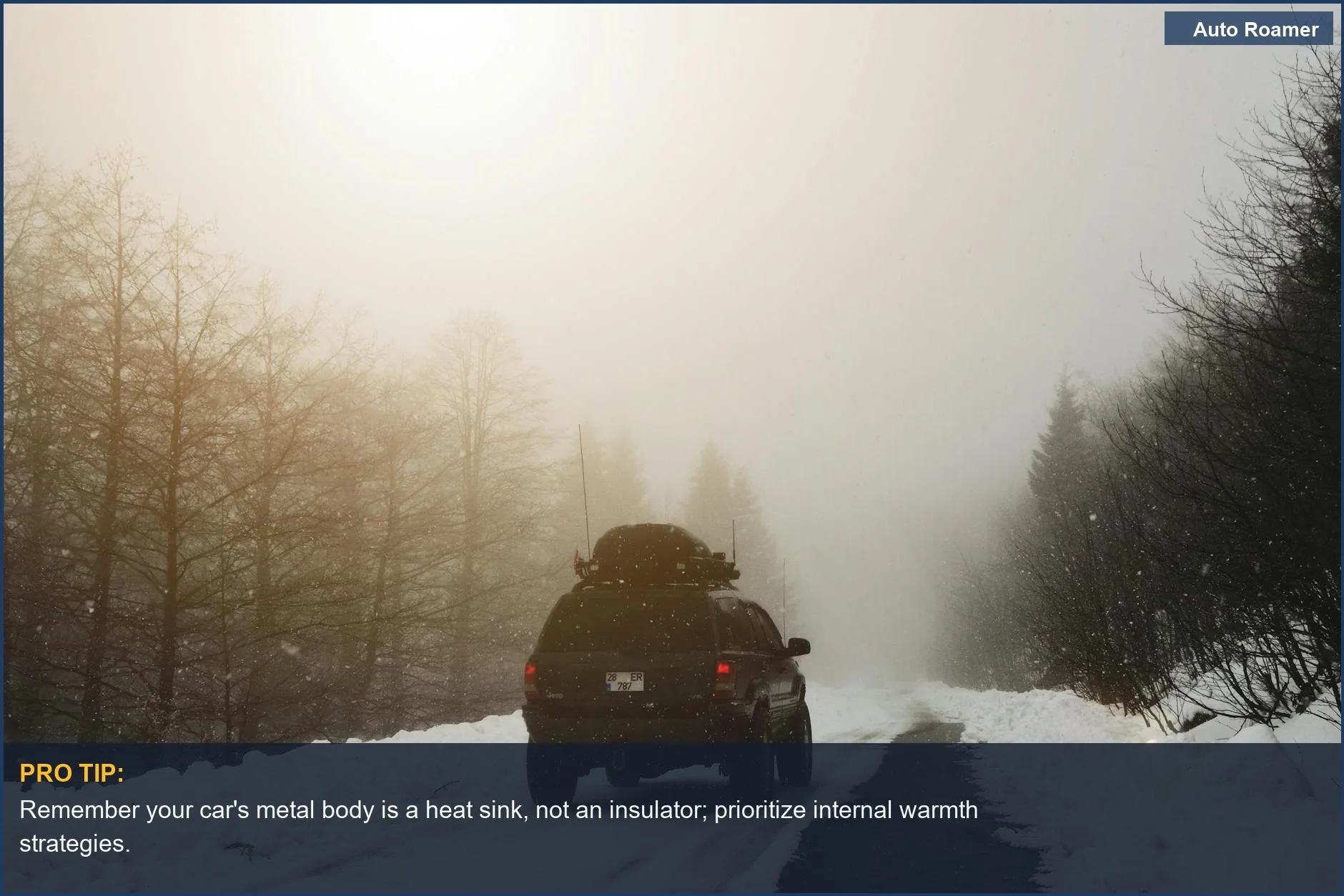
The reality of staying warm without a heater means understanding your car's thermal weaknesses. Your vehicle's metal shell is excellent at conducting heat away, meaning any warmth you generate inside quickly escapes to the colder outside air. It's why your car gets blazing hot in summer and freezing cold in winter.
Windows, especially, are thermal black holes. They offer almost no insulation value, allowing radiant heat to escape and cold air to radiate inward. This is true for any vehicle, from a Honda Civic to a Ford F-150. Your sleeping bag might be rated for 20 degrees F, but the car itself adds no R-value.
Condensation is another silent killer. Warm, moist air from your breath hits cold window surfaces and turns into water. This dampness then makes everything feel colder and can even soak your gear. I woke up with my sleeping bag damp around the edges in a Subaru Outback near Boone, NC, because I hadn't cracked a window. Dampness makes you feel colder.
| Component | How It Fails | Symptoms | Fix Cost |
|---|---|---|---|
| Car Body | High thermal conductivity | Interior temperature matches exterior quickly | $0 (insulation adds comfort, not car fix) |
| Windows | Poor insulation, radiant heat loss | Cold spots, condensation, rapid heat escape | $20-$50 (Reflectix roll) |
| Floor | Direct contact with cold ground/air | Cold feet, chilly sleeping pad | $15-$40 (foam pad) |
| Air Gaps | Drafts, heat leakage | Constant cold breeze, ineffective insulation | $5-$10 (weather stripping/towel) |
The most overlooked part is the ground. Your car's metal floor is in direct contact with the cold earth or cold air underneath. This means heat is drawn away from your sleeping setup continuously. An insulated sleeping pad is not a luxury; it's a necessity.
Even small air gaps around doors or windows can create drafts. I once spent a night in a Ford Transit Connect with a tiny gap near the rear door that felt like a constant Arctic breeze. It makes all your other efforts less effective. Blocking these drafts is a zero-dollar win.
How to Handle This
-
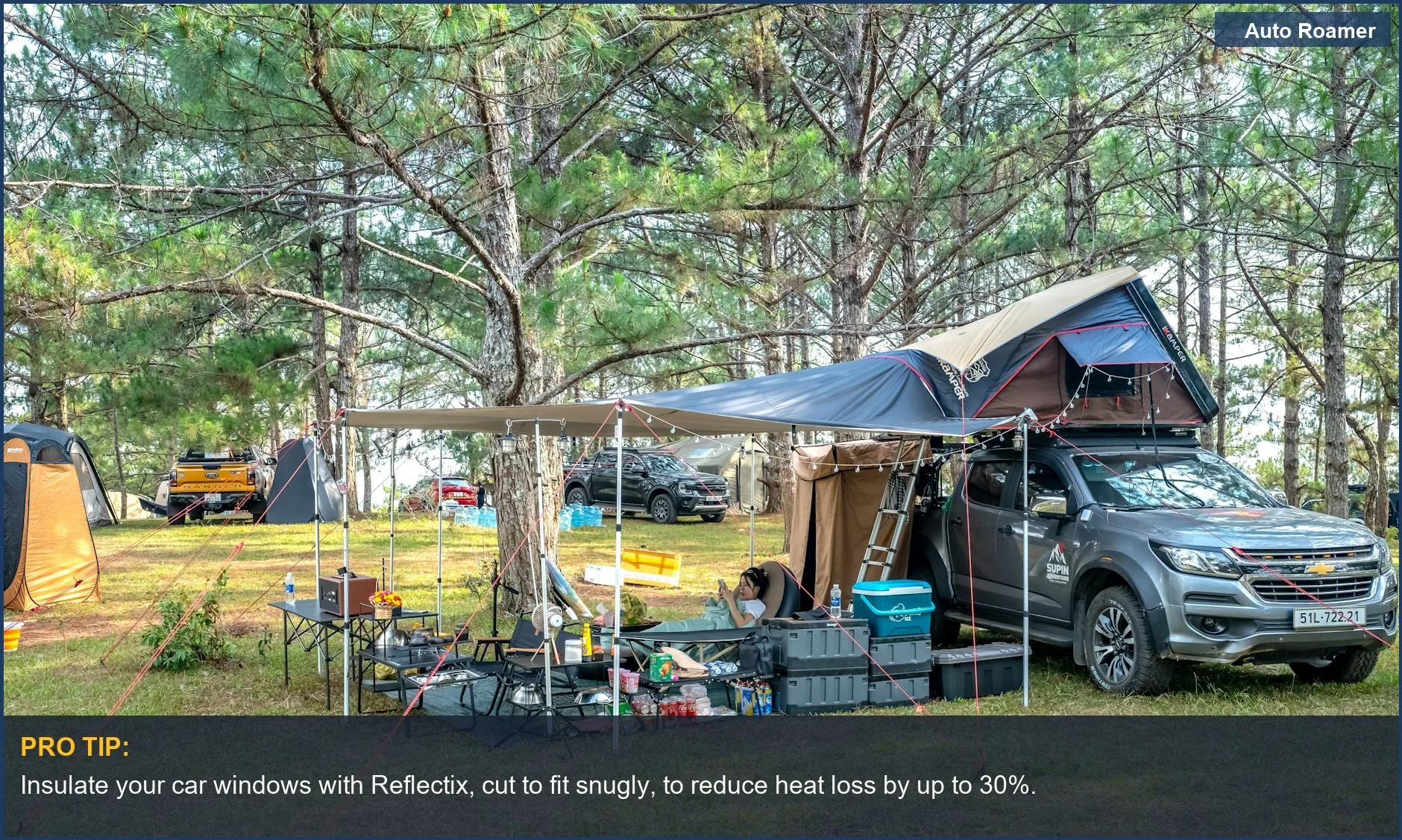
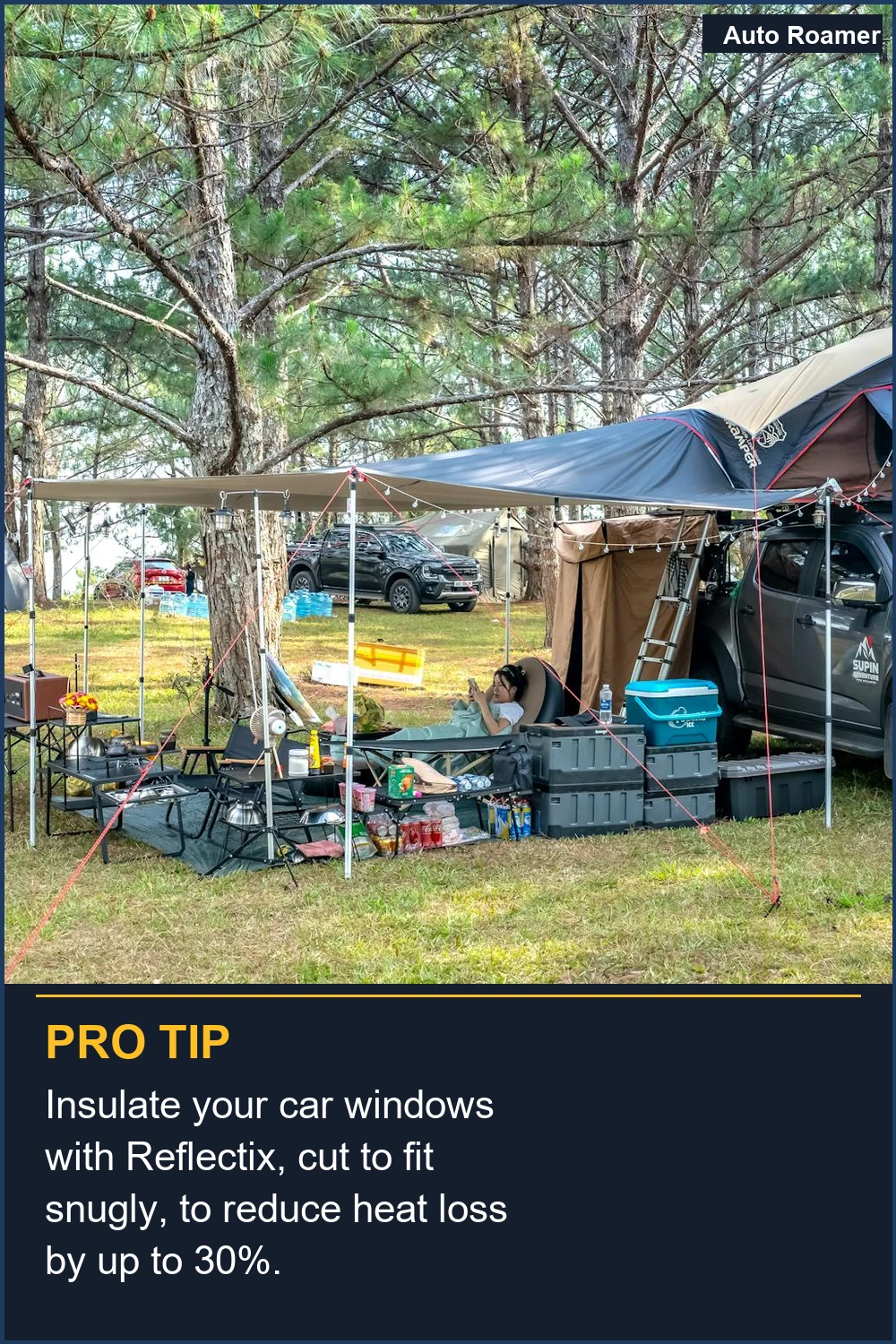
Insulate your windows ($20-$50): Go to a hardware store and buy a roll of Reflectix insulation. This is the silver bubble wrap stuff. Cut pieces to fit snugly into each window. My first attempt in my old Jeep Cherokee took 43 minutes, and I used a box cutter and a measuring tape. Don't forget the rear window.
-
Layer your sleeping pad ($15-$40): Your sleeping pad's R-value is critical. If you have a thin foam pad, put a cheap yoga mat or even a moving blanket underneath it. I used a $15 foam pad from Walmart on top of an old blanket in my Subaru Crosstrek and it made a 10 degree F difference in how my back felt. An insulated mattress is your best friend.
-
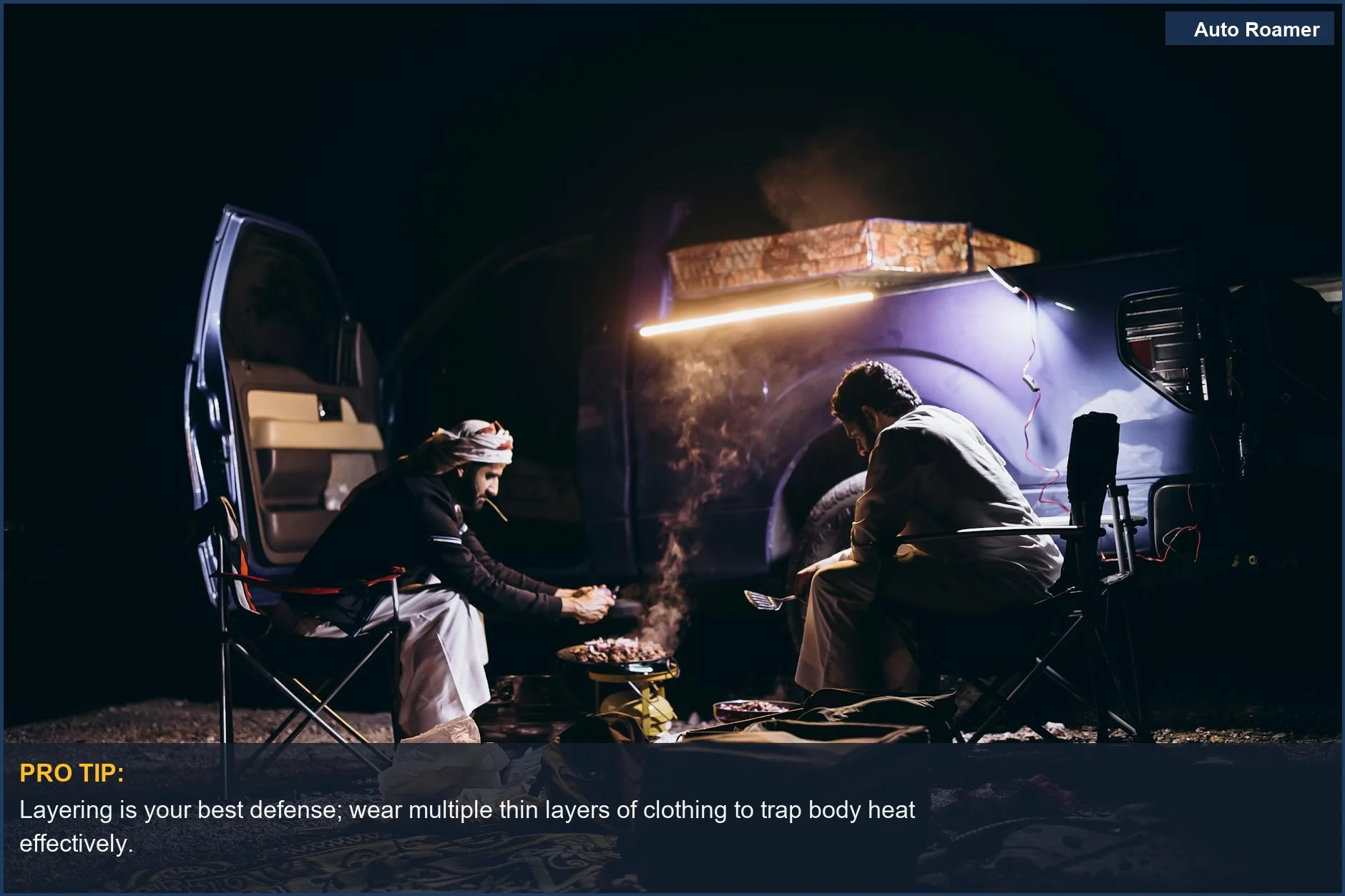
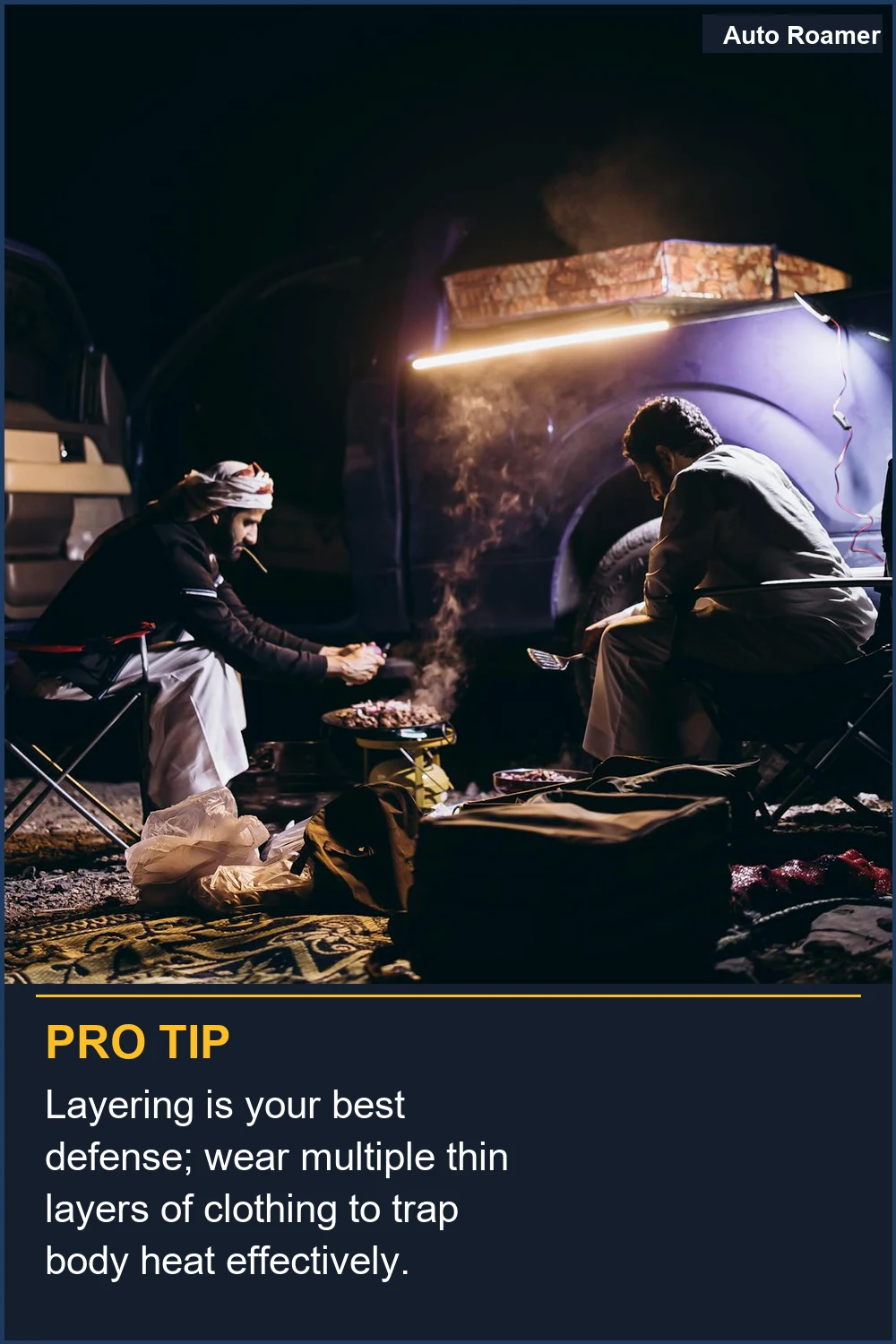
Dress for bed ($0-$50): Wear clean, dry layers. A wool beanie, wool socks, and a base layer are non-negotiable. I tried sleeping in my day clothes once in a Ford Escape, thinking it was fine. Rookie mistake. Your clothes absorb sweat and hold onto cold. The $50 version is a cheap fleece base layer set from Target.
-
Pre-warm your sleeping bag ($0-$10): Before you crawl into your bag, do some jumping jacks or sit-ups for 5 minutes. Get your body temperature up. I learned this after shivering for 30 minutes at a campsite in Colorado. You want to trap warm air, not try to heat cold air. A hot water bottle works too, for about $10.
-
Create ventilation ($0): This sounds counter-intuitive, but crack a window 1/2 inch. This prevents condensation from building up, which makes you feel colder. I use a rain deflector on my driver's side window on my Tacoma, so I don't even need to worry about rain getting in. It's the real move.
What This Looks Like in Practice
1. The Unexpected Freeze
Temperature: 28 degrees F Vehicle: Honda CRV Setup: 20F sleeping bag, thin foam pad, no window insulation. Outcome: Woke up at 3 AM with numb feet and condensation dripping from the ceiling. Had to turn on the car for 15 minutes to warm up. Covering your head is key.
2. The Smart Saver
Temperature: 20 degrees F Vehicle: Toyota Sienna minivan Setup: 0F sleeping bag, R-value 6 sleeping pad, Reflectix in all windows, fleece layers, wool hat. Outcome: Slept through the night comfortably. Minor condensation on the windshield, easily wiped away. This was my setup at a campground in the Smoky Mountains. It cost about $150 total for the insulation and pad.
3. The Minimalist Misstep
Temperature: 35 degrees F Vehicle: Nissan Rogue Setup: 40F sleeping bag, yoga mat, regular clothes. Outcome: Tolerable but not comfortable. Woke up cold around 5 AM, feeling the chill from the floor. The yoga mat added some R-value but wasn't enough for the lower half of my body. Chase's setup shows the importance of a good mattress.
4. The Hot Water Bottle Hero
Temperature: 15 degrees F Vehicle: Ford Escape Setup: 10F sleeping bag, R-value 4 pad, window covers, hot water bottle. Outcome: Surprisingly warm. The hot water bottle, placed at my feet, radiated heat for 4 hours. It kept my core warm enough to compensate for the extreme cold. This was a game-time decision that worked out.
Mistakes That Cost People
1. Relying Solely on Sleeping Bag Rating
Mistake: Thinking a 20 degrees F sleeping bag means you'll be warm in 20 degrees F ambient air. Reality: Sleeping bag ratings are often survival ratings, not comfort. They assume you're insulated from below and above. My first 40F bag in 25F weather was a brutal awakening. Layering is key.
2. Ignoring the Ground/Floor
Mistake: Using a thin sleeping pad directly on your car's floor. Reality: Cold conducts directly from the ground through your vehicle's metal floor. An R-value of 4 or higher is a minimum for cold weather. I used a cheap air mattress once, which has almost no insulation, and might as well have been sleeping on ice.
3. Forgetting Window Insulation
Mistake: Not covering windows, thinking they're minor heat loss points. Reality: Windows are massive thermal bridges. They radiate cold inwards and allow radiant heat to escape. My Toyota RAV4 felt like a refrigerator with bare windows in 30 degrees F.
4. Over-Layering Inside Your Sleeping Bag
Mistake: Wearing all your clothes inside your sleeping bag to stay warmer. Reality: Too many layers can compress your sleeping bag's insulation, reducing its effectiveness. Wear a few clean, dry layers, not your entire wardrobe. The air pockets are what keep you warm.
5. No Ventilation
Mistake: Sealing up your car completely to keep all heat in. Reality: This leads to massive condensation, making everything damp and colder. A small crack (1/2 inch) in a window prevents this. I learned this in a tight spot in a Honda Fit, waking up to a soaking wet interior.
6. Not Pre-Warming Your Body
Mistake: Crawling into a cold sleeping bag when you're already cold. Reality: It takes much longer to warm up a cold bag with a cold body. Get your blood flowing before bed. A 5-minute dance party works wonders.
Key Takeaways
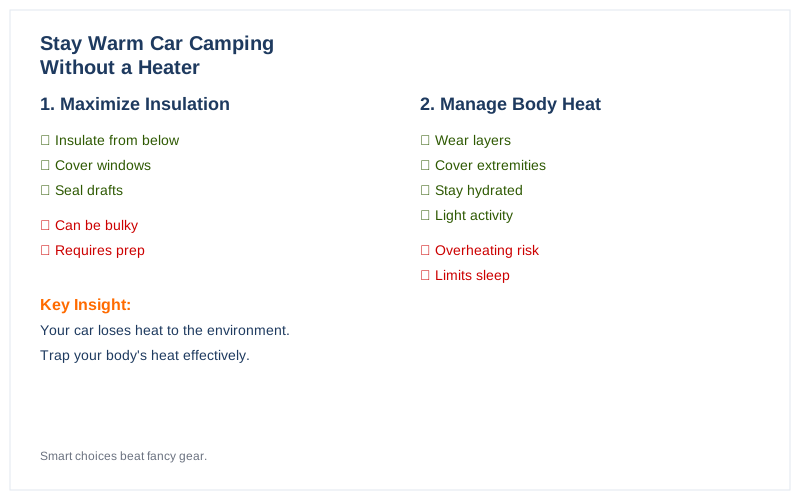
Staying warm car camping without a heater is totally doable, but it requires strategy, not just gear. My field notes consistently show that insulation is the name of the game. You're trying to create a personal warmth bubble inside a metal box. Focus on trapping the heat your body naturally generates.
- Insulate from below: A high R-value sleeping pad is non-negotiable. Don't skimp here. Warm water bottles can also help.
- Cover your windows: Reflectix is cheap and effective. It makes a huge difference in preventing heat loss and stopping cold drafts.
- Layer wisely: Clean, dry base layers, wool socks, and a beanie are your best friends. Don't compress your sleeping bag.
- Ventilate for dryness: A small crack in a window prevents miserable condensation.
Dampness is the enemy of warmth. * Pre-warm your body: Get moving before bed to kickstart your internal furnace. This makes all the difference for a comfortable night.
It's about smart, accessible choices that don't break the bank. You don't need a fancy rig; you just need to understand how heat works (and escapes).
Frequently Asked Questions
Is it worth buying fancy window covers, or should I just DIY with Reflectix?
Do I actually need a thermometer to know how cold it is inside my car?
What if I do all these things and I'm still freezing my butt off?
Can cracking a window all night permanently damage my car's interior from moisture?
I heard that putting blankets over my car's exterior can help keep it warm. Is that true?
Sources
- How to Sleep in a Freezing Car (Without a Heater)
- How to Stay Warm Car Camping - ROAD TO RIDGE
- Car Camping in Cold Weather: How to Stay Warm, Cozy, and ...
- 6 Ways To Stay Warm In A Camper Without A Heater
- How to stay warm while car camping?
- How To Stay Warm Winter Car Camping - YouTube
- 10 Tricks to Sleep Warm While Car Camping - Luno
- Winter car camping? How to stay warm? : r/carcamping
- How To Stay Warm Camping Without A Heater | 5 Tricks
- What is the best way to stay warm while sleeping in a vehicle during ...
- How to Stay Warm Car Camping : Tips for Nights on the Road