How to Safely Tow a Trailer in Crosswinds: What Every Driver Needs to Know
Auto Roamer
12 min read
Includes Video
Fighting trailer sway in high winds? It's not just the wind; it's physics. Ensure your trailer is loaded correctly, with 60% of its weight forward of the trailer's axles. Avoid towing if sustained winds exceed 40 mph. Slow down significantly, and be ready to counteract sudden gusts.
The wind just shoved your 24-foot travel trailer halfway into the next lane on I-40 in New Mexico. You're fighting the steering wheel, the tail wagging the dog, and that sickening lurch tells you trailer sway crosswind is about to become a full-blown disaster. Forget relaxing; this is survival mode. Your RV can be affected by as little as a 10 MPH breeze, but at 15-to-20 MPH, the effect increases dramatically How Much Wind is Too Much for Your RV?. Suddenly, that gust feels like a wall of air trying to rip your rig apart. You know towing a trailer in high winds is risky, but this is immediate. The risk of sway goes up sharply once your trailer reaches about 45 mph, especially with high winds Trailer Sway at High Speeds Causes, Risks, and How to .... This isn't a theoretical problem; it's happening now, and your reaction will determine whether you regain control or face a catastrophic accident.
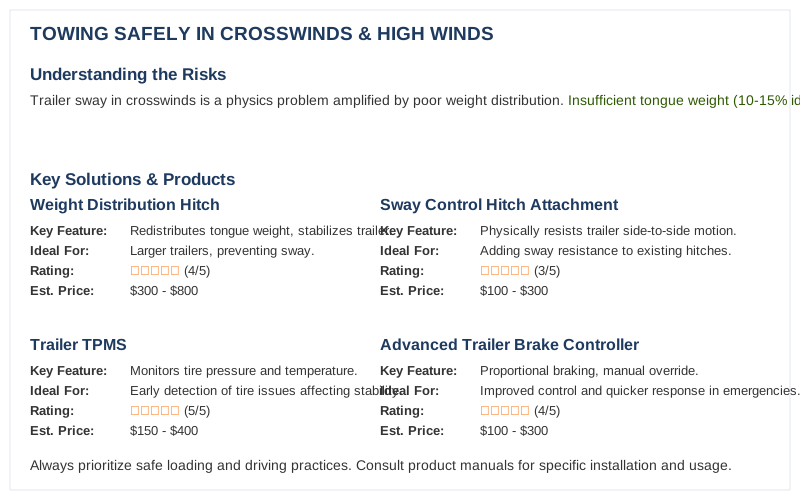
Key specifications for how to safely tow a trailer in crosswinds and high winds
The Short Answer
Trailer sway in crosswinds is fundamentally a physics problem amplified by poor weight distribution, not just a wind problem. A properly loaded trailer with adequate tongue weight resists the pendulum effect wind tries to create. Reacting incorrectly when sway starts is the fastest way to turn a manageable situation into a dangerous one.
We've all felt it - that unsettling wiggle from the trailer when a strong gust hits. This isn't just about the wind pushing your rig; it's about how your trailer's weight distribution interacts with that force. When the weight isn't balanced correctly, especially with insufficient tongue weight (ideally 10-15% of trailer weight), the trailer acts like a pendulum. Wind gusts, or even passing trucks, can initiate a side-to-side motion that quickly escalates if you don't know how to manage it. Inadequate tongue weight is a primary culprit that wind exposes.
Most travel trailers become genuinely difficult to control in sustained crosswinds above 30 mph, and downright dangerous above 40 mph. RV owners commonly report feeling significant effects even with a 15-20 mph breeze, with 30 mph winds and higher demanding serious attention . High Wind Warnings are typically issued at 40 mph, and many experienced towers pull over when sustained winds reach 35 mph .
The core insight here is that trailer sway is almost always a weight distribution problem that wind exposes, not a wind problem by itself. A properly loaded trailer resists wind far better. While some might think of high winds as the sole enemy, research and forum consensus point to weight distribution and hitch setup as critical factors that wind simply magnifies .
When sway starts, your instinct might be to stomp on the brakes, but this is the worst thing you can do. Slamming the brakes shifts weight forward, off the trailer tongue, making the sway much worse. Instead, ease off the gas pedal and keep the steering wheel straight. Let the rig slow down naturally. If you have a trailer brake controller, gently apply it to help stabilize the trailer .
The risk of sway increases sharply once your trailer reaches about 45 mph, particularly with strong winds . Driving 10 mph under the speed at which you first noticed sway is a good rule of thumb once you regain control .
To enhance your driving skills, understanding how to navigate challenging conditions like strong winds is crucial, so explore tips on driving safely in heavy wind.
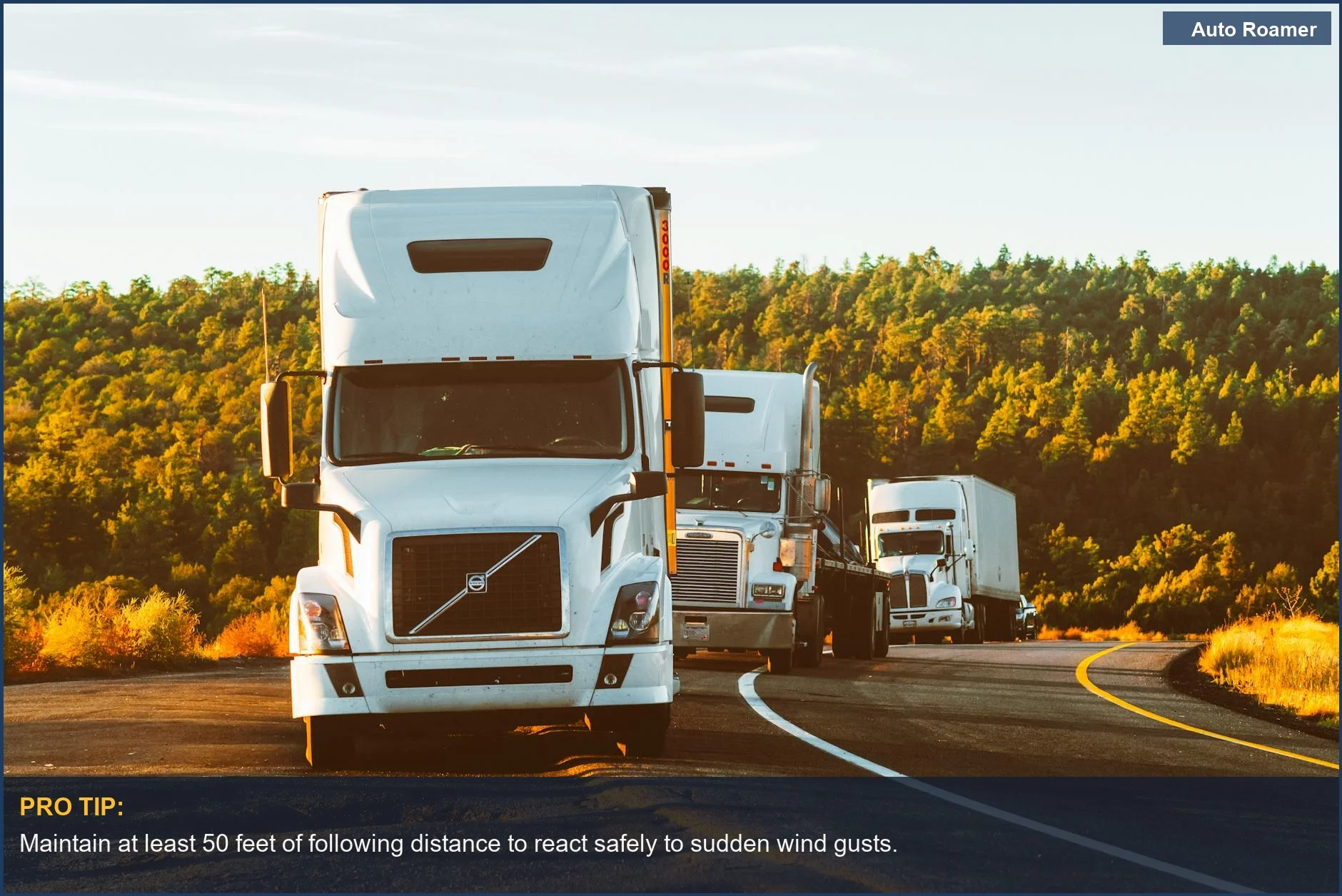
Navigating strong winds requires awareness. Three semi trucks are seen here, highlighting the importance of understanding trailer sway crosswind dynamics and how to manage them on the road.
| Photo by Quintin Gellar
Navigating strong winds requires awareness. Three semi trucks are seen here, highlighting the importance of understanding trailer sway crosswind dynamics and how to manage them on the road.
| Photo by Quintin Gellar
What You Need to Know
1
Understand Trailer Sway Dynamics - Trailer sway is a dangerous side-to-side oscillation. It's primarily a physics problem amplified by external forces like wind. Once your trailer reaches about 45 mph, the risk of sway increases sharply, especially with high winds or passing vehicles .
2
Tongue Weight is King - The target tongue weight ratio is 10-15% of the trailer's total weight. Too little tongue weight turns your trailer into a pendulum, making it highly susceptible to sway, especially in crosswinds . This is a critical factor for preventing trailer sway crosswind issues.
3
Tow Vehicle Matters for Stability - A longer wheelbase on your tow vehicle provides greater stability. A half-ton pickup will be more affected by crosswinds than a three-quarter-ton truck or a heavier SUV. Smaller, lighter tow vehicles struggle more against buffeting winds .
4
Know Your Wind Thresholds - While comfort levels vary, sustained crosswinds above 30-35 mph can become problematic for many rigs . High Wind Warnings are typically issued at 40 MPH. Gusts of 60-70 mph can be extremely dangerous, often warranting pulling over and parking .
5
Trailer Type Impacts Vulnerability - The larger the surface area and the less aerodynamic the trailer, the more it will be affected by wind. An enclosed cargo trailer or a large travel trailer presents a bigger sail than a flatbed or a boat trailer. Weight distribution also varies wildly, impacting how easily sway can be initiated.
6
Reacting to Sway: Don't Panic Brake - If you feel sway, immediately ease off the accelerator. Do NOT slam on the brakes; this can worsen sway by shifting weight off the tongue . Keep the steering wheel straight. Let the rig slow down naturally. If you have a trailer brake controller, gently apply it manually once the speed decreases .
7
Prevention is Key - Before you even hit the road, ensure your cargo is loaded correctly, with about 60% of the weight forward of the trailer's axles . Use a weight distribution hitch (WDH) with sway control, and verify your tongue weight. Check tire pressures on both the tow vehicle and trailer.
Understanding trailer sway is essential, especially if you're also considering how to safely tow a car without a truck.
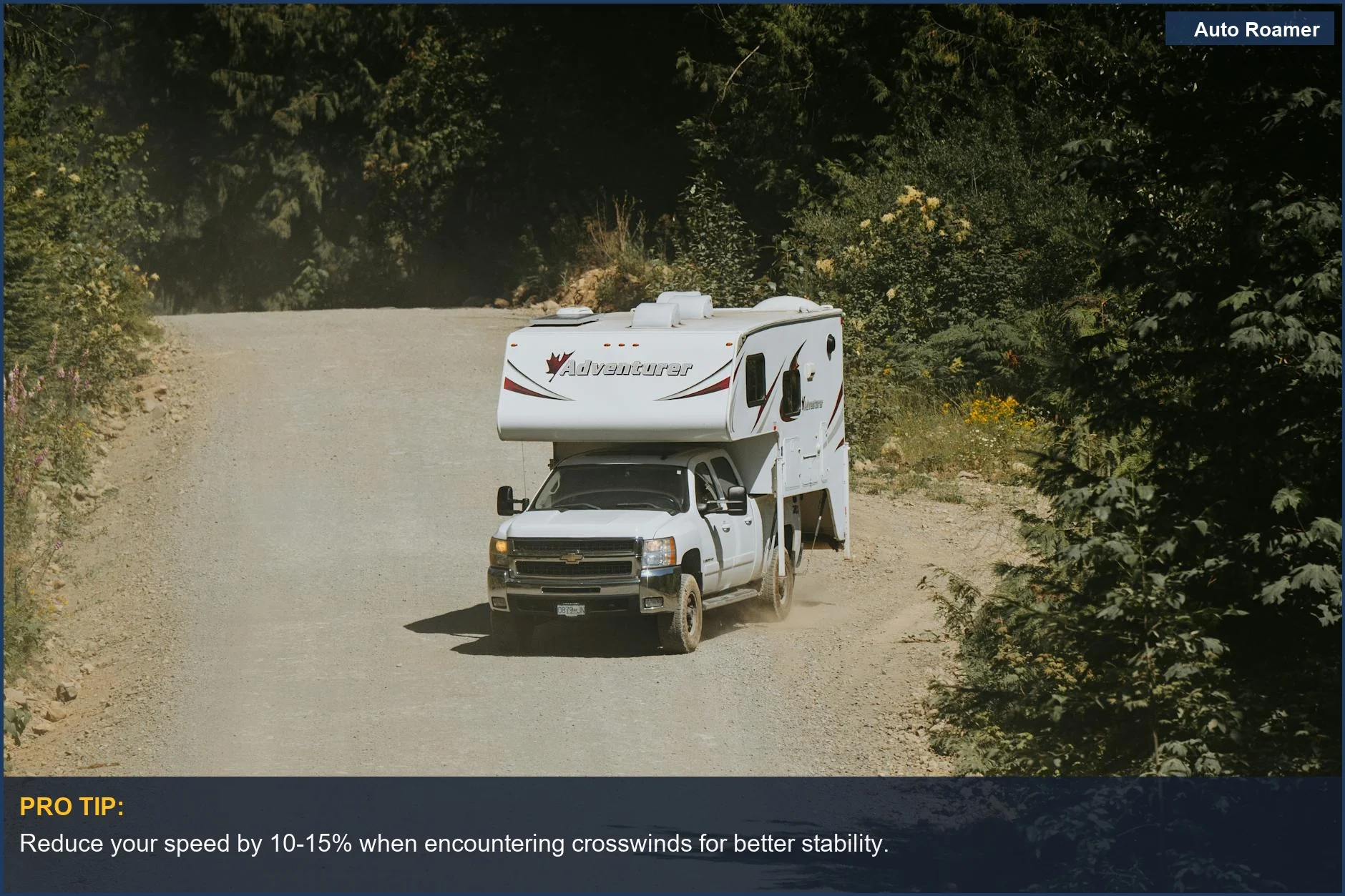
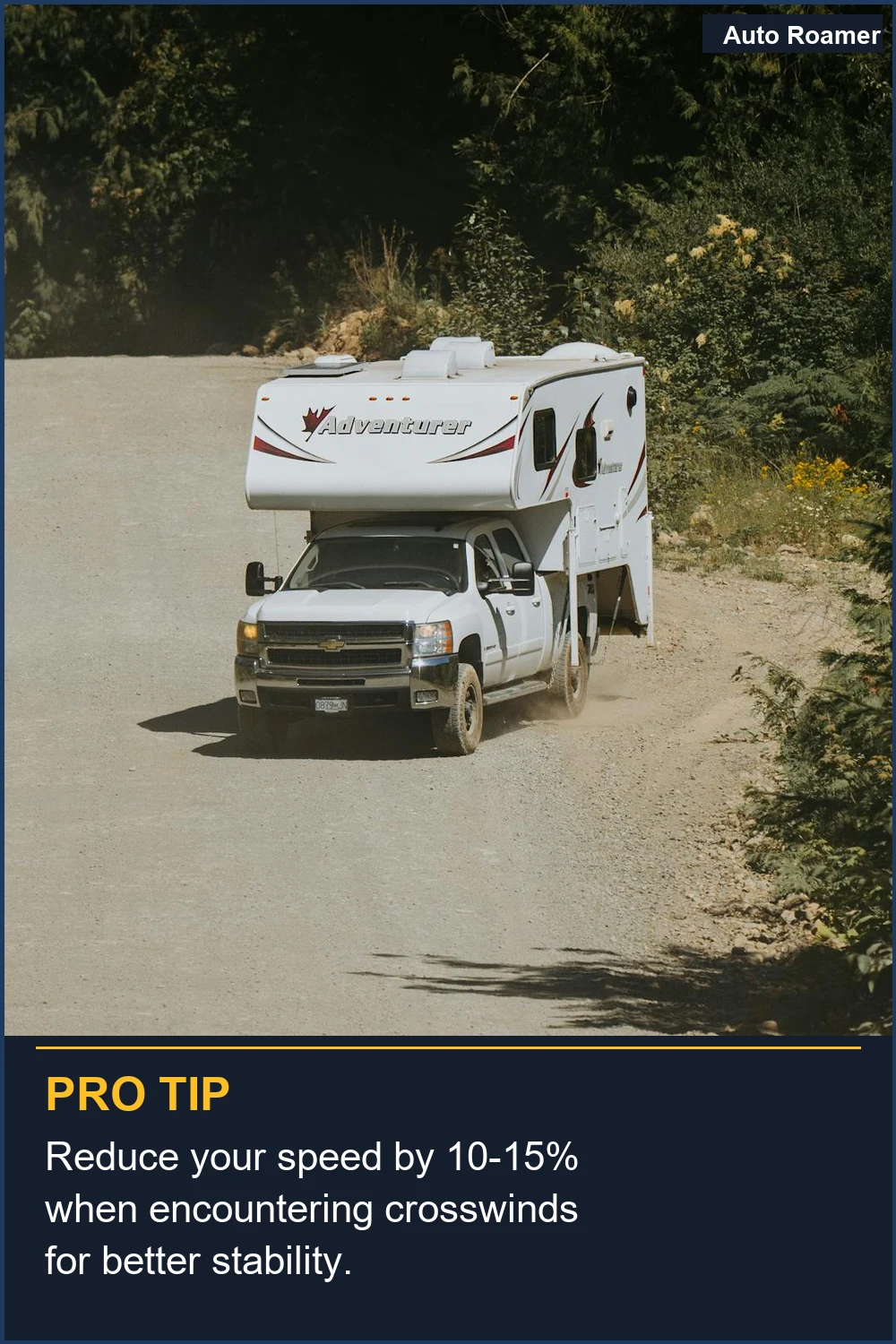
Adventure travel can be unpredictable. This camper truck on a winding road reminds us to prepare for varying conditions, especially when considering how to safely tow a trailer in crosswinds.
| Photo by Luke Miller
Adventure travel can be unpredictable. This camper truck on a winding road reminds us to prepare for varying conditions, especially when considering how to safely tow a trailer in crosswinds.
| Photo by Luke Miller
How to Handle This
1
Pre-drive checks are non-negotiable - Verify your trailer's setup before hitting the highway. Check tire pressure on both the tow vehicle and trailer; underinflated tires contribute to instability r/GoRVing. Ensure your weight distribution hitch (WDH) is correctly adjusted for 10-15% tongue weight. Skipping this can turn moderate crosswinds into a dangerous pendulum effect above 45 mph Trailer Sway at High Speeds Causes, Risks, and How to .... We've seen rigs pushed sideways on I-40 in New Mexico due to this oversight.
2
Adjust your driving for the wind - When sustained crosswinds hit 35 mph, or gusts exceed 50 mph, consider pulling over When Does It Become too Windy?. If you continue, drive at least 10 mph below the speed where you first felt instability What To Do When Trailer Sway Starts. Driving 20 mph under the speed limit is safer than risking loss of control. If you feel any sway you can't immediately control, stop. Don't try to power through it.
3
Know how to react when sway starts - Do not slam on the brakes when your trailer sways. This shifts weight forward, worsening sway and leading to loss of control. Ease off the gas pedal to slow down naturally What To Do When Trailer Sway Starts. Keep the steering wheel straight. Gently and manually apply trailer brakes with your controller to straighten the rig without destabilizing the tow vehicle. Skipping this has caused accidents where trailers jackknife or pull tow vehicles off the road.
4
Choose your route and timing wisely - Avoid towing in known high-wind areas during predicted strong winds. Roads with open expanses, like bridges or desert highways, are susceptible. Winds around 30 mph and higher affect your rig How Much Wind is Too Much for Your RV?. Plan for longer travel times; rushing is dangerous. If in sustained winds above 40 mph, pull over and wait for conditions to improve.
As you navigate construction zones, it's equally important to know how to safely pass larger vehicles, like in our article on passing semi trucks.
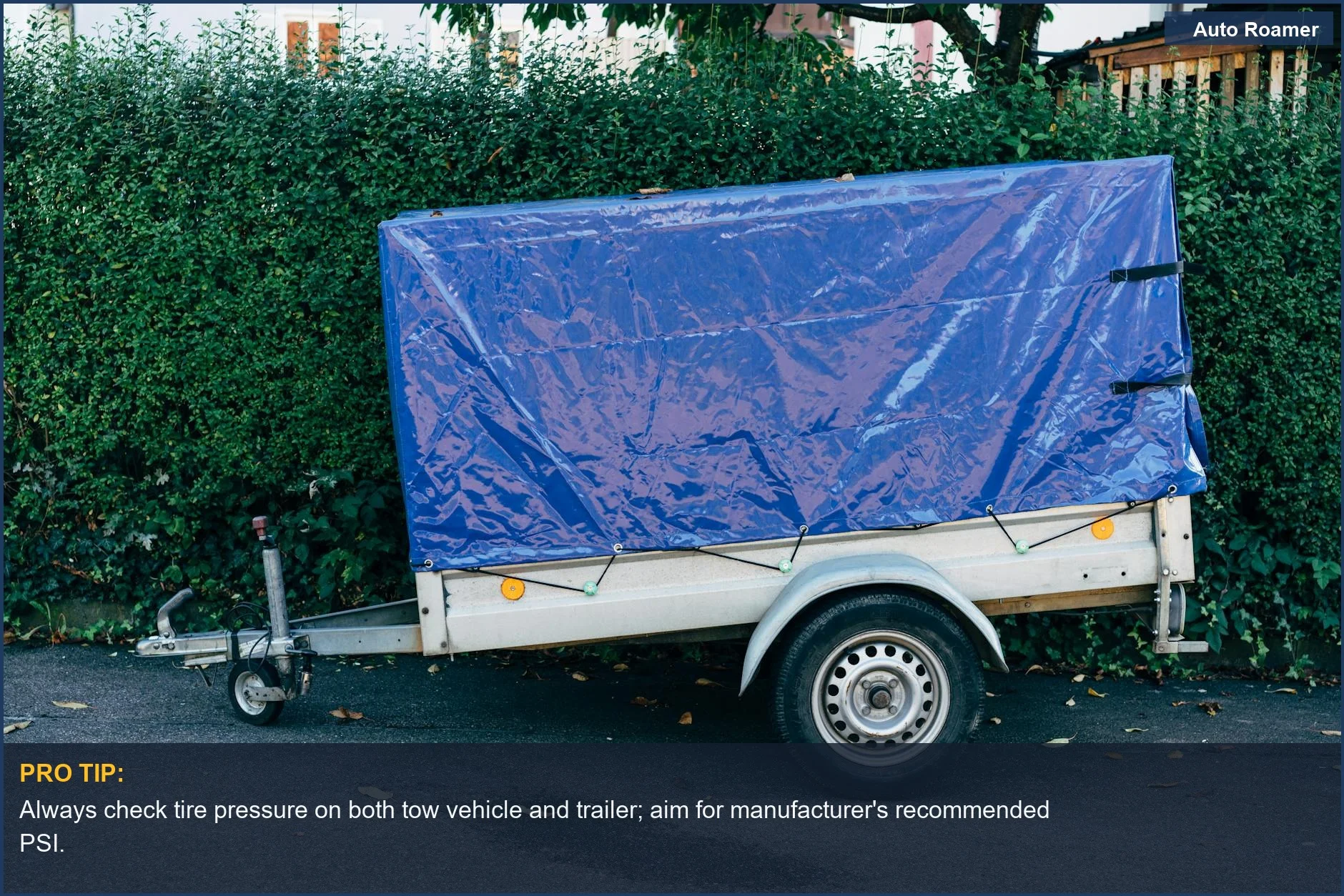
Before embarking on your journey, remember that pre-drive checks are crucial. This covered trailer underscores the need to verify your setup, a key step in safe towing.
| Photo by Markus Winkler
Before embarking on your journey, remember that pre-drive checks are crucial. This covered trailer underscores the need to verify your setup, a key step in safe towing.
| Photo by Markus Winkler
What This Looks Like in Practice
Travel trailer in Colorado crosswinds on I-70 Strong crosswinds caused severe trailer sway. Easing off the accelerator and keeping the steering wheel straight stabilized the rig. Sudden braking worsened the sway. What To Do When Trailer Sway Starts
Enclosed cargo trailer in Wyoming I-80 winds High winds caused erratic sway due to the trailer's large surface area. Reducing speed below the sway threshold maintained control. Unsecured cargo shifted, worsening the problem. What To Do When Trailer Sway Starts
Bass boat on a pickup truck in gusty conditions Gusts affected the boat's hull surface area. Maintaining a steady, slower speed and making minor, smooth steering adjustments helped. Overcorrection induced sway. What To Do When Trailer Sway Starts
Fifth-wheel RV in sustained winds Sustained winds pushed the tall fifth-wheel RV. Slowing down significantly, about 10 mph below the sway speed, and judicious use of the trailer brake controller helped. Maintaining highway speeds amplified the wind's effect. What To Do When Trailer Sway Starts
Understanding how to manage your vehicle in challenging conditions, like a tire blowout, is crucial for safe towing, so consider our tips on handling a tire blowout.
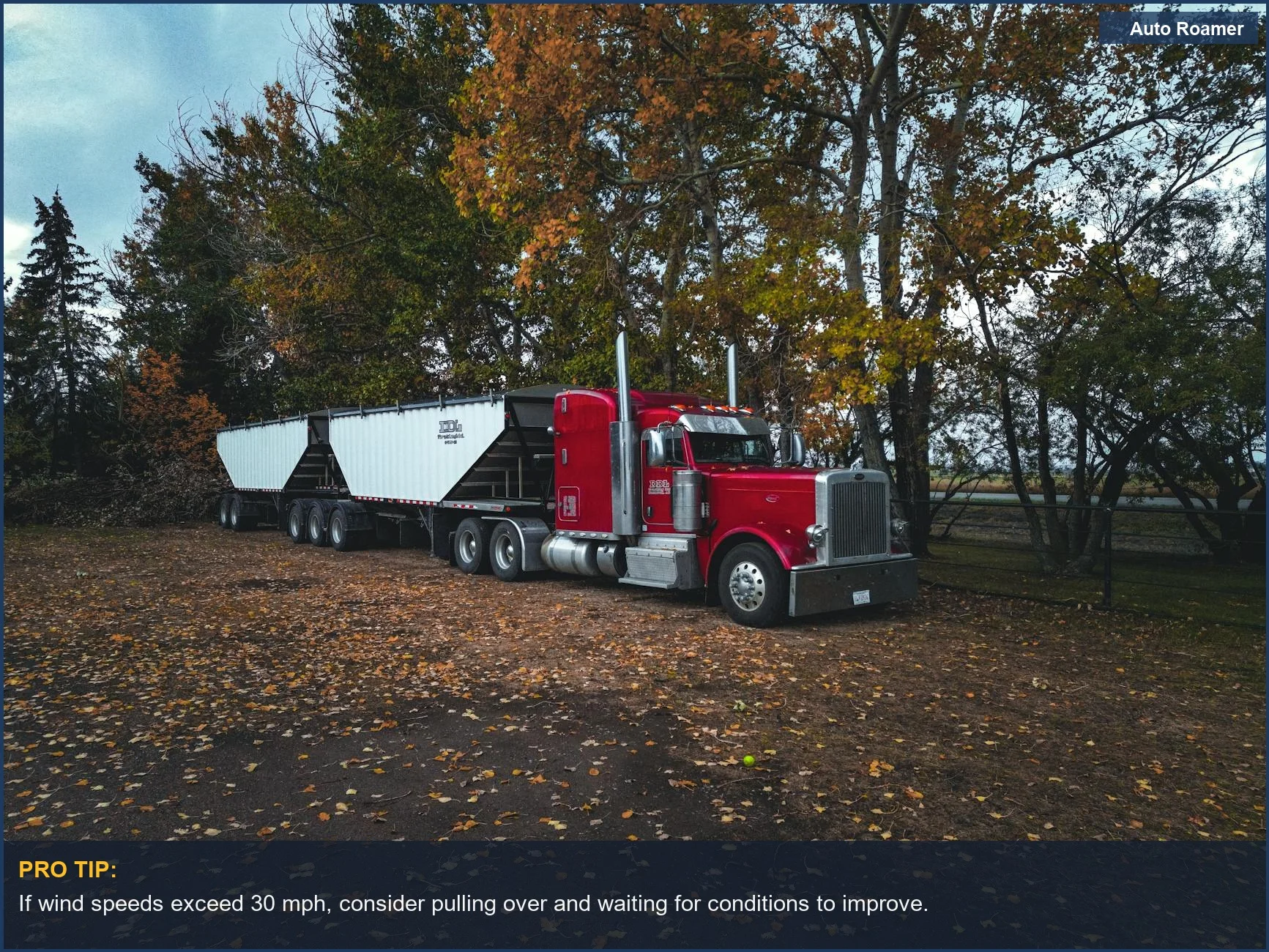
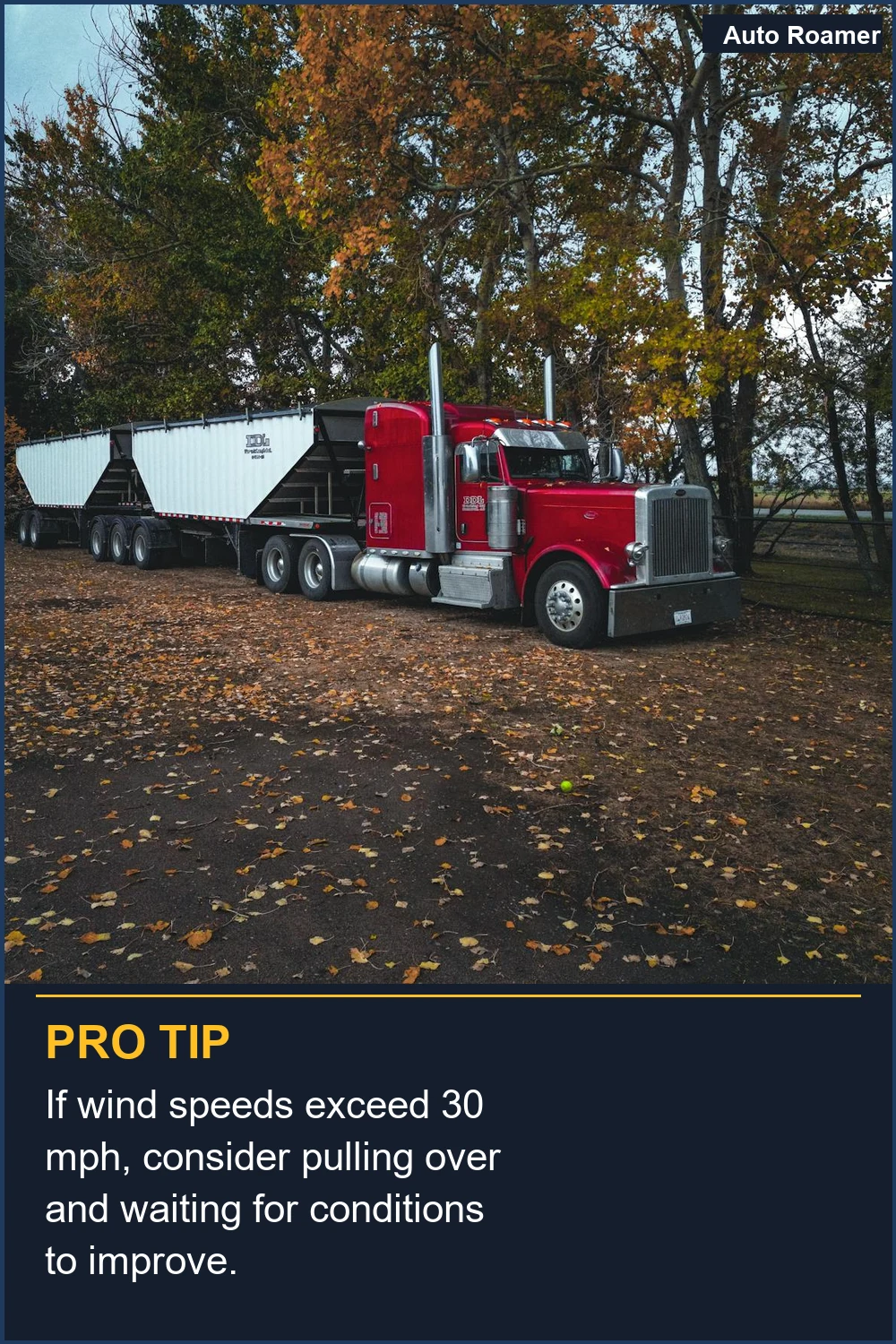
Autumn beauty surrounds this parked trailer truck, but it also serves as a reminder for drivers to be mindful of the wind speed limit for towing. Strong gusts can be dangerous.
| Photo by Peter Buhler
Autumn beauty surrounds this parked trailer truck, but it also serves as a reminder for drivers to be mindful of the wind speed limit for towing. Strong gusts can be dangerous.
| Photo by Peter Buhler
Mistakes That Cost People
Mistake Slamming on the brakes when trailer sway starts.
Why people make it It's an instinctive reaction to an emergency; you want to stop the scary movement immediately.
What actually happens Abrupt braking shifts weight forward off the trailer tongue, making the trailer even more unstable and potentially causing a complete loss of control. What To Do When Trailer Sway Starts
The fixEase off the gas pedal gradually and keep the steering wheel straight. Let the rig slow down on its own. If equipped, gently apply the trailer brake controller once speed decreases. What To Do When Trailer Sway Starts
Mistake Speeding up to "drive through" trailer sway.
Why people make it Some drivers believe a bit more speed will straighten out the trailer by increasing forward pressure on the tongue.
What actually happens While a *slight* increase *might* help in very specific, minor sway situations (and never downhill), generally, increasing speed amplifies the sway motion, turning a small wobble into a dangerous oscillation. What To Do When Trailer Sway Starts
The fix This is a non-obvious mistake. Instead of speeding up, reduce your speed significantly. If you feel sway, aim to be about 10 mph under the speed at which it started. What To Do When Trailer Sway Starts
Mistake Loading heavy items in the rear of the trailer.
Why people make it It's often easier to just slide heavier items towards the back to make space or because you think it's out of the way.
What actually happens This creates a pendulum effect, drastically reducing tongue weight and making your trailer highly susceptible to sway, especially in crosswinds. Why Does My Trailer Sway at 60 MPH?
The fixDistribute weight evenly, with approximately 60% of the trailer's weight placed over or forward of the axles. Ensure your tongue weight is between 10-15% of the total trailer weight. What To Do When Trailer Sway Starts
Mistake Ignoring sustained wind speeds.
Why people make it Drivers might feel confident in moderate winds or believe they can muscle through it.
What actually happens Even a 10 MPH breeze can affect an RV, and winds around 30 MPH and higher can be dangerous. How Much Wind is Too Much for Your RV? Sustained winds of 35 MPH or higher require extreme caution, and many drivers pull over when reported winds reach 40 MPH. When Does It Become too Windy?
The fixPull over and park if you encounter sustained winds above 35 MPH or if you feel uncomfortable, even at lower speeds. High wind warnings are often issued for winds around 40 MPH. When Does It Become too Windy?
Mistake Over-correcting the steering wheel during gusts.
Why people make it When the wind pushes the trailer sideways, the driver instinctively tries to steer back into the lane.
What actually happens Oversteering can worsen the sway and lead to a dangerous side-to-side motion, increasing instability. How Much Wind is Too Much for Your RV?
The fix Keep the steering wheel as straight as possible. Focus on maintaining your lane and letting the rig settle naturally as you decelerate. What To Do When Trailer Sway Starts
Mistake Relying solely on friction-based sway control hitches in high winds.
Why people make it Many drivers assume their existing sway control hitch is sufficient for all conditions.
What actually happens Friction-based systems can struggle significantly in strong crosswinds or when trailer sway starts at speeds above 45 mph. Trailer Sway at High Speeds Causes, Risks, and How to ... They may allow sway to build dangerously.
The fix Consider upgrading to a more robust system like a Hensley Arrow or ProPride hitch, which use different engineering principles to virtually eliminate sway by controlling the pivot point. Why Does My Trailer Sway at 60 MPH?
Mistake Driving at or near the speed limit in windy conditions.
Why people make it Drivers want to maintain their schedule and may not realize how much speed amplifies wind's effect.
What actually happens The risk of sway increases sharply once your trailer reaches about 45 mph, especially in high winds. Trailer Sway at High Speeds Causes, Risks, and How to ... Driving at 60 mph and beyond can make small sways amplify quickly. Why Does My Trailer Sway at 60 MPH?
The fixReduce your speed to well below the speed limit. Keeping speed below 60-65 mph is a common recommendation, but listen to your rig and pull over if you feel any instability. Towing in 20-25mph winds : r/GoRVing
In addition to merging safely, knowing what to do in case of a flat tire on the highway is crucial; refer to our guide on flat tire procedures.
Key Takeaways
Trailer sway is fundamentally a weight distribution problem, not just a wind problem. A properly loaded trailer with adequate tongue weight (10-15% of total weight) acts as a stable unit. Wind exacerbates instability when this crucial balance is off, turning a manageable situation into a dangerous pendulum effect.
Sustained crosswinds above 30 mph significantly increase the risk of trailer sway, with 40-50 mph winds often prompting experienced drivers to pull over entirely. Don't push your luck; if you feel uncomfortable, slow down to the minimum legal speed or find a safe place to wait out the gusts.
When trailer sway starts, do NOT brake the tow vehicle. Instead, ease off the accelerator and let the rig slow naturally. If equipped, gently apply the trailer brake controller. Braking the tow vehicle can shift weight off the tongue, worsening sway instantly.
Once you regain control after sway, pull over to inspect your load. Ensure about 60% of the trailer's weight is forward of the axles, and secure all cargo to prevent shifting. On the road, maintain a speed about 10 mph slower than when sway began to be safe.
The single most important thing to remember about towing in high winds is: trailer sway is a weight distribution problem - get your tongue weight right and wind becomes manageable.
When navigating strong winds, knowing how to safely pull over can enhance your driving safety.
Frequently Asked Questions
At what wind speed should I start worrying about towing my travel trailer?
We've found that sustained winds around 35 mph are a good trigger to start looking for a place to pull over. While some folks might push through 40-50 mph winds, especially with a heavier rig and good hitch setup, anything over that and you're really tempting fate. If you're feeling uncomfortable, even at 25 mph gusts, it's always better to find a safe spot and wait it out; your destination will still be there. IRV2 and Good Sam both suggest pulling over in the 40-50 mph range.
Does a weight distribution hitch actually help with trailer sway in crosswinds?
Absolutely. A properly set up weight distribution hitch (WDH) is crucial for stability, especially in crosswinds. It helps balance the load across your tow vehicle's axles, which makes the entire rig less susceptible to being pushed around by gusts. We've seen firsthand how a good WDH, when paired with adequate tongue weight (10-15% of trailer weight), significantly reduces that unsettling feeling of the trailer wanting to drift. Hensley Mfg. highlights this as a key prevention method.
Should I use cruise control when towing in high winds?
No, definitely not. When you're dealing with crosswinds or sudden gusts, you need to be in complete control of your speed. Cruise control can react unpredictably to wind, potentially accelerating when you need to slow down or maintain a steady pace. We always recommend maintaining a speed that feels comfortable and allows for quick, smooth adjustments, often 10 mph below the speed where you first notice sway starting. Blue Ox advises against sudden braking, and maintaining manual speed control is paramount.
Can I add sway control to any trailer hitch I already have?
You can often add friction-style sway control devices to many existing hitches, typically clamping onto the trailer's A-frame. However, these systems have limitations and can struggle in severe crosswinds or with heavier trailers. For truly robust sway elimination, especially in high winds, you might need to consider a more advanced system like a ProPride or Hensley hitch, which fundamentally redesigns the connection point to prevent sway. ProPride Hitch explains how their technology offers superior control over friction-based systems.
Are bumper pull trailers more dangerous in crosswinds than fifth wheels?
Generally speaking, yes, bumper pull trailers, especially those with shorter wheelbases or lighter construction, can be more susceptible to trailer sway crosswind issues compared to fifth wheels. The higher hitch point and longer connection on a fifth wheel tend to offer more inherent stability. However, a well-loaded bumper pull with a good weight distribution and anti-sway hitch can be very stable, while a poorly loaded fifth wheel can still present challenges. RV Forum discussions often point out that lighter rigs are more affected by wind.