How to Merge Onto the Highway Safely: What Most Drivers Get Wrong
Auto Roamer
12 min read
Includes Video
Merging onto the highway requires matching traffic speed before the merge point. Don't wait until you're on the highway. We've seen countless issues when drivers brake on the ramp. Aim to get to highway speed on the ramp itself. This highway merge technique is critical for merging onto freeway safely.
You're on the on-ramp, and it's shorter than you hoped. Ahead, a semi-truck occupies the right lane, and the traffic on the highway is a solid, fast-moving stream. This is the moment every nervous driver dreads - the panic of running out of space and the desperate need to merge onto the highway safely. Merging is one of the most stressful maneuvers we learn, and it's crucial for avoiding dangerous situations. According to the National Highway Traffic Safety Administration (NHTSA), improper merging or lane changes contribute to nearly 300,000 crashes annually Safeway Driving. This isn't just about passing a test; it's about preventing collisions, which accounted for about 574,000 crashes in 2019 alone What Is a Merging Accident?. Getting this right means understanding the flow of traffic and positioning your vehicle correctly, not just hoping for a gap.
Key specifications for how to merge onto the highway safely and confidently
The Short Answer
To merge onto the highway safely, match traffic speed BEFORE the merge point, not after. This is the most common mistake and a primary cause of merge accidents.
Most drivers mistakenly brake on the entrance ramp, creating a dangerous speed differential. Use the ramp as an acceleration lane to match highway traffic flow. You don't have the right of way when merging; you must adapt. Merging at 40mph into 70mph traffic is a recipe for disaster. Mastering freeway merging requires proactive speed management.
Think of the highway as a river of cars. Accelerate on the ramp until you're flowing at the same speed. Look for a sufficient gap to enter, adjusting your speed slightly to fit smoothly. This is a "zipper merge"-finding a space to slide into, not forcing your way. If you're too slow, highway cars will reach you too quickly, making it hard for them to react or for you to find a safe opening.
Data from the NHTSA shows encroaching from an adjacent lane (34.9%) is a significant crash factor, with improper merging contributing. Merging or lane-change accidents accounted for about 574,000 crashes in 2019 according to NHTSA data. Be at highway speed as you enter the freeway. If your ramp is short and you can't build speed, pull over to the shoulder, wait for a larger gap, accelerate on the shoulder, then merge.
A safe merge involves observation, acceleration, and execution. Observe traffic while accelerating on the ramp, identify a gap, signal, and then execute the merge by matching speed and steering smoothly into the opening. This proactive approach builds confidence and reduces accident risk.
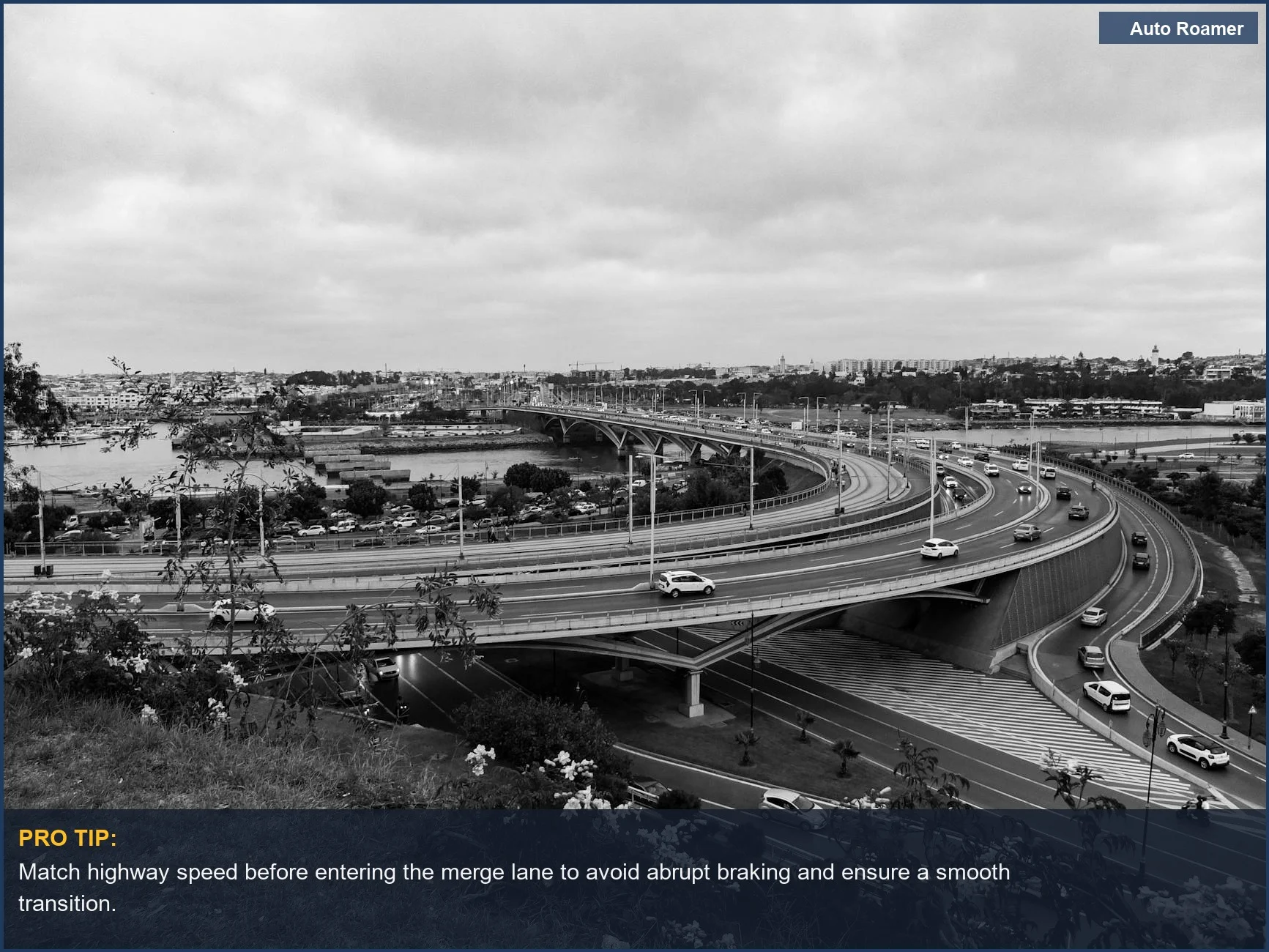
Navigating busy urban highways requires matching traffic speed before merging. This crucial step, often overlooked, is key to a safe highway merge technique.
| Photo by MAG Photography
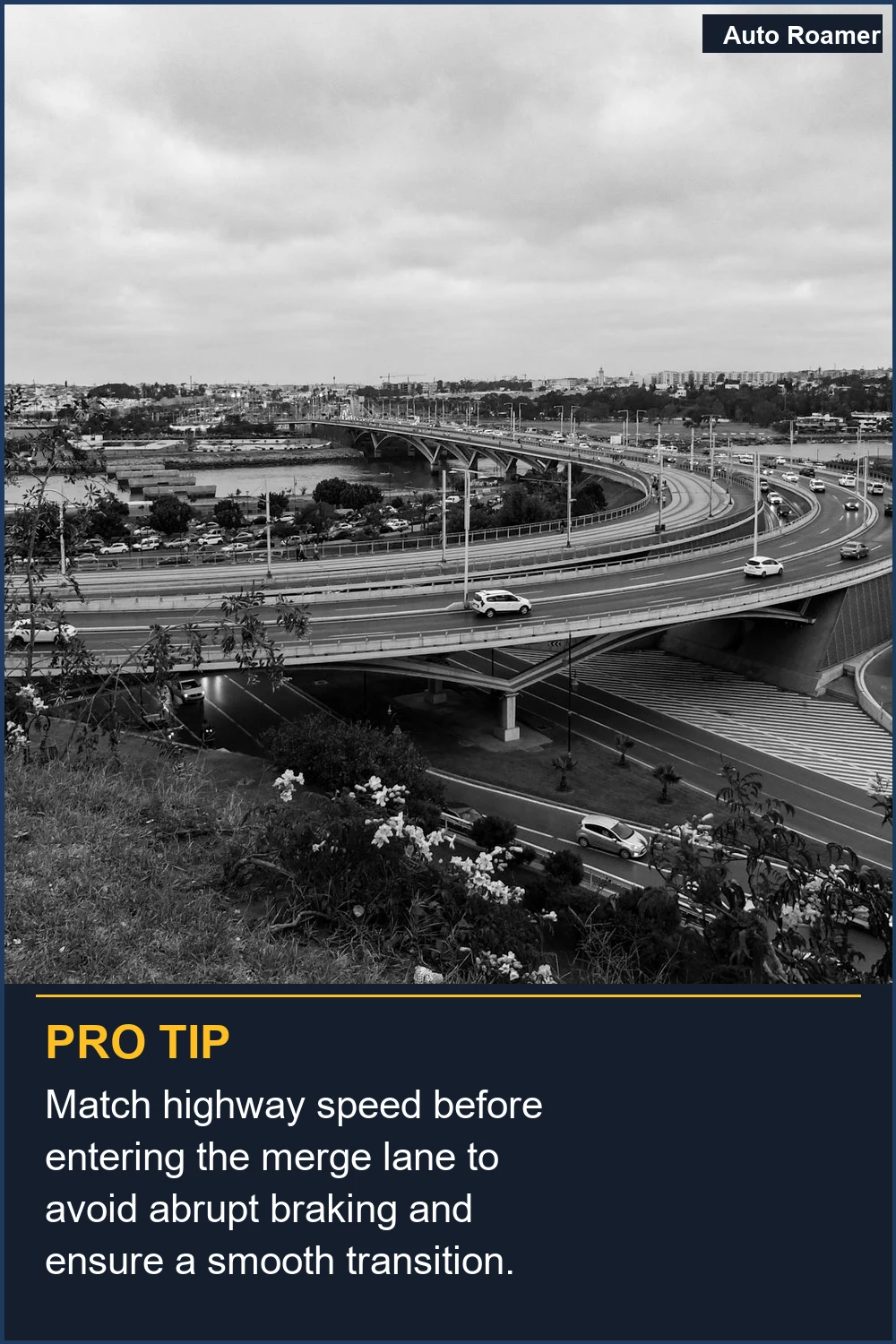
Navigating busy urban highways requires matching traffic speed before merging. This crucial step, often overlooked, is key to a safe highway merge technique.
| Photo by MAG Photography
What You Need to Know
1
Read the ramp type and traffic flow - Before you even reach the highway, assess the ramp. A long acceleration lane offers ample opportunity to build speed, while a short ramp demands immediate acceleration. Cloverleaf ramps can sometimes have shorter merging sections, requiring you to be more decisive. Glance ahead to understand the traffic pace on the highway. Don't get stuck behind a slow vehicle on the ramp if you can avoid it.
2
Accelerate to match highway speed - This is where most drivers get it wrong. The absolute key to merging onto the highway safely is to match the speed of the traffic you intend to join. Do NOT brake on the ramp. Use the entire length of the acceleration lane to build your speed. For a sedan, this might be easier than for a loaded SUV or a truck, which will require more distance to reach highway speeds. The goal is to be traveling at approximately the same speed as the cars in the lane you're merging into. Attempting to merge at 40-50 mph into traffic going 60-70 mph is a recipe for disaster and is a leading cause of merge accidents Mastering Freeway Merging: A Comprehensive Guide - YouTube.
3
The mirror-shoulder-mirror check sequence - Once you're accelerating and approaching the merge point, it's time for your scan. Begin with your rearview mirror, then your right-side mirror, and finally, perform a quick head check over your right shoulder to catch your blind spot. This comprehensive check ensures you see all surrounding vehicles. This is the widely taught SMOG technique: Signal, Mirror, Outside Mirror, Glance over your shoulder How to Safely Merge Onto the Highway: A Beginner's Guide.
4
Signal and find your gap - As you check your mirrors, signal your intention to merge. This gives drivers on the highway advance notice of your presence. Look for a gap in traffic that's large enough for your vehicle to fit comfortably. Remember, you don't have the right of way; you must merge into a safe opening. Many drivers fail to signal early, leading to confusion and potential collisions How to Safely Merge Onto the Highway: A Beginner's Guide.
5
Execute the merge smoothly - Once you've identified your gap and confirmed it's clear, gently steer your vehicle into the highway lane. Maintain your speed and avoid sudden braking or jerky movements. The goal is a seamless transition. If there's no gap, and you're running out of acceleration lane, the safest option is to pull onto the shoulder and wait for traffic to clear before merging Merging onto highway safely and responsibly - Facebook. Failing to yield the right-of-way is a common cause of merging accidents What Is a Merging Accident?.
Once you've mastered merging onto the highway, knowing how to safely pull over is equally important.
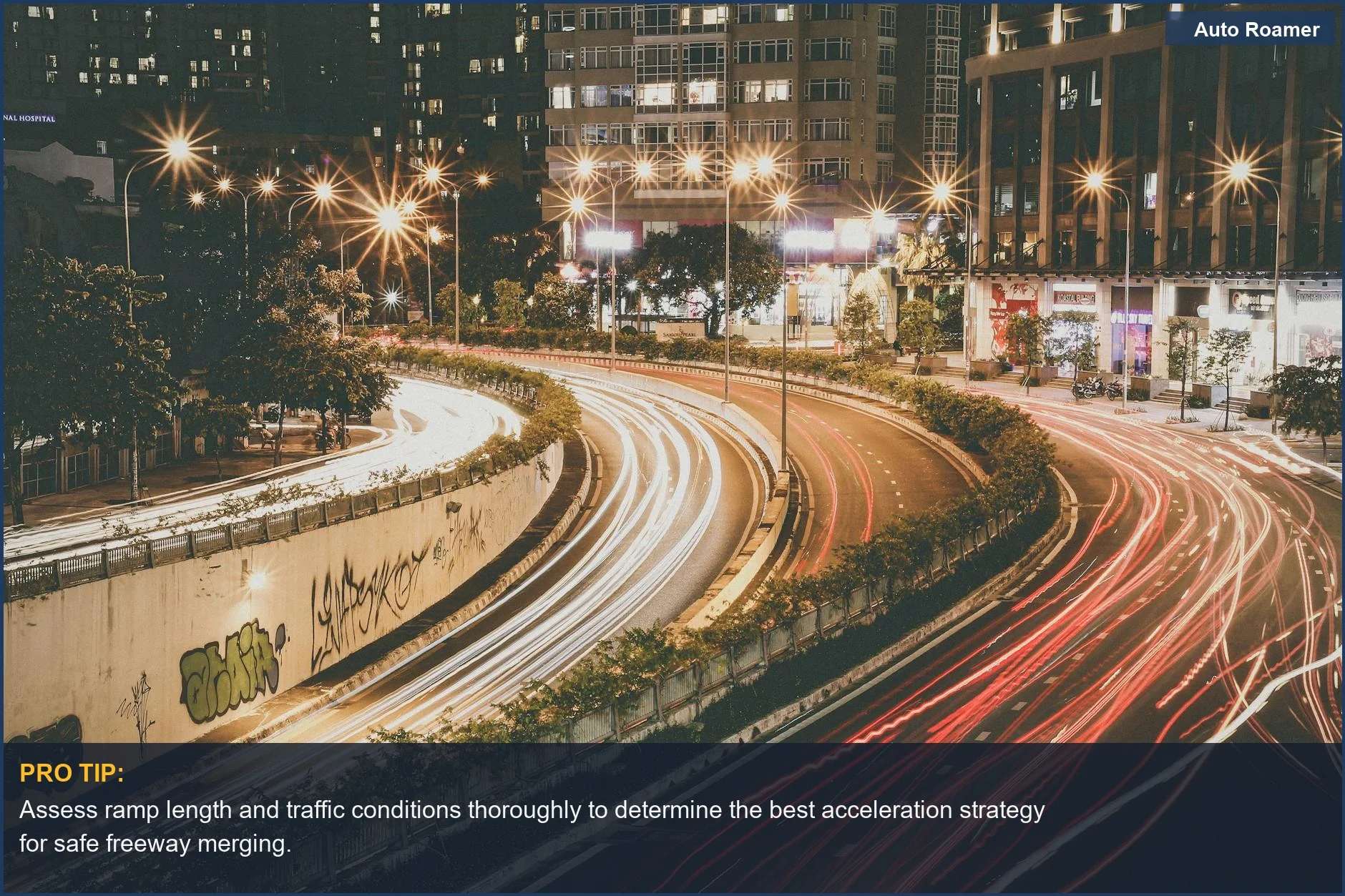
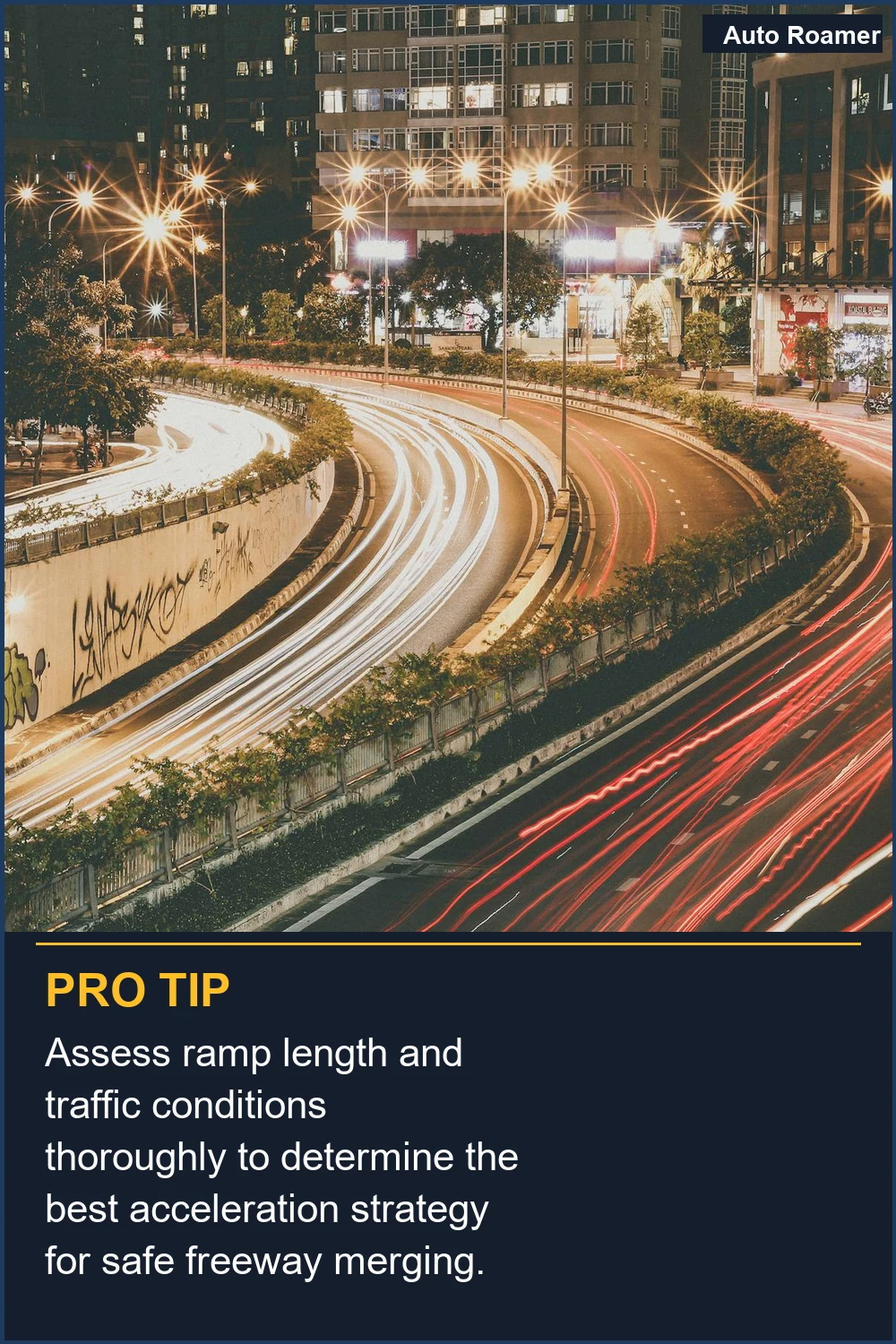
Vibrant nighttime expressways highlight different ramp types. Understand your ramp's length to build adequate speed before merging onto the freeway safely.
| Photo by Kha Ruxury
Vibrant nighttime expressways highlight different ramp types. Understand your ramp's length to build adequate speed before merging onto the freeway safely.
| Photo by Kha Ruxury
How to Handle This
1
Accelerate to highway speed - This is non-negotiable. Do NOT attempt to merge onto a highway where traffic is moving 60-70 mph while you're only going 40-50 mph. Mastering Freeway Merging: A Comprehensive Guide - YouTube tells it straight: this is how close calls and accidents happen. Use the entire acceleration lane to build speed. Braking on the ramp creates a hazard.
2
Signal, scan, and find your gap - Once accelerating, signal your intention to merge early. Then, check your mirrors and perform a shoulder check to confirm a safe space. Many drivers skip the shoulder check, relying only on mirrors, a common cause of accidents How to Safely Merge Onto the Highway: A Beginner's Guide.
3
Merge smoothly, don't stop - The goal is to enter the lane seamlessly. Stopping on the on-ramp forces traffic behind you to brake suddenly, increasing rear-end collision risk. What Is a Merging Accident? highlights that merging or lane-change accidents accounted for about 574,000 crashes in 2019 alone. Match the speed of traffic and slide into an available gap.
4
The "no gap" bail-out plan - If there's no safe gap, do not force it. The law states the merger must adjust or yield new driver - how to merge onto highway? : r/driving - Reddit. Continue accelerating on the shoulder if safe and clear, and wait for a gap. Stopping is the worst possible action.
5
Heavy vs. light traffic tactics - In heavy traffic, be more aggressive matching speed and finding small gaps. In light traffic, you have more flexibility, but always accelerate to highway speed. Don't get complacent; a car at 70 mph is a hazard if you're at 45 mph.
Knowing how to signal your intentions is crucial, especially when you need to safely pull over on the highway.
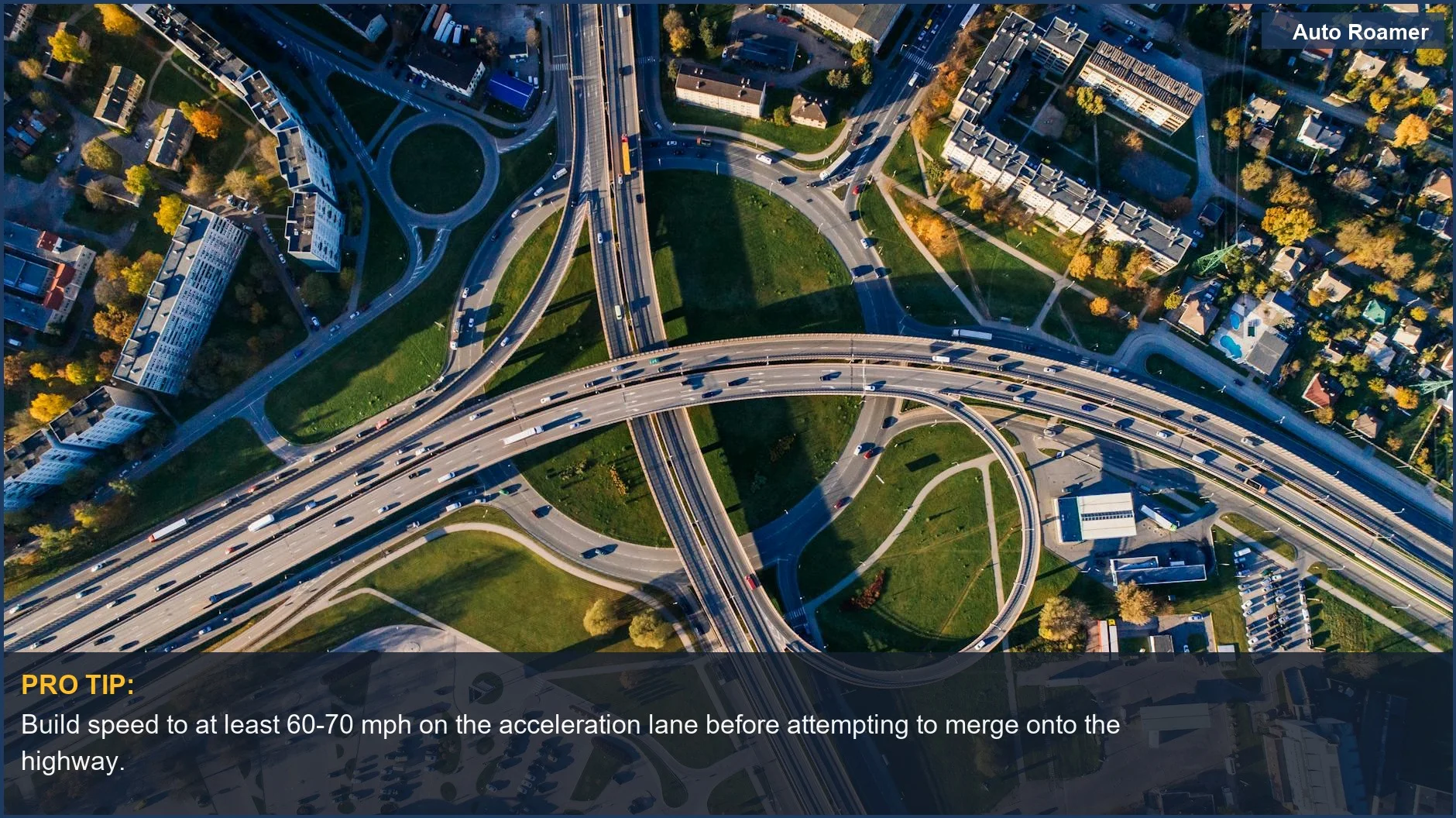
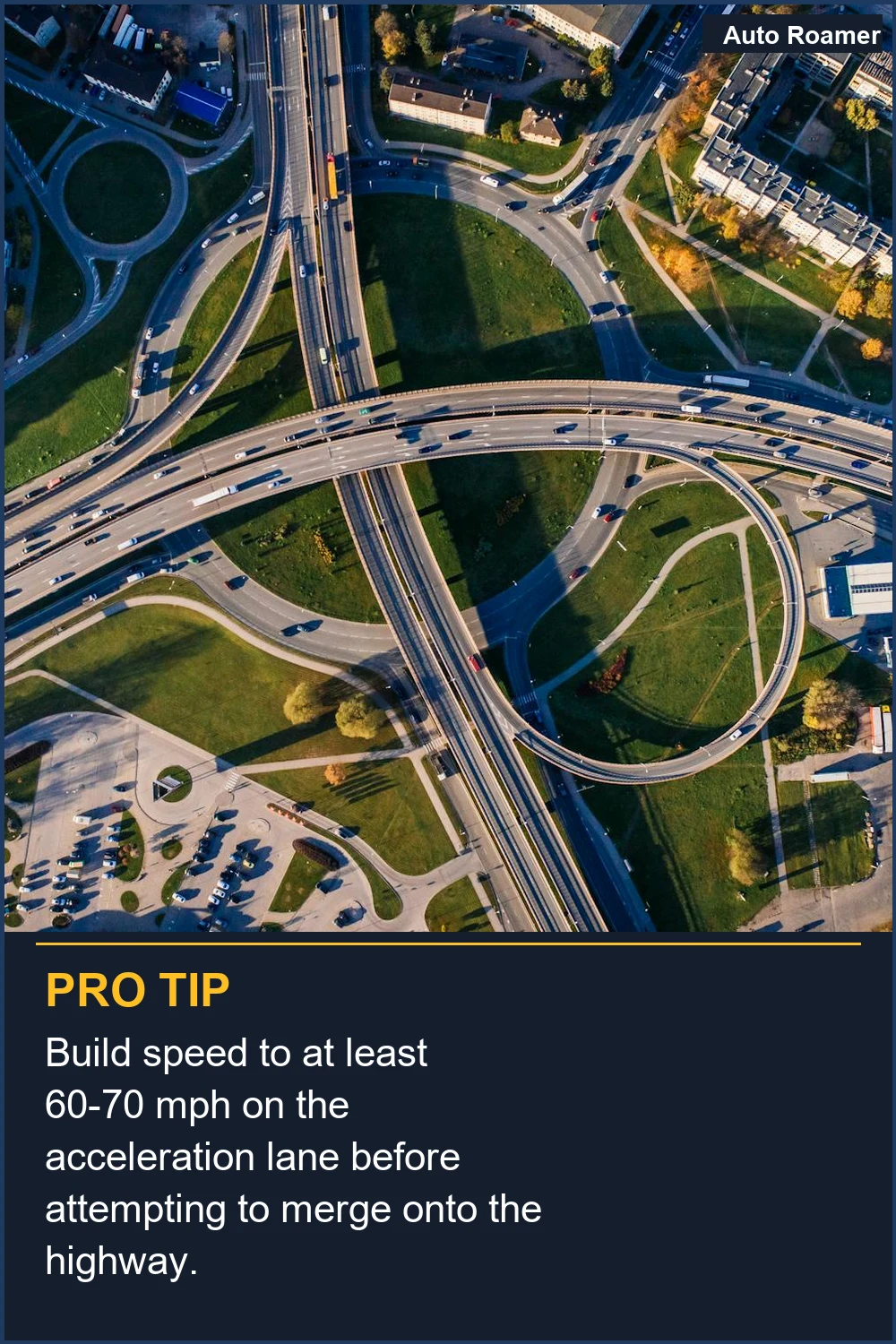
Complex highway intersections demand preparation. Accelerate to the speed of traffic on the on ramp merge tips to ensure a confident entry.
| Photo by Aleksejs Bergmanis
Complex highway intersections demand preparation. Accelerate to the speed of traffic on the on ramp merge tips to ensure a confident entry.
| Photo by Aleksejs Bergmanis
What This Looks Like in Practice
Short Cloverleaf Ramp in a Honda Civic During Rush Hour We've all been there: a tiny cloverleaf ramp, no real acceleration lane, and traffic at 65 mph. The correct approach is to use every inch of that ramp to get as close to highway speed as possible *before* you see the traffic. If you can't build enough speed and there's no gap, pull onto the shoulder and wait for a larger opening, then merge from the shoulder at speed, as reported on Facebook.
Long Acceleration Lane in a Toyota Tacoma into Light Traffic This is your golden opportunity. The key here is to use the full length of the lane to match highway traffic speed. Don't just aim for 50 mph if traffic is doing 70 mph; get as close as you can. Failing to match speed is a primary cause of merge accidents, as highlighted in r/driving. Be parallel with a gap, not forcing your way in.
Merging in an Unfamiliar Rental Car Don't get distracted by unfamiliar controls. Rental cars have different blind spots, braking feel, and acceleration. Before the ramp, familiarize yourself with the mirrors and acceleration. The core principle: match highway speed. A SafeWay Driving guide stresses the SMOG (Signal, Mirror, Outside Mirror, Glance over shoulder) technique, crucial when situational awareness is compromised.
Tight Urban Ramp with No Acceleration Lane This is the most dangerous scenario, dumping you directly into fast traffic. The absolute worst thing you can do is stop on the ramp. This creates an immediate hazard and is a leading cause of merge accidents, accounting for approximately 574,000 crashes in 2019 according to NHTSA data. Maintain speed, look for the first available gap, and signal early. If no gap appears, be prepared to hug or use the shoulder to accelerate if necessary and safe, as discussed in driving forums.
In case you find yourself stuck in traffic with a stalled vehicle, knowing what to do can help.
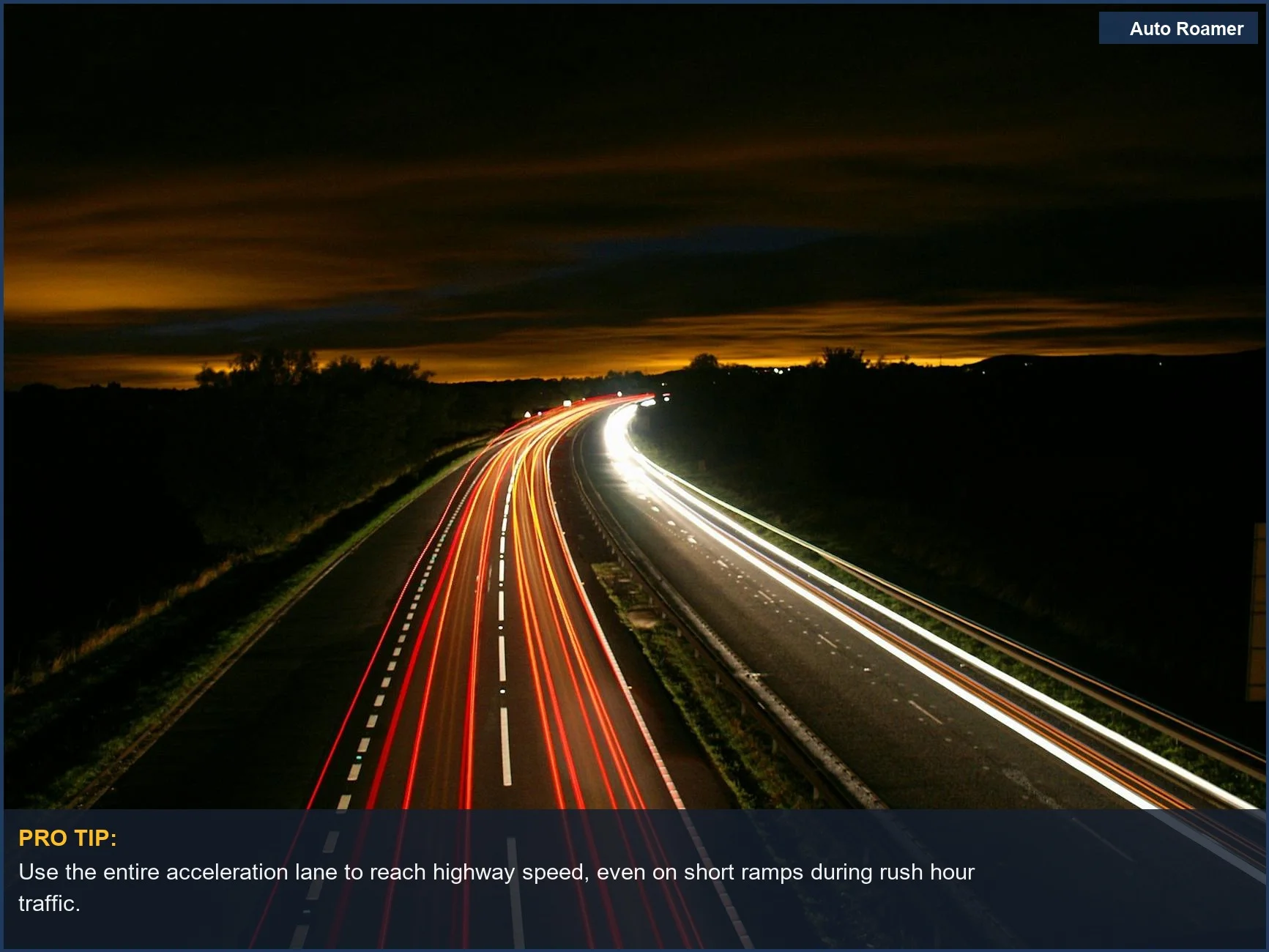
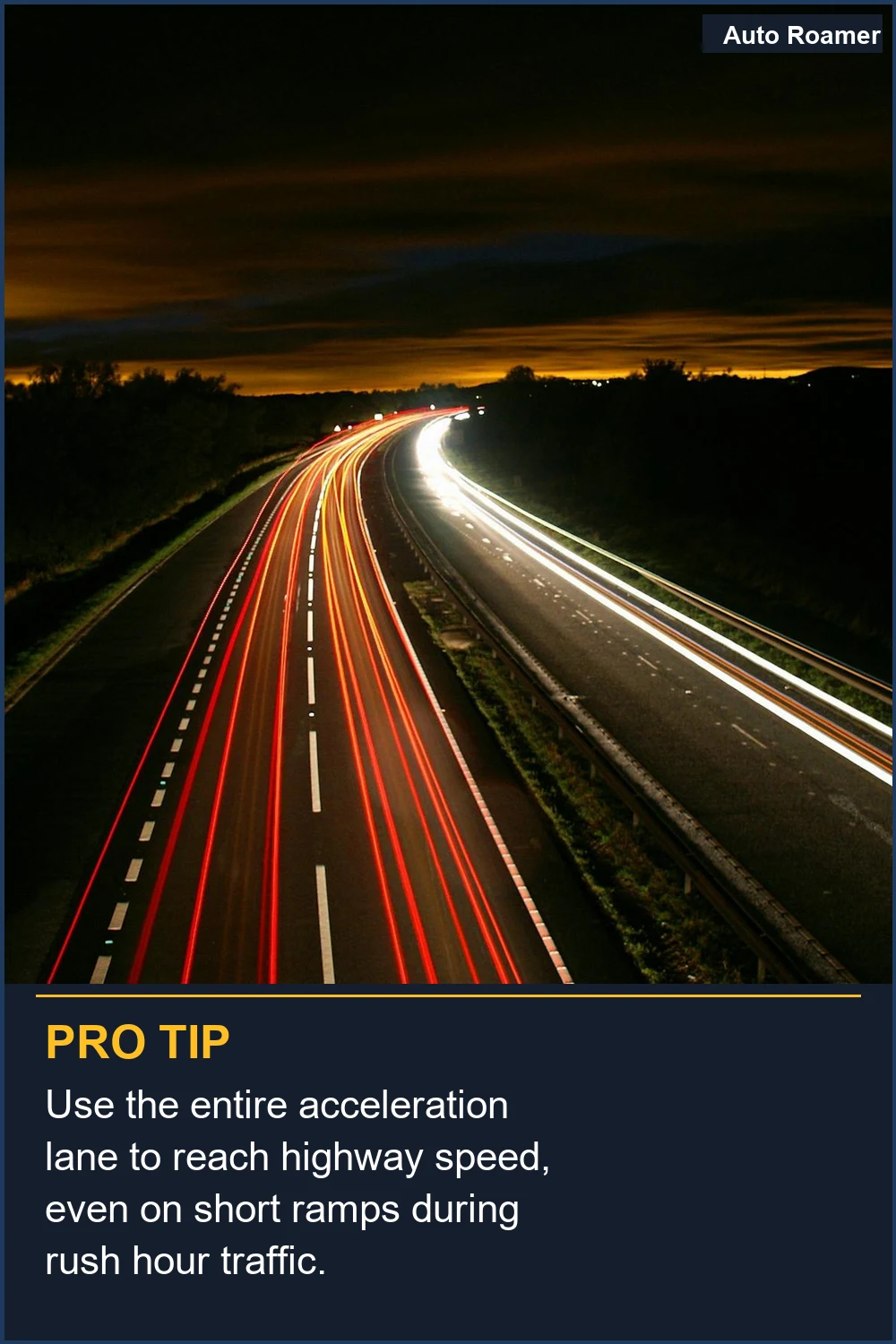
Rush hour traffic at night can be daunting. Utilize the full acceleration lane to reach highway speed before merging, even on short ramps.
| Photo by Pixabay
Rush hour traffic at night can be daunting. Utilize the full acceleration lane to reach highway speed before merging, even on short ramps.
| Photo by Pixabay
Mistakes That Cost People
Mistake Stopping on the on-ramp.
Why people make it Panic, uncertainty about traffic speed, or waiting for a massive gap.
What actually happens You become a stationary hazard. Drivers behind you brake hard, risking a rear-end collision. You also lose momentum, making merging harder.
The fixNever stop on the on-ramp unless avoiding an imminent collision. Use the ramp to accelerate and match traffic. The law often requires mergers to yield if they can't merge safely. New driver - how to merge onto highway? : r/driving - Reddit
Mistake Merging at a significantly lower speed than highway traffic.
Why people make it Fear of fast traffic, underestimating ramp acceleration, or misjudging approaching vehicle speeds.
What actually happens You create a dangerous speed differential. Highway vehicles have less reaction time, leading to sudden braking and potential crashes. Merging accidents accounted for about 574,000 crashes in 2019 What Is a Merging Accident?.
Mistake Relying solely on mirrors and neglecting the shoulder check.
Why people make it Overconfidence in technology or keeping eyes forward.
What actually happens Mirrors miss vehicles in your blind spot, especially smaller ones like motorcycles. This can lead to a collision when you merge.
The fix Always perform a quick, decisive glance over your shoulder after checking mirrors. This is key to the SMOG technique (Signal, Mirror, Over your shoulder, Go) How to Safely Merge Onto the Highway: A Beginner's Guide. Blind spot monitors help but don't replace this manual check.
Mistake Waiting for a massive gap instead of actively finding one.
Why people make it Desire for a perfectly clear path or misunderstanding high-speed traffic flow.
What actually happens You might wait indefinitely, or worse, force your way into a gap that's too small, causing sudden braking and rear-end collisions What Is a Merging Accident?.
The fix At highway speeds, gaps appear and disappear rapidly. Find a space to smoothly enter and match speed, even if it means adjusting behind a vehicle. It's about timing and adjustment, not waiting for perfection.
Mistake Signaling too late or not at all.
Why people make it Rushing the merge, forgetting to signal, or assuming others will see you.
What actually happens Other drivers are surprised and may not have time to react, leading to dangerous situations and accidents. Proper signaling is crucial for communication How to Safely Merge Onto the Highway: A Beginner's Guide.
The fixSignal your intention to merge well in advance, as you begin accelerating on the ramp. This gives other drivers ample warning.
Mistake Over-reliance on lane-assist or adaptive cruise control for merging.
Why people make it Trusting technology without understanding its limitations in complex merges.
What actually happens These systems can misjudge gaps, hesitate, or brake erratically, leaving you unprepared to take over and potentially causing a loss of control.
The fixAlways maintain active control. These systems are aids, not replacements for attentive driving. Be ready to disengage them and take manual control, especially during the merge.
Navigating toll roads smoothly is just one aspect of driving; understanding how to stay safe in construction zones is equally important, so consider our tips on driving safely in construction zones.
Key Takeaways
Speed UP on the ramp. This is the single biggest mistake drivers make. Braking on the on-ramp creates a dangerous speed differential and forces traffic to react. You must match the speed of highway traffic before you merge, not after. The law requires the merging driver to adjust to the flow of traffic New driver - how to merge onto highway? : r/driving - Reddit.
Merging is about finding and matching a gap, not forcing your way in. Scan ahead, use your mirrors and blind spot check, and accelerate to match the speed of the vehicles already on the highway. This makes you predictable How to Merge Onto the Highway Without Crashing: 9 Steps - wikiHow.
Understand that merging accidents are common, accounting for about 574,000 crashes in 2019 alone What Is a Merging Accident?. These aren't just fender-benders; they cause significant injuries and fatalities. Proper technique prevents you from becoming a statistic.
The most important takeaway is to accelerate on the ramp to match highway speed. Do not attempt to merge onto a highway where traffic is going 60-70mph if you are only going 40-50mph Mastering Freeway Merging: A Comprehensive Guide - YouTube.
Once you've mastered merging onto the highway, it's crucial to understand how to safely pass a semi truck nearby.
Frequently Asked Questions
When I'm on the on-ramp, how fast should I be going before I try to get onto the highway?
You need to match the speed of the traffic already on the highway. Use the entire length of the on-ramp to accelerate. We've seen that trying to merge when you're going 15-20 mph slower than highway traffic, say 40 mph into 60 mph traffic, is a recipe for disaster. Aim to be at or very close to the speed of the cars already moving.
When I'm merging, who has the right of way?
The cars already on the highway have the right of way. As the merging driver, you're responsible for finding a safe gap and adjusting your speed. It's like joining a moving train - you have to find your spot without disrupting the flow. This is a critical point, as failure to yield often leads to accidents, according to NHTSA data.
What do I do if there's no space to merge into on the highway?
If you can't find a gap, don't stop on the ramp if you can avoid it; instead, pull onto the shoulder of the ramp and wait for traffic to clear. Once there's a sufficient opening, accelerate on the shoulder and merge. Some drivers panic and try to force their way in, but patience and using the shoulder strategically are safer bets.
Is it against the law to stop on a highway on-ramp?
Generally, yes, it's illegal and unsafe to stop on a highway on-ramp unless absolutely necessary for traffic or safety. Stopping creates a hazard for vehicles behind you. If you must stop, do so briefly to assess traffic, but the goal is always to keep moving and accelerate to match highway speeds.
How do I merge onto a busy highway when no one seems to be letting me in?
In heavy traffic, patience is key. Continue to accelerate on the ramp and look for the smallest gap. If drivers aren't yielding, you might have to adjust your speed slightly - slowing down a bit more if there's a large gap behind a car, or speeding up if you see a smaller opening. Sometimes, you might need to use the shoulder to safely wait for a better opportunity, as suggested in some driving forums.