
How to Keep Car Battery From Dying While Camping (2026 Complete Guide)
Forget the 'fresh air' and 'stargazing' nonsense; the real buzzkill camping is a dead 12V lead-acid battery. I've seen too many weekend warriors stranded with a dead rig because they thought a cooler light only drew 'a little power.' That 'little power' adds up to a 60Ah battery being flat in 48 hours if you're pulling just 625mA.
Forget the 'fresh air' and 'stargazing' nonsense; the real buzzkill camping is a dead 12V lead-acid battery. I've seen too many weekend warriors stranded with a dead rig because they thought a cooler light only drew 'a little power.' That 'little power' adds up to a 60Ah battery being flat in 48 hours if you're pulling just 625mA. Ignorance isn't bliss when you're 50 miles from pavement. Facebook groups are full of these stories. Don't be that guy.
The Short Answer
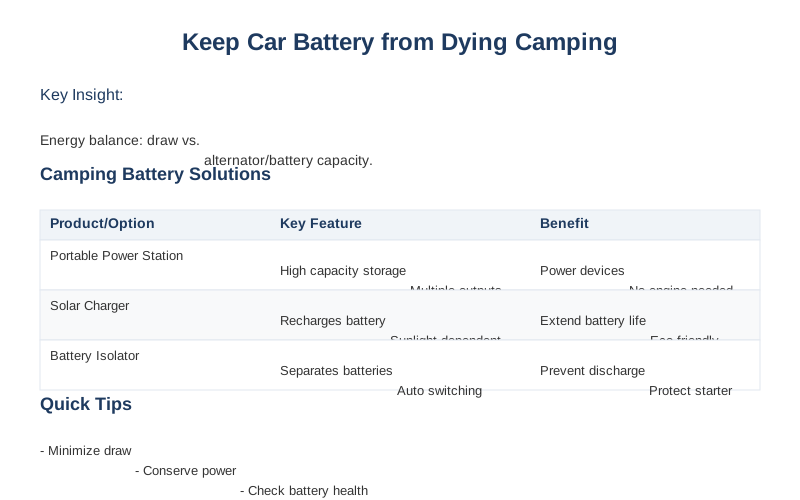
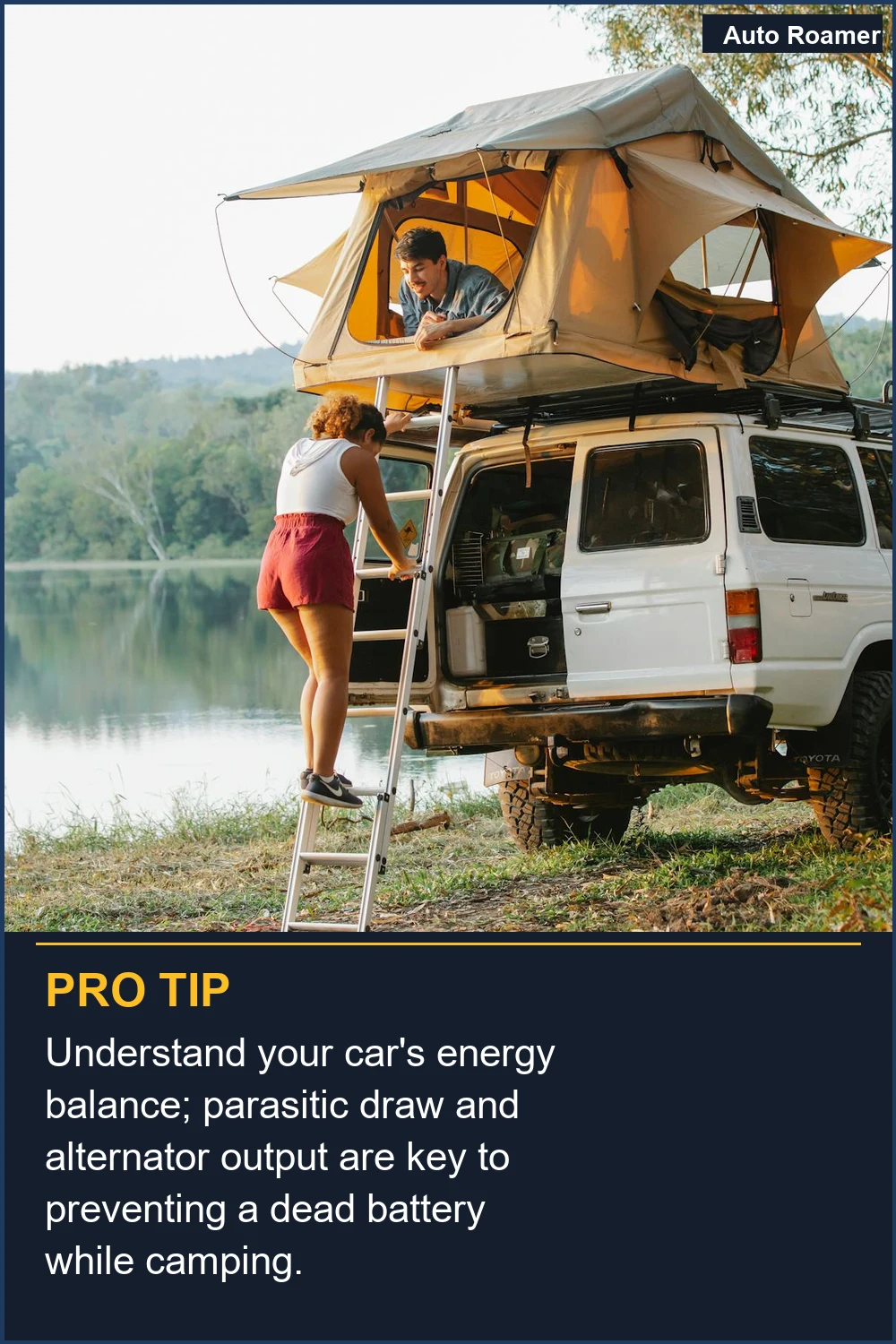
Every electrical component in your vehicle has a current draw, measured in amps (A). Your battery has a limited capacity, measured in amp-hours (Ah). If the total current draw, including parasitic loads, exceeds what the alternator can supply when the engine runs, or if the engine isn't running, the battery voltage will drop below the 10.5V threshold required to crank the starter. This isn't some deep mystery.
Cold weather compounds this. A lead-acid battery's chemical reaction kinetics slow down significantly as temperature drops. At 0 degrees F, a battery might only deliver 60% of its rated capacity. Meanwhile, engine oil thickens, increasing the mechanical resistance the starter motor has to overcome, demanding more current. More demand, less supply. It's a double whammy for your battery.
Accessory use, like charging phones or running a fridge, adds to this draw. A typical 12V fridge can pull 3-5A. Leave that running overnight for 8 hours, and you've drained 24-40Ah from a battery that might only have 60Ah usable capacity before it's too low to start. That's assuming a perfect battery, which you probably don't have.
Even with the engine off, your vehicle's body control module, alarm system, and radio memory draw current. This is parasitic draw. A healthy vehicle typically has a parasitic draw of 20-50mA. Anything above 80mA is a problem. At 80mA, a 60Ah battery is dead in 31 days. Add a dashcam or an aftermarket stereo, and that number shrinks fast.
Summer heat actually accelerates battery degradation too, often shortening lifespan to 30 months in warm climates compared to 51 months in cold ones.
The alternator charges the battery, but it needs consistent RPMs to do its job effectively. Short drives, idling, or running accessories with the engine off prevent a full recharge. The battery's state of charge perpetually declines. It's a downward spiral. The physics are non-negotiable.

The Reality Check
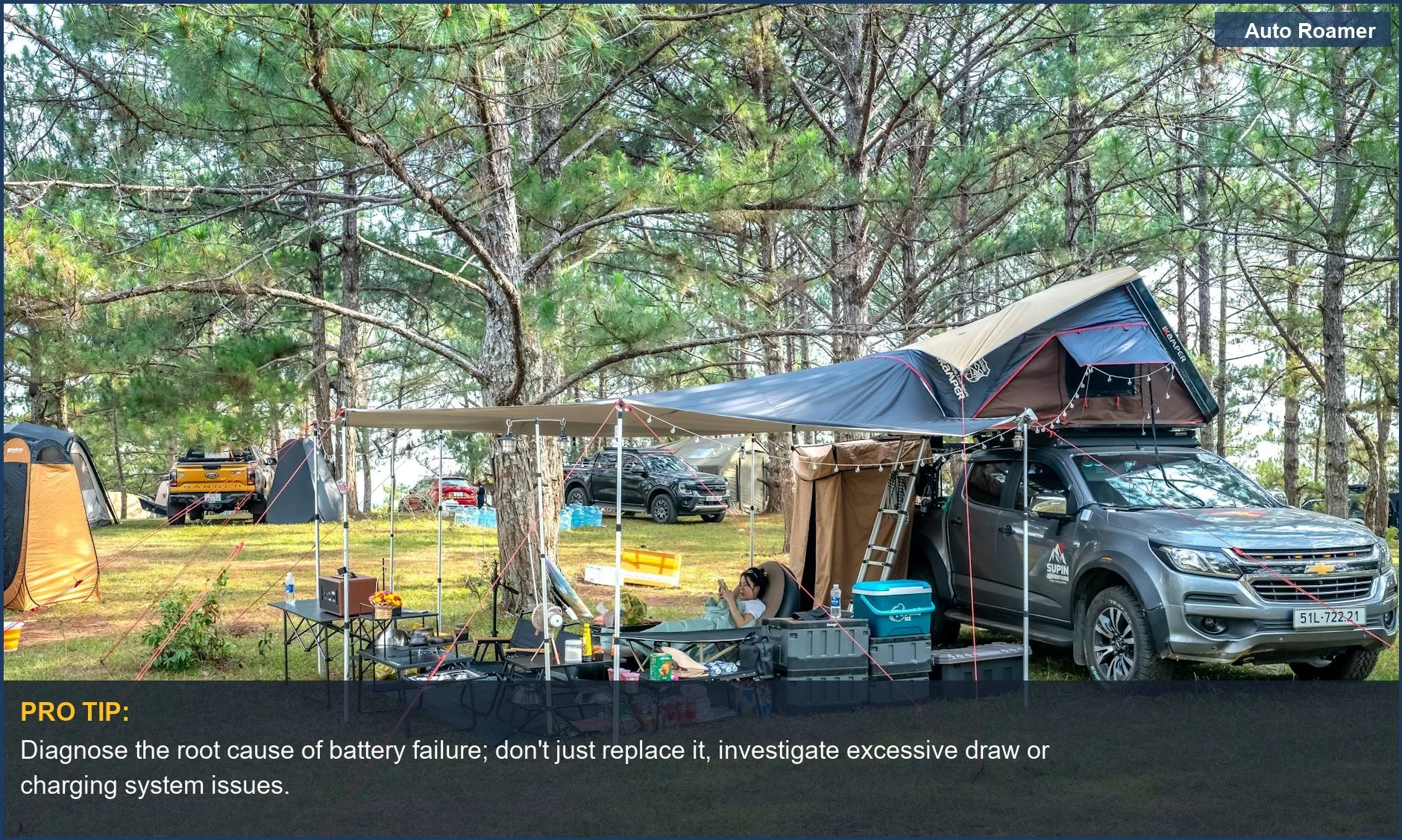
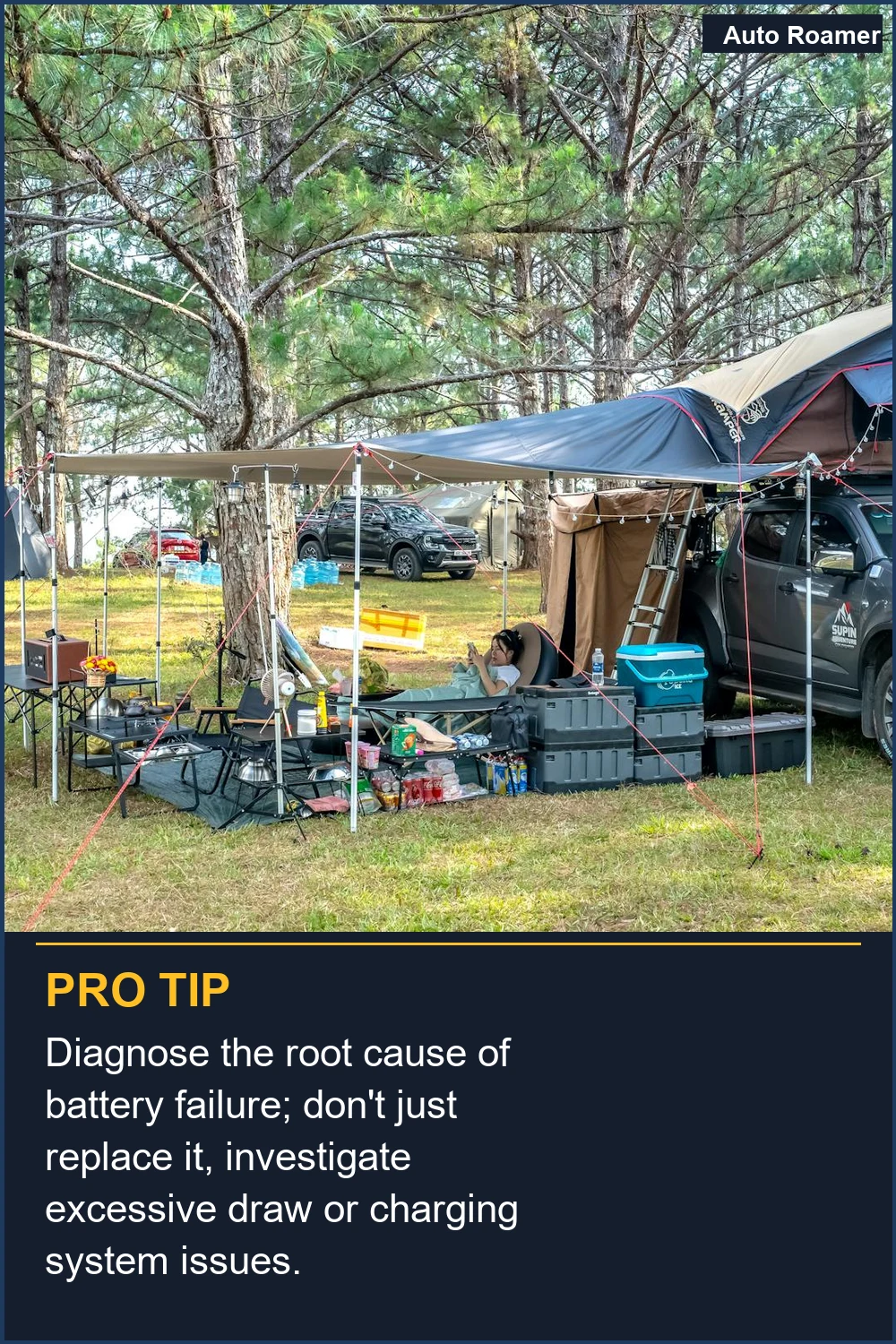
The 'battery is dead' diagnosis is rarely the full story. It's a symptom. The underlying failure mode is usually a combination of inadequate reserve capacity, excessive current draw, or a degraded charging system. Don't just swap the battery; figure out why it died. Otherwise, you'll be buying another one in six months. YouTube is full of guys just swapping batteries, never fixing the root cause.
Your battery's usable capacity isn't its advertised Ah rating. A lead-acid battery shouldn't be discharged below 50% state of charge to maximize its cycle life. So, a 60Ah battery really only provides 30Ah of safe usable power. Go lower, and you're inducing sulfation, reducing its lifespan. That's a rapid degradation. Regular driving for 30 minutes a week helps maintain charge.
Temperature plays a massive role. At 77 degrees F, a battery performs at 100%. At 32 degrees F, it's 65%. At 0 degrees F, it's 40%. This isn't theoretical; it's a direct consequence of reduced ion mobility within the electrolyte. Simultaneously, engine oil viscosity increases, demanding more cranking amps. Your starter motor is fighting a thicker fluid, while the battery delivers less punch. Brilliant engineering, for sure.
Most factory alternators are designed to maintain the battery and power accessories during normal driving, not to rapidly recharge a deeply discharged battery or support heavy loads at idle. Their output drops significantly at low RPMs. If you're running a fridge, lights, and charging devices off a single battery with the engine off, you're exceeding its design parameters. It's a simple electrical budget you're blowing through.
Here's a breakdown of common failure points:
| Component | How It Fails | Symptoms | Fix Cost |
|---|---|---|---|
| Battery (Lead-Acid) | Sulfation, plate shedding from deep discharge/thermal cycling. Internal resistance increases. | Slow crank, low voltage (below 12.0V at rest), high CCA drop on load test. | $120 - $250 |
| Alternator | Diode failure, bearing wear, brush wear, voltage regulator failure. Output drops. | Dashboard battery light, dim lights, low voltage (below 13.5V engine running), eventually dead battery. | $200 - $600 |
| Parasitic Draw | Faulty module, aftermarket accessory, stuck relay. Drains battery when vehicle off. | Battery dead after 2-14 days of sitting, even with good battery/alternator. | $0 (DIY) - $400 (shop diagnosis) |
| Battery Cables | Corrosion (acid outgassing), loose terminals, high resistance. | Slow crank, no crank, hot cable ends (thermal signature), voltage drop under load. | $15 - $80 |
Ignoring these fundamental issues is why people keep replacing batteries. You're just treating the symptom, not the disease. Understand the current flow, the voltage drops, and the thermal properties. That's how you fix it right.
How to Handle This
-
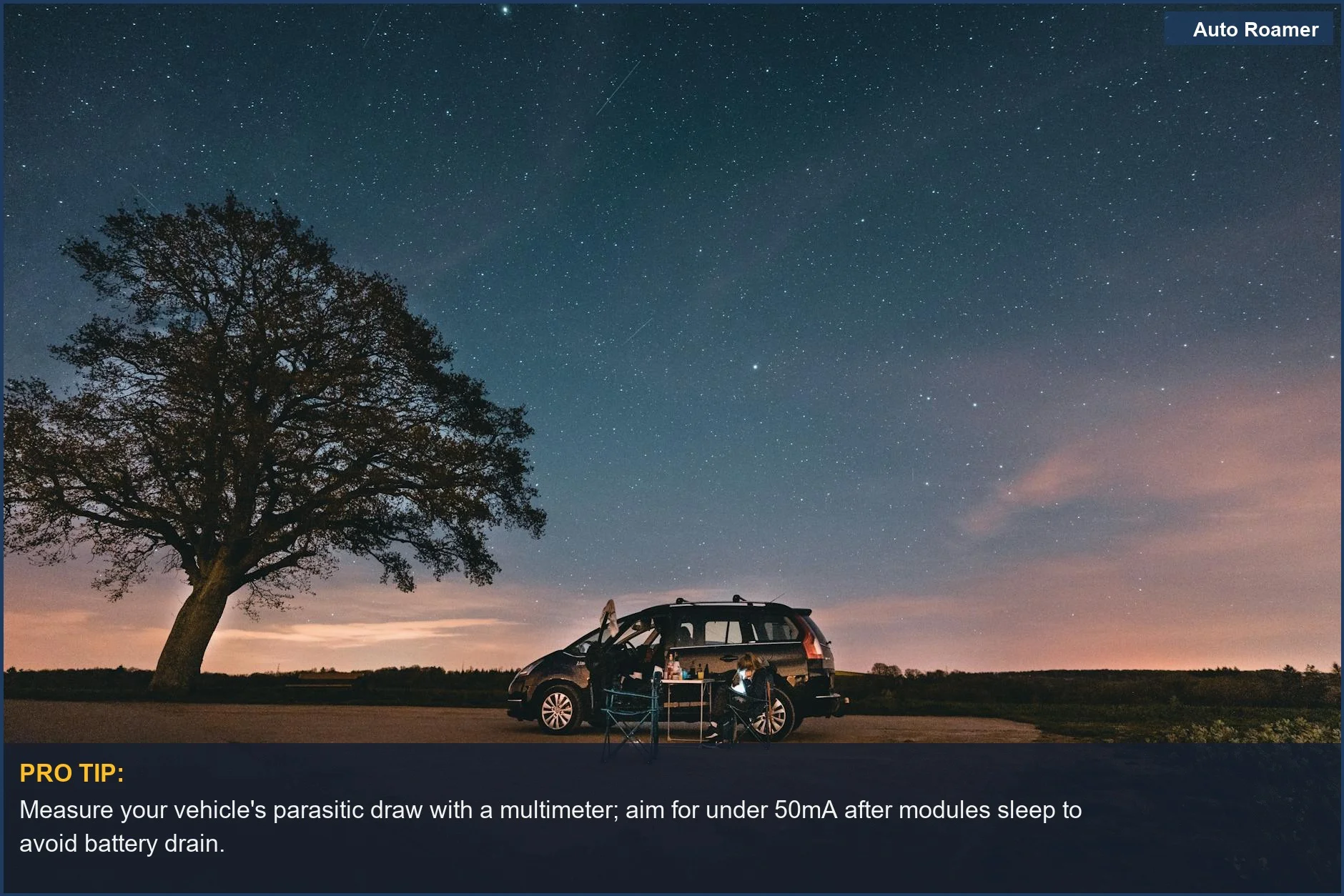
Assess Your Baseline Draw: Before you even pack a tent, grab a $15 multimeter. Disconnect the negative battery terminal and put the multimeter in series, set to Amps (A). Wait 20 minutes for modules to 'go to sleep.' A healthy vehicle should show 20-50mA. If it's over 80mA, you've got a parasitic draw to hunt down. This will tell you how long your battery will last just sitting there.
-
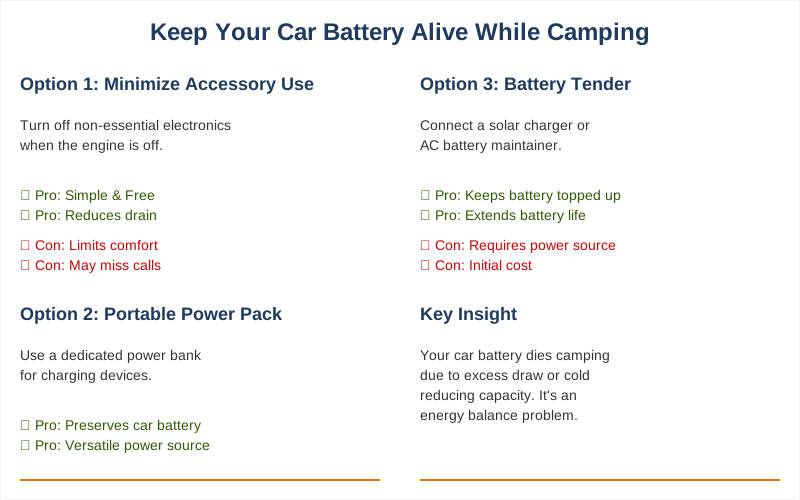
Isolate High-Draw Accessories: If you're running a fridge or charging a laptop, use a separate power station (LiFePO4 preferred) charged by solar or a DC-DC charger connected to your alternator only when the engine is running. Do not run it off your starter battery with the engine off. Your starter battery is for starting. Period. A 100W inverter can kill a battery in hours.
-
Monitor Voltage: Invest in a cheap 12V voltmeter that plugs into your cigarette lighter. Keep an eye on it. If it drops below 12.2V with the engine off, you're getting into dangerous territory for a lead-acid battery. Start the engine and let it run for 30 minutes at 1500 RPM to get some charge back into it. Or better yet, don't let it get that low.
-
Carry a Jump Pack: A portable lithium jump pack is cheap insurance. My NOCO GB40 cost $100 and has saved my ass (and countless others) multiple times. It's a small, dedicated burst of high current, designed for cranking. This is not a substitute for addressing the underlying power budget issues, but it gets you out of a jam. They're a good backup if you can't drive weekly.
-
Consider a Dual Battery Setup: For serious overlanding or extended camping, a properly installed dual battery system with an isolator is the only way to go. This dedicates a 'house' battery for accessories, completely separate from your starter battery. The isolator only connects them for charging when the engine is running. This prevents accessory draw from flattening your starting battery. It's an investment, but it's proper engineering.
What This Looks Like in Practice
-
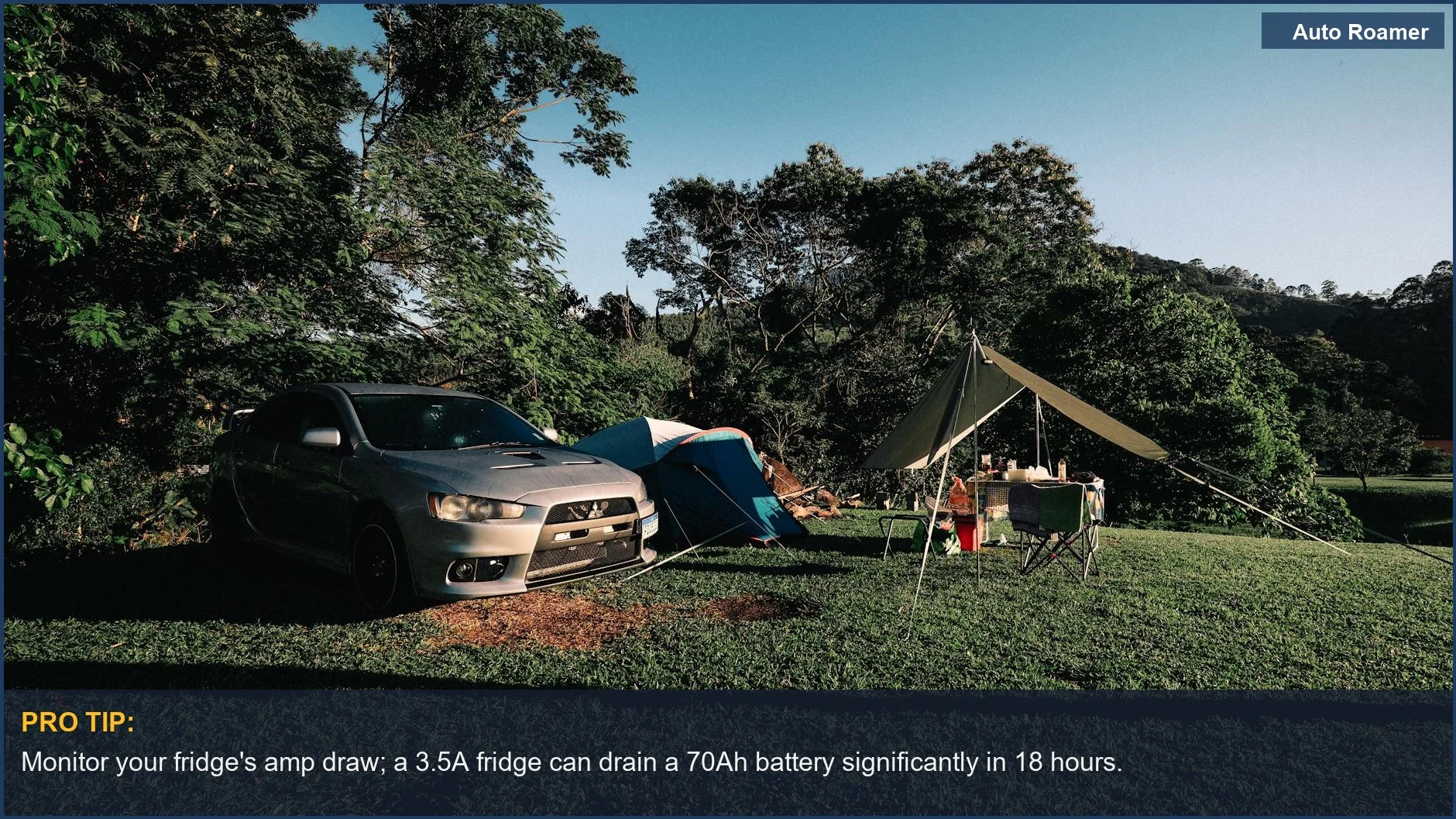
The Fridge Drain: My buddy's brand-new Tacoma, running a 40L Dometic fridge off the rear 12V socket. After 18 hours, the truck wouldn't crank. The fridge draws 3.5A average. 3.5A * 18 hours = 63Ah. His stock 70Ah battery only had about 35Ah usable. He'd deeply discharged it, likely causing permanent sulfation. A small solar panel might have kept it topped off.
-
The Open Hatch Light: A classic. A Jeep Wrangler with the rear hatch open, illuminating the cargo area. The owner thought the light was LED and drew nothing. Turns out, it was a 5W incandescent bulb. 5W / 12V = 0.41A. In 24 hours, that's almost 10Ah. Enough to push an older battery over the edge. Many vehicles have independent cargo lights.
-
The 'Just Listening to the Radio' Fail: Parked at a trailhead, listening to the radio for three hours with the engine off. Modern infotainment systems can pull 2-3A. Three hours at 2A is 6Ah. Not much, but if the battery was already at 70% state of charge, that 6Ah could drop it below cranking voltage. Especially if it's 20 degrees F outside.
-
The Old Battery in Cold Weather: A 4-year-old battery in a Subaru Forester, already degraded to 70% of its original 500 CCA rating. Overnight camping at 15 degrees F. The battery's effective capacity was maybe 50% of its already diminished rating. Combined with thicker oil, the starter motor couldn't generate enough torque. Total failure.
-
The Aftermarket Dashcam: Hardwired to a constant 12V source, drawing 100mA in parking mode. The owner's 60Ah battery was fine for daily driving. But after a 5-day camping trip without starting the car, 100mA * 24 hours/day * 5 days = 12Ah. This, plus the vehicle's inherent parasitic draw, was enough to kill it. Always wire dashcams to switched power or use a dedicated power bank.
Mistakes That Cost People
| Mistake | Why It's a Problem (Physics) | Consequence |
|---|---|---|
| Relying on short engine runs to 'charge' the battery. | Alternator output is low at idle. It takes significant RPMs and time to replace amp-hours. | Battery never fully recharges, leading to chronic undercharging and sulfation. |
| Running accessories directly off the starter battery with engine off. | Starter batteries are designed for high current bursts, not deep cycling. Deep discharge damages plates. | Premature battery failure, reduced capacity, stranded vehicle. |
| Ignoring parasitic draw until the battery dies. | Constant low-level current drain over days/weeks cumulatively discharges the battery. | Intermittent no-starts, especially after sitting, even with a 'good' battery. This is a common killer. |
| Not checking battery terminal corrosion or cable integrity. | Corrosion (lead sulfate) increases electrical resistance, causing voltage drop and heat. | Reduced cranking power, charging inefficiencies, potential fire hazard from thermal runaway at high resistance points. |
| Using undersized or cheap solar panels for charging. | Inadequate wattage means insufficient current to overcome parasitic draw and recharge the battery effectively. | Perpetual low state of charge, leading to battery degradation. It's a trickle, not a flood. |
| Assuming 'new battery' fixes everything without addressing the root cause. | The underlying electrical or mechanical issue continues to stress the new battery. | Repeat battery failures, wasted money, continued frustration. You're just replacing a symptom. |
These aren't suggestions; they're engineering principles. Violate them at your own risk. The dealer will happily sell you another battery, no questions asked. They won't tell you to check your parasitic draw.
Key Takeaways
You want to keep your car battery from dying while camping? It's about managing your energy budget, not hoping for the best. Here's the dirt:
- Know Your Draw: Measure your parasitic current. Every mA counts, especially when you're off-grid. A 50mA draw is fine; a 200mA draw will kill a 60Ah battery in 12.5 days. I'm paranoid about battery draw, and you should be too.
- Isolate Accessories: Don't run anything significant off your starter battery when the engine is off. Use a separate power station or a properly installed dual battery system.
Your cranking battery's job is to start the engine, not run your fridge. This isn't rocket science. * Monitor Voltage: Keep an eye on your battery voltage. If it drops below 12.2V, you're on borrowed time. Below 12.0V, you're actively shortening its life. Voltage is your primary indicator of state of charge. * Charge Smart: If you're running accessories, you need a charging solution - solar, DC-DC charger, or generator.
The alternator alone isn't enough unless you're driving for hours every day. Short idle periods don't cut it. * Quality Gear: A cheap jump pack is better than nothing, but a quality one, or a proper battery bank, is an investment in not being stranded. Don't skimp on the tools that get you home. It's not about the 'experience'; it's about circuit integrity.
Frequently Asked Questions
My battery died after running a portable air compressor for 30 minutes. The dealer said I need a new battery for $250. Can I just charge it?
Do I really need a multimeter to check for parasitic draw? Can't I just guess?
What if I use a battery tender while camping? Will that keep my battery alive?
Can repeatedly discharging my car battery while camping permanently damage it?
Someone told me idling my car for an hour every night will fully charge the battery. Is that true?
Sources
- How to keep battery alive? : r/camping - Reddit
- keep-car-battery-from-dying?srsltid=AfmBOooJGU9IdDfi2_g8Qc-MT8GAFa7FyVVHBU_ElIwd
- Car battery tips during frigid temps | Jan. 23, 2026 - YouTube
- 5 Ways to Help Avoid a Dead Car Battery During the Summer
- Dead vehicle battery when camping in winter/snow - Reddit
- Camping Car Battery Tips Avoid My Mistakes - YouTube
- How to Prevent Battery Drain in Your Micro Camper Car ... - YouTube
- How to prevent car battery from dying while camping? - Facebook
- Not Driving? How to Keep Your Auto Battery from Dying - YouTube
- keep-car-battery-from-dying?srsltid=AfmBOooJGU9IdDfi2_g8Qc-MT8GAFa7FyVV4g8EnBP0DOef74uINEU6i
- Maybe I'm just Battery Paranoid | Jeep Wrangler Forums (JL / JLU)
- How to Keep a Car Battery from Dying When Not in Use
- UKC Forums - Sleeping in car - battery life/charging stuff - UKClimbing