
Evaluating Used Family Vehicles for Hidden Safety Issues Before Buying (2026 Complete Guide)
Paying $25,000 for a used family hauler only to find the frame rails are compromised is a financial gut punch. In 2026, with used car prices still elevated, you need to be sharper than ever. I've seen too many people trust a shiny coat of paint over actual structural integrity.
Paying $25,000 for a used family hauler only to find the frame rails are compromised is a financial gut punch. In 2026, with used car prices still elevated, you need to be sharper than ever. I've seen too many people trust a shiny coat of paint over actual structural integrity. Don't be that guy. Before you sign anything, understand the underlying failure modes. Even 'reliable' models can hide expensive secrets.
The Short Answer
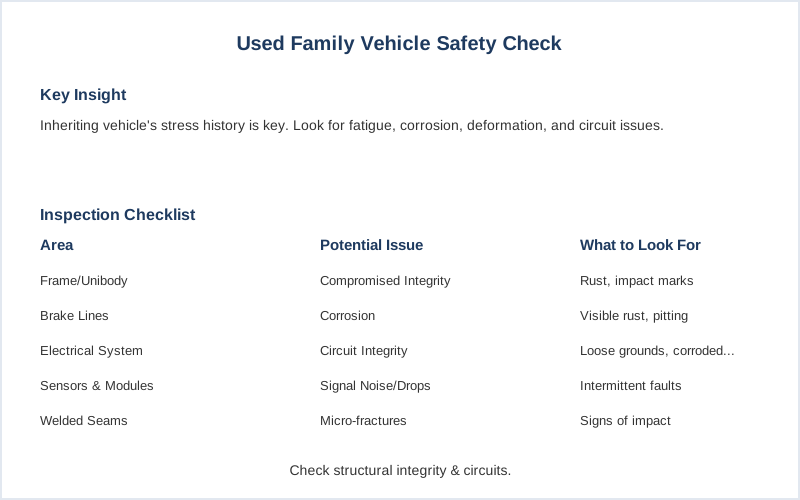
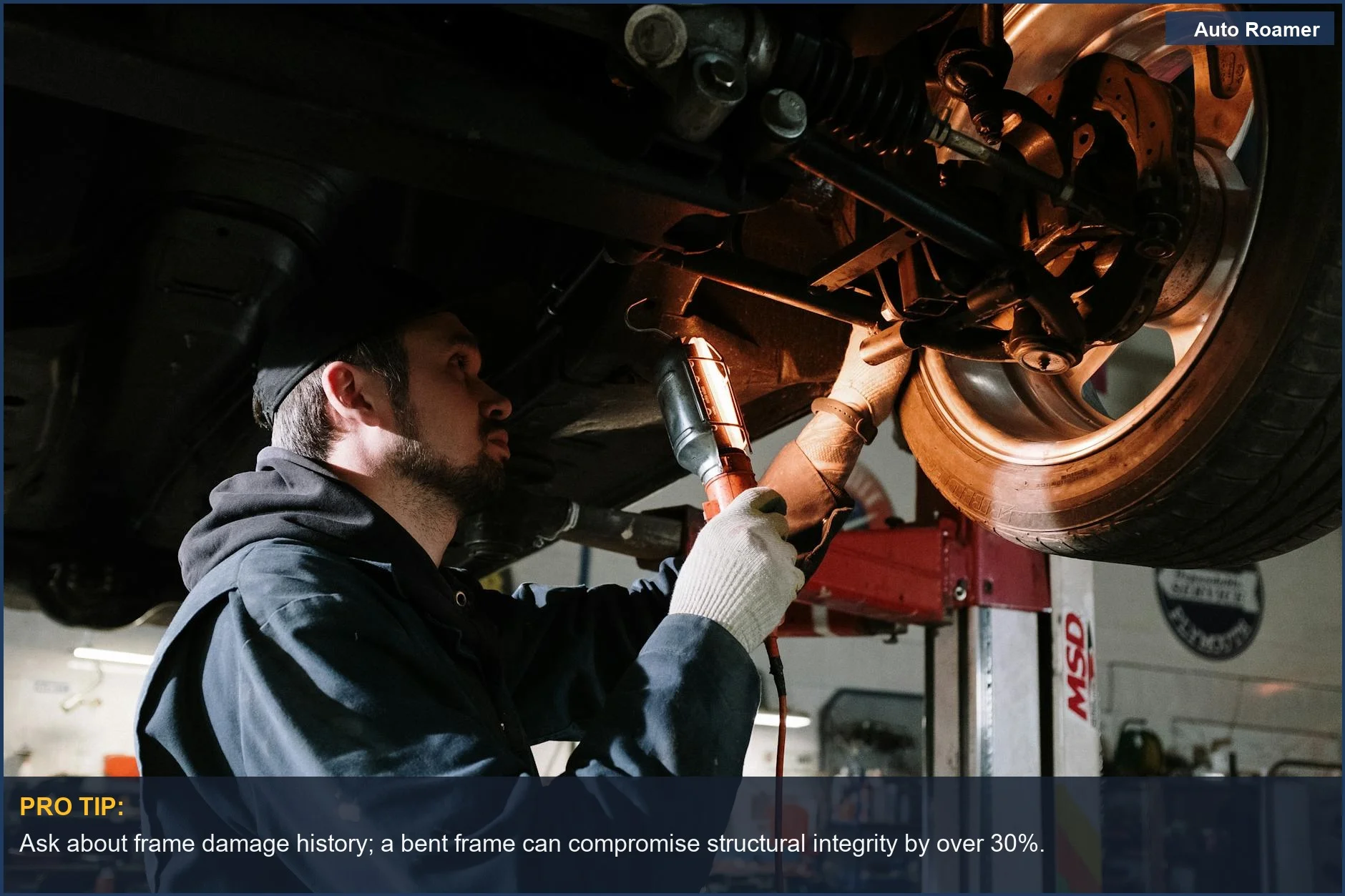
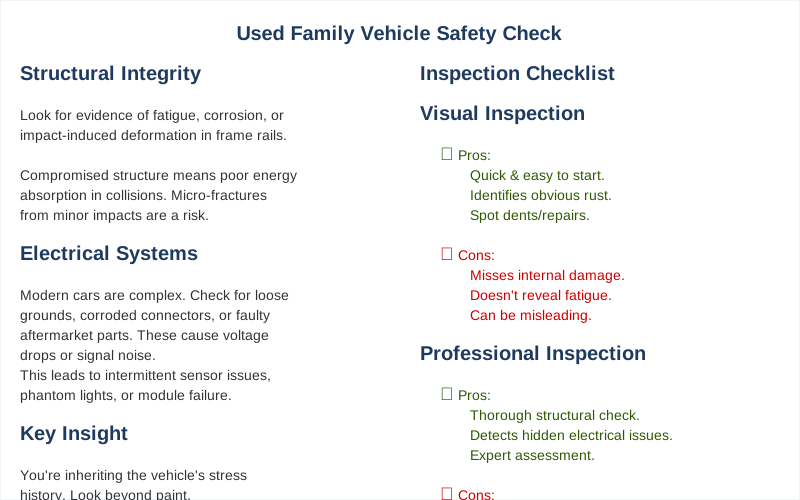
I'm looking for evidence of fatigue, corrosion, or impact-induced deformation. A vehicle's structural integrity, especially the unibody or frame, dictates how it absorbs energy in a collision. Even a minor fender bender can introduce micro-fractures in welded seams, reducing the material's yield strength. That's a ticking time bomb for safety.
Then there's the electrical system. Modern family cars are basically rolling data centers. A loose ground, a corroded connector, or a cheap aftermarket accessory can introduce voltage drops or signal noise. This compromises circuit integrity, leading to intermittent sensor readings, phantom warning lights, or even complete module failure. It's not magic, it's just physics. Every sensor needs a clean signal.
Thermal cycling also plays a massive role in component longevity. Engine components, transmission fluids, and even brake pads are constantly expanding and contracting. This leads to material fatigue, seal degradation, and viscosity changes. Ignoring the history of these cycles - say, a vehicle consistently used for heavy towing - means you're buying a component already nearing its fatigue limit. Even a good reliability record doesn't mean it was babied.
I always assume the previous owner cut corners. My job is to find exactly where those corners were cut and quantify the risk. Is that a minor surface rust spot or a structural perforation? Is that an oil seep or a main seal about to blow? It's all about understanding the failure modes before they become your problem.
The Reality Check
The reality is, even a Consumer Reports Top Pick can be a lemon if it's been abused. I've seen 'reliable' Toyota Corollas with bent subframes from hitting curbs. It's not the nameplate, it's the specific vehicle's history and its current state of mechanical stress and circuit integrity. You need to look past the shiny paint.
Consider the most common failure points that compromise safety or lead to massive bills. These aren't always obvious. A lot of folks focus on the engine, but the chassis and electrical system are often where hidden dangers lurk. Always check the NHTSA site for recalls.
Here's a breakdown of common hidden issues:
| Component | How It Fails | Symptoms | Fix Cost |
| Subframe/Mounts | Impact deformation, fastener shear, corrosion-induced material loss | Uneven tire wear, clunking over bumps, steering wheel off-center | $800 - $3000 |
| Brake Lines | Corrosion leading to wall thinning, rupture under hydraulic pressure (1000+ PSI) | Soft pedal, fluid leaks, complete brake failure | $300 - $1000 |
| Airbag System wiring | Damaged clock spring, corroded connectors, rodent damage to harnesses, causing open circuits | Airbag warning light, non-functional horn/steering wheel controls | $400 - $1500 |
| Suspension Bushings | Elastomer degradation from thermal cycling and mechanical shear forces | Squeaks, vague steering, excessive body roll, premature tire wear | $200 - $800 per axle |
| Tire Sidewall | Impact damage (curb strike), dry rot from UV exposure, low PSI operation | Bulges, cracks, rapid deflation (blowout risk) | $100 - $300 per tire |
The corrosion on brake lines is particularly insidious. It's often hidden by undercoating or dirt, but the steel line's wall thickness can be compromised by galvanic corrosion between dissimilar metals or road salt. A line rated for 2000 PSI can fail at 500 PSI if the wall is paper-thin. That's a catastrophic failure waiting to happen. Your life literally depends on that tiny tube.
As for airbag systems, the clock spring often fails due to repeated torsional stress from steering wheel rotation. It's a ribbon cable that maintains circuit integrity while twisting. Once the conductors fatigue, you lose continuity, and boom, airbag light. It's a simple mechanical failure with massive safety implications.
How to Handle This
You want to find the hidden crap before you own it. This isn't just about saving money; it's about not putting your family in a rolling death trap. Here's my process, step-by-step. Even in 2026, the basics still apply.
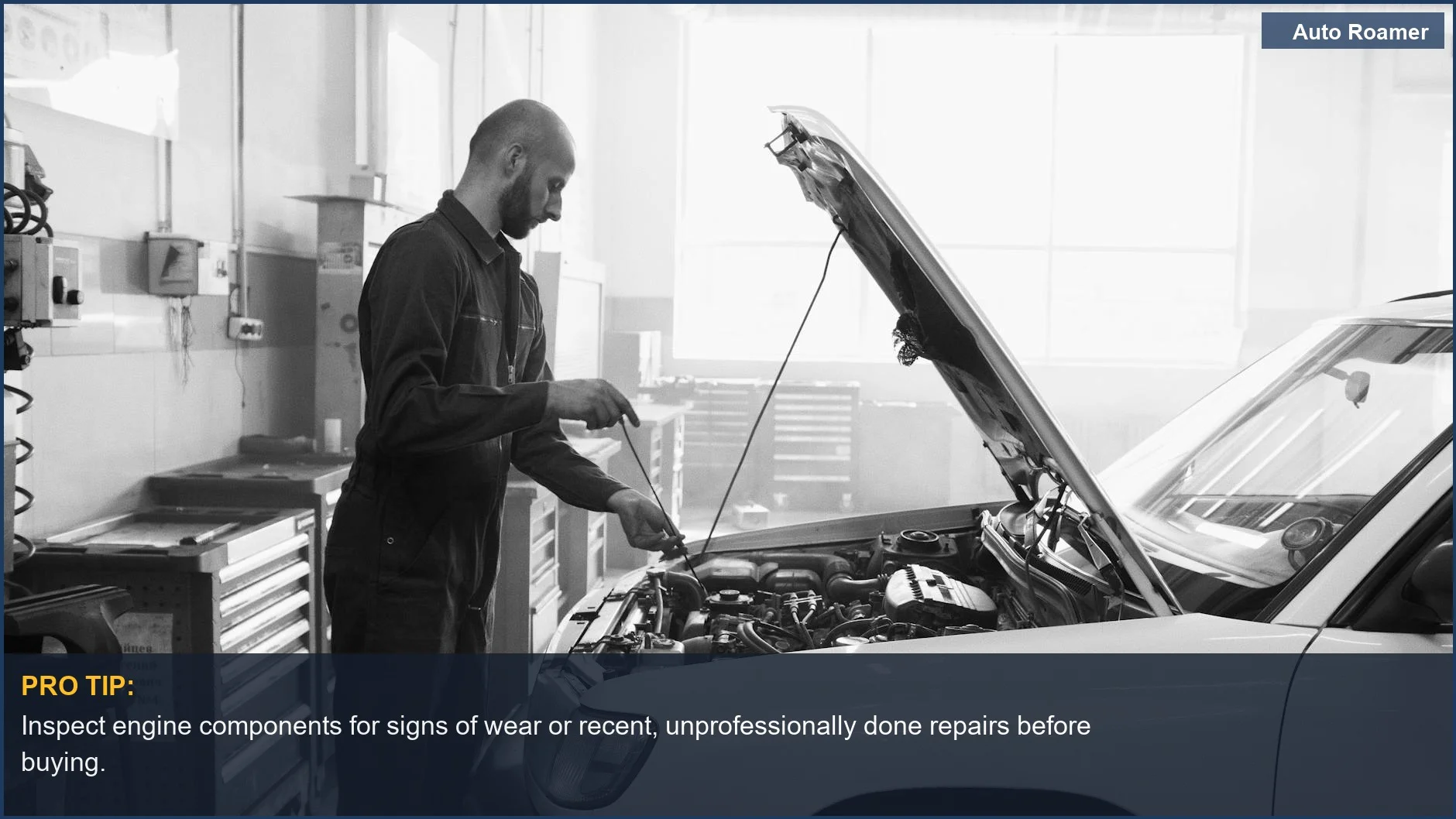
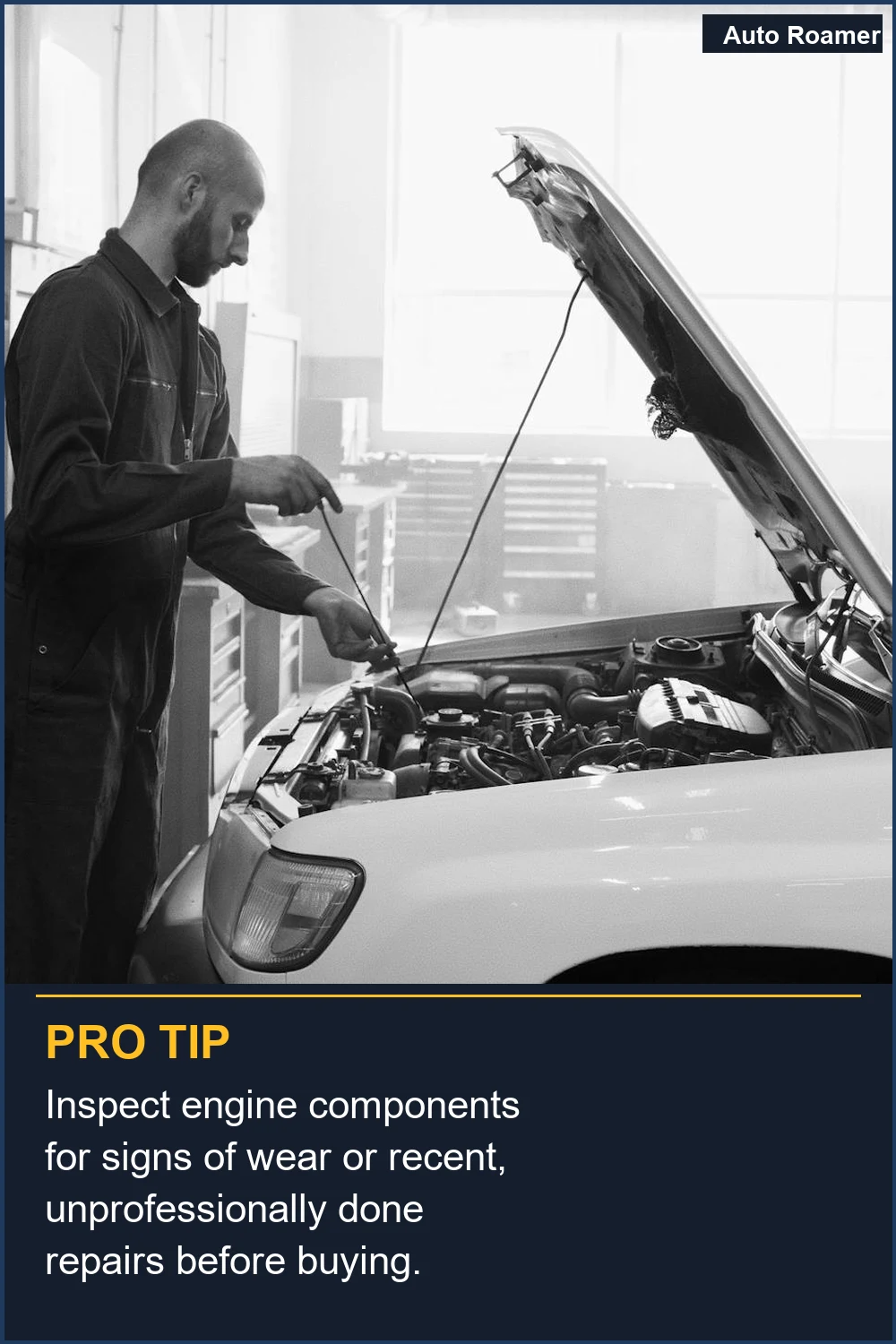
- Visual Inspection - Under the Hood (5 minutes): Pop the hood. Look for fluid leaks - not just puddles, but seeps around seals and gaskets. Check coolant reservoir for proper level and color; if it's brown or sludgy, that's a thermal cycling failure indicator. Grab the battery terminals and try to twist them; any play means poor circuit integrity and eventual starting issues. Look for zip-tie repairs or mismatched hose clamps. That's a red flag for shoddy work.
A thorough VIN check is next.
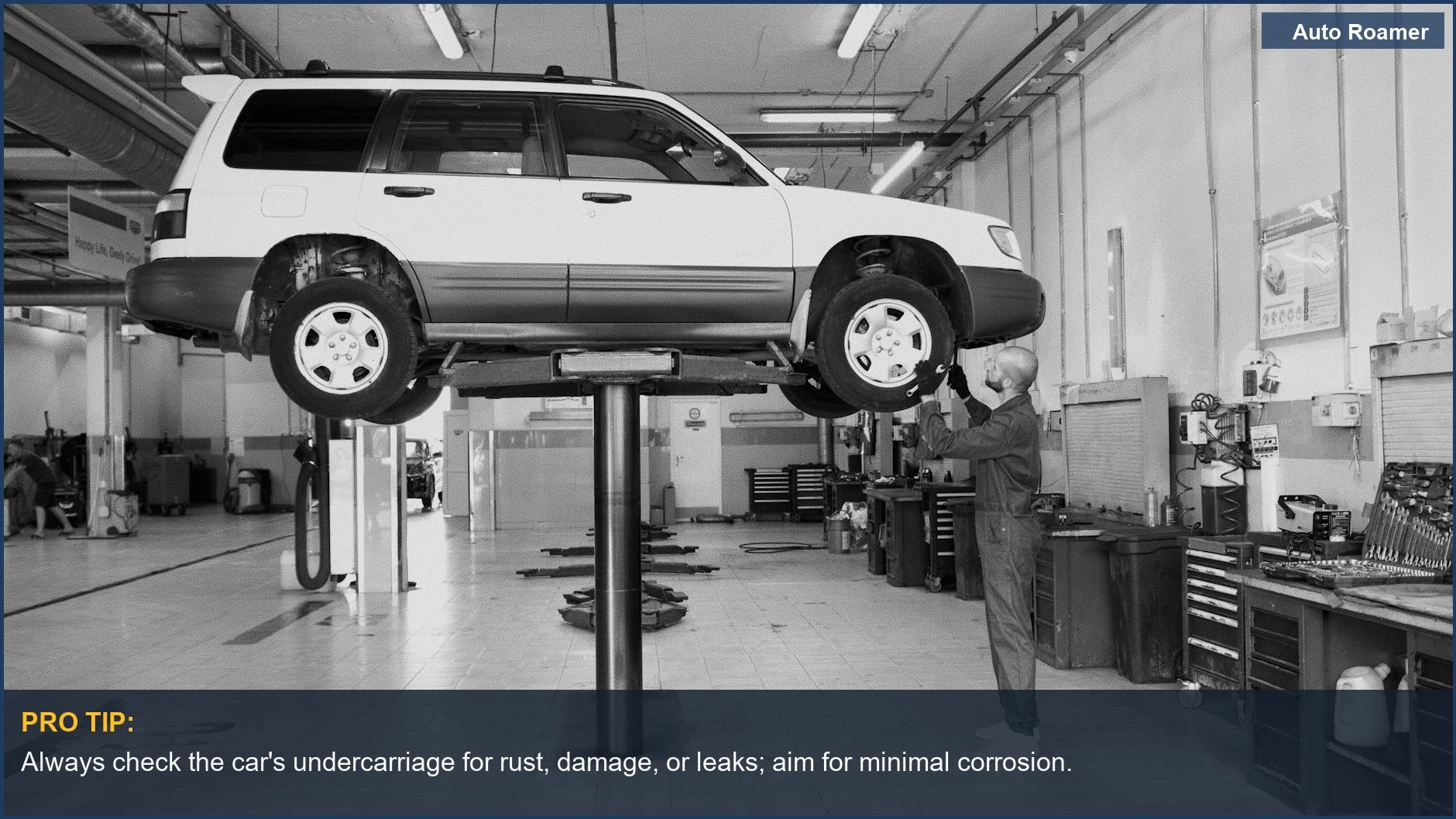
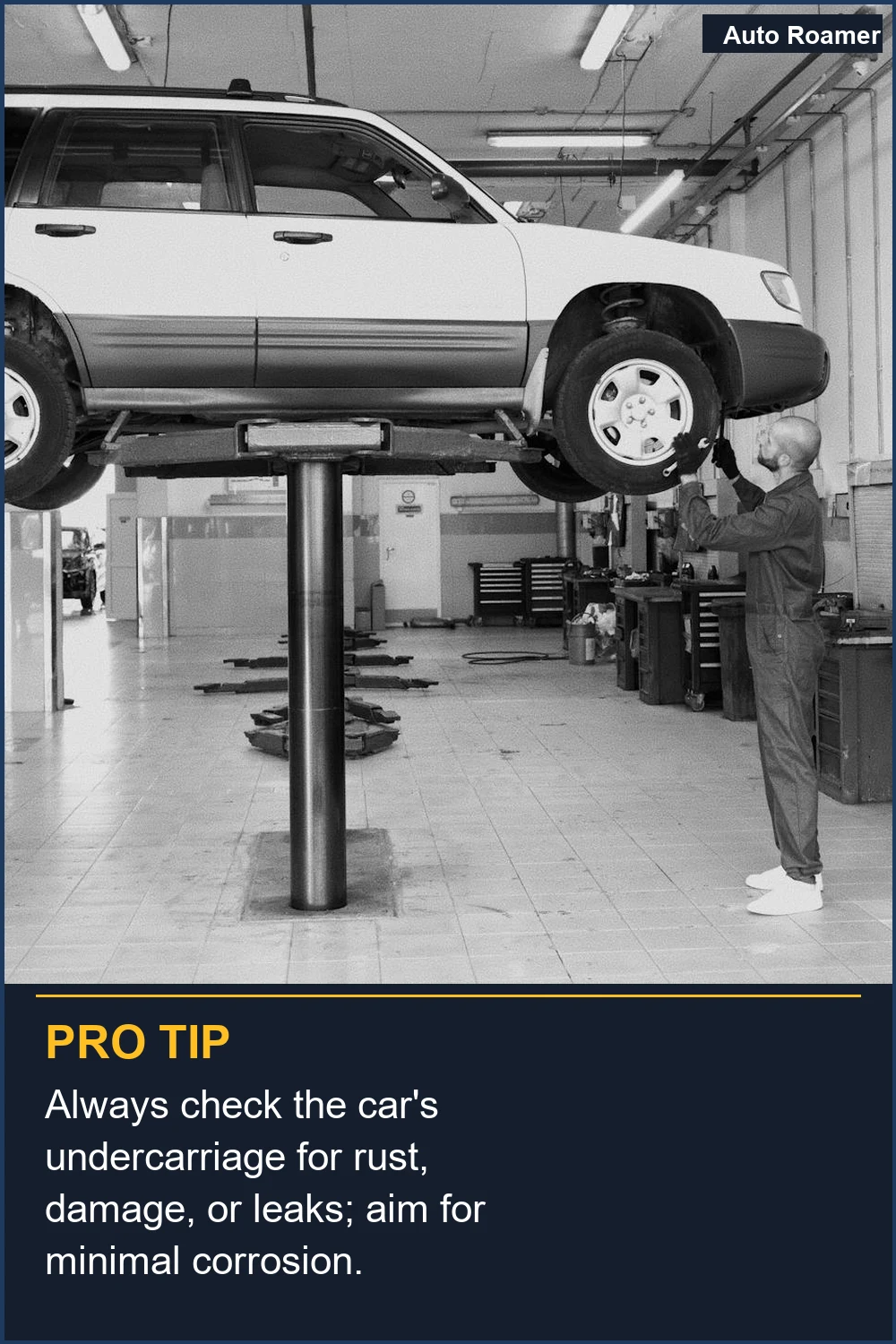
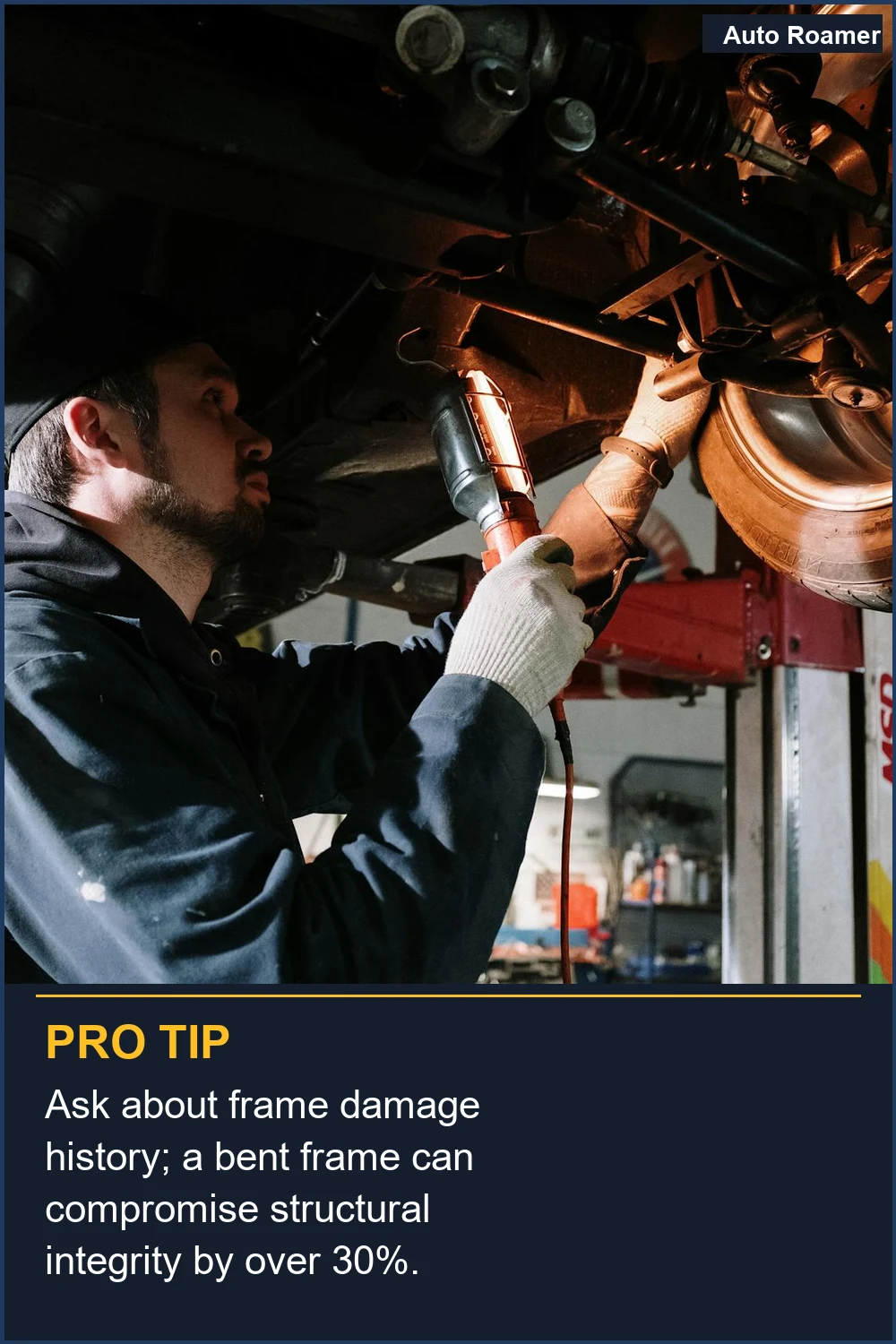
- Exterior and Undercarriage (10 minutes): Get low. Shine a flashlight under the car. Look for frame rail bends, pinch weld damage, or excessive surface rust that suggests deeper structural corrosion. Check the tires for uneven wear patterns - cupping, feathering, or excessive inner/outer shoulder wear. This indicates alignment issues, worn suspension components, or bent chassis geometry. That's a mechanical stress problem you'll pay for.
Press down on each corner of the car; if it bounces more than twice, the shock absorbers are toast.
-
Interior and Electronics (7 minutes): Check every button. HVAC, power windows, radio, wipers. Intermittent operation hints at underlying circuit integrity issues, often a corroded connector or a failing body control module. Look for any warning lights that stay on after engine start. The airbag light, ABS light, or check engine light are not suggestions; they are indicators of active faults. Don't let a seller tell you 'it's just a sensor.'
-
Test Drive (20 minutes): Pay attention to vibrations. A persistent vibration at 60 MPH often points to unbalanced wheels, worn CV joints, or driveshaft issues. Listen for clunks or rattles over bumps - suspension component play. Brake firmly (safely) from 40 MPH; does the pedal pulsate? That's warped rotors. Does the car pull? Caliper issues or alignment. Drive in a figure-eight pattern in a parking lot; listen for groaning or popping from the steering or suspension.
This tests the limits of mechanical stress.
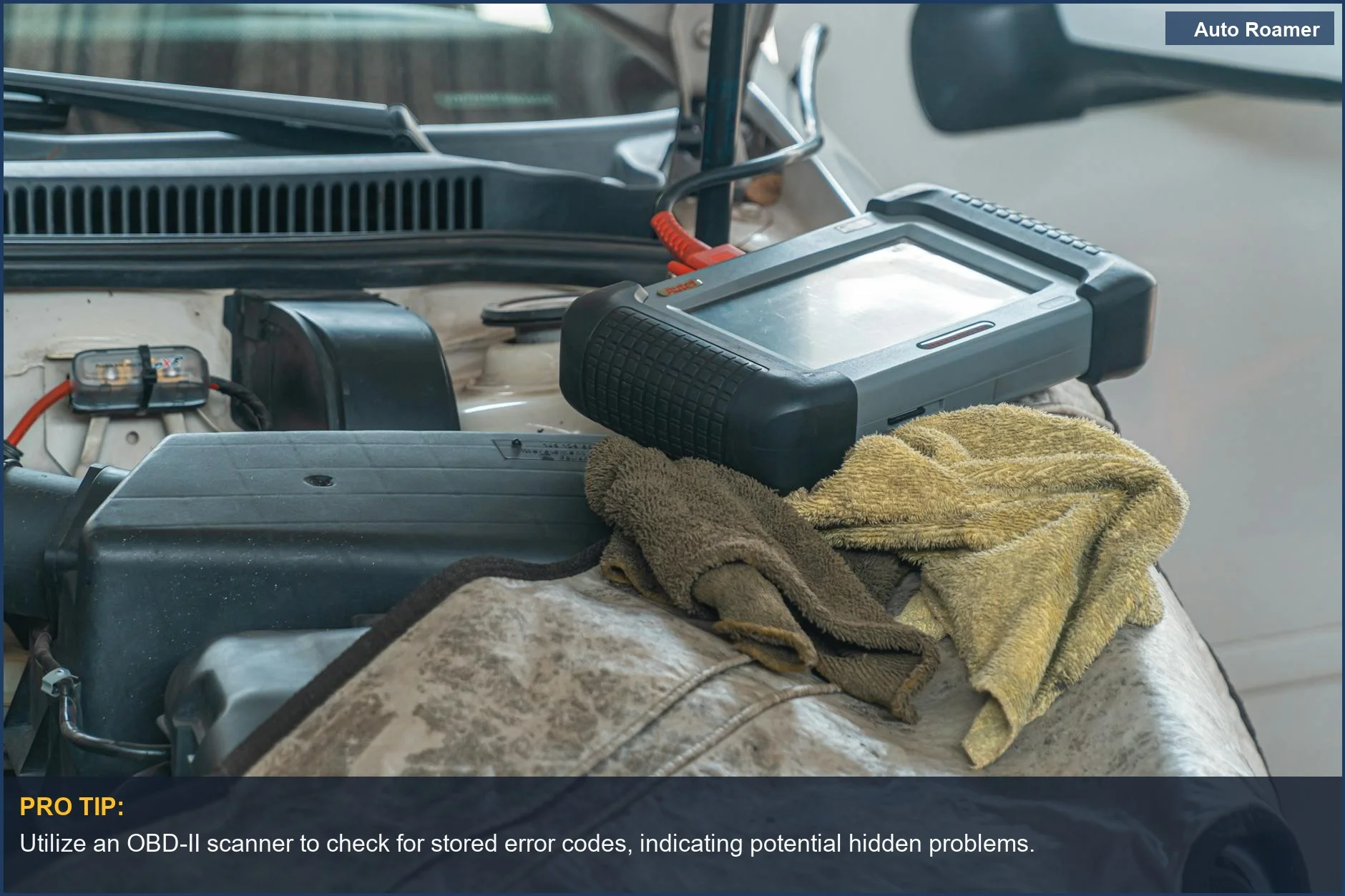
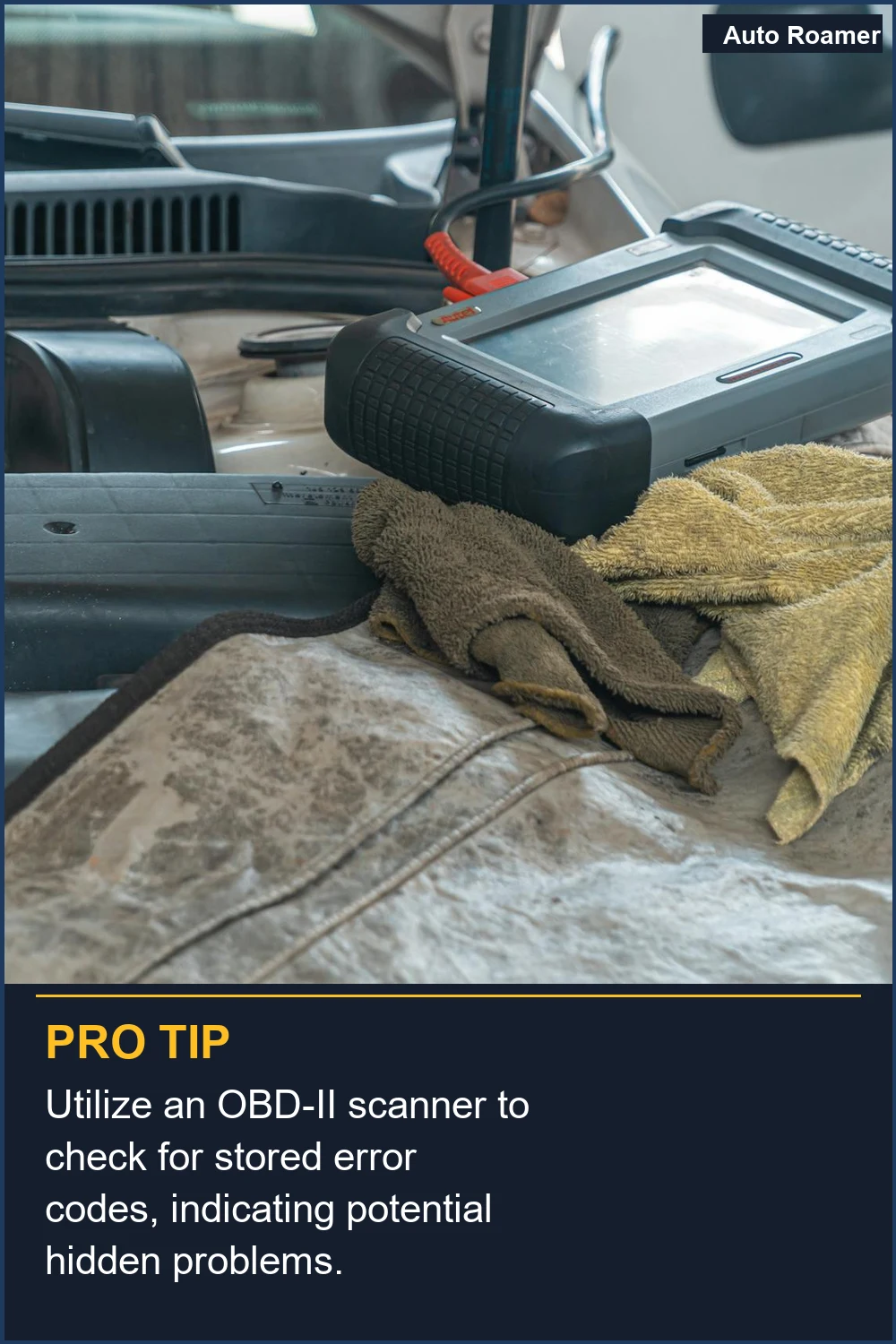
- Pre-Purchase Inspection (PPI) - The Non-Negotiable Step: If you're serious, pay $150-$250 for a certified independent mechanic to do a PPI. They'll put it on a lift, check for active fault codes, and measure component wear. This is where hidden fluid leaks, structural damage, or major electrical faults are found. It's cheap insurance against a $3000 repair. Don't skip this. A good mechanic will give you a list of every minor fault.
What This Looks Like in Practice
I've seen some real beauties. You need to know what to look for beyond the sales pitch. Don't say 'I'll take it' before you do your homework.
-
Scenario 1: The 'Clean' Underbody: A 2017 Honda CR-V with 80,000 miles, looks great. But under the lift, I found the rear subframe mounting bolts had 2mm of corrosion-induced play. The previous owner lived in a salt-belt state. This meant the rear suspension geometry was constantly shifting under load, causing accelerated tire wear and unpredictable handling. A $1500 repair to drop the subframe and replace bushings and bolts.
-
Scenario 2: The 'Minor' Electrical Glitch: A 2019 Toyota RAV4 with a flickering dash display. Seller said it was 'just a loose wire.' Turns out, an aftermarket remote start system was drawing 500mA of parasitic current when off, causing intermittent low voltage conditions to the infotainment system. That's a circuit integrity nightmare. A $40 fix to remove the cheap system and trace the harness, versus a $1200 dealer diagnostic and module replacement.
-
Scenario 3: The 'New' Tires: A 2018 Subaru Outback with brand new tires. Great, right? Except the inner edge of the old tires were worn down to the cords. The new tires were just masking severe negative camber from a bent control arm after a curb strike. That's a mechanical stress issue. Without replacing the control arm, the new tires would be junk in 10,000 miles. A $700 repair for parts and alignment.
-
Scenario 4: The 'Quiet' Engine: A 2016 Hyundai Elantra, engine purrs. But the oil filter housing had a persistent weep, losing about 50mL of oil every 100 miles. This wasn't a catastrophic leak, but the constant thermal cycling on the plastic housing had embrittled it, leading to a micro-crack. Eventually, it would fail completely, dropping oil pressure. That's a $300 part and labor for a simple seal that became a material failure.
Modern cars are very safe overall, but their components still degrade.
Mistakes That Cost People
People make stupid mistakes when buying used cars, and they always cost money. Don't be one of them. Even reliable brands like Hyundai have specific failure points if not maintained.
| Mistake | Diagnostic Failure | Consequence |
| Trusting a 'clean' engine bay | Not checking for fresh degreaser or oil residue around seals | Missing active oil/coolant leaks that were temporarily cleaned for sale |
| Ignoring the check engine light (CEL) | Believing 'it's just a sensor' or assuming a quick reset fixed it | Buying a car with underlying engine, transmission, or emissions faults that could cost thousands |
| Not checking tire date codes | Assuming good tread depth means good tires | Driving on old, dry-rotted tires that are susceptible to blowouts due to material degradation, regardless of tread |
| Skipping the test drive entirely | Buying based on looks and a short lot drive | Missing vibrations, clunks, or steering issues that only appear at highway speeds or under specific loads |
| Not getting a pre-purchase inspection (PPI) | Relying solely on your own limited mechanical knowledge | Missing critical structural damage, hidden leaks, or advanced electrical issues that require specialized tools to find |
| Buying from a curbside seller without documentation | Not verifying maintenance history or title status | Purchasing a vehicle with a salvaged title, undisclosed accidents, or a history of skipped maintenance intervals, leading to premature component failure |
The biggest mistake is assuming good looks equal good mechanical condition. A fresh coat of paint costs $500. Replacing a transmission costs $4000. Prioritize the physics, not the aesthetics. That 'just a sensor' CEL could be a $2000 catalytic converter, a component that fails due to thermal cycling and material poisoning. Brilliant engineering.
Key Takeaways
Don't get fleeced when buying a used family vehicle. Your wallet and your family's safety depend on it. Safety, space, and comfort are important, but they mean nothing if the car's about to fall apart.
- Prioritize structural integrity: Look for bent frame rails, rust perforation, or poor weld repairs. These are non-negotiable safety issues.
- Verify circuit integrity: Check every electrical component. Intermittent faults are often early warnings of expensive module failures or wiring harness damage.
- Understand mechanical stress: Listen for abnormal noises, feel for vibrations, and check for fluid leaks.
These indicate components operating beyond their design limits or nearing end-of-life. * Invest in a PPI: A $200 inspection is the cheapest insurance you'll ever buy against a multi-thousand-dollar repair. It's not optional. * Don't trust appearances: A shiny exterior can hide a mechanical nightmare. Focus on the underlying physics, not the paint job. Every vehicle has a story, and you need to read between the lines of rust and oil.
Frequently Asked Questions
My check engine light is on for a P0420 code (catalyst efficiency). The seller says it's just an oxygen sensor. Can I just replace the sensor myself for $60?
Do I really need a fancy multimeter to check for parasitic draws, or can I just pull fuses until something stops draining?
What if I get a pre-purchase inspection, and the mechanic misses something major?
Can driving a used car with worn suspension bushings permanently damage other components?
Is it true that modern cars are so over-engineered they'll last 200,000 miles no matter what?
Sources
- 132+ Cars Driven – Here's What You MUST Buy & Avoid in 2026
- 5 Things You MUST Know Before Buying a Car in 2026 with Dave ...
- Don't Say THIS When Buying a Used Car in 2026 - YouTube
- If you were buying a used car in 2026, what would you ... - Reddit
- How to Check for Hidden Issues in a Used Car Before Purchasing
- Are Hyundai Good Cars? A Used-Car Dealer's Honest Guide (2026)
- How to Protect Yourself When Buying a Used Car - Consumer Reports
- The Top 10 Most Reliable Used Vehicles for 2026 | iNeedaPPi USA
- Compact and affordable used cars with safety features? - Reddit
- Best Used Cars: 10 Top Picks for March 2026 - Consumer Reports
- Choosing the Right Family Cars: Safety, Space, and Comfort
- Shopping for safety: a guide for new and used vehicle buyers - IIHS