Smart Car Tech

Dashcam Features to Consider for Recording Your Drives

Casey - The Weekend Warrior
4 min read
Includes Video

My first dashcam was a $50 impulse buy from Amazon that I wired up with a "hardwire kit" that promised "easy installation." Five hours later, surrounded by a mess of wires and my car's interior panels scattered across my driveway, I learned that "easy" is a relative term.

My first dashcam was a $50 impulse buy from Amazon that I wired up with a "hardwire kit" that promised "easy installation." Five hours later, surrounded by a mess of wires and my car's interior panels scattered across my driveway, I learned that "easy" is a relative term. I ended up just plugging it into the cigarette lighter adapter, which worked fine until I forgot to unplug it and drained my battery.

This whole dashcam thing can feel overwhelming with all the jargon, but the honest version is you just need something that records when you're driving and doesn't kill your car's battery when you're parked. Consumer Reports says they range from $30 to $400, and honestly, you don't need the $400 one to start. I learned that the hard way, too.
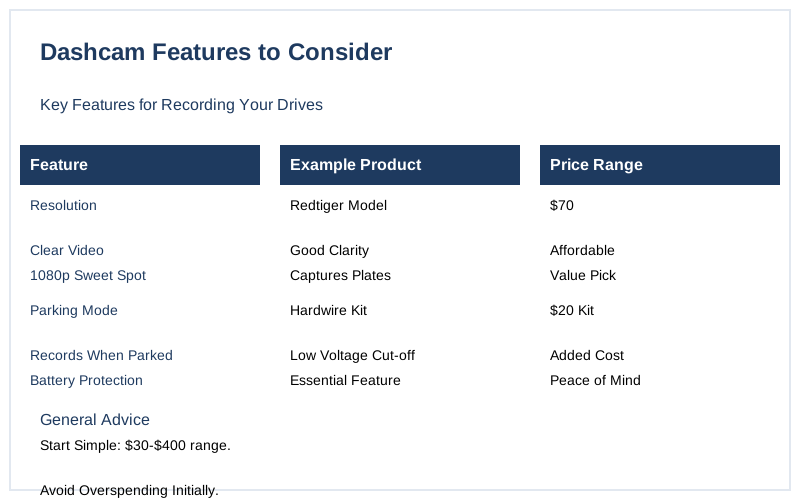
Dashcam Features to Consider for Recording Your Drives — Key Specifications Compared
Key specifications for Dashcam Features to Consider for Recording Your Drives

The Core Answer

Look, the real move for any dashcam is decent video quality so you can actually see what's happening. Most guides will drone on about 4K resolution, but honestly, my $70 1080p unit from Redtiger captures license plates just fine, especially at night. The key is that it records clearly, which they call "resolution." Consumer Reports mentions that higher resolution generally means more detail, but you can't always have top resolution and top frame rate at the same time. My field notes say 1080p is the sweet spot for not needing a super expensive card. Then there's parking mode. This is what nobody tells beginners: if you want your dashcam to record when your car is off, you need a special hardwire kit that cuts power before it drains your battery. My first attempt at wiring fried a fuse and left me without a working car for a day. The fix was a $20 kit with a low-voltage cut-off. This feature is crucial if you want to catch that hit-and-run driver who dinged your bumper while you were inside the grocery store. RD Forum users talk about wanting notifications for motion or impacts while parked, which is what a good parking mode system provides. GPS is another one. I scoffed at it initially, thinking "why do I need my car's location tracked?" But when I got into a fender bender, having the exact time and location data from the GPS proved I wasn't speeding through a school zone like the other guy claimed. It's a small addition that adds a ton of credibility to your footage. RAM Tracking highlights GPS as a key fleet management tool, but for us weekend warriors, it's about proving your innocence. It's like having a digital alibi. Finally, loop recording. This is standard on almost everything, but it's essential. It means the camera automatically overwrites the oldest footage when the memory card is full, so you don't have to manually delete files. I learned this when my card filled up and stopped recording right before a squirrel did something truly spectacular in front of my car. The Reddit community agrees: loop recording is non-negotiable. It's the automatic save button for your driving life.
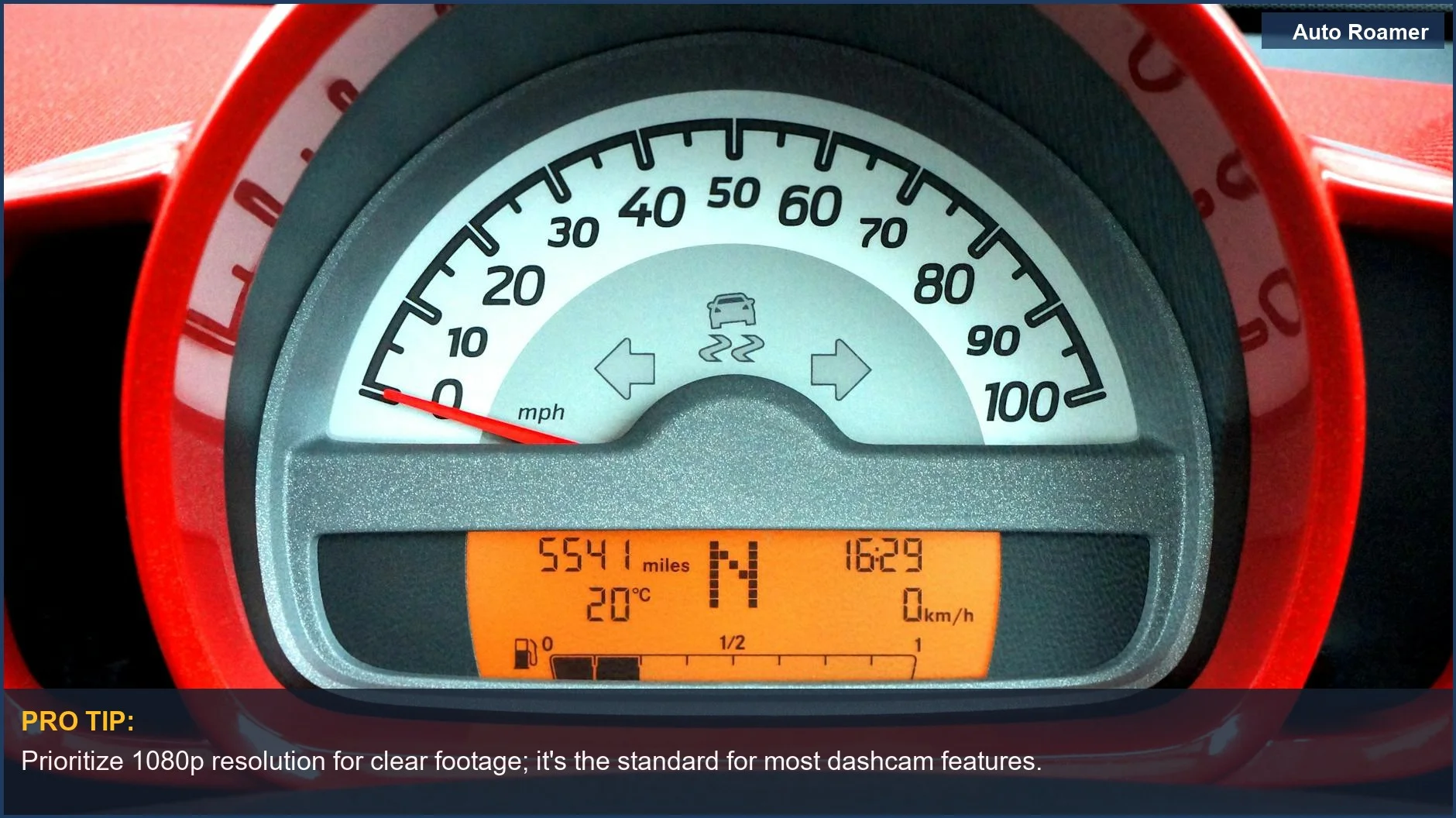
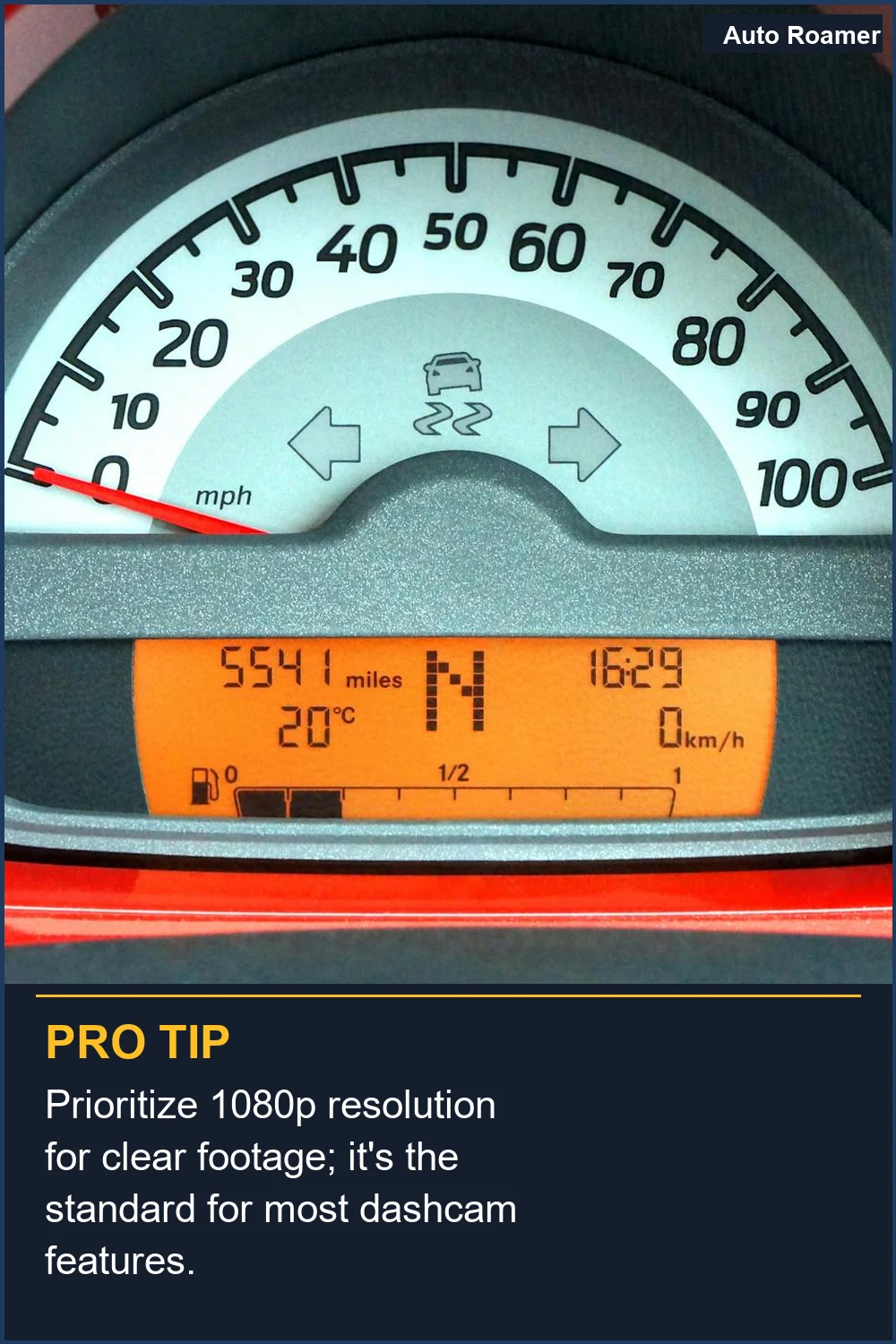
Understanding the essential features can help you choose the best option for your needs, so consider what matters most for everyday driving.
Prioritize 1080p resolution for clear footage; it's the standard for most dashcam features.
A detailed view of a car's digital dashboard and speedometer highlights the importance of excellent dashcam resolution for capturing crucial details during your drives. | Photo by Mike Bird

Why This Matters for Your Setup

Why does all this matter for your setup? Because the real move is to get a dashcam that works for *you*, not against you. My first setup was a disaster because I didn't understand parking mode. I ended up with no footage of a parking lot incident because my camera died overnight. Here's the breakdown:
  • Resolution is King (But Not Crazy King): You need to see details like license plates. My $70 1080p camera from Redtiger is perfectly adequate. Don't get sucked into needing 4K if it means a $300 price tag and a massive memory card.
  • Parking Mode is Non-Negotiable for Peace of Mind: This is where the $20 low-voltage cut-off hardwire kit comes in. Without it, you're just asking for a dead battery. I learned this lesson at a campground in Pennsylvania when my car wouldn't start after two days. Brilliant engineering, that.
  • GPS is Your Digital Witness: It adds context. Knowing exactly *when* and *where* something happened is invaluable for insurance claims or just proving you weren't doing donuts. RAM Tracking even uses it for fleet management.
  • Automatic Recording is a Must-Have: You don't want to fuss with turning it on. Most cameras start recording when the car starts, which is the real move. RD Forum users confirm this is a standard expectation.
  • To ensure you choose the right model, consider what features you should prioritize in a dashcam by visiting this helpful article.
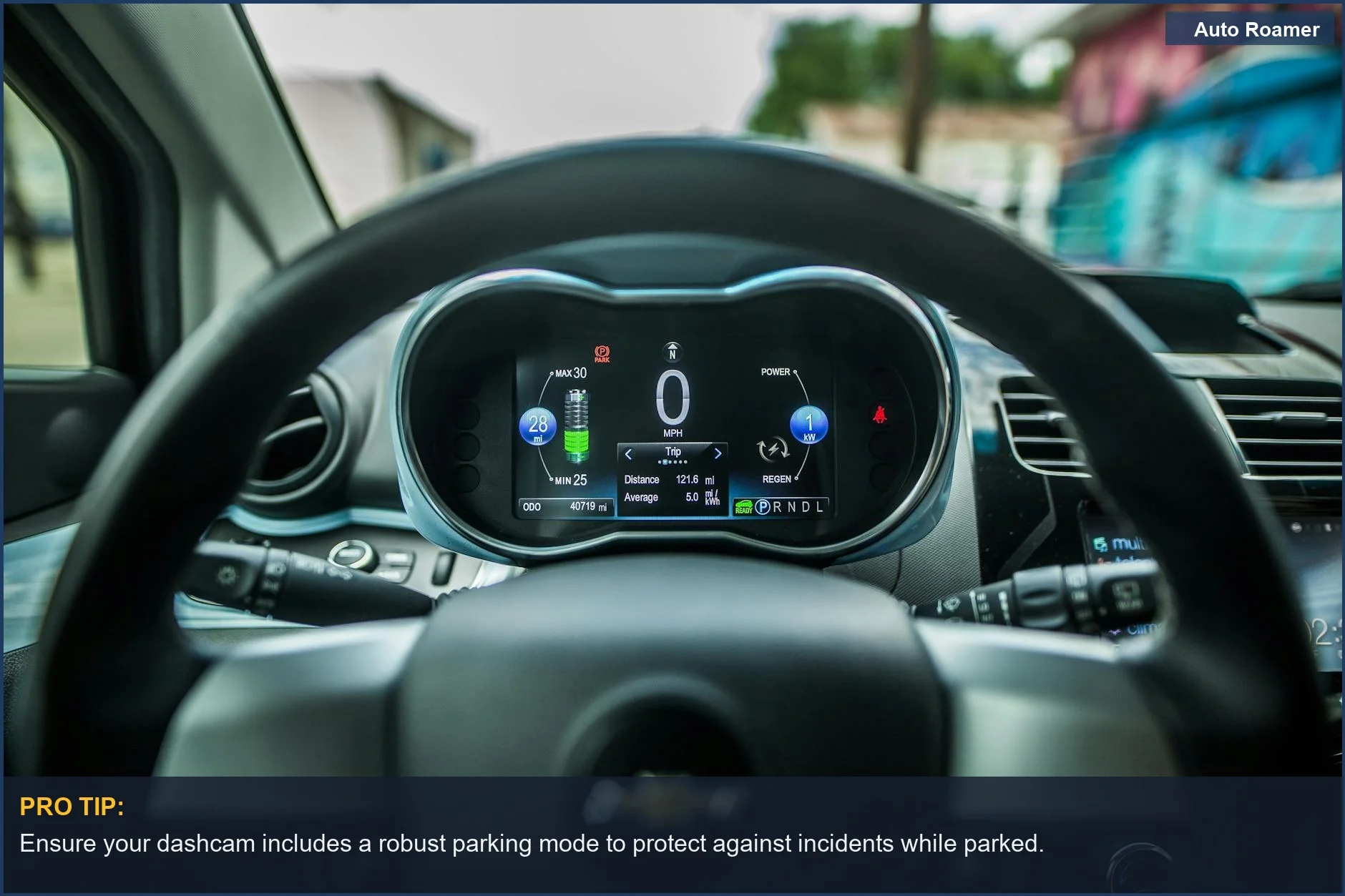
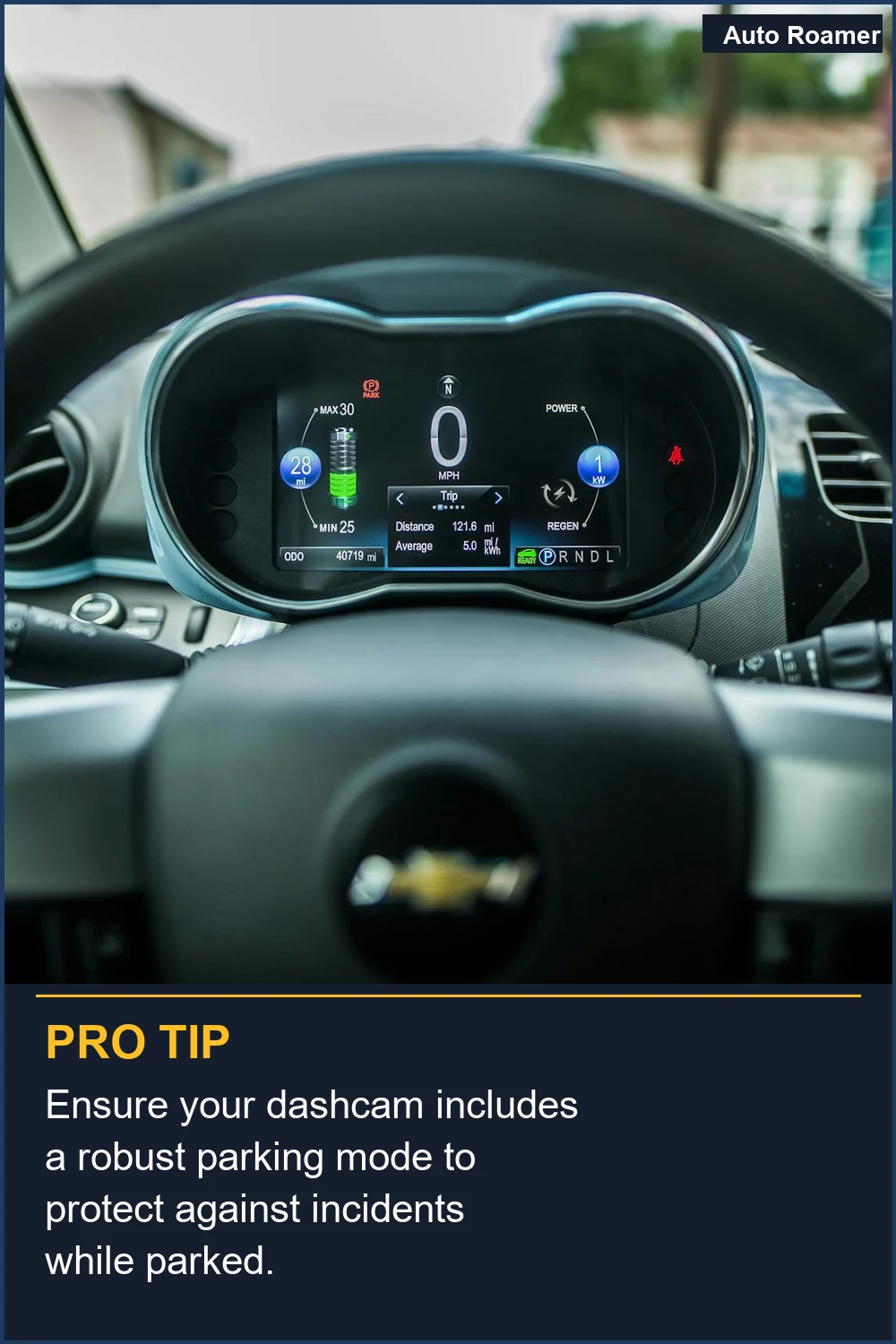
    Ensure your dashcam includes a robust parking mode to protect against incidents while parked.
    This close-up of a car's dashboard and steering wheel emphasizes how a reliable parking mode dashcam is vital for continuous protection, even when your car is off. | Photo by Caleb Oquendo

    Making the Right Choice

    So, how do you make the right choice without blowing your budget or your sanity?
  • Start with 1080p: It's the $50 version that gets the job done. Consumer Reports agrees that 1080p is generally less useful than higher resolutions, but for a beginner, it's a good starting point.
  • Invest in a Proper Hardwire Kit: For parking mode, spend the extra $20. Trust me, it's cheaper than a tow truck. My roadside assistance bill was astronomical that first time.
  • Don't Overcomplicate It: You don't need cloud storage or fancy app features on day one. Get the basics right first. Grand Rapids Informed Facebook group members often just want clear footage and basic functionality.
  • Read Reviews (But Take Them With a Grain of Salt): Everyone has different needs. What works for a trucker in a fleet might be overkill for your weekend grocery runs.
  • To ensure a smart investment, consider which dashcam features are most important for your used car.
    Check for excellent low-light performance; many dashcams offer advanced night vision capabilities.
    At night, illuminated car dashboard displays underscore the necessity of advanced dashcam features, especially for clear visibility and recording in low-light conditions. | Photo by Doci

    Frequently Asked Questions

    My mechanic quoted me $150 to install a hardwire kit for my dashcam. Is it really worth paying that much, or should I just use the cigarette lighter adapter like you did?
    That's a rookie mistake waiting to happen. While the cigarette lighter adapter is the $0 version, it's going to drain your battery if you forget to unplug it. The $150 quote is highway robbery for a job that takes about 30 minutes with the right tools. You can get a decent low-voltage cut-off hardwire kit for about $20 online, and the installation is usually just tucking wires and connecting to the fuse box. You do not need a mechanic for this. Trust me, I've learned this the hard way and ended up with a $100 tow bill.
    Do I really need a special SD card, or can I just use the one from my old digital camera?
    No, you absolutely do not want to use an old SD card from a digital camera. Dashcams record constantly, which is a much harsher workload than a camera that takes a few photos at a time. You need a high-endurance microSD card, often rated for continuous recording. My old camera card failed after two weeks, and I lost crucial footage. For about $30, you can get a 128GB card designed for dashcams that will actually last. It's a small price to pay for reliable footage.
    What if I get a dashcam with parking mode, wire it up correctly, and my battery still dies?
    That's a valid concern. If your battery is old and weak, even a proper parking mode might struggle, especially in very cold weather. Your battery's health is a factor here. You might need to get your battery tested or consider a dashcam with a built-in battery or a small external power bank that charges while you drive. It's not the dashcam's fault if your battery is already on its last legs; physics doesn't care about your convenience.
    Can having a dashcam plugged in all the time permanently damage my car's electrical system?
    Not if you do it right. The only way you're going to cause permanent damage is by jury-rigging connections or using a cheap hardwire kit that doesn't have proper voltage protection, like I did initially. A properly installed dashcam with a low-voltage cut-off or a battery pack won't stress your car's system. The real risk is a shoddy installation that could short something out, but that's user error, not a dashcam defect.
    I heard that in some states, dashcam footage isn't admissible in court. Is that true?
    That's a common misconception, and it's mostly not true for typical accidents. While there are laws about recording conversations without consent, video footage of a car accident is generally admissible. The key is ensuring your dashcam is legally mounted and not obstructing your view. Consumer Reports notes that laws vary by state, so it's wise to check your local regulations, but don't let fear of court stop you from getting basic protection.

    🏅 Looking for Gear Recommendations?

    Check out our tested gear guides for products that work with this setup:

    C

    Casey - The Weekend Warrior

    Weekend car camper and road trip enthusiast. Focuses on practical, budget-friendly solutions for families and first-time campers.

    Sources

    Related Articles