None
Tahoe Camping Capability
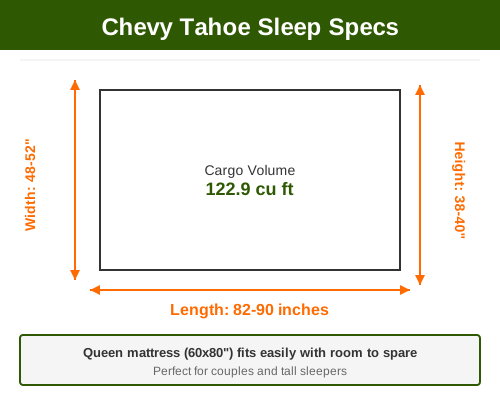
The Chevy Tahoe is a full-size SUV with excellent cargo space for camping adventures. With third row folded (and second row if needed), it provides generous sleeping dimensions—one of the most spacious SUVs for car camping. The Tahoe's blend of size, comfort, and modern technology makes it an exceptional choice for vehicle-based camping experiences without sacrificing comfort. The Tahoe's popularity among campers stems from its truck-based platform providing genuine capability, substantial interior volume, powerful climate control systems, and advanced connectivity features. The vehicle successfully bridges the gap between luxury SUV and adventure vehicle—maintaining refined daily driving characteristics while delivering authentic camping capacity. For those seeking comfort without extreme off-road demands, the Tahoe represents an exceptional platform.Dimensions and Sleeping Space
With Second and Third Row Folded
Best Mattress Options
Sleeping Configuration Options
Option 1: Simple Air Mattress SetupComfort Enhancements
Consider layering for optimal sleeping comfort:Climate Control and Technology
Modern Tahoes feature excellent technology supporting car camping:
Climate Control: Three-zone automatic climate control maintains precise cabin temperatures. Pre-arrival pre-conditioning ensures comfortable sleeping environment. Heated and ventilated seats provide personalized comfort without heating entire cabin—improving fuel efficiency.
Cameras: 360-degree camera systems with multiple viewing angles simplify tight campground parking. Rear-camera viewing enables safe nighttime door opening.
Power Management: Strong alternators (150+ amps) efficiently charge auxiliary battery systems. The electrical system supports extensive power accessories for extended camping. Multiple 12V power outlets provide charging for various devices.
Connectivity: Built-in WiFi hotspot, wireless charging pads, and multiple USB ports enable seamless device integration. Voice controls facilitate hands-free operation. Navigation systems store offline maps for areas without cell service.
Charge power station using 12V outlets while driving to campsite
Operate small appliances (coffee maker, mini fridge, laptop)
Backup for phone and camera charging
Provides AC power for evening lighting and entertainment
Reduces reliance on extended idle climate control
Solar panels recharge power station during daytime
Charge devices during driving time using available USB ports
Use power station for evening entertainment and appliances
Prioritize charging critical devices
Limit simultaneous high-draw operations
Establish morning charging protocols
Monitor battery voltage gauge if equipped
Idle climate control costs 0.5-0.6 gallons per hour
Power Station Integration
A portable power station ($500-1500) works excellently with Tahoe camping:Charging Strategy for Extended Trips
Effective power management preserves battery health:Practical Multi-Day Camping Operations
Food Storage and Cooking
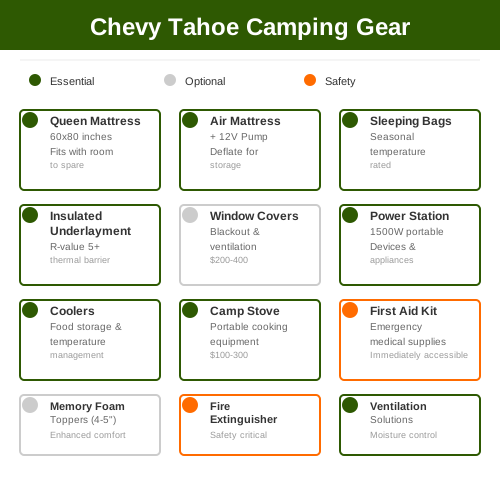
The Tahoe's spacious interior accommodates coolers, portable stoves, and cooking equipment. Dedicate cargo areas for cooking supplies maintaining accessibility. Consider built-in cooler drawers integrating cooling into vehicle infrastructure.Climate Control During Extended Occupation
Idling Tahoe climate control consumes 0.5-0.6 gallons per hour. Eight-hour extended operation consumes 4-5 gallons. Pre-cooling or pre-heating 30 minutes before sleeping reduces extended running time. In summer, strategic parking (shade priority) reduces cooling requirements. Window covers further reduce daytime heat gain. In winter, insulated covers reduce heating demands.Fuel Economy and Range
Most Tahoes achieve 16-22 miles per gallon depending on driving conditions. At 20 mpg highway average, a 26-gallon tank provides approximately 520 miles range. Calculate fuel stops carefully when traveling to remote areas. Keep fuel tank above half-full during extended camping.Pre-Camping Checklist
One Week Before Departure:Interior Storage and Organization
The Tahoe's spacious cargo area (122.9 cubic feet with rows folded) enables sophisticated storage organization beyond basic camping setup. Strategic planning transforms raw space into functional compartments supporting extended camping expeditions.Gear Zones and Accessibility
Divide cargo area into distinct zones: sleeping platform (front 40%), gear storage (rear 30%), equipment access (sides 20%), and emergency supplies (secure location 10%). This systematic organization prevents chaos during multi-day trips. Keep frequently accessed items (toiletries, medications, phone chargers) in front-accessible storage. Place less-used items (seasonal clothing, specialized equipment) toward rear. Emergency supplies (first aid, tools, flashlights) should be immediately accessible without moving primary camping gear.Vertical Storage Solutions
Maximize overhead space using roof racks and cargo carriers. Soft-sided carriers ($200-400) store 18-25 cubic feet, perfect for overflow gear. Hard boxes ($400-800) provide weatherproof storage suitable for electronics and sensitive equipment. Wall-mounted organizers utilize unused vertical space. Adhesive-backed bins ($50-100) store smaller items without permanent installation. Consider removable tension rods creating hanging storage for clothing and gear bags.Under-Bed Storage Integration
Elevating sleeping platform 12-14 inches above cargo floor creates valuable underbed storage. Custom-built platforms typically include storage drawers ($200-400) enabling organized gear access. Most successful implementations feature pull-out drawers simplifying item retrieval. Design underbed storage with wheel-equipped containers enabling smooth extraction. Label all storage bins clearly—nighttime retrieval becomes possible without detailed inventory knowledge.Extended Trip Considerations
Multi-Week Camping Logistics
Tahoe cargo capacity supports week-long expeditions comfortably. Plan water management (multiple 5-gallon containers or locating water sources), waste disposal (trash containers, grey water management), and supply rotation (rotating fresh food acquisition). Power requirements increase dramatically for extended trips. Portable power stations (1500W capacity, $1000-1500) enable indefinite camping when combined with solar charging. Battery capacity planning ensures adequate power for lights, fans, device charging, and small appliances throughout camping duration.Provisioning for Extended Expeditions
Successful extended camping requires systematic provisioning. Start with detailed meal planning (specify recipes and ingredients). Acquire perishables at established markets rather than carrying from home. Rotate fresh items ensuring variety despite limited shopping access. Stockpile shelf-stable items (canned goods, dried foods, snacks) at trip start. Many extended-trip Tahoe campers maintain "camping pantries"—dedicated storage bins containing non-perishable staples requiring no refrigeration. Water management: Carry 25-40 gallons for remote camping. Establish filling routines at established campgrounds or towns. Purification tablets ($10-20) provide emergency backup for questionable water sources.Ventilation and Condensation Management
Understanding Condensation in Vehicle Camping
Car camping in closed vehicles creates moisture and condensation challenges. Understanding and managing these improves comfort and vehicle health. What causes condensation? Warm interior air from breathing and perspiration holds moisture. When air contacts cold windows and metal surfaces, moisture condenses into water droplets. Temperature differential between interior and exterior is the primary factor. Why does condensation matter?Ventilation Strategies
Cross-ventilation approach:Temperature Management
In cold climates:Morning Routine
After waking, open all windows for 10-15 minutes to dry interior moisture and prevent mold growth.Regional Adaptation Strategies
Mountain Camping (Rockies, Cascades, Sierra Nevada)
Tahoe's ground clearance (8.5 inches) handles most established mountain roads comfortably. All-wheel-drive options provide advantage on rough terrain. High-altitude camping (8,000-10,000 feet) requires:Desert Camping (Southwest, Great Basin, Mojave)
Desert camping emphasizes heat management and water security. Tahoe's air conditioning system proves invaluable during daytime hours. Strategic parking in shade reduces interior temperatures dramatically. Reflective window covers ($100-200) reduce solar heating significantly. Water requirements increase substantially—carry 30-40 gallons minimum for multi-day desert expeditions. Desert nights frequently reach freezing temperatures despite scorching days—adequate bedding prevents nighttime discomfort. Dust management: Frequent dust storms warrant sealed window systems and air filter replacement before/after desert expeditions. Many desert campers invest in upgraded air filters improving air quality during extended dust exposure.Coastal Camping (Pacific, Atlantic, Great Lakes)
Coastal camping leverages Tahoe's comfort for highway transitions between coastal destinations. Salt air requires maintenance: regular underbody washing preventing corrosion, interior air circulation preventing moisture accumulation, and electronics protection from moisture exposure. Beach camping gear (surfboards, paddleboards, fishing equipment, beach toys) occupies substantial space. Design storage accommodating these specialized items while maintaining sleeping space accessibility.Forest Camping (Pacific Northwest, Northeast, Midwest)
Forest camping exploits Tahoe's off-road capability for Forest Service roads and dispersed camping areas. Ground clearance handles rough roads; all-wheel drive improves muddy terrain traction. Extended forest camping requires:Seasonal Camping Strategies
Spring Camping (March-May)
Spring temperatures (45-65°F) enable comfortable camping with moderate bedding. Ventilation becomes important—cracking windows prevents moisture accumulation. Spring showers warrant waterproofing: check weatherstripping, verify window seals, ensure water-tight cargo area. Spring mud affects campground access. All-wheel-drive advantage shows during soggy conditions. Consider carrying traction aids (sand/kitty litter) for emergency traction if stuck.Summer Camping (June-August)
Summer heat management dominates strategy. Pre-cool vehicle for 30-60 minutes before sleeping. Maximum window opening and cross-ventilation become essential. Climate control running overnight consumes 4-6 gallons fuel—calculate costs for extended summer trips. Consider rooftop tent alternatives providing better ventilation than enclosed cargo areas. Elevated sleeping position improves air circulation, reducing condensation and heat accumulation.Fall Camping (September-November)
Fall temperatures (50-70°F) represent ideal camping conditions—neither extreme heating nor cooling necessary. Mild weather enables maximum outdoor activity time. Prepare for rapid weather changes—autumn storms can develop quickly.Winter Camping (December-February)
Winter camping demands maximum insulation, quality heating, and weatherproofing. Adequate bedding (quality sleeping bags, thermal underlays, heavy blankets) prevents dangerous nighttime temperatures. Portable heaters ($100-300) provide supplemental warmth—operate safely with windows cracked for ventilation. Battery health matters significantly—cold weather reduces battery capacity. Pre-warming vehicle before sleeping improves comfort. Many winter campers use block heaters and insulated engine covers extending vehicle reliability during extended cold exposure.FAQ and Practical Tips
Can you sleep in a Chevy Tahoe? Excellent for sleeping—one of the most spacious SUVs. Queen mattress fits easily with room to spare. Multiple sleeping configurations accommodate various family sizes.
What size mattress fits? Queen (60x80 inches) fits well with cargo space remaining. Full size leaves adequate room for additional gear. Some owners customize foam to exact cargo dimensions.
Is the Tahoe good for camping? Excellent sleeping space and capability. Trade-offs are lower fuel economy, larger size requiring spacious parking areas, and higher maintenance costs.
How long can climate control run? Continuous 8-hour operation typically consumes 4-6 gallons fuel. Most owners run 30-90 minutes before sleep for fuel efficiency.
Can I tow camping trailers? Yes—6,000-7,200 pound towing capacity enables small trailers (teardrops, compact RVs).
What's the Tahoe's ground clearance? Approximately 8.5 inches—adequate for established campgrounds and maintained roads.
How many people can sleep in the Tahoe? 2-3 comfortably on primary platform. Comfort decreases with occupancy.
What maintenance matters before long trips? Battery health check, fluid level verification, tire condition assessment, air filter inspection.
How do I organize gear in the Tahoe? Create dedicated zones for sleeping, clothing, cooking supplies, tools, and safety equipment. Use stackable bins with labels for quick identification. Keep frequently accessed items toward rear for easy access.
Should I get a roof tent for my Tahoe? Roof tents ($800-2000) offer benefits: additional sleeping space, protection from ground moisture, quick setup. Trade-offs: reduced fuel economy, height clearance concerns, installation cost. Excellent for extended trips or larger groups.