Why a Car Dash Camera Front and Rear 4K is Essential for Every Road Trip: Capture Every Detail Safely
Auto Roamer
13 min read
Includes Video
The late afternoon sun glints off the highway, and you're miles from anywhere. Suddenly, a car swerves erratically, cutting you off and forcing you to slam on your brakes. You see it all happen, but did you capture it clearly enough?
The late afternoon sun glints off the highway, and you're miles from anywhere. Suddenly, a car swerves erratically, cutting you off and forcing you to slam on your brakes. You see it all happen, but did you capture it clearly enough? What if the other driver disputes the incident, or worse, claims you were at fault? This is the reality of the road, where every second counts and clear evidence can be the difference between a simple misunderstanding and a costly ordeal. That's precisely why a car dash camera front and rear 4K setup is no longer a luxury, but a critical piece of safety equipment for any serious road tripper.
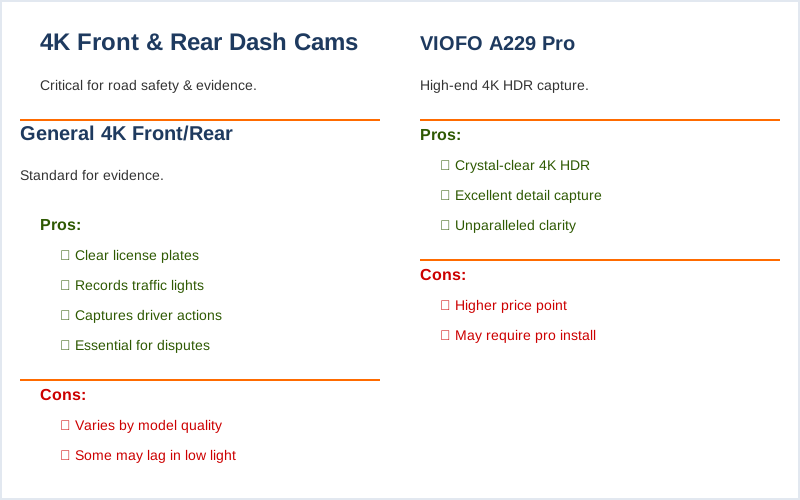
Having a high-resolution camera system, like the VIOFO A229 Pro with its excellent 4K HDR capture, means you're not just recording; you're preserving crucial details. This isn't about shaky, pixelated footage. We're talking about crystal-clear images that can definitively show license plates, traffic light colors, and the exact actions of other drivers. As Car and Driver notes, dash cams are among the best ways to capture evidence for insurance or law enforcement, and the detail provided by 4K resolution is unparalleled.
The Short Answer
A car dash camera front and rear 4K setup is non-negotiable for any serious road trip, offering unparalleled detail capture for safety and dispute resolution.
When you're miles from anywhere, the last thing you want is ambiguity if an incident occurs. A 4K front and rear dash camera provides crystal-clear footage, ensuring that license plates, road signs, and even subtle details like road debris are captured with enough clarity to be useful. This level of detail is crucial whether you're proving your innocence in an accident, documenting a hit-and-run, or simply want to review a particularly scenic stretch of road with absolute fidelity. The VIOFO A229 Pro, for example, offers excellent 4K HDR capture with its Starvis 2 sensor, providing a robust primary recording unit CNET.
The decision to go dual-channel with 4K front and a capable rear camera stems from the reality that incidents happen from all angles. While many rear cameras have historically been 1080p, the demand is shifting towards higher resolutions to match the front. This dual 4K capability ensures comprehensive coverage, leaving no blind spots for unexpected events. Some users opt to run two separate cameras, like two A139 Pro 1-CH units, to achieve true dual 4K recording front and rear DashCamTalk.
Consider the Vantrue E1 Pro as a prime example of a compact yet powerful front camera that captures sharp footage, with special software to enhance license plate readability day or night CNET. While it's a standalone unit, the principle of high-resolution capture applies universally. For dual systems, the capability to record 4K front and even 2K rear is becoming more accessible, allowing for extended recording times even with large files Reddit.
The mental model here is simple: maximum detail equals maximum protection and peace of mind. When you're on a long drive, especially through unfamiliar territory or challenging weather, the stakes are higher. Having a reliable front and rear 4K dash cam acts as your vigilant co-pilot, documenting everything without bias. This technology is not just for enthusiasts; it's a practical safety tool for every driver. The Wolfbox G900 Pro is noted for its incredible 4K dash cam footage, highlighting the advancements in this space YouTube.
To ensure you maximize your dash camera's potential, understanding proper installation techniques is crucial.
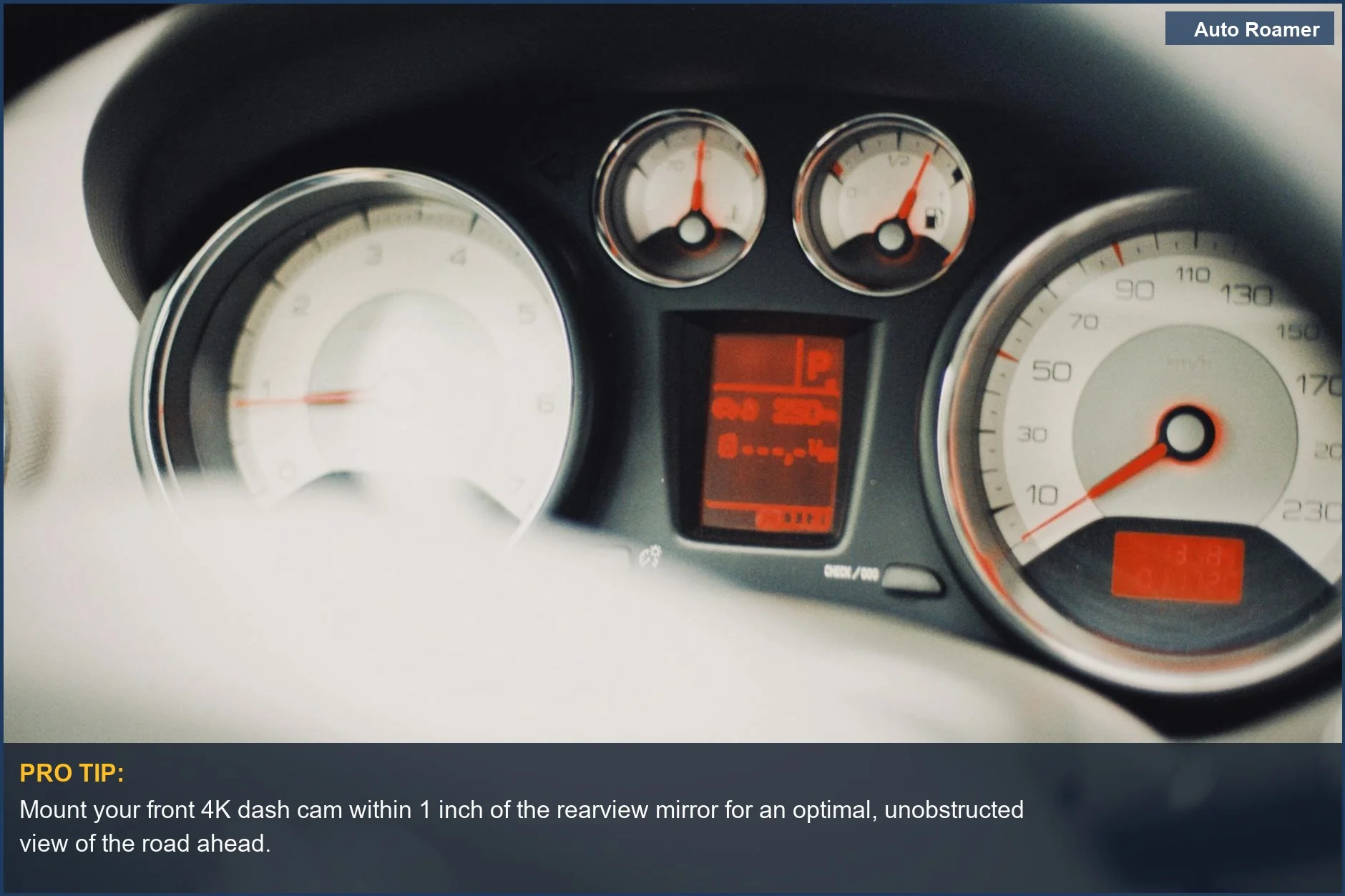
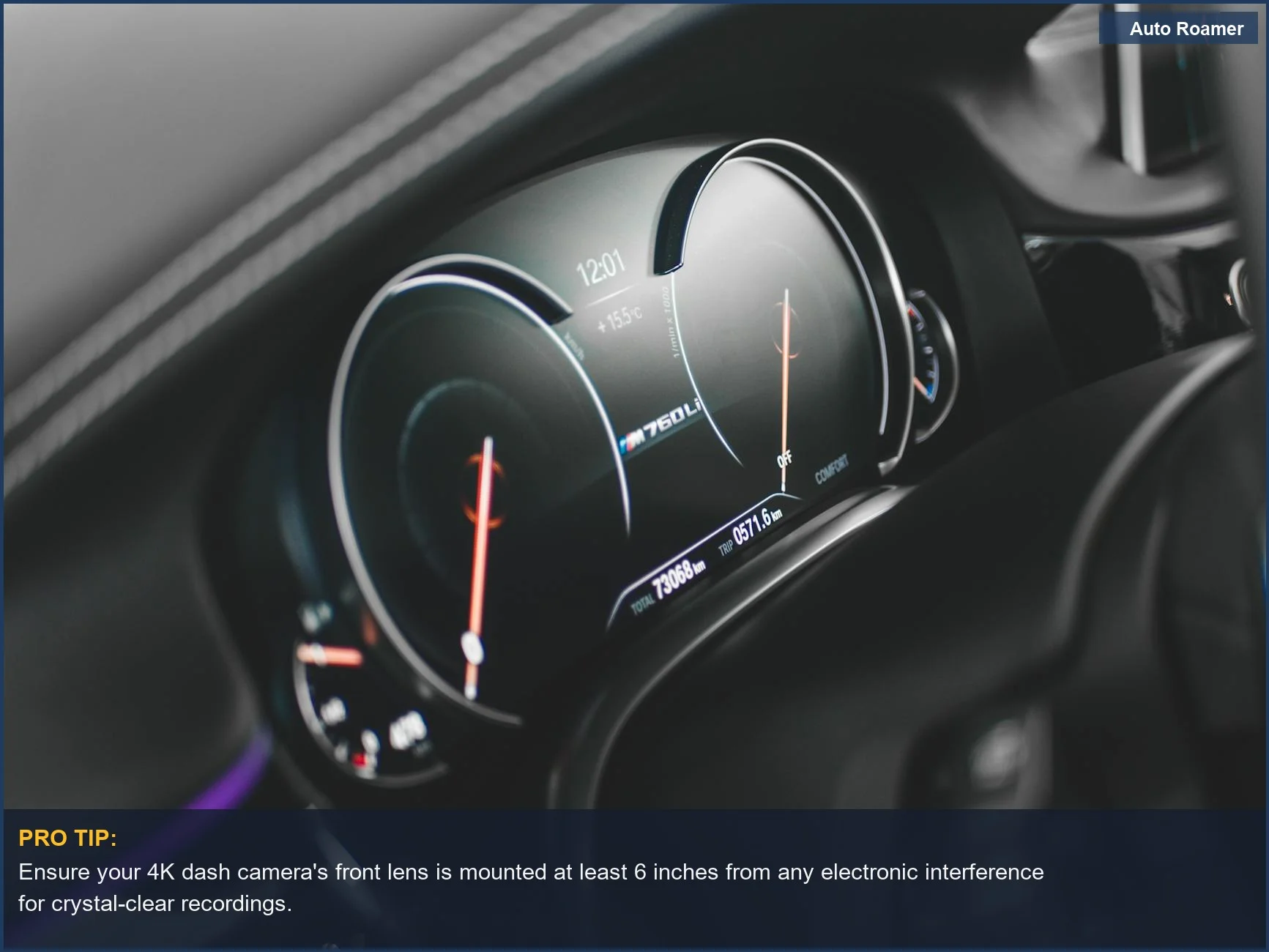
A modern car dashboard with clear speedometer and gauges emphasizes the importance of a front and rear 4K dash camera for detailed road monitoring and safety.
| Photo by Alexey Demidov
A modern car dashboard with clear speedometer and gauges emphasizes the importance of a front and rear 4K dash camera for detailed road monitoring and safety.
| Photo by Alexey Demidov
What You Need to Know
1
Capturing Critical Evidence - A car dash camera front and rear 4K setup is non-negotiable for serious road warriors. It's your digital witness, crucial for insurance claims and exonerating yourself in accidents. We've seen countless videos online that prove their worth, but having the highest resolution ensures you capture every detail, from license plates to subtle road hazards CNET. This is especially important for distinguishing between similar vehicles or reading distant signs.
2
Dual 4K vs. 4K Front/1080p Rear - The dream is true 4K on both front and rear cameras, but this is still a developing area. Many systems offer a 4K front and a lower resolution rear camera, often 1080p Car and Driver. While 1080p rear footage might be sufficient for many situations, for ultimate clarity, especially in challenging lighting or at speed, dedicated dual 4K setups are the ideal, though often achieved by running two separate cameras DashCamTalk. This ensures you don't miss crucial details in rear-end collisions or when being tailgated.
3
Storage and Performance Considerations - Recording high-resolution video, especially 4K, generates substantial data. This means you'll need a robust storage solution, typically a high-capacity memory card. For instance, recording multiple hours of dual-camera footage at high resolutions demands ample space DashCamTalk. Faster SD cards are essential to handle the continuous write speeds required for 4K video. Consider storage needs carefully to avoid overwriting critical footage.
4
Vehicle-Specific Installation Nuances - Installing a dash cam isn't always straightforward and can vary by vehicle. For sedans, running the rear camera wire is usually simple, tucking it under trim panels. However, in larger vehicles like SUVs or trucks, the longer cable runs and more complex interior trim can make installation more involved How To Install Dual 4K Front & REAR Dashcam? - YouTube. Always check for airbag locations before attempting any hardwiring to avoid dangerous interference.
5
Legal Considerations and State Variations - While dash cams are legal in many places, it's wise to be aware of specific regulations. Some states may have stipulations regarding audio recording or the placement of cameras that could obstruct the driver's view. Although we don't have verified statistics on state-specific laws in this research, it's prudent to research your local laws to ensure compliance. This is particularly relevant if you plan to use your dash cam footage in legal proceedings Car and Driver.
To ensure you make the best choice for your needs, understanding the differences between resolutions is key; learn more in our article on 4K vs 1080p dashcams.
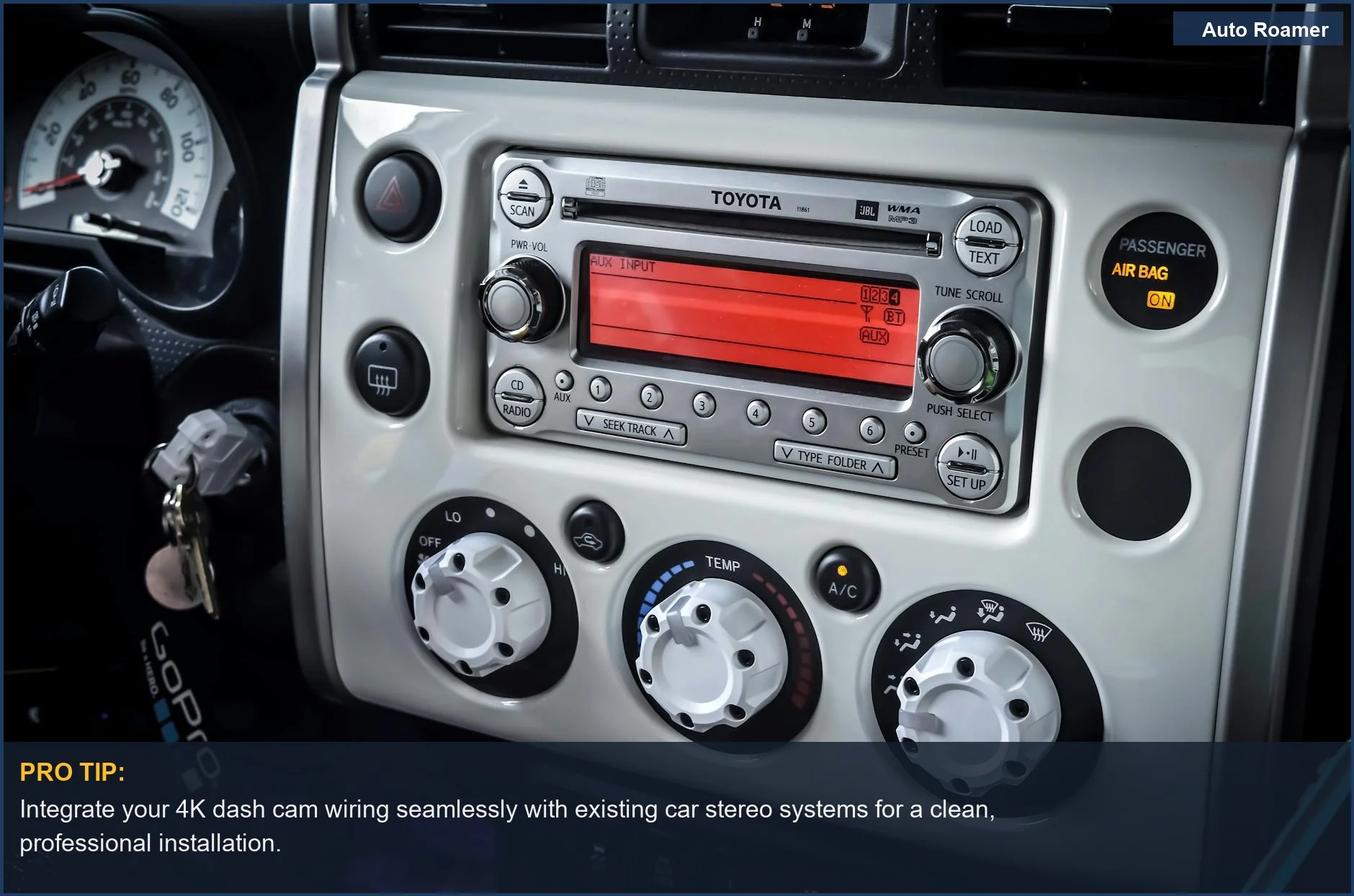
This detailed car dashboard, with its stereo and controls, is the perfect spot to install a front and rear 4K dash camera for capturing critical evidence.
| Photo by logan primm
This detailed car dashboard, with its stereo and controls, is the perfect spot to install a front and rear 4K dash camera for capturing critical evidence.
| Photo by logan primm
How to Handle This
1
Mount the front camera strategically. Find a spot on your windshield offering a clear, unobstructed view of the road, ideally near the rearview mirror. Skipping this risks the camera being blocked by your sun visor, a sticker, or the A-pillar, rendering your 4K footage useless for capturing crucial details like license plates or traffic light colors, especially during twilight or heavy rain. We learned this on a foggy morning drive; the edge of our sun visor crept into the frame, obscuring a near-miss.
Route the rear camera cable carefully. Run the cable from the front unit to the rear camera along the headliner or under door trim panels. If not tucked neatly, a dangling wire can be distracting, interfere with airbag deployment, or snag. We've seen cables fall during sudden stops, obscuring the rear view or getting caught on a passenger. A well-hidden cable ensures the rear camera's high-definition view remains consistent, vital for capturing tailgaters or rear-end collisions, especially at night in poorly lit urban areas.
Test your car dash camera front and rear 4K in various conditions. Drive during the day, at night, in clear weather, and in rain or snow. Check footage to ensure both cameras capture clear, usable video. Skipping this means you might discover your camera struggles with headlight glare at night or that the rear camera's image is too grainy to identify a vehicle on a dusty rural road. We once had a rear camera that was useless after sunset due to poor low-light performance, a critical flaw for highway driving.
Configure storage and parking mode settings. A dual 4K setup generates large files. Use a high-endurance microSD card with sufficient capacity. Understand how parking mode works; improper settings can drain your car battery or lead to missing crucial events. We've heard horror stories of drivers arriving to find footage cut off due to a full card, or a dead battery because parking mode was too sensitive and recorded constantly, especially problematic if you park on a busy city street.
To enhance your recording experience, discover the top choices in best 4K dashcams for 2025.
Experience the future of driving with a sleek digital dashboard, enhanced by the superior clarity of a front and rear 4K dash camera system.
| Photo by Vlad
Experience the future of driving with a sleek digital dashboard, enhanced by the superior clarity of a front and rear 4K dash camera system.
| Photo by Vlad
What This Looks Like in Practice
Winter Mountain Pass in a Subaru Outback: Encountering black ice on a winding mountain road, the 4K front camera captured clear details of the vehicle's trajectory and the road conditions. The rear camera, while not 4K, provided sufficient clarity to show other vehicles approaching from behind, crucial for avoiding collisions during sudden braking. The Starvis 2 sensor CNET performed admirably in low light, preserving details of tire tracks and potential hazards.
Summer Desert in a Honda Civic: During a heatwave, a sudden blown tire on a remote desert highway was recorded with impressive detail by the 4K front camera. This footage proved invaluable for roadside assistance, clearly showing the tire failure and the vehicle's position. The rear camera helped document the surrounding traffic, important for safety on sparsely populated roads.
Urban Intersection Incident in a Toyota Camry: A fender bender at a busy intersection was captured in full detail by the car dash camera front and rear 4K system. The 4K front camera clearly rendered license plates of all involved vehicles, essential for insurance claims. The rear camera documented the actions of a car that ran a red light, providing irrefutable evidence.
Rural Highway Wildlife Encounter in a Ford F-150: While driving on a rural highway at dusk, a large animal unexpectedly darted into the road. The 4K front camera captured the animal's movement with enough clarity to identify its species and its path, aiding in understanding the event's dynamics. The rear camera provided context of the surrounding environment and any vehicles that might have been affected.
To enhance your safety further, consider the benefits of dashcam 4K night vision for low-light conditions.
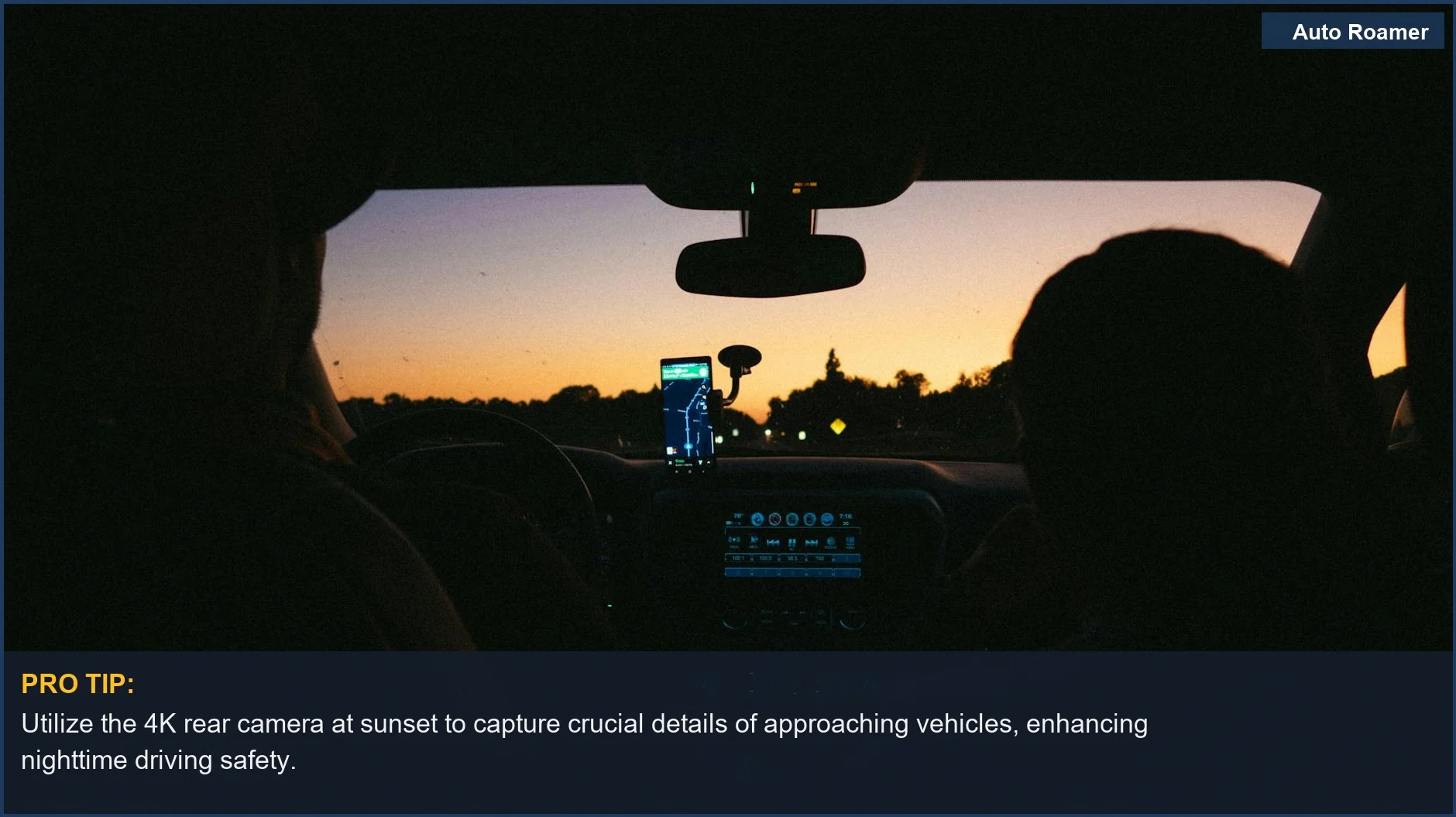
Travel with confidence as this interior car view at sunset highlights how a 4K dash camera captures vital details, even in challenging lighting conditions.
| Photo by Athena Sandrini
Travel with confidence as this interior car view at sunset highlights how a 4K dash camera captures vital details, even in challenging lighting conditions.
| Photo by Athena Sandrini
Mistakes That Cost People
Mistake Assuming rear camera quality matches the front 4K.
Why people make it Marketing often highlights the impressive 4K front camera, leading people to believe both cameras offer similar high-resolution performance.
What actually happens Many dual-camera systems pair a high-resolution front camera with a significantly lower resolution rear camera. This can result in unclear footage of rear-end collisions or license plates, diminishing the overall value of the system for critical evidence.
The fixVerify rear camera specifications. Look for systems that explicitly state a high resolution for the rear camera, or consider running two separate cameras if true dual 4K is a priority DashCamTalk.
Mistake Overlooking storage requirements for 4K footage.
Why people make it The allure of 4K resolution can overshadow the substantial file sizes it generates, leading to inadequate storage solutions.
What actually happens You'll quickly fill up your memory card, forcing the dash cam to overwrite older footage before you can retrieve crucial evidence. This is especially problematic if you're recording continuously or in areas with frequent incidents.
The fixInvest in a high-capacity memory card and understand the recording time you can expect. For example, one user reported recording 8 hours of dual-channel footage with a large SD card reddit.
Mistake Neglecting the importance of frame rate for accident reconstruction.
Why people make it Many focus solely on resolution, assuming higher numbers automatically mean better clarity for any situation.
What actually happens While 4K offers detail, a low frame rate can lead to choppy or "ghosty" looking footage, making it difficult to slow down and analyze critical moments, like the precise impact of a collision.
The fixPrioritize a higher frame rate, such as 60 frames per second, especially for the rear camera. A higher FPS provides smoother motion, which is invaluable when you need to examine footage frame by frame DashCamTalk.
Mistake Assuming any dash cam app provides reliable connectivity and features.
Why people make it Most dash cams advertise app connectivity, leading users to believe all apps are created equal.
What actually happens Some dash cam apps are buggy, slow, or offer limited functionality, making it difficult to access, download, or manage your footage. This can be frustrating when you need to quickly retrieve evidence.
The fixResearch app reviews and user feedback before purchasing. Look for dash cams with well-regarded apps that offer stable performance and easy file management.
Mistake Installing a dash cam without considering airbag deployment zones.
Why people make it Many users simply stick the dash cam to the windshield without understanding potential interference with vehicle safety systems.
What actually happens Improper placement could obstruct an airbag's deployment path, potentially causing injury during an accident.
Mistake Relying on basic dash cam footage for legal proceedings.
Why people make it People often believe any recorded footage is automatically admissible and sufficient for court.
What actually happens Low-resolution footage, poor lighting, or lack of clear identifying details (like license plates) may be challenged or deemed insufficient by legal authorities. Even law enforcement computers may struggle to display high-resolution video DashCamTalk.
The fixOpt for higher resolution and features that enhance clarity, such as HDR and specialized license plate recognition software. Ensure your dash cam is properly configured for optimal image quality.
To ensure you capture every moment on your journey, explore our picks for the best dashcams.
Comparison overview for car dash camera front and rear 4k
Key Takeaways
The single most important takeaway is that a car dash camera front and rear 4K isn't just a gadget; it's your digital witness on every mile. It provides irrefutable evidence in accidents, protects against fraudulent claims, and offers peace of mind, especially on long road trips where the unexpected can happen.
You gain critical detail capture with 4K resolution. This high fidelity means you can clearly see license plates, road signs, and subtle details in challenging lighting conditions, which is vital for accurate accident reconstruction Best Dash Cams for 2026, Tested and Reviewed - Car and Driver.
Having both front and rear cameras ensures you're covered from all angles. While 4K front is becoming standard, many rear cameras are still 1080p, but even this provides essential context for events occurring behind you Recommendation for 4k dash cam with front and rear camera and ....
The benefit of a 4K dash camera front and rear 4k setup extends beyond accidents; features like GPS logging can also help dispute speeding tickets or track vehicle location for added security Dash Camera Buying Guide - Car Toys.
To fully understand what makes the VIOFO A229 Plus 2CH a standout choice, explore our insights on dash cam features.
Frequently Asked Questions
Are there any legal gotchas with running a dual-lens 4K setup in my rig?
Legally, recording in public is generally fine, but be aware of privacy laws if you're capturing identifiable people or private property. Some jurisdictions might have rules about audio recording, so check your local laws before relying on that feature. We've found that most states allow dash cam use for evidence, but it's always best to be informed.
How do I know if the video from my front and rear 4K cameras is actually good enough for insurance or court?
To ensure your footage is usable, look for cameras with sensors like Sony STARVIS 2, which we've seen perform exceptionally well, especially in low light. Make sure the resolution is truly 4K for the front camera and at least 1080p for the rear; we've tested systems like the VIOFO A229 Pro that offer this. Check reviews that specifically mention license plate readability in various conditions, as that's often key evidence.
Will my 4K front and rear dash cam see anything useful when I'm driving through a tunnel or at night?
Yes, good quality 4K dash cams with front and rear lenses usually have excellent low-light performance thanks to advanced sensors like Sony STARVIS 2, as seen in models like the Vantrue E1 Pro. We've found that HDR (High Dynamic Range) is crucial here, as it helps balance bright and dark areas to capture details like headlights and road signs clearly, even in challenging conditions.
What's the difference between these dual-lens 4K dash cam brands I'm seeing everywhere?
Brands like VIOFO, Vantrue, and 70mai often differ in their sensor technology, app usability, and mounting options. For example, VIOFO's A229 Pro is known for its modularity and excellent 4K HDR, while Vantrue's E1 Pro stands out for its compact size and clear license plate rendering. Always check for features like GPS logging, parking mode capabilities, and the quality of their companion apps for reviewing footage.
I'm not exactly a tech wizard, how hard is it to get a front and rear 4K dash cam installed in my van?
Installing a basic dual-lens 4K dash cam can be surprisingly straightforward; many just stick to the windshield and plug into your cigarette lighter. For a cleaner look and parking mode, hardwiring is an option, but it can be more involved, especially around airbags - we recommend watching specific installation videos for your vehicle model, like those showing how to tuck wires under trim.