
Why Your Car 12v Outlet Stopped Working and How to Fix It Yourself (2026 Complete Guide)
There's a special kind of rage reserved for the moment your phone hits 2% and your car's 12V outlet is a dead hole of nothingness. This isn't some over-engineered garbage needing a dealership's $300 "diagnostic fee" to tell you a quarter was lodged in there.
There's a special kind of rage reserved for the moment your phone hits 2% and your car's 12V outlet is a dead hole of nothingness. This isn't some over-engineered garbage needing a dealership's $300 "diagnostic fee" to tell you a quarter was lodged in there. Most of the time, a blown fuse is the culprit, a tiny ceramic or plastic hero sacrificing itself so your car doesn't catch fire.
If your car power outlet fix is more than just plugging in a different charger (which you should do first, obviously), it's probably a fuse. The trick is finding the right one. Consult your owner's manual for the 12v outlet fuse location, which can be buried in the dash or under the hood like a buried treasure map.
A burned cigarette lighter socket just means no power is reaching it; the fuse is the most common reason for this lack of juice .
Sometimes, even with a good fuse, you're still stuck. That's when you start looking for loose or disconnected wires, or even corrosion. It's not rocket science; it's just basic electrical troubleshooting that saves you a boatload of cash. Don't let a janky outlet ruin your road trip playlist.
The Short Answer
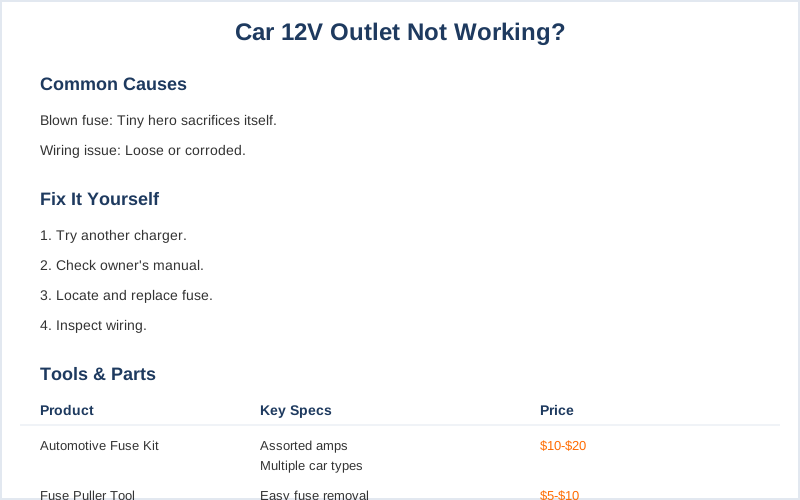
Your car's 12v outlet stopped working because either the fuse blew or there's a wiring issue. It's not rocket science; it's just basic electrical flow getting interrupted.
Most of the time, when your 12v outlet isn't working, it's because the fuse for that circuit has blown. Think of it as a tiny, sacrificial soldier designed to fry itself before your expensive electronics or the car's wiring get toasted. Plug in too many power-hungry gadgets, or worse, a penny falls in, and *poof*, no more juice.
If you've checked the fuse and it looks fine, or you've replaced it and it blows again immediately, then you're likely dealing with a faulty connection somewhere in the wiring. This could be a loose wire behind the outlet itself, frayed insulation, or even corrosion on the terminals. No power reaching the receptacle means the problem isn't the socket, it's upstream.
This whole setup is pretty straightforward. The 12v socket is just a direct tap into your car's electrical system, usually with a dedicated fuse to keep things safe. If that circuit gets overloaded or shorted, the fuse pops. If the wiring itself is damaged, you get intermittent power or a complete cutoff. It's not over-engineered garbage; it's just basic physics.
The Sketchy Fix: Sometimes, a cigarette lighter not working is due to a slightly loose socket housing. A bit of electrical tape wedged just right can sometimes push the contacts back into alignment. It's janky as hell, but it works. Don't tell anyone I told you this.
When all your 12v outlets die simultaneously, it's almost certainly a blown fuse affecting a larger section of the car's accessory power. If just one outlet is dead, it's usually that specific circuit. The key is finding the right 12v outlet fuse location; your owner's manual is your best friend here.

The Reality Check
Look, if you're taking your rig to the dealership for a dead 12V outlet, they'll probably charge you north of a ridiculous amount to tell you a penny was lodged in there, or the fuse blew. That's just highway robbery. Most of the time, it's something you can sort out yourself without needing a degree in electrical engineering or a loan.
So your car's 12V outlet, the lifeline for your phone, GPS, or that crucial portable espresso machine, has decided to go on strike. Don't panic. This isn't usually some mystical electrical gremlin demanding a sacrifice of your entire paycheck. It's often something incredibly simple.
Obstructions are the low-hanging fruit here. Seriously, people jam all sorts of junk into these things. Think coins, stray charging cables, maybe even a rogue french fry. A non-conductive blockage just stops your charger from making proper contact. A conductive object, like a coin, is worse - it can short the whole circuit and blow the fuse, which is the next most likely suspect.
Blown fuses are the silent killers of car power. These little things are designed to sacrifice themselves when too much juice tries to flow, protecting your car's wiring from turning into a bonfire. If your 12V outlet is dead, the first thing you should suspect is a blown fuse. You'll need to consult your owner's manual to find the fuse box and the specific fuse for your accessory outlet. They aren't always labeled obviously, sometimes they're just lumped under "power outlet" or "accessory."
Beyond that, you're looking at potential issues with the wiring connections. Over time, vibrations from driving can loosen wires, or insulation can get worn. Loose or corroded connections at the back of the socket or further up the harness are common culprits for intermittent or complete power loss.
It's also worth noting that some devices themselves can be the problem. Chargers go bad. Plugs wear out. Rule out your charger by trying it in another known working outlet, or try a different charger in the suspect outlet. Don't immediately assume the car's socket is the issue.
If you've tried these basic steps and still have a dead outlet, it's time to consider more involved diagnostics. This is where things can get a bit more janky, but often effective for us DIY types. It might involve pulling the socket assembly to check the wiring connections directly behind it, looking for any signs of melting, corrosion, or loose wires. This is also where a basic test light or multimeter becomes your best friend for tracing power.
How to Handle This
Forget calling a dealership for this. They'll charge you a king's ransom to tell you the obvious. Most of the time, your car 12v outlet not working is a simple fuse swap, but you gotta know where to look.
What This Looks Like in Practice
real_scenarios — ## What This Looks Like in Practice
- Winter Mountain Pass in a Subaru Outback: Blasting the heater and running a GPS trying to find a signal, the 12v outlet suddenly dies. You're in a blizzard, and your phone's at 5%. Likely culprit? A blown fuse from that sketchy-as-hell dash cam you installed. This is a common scenario where an overloaded circuit, often exacerbated by a faulty accessory, causes the fuse to sacrifice itself to protect the vehicle's wiring Source Name. Trying to send it with a higher amperage fuse is a terrible idea, as it bypasses crucial safety mechanisms and could lead to melted wires or even a fire Source Name.
- Summer Desert in a Honda Civic: Mid-day heat, you need to power a portable fridge for drinks. It worked yesterday, now nothing. This could be a simple case of the socket being clogged with sand or a rogue coin, causing a short. These foreign objects can bridge the contacts, drawing too much current and blowing the fuse or damaging the socket itself Source Name. Or worse, the wiring is just janky after years of being bone stock and baked in the sun. Heat can degrade insulation and connections, leading to intermittent failures or complete loss of power.
- Off-Grid Rig in a Toyota Tacoma: You're miles from anywhere, relying on your rig for shore power for your satellite phone charger. It's dead. This isn't just a blown fuse; it's probably a loose connection behind the panel, or the socket itself has corroded from dust and moisture. In off-road or dusty environments, debris can infiltrate the socket, causing poor conductivity and eventual failure Source Name. This is where you might need to dig deeper than just checking the fuse box, potentially dealing with over-engineered garbage wiring or poorly crimped connections that fail under stress.
- Commuter Car in a Downpour: Trying to charge your phone during a torrential rainstorm, the outlet sputters and dies. This could be a fuse issue, but also a sign of water ingress into the socket or associated wiring. Water is a conductor and can cause short circuits, leading to blown fuses or corrosion of internal components Source Name. If other accessories on the same circuit are also dead, it's a bigger electrical gremlin, suggesting a more widespread issue with the circuit protection or wiring harness. Sometimes, simply drying out the area can resolve temporary issues, but persistent problems indicate a need for inspection.

Mistakes That Cost People
Don't let your car's 12v outlet turn into a black hole of frustration. Most of the time, it's not some complex electrical gremlin; it's something dumb and obvious you probably did yourself.
Mistake: Assuming your device is the problem.
Why people make it: It's easy to blame the charger when your phone won't juice up. You've got a drawer full of janky cables anyway.
What actually happens: While your charger *could* be dead, it's more likely the outlet itself is toast or the fuse is blown. Trying another device is the first step, but don't stop there. If your GPS also dies, it's definitely not the charger.
The fix: Grab a known-good accessory (like a cigarette lighter air pump or a different phone charger) and test it. If that doesn't work, move on.
Mistake: Ignoring the obvious foreign object.
Why people make it: Who's got time to inspect every nook and cranny? Plus, you assume only a cigarette lighter would get stuff stuck in it.
What actually happens: Small coins, crumbs, or even a rogue paperclip can lodge themselves in the socket, preventing your plug from making proper contact. Worse, a conductive object like a coin can short out the circuit and blow the fuse.
The fix: Get a flashlight and a pair of long tweezers or a bent paperclip. Carefully inspect and remove any debris. Don't jam metal objects in there if you suspect it's already shorted.
Mistake: Thinking a good fuse means no fuse problem.
Why people make it: You checked the fuse, saw it wasn't visibly blown, and declared victory. Or worse, you swapped it with a higher amperage one because you're impatient.
What actually happens: Fuses can fail internally without looking burnt. And jamming a higher amp fuse in is how you start a fire, not fix a car 12v outlet not working.
The fix: Pull the fuse and test it with a multimeter for continuity. If you don't have one, just swap it with a known-good fuse of the *exact same amperage*. Then, figure out why the original blew.
Mistake: Blaming the socket when the whole system is dead.
Why people make it: You only notice the one outlet isn't working. You assume it's an isolated incident.
What actually happens: If multiple 12v outlets (or other accessories like your radio) are dead, it's usually a bigger issue. It could be a main fuse for accessory power, or a problem further up the electrical chain. When all 12V power outlets stop working, it's rarely just one bad socket.
The fix: Check your owner's manual for the *main* accessory fuse, not just the one specifically labeled for your dead outlet. Sometimes they're grouped.
Mistake: Forgetting about the "smart" features in newer cars.
Why people make it: You're used to older cars where everything was hardwired and simple. You're not expecting the car to actively disable things.
What actually happens: Newer vehicles often have sophisticated power management systems. Overloading an outlet, or plugging in something that draws too much power (like a cheap inverter that's not properly dialed), can cause the car's computer to temporarily shut down that circuit to protect itself. It's not always a blown fuse; it's a software lockout.
The fix: Sometimes simply turning the car off and on again will reset it. If it keeps happening, you might be drawing too much power. Check the amperage rating of your device and compare it to what the outlet is designed for (usually around 10A, but check your manual).
Mistake: Not checking the socket's internal wiring connections.
Why people make it: You've replaced the fuse, the outlet looks clean, but still nothing. You assume the new outlet is faulty, or it's some deep wiring harness issue.
What actually happens: The wires connecting to the back of the 12v socket can vibrate loose over time. This is especially common on older vehicles or those driven on rough terrain. Loose or disconnected wires mean no power, even with a good fuse and a new socket.
The fix: With the power off (disconnect the battery if you're unsure), gently wiggle the wires connected to the back of the socket. If they feel loose, try to secure them. Sometimes a bit of electrical tape or even a tiny zip-tie can do the trick for a sketchy-as-hell but effective fix.
Key Takeaways
- Most dead outlets are just a blown fuse. Seriously, don't even bother with anything else until you've checked that. If it's blown, grab a new one of the *exact* same amperage - don't get cute and try to over-engineer garbage with a higher rating. That's how you start fires, not fix cars.
- If the fuse is fine, then you're probably dealing with some shoddy wiring or a corroded connection. Wiggle everything behind the dash. If that doesn't work, you might need to pull the socket out and see if the wires are loose. It's usually pretty straightforward, unless your car is some over-engineered garbage that requires an engineering degree to access.
- Sometimes, it's just a piece of junk stuck in the socket. A coin, a stray french fry, whatever. Grab some needle-nose pliers or even just some compressed air and give it a good blast. You'd be amazed how often this fixes a janky outlet.
- The most important thing to remember is that most car power outlet fix jobs aren't rocket science. They're usually just a blown fuse or a loose wire. Don't let some dealership talk you into a $200 "diagnostic fee" for what amounts to a 5-minute fix. You can send it yourself.
Frequently Asked Questions
My car’s 12v outlet just died. What’s the stupidest reason it stopped working, and how do I fix it without selling a kidney?
I plugged in my phone charger and my portable fridge, and now nothing works. Is my car's electrical system just over-engineered garbage?
I replaced the fuse, and it blew again immediately. What kind of sketchy-as-hell thing is going on now?
What if the fuse is fine, but the 12v outlet is still dead? Do I need to call some dealership that'll charge me $200 for a five-minute fix?
My cigarette lighter stopped working, but my phone charger still works in the same outlet. What gives?
Sources
- item?id=38900000
- Troubleshooting Your Car's 12V Socket: A Guide to Getting It Back in ...
- Why Did The 12 Volt Socket Stop Working In My Car? - Bituoelec
- cars.com
- Troubleshooting Your Car's 12V Outlet: Common Issues and Solutions
- facebook.com
- The Ultimate Guide - Fix your car 12V Cigarette Lighter, Charger Outlet
- Why Your Car's 12V Socket Fails and How to Fix It - Yahoo
- Could this be the reason for the 12v socket not working? - Reddit
- Why Did My 12-Volt Power Outlet Stop Working?
- 12V Power Outlets Not Working? Expert Troubleshooting Guide