
Camping Gear for Subaru Outback
Forget the glossy brochures. My 2018 Outback has seen 110,000 miles of dirt roads, not paved ones. When you're 40 miles out, a broken tent pole or a dead fridge isn't an 'inconvenience' - it's a mechanical failure with consequences.
Forget the glossy brochures. My 2018 Outback has seen 110,000 miles of dirt roads, not paved ones. When you're 40 miles out, a broken tent pole or a dead fridge isn't an 'inconvenience' - it's a mechanical failure with consequences. This isn't about Instagram-ready campsites; it's about reliable gear that doesn't fold under thermal cycling or shear stress from a poorly secured load. Camping in an Outback means understanding its limitations and optimizing around them.
I've seen too many 'adventure setups' that look great until the 12V socket arcs out or the roof rack rattles loose after 50 miles of washboard. Subaru's stock crossbars are decent for 150 pounds dynamic load, but try strapping a 100-pound rooftop tent to them and see how much lateral play you get. That's a fatigue failure waiting to happen. Your gear needs to survive the drive as much as the destination.
We're talking about gear that withstands vibration frequencies, not just 'looks rugged.' The goal is to avoid the $300 roadside tow because some cheap plastic bracket failed at 7,000 feet. This is about keeping the electrical system intact and the mechanical bonds secure. Anything less is just asking for a bad time and an expensive fix.
⭐ Quick Picks
Quick Verdict
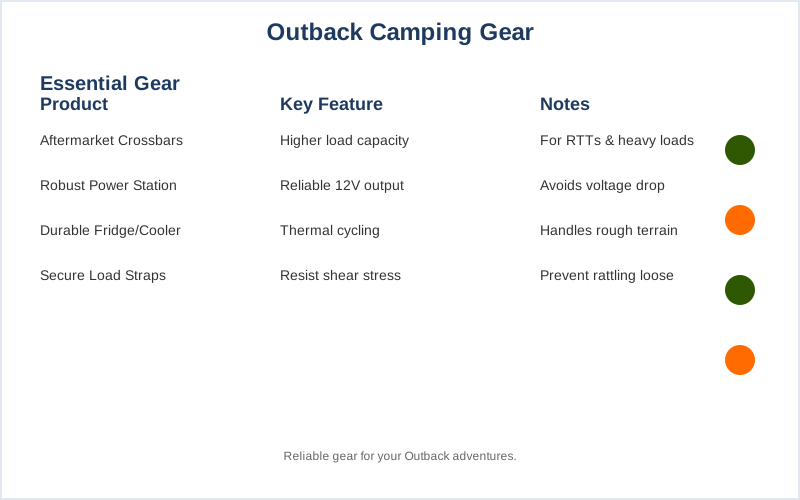
Your Outback is a decent platform, but it's not a tank. The built-in crossbars, while convenient, top out at 150 pounds dynamic load. That's fine for a few duffels, but a rooftop tent puts you right at the edge, or over, once you add bodies. Aftermarket crossbars are almost mandatory for anything serious. For power, skip the cheap cigarette lighter adapters. They introduce resistance and voltage drop, which means your fridge motor works harder and draws more current. A dedicated 12V auxiliary battery setup is the only way to reliably run a fridge for more than 12 hours without draining your starting battery. My setup holds 100Ah for 3 days. Interior organization is critical to prevent impact damage. Loose gear becomes projectiles on rough terrain. Subaru offers cargo organizers, but custom solutions often provide better load distribution and prevent rattling that can fatigue plastic trim. That constant vibration at 150 Hz will eventually crack something. Don't skimp on recovery gear. A cheap recovery strap can fail at 5,000 pounds of tensile stress, snapping back and causing serious injury. I've seen it. Get a kinetic rope rated for 20,000 pounds. It's a mechanical bond that distributes shock loads, not a static tension device. You'll thank me when you're buried to the axles. My last pull was a 2012 Forester stuck in 18 inches of mud. Took 15 minutes. A proper recovery kit is cheap insurance.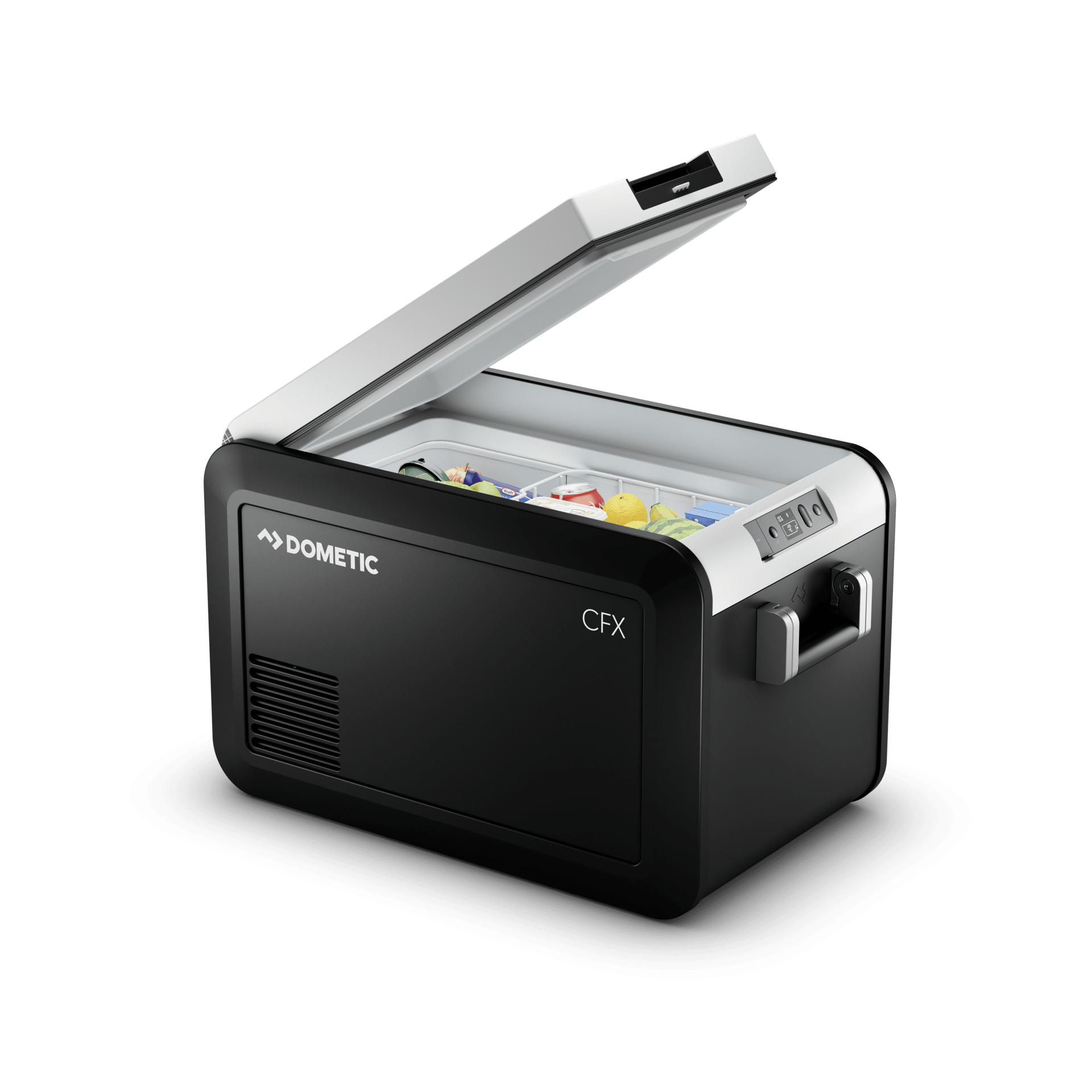
What to Look For
When kitting out your Outback, think failure modes, not just features. That shiny roof rack looks great, but what's its load rating? What's the material's yield strength? Does it use thin-gauge aluminum that will deform under dynamic loads? Consider the thermal cycling a portable fridge goes through. If it's running 24/7 in 90 degrees F ambient air, cheap insulation will mean the compressor cycles constantly, drawing more current and shortening its lifespan. Look for units with a low current draw at a 90 degrees F ambient temperature, not just a 'max cool' spec. Real-world performance matters. Power solutions need to handle transient loads. A cheap inverter might handle 100W continuous, but hit it with a 500W surge from a coffee grinder and the internal fuses pop, or worse, the MOSFETs overheat and desolder. Know your peak current requirements. Electrical integrity is non-negotiable.| Gear Type | Critical Engineering Spec | Why it Matters |
|---|---|---|
| Roof Rack | Dynamic Load Rating (lbs) | Prevents structural fatigue and catastrophic failure under vehicle motion. Subaru's built-in bars are 150 lbs; going over means eventual fastener shear or rail deformation. |
| Portable Fridge | Current Draw (Amps) @ 90F Ambient | Determines battery drain rate. High draw means more thermal cycling for your auxiliary battery, reducing its cycle life. Look for < 1.0A average. |
| Power Station | Peak Inverter Output (Watts) | Ensures it can handle startup surges from motors (e.g., coffee grinders). A 500W continuous inverter needs 1000W peak for a brief moment. |
| Sleeping Pad | R-Value (Thermal Resistance) | Quantifies insulation from ground temperature. An R-value of 4.0 or higher is needed for ground temperatures below 40 degrees F to prevent conductive heat loss. |
| Recovery Strap | Tensile Strength (lbs) | Prevents snap-back injuries and material failure during vehicle extraction. Cheap straps can fail at 5,000 lbs; kinetic ropes handle 20,000 lbs+ with elastic deformation. |
Our Top Picks for Reliable Performance
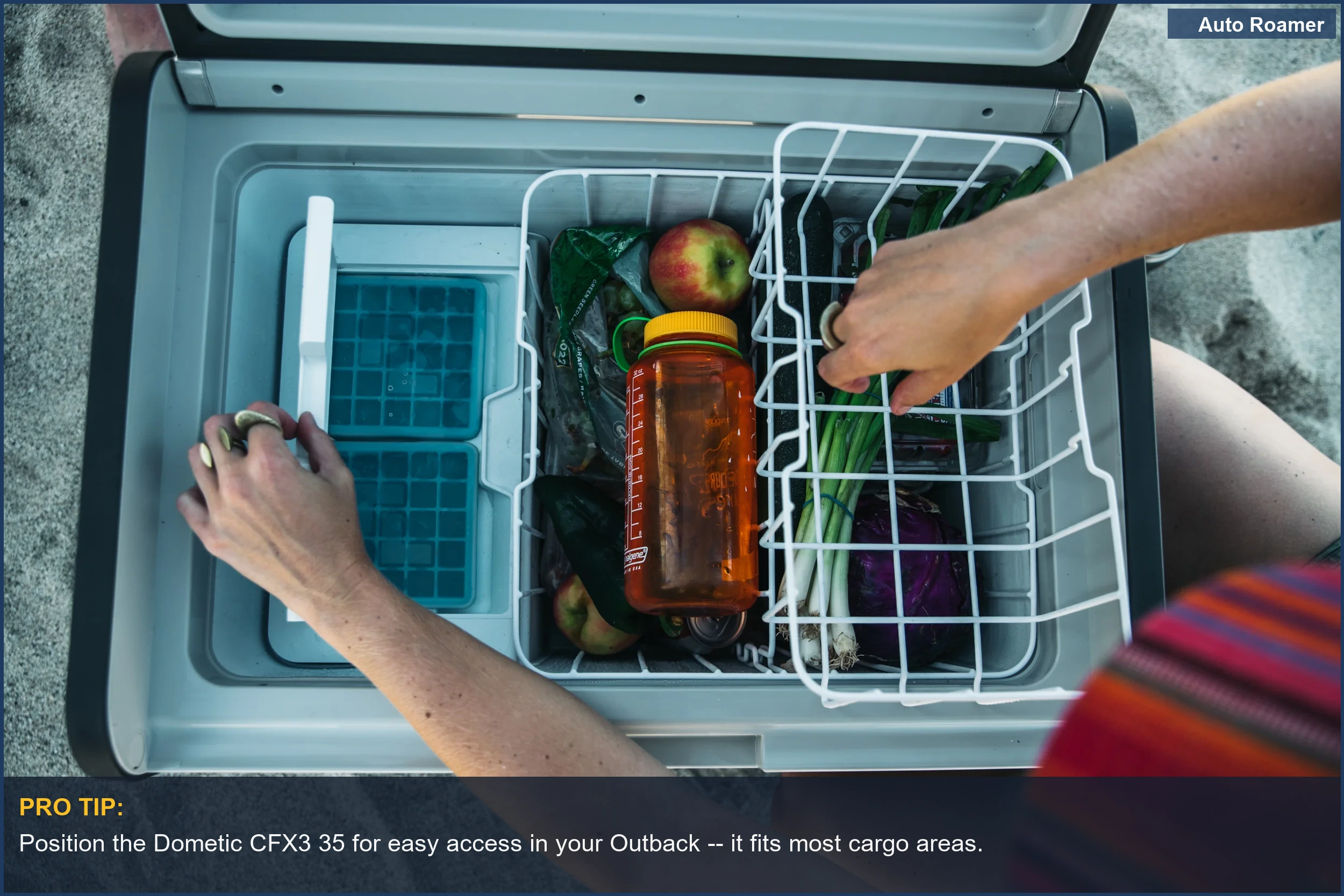
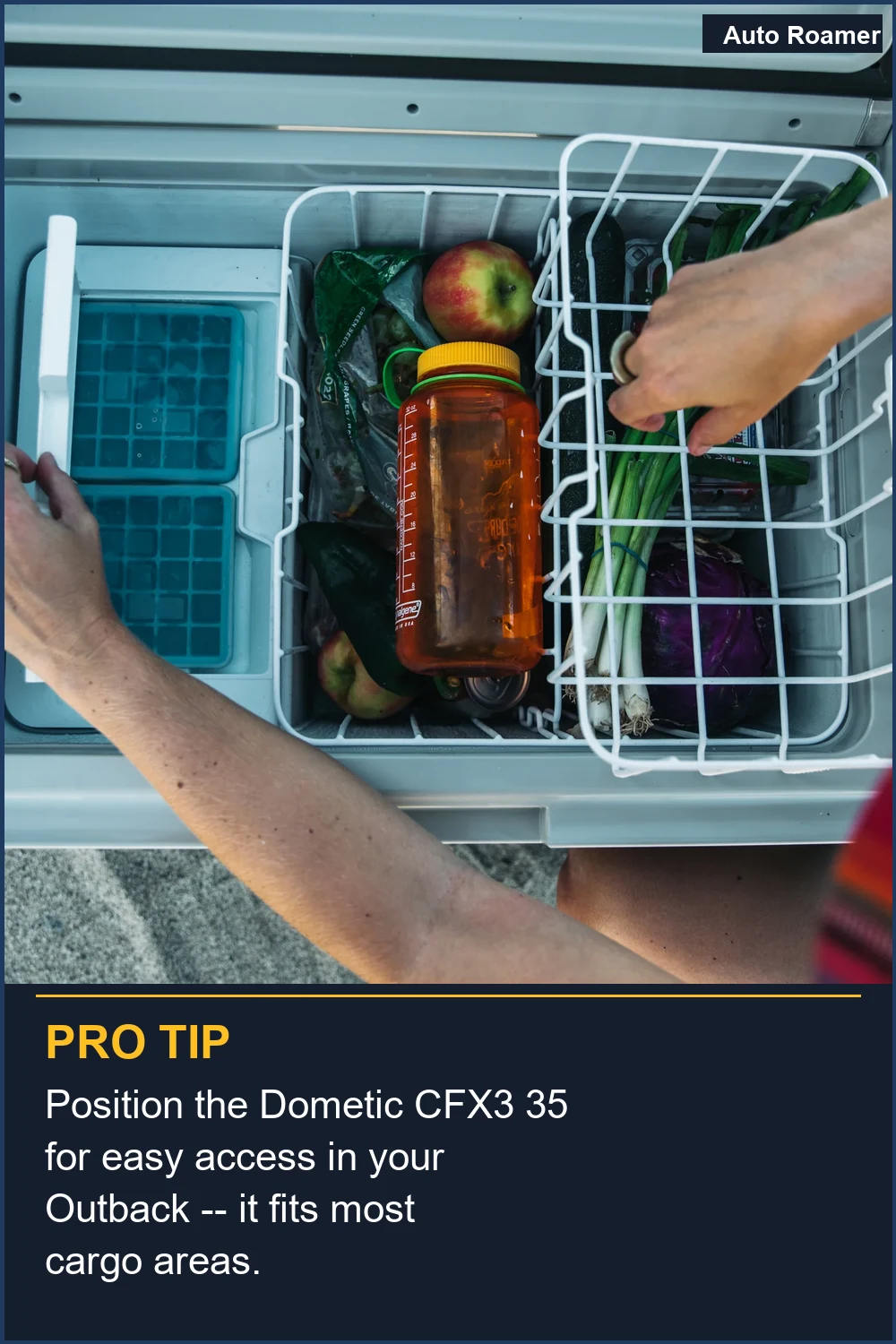
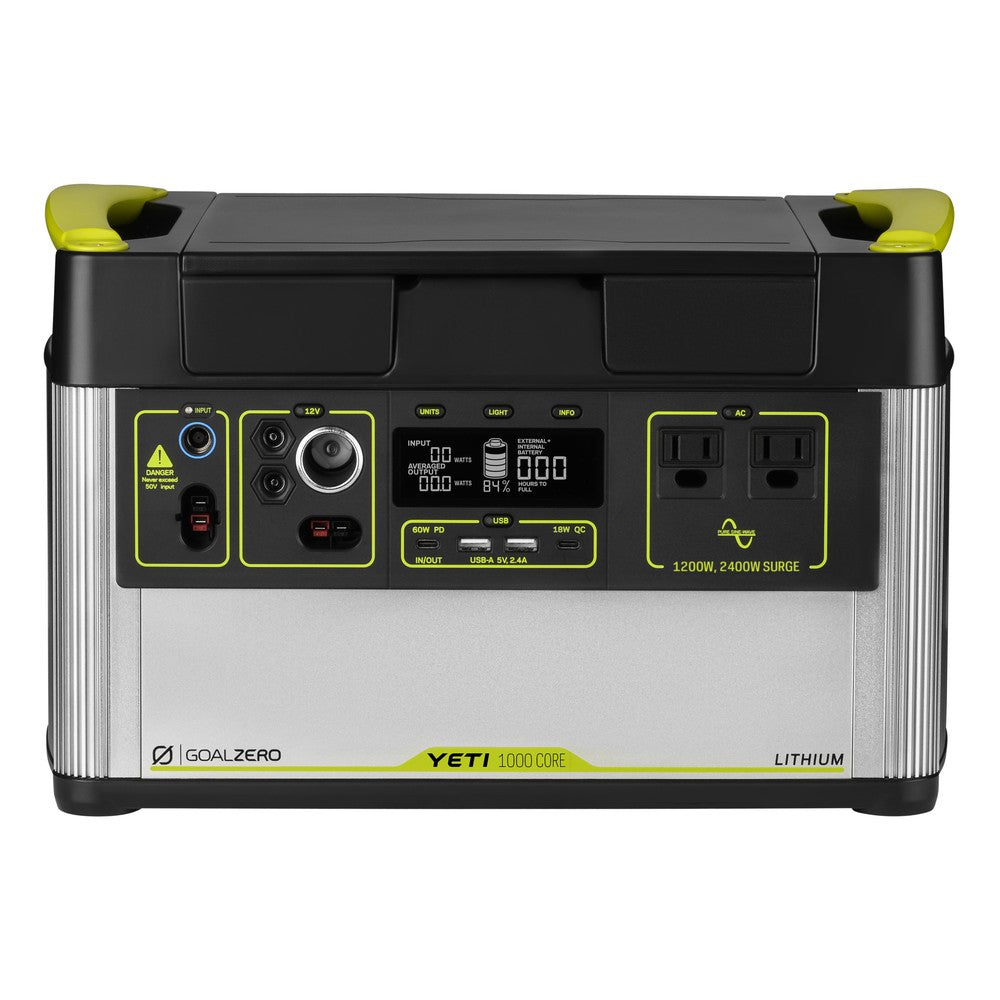
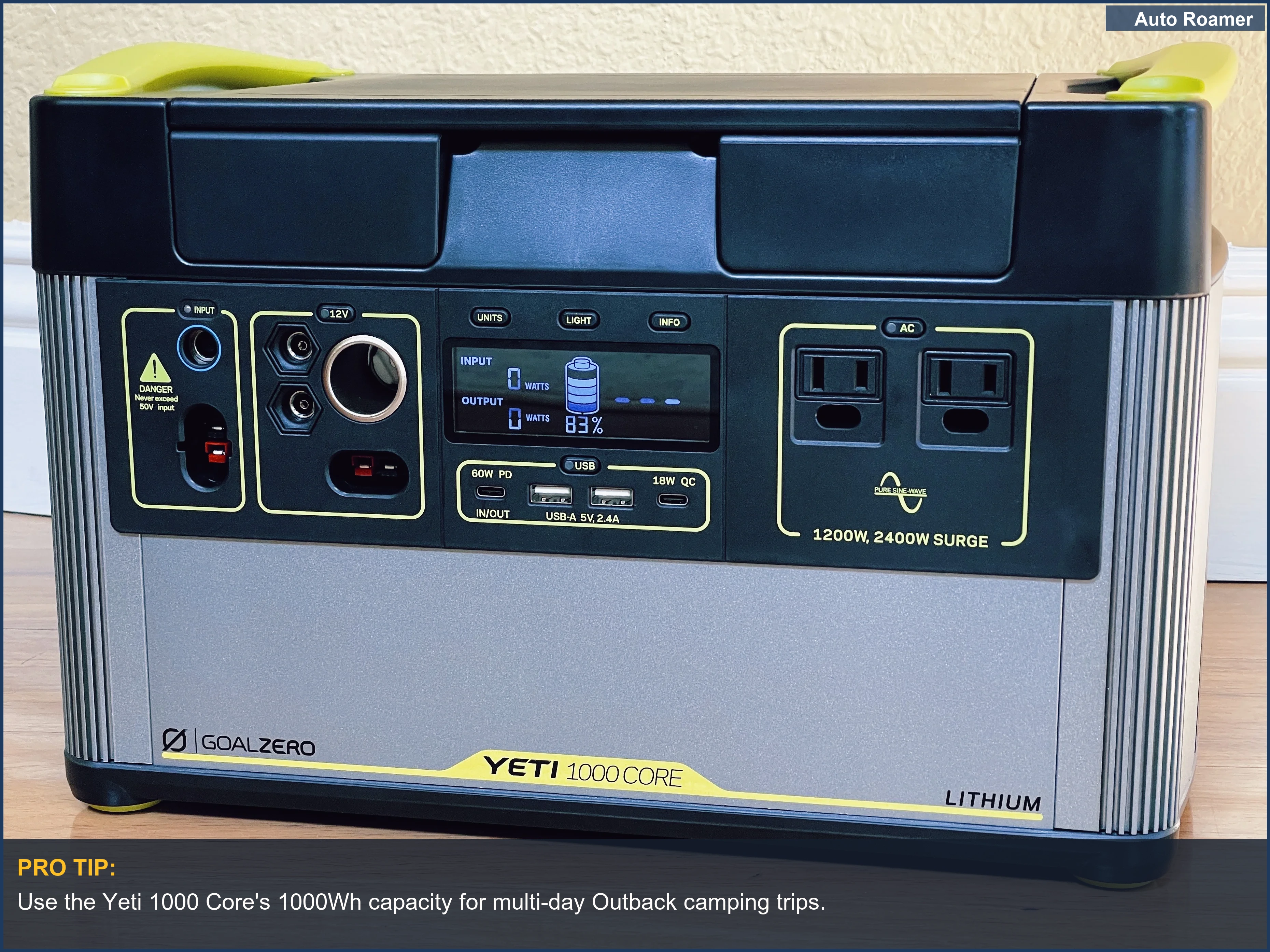
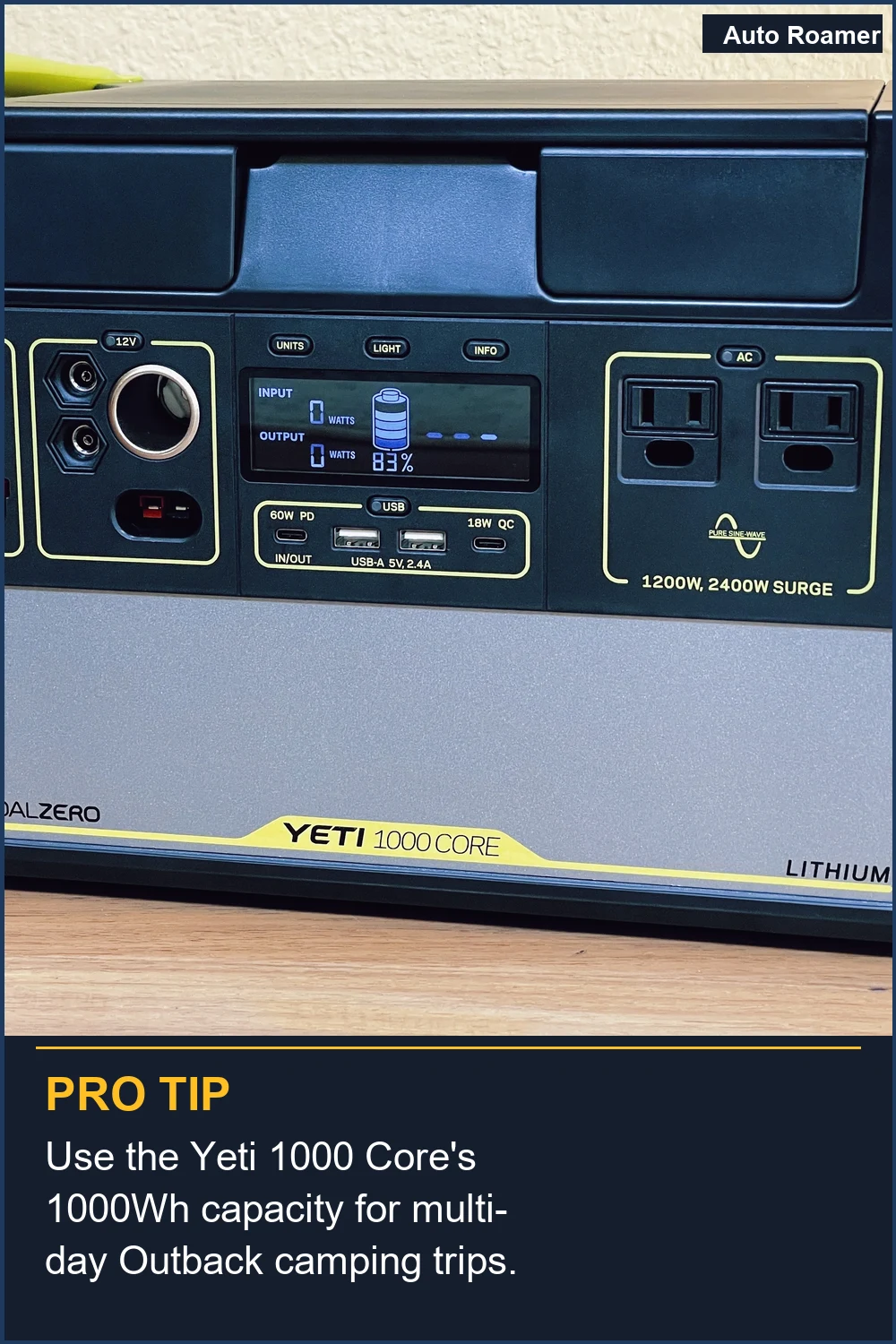
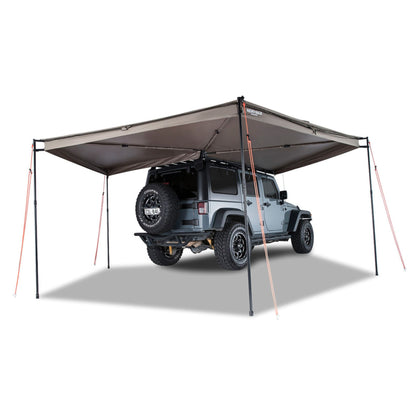
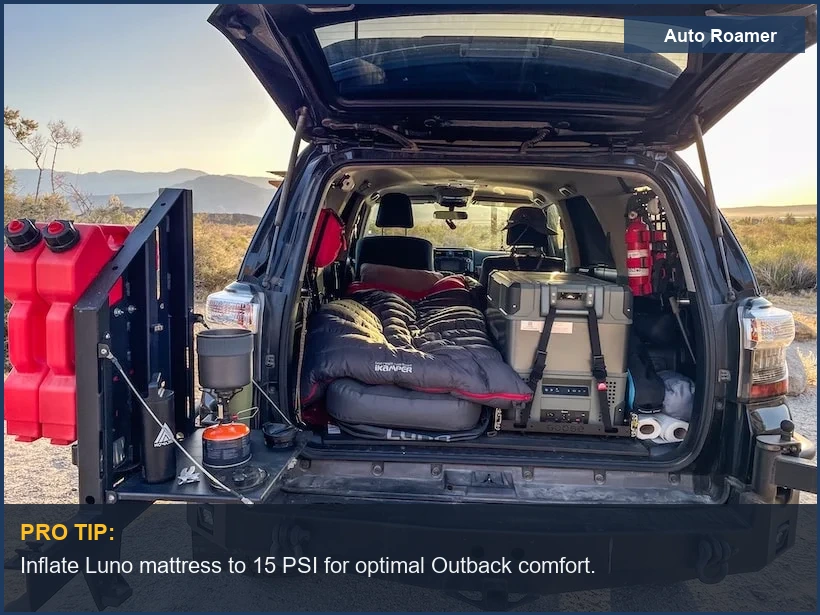
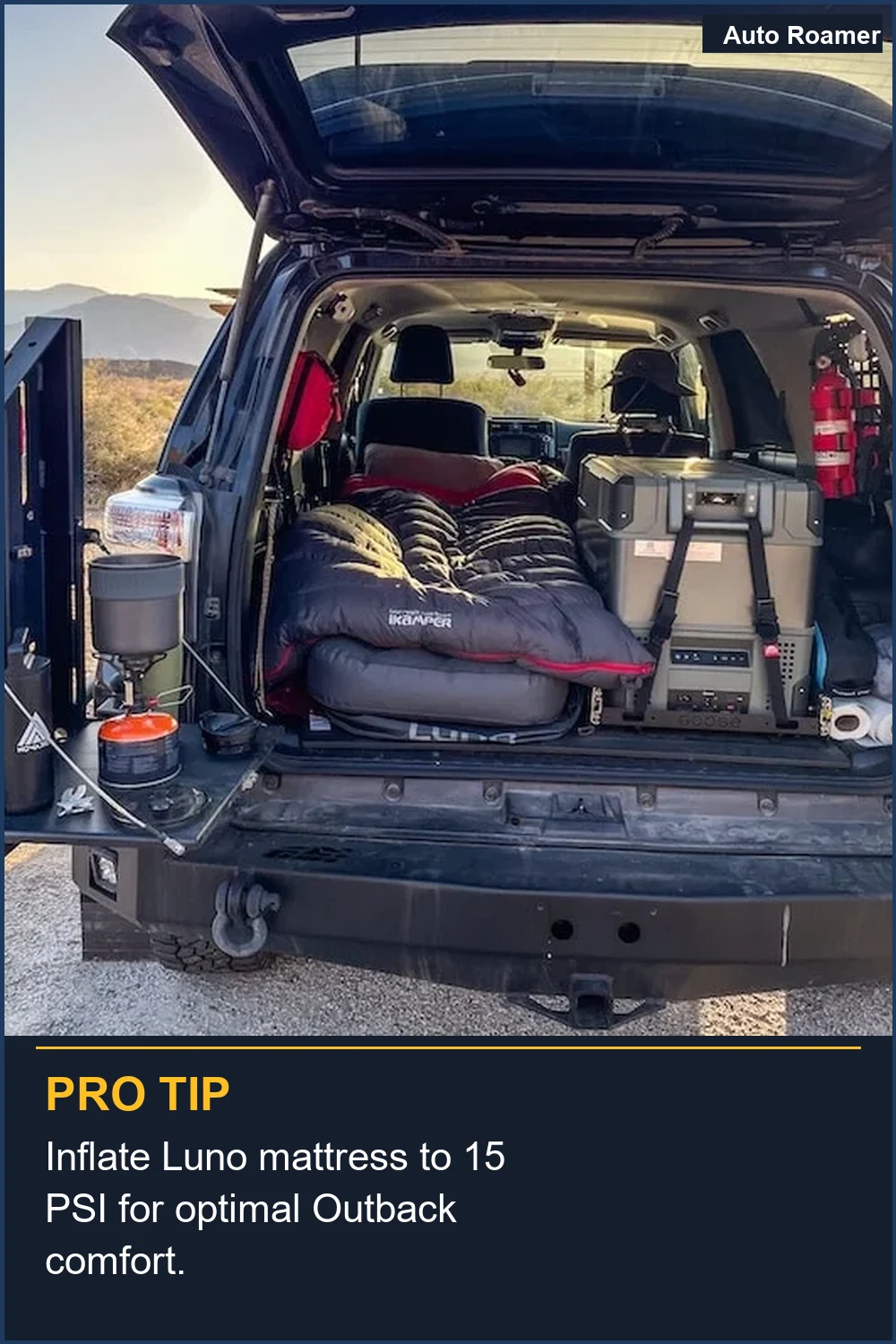
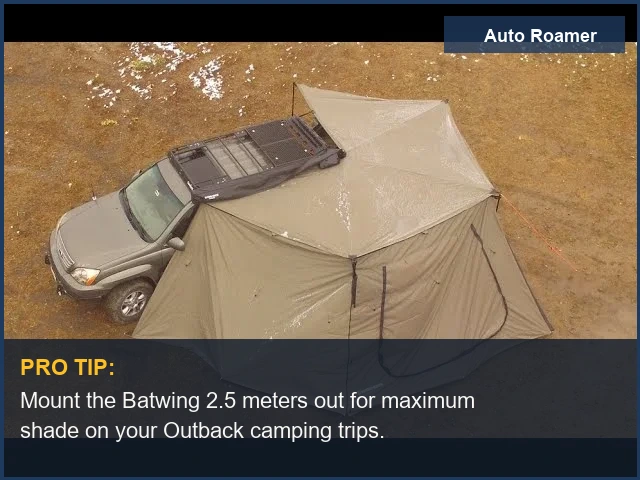
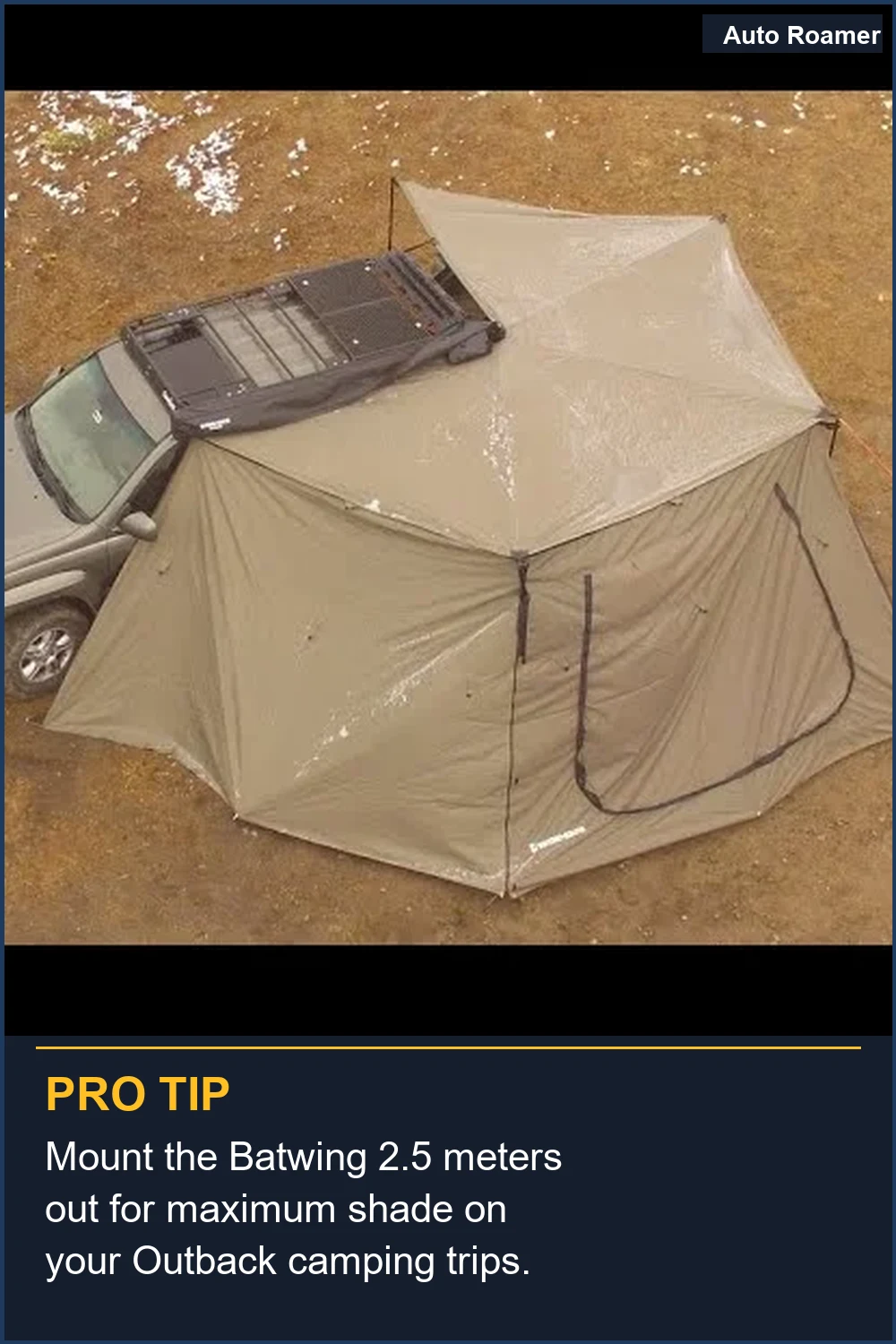
Here are the tools that actually perform, based on mechanical integrity and circuit reliability, not just marketing fluff. Yakima LoadWarrior Roof Basket (~$450) Capacity: 150 lbs dynamic load (matches Outback's factory crossbars) Pros: Steel construction, good tie-down points, minimal vibration at highway speeds with proper load distribution. The powder coat holds up to UV exposure and abrasion. Cons: Adds wind noise and a 1.5 MPG penalty. The U-bolt mounting hardware can scratch factory crossbars if not shimmed. Mounting requires attention to torque specs. Best-for: Hauling bulky, lighter gear like firewood, recovery boards, or camp chairs. Keeps dirty stuff out of the interior. Dometic CFX3 35 (~$600) Capacity: 36L (holds 50 cans) Pros: Low current draw, typically 0.8-1.2A at 90 degrees F ambient. Robust compressor, minimal thermal cycling. Excellent insulation, maintains temp even with power off for hours. Reliable 12V connection. Cons: Pricey. The plastic body can scratch easily. The internal basket takes up valuable space, reducing usable volume by 5L. Best-for: Extended trips where power efficiency is critical. Keeping food safe and cold without constantly cycling. Goal Zero Yeti 1000 Core (~$800) Capacity: 983Wh Li-ion battery, 1200W continuous / 2400W surge inverter Pros: Pure sine wave inverter protects sensitive electronics. High cycle life (500 cycles to 80% capacity). Multiple output ports, including 12V regulated, preventing voltage drop. Good for powering a fridge for 2-3 days. Cons: Heavy at 28.6 lbs. Slower charging time from a 12V car adapter (around 10-12 hours for full charge). Fan can be noisy under heavy load. Best-for: Primary power source for fridges, charging laptops, and running small appliances for several days. Luno Life Air Mattress 2.0 (~$350) Capacity: Fits Outback cargo area, inflates to 4 inches thick. Pros: Custom-fit design minimizes lateral movement, reducing squeaks and rubbing against interior panels. Durable 300D fabric resists punctures from minor abrasions. Inflates with a 12V pump in under 3 minutes. Cons: Takes up significant storage space when deflated. The pump's 12V connector can be flimsy; I had to re-solder mine after 6 months of use. Best-for: Comfortable sleeping platform inside the vehicle, protecting occupants from ground-level cold transfer. R-value is around 2.0, so add a foam pad below 40 degrees F. Rhino-Rack Batwing Awning (~$850) Capacity: 270 degrees coverage, 118 sq ft. Pros: Robust aluminum frame and UV-resistant ripstop polycotton fabric. Pivoting arm mechanism is over-engineered, minimizing stress points. Withstands 20 MPH winds with proper guylines. Attaches directly to aftermarket crossbars. Cons: Heavy at 50 lbs. Requires two people for initial setup to avoid torsional stress on mounting brackets. Pricey for what it is - shade. Best-for: Providing significant shade and rain protection, extending usable camp space. Critical for thermal regulation in hot climates.View on Amazon — Yakima LoadWarrior Roof Basket
View on Amazon — Dometic CFX3 35
View on Amazon — Goal Zero Yeti 1000 Core

Head-to-Head Comparison
When you're comparing gear, look past the marketing. I'm focused on the physical properties and failure rates.| Feature/Product | Budget Option (e.g., Amazon Basics) | Premium Option (e.g., Dometic, Goal Zero) | Engineering Insight |
|---|---|---|---|
| Portable Fridge Compressor | Thermodynamic Cooler (~$150) | True Compressor Fridge (~$600) | Thermoelectric coolers use Peltier effect, drawing 4-6A constantly, regardless of ambient temp. Compressor fridges cycle, drawing 0.8-1.2A average. Less electrical system stress, lower thermal load on battery. |
| Roof Rack Material | Stamped Steel / Thin Aluminum (~$100) | Thick Wall Aluminum / Steel (~$450) | Thin gauge materials have lower yield strength, leading to permanent deformation under dynamic loads. Higher gauge aluminum (3mm+) or steel (2mm+) prevents fatigue cracking from vibration. |
| Power Station Battery | Lead-Acid (~$200) | LiFePO4 (~$800) | Lead-acid has 300-500 cycle life, deep discharge damages capacity. LiFePO4 offers 2,000-3,000 cycle life, better voltage stability under load, and higher energy density. Less voltage sag means less stress on connected devices. |
| Awning Fabric | Polyester (~$150) | Ripstop Polycotton (~$850) | Polyester degrades faster under UV exposure, leading to brittle failure. Ripstop polycotton has higher tear strength (measured in Newtons per millimeter), better UV resistance, and resists mildew from thermal cycling (wet/dry). |
| Recovery Strap | Polyester Tow Strap (~$30) | Kinetic Recovery Rope (~$150) | Polyester has low elasticity, creating high shock loads and potential snap-back. Kinetic ropes (e.g., nylon) stretch 20-30%, absorbing kinetic energy and reducing peak tensile stress on recovery points. Safer, more effective recovery. |
Budget vs Premium: Where Your Money Actually Goes
The difference between cheap and expensive gear isn't just a brand name; it's material science and engineering. A $100 roof basket might save you money upfront, but if it's stamped from 1.5mm steel, it'll flex and fatigue crack under a 100-pound load on a washboard road. That's a failure mode, not a 'feature.'| Component | Budget (< $200) | Premium (> $500) | Why it Matters (Physics/Engineering) |
|---|---|---|---|
| Roof Rack Crossbars | OEM Subaru (~$180) | Yakima JetStream (~$500) | OEM bars have a fixed position and 150 lbs dynamic load limit. Aftermarket bars use thicker aluminum extrusions (e.g., 2.5mm wall thickness) for higher bending stiffness and dynamic load capacity up to 220 lbs, reducing vibration and fatigue on mounting points. Better load distribution. |
| Portable Power | Jump Starter + Inverter (~$150) | Goal Zero Yeti 1000 Core (~$800) | Cheap inverters often produce modified sine wave output, which can damage sensitive electronics or motors by creating harmonic distortion. Dedicated power stations use pure sine wave, protecting your gear. Also, a dedicated unit has proper charge controllers to prevent over-discharge, extending battery cycle life. |
| Sleeping Pad | Generic Inflatable (~$50) | Luno Life Air Mattress 2.0 (~$350) | Generic pads use thinner PVC or TPU (0.2-0.3mm), prone to puncture failure and delamination under thermal cycling. Custom-fit pads use thicker materials (0.4-0.5mm) and better seam welding, increasing abrasion resistance and reducing air loss over time. Their R-value is often lower, leading to more conductive heat transfer. |
| Cargo Management | Bungee Cords & Tarps (~$20) | Subaru Cargo Organizers / MOLLE Panels (~$100-$300) | Bungee cords have high elastic deformation but low clamping force, allowing gear to shift and cause impact damage. Dedicated organizers use rigid panels and secure attachment points, distributing impact loads and preventing kinetic energy transfer to vehicle interior components. Less rattling and abrasion. |
The Bottom Line
Equipping your Outback for camping isn't about buying the most expensive gear, it's about understanding the physics of failure. Every component you add introduces potential stress points, electrical loads, or thermal challenges. Ignore them, and you'll be fixing something expensive on the side of a dirt road. Prioritize items that enhance circuit integrity and mechanical stress resistance. That means robust mounting hardware, efficient electrical components, and materials that won't degrade under UV or thermal cycling. Your adventure depends on it.Frequently Asked Questions
Can I just use my car's 12V socket to run a fridge all weekend?
Do I really need a special recovery rope, or will a cheap tow strap work?
What if I overload my Outback's factory roof rack just a little, like 200 pounds instead of 150?
Can I just use household extension cords for my camping power setup?
My camping gear rattles a lot in the back. Is that a problem, or just annoying?
🏅 Looking for Gear Recommendations?
Check out our tested gear guides for products that work with this setup:
Sources
- 17 Must-Have Items for a Subaru Outback | Halfway Anywhere
- How to Turn Your Subaru Outback Into the Ultimate Weekend ... - Luno
- Subaru Camping Essentials - RalliTEK
- Pick the finishing touches for your 2026 Outback Touring. - Subaru
- How to Set Your Subaru Up for Camping
- Equipment used while car camping in my Subaru Outback for two ...
- 2026 Subaru Outback Roof Rack and Crossbar Options: Best Gear ...
- subaruofdayback.org
- facebook.com
- Best accessories for camping/outdoor activities : r/subaruoutback
- Complete Camping Setup in a Subaru Outback Wilderness! (Full Tour)