Quick Answer: Which Bluetooth Car Adapter to Buy
As an Amazon Associate I earn from qualifying purchases.
A short honesty note, because the internet is full of fake gear reviews: I have not bench-tested every one of these adapters with audio gear, and neither has anyone writing a roundup blog. What follows compares the specifications each manufacturer publishes — Bluetooth version, supported codecs, dual-device pairing, battery life, and microphone count — and explains which of those specs actually matter for which car. That is the useful job here: match the real, published capabilities to your stereo, not pretend I wired up a spectrum analyzer in my driveway.
- Have an aux jack: get an aux receiver for the best sound.
- No aux, just a radio: get an FM transmitter — works in any car.
- Wired CarPlay/Android Auto screen: get a wireless dongle.
How to Choose a Bluetooth Car Adapter
The category looks crowded, but four specs decide whether an adapter is worth buying. Get these right and almost any reputable brand will serve you well.
1. Match the connection type to your stereo. This is the first decision and it rules out most of the catalog. An aux receiver needs a 3.5mm input and delivers a direct wired signal into your amplifier, so it sounds the best. An FM transmitter rebroadcasts audio onto an empty radio frequency, which works on literally any car but is more prone to static in cities with crowded airwaves. A USB-C or USB-A adapter or a wireless CarPlay/Android Auto dongle plugs into a data or power port and is the right call for newer head units.
2. Bluetooth version and codec set the sound ceiling. Look for Bluetooth 5.0 or newer; the higher version improves range and connection stability, not just speed. Codec support matters more for sound: standard SBC is fine for podcasts, but AAC (best for iPhones) or aptX (common on Android) reduces the compression artifacts you hear on music. Manufacturers publish the supported codecs; an adapter that lists only SBC is a budget adapter no matter what the box says.
3. Dual-device pairing and microphone count. If two people share the car, multipoint (dual-device) pairing lets both phones stay connected and hand off music without re-pairing. For hands-free calling, the number and placement of microphones is the spec that predicts call clarity: dual-mic models filter road noise far better than a single mic buried in the unit.
4. Powered vs. battery. A battery receiver is portable and can clip anywhere, but you have to recharge it; published battery life ranges from roughly 8 to 16 hours. A powered adapter draws from the 12V outlet or a USB port and never needs charging, which is simpler for a car you drive daily. Neither is better — it is a convenience trade-off.
5. Latency and range matter more than the spec sheet suggests. For music, a little Bluetooth latency is harmless. But if you also watch video on a mounted phone or rely on turn-by-turn voice prompts, lag between the screen and the speakers becomes noticeable. Low-latency codecs such as aptX Low Latency help, and a higher Bluetooth version keeps the signal stable as you reach across the cabin or leave the phone in a console. A powered adapter wired directly to the head unit generally holds its connection better than a battery puck buried in a bag, simply because nothing is blocking the antenna.
One last practical point: read the published warranty and the brand's track record, not just the headline price. The difference between a $20 adapter and a $40 one is often the quality of the digital-to-analog conversion and the microphone, neither of which shows up in a thumbnail. Spending a little more on a reputable brand usually buys you cleaner sound and a longer service life rather than flashier features.
Still deciding between the two universal approaches? Our deeper comparison of a Bluetooth aux adapter vs. an FM transmitter walks through the sound-quality difference in detail.
The 6 Best Bluetooth Car Adapters, Compared
Each pick below is matched to a specific car setup and need. The capability claims are drawn from each manufacturer's published specifications — Bluetooth version, codecs, mic count, battery life — attributed throughout, never from any bench test of my own.
The single biggest mistake buyers make is choosing the wrong connection type. An aux receiver in a car with no aux jack is useless; an FM transmitter in a noisy radio market sounds worse than the aux receiver it replaced. Decide the connection first, then pick the brand.
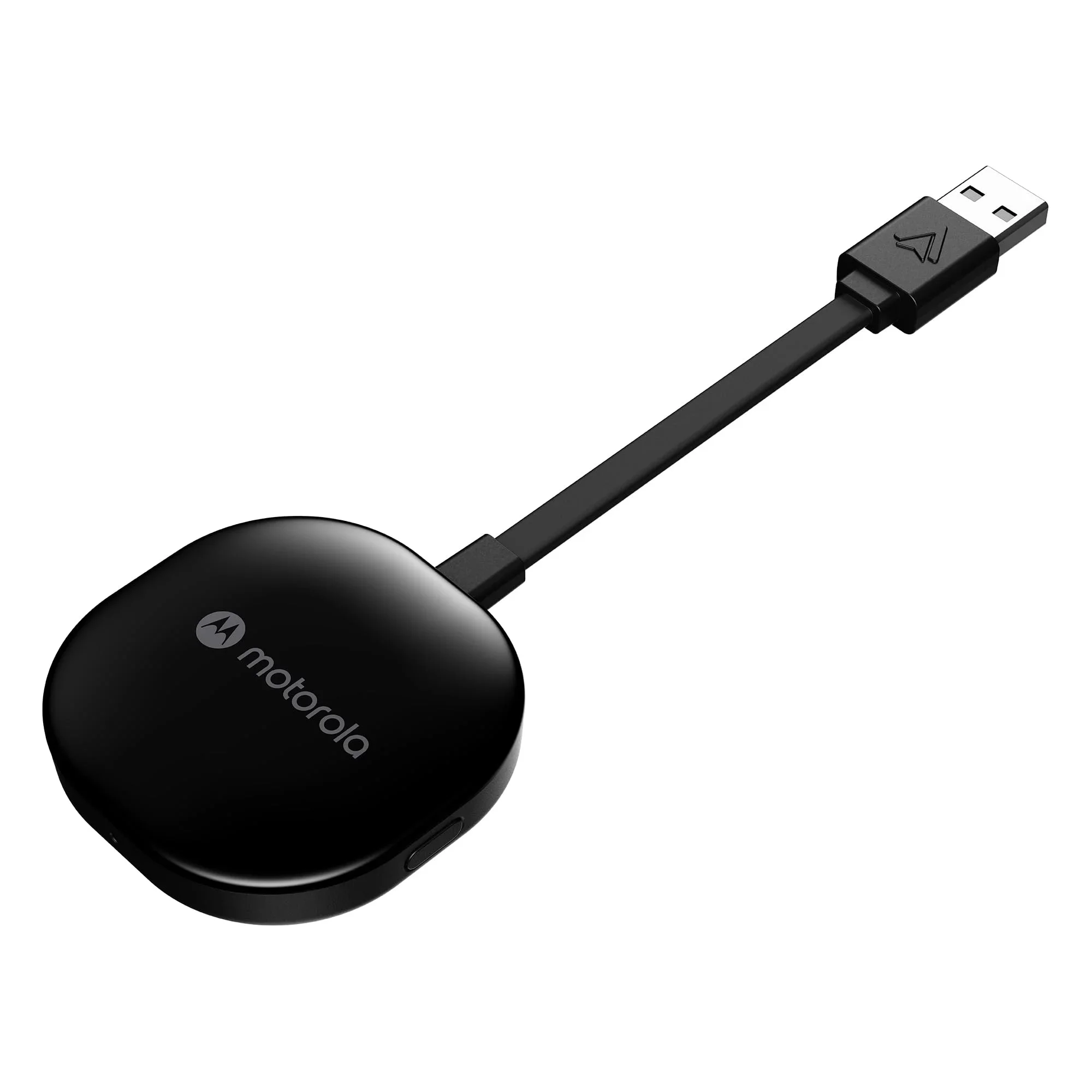
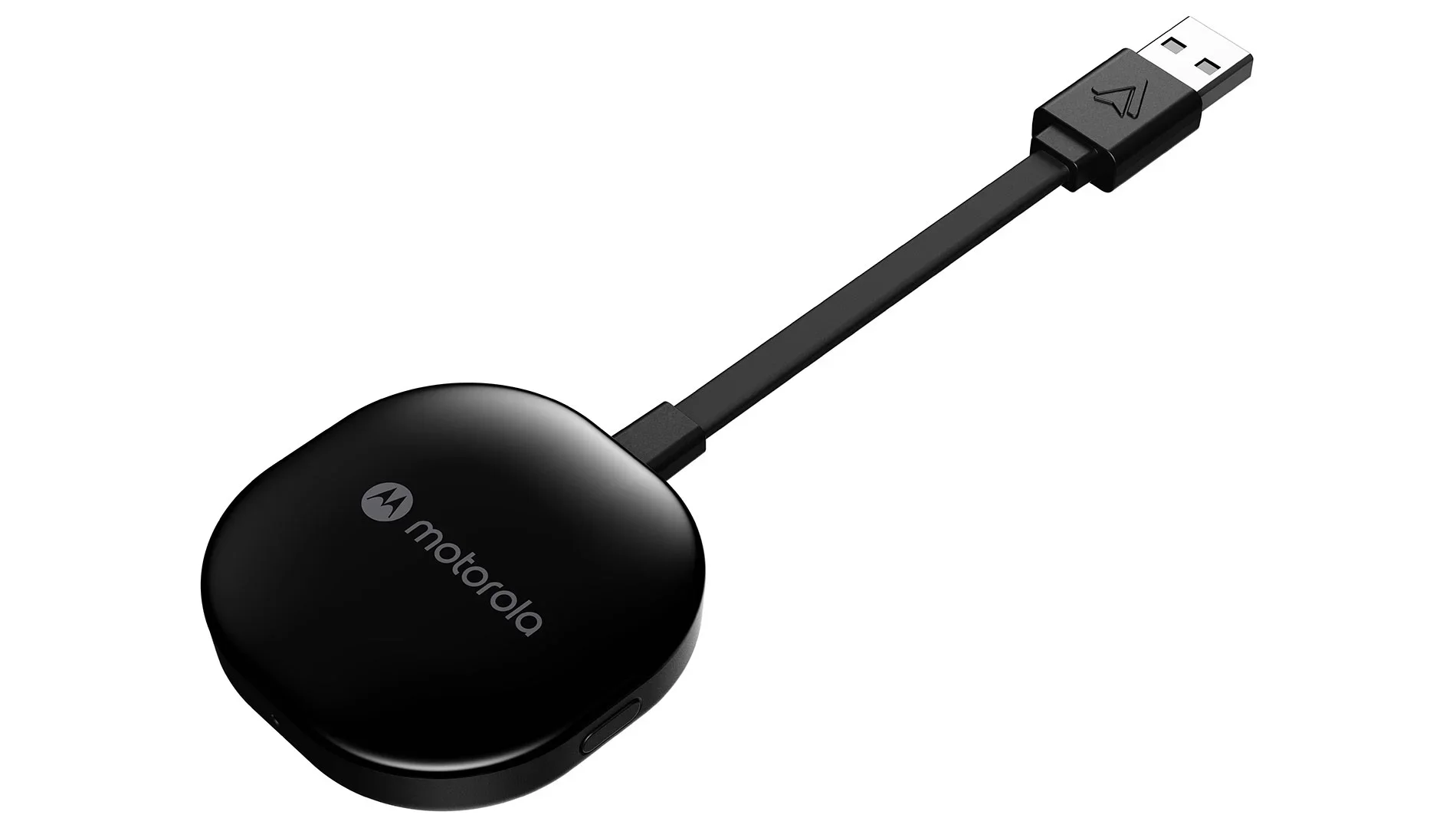
Motorola MA1 is the wireless Android Auto dongle for a head unit that supports wired Android Auto. Motorola lists a USB plug-in that converts the wired interface to wireless, keeping your full screen and maps. It only works on Android-Auto-capable units — confirm yours before buying.
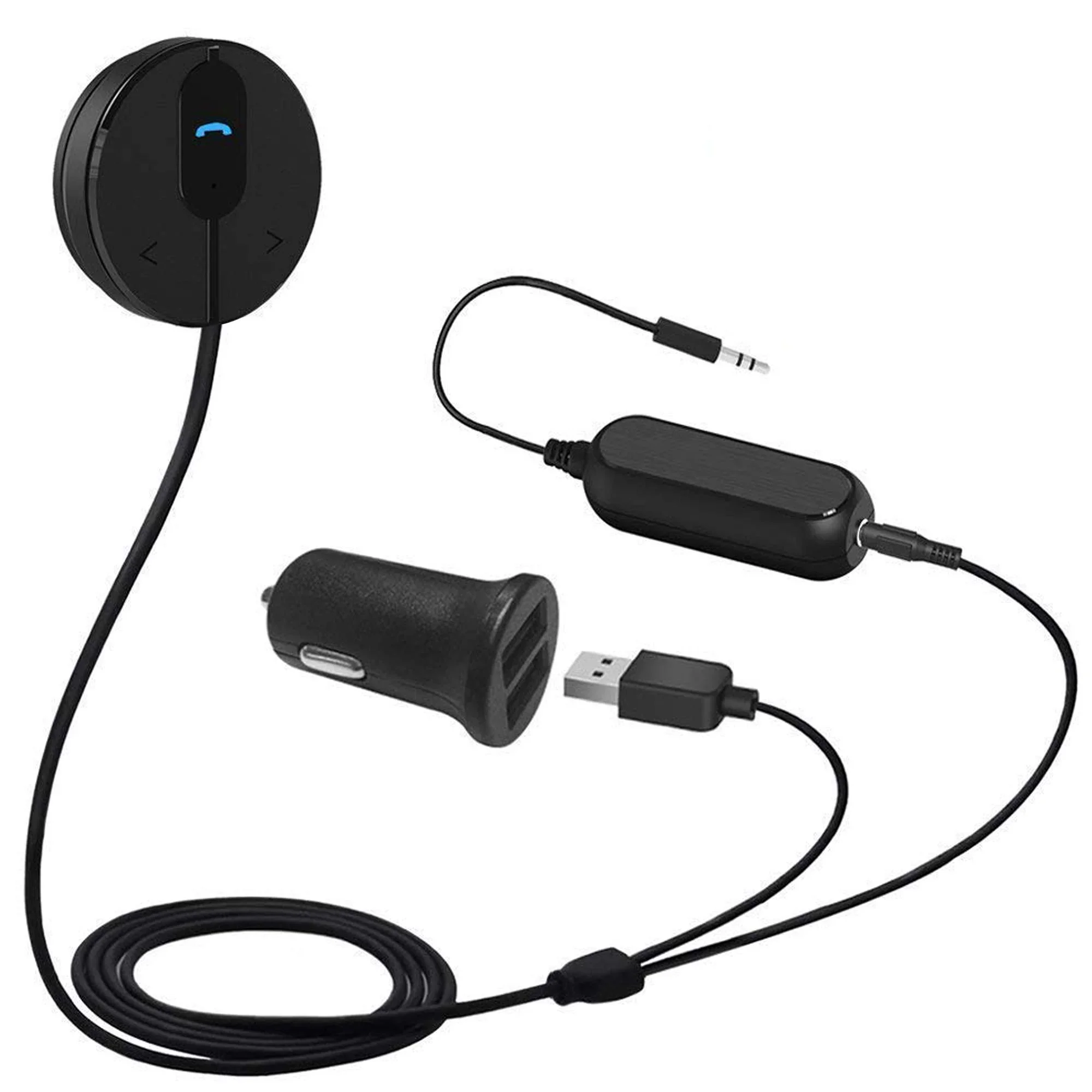
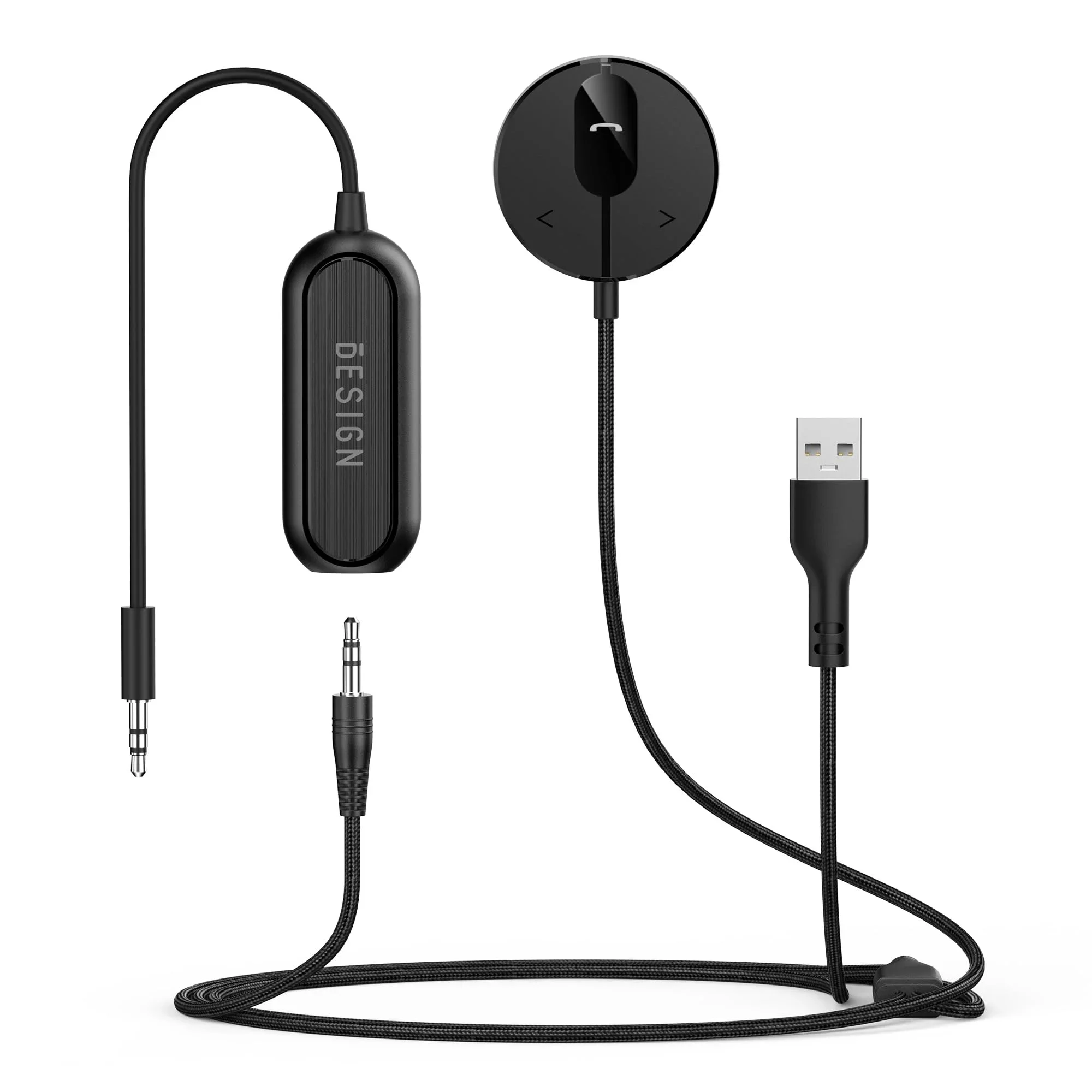
Besign BK01 is a popular aux receiver built for the car. Besign specs Bluetooth 4.1 with aptX support, dual built-in microphones for clearer calls, and a magnetic base plus a charging dock that keeps it powered from the 12V outlet. A tidy, permanently-mounted alternative to a battery receiver.
Aux vs. FM vs. USB-C vs. Wireless CarPlay
The adapter is only as good as the connection it uses. Here is how the four approaches actually differ, so you can rule out the wrong ones before you shop.
- Aux (3.5mm): the cleanest sound, because the signal goes straight into the amplifier with no rebroadcast. Needs an aux input, which many cars built before roughly 2010 and a few newer ones lack. This is the pick whenever you have the jack.
- FM transmitter: the universal option — it works on any car with an FM radio, including the oldest. The trade-off is sound: it rebroadcasts on a radio frequency, so in cities with crowded airwaves you may hear static and need to hunt for an empty station. Many include a USB charging port as a bonus.
- USB-C / USB-A: plugs into a power or data port. As a simple receiver it powers itself from the port; on head units that support wired CarPlay or Android Auto, a data-capable dongle unlocks the wireless version of the same interface.
- Wireless CarPlay / Android Auto dongle: not a plain audio adapter — it converts a wired CarPlay or Android Auto head unit to wireless, keeping your full touchscreen interface, maps, and Siri or Assistant. Only works if your car already supports the wired version.
If you decide a dongle is what you actually want, see our dedicated guide to the best wireless CarPlay adapter for picks built specifically for that job.
Setup and Getting the Best Sound
A good adapter installed carelessly still sounds bad. A few minutes of setup is where most of the real-world quality is won.
- Pair it once, properly. Put the adapter in pairing mode (most enter it automatically on first power-up), then connect from your phone's Bluetooth menu. A powered USB or 12V model usually re-pairs the moment the car starts.
- For an FM transmitter, find a dead frequency. Use an FM station with no broadcast in your area and set both the radio and the transmitter to it. This single step eliminates most static complaints.
- Set phone volume high, head-unit volume to taste. Keep the phone near maximum and control loudness from the stereo; this preserves the cleanest signal and the lowest hiss.
- Keep it away from interference. Position the unit away from large metal surfaces and other electronics to hold a stable connection, especially for FM models.
- For calls, mind the mic. Mount a dual-mic adapter where the microphone faces you, and roll up windows on calls — no adapter fully beats wind noise.
While you are upgrading the cabin, a tidy car phone mount and a fast car USB charger round out a clean wireless-audio setup.
Bottom Line
The decision is simpler than the crowded shelf suggests, because your stereo makes most of it for you. If you have a 3.5mm aux jack, an aux receiver gives you the best sound for the least money. If you have no aux but a working radio, an FM transmitter is the universal answer, with the honest caveat that it can pick up static in crowded radio markets. And if you have a newer wired CarPlay or Android Auto head unit, a wireless dongle is the upgrade that pays off every single drive.
Whichever you choose, the principle does not change: pick the connection type first, then prioritize Bluetooth 5.0 or newer, the right codec for your phone (AAC for iPhone, aptX for Android), and dual-device pairing if you share the car. Match those published specs to your situation and a $25 adapter can sound nearly as good as the expensive one. For the broader cabin-tech picture, our roundup of the best car FM transmitters covers the radio-only path in more depth.