
Strategies for Managing Motion Sickness in Kids Without Medication (2026 Complete Guide)
A 4-year-old on a winding road has a 7-minute countdown before their stomach contents become a biohazard. Nobody talks about this specific failure point. You're not managing 'car sickness'; you're managing a potential projectile event that can contaminate an entire vehicle cabin and delay your arrival by 90 minutes.
A 4-year-old on a winding road has a 7-minute countdown before their stomach contents become a biohazard. Nobody talks about this specific failure point. You're not managing 'car sickness'; you're managing a potential projectile event that can contaminate an entire vehicle cabin and delay your arrival by 90 minutes. My field-tested protocol focuses on containment and rapid extraction, not 'enriching experiences' or sing-alongs. Mayo Clinic confirms it's about reducing sensory input.
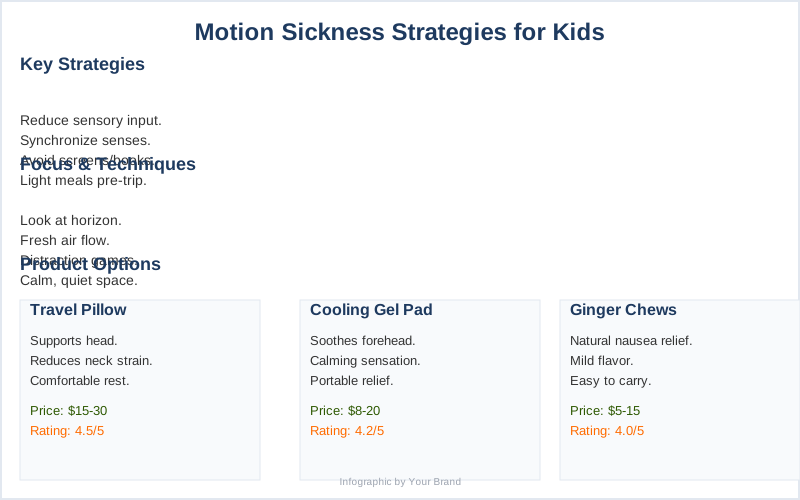
The Short Answer
This sensory processing error is why kids between 2 and 12 years old are prime targets.
Their systems are still calibrating, making them more susceptible to this internal chaos. St. Louis Children's Hospital notes even light meals are a better choice than heavy ones pre-trip.
The car's motion creates a constantly shifting visual field outside, but inside, a screen or book stays static. This mismatch is the core problem. Your mission: synchronize their senses or minimize the conflicting data.
That means no screens, no books, and certainly no staring at the seatback in front of them for 3 hours. Mayo Clinic Health System advises cutting down on sensory input.
The brain is trying to make sense of conflicting signals from the eyes, inner ear, and even muscle receptors. When it can't, it defaults to a 'poison' response, which means emptying the stomach. It's a primal defense mechanism, not a plea for a lullaby.
Your goal is to prevent the trigger, not comfort the aftermath.
A full stomach, especially with greasy food, adds fuel to this fire. An empty stomach can also be a problem, causing acid to churn. The sweet spot is a light, bland meal, ingested at least 60 minutes before departure. Think crackers and water, not a breakfast burrito. St.
Louis Children's Hospital highlights that crackers and water may be all some kids can handle.
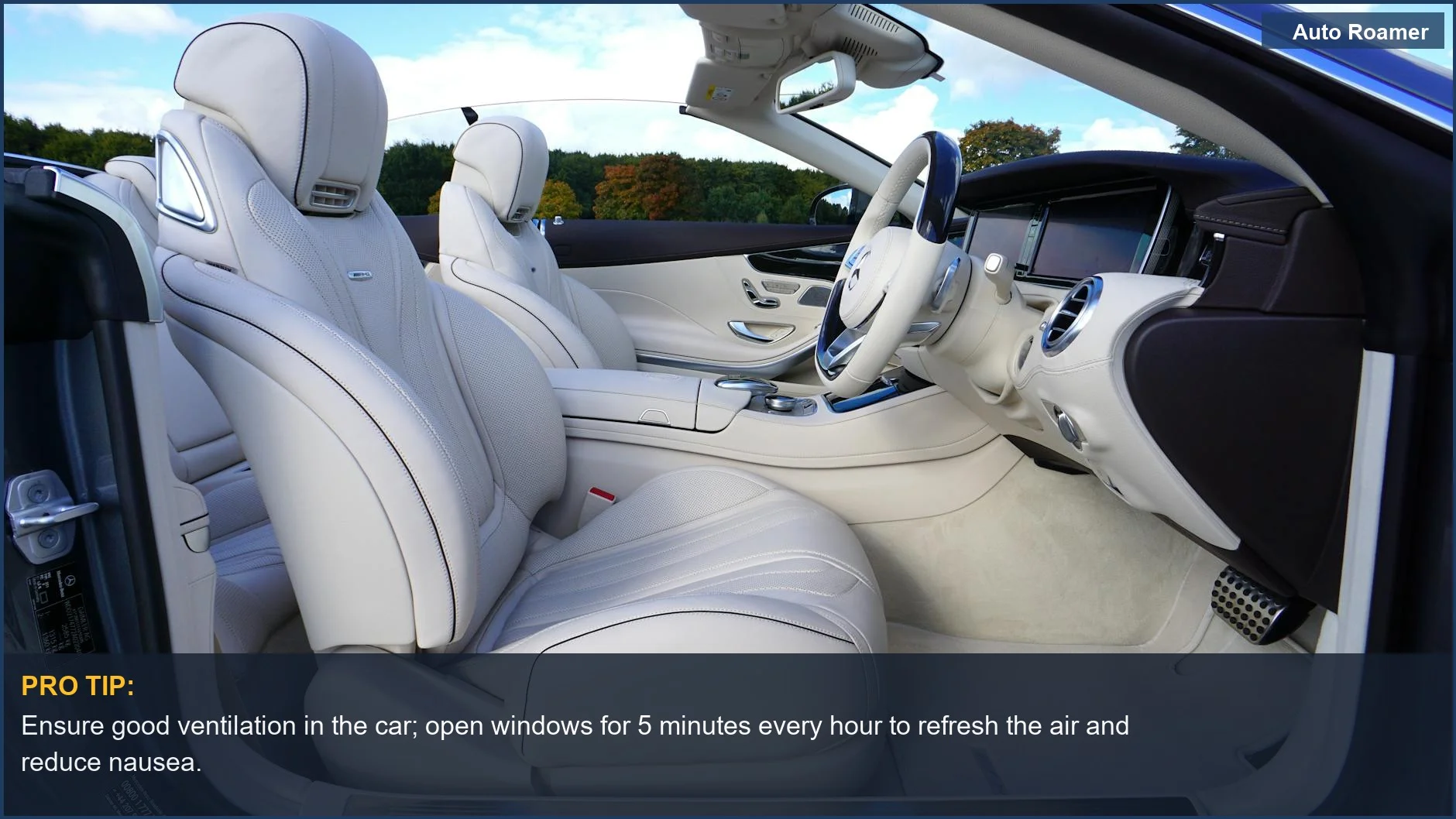
The internal temperature of the vehicle also plays a critical role. A hot, stuffy car exacerbates nausea, turning a mild queasy feeling into a full-blown extraction scenario. Keep the cabin cool and well-ventilated. Fresh air can sometimes provide enough external sensory input to recalibrate the brain. University Hospitals suggests focusing on objects outside and fresh air.
The Reality Check
The reality of motion sickness isn't just about the kid; it's about the vehicle's internal environment and how it amplifies the problem. A 2005 Honda Odyssey's third-row window is significantly smaller than a 2023 Kia Carnival's, drastically impacting the visual horizon. This isn't aesthetic; it's a tactical disadvantage. University Hospitals points out that young children ages 2 to 12 are especially prone to this.
Vehicle suspension and road conditions are also critical variables.
A stiff suspension on a rough road creates more jarring motion, increasing the inner ear's input. A smooth ride on a new highway reduces this. You can't change the road, but you can understand the threat level it presents.
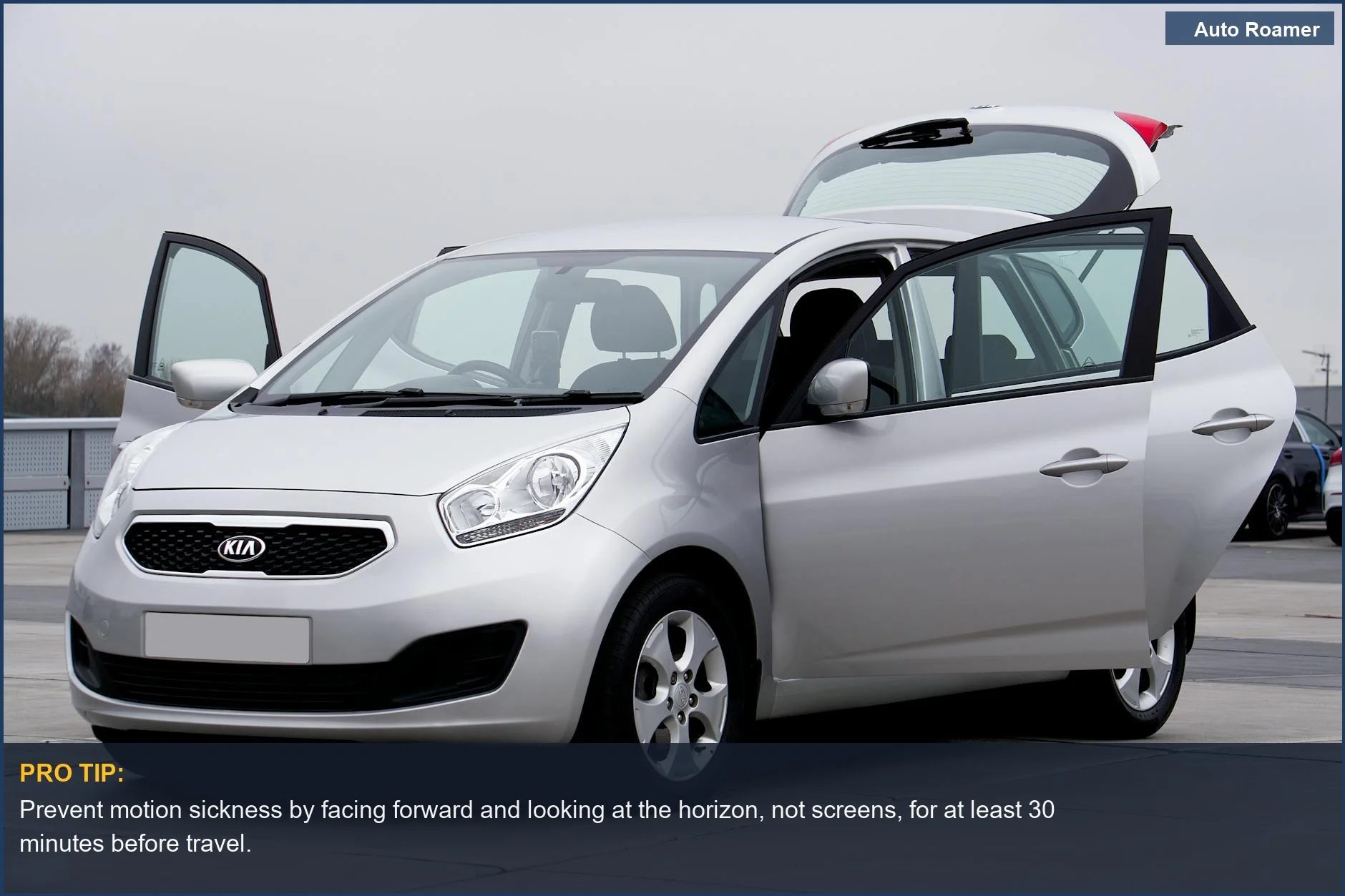
The actual seat position matters. The middle seat in the second row, or even the front passenger seat for older, taller kids, offers the best view of the true horizon. This visual anchor helps synchronize their eyes with their inner ear.
St. Hope Pediatrics advises sitting in the middle seat or front passenger seat.
Window tinting can reduce glare, but too dark a tint can restrict the external visual field, exacerbating the sensory conflict. It's a delicate balance between comfort and tactical visibility. My load-out always includes clear windows for maximum horizon visibility.
Humidity and cabin air quality are often overlooked. A stale, warm, or odorous cabin can trigger nausea even without significant motion.
My protocol includes running the AC on fresh air mode, even in cool weather, to maintain optimal air exchange.
Cincinnati Children's recommends opening the windows.
| Component | How It Fails | Symptoms | Fix Cost |
|---|---|---|---|
| Rear Seat Monitors | Focuses eyes inside vehicle, conflicting with motion sense. | Nausea, dizziness, vomiting. | $0 (turn off) |
| Heavy Meals | Slow digestion, increased stomach acid. | Queasiness, abdominal discomfort, projectile vomit. | $0 (pre-plan meals) |
| Stuffy Cabin | Lack of fresh air, increased heat. | Headache, heightened nausea, sweating. | $0 (open windows/AC) |
| Side Window View | Rapidly changing peripheral vision, no stable horizon. | Disorientation, dizziness, immediate nausea. | $0 (reposition child) |
The cost of ignoring these factors isn't just a detailing bill; it's lost time, ruined clothing, and a traumatized child.
A $20 interior detail kit is cheap insurance compared to a $150 professional hazmat cleanup. The extraction time for a full interior vomit cleanup is at least 45 minutes, plus drying time.
Your vehicle's internal air recirculation system might save on fuel, but it's a biohazard accelerator for motion sickness. Stale air and rising temperatures turn a minor queasy feeling into a Code Red event in 15 minutes flat. Always use fresh air mode.
HealthyChildren.org confirms being hot makes carsickness worse.
How to Handle This
- Pre-trip Recon (60 minutes prior): Administer a light, bland meal - think 2-3 saltine crackers and 4 oz of water. Avoid anything greasy, sugary, or acidic. This stabilizes the stomach without overfilling it. Seattle Children's advises offering sips of fluid.
2. Load-out Deployment (15 minutes prior): Equip each child with a gallon-sized ziplock bag containing two smaller plastic grocery bags and a travel pack of baby wipes. This is their personal hazmat kit.
It seals the biohazard, preventing spread and odor. Total prep time: 3 minutes per kit.
3. Strategic Seating Assignment: Place the child in the middle seat of the second row, or the front passenger seat if they meet age/height requirements. This maximizes their view of the true horizon, synchronizing visual input with inner ear signals. HealthyChildren.org suggests scheduling long drives when kids are likely to sleep.
4. Sensory Input Control: Absolutely no screens, books, or close-up activities.
Direct their gaze to the distant horizon. Engage them in verbal games like 'I Spy' that require looking outside. This forces visual tracking of external movement. AAFP notes watching the true visual horizon can reduce symptoms.
5. Environmental Regulation: Maintain a cool cabin temperature, 68-72 degrees F, with maximum fresh air intake. Open windows slightly for direct airflow if safe. A stuffy, warm environment accelerates nausea by 2x.
Cincinnati Children's recommends opening windows.
6. Emergency Extraction Protocol: If symptoms begin (dizziness, pale skin, verbal complaint of 'funny tummy'), immediately offer 1-2 oz of water. Instruct them to focus on deep, slow breaths. Deploy the pre-staged ziplock bag. Pull over at the first safe opportunity, not the next rest stop 20 minutes away.
Seattle Children's outlines care advice for motion sickness.
7. Post-Event Debrief: Once the biohazard is contained and secured, provide fresh air and a few minutes of quiet. Do not immediately resume the journey or offer more food. Allow their system to reset. This prevents a rapid recurrence of symptoms.
What This Looks Like in Practice
Scenario 1: You're on a 3-hour drive, and your 6-year-old insists on watching a movie on their tablet. Threat level: High. The visual disconnect from the tablet will trigger motion sickness within 30 minutes on a winding road. My tactical response: Tablet remains off, or only audio books are allowed.
Mayo Clinic Health System suggests cutting down on sensory input like movies and books.
Scenario 2: Your child ate a greasy breakfast burrito 10 minutes before departure for a 2-hour trip. Threat level: Extreme. The heavy food combined with motion will create a high probability of a Code Brown or Code Red event within 45 minutes. My tactical response: Delay departure by 30 minutes, or accept the inevitable biohazard.
Cincinnati Children's advises avoiding greasy, heavy foods.
Scenario 3: It's a 90-degree F summer day, and the AC is on recirculation to save fuel. Threat level: High. The stale, warm air will exacerbate any latent nausea. My tactical response: AC on fresh air, fan speed at 3-4, and windows cracked if safe. A $0 adjustment to prevent a $150 detailing bill.
HealthyChildren.org states being hot makes carsickness worse.
Scenario 4: Your child is reading a comic book in the back seat on a 4-hour highway drive. Threat level: Moderate. While highways are smoother, the sustained internal focus will still create a sensory conflict. My tactical response: Comic book confiscated, child instructed to look out the window. Distract with verbal games.
AAFP suggests behavioral strategies like watching the true visual horizon.
Scenario 5: Your 3-year-old is in a rear-facing car seat, making it impossible for them to see the horizon. Threat level: High. Their visual field is restricted to the seatback. My tactical response: Ensure maximum fresh air, consider timing the drive during naptime, and have hazmat bags readily accessible. Three Lollies suggests timing travel wisely, like around naptime.
Mistakes That Cost People
| Mistake | Why It Fails | Consequence |
|---|---|---|
| Allowing screen time | Focuses eyes on a static internal point, conflicting with inner ear's motion data. | Guaranteed projectile vomit within 30 minutes, full interior contamination. |
| Feeding heavy/greasy foods | Slow digestion, excessive stomach acid, increases gut distress with motion. | Accelerates onset of nausea, makes cleanup much more difficult. |
| Ignoring early symptoms | 'My tummy feels funny' is Code Yellow. Delaying action leads to Code Red. | Full vehicle biohazard, 45+ minute roadside extraction, ruined clothing. |
| Keeping windows closed/AC on recirculate | Stale, warm air amplifies nausea and disorientation. | Turns a minor queasy feeling into an acute emergency in 15 minutes. |
| Not having a dedicated containment kit | Forces panic-scramble for inadequate solutions (e.g., cupped hands, tiny bag). | Biohazard spread, missed containment window, prolonged odor. |
| Sitting child in side window seat | Rapid, disorienting peripheral vision without a stable horizon reference. | Increased dizziness and nausea, faster onset of symptoms. |
One common mistake is believing a 'distraction' like a movie will help.
It's the opposite. You're creating the very sensory conflict that causes the problem. Your distraction needs to be external, not internal. Mayo Clinic Health System states loading kids with movies and books may not be the best thing.
Another tactical error is underestimating the half-life of a stomach upset. That 'funny tummy' feeling transitions to a full-blown expulsion in under 10 minutes for most kids. You need to act immediately, not wait for the next exit.
My field-tested protocol doesn't allow for casual observation.
Failing to prep the vehicle's environment is also critical. A hot, stuffy car is a motion sickness incubator. You need cool, fresh airflow. This isn't about comfort; it's about mitigating a hazmat threat. Cincinnati Children's advises adequate air ventilation.
Finally, assuming a child can 'power through' it is a dangerous delusion. Motion sickness is a physiological response, not a lack of willpower. They cannot control it.
Your job is to manage the environment and provide the tools for containment. Seattle Children's confirms it's not related to emotional problems.
Key Takeaways
Managing motion sickness isn't about magical cures; it's about rigorous pre-trip planning and rapid response. The core issue is a sensory conflict in the brain, exacerbated by internal focus and poor environmental control. The CDC suggests sitting in the front of a car or bus.
Your load-out needs to be specific: gallon ziplock bags, smaller plastic bags, and baby wipes, readily accessible to every potential biohazard source. This isn't a suggestion; it's a non-negotiable component of logistic survival.
Total cost: less than $5.
Prioritize external visual input - the true horizon - and maintain a cool, fresh air cabin. These simple environmental controls can drastically reduce the threat level. Ignoring them guarantees a messy extraction.
Never underestimate the speed of onset. 'Funny tummy' means you have 7-10 minutes before a full-scale biohazard event. Your response must be immediate and decisive.
Delay is not an option.
The long-term consequence of being unprepared isn't just a dirty car; it's a child who dreads travel, creating a permanent logistical hurdle for your family. Prevention is always cheaper than cleanup.
Frequently Asked Questions
What's the cost difference between my DIY containment kit and just hoping for the best?
Do I really need to put my kid in the middle seat if they can't see the horizon from there anyway?
What if I do all this, and my kid still gets sick?
Can frequent motion sickness permanently damage my child's inner ear or brain development?
My aunt says giving them ginger ale helps. Is that true?
Sources
- Car sickness in children: Can I prevent it? - Mayo Clinic
- Prevention and Treatment of Motion Sickness | AAFP
- My son gets carsick frequently. What can I do? - HealthyChildren.org
- put-brakes-on-motion-sickness
- Motion Sickness - Seattle Children's Hospital
- How Can I Prevent My Kids From Getting Motion Sickness?
- Tips to prevent your kids from getting car sick - Mayo Clinic
- Parent Tips to Prevent Nausea for Travel in 2025 - Three Lollies
- How to Prevent and Treat Car Sickness in Kids | University Hospitals
- Motion Sickness | Travelers' Health - CDC
- Tips to prevent your kids from getting car sick
- Tips for Managing Motion Sickness in Kids | St. Hope Pediatrics