Car Ownership

How to Remove Water Spots from Car Paint: From Vinegar to Clay Bar

Auto Roamer
10 min read
Includes Video

Hard water spots on car paint aren't just surface dust. We've found they range from light mineral deposits (easily removed with vinegar) to etched water spots that have penetrated the clear coat. For stubborn etched spots, a polish or compound may be necessary to remove water spots from car paint effectively.

You just finished washing your car, the sun is beating down, and as the water evaporates, a constellation of white spots appears on your paint. It's maddening; the wash made it worse. These aren't just surface dust; they're mineral deposits from hard water, bonding to your clear coat How to Remove Water Spots and Water Etching on Paint and Glass. The longer they sit, the harder they are to remove. Some spots, if left untreated, can actually etch into your clear coat, turning a simple wash into a much more involved paint correction job drbeasleys.com.

Understanding the type of water spot is critical to effectively remove them without causing further damage. We're talking about everything from simple mineral deposits to actual etchings in the paint. Trying to buff out stubborn spots dry, for instance, is a sure way to introduce scratches. The trick is to start with the least aggressive method that will still get the job done.
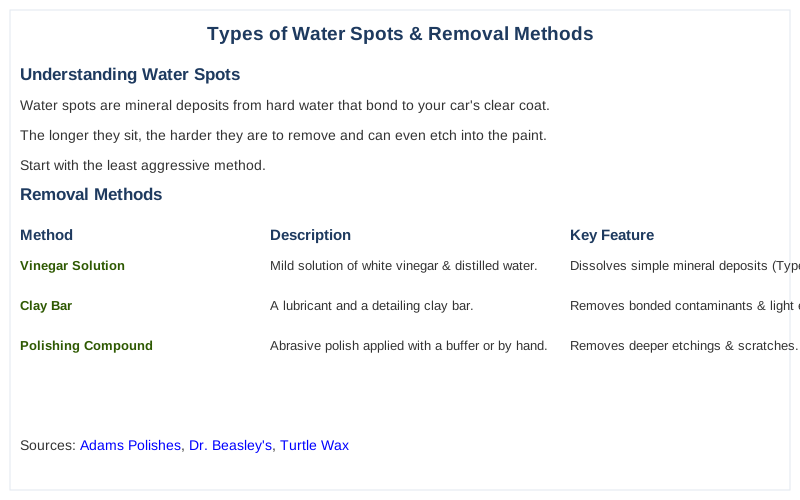
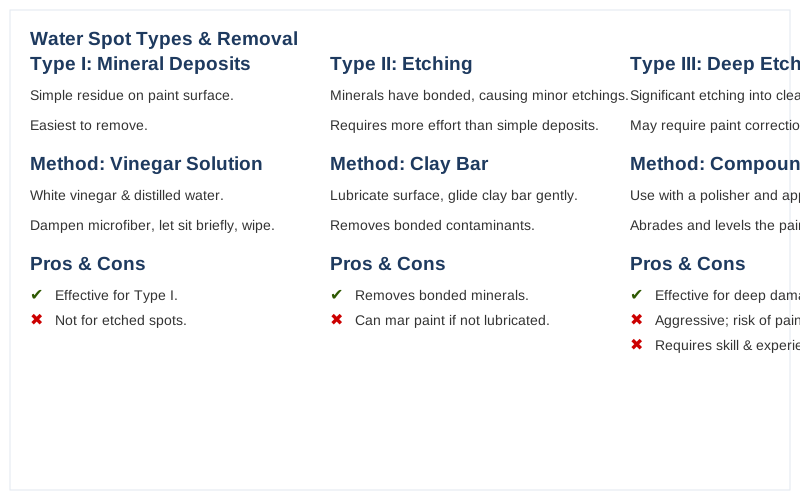
Water spot types & removal: vinegar to polishing comparison.
Key specifications for Types of water spots and removal methods from vinegar to compound polishing

The Short Answer

The key to tackling water spots on your car paint lies in understanding their nature: they aren't all the same. We categorize them into three types, and your approach must match the specific damage.

Type I water spots are simple mineral deposits sitting on the paint surface. Think of them as a thin, chalky residue. These are the easiest to remove. A mild solution, like white vinegar mixed with distilled water, can dissolve these mineral deposits relatively quickly, often within minutes Turtle Wax. Dampen a microfiber towel with this solution and let it sit on the spot for a short period before wiping. This is often all it takes to get your car looking spotless again.

When washing or a simple spray detailer won't cut it, you're likely dealing with Type II water spots. These are minerals that have bonded more strongly to the clear coat. To remove these, you'll need a bit more mechanical action. A clay bar, used with a dedicated clay lubricant, is your best bet for lifting these bonded contaminants without scratching Adams Polishes. A dedicated water spot remover product can also be effective here.

The most severe are Type III water spots, where the minerals have actually etched into the clear coat, leaving behind permanent marks. This is effectively damage to the paint itself. Removing Type III spots requires abrasive correction. You'll need a compound polish, applied either by hand with significant effort or, more effectively, with a dual-action polisher. This process mechanically levels the clear coat to remove the etching. For severe etching, professional paint correction might be the only viable solution Dr. Beasley's. Always follow up any correction with a sealant or wax to protect the newly leveled surface.
To keep your car looking pristine, you might also want to learn how to remove tree sap with effective methods found in our article on tree sap removal.
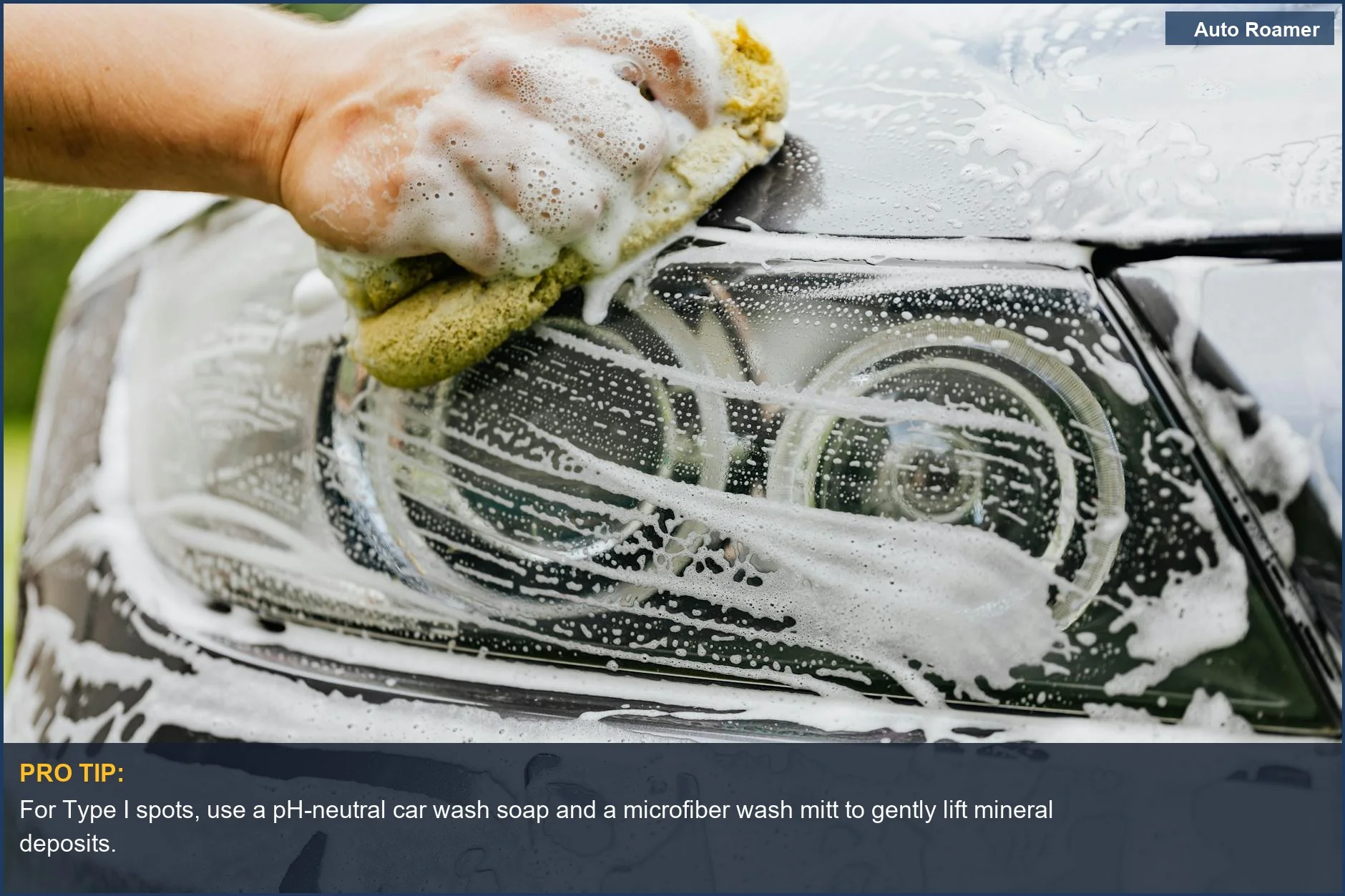
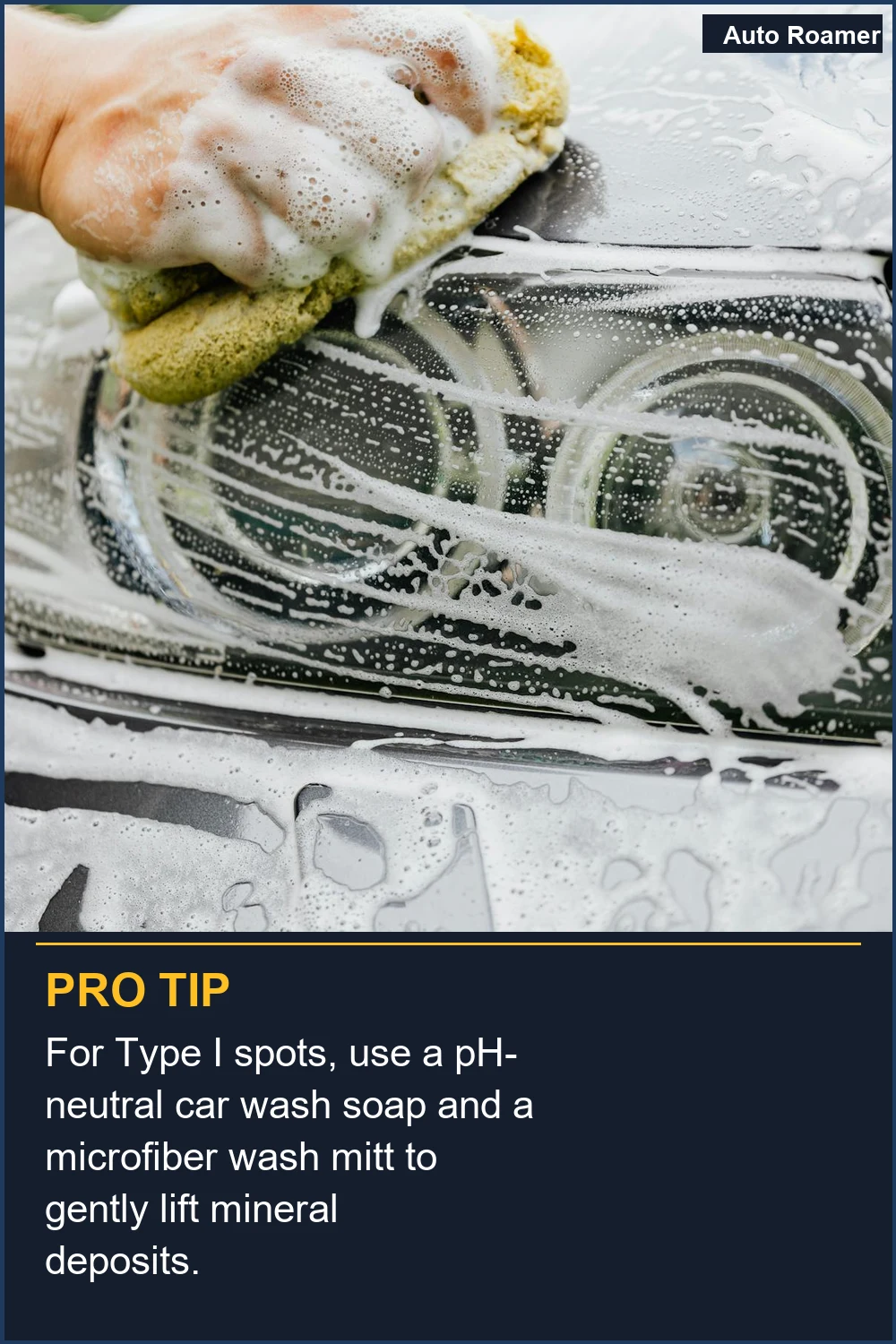
For Type I spots, use a pH-neutral car wash soap and a microfiber wash mitt to gently lift mineral deposits.
Easily remove Type I water spots, which are simple mineral deposits, by washing and drying your car promptly. Don't let them bake on! | Photo by www.kaboompics.com

What You Need to Know

Water spots are a persistent nuisance, especially on dark vehicles. These blemishes indicate varying levels of paint damage. The primary culprit is minerals in hard water, such as calcium and magnesium, baked onto your car's surface by UV heat How to Remove Water Spots and Water Etching on Paint and Glass. Sprinkler water is particularly problematic due to its high mineral content and sun exposure while the car is wet. While dark cars make spots more visible, light-colored vehicles experience the same damage.

We categorize water spots into three types, each requiring a different approach. Type I water spots are superficial mineral or dirt deposits 3 - Types of Water Spots - Type I, Type II and Type III. These are often from tap or well water, or airborne pollutants, and can precede Type II. Type II water spots are bonded minerals, more challenging to remove. Type III water spots are etchings or craters where corrosive elements have degraded the clear coat The Best Way to Remove Water Spots.
1
Address Type I Water Spots - For surface deposits, a solution of white distilled vinegar and distilled water can dissolve minerals. Dampen a microfiber towel with the solution, let it sit on the area to soften deposits, then gently wipe away.
2
Tackle Type II Bonded Minerals - For bonded spots, a clay bar with lubricant is necessary after washing. The clay bar lifts contaminants without scratching, preparing the paint for the next step.
3
Correct Type III Etched Spots - Etched spots require mechanical abrasion. Use a compound polish by hand or with a dual-action polisher to level the paint surface by removing damaged clear coat.
4
Prevent Future Spots - Drying your car immediately after washing is paramount. Applying wax or ceramic coating provides protection against mineral deposits and environmental contaminants, simplifying future cleaning.
To keep your car looking pristine, it's also important to know how to remove bird droppings safely.
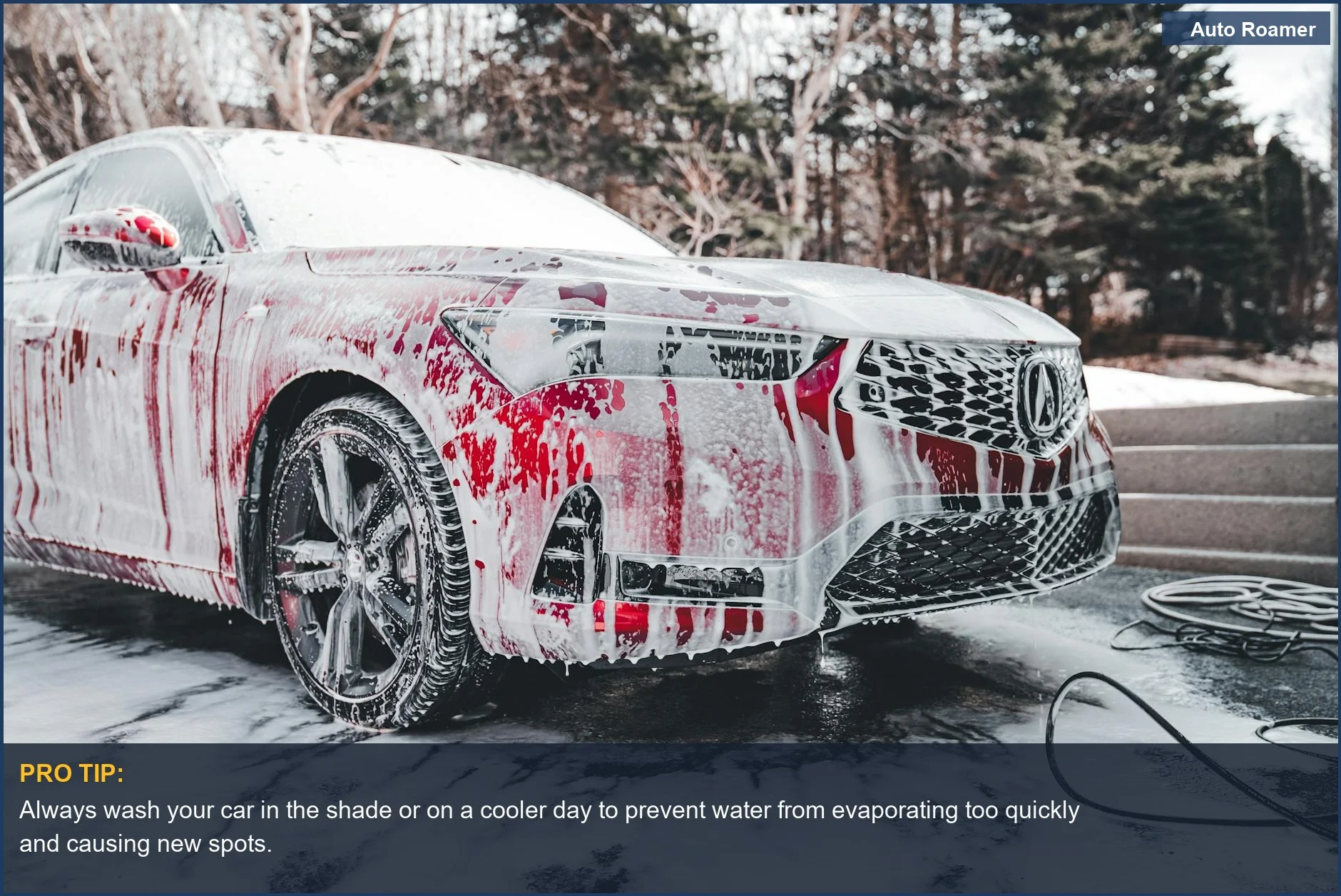
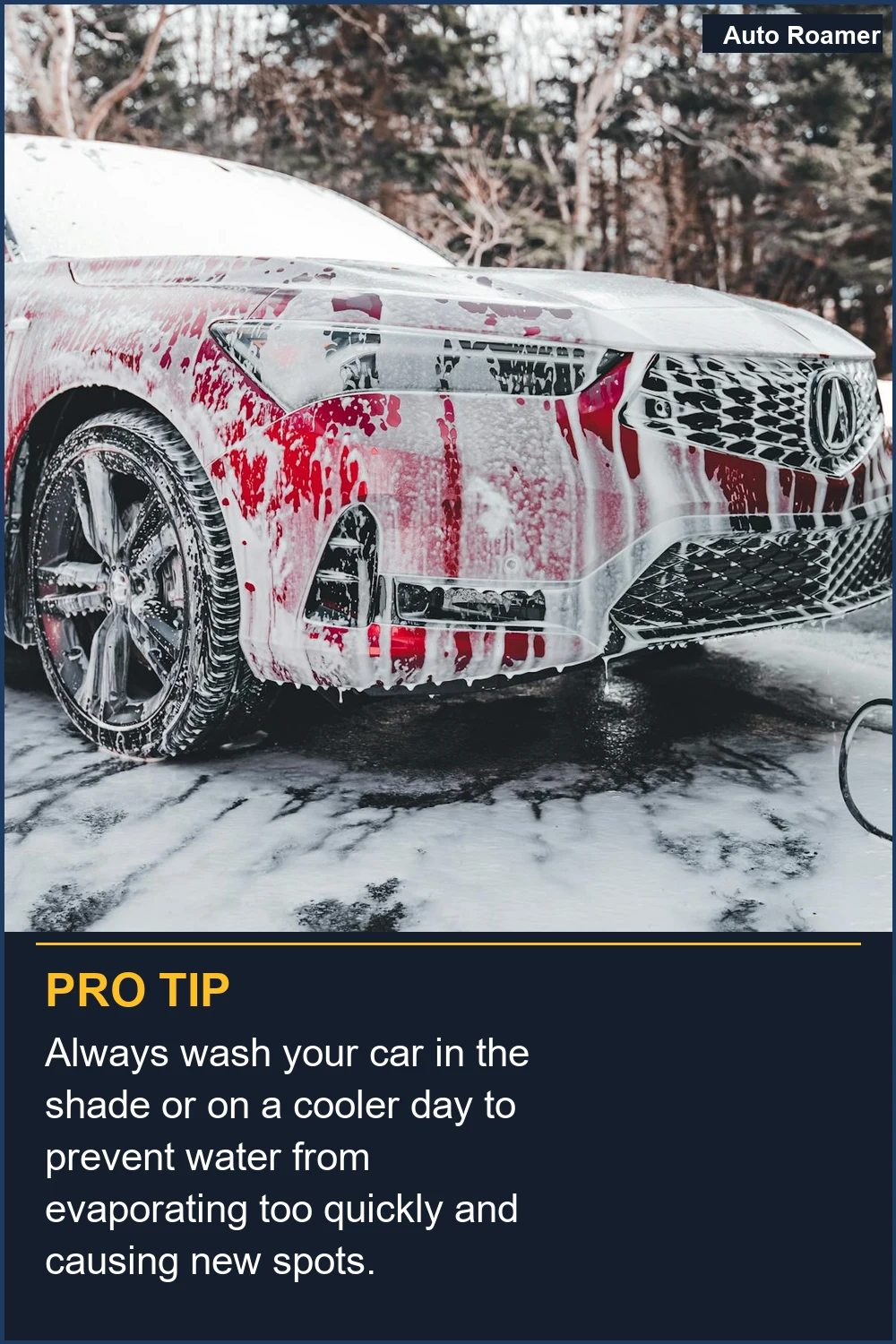
Always wash your car in the shade or on a cooler day to prevent water from evaporating too quickly and causing new spots.
Dark cars are notorious for showing hard water spots on car paint. This thorough wash is the first step in preventing stubborn blemishes. | Photo by Erik Mclean

How to Handle This

Type I water spots are mineral deposits from evaporated water. These are the easiest to fix. A quick wash and immediate drying often works. For tougher spots, a mild acidic solution dissolves the minerals without harming paint.
Mix white vinegar and distilled water, typically a 1:1 ratio for general cleaning Turtle Wax. This acidic mix breaks down mineral deposits. Action: Dampen a clean microfiber towel with the solution and gently wipe affected areas. Why it matters: Vinegar's acidity lifts bonded minerals. What goes wrong if you skip it: Untreated spots bond more strongly, potentially becoming Type II.
Type II water spots occur when minerals etch into the clear coat. These won't wipe off; they must be physically lifted. Action: Wash your car to remove loose dirt. Use a clay bar with a dedicated lubricant, gently gliding it over the paint. Why it matters: The clay bar grabs bonded contaminants, including mineral etchings. What goes wrong if you skip it: Etchings remain, leaving paint rough and dull. You can't achieve a smooth finish.
Type III water spots are the most severe, damaging the clear coat itself. They appear as dull, faded areas or small craters. Action: Mechanically abrade the paint to level the surface. A compound polish, ideally with a dual-action polisher, is best. Hand application requires significantly more effort. Why it matters: Compounding removes a microscopic layer of clear coat, smoothing etched areas and restoring reflectivity. What goes wrong if you skip it: Etched areas remain visible, creating permanent paint defects that can worsen.
Prevention is key. The most crucial step is to dry your car immediately after washing. Do not let water air dry, especially in sun or heat. Action: After rinsing, use clean, absorbent microfiber towels to dry all surfaces thoroughly. Consider applying a protective layer like wax or a ceramic coating. Why it matters: Drying prevents mineral deposits. Protective coatings repel water, causing it to bead and roll off, minimizing spot formation. What goes wrong if you skip it: You'll face new water spots after every wash, leading to a constant battle and potential paint damage.
To keep your car looking pristine, you might also want to learn how to remove stickers and decals without damage by visiting this helpful guide.
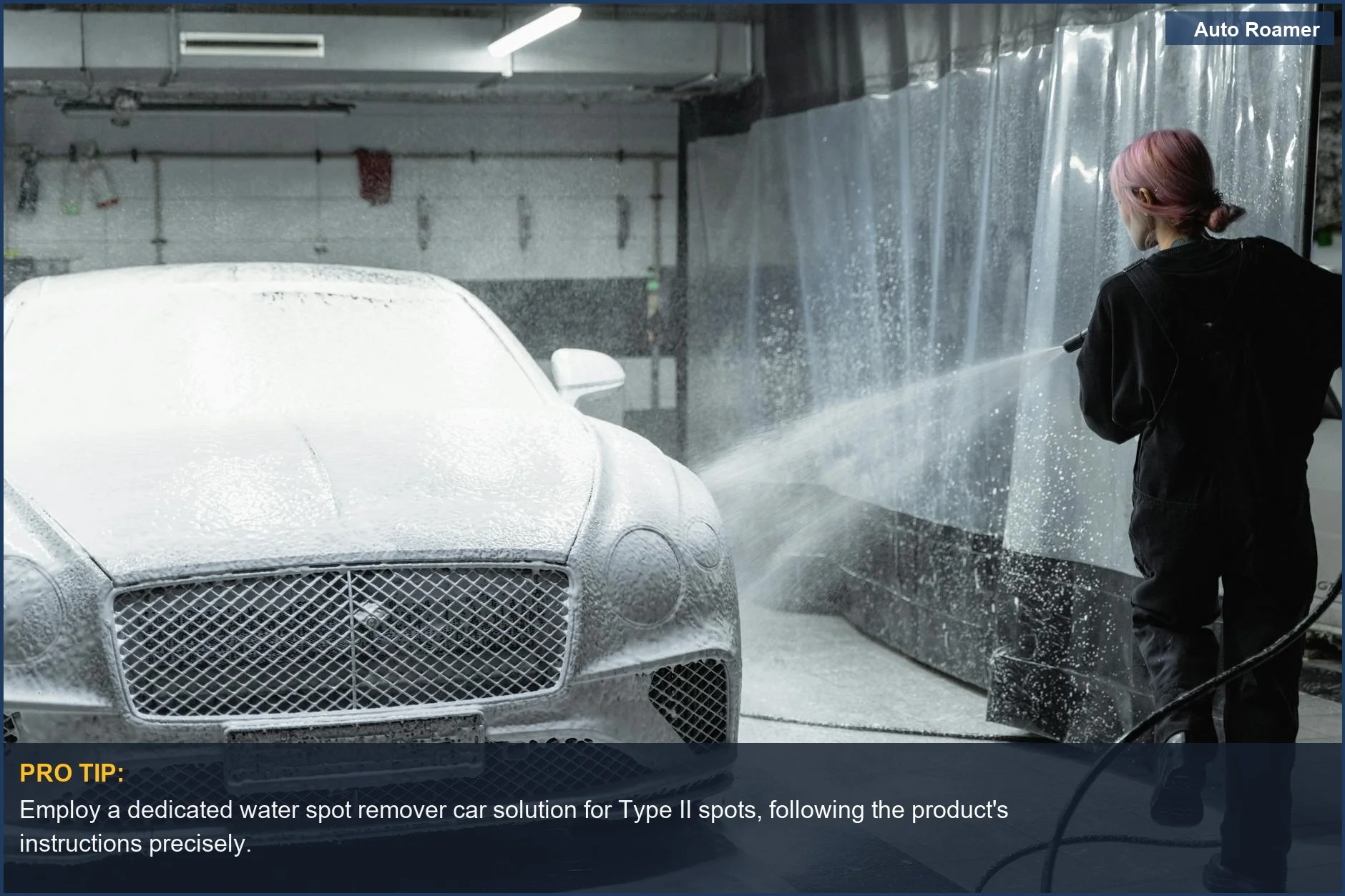
Employ a dedicated water spot remover car solution for Type II spots, following the product's instructions precisely.
Professional car washing with a pressure washer can help remove Type I water spots effectively. For tougher jobs, advanced techniques are needed. | Photo by Tima Miroshnichenko

What This Looks Like in Practice

  • Black Toyota Camry near sprinklers for 6 months Parked daily near office sprinklers, this Camry developed Type II water spots - bonded mineral deposits adhering to the clear coat. Standard washing and vinegar were insufficient. We restored it using a clay bar to lift contaminants, followed by a polish to remove minor marring How to Remove Water Spots and Water Etching on Paint and Glass.
  • White Honda CR-V after Arizona car wash Washed in Arizona's hard water, this CR-V developed Type I spots - superficial mineral deposits. A quick spray of diluted white vinegar dissolved the minerals. A microfiber towel wiped them clean, restoring clarity which is the best way to get rid water spots?.
  • Dark blue BMW 5 Series with etched spots Prolonged sprinkler exposure caused significant water etching on this BMW, creating visible craters in the clear coat. Clay bars and milder solutions failed. We used compound polishing to level the clear coat and remove the damage The Best Way to Remove Water Spots.
  • Red Ford Mustang with ceramic coating A ceramic coating on this Mustang acted as a barrier, preventing direct contact between water and paint. Water beaded and rolled off cleanly, minimizing water spot formation even in harsh conditions.
To prevent scratches while maintaining your car's appearance, consider using the two-bucket method for washing.
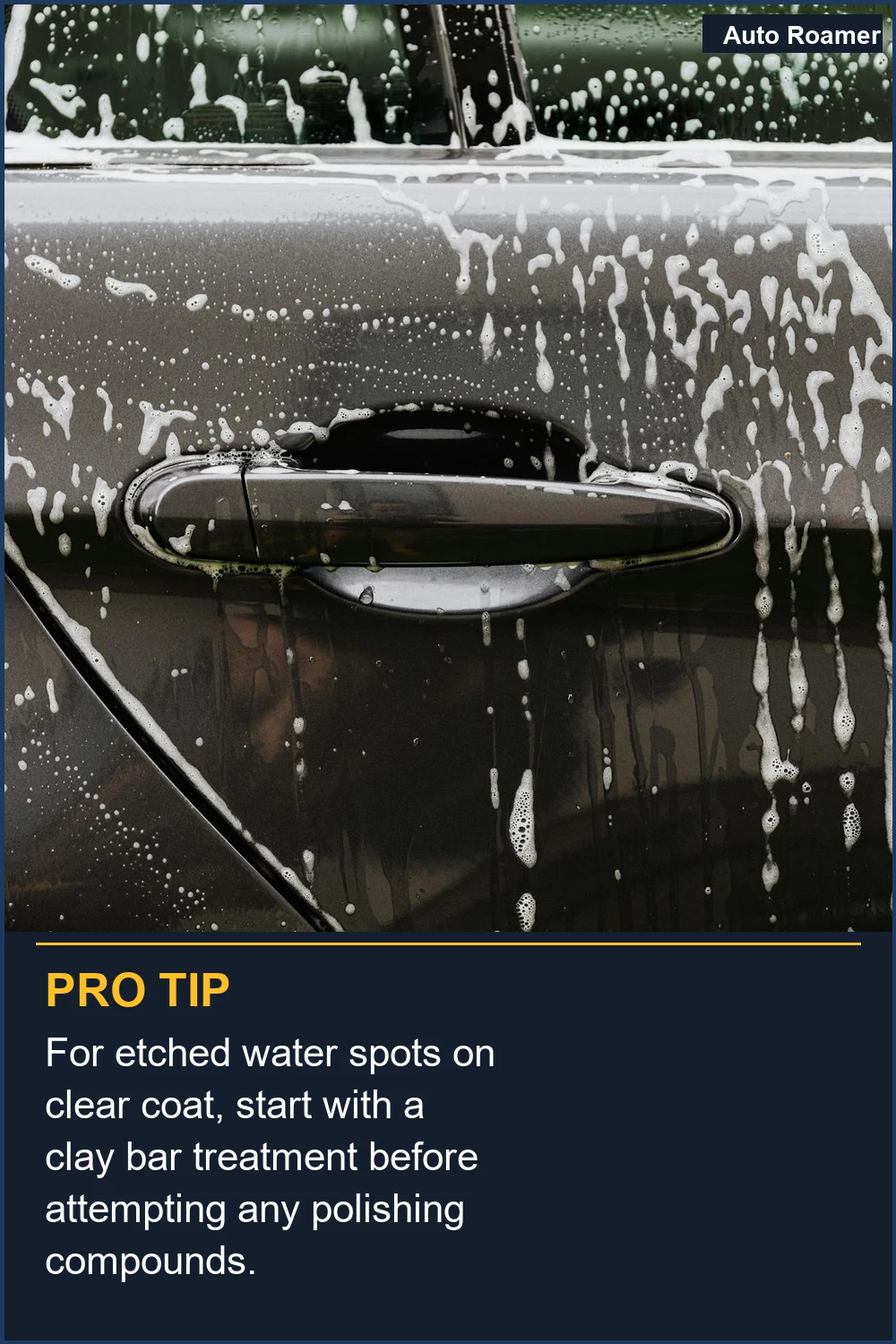
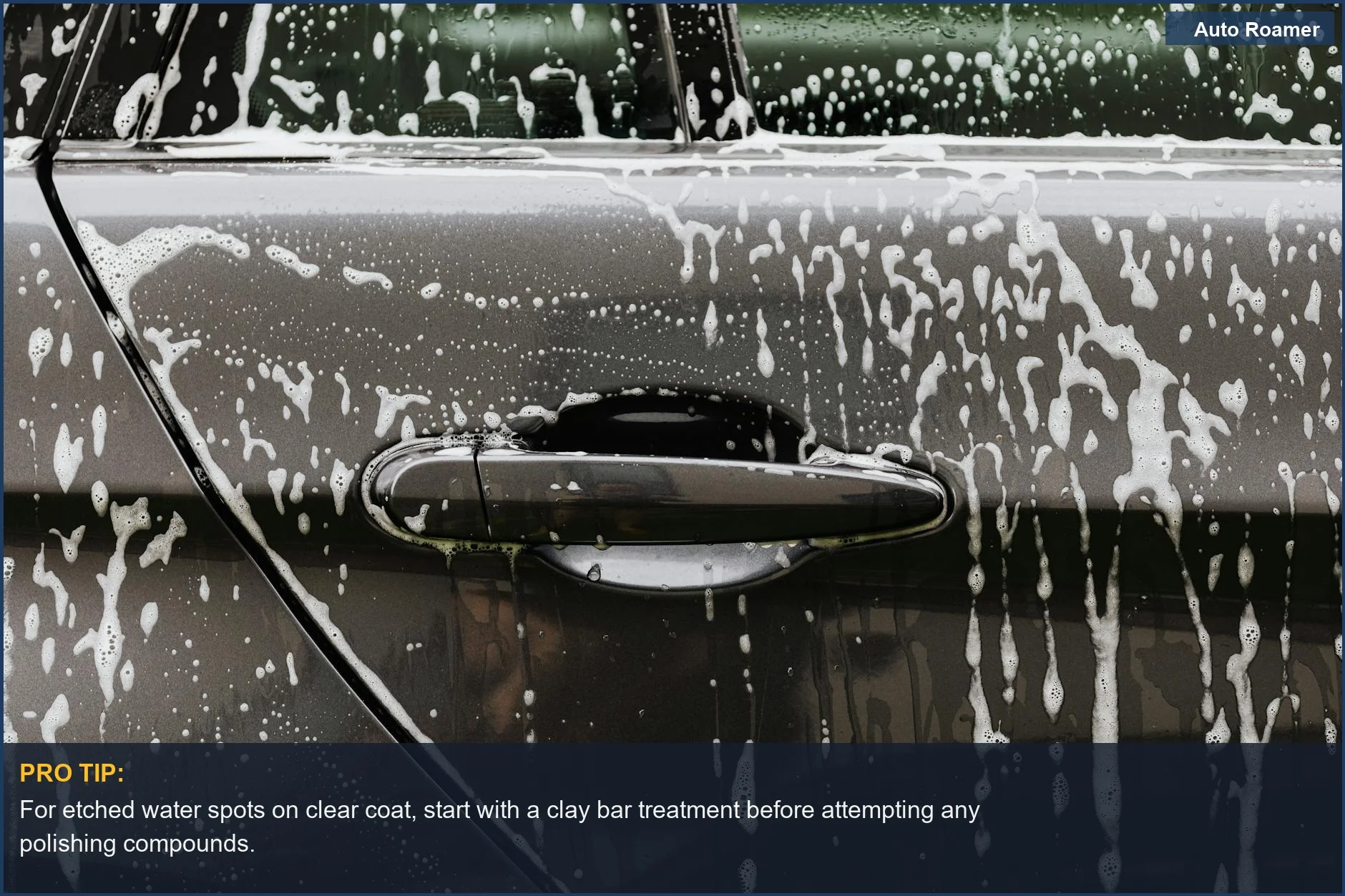
For etched water spots on clear coat, start with a clay bar treatment before attempting any polishing compounds.
Close-up detail of soap suds on a black car door. Learn how to remove water spots from car paint before they etch the clear coat. | Photo by www.kaboompics.com

Mistakes That Cost People

Symptom Trying to buff out water spots dry.
Signal You see fine scratches appearing around the spot after buffing.
Fix Always use a lubricant like a spray detailer or water when attempting to remove spots. Buffing dry grinds the mineral deposit into the paint, causing micro-scratches How To Remove Water Spots In Less Than 5 Minutes! - YouTube.
Symptom Using undiluted vinegar on fresh paint.
Signal The clear coat appears hazy or dull after application.
Fix While vinegar is great for Type I spots, always dilute it with distilled water How To Remove Water Spots From Car Exterior Surfaces - Turtle Wax. Undiluted, it's too acidic and can damage delicate paint finishes, especially on newer vehicles.
Symptom Washing your car in direct sunlight.
Signal New water spots appear almost immediately as you rinse and dry.
Fix Always wash and dry your car in the shade or during cooler parts of the day. Sunlight bakes water into the paint before you can dry it, creating new hard water spots adamspolishes.com.
Symptom Using tap water for the final rinse.
Signal You notice mineral deposits forming even after a thorough wash and dry.
Fix The minerals in tap water are the culprits. Always perform your final rinse with filtered or distilled water to prevent introducing more contaminants that cause water spots How To Remove Water Spots From Car Exterior Surfaces - Turtle Wax.
Symptom Ignoring spots for months.
Signal Simple washing or vinegar no longer removes the spots; the paint feels rough.
Fix What starts as a Type I spot can quickly become a Type II or even Type III etched spot if left untreated. The longer you wait, the more aggressive the removal method needs to be, potentially requiring compound polishing The Best Way to Remove Water Spots | Dr. Beasley's.
Symptom Using a dish sponge or old RAG for spot removal.
Signal You create new scratches while trying to remove existing water spots.
Fix These materials are too abrasive and can trap grit. For bonded minerals (Type II spots), use a proper clay bar with a dedicated clay lubricant to safely lift contaminants without scratching the paint adamspolishes.com.
While you're enhancing your car's appearance, consider also tackling those unsightly dents with our tips on removing car dents.
Water spot types & removal methods: vinegar to polishing pros/cons.
Comparison overview for Types of water spots and removal methods from vinegar to compound polishing

Key Takeaways

To protect your car's exterior, it's also helpful to know how to address scratches, as discussed in our article on fixing car scratches.

Frequently Asked Questions

Does vinegar actually mess up car paint when trying to remove water spots?
We've used diluted white vinegar, usually a 1:1 mix with distilled water, on countless vehicles over the years, and it's generally safe for clear coats. It works by dissolving the mineral deposits left behind by evaporated water. Just don't let it sit on the paint for extended periods - work in small sections and rinse thoroughly.
What causes those stubborn hard water spots on my car after a wash?
Hard water spots happen when water evaporates, leaving behind the minerals dissolved in it, like calcium and magnesium. If you're using tap water that's particularly mineral-rich, or if sprinklers hit your vehicle after a wash and aren't dried, those minerals bake right into the paint. We've seen this most often on our older rigs when camping in areas with notoriously 'hard' water sources.
Can water spots on my car become permanent if I don't deal with them fast enough?
Absolutely. We call these 'etched' water spots, or Type II and Type III, where the minerals or contaminants in the water have actually eaten into the clear coat. If left for too long, especially in the sun, they can become permanent damage that you can't just wipe away. At that point, you're looking at needing to mechanically level the paint.
Does putting a ceramic coating on my car prevent water spots from forming in the first place?
Ceramic coatings definitely help a lot by creating a slick, hydrophobic surface that makes water bead up and roll off more easily. This significantly reduces the chances of water sitting and evaporating to leave spots. While it's not a 100% guarantee against *all* water spots, especially if a vehicle is left unwashed for a long time, it makes them much easier to remove if they do form.
How do I make sure I don't get water spots on my car right after I wash it?
The key is immediate drying with high-quality microfiber towels. After the final rinse, we always go over the entire vehicle, panel by panel, to remove every last drop of water. If you're in a pinch and can't dry it immediately, a quick detailer spray can help lift any lingering water before it evaporates and leaves its mark.

Sources

Related Articles