How to Check Your Oil Without Going to a Mechanic (2026 Complete Guide)
Auto Roamer
9 min read
Prices verified February 2026
Includes Video
The engine sputters, the dashboard light flickers ominously, and a knot tightens in your stomach. You're miles from the nearest mechanic, but a low oil warning is screaming for attention. This isn't a drill; you need to check your car oil level right now.
The engine sputters, the dashboard light flickers ominously, and a knot tightens in your stomach. You're miles from the nearest mechanic, but a low oil warning is screaming for attention. This isn't a drill; you need to check your car oil level right now. Ignoring this could lead to catastrophic engine damage, costing thousands down the line Video: how to check your car's engine oil. Fortunately, checking your oil isn't rocket science, and you can do it yourself with just a few minutes and a clean RAG. Forget the panic and the expensive tow truck. Understanding how to use your oil dipstick is a fundamental skill that empowers you to keep your vehicle running smoothly and avoid unnecessary trips to the shop How to Check Your Vehicle's Oil Level. This guide will walk you through the straightforward process, so you can confidently assess your engine's vital fluid and get back on the road.
Key specifications for How to Check Your Oil Without Going to a Mechanic
The Short Answer
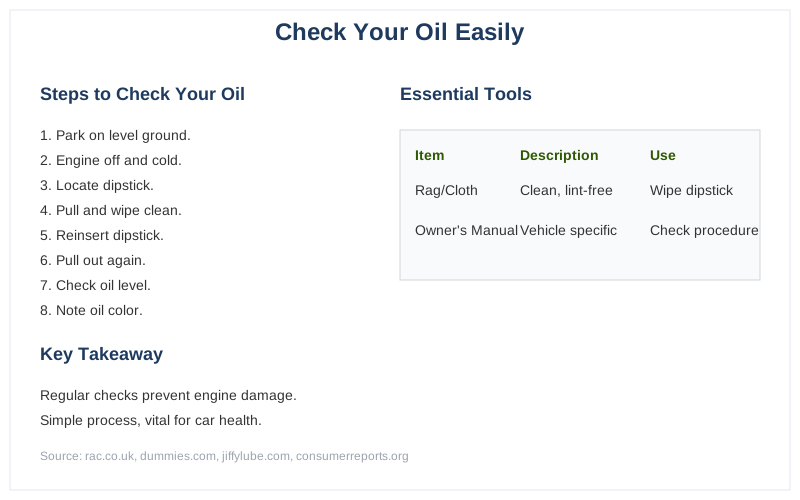
Checking your car's oil is a fundamental maintenance task, akin to checking your own vital signs, that prevents costly engine damage. The core framework involves a simple, repeatable process: preparation, extraction, and interpretation.
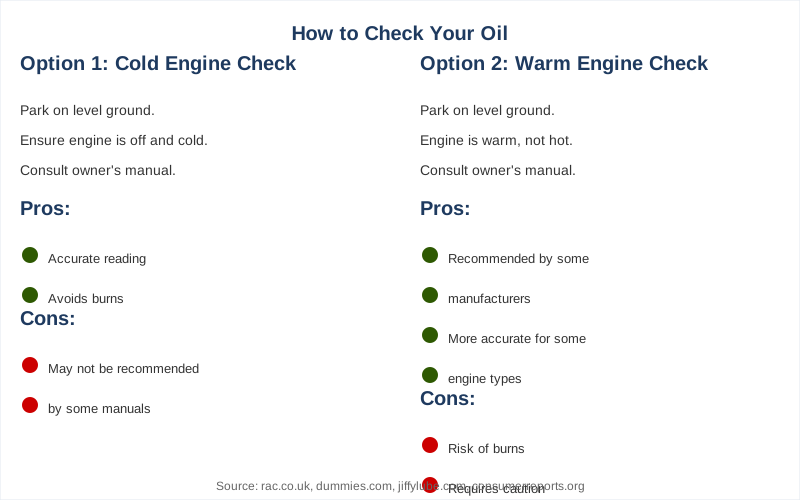
First, park your car on level ground and ensure the engine is off and cold to get an accurate reading and avoid burns Jiffy Lube. Some manufacturers, however, recommend checking when the engine is warm, so always consult your owner's manual for specific instructions Consumer Reports.
Next, locate the oil dipstick, usually marked with a bright handle. Pull it out, wipe it clean with a RAG or paper towel, then reinsert it fullyRAC. Remove it again and observe the oil level on the end.
The dipstick will have markings indicating the proper oil level, often as two pinholes, L and H, or MIN and MAX. The oil streak should fall between these marks or within a crosshatched area Consumer Reports. If it's below the minimum, you need to add oil. Also, look for discoloration or metal particles, which can signal bigger issues.
This manual check is crucial because modern cars with electronic monitors might not always provide a warning before damage occurs. Getting into the routine of checking your car oil every few weeks can save your engine from serious trouble.
To ensure your vehicle runs smoothly, it's also important to know how to check all your car fluids; learn more in our article on car fluids checkup.
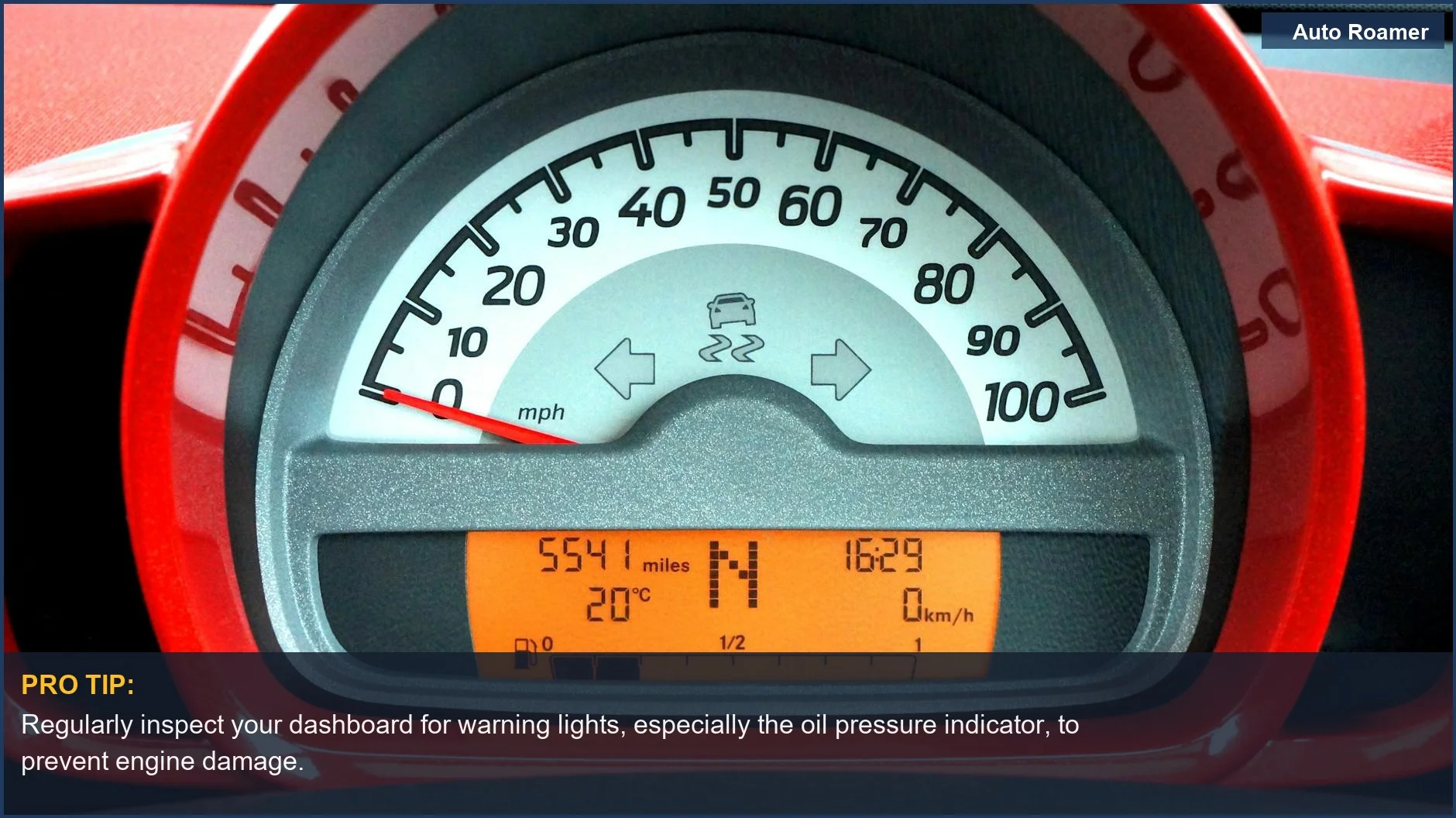
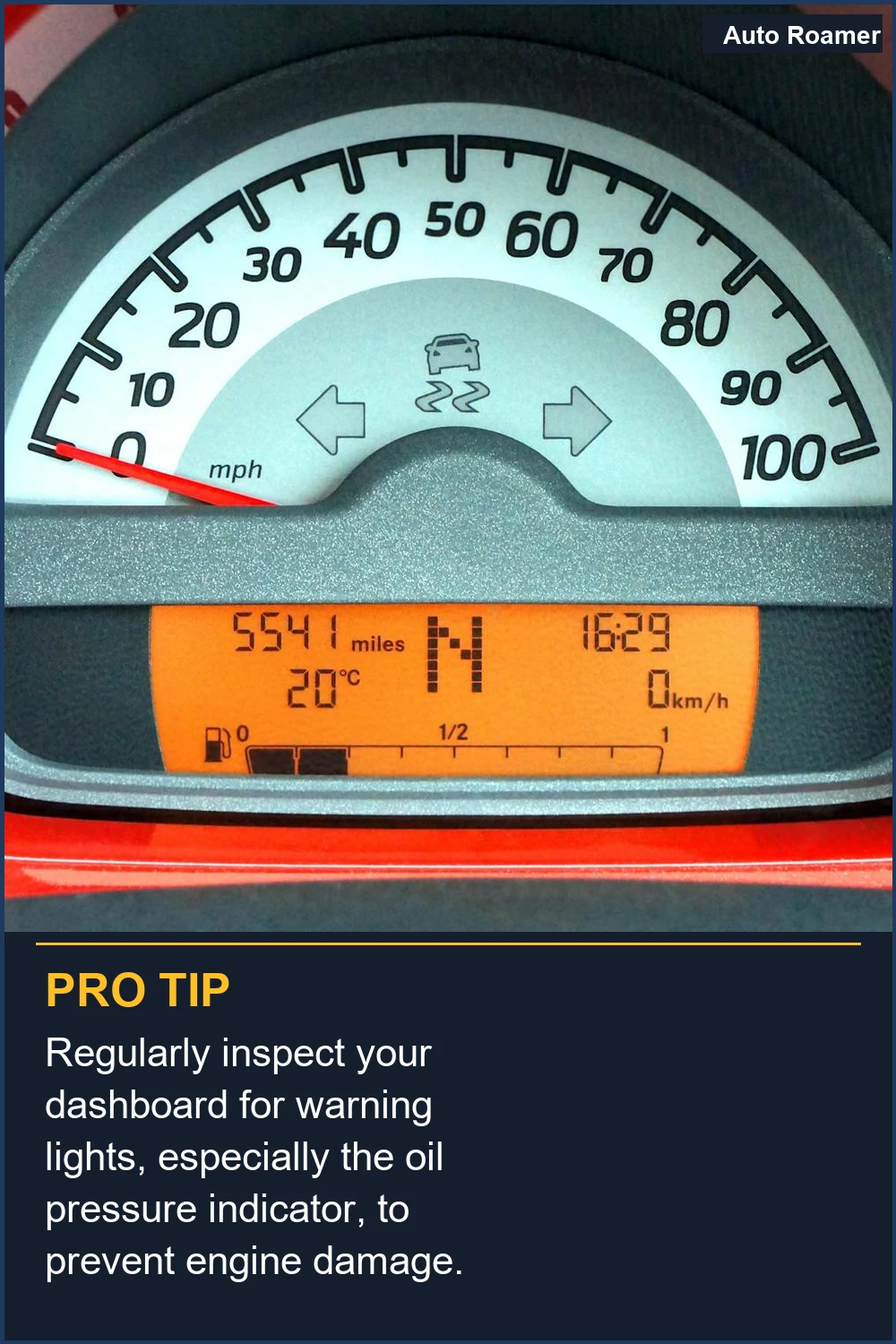
Your car's dashboard, like this modern display, provides crucial real-time information. Knowing how to check your car's oil level ensures your engine runs smoothly.
| Photo by Mike Bird
Your car's dashboard, like this modern display, provides crucial real-time information. Knowing how to check your car's oil level ensures your engine runs smoothly.
| Photo by Mike Bird
What You Need to Know
1
Park on level ground and ensure your engine is cool. This is crucial for an accurate check car oil level reading; uneven surfaces will skew the results Jiffy Lube. While many vehicles recommend a cold engine, always consult your owner's manual, as some manufacturers advise checking when the engine is warm Consumer Reports.
2
Open the hood and locate the oil dipstick. It's typically marked with a brightly colored handle (often orange or yellow) and labeled "engine oil" Beaver Chevrolet. If you're unsure, your vehicle's user manual is your best friend RAC. Keep a RAG or paper towels handy, as this can be a messy task.
3
Pull the dipstick out completely and wipe off all the oil with your RAG. Then, reinsert the dipstick fully back into its tube. This ensures you're getting a clean reading on the second pull Facebook.
4
Remove the dipstick again and examine the end. You'll see markings indicating the proper oil level, usually two pinholes, "MIN" and "MAX" (or "L" and "H"), or a crosshatched area Consumer Reports. The oil level should fall between these marks. If the oil is below the minimum mark, you'll need to add oil.
5
Observe the oil's color and consistency. Ideally, it should be a translucent brown or black. A milky appearance suggests coolant contamination, while metal particles could indicate internal engine wear Consumer Reports. Some modern vehicles, especially SUVs and trucks, might have digital oil level indicators instead of a physical dipstick; consult your owner's manual for these systems.
6
If your oil level is low, add the correct grade of oil as specified in your owner's manual. Always use the manufacturer-recommended oil grade, such as 0W-20 or 5W-30, to avoid engine damage Jiffy Lube. Overfilling can be as detrimental as having too little oil.
This close-up of a car's dashboard and steering wheel emphasizes preparation. For a precise check car oil level, park on level ground with a cool engine.
| Photo by Caleb Oquendo
This close-up of a car's dashboard and steering wheel emphasizes preparation. For a precise check car oil level, park on level ground with a cool engine.
| Photo by Caleb Oquendo
How to Handle This
1
Park on level ground and let the engine cool - This is critical because an uneven surface will give you a false reading of the oil level. Jiffy Lube recommends the engine be cold to avoid burns from hot components, though your owner's manual might specify checking a warm engine for some vehicles. Skipping this means you could be chasing a non-existent low oil situation or, worse, overfilling an already correct level. Imagine trying to gauge water in a tilted bucket; the measurement is meaningless. This also applies if you're out on a road trip, pulled over at a rest stop in the blazing sun. Patience is key.
2
Locate and access the oil dipstick - Pop the hood and find the dipstick, often with a bright yellow or orange handle, usually labeled "Engine Oil." Consumer Reports notes that some modern cars have electronic monitors instead of a physical dipstick; consult your owner's manual if you're unsure. If you don't find a dipstick, don't panic; your car might use an electronic system. However, if you *do* have one and can't find it, you'll be unable to perform a manual check, leaving you reliant on dashboard warnings, which aren't always immediate.
3
Wipe, reinsert, and read the oil dipstick - Pull the dipstick out completely and wipe off all the oil with a clean RAG or paper towel. Then, push it back in fully to ensure an accurate reading. Pull it out again and observe the oil mark. You're looking for the oil level to be between the "MIN" and "MAX" or "L" and "H" indicators. Firestone Complete Auto Care advises checking both sides of the dipstick. If the oil streak is below the minimum mark, your check car oil level is low. If you only wipe it once and don't reinsert it fully, you'll get a misleadingly low reading, potentially leading you to add unnecessary oil. A flashlight can be a lifesaver when checking in dim garages or at dusk.
4
Assess the oil's condition - Beyond just the level, look at the oil itself. It should be brown or black. If it appears light and milky, it could indicate coolant leaking into the engine, a serious problem. Consumer Reports also suggests looking for metal particles, which point to internal engine wear. Ignoring the oil's appearance means you might miss an early warning sign of a much larger, more expensive mechanical failure, even if the oil level is technically correct. This quick visual inspection is a crucial part of understanding your engine's health.
To ensure your vehicle runs smoothly, it's also important to know how to check your tire tread.
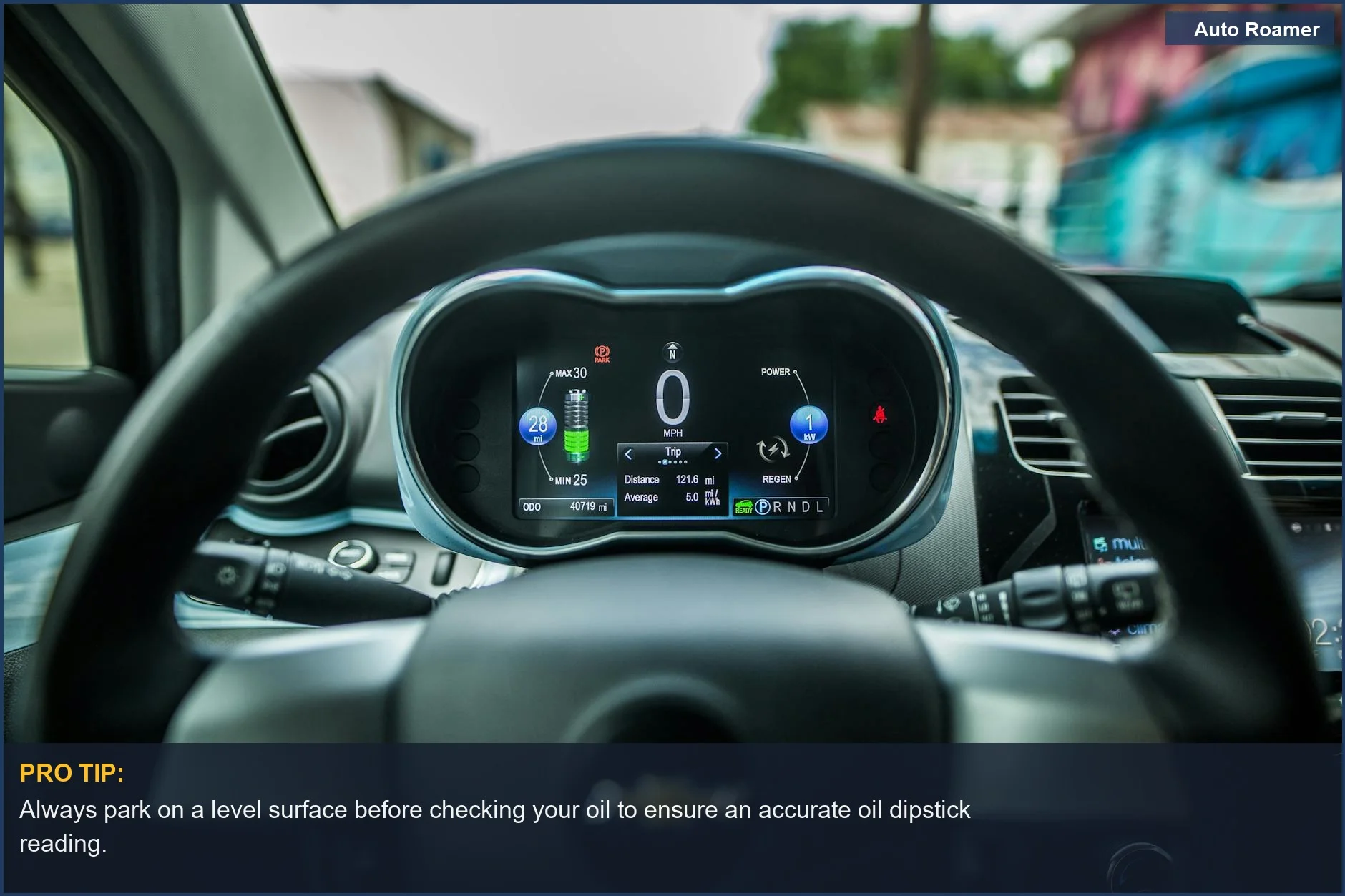
High-tech car interiors like this feature advanced displays. Understanding how to check your oil dipstick accurately is a vital skill for any driver.
| Photo by Salah Özil
High-tech car interiors like this feature advanced displays. Understanding how to check your oil dipstick accurately is a vital skill for any driver.
| Photo by Salah Özil
What This Looks Like in Practice
Summer Desert Road Trip in a Compact Sedan: Driving through scorching heat, your car's engine temperature gauge creeps up. You pull over, turn off the engine, and wait for it to cool. Checking the dipstick, the oil level is within range, indicating the ambient temperature stressed the cooling system, not an oil issue. This highlights checking your oil level before extended trips in extreme conditions Tohaas Tire.
Cold Weather Commute in an Older SUV: On a frigid morning, your car starts roughly. You check the oil after parking on level ground and letting the engine cool. The dipstick shows the oil level at the lower end of the acceptable range. This might explain the rough start, as thicker oil lubricates less effectively in the cold. Adding the correct grade of oil should help Consumer Reports.
Hilly Terrain Drive in a Crossover: Driving through mountains, steep inclines and descents can temporarily skew the dipstick reading. Parking on a level stretch after a climb and performing the standard check (engine off, cool, wipe dipstick, reinsert, check) provides an accurate reading for that moment, but reinforces that readings are only snapshots on level ground RAC.
City Driving with Frequent Stops in a Hatchback: For short city commutes with frequent stops and starts, checking your oil every few weeks is a good habit. Stop-and-go traffic can sometimes lead to increased oil consumption. Perform the check with the engine off and the car on level ground Jiffy Lube.
To keep your engine cool during those hot summer drives, it's also important to know how to check and top off coolant.
The illuminated controls on this dashboard are key indicators. During a summer road trip, knowing how to check oil is essential for engine longevity.
| Photo by Evgeniy Lejnev
The illuminated controls on this dashboard are key indicators. During a summer road trip, knowing how to check oil is essential for engine longevity.
| Photo by Evgeniy Lejnev
Mistakes That Cost People
Symptom Checking oil on a sloped surface.
Signal Inaccurate oil level reading.
Fix Park on level ground before checking oil. Uneven surfaces give inaccurate readings. Jiffy Lube emphasizes this.
Symptom Reading a dirty dipstick.
Signal Smeared or inconsistent oil reading.
FixWipe the dipstick clean before reinserting. Pull it out again for a clear reading. Consumer Reports highlights this.
Symptom Reading only one side of the dipstick.
Signal Inconsistent or misleading oil level.
FixInspect both sides of the dipstick. Manufacturers design them for accurate readings. Firestone Complete Auto Care recommends this.
Symptom Checking oil when the engine is hot.
Signal Risk of burns and inaccurate reading due to hot oil expansion.
FixLet the engine cool down for at least a few minutes (unless your owner's manual states otherwise). This prevents burns and ensures accuracy. TohAASTire points out the importance of a cool engine.
Symptom Relying solely on newer cars' electronic oil monitors.
Signal Missing subtle issues a manual check might reveal.
FixDon't disregard the dipstick if your car has one. It offers a more direct assessment than electronic sensors. RAC notes not all cars have electronic monitors.
Symptom Ignoring oil appearance beyond level.
Signal Overlooking signs of internal engine problems.
Fix Observe oil color and consistency. A milky appearance indicates coolant mixing; metal particles suggest internal wear.
Being aware of oil levels can help prevent issues, but knowing how to spot overheating signs is equally essential; learn more in our guide on car overheating signs.
Product comparison for How to Check Your Oil Without Going to a Mechanic
Always ensure your vehicle is parked on level ground and the engine is off and cool before pulling the oil dipstick; a warm engine can cause burns and an inaccurate reading How To Check Oil In A Car.
Wipe the dipstick clean, reinsert it fully, then pull it out again to read the oil level against the minimum and maximum marks or crosshatched area; consult your owner's manual if unsure of your car's specific indicators How to Check Your Car's Engine Oil the Right Way.
Pay attention to the oil's appearance: brown or black is normal, but a milky or foamy look can signal coolant contamination, while metal particles indicate serious internal wear How to Check Your Car's Engine Oil the Right Way.
The single most important thing to remember is this: consistent oil level checks are your first line of defense against catastrophic engine failure.
To ensure your tires are properly inflated, learn how to check tire pressure without a gauge in our article on tire pressure tips.
Frequently Asked Questions
How do I check my car's oil level without a mechanic?
Checking your car's oil level is a simple DIY task. Park your car on level ground and ensure the engine is turned off and has cooled down for a few minutes. Locate the oil dipstick, usually marked with a brightly colored handle, pull it out, wipe it clean with a rag, reinsert it fully, then pull it out again to read the oil level against the markings on the dipstick.
Where can I find the oil dipstick in my car?
The oil dipstick is typically found under the hood of your car and is usually marked with a bright, often yellow or orange, loop or handle. If you're unsure of its exact location, consulting your vehicle's owner's manual is the best way to find it. Some newer cars may not have a traditional dipstick and instead use an electronic oil monitoring system.
How do I know if my car's oil level is too low?
Once you've pulled out the clean dipstick, look for the markings on the end, which might be two pinholes, 'MIN' and 'MAX' indicators, or a crosshatched area. If the oil level on the dipstick falls below the lowest mark or outside the designated area, your car's oil level is too low and needs to be topped up.
What should I do if my car's oil level is low?
If your oil level is low, you'll need to add the correct type and grade of motor oil recommended by your car's manufacturer. Refer to your owner's manual for the specific oil type, often indicated by numbers like 5W-30. Add oil gradually, rechecking the dipstick after each small addition until the level reaches the 'full' mark.
Can I check my car's oil when the engine is hot?
For most vehicles, it's best to check your car's oil when the engine is cold and has been turned off for at least a few minutes. This prevents burns from hot engine parts and provides a more accurate reading, as oil expands when hot. However, always consult your owner's manual, as some manufacturers recommend checking the oil when the engine is warm.
What if I can't clearly see the oil on the dipstick?
If you're having trouble seeing the oil level on the dipstick, especially with lighter-colored oil, try sliding your finger down the dipstick to feel where the oil ends; this will indicate the level. Using a flashlight can also help illuminate the markings and the oil streak for a clearer reading.