Car Maintenance

How to Change Your Windshield Wipers Yourself (2026 Complete Guide)

Auto Roamer
11 min read
Prices verified February 2026
Includes Video

The rain is coming down in sheets, and your windshield wipers are just smearing the water across the glass, making it impossible to see the road ahead. This isn't just an inconvenience; it's a serious safety hazard. Driving with worn-out wipers is dangerous, and you don't need to wait for your next service appointment to fix it.

The rain is coming down in sheets, and your windshield wipers are just smearing the water across the glass, making it impossible to see the road ahead. This isn't just an inconvenience; it's a serious safety hazard. Driving with worn-out wipers is dangerous, and you don't need to wait for your next service appointment to fix it. Replacing your windshield wipers yourself is a straightforward DIY task that can save you time and money USA Today. Many drivers feel intimidated by this simple maintenance, but understanding the process can eliminate that anxiety. With the right approach, you can quickly and easily replace wiper blades yourself, ensuring clear visibility in any weather. This guide will walk you through how to change your windshield wipers with confidence. Most wiper arms can be lifted to a 90-degree angle for better access, and often the blades simply snap into place after releasing a tab Team-BHP.

The Short Answer

Changing your windshield wipers yourself is a surprisingly straightforward DIY task that saves both time and money compared to dealership visits. The core principle is understanding the simple release mechanism that connects the wiper blade to the wiper arm, allowing for a quick swap.

The mental model here is that wiper blades are designed for easy replacement, acting like a snap-on accessory rather than a complex mechanical component. When your wipers start leaving streaks or making noise, it's a clear signal they're due for a change, and you don't need specialized tools or expertise to tackle it. Most people can successfully replace wiper blades in about 2 to 15 minutes, depending on their familiarity with the process.

Before you begin, ensure you have the correct wiper blade size for your vehicle, as mismatched lengths can cause visibility issues or even damage your windshield Trico. Your car's manual or an auto parts retailer can help you determine the right dimensions, noting that the driver and passenger sides often require different sizes. It's also a good idea to clean your windshield thoroughly with glass cleaner and a microfiber towel before installing the new blades to ensure optimal performance and longevity.

The actual removal process involves lifting the wiper arm away from the windshield, typically to a 90-degree angle Team-BHP. Then, locate the release button or tab where the blade connects to the arm. Pressing this tab or button, often while sliding the blade downwards, will detach the old wiper. Some mechanisms might require pinching tabs together. Remember, it's designed to be simple, so if you feel significant resistance, double-check your approach or consult your owner's manual.

Attaching the new wiper blade is the reverse of removal: simply align the new blade with the wiper arm's connector and push it firmly until it snaps into place. It's crucial to place a towel on your windshield before lifting the wiper arms to prevent damage if an arm accidentally falls back down Trico. This DIY wiper replacement is a valuable skill that empowers you to maintain your vehicle's safety and clear visibility without relying on costly professional services.
To ensure your new wipers perform optimally, you should be aware of signs for replacement.
Before you begin, ensure you have the correct replacement wiper blades for your vehicle's make and model to avoid damage.
Transform your driving experience by learning how to change windshield wipers yourself. This guide shows you the simple steps to get clear visibility back in under 5 minutes. | Photo by Andrea Piacquadio

What You Need to Know

1
Identify the correct wiper blade size - This is non-negotiable. Most vehicles require different sizes for the driver and passenger sides, with the driver's side typically being longer. Consult your owner's manual or check online auto parts retailers for your specific vehicle's dimensions. Don't guess; incorrect sizing can lead to poor performance or even windshield damage.
2
Prepare your workspace and lift the wiper arm - Before you begin, ensure you have a clean windshield. Spray it with glass cleaner and wipe it down to remove debris. Next, carefully lift the wiper arm away from the windshield until it's at roughly a 90-degree angle. Many wiper arms will hold this position on their own. To prevent accidental damage to your windshield, place a towel or cloth where the wiper blade normally rests. This is a crucial step to avoid cracking the glass if the arm slips, a common concern mentioned in forums.
3
Remove the old wiper blade - The removal process varies slightly by connector type, but most involve a simple release mechanism. For the common J-hook connection, you'll typically slide the blade downwards toward the base of the arm to unhook it. Other arms have a small tab or button you need to press or lift to disengage the blade. As one guide explains, you might need to pinch two tabs together before sliding the blade off. Resist the urge to force it; if it's difficult, re-examine the connection point for a hidden release.
4
Install the new wiper blade - Align the new wiper blade with the wiper arm, ensuring the connector matches the arm's attachment point. Most new blades simply snap into place. You should feel or hear a click when it's securely attached. Gently pull on the blade to confirm it's locked on. For SUVs and trucks, the process is generally the same, though the wiper arms themselves might be more robust. If you're unsure, most replacement wiper blades come with illustrated instructions.
5
Test your new wipers - Once both blades are replaced, carefully lower the wiper arms back to their resting position on the windshield. Turn on your vehicle and test the new wipers with washer fluid. They should sweep smoothly and clear the glass effectively without streaking or chattering. If you encounter issues, double-check the installation. Replacing your own wiper blades is a straightforward DIY task that saves time and money compared to a dealership visit, as highlighted by multiple sources like USA Today.
To further save on expenses, consider exploring car maintenance you can do yourself.
Measure your old wiper blades accurately; most cars need two different lengths, typically 24 inches for the driver and 16 inches for the passenger.
Identifying the correct wiper blade size is crucial for a streak-free clean. Our guide makes DIY wiper replacement easy and effective for all vehicle types. | Photo by Andrea Piacquadio

How to Handle This

1
Confirm Wiper Blade Size and Type - Don't guess; wrong sizes can scratch your windshield or leave critical gaps in heavy rain. Check your owner's manual or an auto parts store's lookup tool to ensure you buy the correct length for both driver and passenger sides. Considering an upgrade to beam-style blades is often worthwhile for better performance and longevity.
2
Prepare for Removal and Protect Your Windshield - Lift the wiper arms away from the glass until they are roughly at a 90-degree angle, and they should hold their position. To prevent a nasty surprise if an arm slips, place a folded towel or shop RAG on the windshield where the wiper blades normally rest. This simple step is crucial; a metal wiper arm snapping back onto bare glass can cause a significant crack, turning a DIY job into an expensive repair.
3
Release and Remove the Old Wiper Blade - Most wiper blades attach via a small tab or button at the connection point to the wiper arm. For common J-hook arms, lift the tab and slide the blade downwards towards the base of the arm until it disengages. This release mechanism is designed to be straightforward; if you're forcing it, double-check you've correctly located and pressed the release tab. Don't skip this; forcing it can bend the wiper arm.
4
Install the New Wiper Blade - Align the new wiper blade's connector with the wiper arm, ensuring it's oriented correctly. Slide the new blade onto the arm until you hear or feel a distinct click, confirming it's securely locked in place. Test the connection by gently tugging on the blade; it should feel solid and not wobble. This ensures your new blades won't fly off unexpectedly on the highway, a dangerous situation in any weather.
5
Test and Clean Up - Carefully lower the wiper arms back onto the windshield. Before relying on them, spray your windshield with washer fluid and operate the new wipers to ensure they move smoothly and clear the glass effectively without streaking or chattering. Clean any smudges from your hands or the new blades from the glass. Doing this test in good light, like during the day before a storm hits, is always best.
Just like ensuring your wipers are in top shape, knowing how to address a flat tire is essential for safe driving; learn more about changing a flat tire.
To prevent scratching your windshield, lift the wiper arm fully away from the glass before attempting to remove the old blade.
When you need to replace wiper blades, understanding the connection is key. This visual shows how simple the process is for a quick DIY job. | Photo by cottonbro studio

What This Looks Like in Practice

  • Winter Mountain Pass in a Subaru Outback A blizzard hit while navigating a mountain pass in a Subaru Outback, rendering the existing wipers useless due to ice buildup and worn rubber. Reduced visibility made the steep, winding roads treacherous. Fortunately, the driver had recently learned how to change windshield wipers and had a spare set, allowing them to quickly replace the frozen blades and regain clear vision, averting an accident. This scenario highlights the critical importance of maintaining wipers in harsh conditions.
  • Summer Desert Heat in a Honda Civic Driving a Honda Civic through the desert exposed rubber wiper blades to intense UV radiation, causing them to dry out and crack prematurely. This resulted in persistent streaking and squeaking, even during light dust storms. The extreme heat had degraded the blades, impacting their ability to clear the windshield. Replacing them with new ones, as detailed in guides like Trico Products, restored proper function and improved driving comfort.
  • Commute Interrupted by Heavy Rain in a Toyota Camry During a commute in a Toyota Camry, a downpour overwhelmed aging wiper blades, leaving significant streaks and missing water. The driver couldn't see clearly, forcing them to pull over and manually clear the windshield. This situation underscores why checking wiper condition regularly is essential, as leaving them too long can lead to immediate replacement needs. Following a guide such as the one from Allstate can help prevent such a predicament.
  • Unexpected Hailstorm in a Ford F-150 While driving a Ford F-150, a hailstorm created visibility issues due to ice and water accumulation. Existing wiper blades, not changed in over a year, chattered and skipped, failing to clear precipitation effectively. This made it difficult to judge distances and navigate safely. The driver realized the rubber had hardened over time, a common issue after extended use, and wished they had performed a DIY wiper replacement sooner for better performance in adverse weather.
In addition to maintaining your wipers, knowing how to change a flat tire is crucial for winter driving safety.
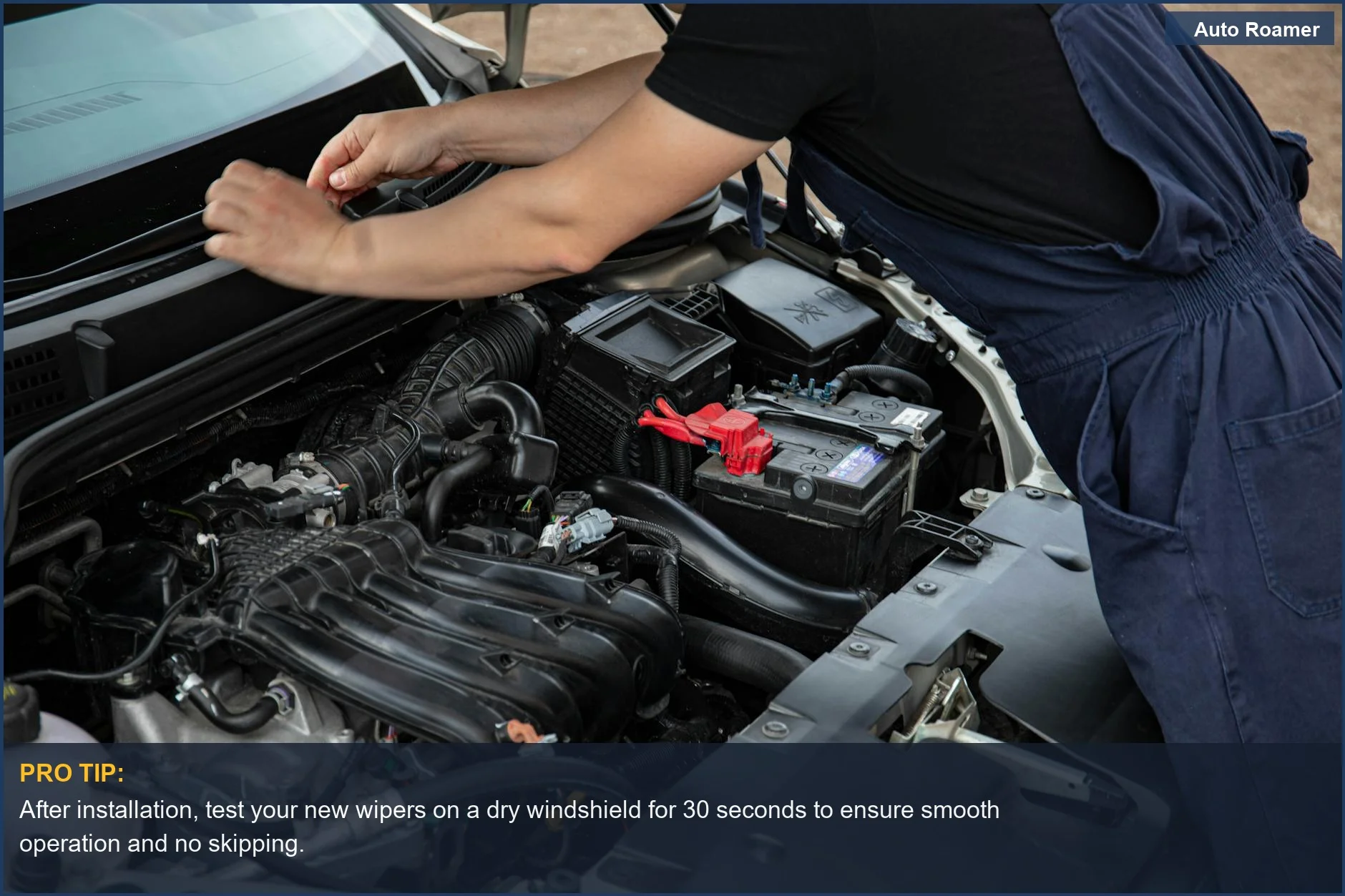
After installation, test your new wipers on a dry windshield for 30 seconds to ensure smooth operation and no skipping.
Just like engine maintenance, keeping your windshield clear is vital for safety. Learn how to change windshield wipers yourself and tackle any weather condition. | Photo by Sergey Meshkov

Mistakes That Cost People

Symptom New wiper blades leave streaks or chatter.
Signal Poor immediate performance indicates an installation error.
Fix Ensure the release mechanism on the old blade was used and the new one fully seated until it clicks. Give it a gentle tug to confirm. Team-BHP
Symptom New wiper blade is too short or too long.
Signal Visual inspection shows a gap at the windshield edge or the blade extends beyond the glass.
Fix Always confirm the correct wiper blade size for your vehicle. Driver and passenger sides often require different lengths. Consult your owner's manual or an online lookup tool. Blades too short compromise visibility; too long can scratch the windshield. USA Today
Symptom Wiper arm snaps back and cracks windshield during replacement.
Signal Sound of impact and spiderwebbing cracks on the glass.
Fix Always lift the wiper arm gently and place a towel on the windshield where the blade rests before removing the old one. This cushions impact. Newer vehicles often have a "service mode" to lift wipers vertically. TRICO
Symptom Struggle to remove old wiper blade due to unfamiliar connector type.
Signal Blade won't budge despite force; release point is unclear.
Fix Examine how the old blade attaches before starting. Common types are J-hooks that slide down or connectors with a small tab/button to press. If unsure, search your vehicle model and "wiper blade connector type" or check new blade instructions. The Home Depot
Symptom Replacing wipers in rain or snow makes the job difficult and dangerous.
Signal Poor visibility, slippery conditions, and rushed actions leading to mistakes.
Fix Schedule your DIY wiper replacement for a clear, dry day. Having new blades arrive is a good reminder. This allows you to take your time and follow instructions without weather stress. Car Talk
Understanding tire maintenance is essential, especially when you need to know how to change a flat tire on the highway; see our guide here.
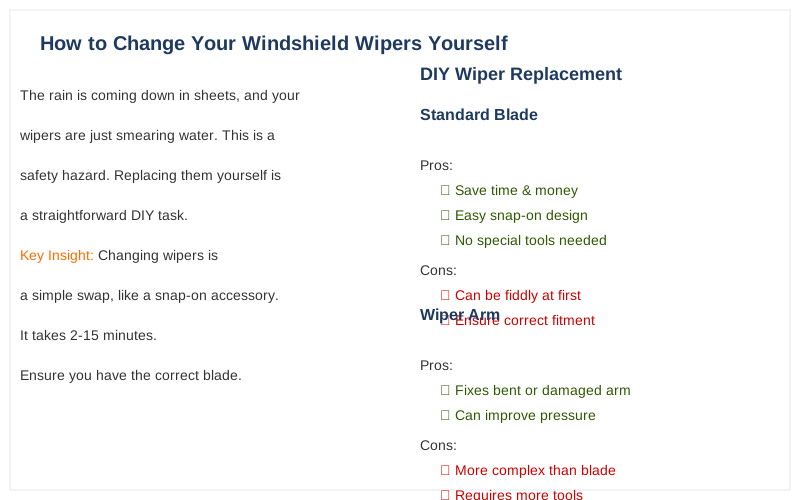
Infographic: Pros/cons of DIY windshield wiper replacement.
Product comparison for How to Change Your Windshield Wipers Yourself

Key Takeaways

  • Changing your own windshield wipers is a straightforward DIY task that saves both time and money compared to dealership visits How to replace your windshield wipers - USA Today.
  • Always ensure you have the correct wiper blade size for your vehicle; consult your owner's manual or an auto parts retailer. Lifting the wiper arm to a 90-degree angle is usually necessary for removal and installation How to Replace Your Windshield Wipers.
  • The most crucial step is to visually inspect and feel how the old wiper blade connects to the arm before attempting removal. Most blades simply snap off and snap on after pressing a release tab or button Change Your Own Windshield Wipers - It's Easy!.
  • If you're unsure, watching a quick online tutorial after physically examining your wipers can demystify the process, but direct interaction is key Change Your Own Windshield Wipers - It's Easy!.
  • With the right blades and a few minutes, you can easily replace wiper blades yourself, ensuring clear visibility in any weather How to Change Windshield Wipers - The Home Depot.
  • The single most important takeaway: look and feel how your current wipers attach before you start; the mechanism is usually intuitive and the new ones will attach the same way.
While you're maintaining your vehicle, it's also important to know how to check your tire tread depth.

Frequently Asked Questions

My wipers are leaving streaks, when should I consider replacing them myself?
If your wipers are leaving streaks on the windshield, it's a clear sign they need replacing. This usually happens when the rubber is worn, bent, or dried out from UV exposure. Ignoring this can make driving in rain or snow much more dangerous.
How do I know what size wiper blades to buy for my car?
To find the correct wiper blade size, you can consult your car's owner's manual, search online for your vehicle's make and model, or ask an employee at an auto parts store. On most cars, the driver's side wiper is slightly longer than the passenger's side.
Is it really easy to replace my own windshield wipers, or should I just go to a shop?
Replacing your own windshield wipers is generally a straightforward and quick process, often taking just 2-15 minutes. You can save both time and money by doing it yourself instead of visiting a dealership or repair shop.
What tools do I need to change my windshield wipers?
Typically, you won't need many tools to replace your wiper blades. Often, the new blades simply snap into place. Some older models might require a screwdriver or wrench, but it's best to check your specific wiper arm connection.
Are there specific types of wiper blades I should consider when doing a DIY replacement?
When you replace your wiper blades, you can choose from different types like traditional or beam blades. Beam blades are often recommended for better performance and a sleeker look, and brands like TRICO offer various options.
What's the best way to remove the old wiper blades?
To remove old wiper blades, first lift the wiper arm away from the windshield to about a 90-degree angle. Most blades have a release button or tab you'll need to press or pinch while sliding the old blade off the arm. It shouldn't require excessive force.
I'm worried about scratching my windshield when I replace the wipers. Any tips?
To protect your windshield, you can place a clean towel on the area where the wiper arm rests before you start. This acts as a cushion in case the arm accidentally springs back down onto the glass.
My wipers make a loud squeaking noise. Does this mean I need new ones?
Squeaking noises during wiper operation can indicate a need for new blades, but it could also be due to debris buildup. Try cleaning the windshield and the existing blades first; if the squeaking persists, it's time for a replacement.

Sources

Related Articles