You're driving on a remote stretch of highway, the sun is setting, and you just witnessed a fender-bender. You need that footage *now* to prove you weren't involved, but fumbling with tiny SD cards and finding a laptop is the last thing you want to do.
You're driving on a remote stretch of highway, the sun is setting, and you just witnessed a fender-bender. You need that footage now to prove you weren't involved, but fumbling with tiny SD cards and finding a laptop is the last thing you want to do. This is where a Wi-Fi dash cam proves its worth. Forget the idea that it connects to your home network; instead, your dash cam creates its own Wi-Fi hotspot Unlocking the Secrets of Dash Camera Wi-Fi. You download a specific app to your smartphone, activate the Wi-Fi on the dash cam, and connect your phone directly to it, much like pairing a Bluetooth device What to Look For in Your Dash Cam Wi-Fi. This direct connection bypasses the need for an internet connection and lets you instantly view, download, or even adjust settings without ever touching the camera itself. It's about getting that crucial evidence or making quick adjustments on the fly, all from your phone Wireless Dash Cam for Cars: Your Simple and Complete Guide.
Key specifications for how does a wifi dash cam work
The Short Answer
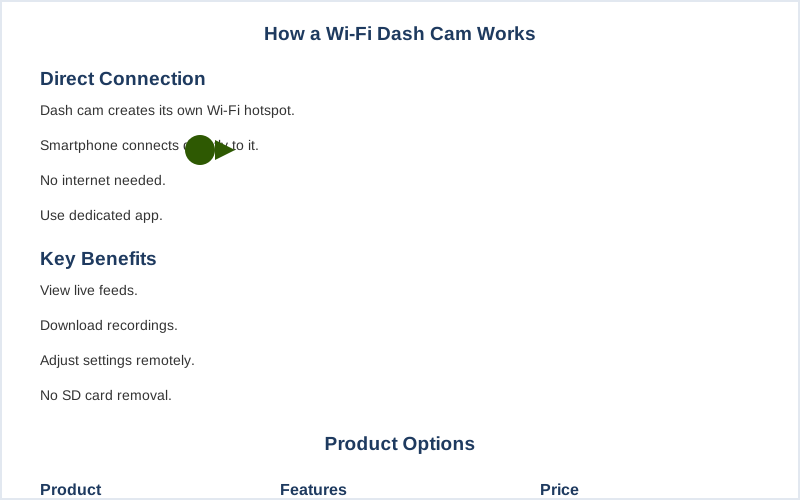
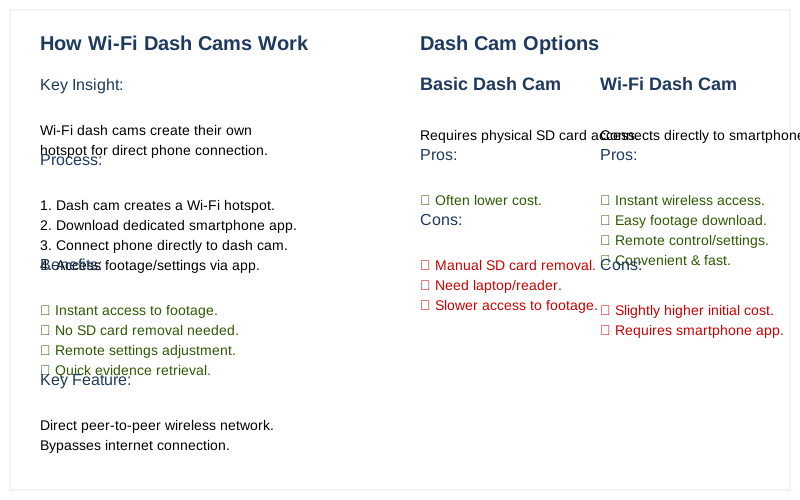
A Wi-Fi dash cam works by creating a direct, peer-to-peer wireless network between your dash cam and your smartphone, acting like a mini hotspot.
This Wi-Fi connection eliminates the need to physically remove the SD card to access footage or change settings. Instead, you use a dedicated smartphone app to connect to the dash cam's hotspot, enabling you to view live feeds, download recordings, and adjust configurations remotely What to Look For in Your Dash Cam Wi-Fi. Think of it as a temporary, localized network solely for your phone and the dash cam.
The primary benefit of this setup is convenience. If you're involved in an incident or pulled over, you can quickly access and share critical video evidence without needing a computer or fumbling with memory cards Wireless Dash Cam for Cars: Your Simple and Complete Guide. You can also use the app to fine-tune settings like recording quality or enable parking mode features while you're away from the vehicle Unlocking the Secrets of Dash Camera Wi-Fi.
It's important to understand that this Wi-Fi connection is typically not an internet connection. Your dash cam isn't connecting to your home Wi-Fi or cellular data. It's simply creating its own network for direct communication with your phone safedrivesolutions.com. This means you don't need to be near your home Wi-Fi to use the feature. You activate the Wi-Fi on the dash cam, download the manufacturer's app on your smartphone, and then connect your phone to the dash cam's generated Wi-Fi hotspot Unlocking the Secrets of Dash Camera Wi-Fi.
This direct connection is crucial for quick access to data and settings adjustments, making the dash cam a much more user-friendly device. While some users might initially expect internet connectivity, the reality is a localized wireless link for ease of use.
If your dash cam struggles to connect, troubleshooting tips can help you resolve issues related to Wi-Fi connectivity.
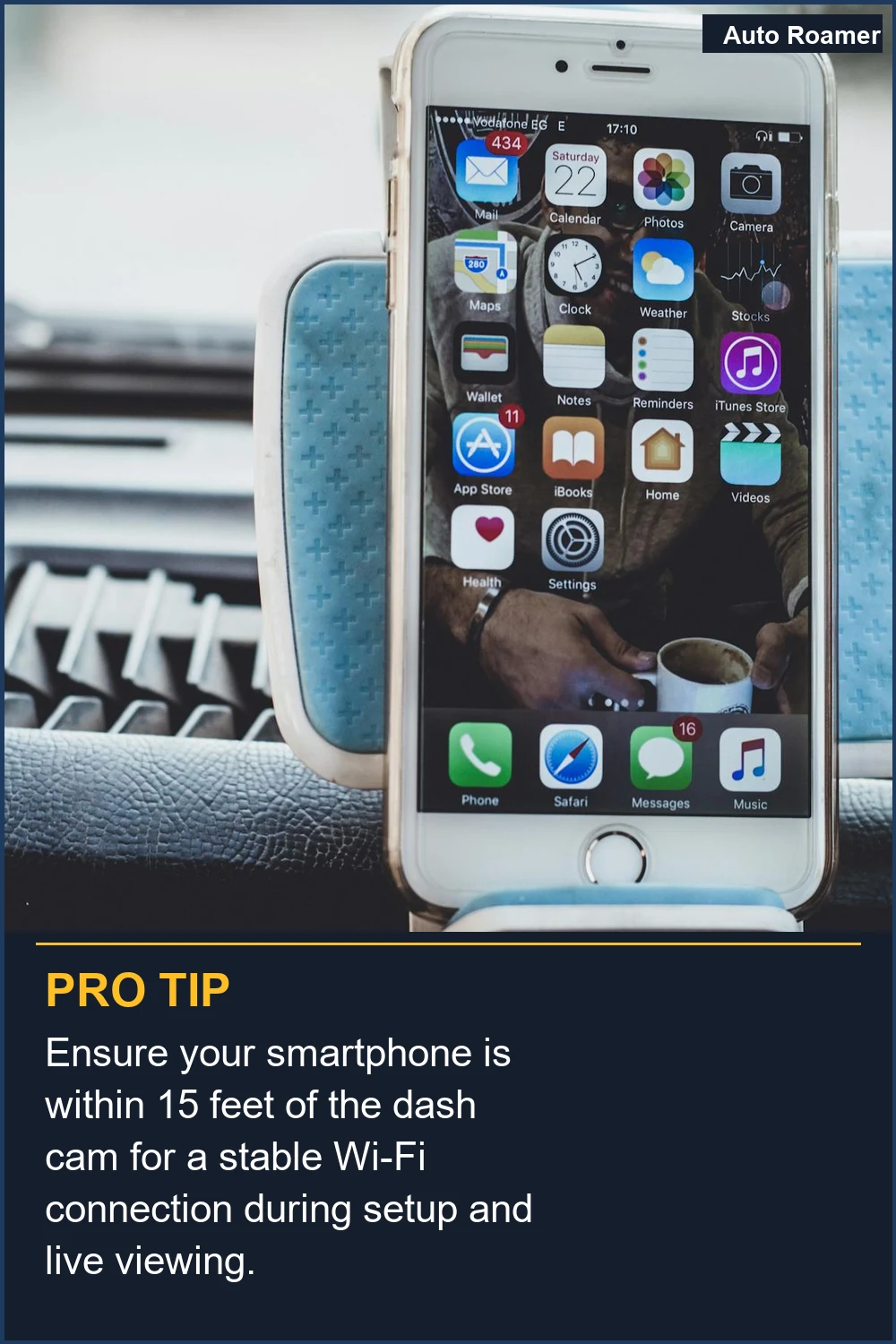
Connecting your smartphone to a Wi-Fi dash cam is simple, creating a direct link to view footage and manage settings without removing the SD card.
| Photo by Mustafa ezz
Connecting your smartphone to a Wi-Fi dash cam is simple, creating a direct link to view footage and manage settings without removing the SD card.
| Photo by Mustafa ezz
What You Need to Know
1
Wi-Fi Hotspot Creation - A Wi-Fi dash cam doesn't connect to your home network or the internet. Instead, it generates its own Wi-Fi hotspot. You then connect your smartphone directly to this hotspot, similar to how you'd connect to a Bluetooth device, but with faster data transfer speeds for video What to Look For in Your Dash Cam Wi-Fi. This direct connection is crucial for accessing footage and settings on the fly.
2
Dedicated Mobile App - To leverage the Wi-Fi capability, you'll need to download the dash cam manufacturer's dedicated mobile app from the App Store or Google Play. This app acts as your interface, allowing you to view live footage, download recordings, and adjust camera settings remotely What to Look For in Your Dash Cam Wi-Fi. It eliminates the need to physically remove the SD card to access your videos, which is a significant convenience, especially if you need evidence quickly after an incident Wireless Dash Cam for Cars: Your Simple and Complete Guide.
3
On-the-Go Management - Once connected, you can use your smartphone as a remote control. This means you can change recording quality, enable parking mode, or even download specific clips without ever touching the dash cam unit itself. For example, if you're parked in a busy urban area and want to ensure parking surveillance is active, you can easily log into the app, make the adjustments, and log out Unlocking the Secrets of Dash Camera Wi-Fi.
4
No Internet Required While Driving - It's important to understand that the dash cam's Wi-Fi is for direct device-to-device communication. There's no reason to have the Wi-Fi active while you're driving, as the camera is continuously recording to its internal SD card Understanding WiFi and Internet Connection on Dash Cams. The Wi-Fi connection is primarily for setup, viewing, and downloading footage. For SUVs, trucks, and vans, the principle remains the same, though the physical placement of the dash cam might influence the signal strength slightly depending on the vehicle's interior layout.
5
Storage Solutions - While most Wi-Fi dash cams record to an SD card, some advanced models offer cloud storage integration. This means footage can be uploaded wirelessly to cloud servers, providing an extra layer of security against theft or damage to the camera itself Wireless Dash Cam for Cars: Your Simple and Complete Guide. This is a significant advantage for long road trips or when you need extensive storage without constantly swapping cards.
Understanding the importance of accurate timestamps can enhance your experience with various dash cam features.
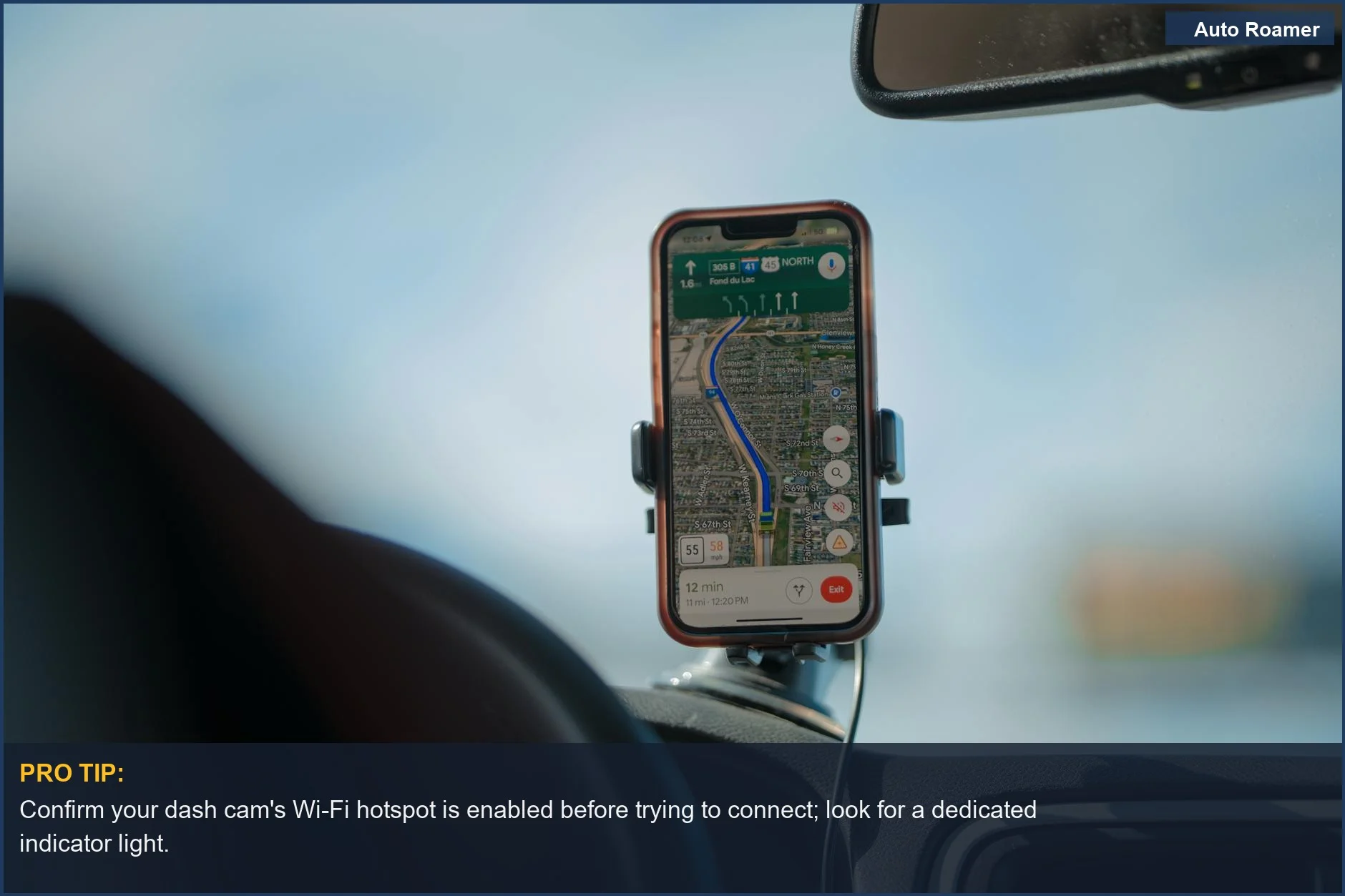
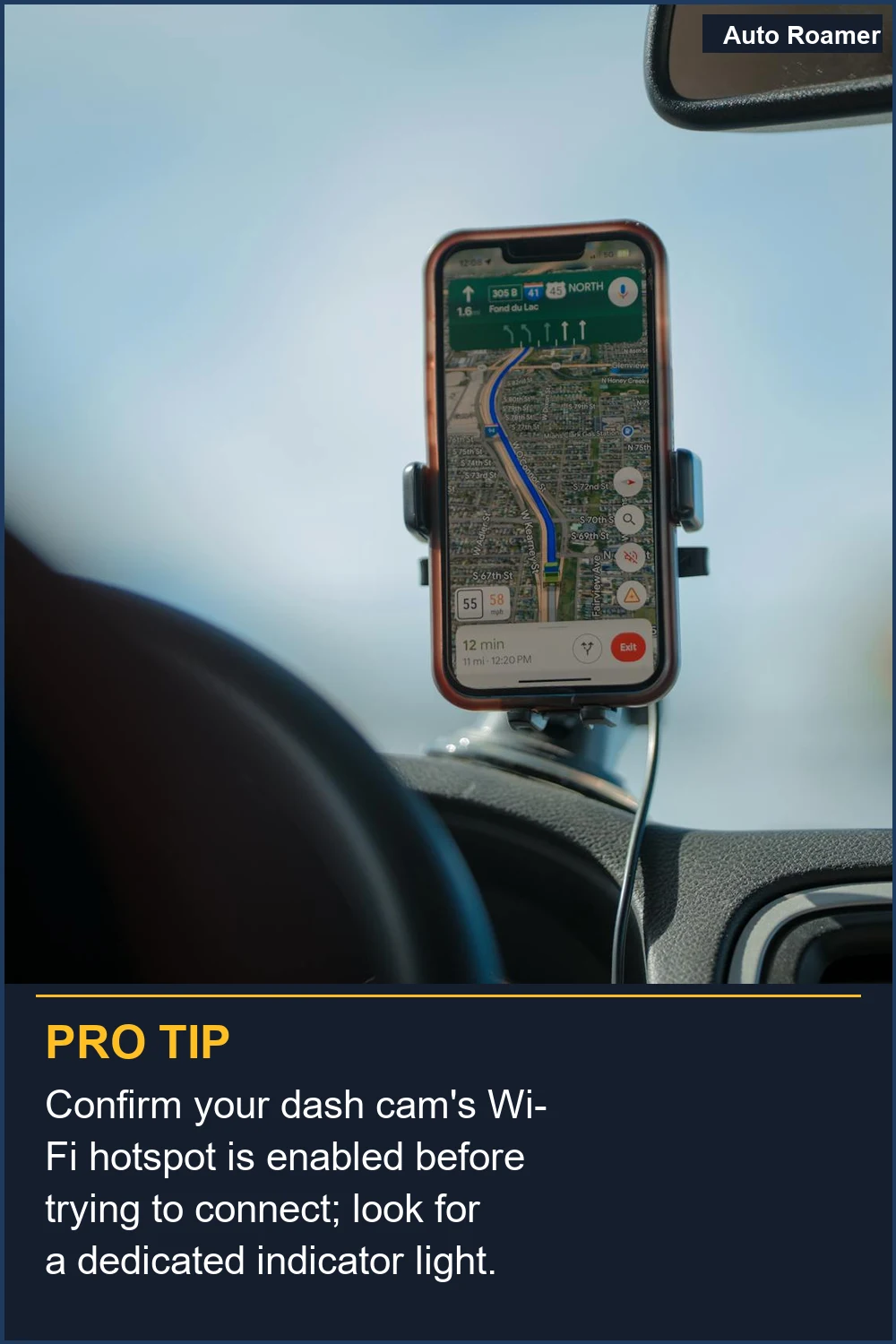
This smartphone setup is similar to how you'd connect to your Wi-Fi dash cam's hotspot, allowing for easy access to its features on the go.
| Photo by William Hadley
This smartphone setup is similar to how you'd connect to your Wi-Fi dash cam's hotspot, allowing for easy access to its features on the go.
| Photo by William Hadley
How to Handle This
1
Download the Dash Cam App First - Grab the manufacturer's app from the App Store or Google Play before turning on your dash cam's Wi-Fi. This app is your command center for accessing footage and tweaking settings. Skipping this means you'll have a Wi-Fi hotspot with no way to connect. I once found myself stranded on a dark, remote road after a fender bender, only to realize I hadn't downloaded the app. The camera's Wi-Fi was on, but useless without the software to interface with it. Unlocking the Secrets of Dash Camera Wi-Fi
2
Activate the Camera's Wi-Fi Hotspot - Once the app is installed, turn on your dash cam and activate its Wi-Fi. This creates a direct, local wireless network. It's crucial to do this when you need to access footage, not while driving. I learned this the hard way during a sudden downpour in rush hour traffic; trying to toggle the Wi-Fi while navigating slick roads took my focus off driving safely. What to Look For in Your Dash Cam Wi-Fi
3
Connect Your Smartphone to the Camera's Network - Open the dash cam app and follow the prompts to connect to the camera's Wi-Fi network. Your phone will see the dash cam as a new Wi-Fi signal. This connection bypasses your home internet entirely; it's a peer-to-peer link. If you skip this step, you're just staring at a blinking Wi-Fi light. Imagine being pulled over in a rural area with spotty cell service; you need that direct connection to prove your innocence, and without connecting your phone, that's impossible. Unlocking the Secrets of Dash Camera Wi-Fi
4
Access Footage and Settings Remotely - With your phone connected, you can view live video feeds, download recorded clips directly to your phone without removing the SD card, and adjust settings like recording resolution or parking mode sensitivity. This is a lifesaver when you need evidence quickly, like after an unexpected accident at dusk. If you skip this connection, you're back to pulling the SD card, which is a hassle, especially if you're dealing with a damaged dash cam. Wireless Dash Cam: How They Work and Installation Tips
To avoid common issues, understanding dash cam problems can help you choose the right SD card.
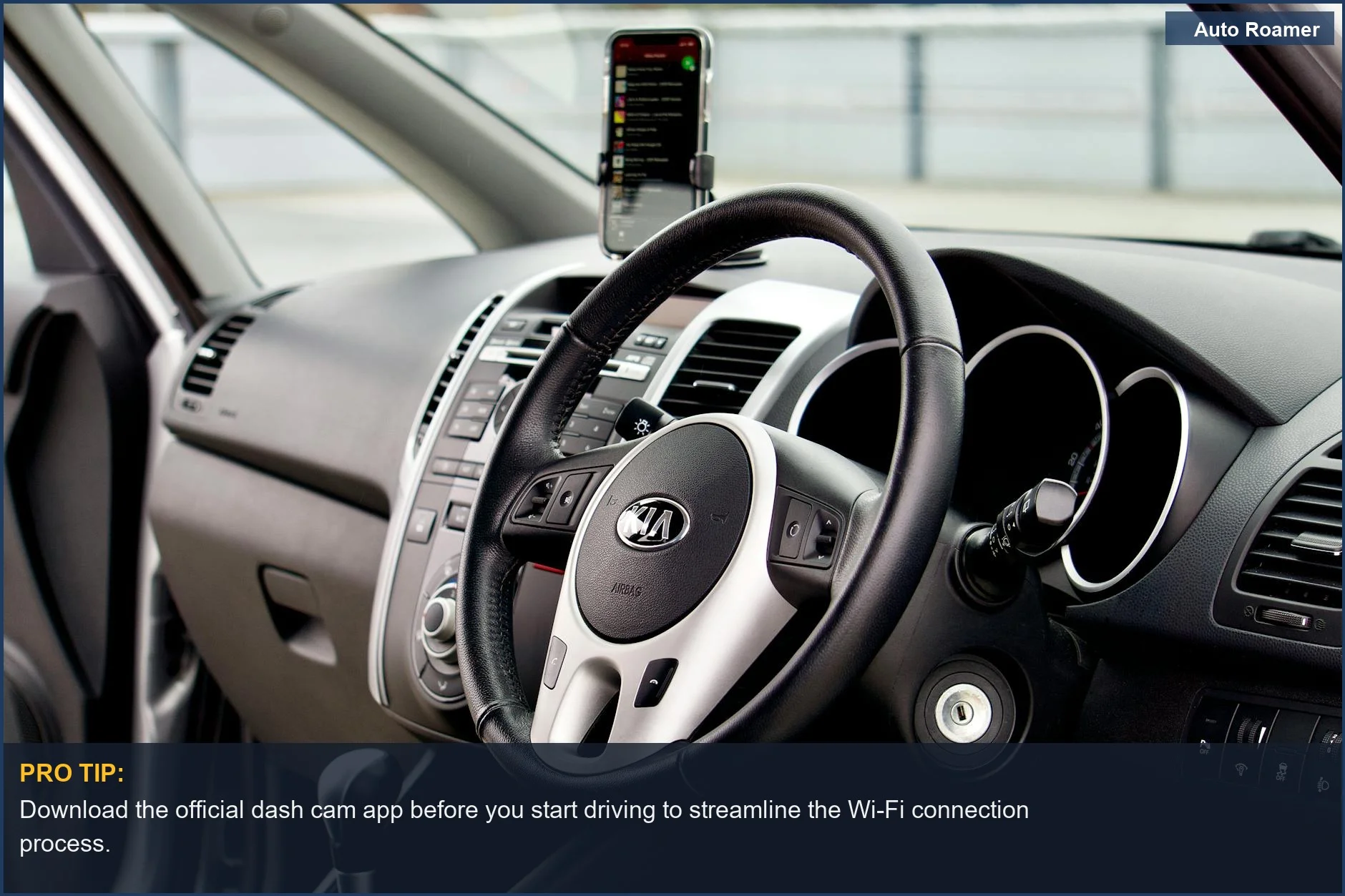
A modern car interior provides the perfect backdrop for a Wi-Fi dash cam, easily managed via a smartphone app for instant access to recordings.
| Photo by Mike Bird
A modern car interior provides the perfect backdrop for a Wi-Fi dash cam, easily managed via a smartphone app for instant access to recordings.
| Photo by Mike Bird
What This Looks Like in Practice
Winter Mountain Pass in a Subaru Outback: Navigating a snowy mountain pass with dropping visibility, the Wi-Fi dash cam's app let us quickly check the live feed, ensuring the lens wasn't snow-obscured. This was crucial for recording potential incidents on the slick road. The app connection worked flawlessly, allowing us to download a near-miss clip without fumbling with the SD card in the freezing cold.
Summer Desert in a Honda Civic: Driving through the scorching Arizona desert, we used the Wi-Fi dash cam to review footage. The intense heat had us worried about the camera overheating, but the app let us remotely check its status and download footage without physical access. The dash cam's Wi-Fi hotspot connected reliably to our phones, even with limited cell service.
Urban Commute in a Toyota Camry: During a busy city commute, a fender bender occurred right in front of us. We immediately used the dash cam's Wi-Fi to connect to its app and download the critical seconds of the incident. This provided the police with immediate evidence, saving us the time of removing the SD card and finding a computer. The app's intuitive interface made the download quick and stress-free What to Look For in Your Dash Cam Wi-Fi.
Long-Haul Trucking on I-80: On a multi-day trucking trip, we relied on the Wi-Fi dash cam to document our journey and roadside events. Accessing recordings remotely via the app eliminated the need to stop and manually retrieve the SD card, a significant time saver on long hauls Wireless Dash Cam for Cars: Your Simple and Complete Guide. The camera's built-in Wi-Fi hotspot was essential, as we often drove through areas with no external Wi-Fi.
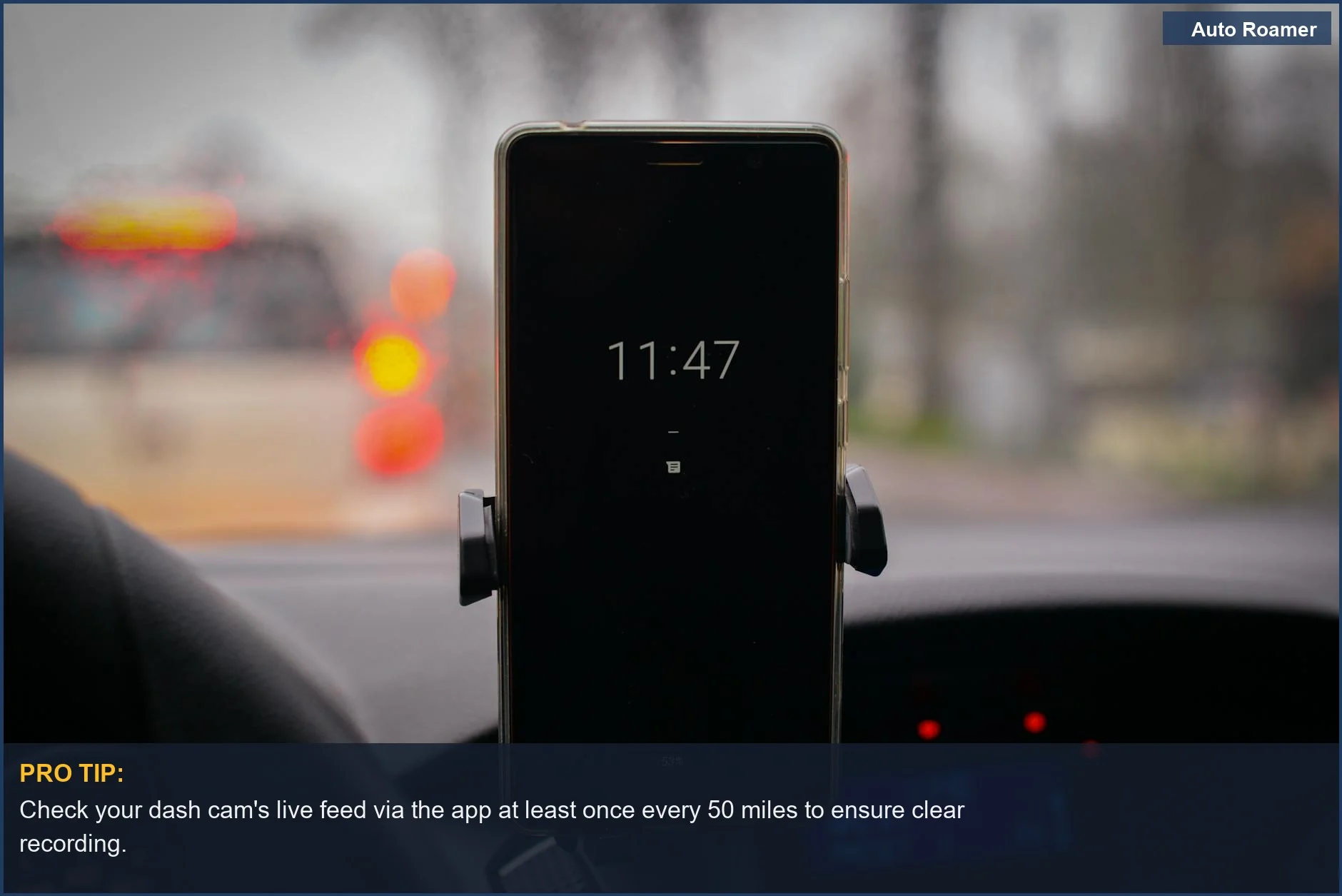
To enhance your experience, consider exploring the benefits of a dedicated dash cam app for your Wi-Fi dash cam.
View live footage of your drive on your smartphone, a key benefit of how a Wi-Fi dash cam works, ensuring clear recordings even in challenging conditions.
| Photo by ClickerHappy
View live footage of your drive on your smartphone, a key benefit of how a Wi-Fi dash cam works, ensuring clear recordings even in challenging conditions.
| Photo by ClickerHappy
Mistakes That Cost People
Symptom You expect your dash cam's Wi-Fi to connect to your home network or the internet.
Signal Your phone's Wi-Fi list doesn't show your dash cam, or it shows "no internet."
Fix Most dash cams create their own Wi-Fi hotspot for direct smartphone pairing. Activate the dash cam's Wi-Fi and connect your phone directly to that network, usually via a dedicated app safedrivesolutions.com.
Symptom You think Wi-Fi is only for downloading footage or changing settings.
Signal You're not using the Wi-Fi feature, or only sporadically for specific clips.
Fix Use the Wi-Fi for real-time live view during installation to ensure proper positioning and for firmware updates to keep your dash cam performing optimally How does Wi-Fi work on a dash camera? - YouTube. Some apps also allow remote adjustment of parking mode sensitivity or impact detection.
Symptom You leave your dash cam's Wi-Fi constantly connected while driving.
Signal Your phone battery drains faster, or you experience intermittent connectivity issues.
Fix There's no need to keep the Wi-Fi active while driving. The dash cam records directly to its SD card Understanding WiFi and Internet Connection on Dash Cams. Turning Wi-Fi on only when needed conserves battery and prevents interference.
Symptom You believe "wireless" means no power cables are needed.
Signal Your dash cam isn't powering on, or you're confused about wiring.
Fix "Wireless" refers to video transmission and access, not power. Dash cams still require a power connection, typically to your car's 12V outlet or fuse box, to operate redtigercam.com.
Symptom You assume Wi-Fi is slower than physically removing the SD card.
Signal You're still removing the SD card to view or transfer footage, finding it cumbersome.
Fix Wi-Fi provides significantly faster access to footage than removing an SD card, finding a reader, and transferring files blackboxmycar.com. This is crucial if you need evidence immediately after an incident.
Understanding the legal implications of using dash cams can help avoid costly mistakes; for more information, check out our article on dash cam laws.
Comparison overview for how does a wifi dash cam work
Key Takeaways
A Wi-Fi dash cam creates its own wireless hotspot, allowing your smartphone to connect directly without needing your home Wi-Fi network Unlocking the Secrets of Dash Camera Wi-Fi. This direct connection is key for immediate access.
You can then use a dedicated app to view live footage, download recordings without removing the SD card, and remotely adjust settings like recording quality or parking mode features Wireless Dash Cam: How They Work and Installation Tips. It's like having a remote control for your dash cam.
This wireless connectivity is not for internet access while driving; it's solely for device-to-device communication between your phone and the dash cam Understanding WiFi and Internet Connection on Dash Cams. Forget about using it to stream Netflix.
The primary benefit is convenience: quickly grabbing video evidence after an incident or for insurance purposes without fumbling with memory cards and computers blackboxmycar.com.
The single most important thing to remember is that a Wi-Fi dash cam's wireless function is for direct, local connection to your phone for easy video access and settings management, not for internet connectivity.
Understanding how a Wi-Fi dash cam functions can enhance your experience, especially when you consider how GPS works in a dashcam, as discussed in this article.
Frequently Asked Questions
So, how does the Wi-Fi on a dash cam actually connect to my phone?
It's not like your home Wi-Fi. Most dash cams with Wi-Fi create their own hotspot. You download the manufacturer's app, turn on the Wi-Fi on the dash cam, and then connect your phone directly to that hotspot. This creates a direct, wireless link between your phone and the camera.
What can I actually do with my phone once it's connected to the dash cam's Wi-Fi?
It's all about convenience and quick access. You can view live footage, which is super handy for initial setup or checking blind spots. Plus, you can download recorded videos directly to your phone without ever pulling out the SD card - great for getting footage to the police or insurance right away. We've found this saves a ton of time after an incident. Source
Can I change settings on the dash cam using the Wi-Fi connection?
Absolutely. This is one of the biggest perks. Instead of fumbling with tiny buttons on the dash cam itself, you can adjust recording quality, sensitivity for parking mode, or even toggle features like impact detection right from your smartphone app. It makes tweaking settings on the fly, especially if you're parked somewhere you want extra vigilance, much easier. Source
Is the Wi-Fi connection always on, or do I need to activate it?
You typically need to activate it. Many dash cams have a dedicated Wi-Fi button you press to turn on the hotspot. It's important to note that you generally don't want the Wi-Fi active while you're driving, as it uses power and isn't necessary for recording to the SD card. It's best used when you need to access footage or change settings. Source
Do these Wi-Fi dash cams still record to an SD card?
Yes, they absolutely do. The 'wireless' aspect refers to how you access and transfer the footage, not how it's initially stored. The dash cam records continuously to a microSD card, just like any other dash cam. The Wi-Fi feature just provides a much faster and more convenient way to get that footage off the card and onto your phone or another device. Source