
Best Dashcam for Road Trips (2026 Complete Guide)
The dealer wanted $280 to 'diagnose' the scuff on my bumper after some bozo backed into my F-150 in a parking lot. No footage, no proof, just a 'he said, she said' headache. That's when I finally hardwired a dashcam, after years of dismissing them as a gimmick.
The dealer wanted $280 to 'diagnose' the scuff on my bumper after some bozo backed into my F-150 in a parking lot. No footage, no proof, just a 'he said, she said' headache. That's when I finally hardwired a dashcam, after years of dismissing them as a gimmick. A $120 investment would have saved me a four-hour argument and a ding on my insurance Car and Driver explains.
Road trips amplify this risk. You're in unfamiliar territory, often with higher speed limits, and surrounded by drivers who might be more focused on their Spotify playlist than the road. The probability of an incident, from a minor fender bender to a full-blown collision, rises significantly.
Beyond accidents, dashcams document everything from meteor showers to wildlife encounters. More practically, they catch vandals in parking lots or provide proof against a bogus traffic ticket. It's cheap insurance against a future headache, especially when you're 500 miles from home.
I've seen too many good people get screwed because they lacked concrete evidence. Without video, it's your word against theirs, and the insurance companies love that ambiguity. It's a clear failure mode in legal battles. A dashcam provides indisputable data.
Forget the 'experience' of driving. This is about mitigating risk, documenting mechanical stress events, and protecting your wallet from the financial impact of a liability claim. We're talking about verifiable data, not subjective narratives. A solid dashcam is a tool, plain and simple Road & Track agrees.
This isn't about fancy features or social media clips. It's about clear, timestamped video evidence that can save you thousands of dollars and countless hours of bureaucratic BS. Think of it as a black box for your road trip. Every vehicle should have one.
Key Features to Consider
Getting Down to Brass Tacks: What Actually Matters
When I look at a dashcam, I'm not interested in its marketing fluff. I want to know its sensor capabilities, its data integrity, and its power draw. These are the physical properties that determine if it's a useful tool or just another piece of junk rattling on your windshield.| Feature | Why It Matters (Dirtbag Engineer's Take) | Minimum Spec |
| Video Resolution | Pixel density determines license plate legibility at speed. Low resolution means blur at 40 MPH. You need enough data points to identify a vehicle. | 1440p (2K) front, 1080p rear. 4K is better for clarity Consumer Reports states. |
| Frame Rate (FPS) | Higher FPS reduces motion blur. Crucial for capturing fast-moving objects or impact dynamics. 30 FPS is the absolute minimum, but 60 FPS captures twice the data. | 30 FPS. 60 FPS is ideal for reducing blur artifacts. |
| Night Vision / Low Light | This isn't magic 'night vision' goggles. It's about sensor sensitivity and dynamic range. Sony STARVIS 2 sensors handle low light better, reducing image noise and improving contrast for plate recognition Julian23 on Dashcamtalk notes. | Sony STARVIS 2 sensor or equivalent low-light performance. |
| Capacitor vs. Battery | Capacitors handle thermal cycling better. Batteries degrade with heat, swell, and fail, especially after repeated exposure to 100+ degrees F cabin temperatures. Reduced failure rate with capacitors. | Supercapacitor. Avoid internal batteries for longevity Wirecutter recommends. |
| GPS Logging | Provides irrefutable speed and location data. Essential for proving your position and velocity at the moment of impact. It's metadata for your video evidence. | Integrated GPS. |
| Parking Mode | Monitors for impacts or motion when parked. Requires constant 12V power, which means managing parasitic draw. A buffered parking mode records pre-event footage, capturing the approach, not just the impact. | Buffered parking mode with low-voltage cutoff. |
| Wi-Fi/Cloud Connectivity | Allows quick transfer of footage to your phone. Cloud storage is an off-site backup, critical if the camera itself is damaged or stolen. Useful for immediate incident review. | 5GHz Wi-Fi for faster downloads. Cloud is optional, but robust. |
| Field of View (FOV) | Too wide, and you get fisheye distortion. Too narrow, and you miss critical peripheral events. 140-160 degrees is a good balance to capture multiple lanes without excessive optical distortion. | 140-160 degrees. |
Our Top Picks
The Tools That Actually Work: My Top Picks
After years of testing and watching these things fail in various thermal and vibrational scenarios, I've narrowed it down. These aren't just 'good' dashcams; they're resilient pieces of hardware that deliver verifiable data when it matters. I'm looking for reliability, not flashy touchscreens.- Front Resolution: 4K (Sony STARVIS 2) Wirecutter's top pick
- Rear Resolution: 2K (Sony STARVIS 2 for A329S)
- Capacitor: Yes
- GPS: Integrated
- Parking Mode: Buffered, requires hardwire kit
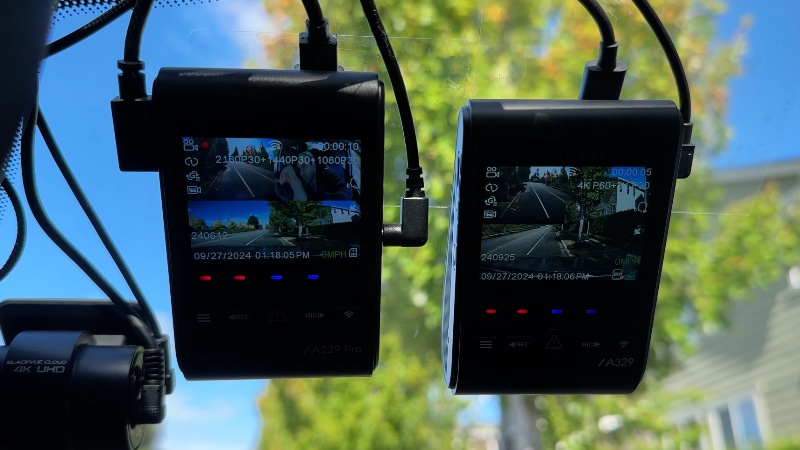
- Why I Like It: The Viofo A229 Pro is a workhorse. It uses a supercapacitor, so it doesn't melt in direct sunlight like those cheap battery-powered units. The Sony STARVIS 2 sensor is the real deal for low-light performance, pulling legible license plates out of near darkness. It's stable, reliable, and the video quality is consistently excellent, even when facing glare or rapid light changes. The A329S is the 2-channel sibling and delivers similar performance Julian23's detailed analysis.
70mai A810 (or T800 Premium Set)
- Front Resolution: 4K (Sony STARVIS 2)
- Rear Resolution: 1080p (or 2.7K on T800)
- Capacitor: Yes
- GPS: Integrated
- Parking Mode: Buffered, requires hardwire kit
- Why I Like It: This is my go-to recommendation for a solid all-rounder that won't break the bank. The A810 delivers sharp 4K footage and the low-light performance from the STARVIS 2 sensor is genuinely impressive. It's utilitarian, no-nonsense, and just works. The T800 Premium Set offers similar quality with enhanced features, proving that 'premium' doesn't always mean overpriced garbage Car and Driver notes.
Vantrue E1 Pro
- Front Resolution: 4K (Sony STARVIS 2)
- Rear Resolution: N/A (single channel)
- Capacitor: Yes
- GPS: Integrated
- Parking Mode: Buffered, optional LTE support
- Why I Like It: If you only need a front camera, the E1 Pro is hard to beat for its price-to-performance ratio. It's compact, which reduces its visual footprint and minimizes obstruction. The STARVIS 2 sensor ensures excellent clarity, especially for license plates at night.
It's a minimalist solution that doesn't compromise on core functionality Julian23 praises the E1 Pro.
To ensure you make an informed choice, explore our insights on the best dashcams for road trips from last year.
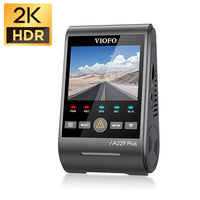
Image: viofo 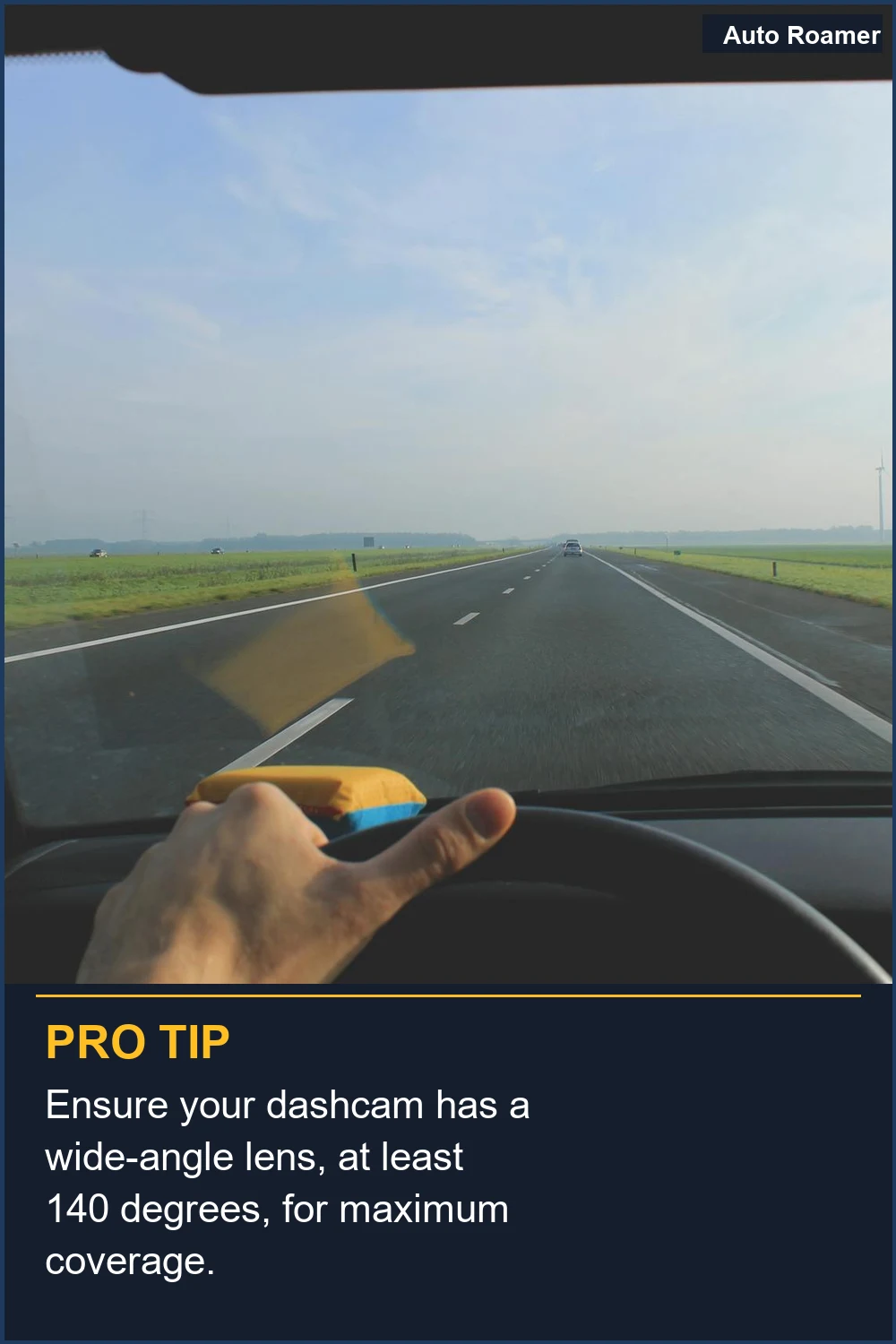
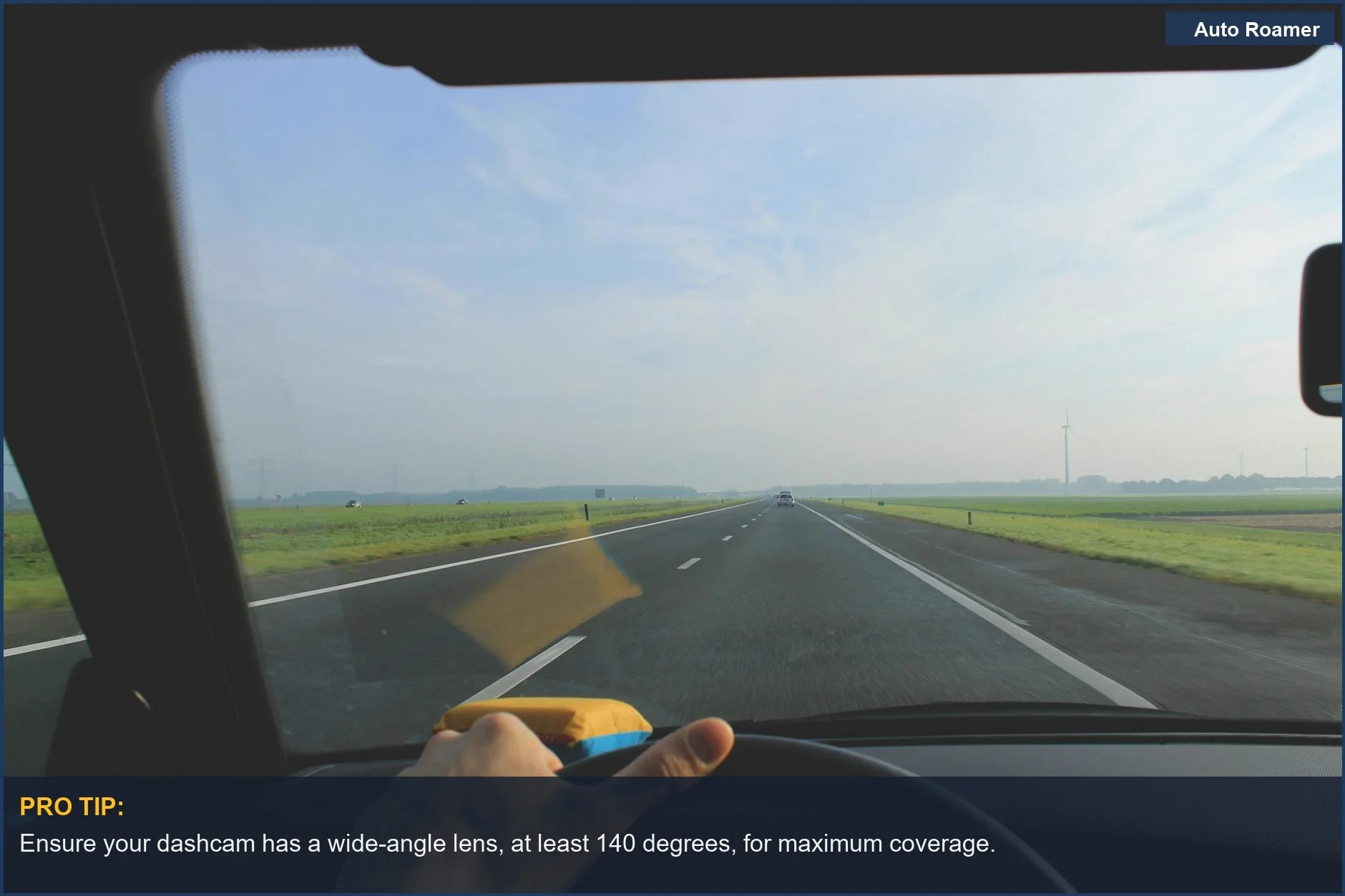
Cruising down an empty highway with clear skies emphasizes freedom and safety on the road, where a good dashcam is your best travel companion. | Photo by Malte Luk Budget vs Premium Options
The Cost-Benefit Analysis: Cheap vs. Not-So-Cheap
Look, I get it. Nobody wants to spend $300 on a camera they hope never to use. But there's a critical difference between 'budget-friendly' and 'absolute junk.' The failure modes for cheap dashcams are predictable: thermal degradation, poor image sensors, and unreliable data storage. You get what you pay for in terms of component quality.
The difference isn't just about 'nicer' video. It's about whether the device actually performs its core function - recording verifiable evidence - under real-world mechanical and thermal stresses. A $60 dashcam that fails when you need it most is a $60 paperweight San Jose forum discusses. I'd rather spend $200 once than $60 three times.Category Budget Option (Under $100) Premium Option ($200+) Video Quality Often 1080p, sometimes 'upscaled' 4K. Low-light performance is generally poor, leading to motion blur and pixelation. License plates are often unreadable at 15+ MPH. True 4K, often with Sony STARVIS 2 sensors. Excellent low-light performance. License plates are legible even at higher speeds and in varied lighting conditions Reddit users agree. Durability/Lifespan Internal battery instead of a supercapacitor. Expect battery bloat and failure within 1-2 years, especially in hot climates. Plastic mounts degrade under UV exposure, leading to vibration and image instability. Supercapacitor for thermal stability. Higher quality plastics or metal components. Designed for continuous thermal cycling without mechanical stress failure. Expect 3-5+ years of reliable operation. Features Basic loop recording, maybe G-sensor for impact detection. Often lack GPS, Wi-Fi, or buffered parking mode. Data transfer is slow via micro SD card removal. GPS logging, fast 5GHz Wi-Fi, buffered parking mode, sometimes cloud connectivity or interior cameras. Comprehensive event logging and easy data retrieval. Reliability High failure rate for SD card corruption due to cheap controllers. Firmware bugs are common. Often miss critical footage due to poor power management or sudden shutdown. Robust firmware, better SD card compatibility, and reliable power management. Designed to function consistently without data loss. Critical for actual evidence capture. If you're considering a dashcam for extended journeys, explore our insights on the best options for car camping and overlanding.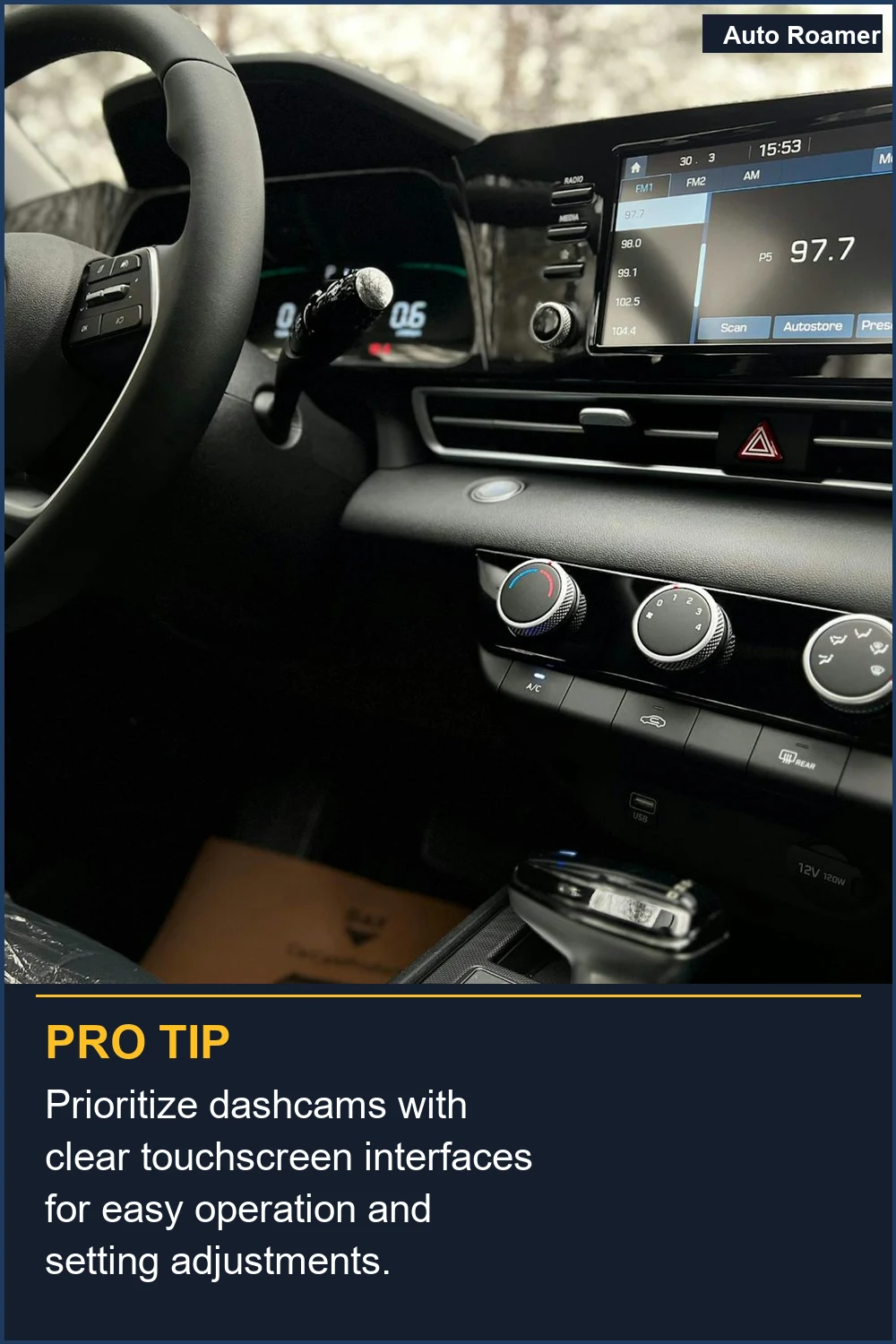
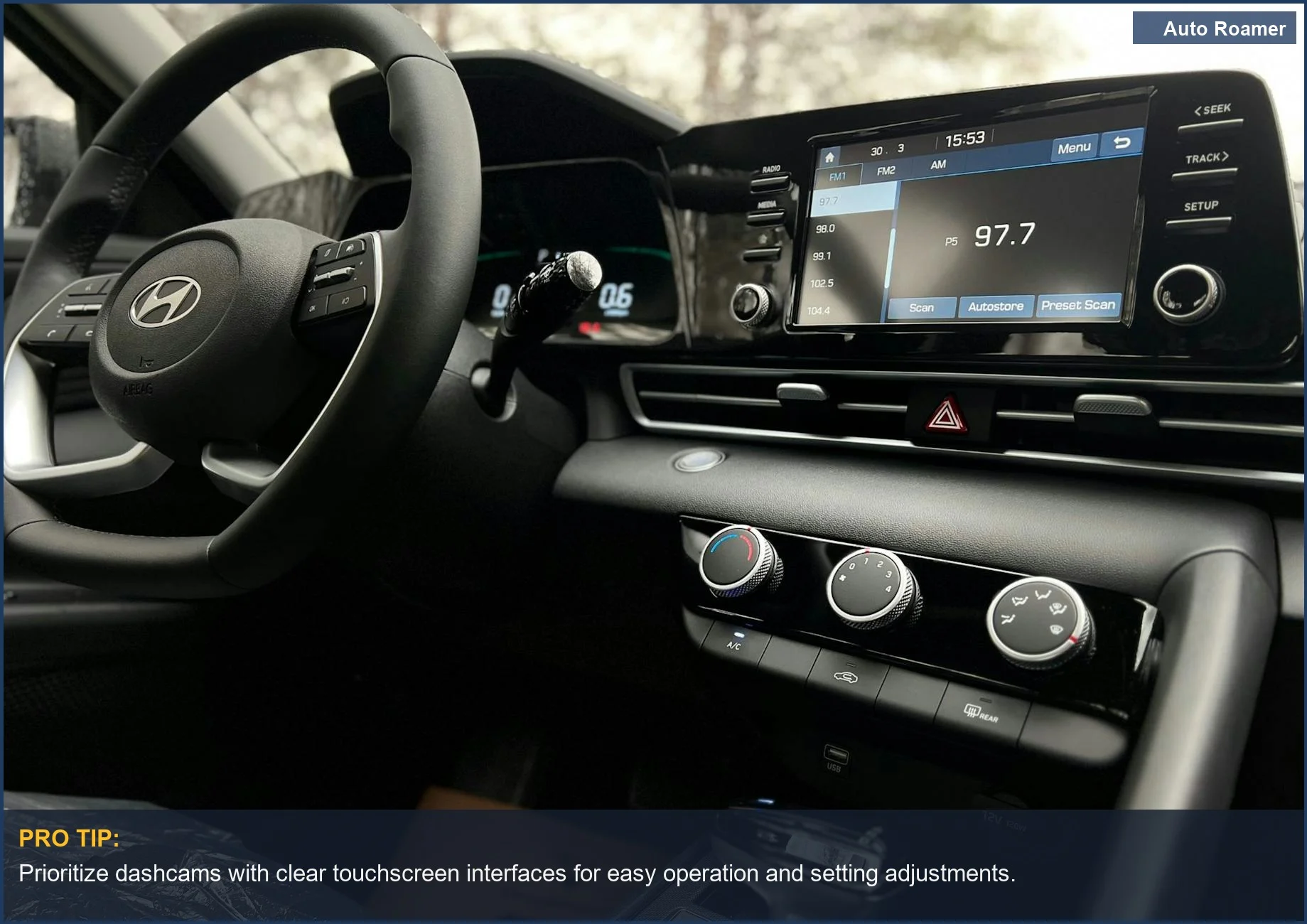
The sleek interior of a modern car, featuring a prominent touchscreen, showcases the evolution of automotive tech, including advanced dashcams for road trip peace of mind. | Photo by Kanat Kairatov Setup and Installation Tips
Hardwiring for Reliability: Installation That Won't Fail
Don't be that guy with a power cable dangling across your dashboard, obstructing your view and eventually getting snagged. A clean installation is about circuit integrity and minimizing mechanical stress on the wiring. This isn't just aesthetics; it's about preventing intermittent power loss and eventual wire fatigue.- Choose Your Power Source: The cigarette lighter is for tourists. You need a dedicated hardwire kit. This usually involves tapping into your car's fuse box. Identify a 'switched' fuse (power only when the ignition is on) for normal recording and an 'always-on' fuse for parking mode. Use a multimeter to confirm voltage presence - don't guess Consumer Reports advises.
- Find the Right Fuse: Look for a fuse that powers a non-critical circuit, like your radio or power windows. Avoid safety-critical fuses like airbags or ABS. An add-a-fuse kit is your friend here; it allows you to piggyback without cutting factory wiring, maintaining circuit integrity.
- Route the Cables: This is where patience pays off. Start at the dashcam, tucking the cable along the headliner, down the A-pillar, and under the dashboard. Use a plastic trim removal tool to gently pry panels - don't use a screwdriver and gouge your interior. Zip ties are your other friend, securing excess cable to prevent vibration damage.
- Ground Connection: Locate a solid chassis ground point, usually a bolt directly to the metal frame of the car. Scrape away any paint to ensure a clean metal-to-metal contact for minimal resistance. A poor ground connection introduces electrical noise and can cause intermittent camera operation.
- Mount the Camera: Place it high and central on the windshield, behind the rearview mirror, to minimize visual obstruction. Ensure the lens has a clear view of the road. Use the adhesive mount provided; suction cups inevitably fail due to thermal cycling and gravity, leading to a sudden drop and potential damage to the camera or windshield.
To ensure safety during late-night drives, consider also exploring the best options for a dashcam for night driving.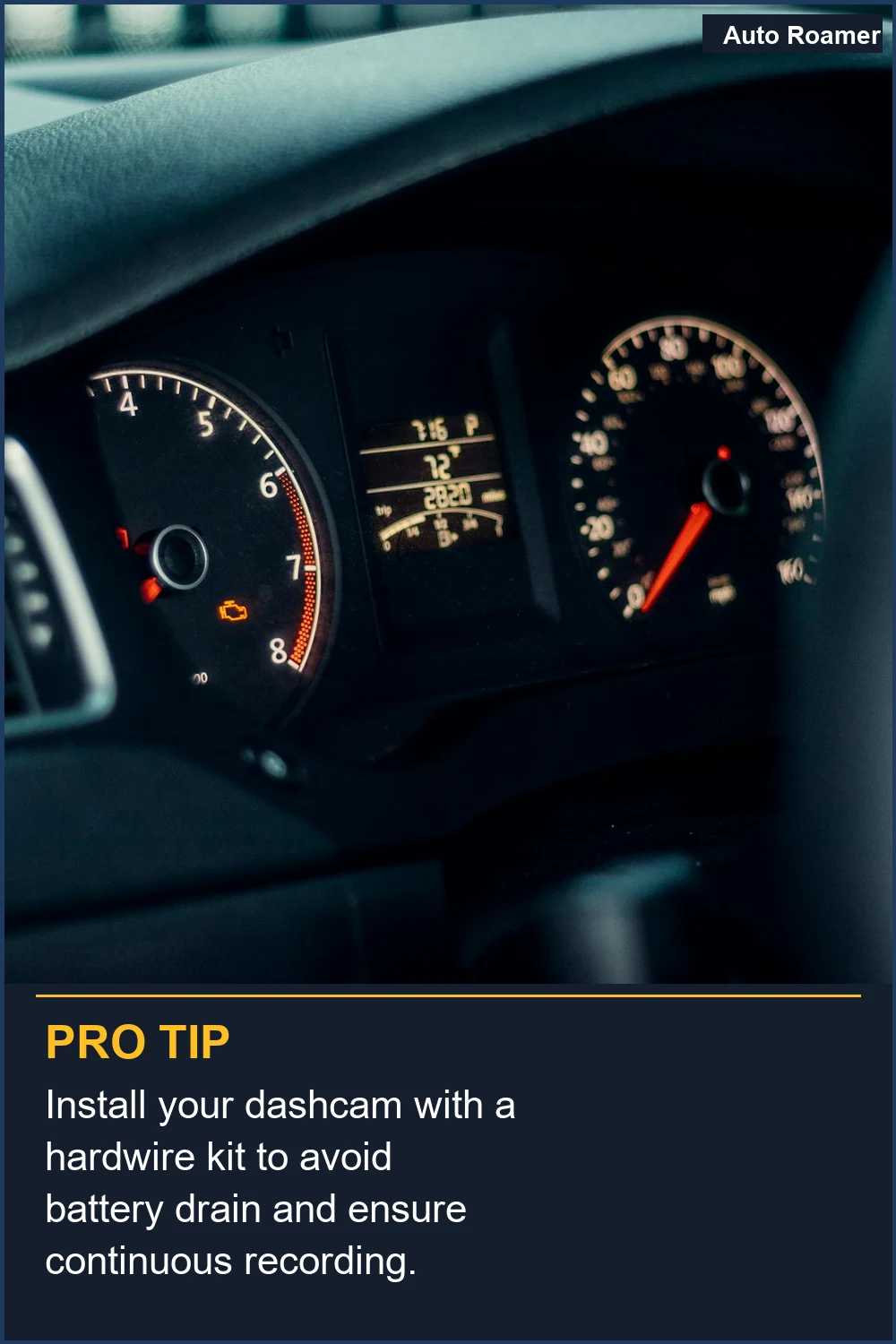
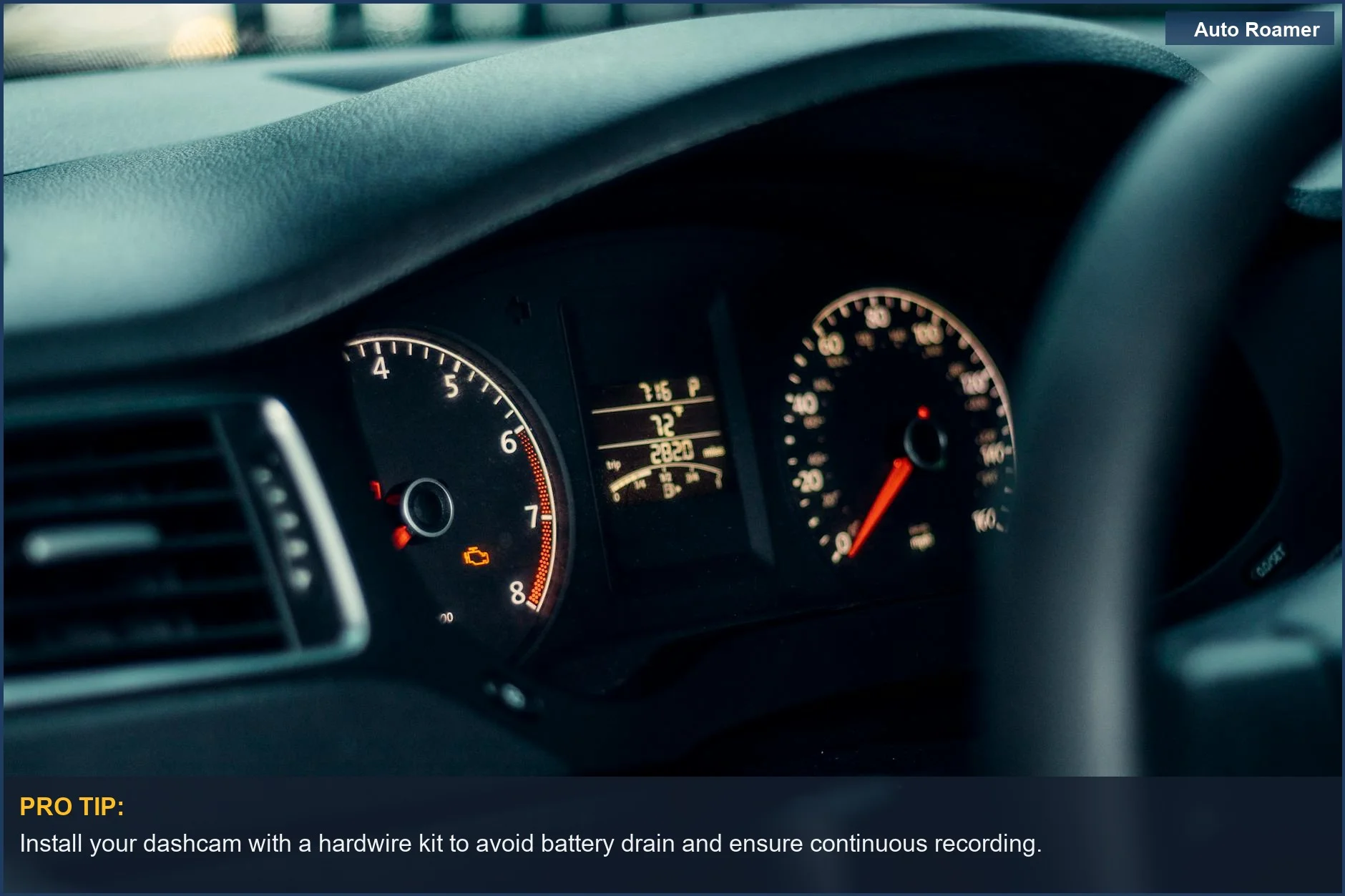
Night driving requires attentive monitoring of illuminated gauges, and a reliable dashcam for road trips provides critical evidence in any situation. | Photo by Griffin Wooldridge Care and Maintenance Tips
Keeping Your Data Safe: Care and Feeding of Your Dashcam
Your dashcam is a data recorder, and like any recording device, it needs minimal maintenance to ensure data integrity. Ignoring these simple steps is a surefire way to find out your critical footage was corrupted when you need it most. This isn't about extending its 'life' - it's about ensuring it works when the mechanical stress event occurs.- Check Your MicroSD Card: This is the most common failure point. MicroSD cards have a limited number of write cycles before the NAND flash memory degrades. I recommend a high-endurance card (like SanDisk Max Endurance) and replacing it every 12-18 months. Format the card monthly within the camera's settings to reduce fragmentation and prevent data corruption. A corrupted card means no evidence PCMag highlights this.
- Clean the Lens: Dust, grime, and bug splatters degrade image quality. Treat the lens like a proper camera lens; use a microfiber cloth and lens cleaner. Don't just wipe it with a greasy finger. Optical clarity is paramount for legible license plates and street signs.
- Verify Power Connection: Occasionally check the hardwire connection at the fuse box. Vibration can loosen connections over time. Ensure the ground wire is still tight and corrosion-free. Intermittent power means intermittent recording, which is useless.
- Firmware Updates: Check the manufacturer's website every 6 months for firmware updates. These often address bugs, improve stability, or enhance video processing. It's free performance and reliability.
- Monitor for Overheating: While capacitors are better than batteries, extreme thermal loads can still cause issues. If your camera feels excessively hot to the touch after a long drive in direct sunlight (150 degrees F+), consider a small sunshade for the windshield. Prolonged high temperatures reduce sensor life and can cause outgassing from internal components.
To enhance your dashcam experience, consider the insights in our dashcam buying guide for optimal choices.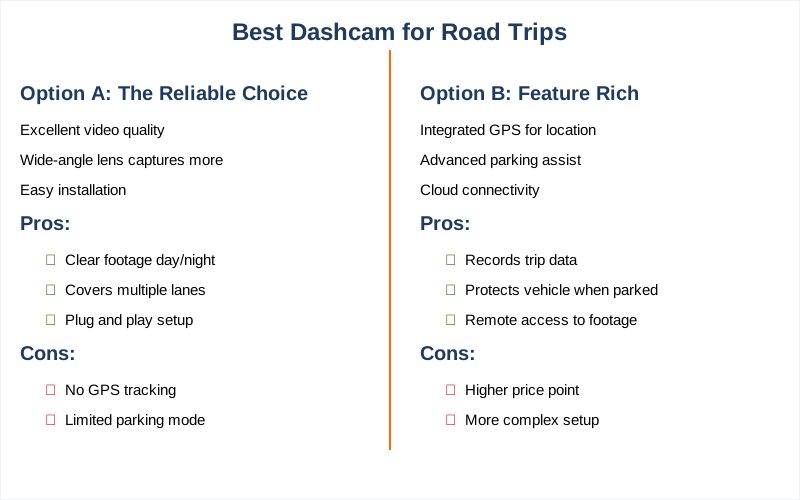
Comparison overview for best dashcam for road trips Final Recommendations
The Bottom Line: Get a Dashcam That Won't Quit
Look, a dashcam isn't a luxury item anymore, especially not for road trips. It's a fundamental piece of risk mitigation equipment, a data recorder for your vehicle's journey. The cost of a decent unit, say $180, pales in comparison to the potential legal fees or insurance premium hikes from a disputed accident claim. It's a small investment against significant financial and legal mechanical stress Pickup Truck Talk concludes. My final recommendations are based purely on reliable performance, robust construction, and verifiable data capture: - Viofo A229 Pro (or A329S): For absolute top-tier video quality and reliability, especially with the Sony STARVIS 2 sensors. It's built to last and provides clear evidence day or night.
- 70mai A810: If you want a solid, no-frills option that still delivers 4K clarity and uses a supercapacitor. Great value for the performance.
- Vantrue E1 Pro: Best single-channel option. Compact, powerful, and gets the job done without unnecessary complexity. Always go for a supercapacitor model to avoid thermal degradation, hardwire it for consistent power, and use a high-endurance microSD card. These aren't suggestions; they're engineering requirements for reliable operation. Anything less is just hoping for the best, and hope isn't a strategy when your insurance premium is on the line.
Frequently Asked Questions
My buddy said a new hardwire kit costs $80 at the auto parts store. Is that really necessary, or can I just splice some wires?
Do I really need to format my micro SD card every month? Seems excessive.
What if I hardwire my dashcam, and it still drains my battery overnight?
Can leaving my dashcam in direct sunlight permanently damage its image sensor?
I heard dashcams are illegal in some states because they obstruct your view. Is that true?
🏅 Looking for Gear Recommendations?
Check out our tested gear guides for products that work with this setup:
Sources
- 5 Best Dash Cams of 2026, Tested by Our Experts
- The 2 Best Dash Cams of 2026 | Reviews by Wirecutter
- How many of you have dash cams and which one is best? : r/SanJose
- Best Dash Cams for 2026, Tested and Reviewed - Car and Driver
- Dashcam Buyer's Guide January 2026: Recommendations & In ...
- Best Dashcam to Buy in 2026? (Price, Video Quality, Battery) - Reddit
- The Best Dash Cams We've Tested for 2026 | PCMag
- 3 Best Dash Cams of 2026, Tested by Experts - Road & Track
- A Simple Guide to Choosing the Best Front and Rear Dash Cam in ...