Why a trunk organizer is the cheapest road-trip upgrade you can buy
Open up a cheap trunk organizer and the story is right there in the stitching: a single row of thread at the handle anchors, divider walls that flop the moment you load them, and a base that's printed to look grippy but slides on carpet. The part they hoped you'd never see is exactly the part that fails on a long drive. A good organizer turns a shifting pile of bags, snacks, chargers, and fluids into findable compartments that stay put on a mountain pass.
One honesty note up front, because half the internet pretends otherwise: I have not bench-tested these units myself. This is a spec comparison built from published manufacturer specifications, owner reports, and named third-party reviews — Car and Driver and CNN Underscored both tested trunk organizers, and I lean on their findings plus the spec sheets, all linked at the bottom. Where I give a verdict, it's reasoning from the published numbers and reviewer consensus, not a claim that I drove any of them through the Rockies.
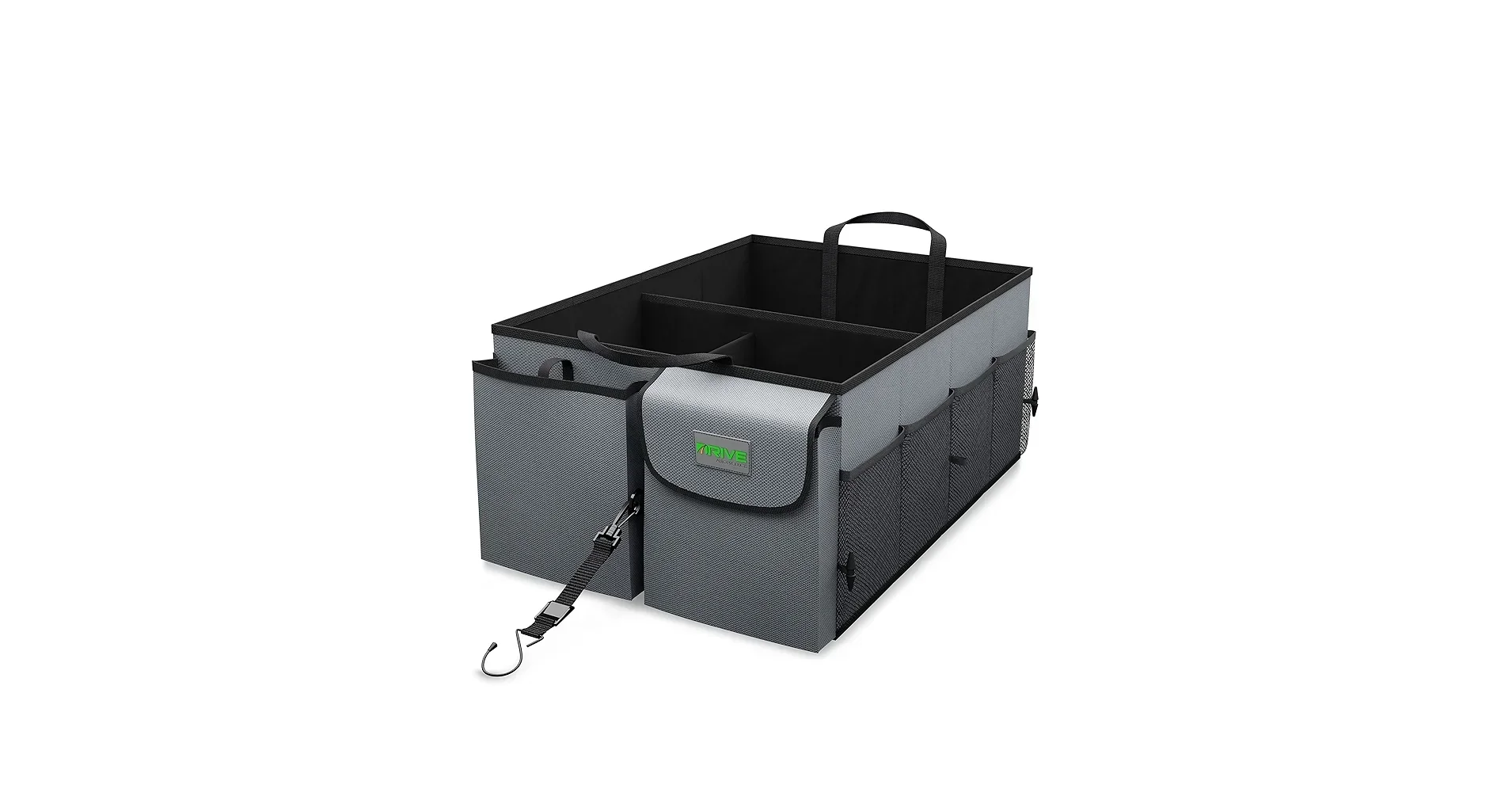
The road-trip field comes down to four real picks: the Drive Auto Collapsible Trunk Organizer, the Trunkcratepro Collapsible Trunk Organizer, the Knodel Car Trunk Organizer, and the Fortem Trunk Organizer. What actually separates them is type (collapsible vs rigid), material, capacity, what vehicle they fit, and how they anchor. Get those five right and everything else is a footnote.
The short version: anchoring keeps it from sliding, type decides flexibility vs rigidity, material decides whether it survives a spill, and capacity has to match your vehicle. Compartment count is the spec that sells boxes and matters least.
What to look for before you buy a trunk organizer
Before the picks, here's what each spec actually means for a trip — so you're not buying on pocket count alone.
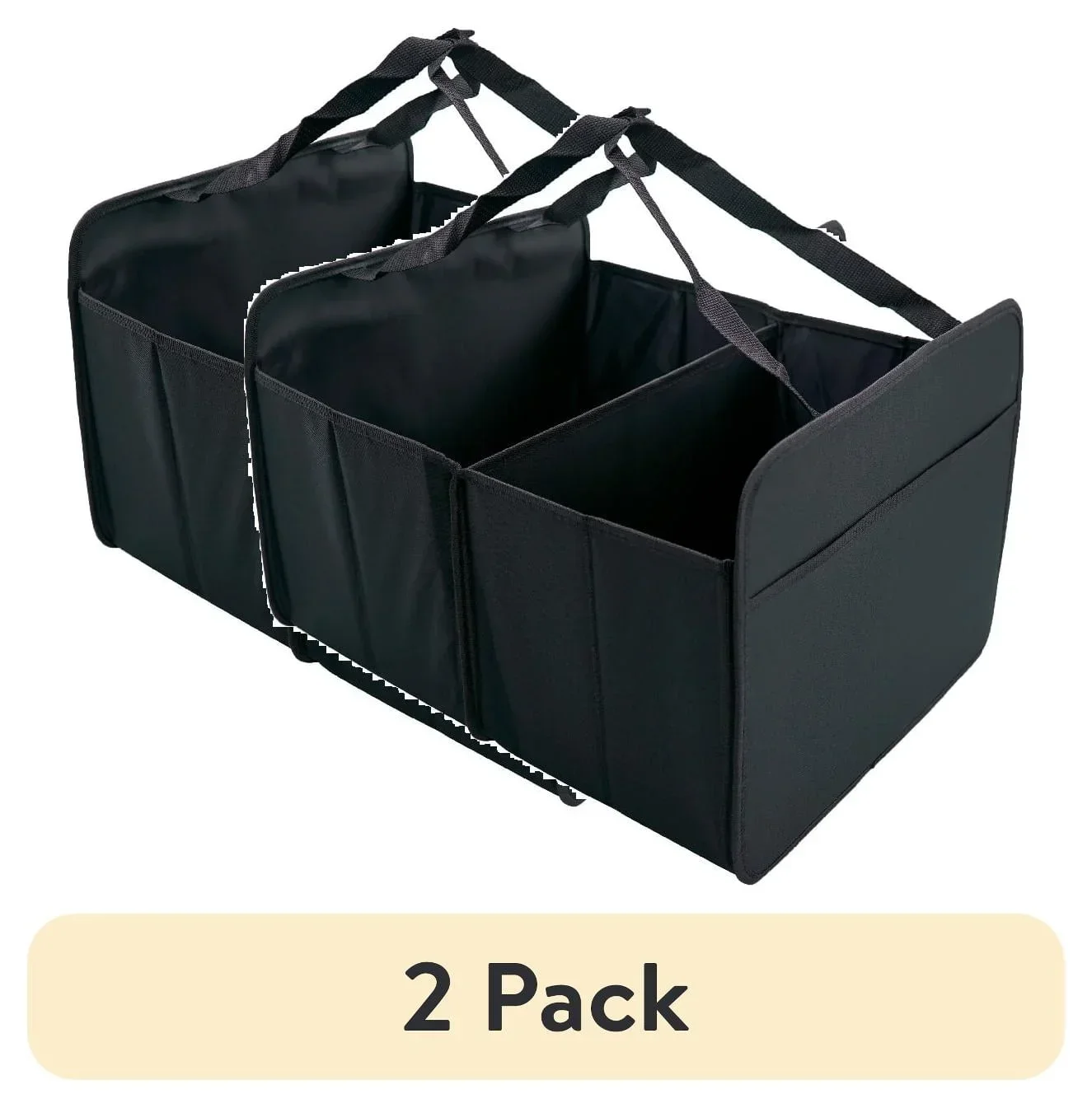
Type is the first fork. Collapsible organizers fold flat when empty, so you reclaim the whole cargo area for a big haul and pop the organizer up when you need it — the flexible choice for mixed daily-plus-trip use. Rigid crates hold their shape under a heavy, shifting load and stack securely, but take up space whether full or empty. I go deeper on that fork in my collapsible vs rigid trunk organizer breakdown.
Anchoring is the spec that decides a long drive. An organizer that slides across the cargo floor on every corner and dumps its contents is worse than none at all. The best units anchor three ways: adjustable straps to tie-down points, hook-and-loop pads that grip carpet, and a non-slip rubberized base. Car and Driver's testing flags sliding as the single most common organizer failure, so prioritize anchoring over compartment count.
Material decides whether it survives. A waterproof or wipe-clean lining contains spilled drinks and melted ice; fabric-only units soak through and stain. UV-resistant fabric or tough plastic survives years in a hot trunk, while cheap material fades and cracks in a season. The durable trunk-organizer materials guide covers what to watch for in the stitching and panels.
Capacity and fit have to match your vehicle and how you pack. A medium three-section unit suits a sedan; a larger crate suits an SUV or a heavy-packing family. Measure your cargo area and leave room for the bulky items no organizer holds — coolers, duffels, strollers. An organizer that fills the whole trunk defeats its own purpose.
- Type: collapsible for flexibility, rigid for a heavy load.
- Anchoring: straps, hook-and-loop pads, and a non-slip base.
- Material: waterproof or wipe-clean lining, UV-resistant fabric.
- Capacity and fit: sized to your vehicle and how you pack.
Drive Auto vs Trunkcratepro vs Knodel vs Fortem, head to head
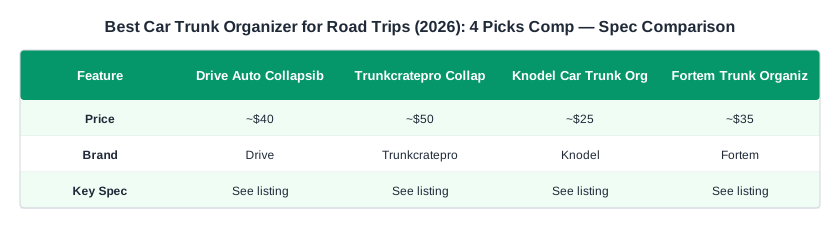
Here are all four laid out against the specs that matter for a road trip, pulled from published specs and named reviews. Find your type-and-fit sweet spot, then read the pick below it.
Two things jump out. First, only one of these is a true rigid crate — the Trunkcratepro Collapsible Trunk Organizer — and it's the one that won't sag when you pack the car to the roof. Second, anchoring and material, not raw capacity, are what separate the picks; every one holds enough, but they differ on whether they'll stay put and shrug off a spill.
The quick way to read it for a road trip, in order of how most people decide:
- One organizer for daily driving and trips: the Drive Auto Collapsible Trunk Organizer (folds flat, good anchoring).
- Packs the car to the roof every time: the Trunkcratepro Collapsible Trunk Organizer (rigid, stacks, never sags).
- Sedan or light packer on a budget: the Knodel Car Trunk Organizer (three sturdy sections, about $25).
- Hauls drinks, groceries, or wet gear: the Fortem Trunk Organizer (waterproof lining, secure straps).
Drive Auto: the all-rounder that tops the field
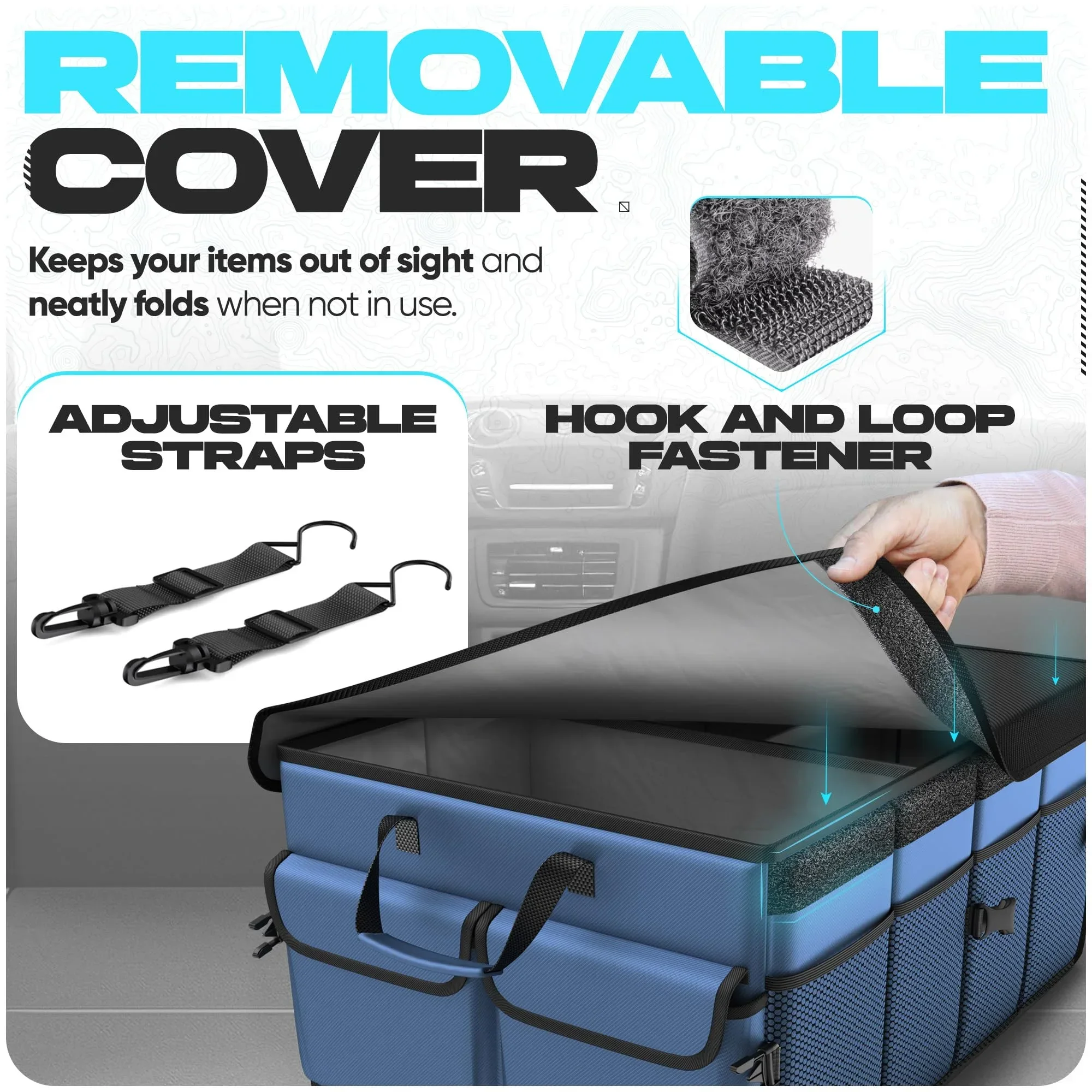
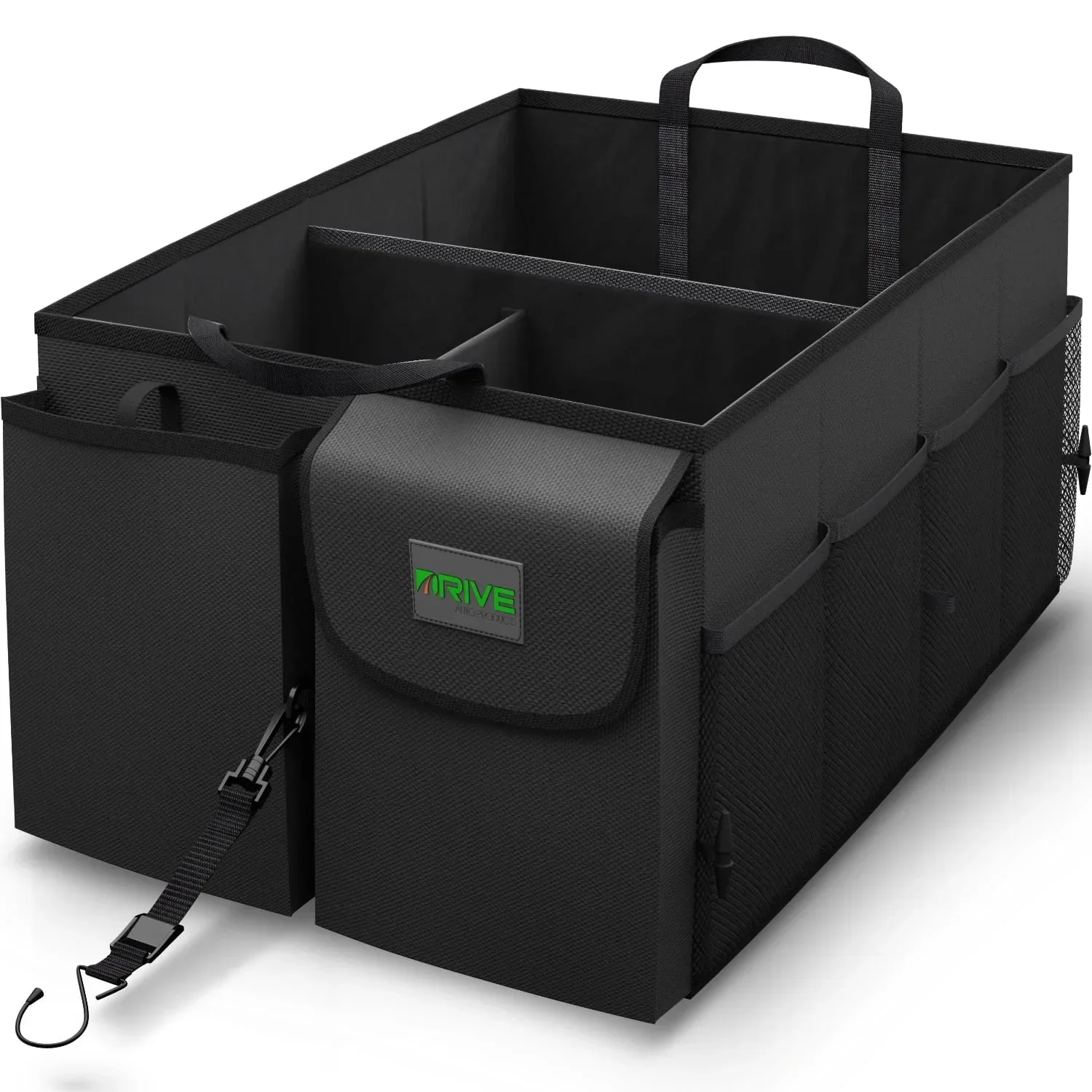
If you make me pick one, it's the Drive Auto Collapsible Trunk Organizer. It's the rare unit that's structured enough to hold its shape loaded yet folds flat when you want the cargo room back — the best of both types. Built from 600D Oxford fabric with foldable side walls, it anchors with adjustable straps and a non-slip base, which is exactly the combination Car and Driver's testing rewards for staying planted on a twisty road.
What earns it the top spot is versatility. Owners consistently report leaving it in the trunk full-time — popped up to corral groceries and gear on errands, folded flat when they need the whole cargo area — so it works as a daily organizer and a road-trip one. It isn't as bombproof as a rigid crate when crammed completely full, and that's the honest trade. For about 90% of road trippers, it's the right answer.
Rule of thumb: if you want one organizer that handles daily errands and the big annual trip without eating your trunk the rest of the year, this is the size and type to buy.
Trunkcratepro and Knodel: rigid splurge vs honest budget
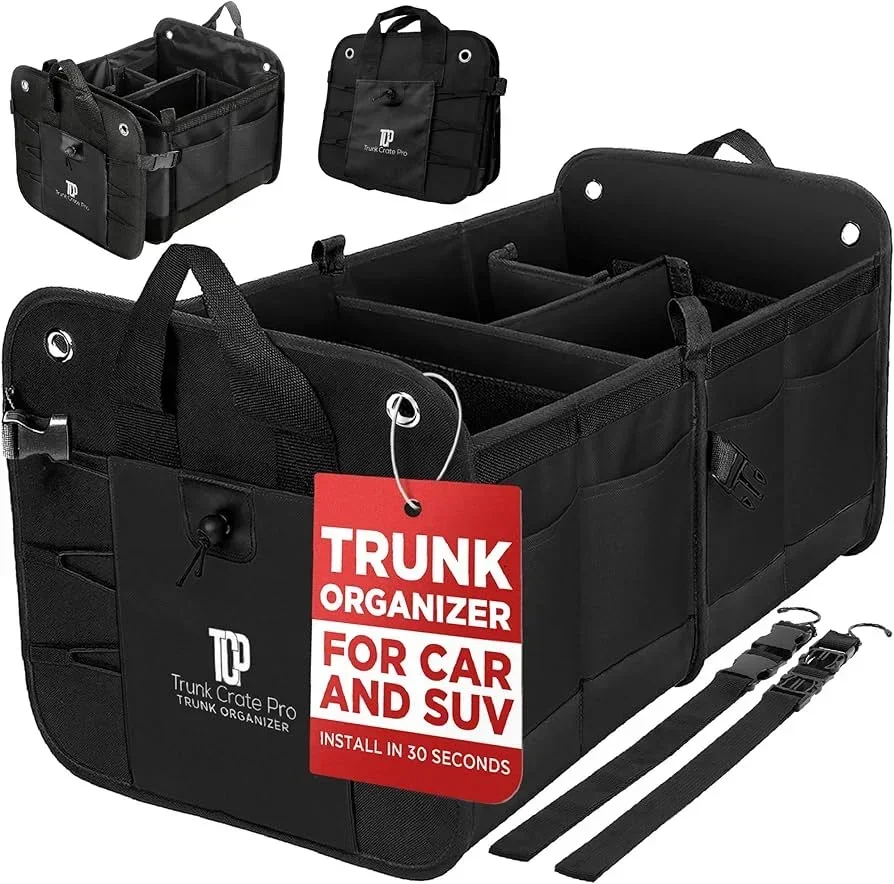
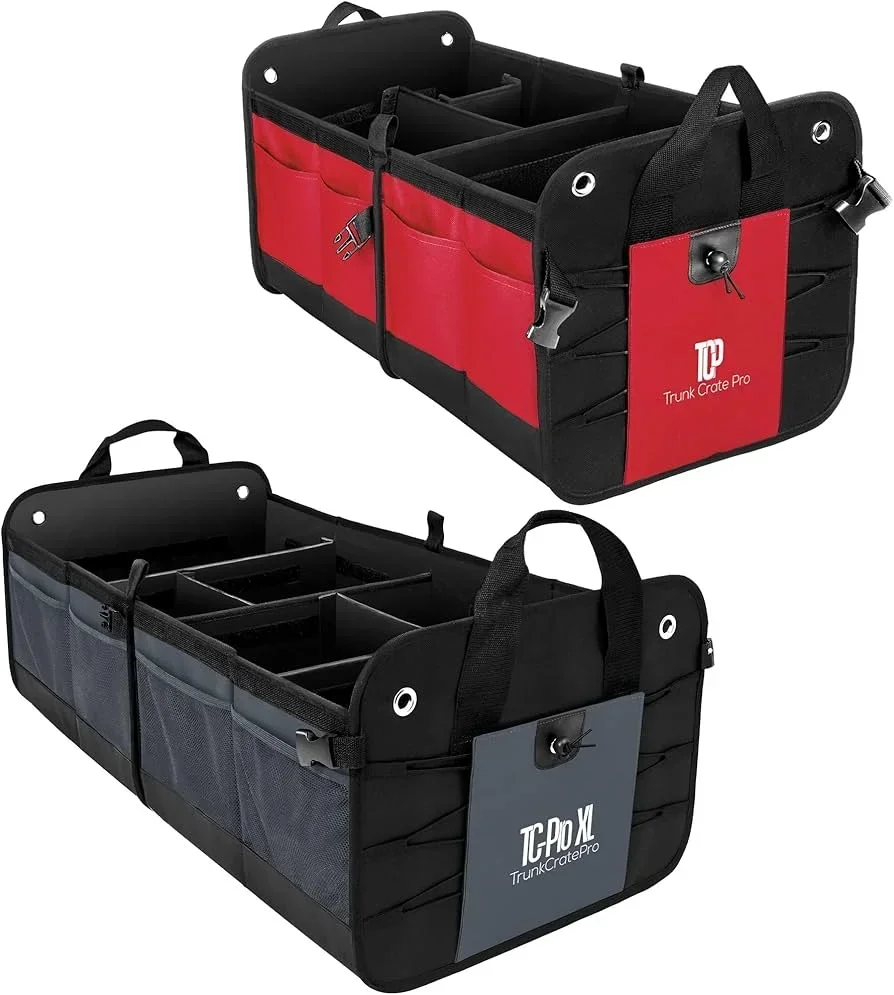
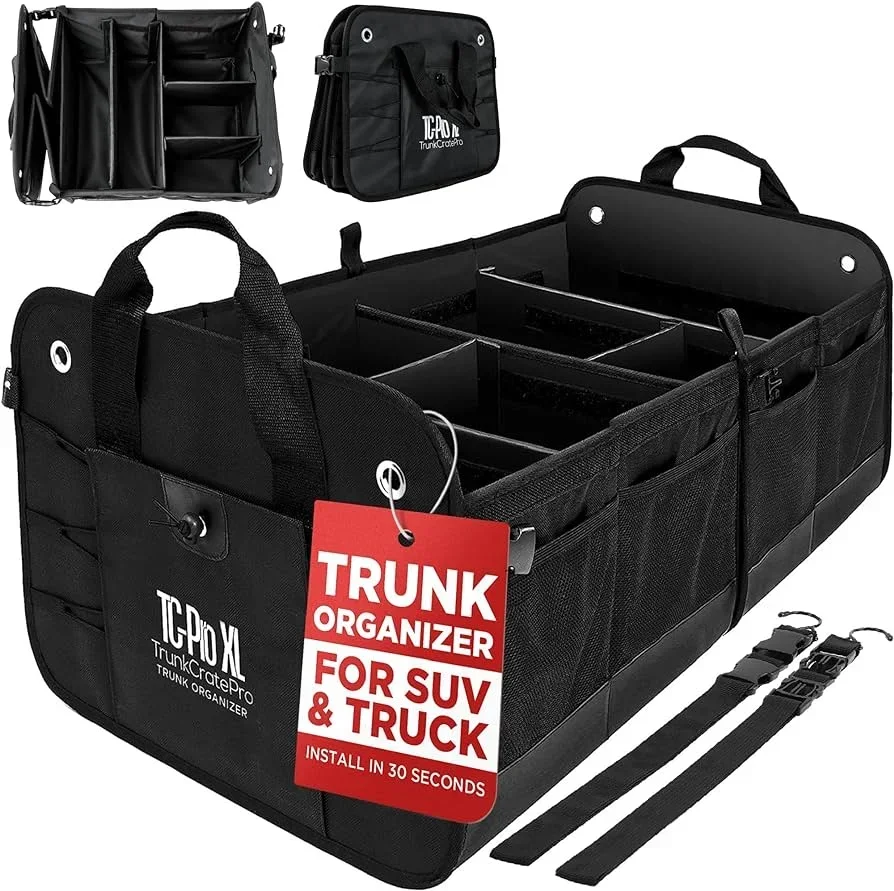
Pack the car to the roof and the Trunkcratepro Collapsible Trunk Organizer is the move. Despite the name it's effectively a rigid crate — reinforced 1680D panels and a stiff floor that holds its shape fully loaded, stacks securely, and won't sag or topple when packed full. At around 72 liters with adjustable dividers it suits an SUV or a heavy-packing family, and CNN Underscored's roundup singles out exactly this rigid-crate class for people who haul a lot. The trade is that it takes up space whether full or empty (it does fold flat when stored), so it's for consistent heavy packers, not occasional ones.
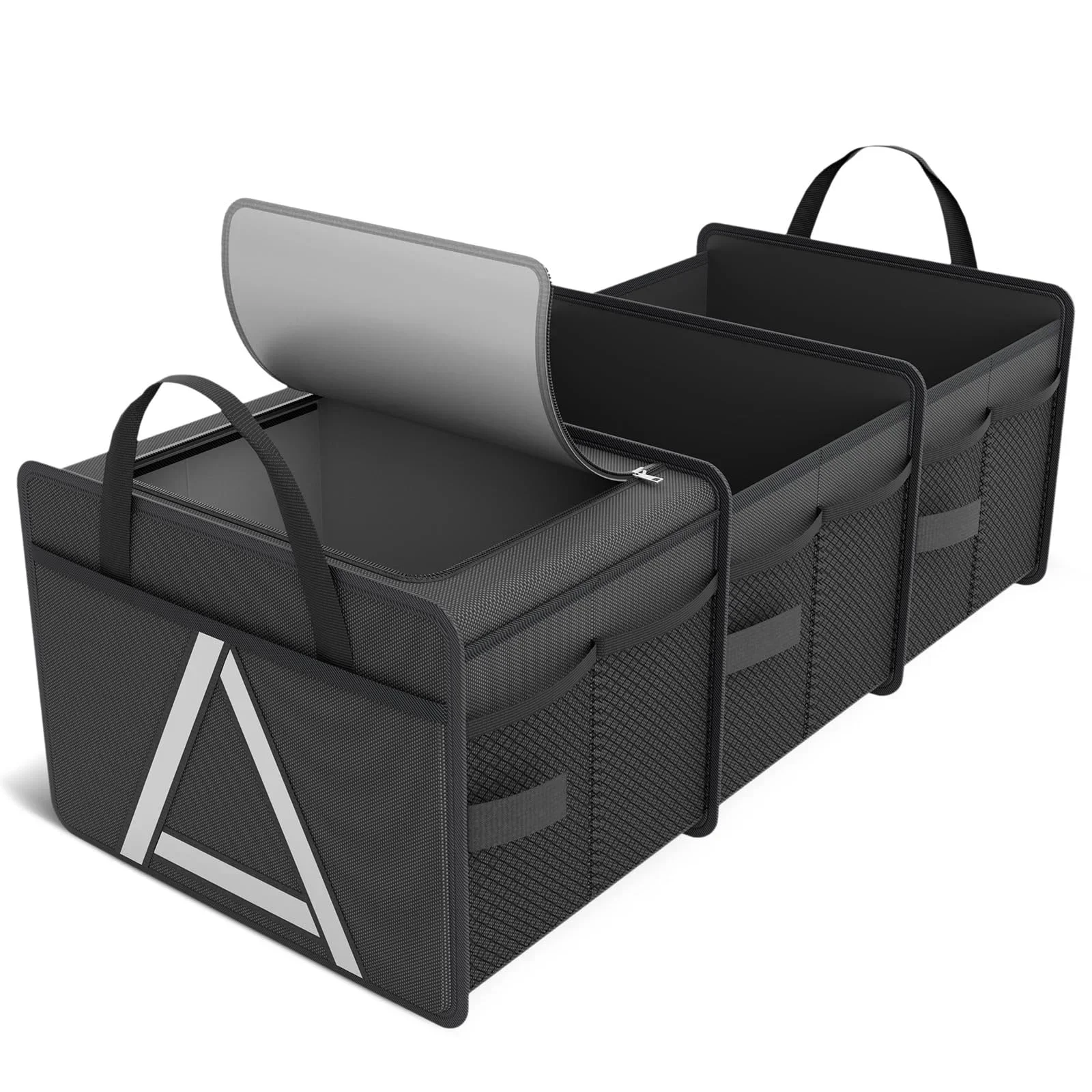
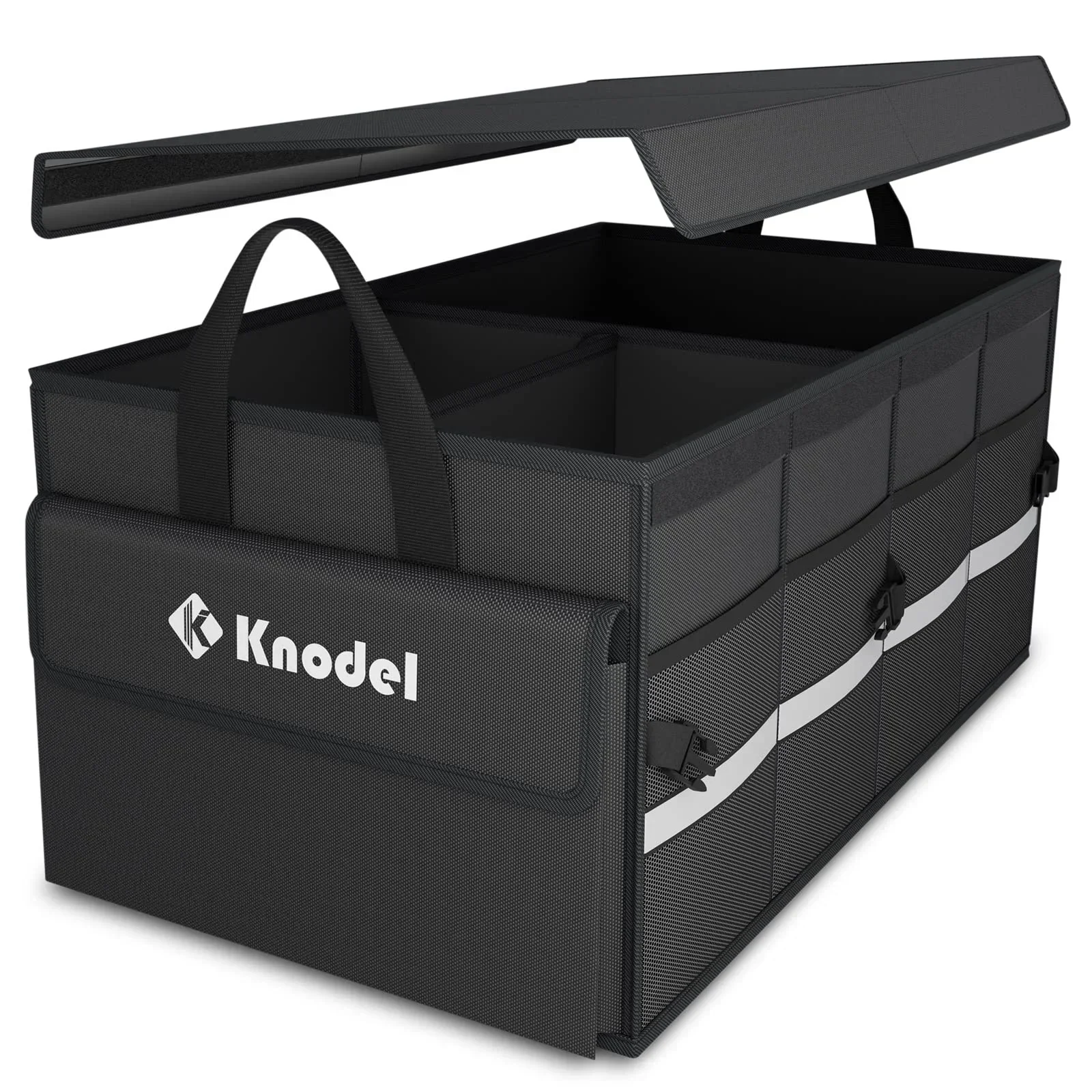
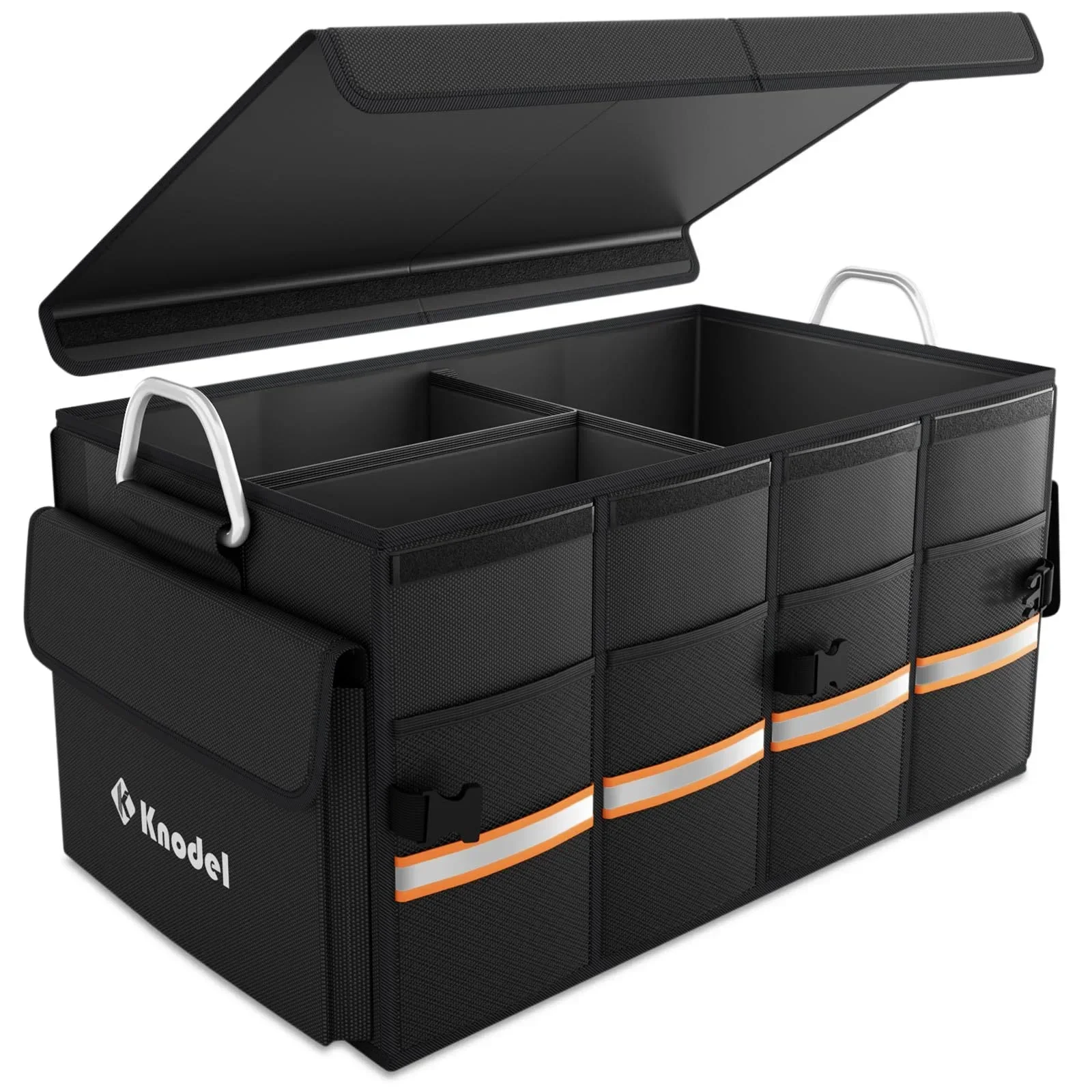
On the other end, the Knodel Car Trunk Organizer is the honest budget pick at around $25. It's a simple, sturdy three-section Oxford-fabric organizer with basic straps — fewer features, but the construction holds up for a sedan or a light packer who just wants snacks, electronics, and fluids kept findable. Bought knowingly for that job, it's good value; buy it expecting crate-grade rigidity or a waterproof lining and you'll be disappointed. It's the right call when budget leads and your loads are light.
The clean way to split them: buy the Trunkcratepro Collapsible Trunk Organizer if you pack heavy on every trip and want a crate that never sags, and buy the Knodel Car Trunk Organizer if your loads are light and the budget leads. They're not really competing for the same shopper — one is a haul-everything crate, the other is a tidy sedan organizer that happens to cost a third as much.
If you can only afford one and you pack light, the budget pick is genuinely fine — just don't expect it to survive a roof-high load it was never built for.
Fortem and the wet-gear, grocery-haul use case
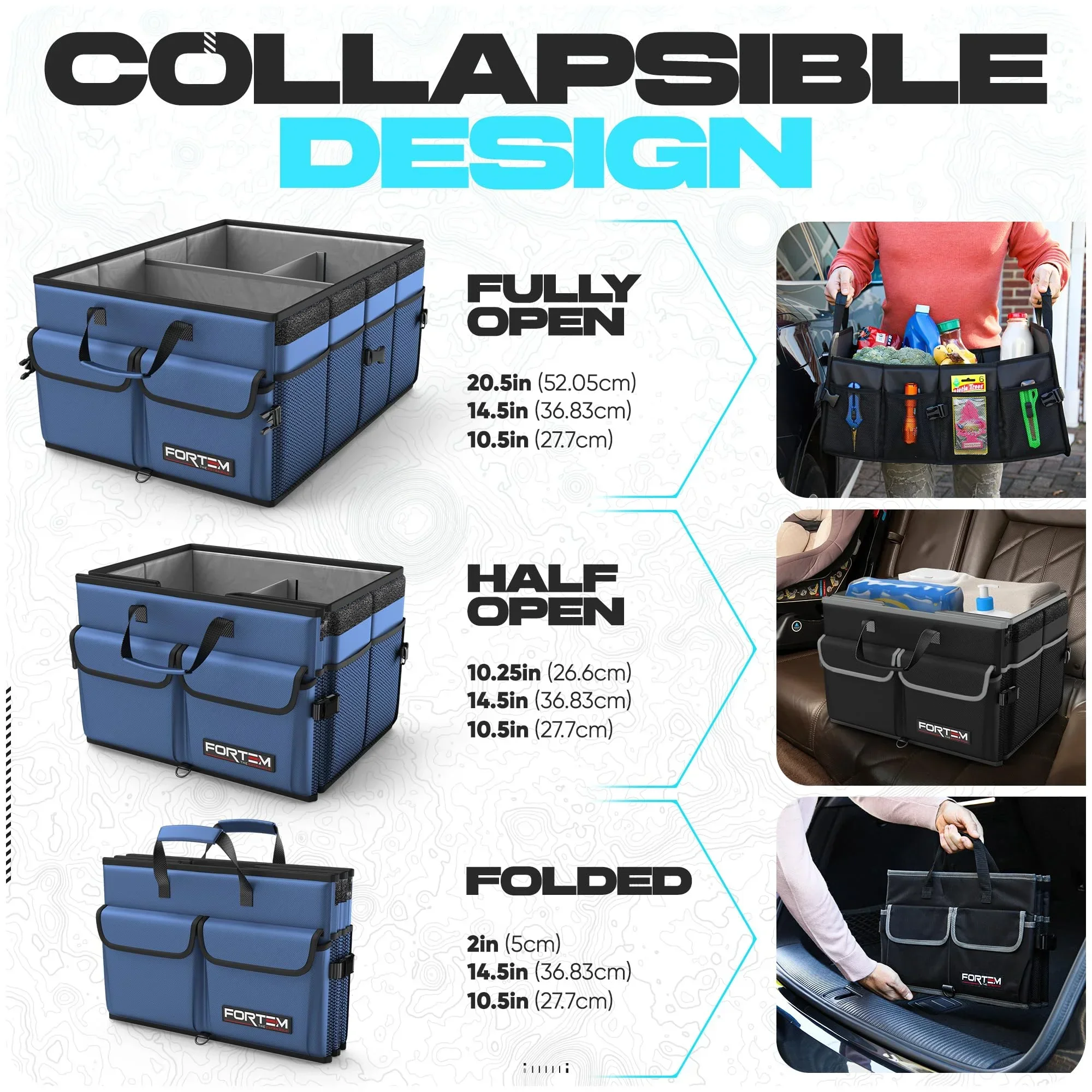
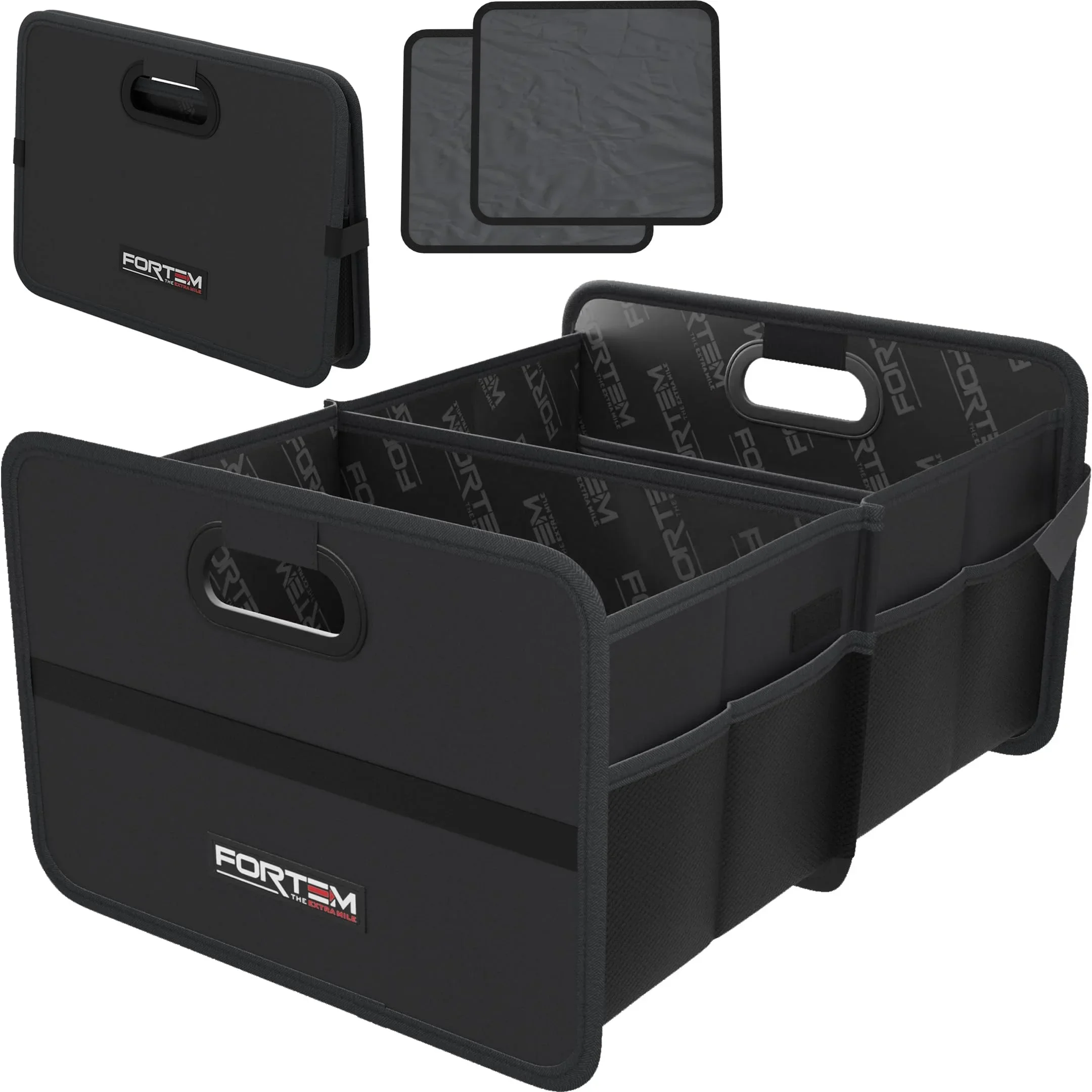
If your road trips involve drinks, groceries, beach gear, or anything that leaks, the Fortem Trunk Organizer is the pick. Its PEVA-lined, wipe-clean interior contains spilled drinks, melted ice, or leaking washer fluid and wipes out clean — the spec that separates an organizer you'll still use next summer from a soaked, stained fabric box. It pairs a secure tie-down strap system with a grippy base, so it anchors about as well as the Drive Auto Collapsible Trunk Organizer.
It's a semi-rigid collapsible with roughly three sections plus side pockets, fitting a sedan up through an SUV, at a modest ~$35. Owners who haul groceries report the lining shrugs off the inevitable yogurt cup that tips over, where a fabric-only organizer would have stained for good. If you frequently carry liquids and want the spill insurance, it's worth the few dollars over the Knodel Car Trunk Organizer. For a dedicated cold-haul setup, my trunk organizers with a built-in cooler guide covers the next step up.
- Carry liquids or groceries often: the lining is the spill insurance.
- Stand bottles upright in the lined section so a leak stays contained.
- Wipe it out after a wet haul so spills don't set into the fabric.
Longevity and care: which one is built to last
An organizer lives in a hot trunk, baked by sun and tossed around for years, so durability is the spec that decides whether you buy once or replace it next summer. The first things to fail on a cheap unit are predictable: the stitching at the handle anchors, the divider walls, and the base where it grips the floor. Check those before anything else.
By material the picks split cleanly. The Trunkcratepro Collapsible Trunk Organizer's reinforced 1680D panels and stiff floor are the most abuse-resistant here — owners report it holding its shape after years of heavy loads where soft organizers have long since sagged. The Drive Auto Collapsible Trunk Organizer and Fortem Trunk Organizer use heavier 600D-class and PEVA-lined fabric that resists fading and wipes clean, a step above the basic Oxford fabric of the budget Knodel Car Trunk Organizer — which is the honest trade you accept for the ~$25 price.
Care is simple and pays off. Empty and wipe out the lined units after a trip that involved drinks or groceries so spills don't set; let a damp organizer air-dry before you fold it away so it doesn't grow musty; and store collapsible units flat rather than crushed under heavier gear, which is what cracks foldable walls over time. Do that and even the mid-priced picks here stay useful for many seasons of trips rather than becoming the brittle, faded thing you toss out.
Buy-once rule: spend a little more on anchoring and material up front, store it flat, and wipe it out after wet hauls — one good organizer outlasts three cheap ones.
Which trunk organizer should you choose? The verdict
Here's the short version, by how you travel:
- Most road trippers / daily + trips: the Drive Auto Collapsible Trunk Organizer. Anchors well, folds flat, lives in the trunk year-round.
- Packs heavy every time: the Trunkcratepro Collapsible Trunk Organizer. Rigid, stacks, never sags under a full load.
- Sedan / light packer on a budget: the Knodel Car Trunk Organizer. Three sturdy sections for about $25.
- Hauls liquids or wet gear: the Fortem Trunk Organizer. Waterproof lining and secure straps for spill insurance.
There's no universal winner — match the type, material, capacity, and anchoring to how heavy and how wet you pack, measure your cargo area, and prioritize anchoring over compartment count. If you also corral the cabin, my best car seat organizer for road trips guide handles the back seat. Do that and one good organizer keeps your trunk tidy for years of trips. And remember these verdicts are reasoned from published specs and named reviews, so sanity-check current prices and your own load list before you commit.